Automotive Assembly Tasks That Still Challenge Industrial Robots
Publication Date
author
Despite rapid advances in automation, some vehicle production steps still expose the real limits of industrial robots for automotive assembly. From deformable materials and complex wire routing to finish-sensitive installation tasks, these bottlenecks reveal where precision, adaptability, and process data still fall short. This article examines the assembly operations that remain difficult to automate—and what those constraints mean for engineers, sourcing teams, and manufacturing strategy.
What this challenge really means in modern vehicle manufacturing
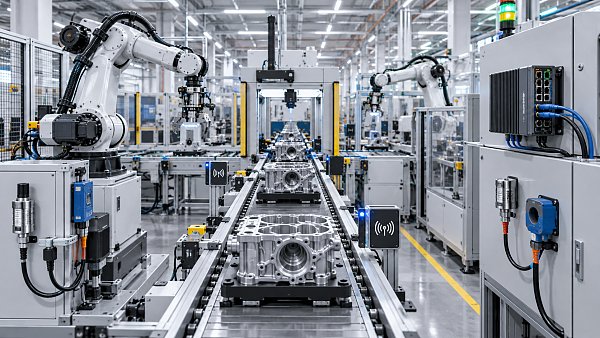
The phrase industrial robots for automotive assembly often brings to mind highly synchronized welding cells, fast pick-and-place systems, and repeatable body-in-white operations. In those environments, robots excel because the task, part geometry, and motion path are tightly controlled. Automotive plants have therefore become one of the strongest proof points for industrial automation. Yet assembly is broader than welding and handling. Final vehicle build includes soft materials, hidden fasteners, moving tolerances, cable routing, clip engagement, surface-sensitive trim, and quality checks that depend on touch as much as vision.
That is why discussions around industrial robots for automotive assembly now focus less on whether robots can be deployed and more on where they still struggle. For information researchers, this distinction matters. It separates mature automation from frontier automation. For engineering teams, it highlights the exact process windows where cycle time, defect risk, and rework rates are still heavily influenced by human adaptability. For sourcing leaders, it clarifies which equipment claims should be validated through process data rather than accepted as marketing language.
Why these tasks remain difficult despite better hardware and AI
In simple terms, robots struggle when the real production environment is less deterministic than the digital model. A robot can repeat a path with extreme accuracy, but many automotive assembly tasks require reacting to variation, not just repeating motion. That variation may come from flexible parts, adhesive behavior, stacked tolerances between suppliers, inconsistent part presentation, or changing reflectivity on glossy surfaces.
Even advanced machine vision, force control, and edge processing do not fully remove the issue. Sensors can detect more, but detection is only one layer. The robot must then interpret that data, adjust in milliseconds, and still preserve takt time. In a vehicle line, a task is not valuable merely because it can be automated once in a lab. It must survive thousands of cycles, multiple shifts, mixed-model production, and supplier variability without creating hidden downtime.
For a data-driven organization like TechStat Vanguard, this is where engineering truth matters. Claims about autonomous adaptation should be tested against repeatability under process drift, force thresholds at contact, false reject rates in vision inspection, and mean downtime caused by recovery events. The gap between capability demonstration and production-grade reliability is where many automation assumptions fail.
A practical overview of high-difficulty assembly tasks
The following table summarizes where industrial robots for automotive assembly are most likely to face persistent constraints and why those tasks deserve closer engineering review.
These areas do not imply that automation is impossible. They indicate that the process often needs a much deeper integration of fixturing, sensing, software logic, and quality analytics before robots can match or exceed skilled operators at scale.
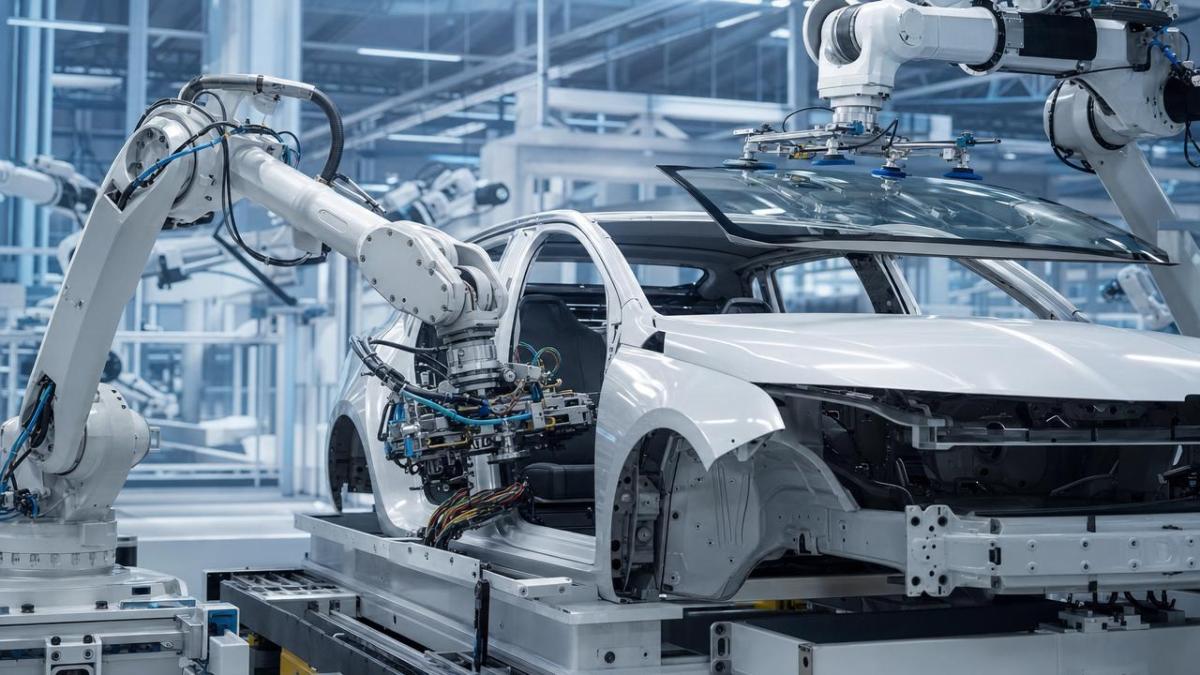
The most persistent bottlenecks in industrial robots for automotive assembly
Wire harness insertion and routing
Among all tasks challenging industrial robots for automotive assembly, wire harness work remains one of the clearest examples. A harness is not a rigid component. It bends, twists, drapes, and reacts differently depending on temperature, packaging memory, and clip geometry. A human operator can instantly feel when a branch is snagging or a connector is slightly misaligned. Robots need multi-point perception and sophisticated force feedback to make that same judgment. Even then, routing through constrained vehicle cavities is difficult because line-of-sight is limited and path conditions vary from one model variant to another.
Soft trim, headliners, and interior panels
Interior assembly is deceptively complex. A robot may be able to place a trim part, but ensuring that every clip seats correctly without marring visible surfaces is harder. Soft trims compress unpredictably, foam-backed materials recover slowly, and decorative finishes can reflect light in ways that mislead standard vision systems. In luxury or EV segments, customer expectations for fit and finish are especially high, so even minor marks or uneven gaps can trigger rework. This raises the bar for compliant end effectors, force-limited insertion, and final inspection resolution.
Adhesive, sealant, and gasket-dependent operations
Robots are already used for dispensing, but downstream assembly involving semi-cured adhesives or compressible seals still introduces uncertainty. Material viscosity can drift over time. Bead geometry can vary with nozzle wear, ambient conditions, or pause events. If a robot then mates a part with a seal that has shifted slightly, the resulting compression may not meet design intent. This is where process data should include not only robot path accuracy, but also dispense consistency, contact force signature, cure-window timing, and leak-test correlation.
Finish-sensitive component installation
Gloss-black panels, chrome accents, displays, lenses, and painted exterior trim require a level of handling sensitivity that can be difficult to sustain at speed. A robot can move precisely, but avoiding micro-scratches, pressure marks, static-related contamination, or imperfect seating often requires a combination of clean handling, nuanced contact control, and inspection feedback. In these tasks, the cost of a small defect is disproportionately high because cosmetic issues are immediately visible to the end customer.
High-voltage and battery-related sub-assembly
Electrification has expanded the role of industrial robots for automotive assembly, but battery systems also introduce new precision burdens. Thermal interface materials may spread inconsistently, cell or module tolerances may stack in subtle ways, and fastening sequences often require traceable torque-angle control tied to safety validation. The challenge is not just placement. It is proving that every assembled unit meets thermal, mechanical, and electrical performance requirements over life-cycle conditions.
Why this topic matters to engineers, analysts, and sourcing teams
For information researchers and technical decision-makers, understanding the limits of industrial robots for automotive assembly creates more realistic project planning. It helps engineering teams identify where fixture redesign may deliver more value than a more expensive robot. It helps manufacturing leaders estimate the hidden cost of exception handling and line recovery. It helps procurement teams ask better supplier questions, such as whether a claimed vision-guided solution was validated across mixed variants, contamination states, and tolerance extremes.
This also has strategic value across the broader manufacturing ecosystem. Integrators, sensor providers, end-effector developers, and software vendors each address a different part of the automation gap. A plant may not need a fully autonomous cell first; it may need better part presentation, more reliable connector geometry, or in-line force signature monitoring. Clear process decomposition prevents overbuying technology that cannot compensate for poor upstream design.
How to evaluate difficult automation candidates more effectively
A robust evaluation framework should focus on measurable production reality, not only demonstration videos. The following points are especially useful when assessing advanced industrial robots for automotive assembly in difficult tasks:
- Define part variability explicitly, including tolerance stacks, material behavior, and supplier differences.
- Measure force and torque signatures, not just position repeatability.
- Test under mixed-model conditions rather than idealized single-part runs.
- Track recovery time after errors, because exception handling often determines true OEE impact.
- Link process metrics to final quality outcomes such as leak rate, fit gap consistency, cosmetic defect rate, or electrical continuity.
This style of evaluation aligns with TSV’s data-first philosophy. Parameters do not lie, and assembly success is often decided by the interaction of tolerances, not by nominal robot specifications alone.
Where progress is most likely over the next few years
The outlook is not static. Several developments are improving the feasibility of challenging vehicle assembly tasks. Better 3D vision is helping robots detect part pose in cluttered environments. More capable force-torque sensing is making compliant insertion safer and more informative. AI-based perception can classify anomalies faster, while edge computing reduces latency in control loops. At the same time, product designers are increasingly considering design-for-automation principles earlier in vehicle development.
Still, the winning formula will rarely be “smarter robot only.” The strongest gains usually come from coordinated engineering: robot control, fixture simplification, connector redesign, digital traceability, and process-specific validation. In other words, the future of industrial robots for automotive assembly depends as much on system architecture as on robotic hardware.
Closing perspective for practical decision-making
The tasks that still challenge industrial robots for automotive assembly are not side issues. They sit at the intersection of quality, cycle time, labor strategy, and product complexity. Wire harness routing, trim installation, sealing operations, surface-sensitive handling, and battery sub-assembly each reveal a common truth: repeatable motion is not the same as robust assembly intelligence.
For teams evaluating automation opportunities, the most effective next step is to map each difficult task to its real physical uncertainty, then request evidence in engineering terms: tolerance response, force data, defect escape rate, recovery behavior, and throughput under realistic variation. That is how manufacturers move beyond automation hype and toward dependable production gains. In a hard-tech landscape shaped by precision and accountability, better decisions begin with better process data.
Search News
Hot Articles
- Carbon Fiber StructuresHow to Specify Aerospace Carbon Fiber Assemblies for Lightweight, Load-Bearing PartsJul 11, 2026
- Machine VisionXiaomi, Alibaba DAMO Academy Drive Open-Source Robotics Model Ecosystem, Lowering Algorithm Development Barriers for Overseas SMEs Adopting Chinese Robotics SolutionsMar 30, 2026
- Cobots & ArmsShanxi 'AI+' Conference Showcases Embodied Intelligence with Multinational Buyer Engagement: Key Industry ImplicationsMar 30, 2026
Popular Tags
Recommended News
 Jul 11, 2026How to Specify Aerospace Carbon Fiber Assemblies for Lightweight, Load-Bearing PartsAerospace carbon fiber assemblies: learn how to specify laminate design, load data, joining methods, and inspection controls for lighter, reliable load-bearing aerospace parts.Elena Rostova (UAV Systems Researcher)
 Mar 30, 2026Xiaomi, Alibaba DAMO Academy Drive Open-Source Robotics Model Ecosystem, Lowering Algorithm Development Barriers for Overseas SMEs Adopting Chinese Robotics SolutionsXiaomi & Alibaba DAMO Academy's open-source robotics models lower algorithm barriers for global SMEs. Boost efficiency in manufacturing, logistics & smart retail with ROS 2 compatible solutions.TSV Data Lab
 Mar 30, 2026Shanxi 'AI+' Conference Showcases Embodied Intelligence with Multinational Buyer Engagement: Key Industry ImplicationsShanxi 'AI+' Conference highlights embodied intelligence with Tesla, Ubtech & Jiantao showcasing multimodal robotics. 40+ global buyers validated tech on-site, creating new B2B channels for industrial automation & AI solutions.Chen Wei (Automation Lead Engineer)
 Mar 30, 2026Zhongguancun Unveils 6G Integrated Sensing-Computing-Intelligence Platform to Empower Embodied Robots for Global Industrial ApplicationsZhongguancun's new 6G platform revolutionizes industrial robotics with <10ms latency, empowering global automotive, logistics & port automation. Discover how this tech boosts China's smart manufacturing exports.TSV Data Lab
 Mar 30, 2026Mech-Mind Tianjin Embodied Intelligence R&D and Production Base Goes Live, Cutting Delivery Time by 20%–30% for Global Customized AMR+Vision SolutionsMech-Mind's Tianjin AMR+Vision production base cuts delivery time by 20%-30% for欧美 & Latin American markets. Discover how this PLd-certified facility accelerates customized robotics solutions for smart manufacturing and logistics.Chen Wei (Automation Lead Engineer)
 Mar 30, 2026Boao Forum Reveals 'Co-evolution of Big and Small Brains' Trend in Humanoid Robots, China's Embodied Intelligence Accelerates Adaptation to Overseas Manufacturing Service ScenariosDiscover how China's humanoid robots, featuring 'Co-evolution of Big and Small Brains,' are revolutionizing global manufacturing. Learn about Embodied Tian Gong 3.0's ISO compliance and overseas deployment at Boao Forum 2026.Chen Wei (Automation Lead Engineer)
 Mar 30, 2026China Railway Industrial Secures Patent for Embodied Robotics in Material Handling, Boosting High-Precision Delivery Capabilities for Overseas Infrastructure and Manufacturing ProjectsChina Railway Industrial's new patent for embodied robotics in material handling boosts high-precision delivery for global infrastructure & manufacturing. Discover how this innovation enhances logistics accuracy in automotive, rail transit & EPC projects.Chen Wei (Automation Lead Engineer)
 Sep 29, 2026ISO 9283 Repeatability: How to Evaluate Cobot Positioning PerformanceISO 9283 cobot repeatability explained: learn how payload, reach, approach direction, and test conditions affect positioning performance and cell capability.Chen Wei (Automation Lead Engineer)
 Sep 29, 2026How Do You Verify Servo Motor Torque Under Continuous Load?How do I verify servo motor torque under continuous load? Learn RMS torque checks, torque-speed limits, thermal derating, and real-machine testing.Chen Wei (Automation Lead Engineer)
 Sep 28, 2026Spindle Runout Measurement in Germany: DIN Standards, Methods, and Acceptance LimitsSpindle runout measurement Germany: explore DIN standards, proven methods, acceptance limits, and audit-ready practices for reliable machining quality.Dr. Marcus Vance
 Sep 27, 2026How to Select Wall-Mount Edge Devices for Space-Constrained Factory NetworksWall mount edge devices for space-constrained factories: evaluate workload, thermal design, power resilience, cable access, and network reliability for smarter deployments.TSV Data Lab
 Sep 26, 2026Machining Tolerance Analysis: How to Set Limits That Meet Function and Cost TargetsMachining tolerance analysis: learn how to set functional limits, control tolerance stacks, reduce inspection risk, and balance precision with production cost.Dr. Marcus Vance
 Sep 25, 2026How to Evaluate an Industrial Infrastructure Data Platform for Multi-Site OperationsIndustrial infrastructure data platform evaluation guide for multi-site operations: compare data quality, edge resilience, interoperability, governance, and scalable proof-of-value criteria.Victor Lin (Chief Software Architect)
 Sep 24, 2026How to Select Machine Vision Optics for Accurate Inspection at Different Working DistancesMachine vision optics selection guide for accurate inspection at every working distance. Compare FOV, pixel scale, DOF, distortion, lighting, and telecentric options.TSV Data Lab
 Sep 23, 2026How to Evaluate a Machine Vision System Integrator for High-Speed Inspection LinesChoose a machine vision system integrator with proven expertise in high-speed inspection, reliable reject timing, robust optics, and measurable acceptance criteria.TSV Data Lab
 Sep 29, 2026How MES and OEE work together to identify production lossesMES and OEE work together to uncover hidden production losses, connect downtime, speed, and quality data, and drive smarter shop-floor improvements.Victor Lin (Chief Software Architect)
 Sep 28, 2026When is a SCADA API the right choice for connecting plant systems?SCADA API guide: learn when governed plant data integration improves traceability, security, and scalability—without compromising real-time control.Victor Lin (Chief Software Architect)
 Sep 27, 2026How SCADA data integration improves traceability across production linesSCADA data integration connects production-line data to improve traceability, accelerate quality investigations, and strengthen safety decisions.Victor Lin (Chief Software Architect)
 Sep 26, 2026What to define before starting SCADA integration planningSCADA integration planning starts with clear scope, control boundaries, data models, cybersecurity, and testing. Discover the definitions that reduce risk and costly rework.Victor Lin (Chief Software Architect)
 Sep 25, 2026How a smart factory with Industrial IoT reduces production blind spotsDiscover how a smart factory with Industrial IoT turns real-time machine, quality, and workflow data into actionable insights that reduce production blind spots and delivery risks.Victor Lin (Chief Software Architect)
 Sep 24, 2026When does Industrial IoT make smart manufacturing easier to scale?Smart manufacturing Industrial IoT scales when trusted data, interoperable systems, and secure workflows turn connected assets into measurable gains.TSV Data Lab
 Sep 23, 2026What drives ultra-precision machining cost at 1-micron tolerance?Ultra precision machining cost per part at 1 micron tolerance depends on process, material, metrology, and yield. Learn how to compare quotes confidently.Dr. Marcus Vance
 Sep 22, 2026Drone Engine-T550CC Applications: Build the UAV Power System Around the MissionAn application guide for Drone Engine-T550CC integration, covering payload planning, airframe matching, cooling, fuel, vibration, test procedures, documentation, and service preparation.Elena Rostova (UAV Systems Researcher)
 Sep 22, 2026How to Evaluate Industrial Edge Computing Vendors for Factory DeploymentIndustrial edge computing vendor evaluation guide for factories: compare latency, protocol fit, reliability, security, and lifecycle support before deployment.TSV Data Lab