
Are Commercial Rock Climbing Walls Worth the Space for Enterprise Venues?
For enterprise decision-makers, the question is not whether commercial rock climbing walls look impressive, but whether they justify their footprint.
That justification depends on measurable utilization, revenue lift, risk control, brand differentiation, and how well the wall supports existing business strategy.
In gyms, hotels, campuses, retail complexes, and corporate wellness spaces, every square meter must perform beyond visual appeal.
The short answer: yes, but only when the wall has a business model
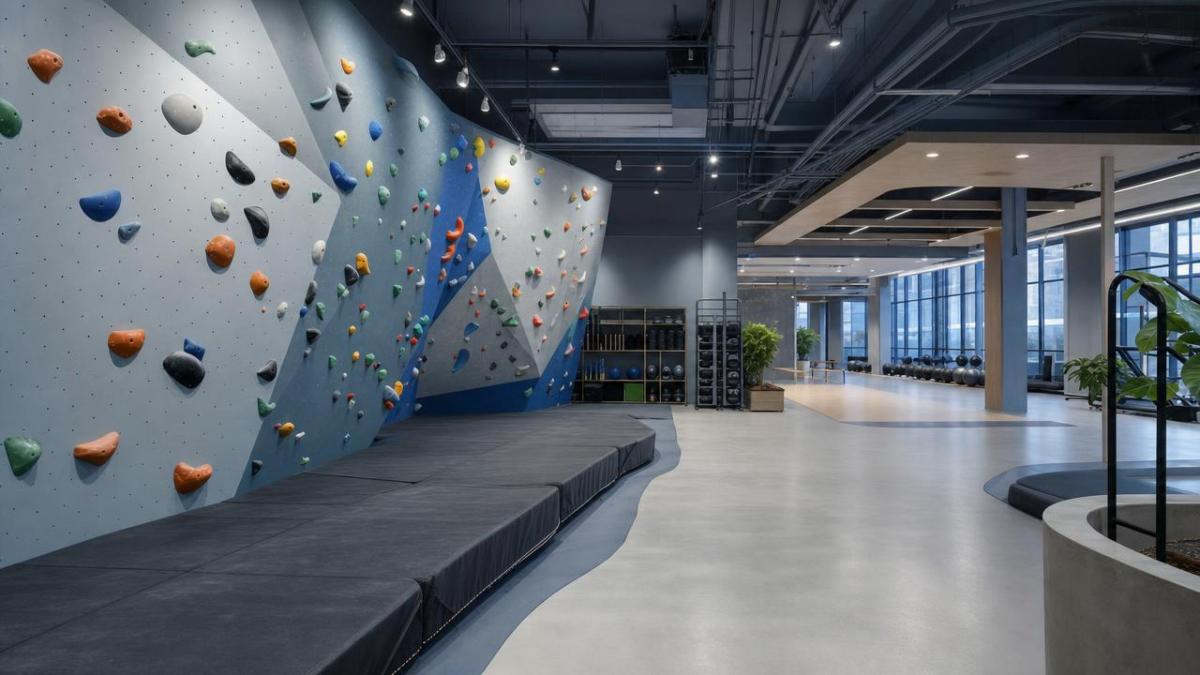
Commercial rock climbing walls are worth the space when they are designed as revenue assets, engagement tools, or retention infrastructure.
They are usually not worth it when treated as decorative amenities with unclear staffing, programming, maintenance, or customer acquisition plans.
The strongest projects begin with utilization assumptions, not architectural enthusiasm. A wall must answer who climbs, when, why, and how often.
For a fitness operator, the wall may increase memberships, premium class sales, and youth programming capacity during off-peak hours.
For a hotel or resort, the value may come from differentiation, longer stays, family bookings, and higher perceived experiential quality.
For a corporate campus, the return may be employee wellness, team-building participation, recruitment appeal, and measurable workplace engagement.
The space question should therefore be reframed. The issue is not square meters consumed, but output per square meter over time.
What enterprise buyers should measure before allocating space
The first metric is utilization density. Estimate how many users the wall can serve per hour, day, week, and season.
A compact bouldering zone may serve more casual users than a tall rope wall requiring harnesses, belayers, and longer session cycles.
The second metric is revenue adjacency. Climbing walls often perform best when linked to memberships, coaching, events, retail, or food service.
A wall that only sells occasional day passes may underperform compared with one integrated into structured programs and recurring payments.
The third metric is substitution cost. Decision-makers must compare the wall against alternative uses such as machines, studios, courts, or lounges.
If another asset can generate higher predictable revenue with lower operational complexity, the climbing wall needs a stronger strategic role.
The fourth metric is brand leverage. Some facilities benefit from a distinctive anchor attraction that competitors cannot easily replicate.
This matters especially in saturated wellness, hospitality, education, and family entertainment markets where differentiation directly affects acquisition costs.
Where commercial rock climbing walls create the most value
Commercial rock climbing walls are especially effective in venues where experience quality influences repeat visits and word-of-mouth growth.
Fitness centers can use climbing to attract younger members, couples, families, and users who dislike traditional cardio or weight training.
Youth programs are often a major value driver. Classes, camps, birthday parties, and school partnerships can increase daytime utilization.
Hotels and resorts benefit when climbing becomes part of a broader recreation portfolio rather than a standalone novelty.
Retail complexes may use climbing walls as dwell-time engines, increasing foot traffic and supporting nearby tenants through longer customer stays.
Universities and schools can justify walls through student recreation, outdoor education, leadership programs, and controlled risk training.
Corporate environments should evaluate whether climbing aligns with wellness strategy, insurance posture, employee demographics, and internal programming capacity.
When the space may not be justified
A climbing wall is less suitable when ceiling height, floor loading, circulation, supervision, or emergency access creates expensive design compromises.
It may also underperform in venues where the target audience prefers passive amenities, low-friction exercise, or highly familiar activities.
Facilities without trained staff or reliable operating procedures should be cautious. Safety systems are not optional cost centers.
Another warning sign is unclear ownership. If marketing wants the wall, operations fears it, and finance cannot model it, pause.
Walls also struggle when hidden in low-visibility corners. Climbing has promotional value, but only when customers can see participation.
If the wall reduces space for proven revenue activities, decision-makers should require a clear incremental benefit before approving installation.
Cost variables that change the return on investment
The installed cost depends on wall type, height, structural engineering, surface system, fall protection, route setting, and local code requirements.
Bouldering walls usually require less vertical infrastructure, but need larger landing zones, impact flooring, and disciplined user management.
Roped walls require more height, anchoring systems, harness management, belay procedures, inspections, and trained supervision.
Auto-belay systems can reduce staffing pressure, but they introduce equipment costs, inspection schedules, user orientation, and strict operating controls.
Ongoing expenses include route setting, hold replacement, mat maintenance, cleaning, staff training, insurance, inspections, and incident documentation.
These costs should be modeled monthly, not treated as occasional maintenance. A neglected wall quickly loses safety credibility and customer interest.
The most reliable financial cases include conservative utilization assumptions and separate scenarios for low, expected, and high adoption.
Revenue models that improve space productivity
Membership uplift is the simplest model. The wall helps increase perceived value and supports higher pricing or lower churn.
Programming revenue is often stronger. Intro classes, technique workshops, youth leagues, camps, and corporate events create repeatable income streams.
Private bookings can be profitable because they concentrate supervision, create predictable schedules, and support premium pricing for special occasions.
Retail sales may add margin through climbing shoes, chalk, apparel, water bottles, and branded merchandise tied to participation.
Hospitality venues can monetize indirectly. The wall may support package pricing, family upgrades, event bookings, and social media visibility.
Corporate and campus facilities often measure value through participation rates, wellness engagement, recruitment appeal, and employee satisfaction indicators.
Decision-makers should avoid relying on one revenue stream. The best-performing walls usually combine direct fees with strategic indirect benefits.
Safety and liability are central business considerations
Safety is not simply a compliance requirement. It affects insurance, customer confidence, staff morale, reputation, and long-term asset viability.
Enterprise buyers should require documented standards for design, engineering review, installation, inspection, operations, staff training, and incident response.
The wall vendor should provide clear specifications for materials, load ratings, anchoring methods, surface performance, and maintenance intervals.
Operational procedures must cover orientation, age restrictions, supervision ratios, equipment checks, fall zones, belay rules, and emergency escalation.
For many organizations, liability concerns are manageable when risk is engineered, documented, trained, audited, and continuously improved.
The mistake is assuming that visual sturdiness equals operational safety. Climbing facilities require active management throughout their lifecycle.
How to evaluate vendors without relying on marketing language
Vendors should be evaluated through specifications, references, engineering documentation, service capacity, and experience in comparable commercial environments.
Ask for examples similar to your venue type, user volume, ceiling height, supervision model, and target customer segment.
Request maintenance requirements in writing. A low upfront quote may conceal higher lifecycle costs or limited post-installation support.
Review the vendor’s inspection protocols, route setting support, staff training options, warranty structure, and response time for repairs.
Decision-makers should also ask how the wall system can adapt if programming expands, demographics shift, or capacity requirements change.
A strong supplier will discuss constraints honestly. Overconfidence without technical detail is a warning sign in commercial climbing projects.
Space planning: the wall is only part of the footprint
The visible climbing surface is not the full space requirement. Circulation, waiting areas, supervision points, storage, and safety zones matter.
Bouldering requires carefully dimensioned fall zones and uninterrupted mat coverage. Crowding around mats can reduce both safety and user experience.
Roped climbing requires staging space for harnessing, belay instruction, equipment storage, and clear separation between climbers and spectators.
Operators should also plan for visibility. A well-positioned wall can serve as a live advertisement for participation and membership value.
Acoustics, lighting, ventilation, cleaning access, and emergency routes should be considered before finalizing design or signing construction contracts.
The best location is not always the tallest wall location. It is the location that supports safe, frequent, profitable use.
A practical decision framework for executives
Start with the business objective. Identify whether the wall must drive revenue, retention, differentiation, wellness outcomes, or community engagement.
Next, define the target users. Casual beginners, children, advanced climbers, hotel guests, employees, and students require different design choices.
Then model utilization. Estimate realistic daily usage by time block, season, program type, and staff availability.
Compare the climbing wall with competing uses for the same space. Include revenue, operating costs, risk, flexibility, and brand effect.
Build a lifecycle budget. Include construction, equipment, staffing, training, insurance, inspections, route setting, maintenance, and periodic upgrades.
Finally, set performance indicators before launch. Track participation, conversion, retention, incidents, program revenue, and customer satisfaction.
Key performance indicators after installation
Utilization rate is the first signal. Measure peak and off-peak participation rather than relying on general impressions.
Revenue per square meter helps compare the wall against other facility assets and confirms whether space allocation remains justified.
Program conversion shows whether casual users become class participants, members, event customers, or repeat visitors.
Incident frequency and near-miss reporting reveal whether procedures, supervision, and user education need adjustment.
Customer feedback should distinguish visual excitement from actual satisfaction. A wall can impress visitors but still underperform operationally.
For corporate settings, participation diversity matters. The asset should serve more than a narrow group of already athletic employees.
Conclusion: worth the space when engineered for outcomes
Commercial rock climbing walls can be highly worthwhile, but the investment must be judged through operational evidence rather than novelty.
They create value when they increase utilization, support programming, differentiate the venue, and operate within disciplined safety systems.
They become questionable when planning ignores staffing, lifecycle costs, user demand, risk management, or alternative space productivity.
For enterprise decision-makers, the right question is not whether climbing is attractive. It is whether the wall can perform.
If the answer is supported by data, programming, vendor reliability, and clear KPIs, the footprint can become a defensible strategic asset.























