
Why does stage monitors oem quality vary by factory?
Publication Date
author
For quality control and safety managers, the real question in stage monitors oem sourcing is not who offers the lowest quote, but why performance, reliability, and compliance can differ so sharply from one factory to another. Behind identical-looking cabinets may be different driver tolerances, amplifier designs, thermal controls, acoustic testing routines, and final inspection standards. This article examines the engineering and process variables that create those quality gaps, helping procurement teams evaluate suppliers with measurable criteria instead of marketing claims.
In professional audio manufacturing, a stage monitor is not just a loudspeaker cabinet. It is a safety-critical performance tool used near artists, technicians, cables, power distribution points, and high sound pressure environments. A factory that cannot control repeatability may deliver units that pass a brief listening test but fail under heat, vibration, transport shock, or long rehearsal cycles.
The Hidden Variables Behind Stage Monitors OEM Quality
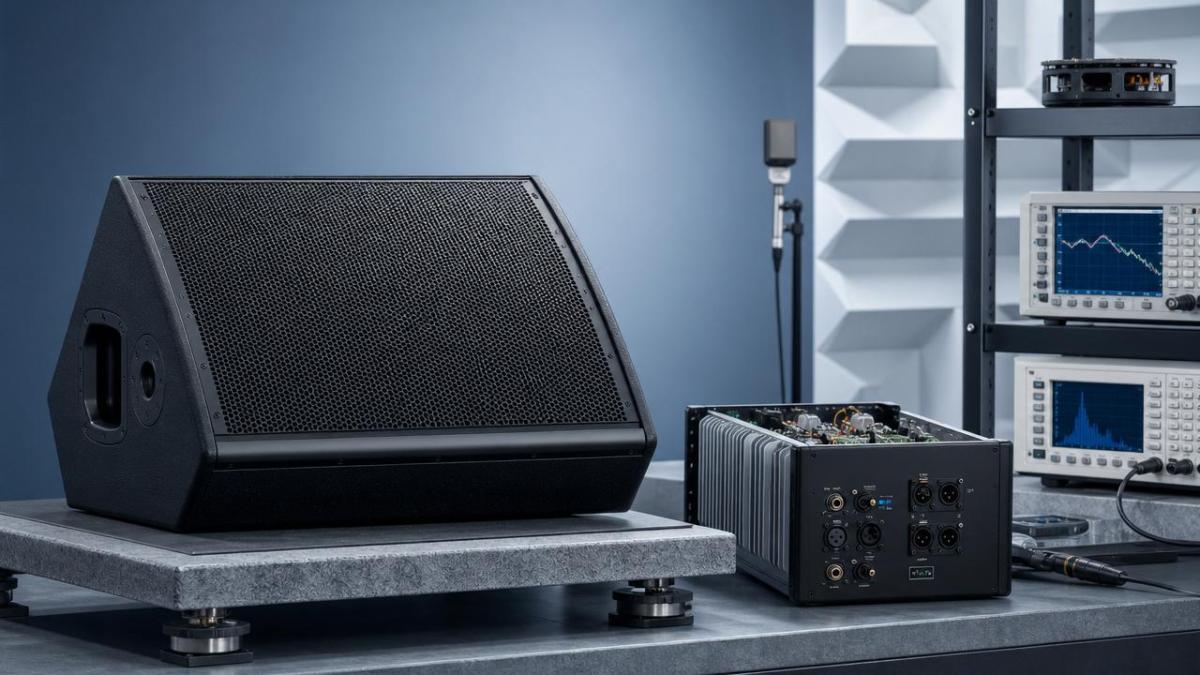
The quality gap in stage monitors oem programs usually begins before assembly. Two factories may purchase similar drivers, plywood, connectors, and amplifier modules, yet their incoming quality control, process discipline, and acoustic validation methods can be completely different.
Driver Consistency and Acoustic Tolerance
A monitor wedge depends on predictable driver behavior. If a woofer batch has loose sensitivity tolerance, such as ±2.5 dB instead of ±1 dB, the final monitor can sound inconsistent across left and right stage positions.
For QC teams, this matters because musicians often use several monitors in the same performance zone. A 2 dB–3 dB deviation in midrange output can affect vocal clarity, feedback margin, and operator confidence during live shows.
Amplifier Design, Protection Logic, and Thermal Headroom
Powered stage monitors depend heavily on amplifier topology, PCB layout, heat sink sizing, and limiter behavior. A low-cost amplifier may meet nominal wattage claims but reduce output after 20–30 minutes of high SPL operation.
Quality-focused factories verify thermal rise under continuous test signals, often checking internal temperatures across 2–4 operating conditions. Less controlled suppliers may only perform a short power-on test, missing heat-related failure modes.
Cabinet Construction and Mechanical Durability
Stage monitors face transport abuse: loading cases, cable impact, angle stress, vibration, and repeated placement on hard flooring. Cabinet quality depends on panel thickness, bracing layout, glue coverage, coating adhesion, and grille stiffness.
In stage monitors oem sourcing, a 12 mm cabinet and an 18 mm cabinet may look similar after coating, but their resonance control and impact resistance can differ sharply. The difference becomes visible after 6–12 months of touring use.
Key factory-controlled variables
- Incoming driver inspection, including impedance, polarity, sensitivity, and rub-and-buzz checks.
- Amplifier burn-in duration, commonly ranging from 2 hours to 8 hours depending on risk level.
- Cabinet bonding control, including adhesive type, clamp pressure, and curing time.
- Final acoustic test coverage, including frequency response, noise floor, and maximum SPL verification.
Why Identical Specifications Do Not Guarantee Identical Performance
Many stage monitors oem quotations list the same basic items: 12-inch woofer, 1.35-inch compression driver, Class-D amplifier, plywood cabinet, and black polyurea finish. These descriptions are useful, but they do not define process capability.
For safety managers, the most important question is whether the factory can prove that every batch performs within controlled limits. A single golden sample is not enough for venue, rental, worship, broadcast, or touring applications.
The table below shows how similar-looking specifications can hide major engineering differences. These are typical evaluation points rather than universal standards, but they help convert supplier discussions into measurable evidence.
The key conclusion is simple: a specification sheet describes intent, while factory process data describes repeatability. Buyers should request both, especially when ordering 50, 200, or 1,000 units across multiple batches.
Why Sample Approval Can Be Misleading
A sample monitor is often built with extra attention. The real challenge begins after purchase order release, when component substitution, operator variation, and production pressure influence mass-production consistency.
For stage monitors oem projects, procurement teams should compare pre-production samples, first-article units, and random production units. A difference larger than 1.5 dB across critical vocal bands deserves technical review.
Component Substitution and Traceability Risk
Factories under cost pressure may change capacitors, adhesives, cables, fans, or connector suppliers. Each substitution may seem minor, but accumulated changes can affect noise, heat, reliability, and electrical safety.
A responsible OEM partner should define approved vendor lists and change-control rules. Any part affecting audio path, power safety, thermal stability, or mechanical strength should require written approval before production use.
Factory Quality Systems That Matter to QC and Safety Teams
A stage monitor factory does not need to be the largest supplier to be reliable. What matters is whether its quality system can identify risk early, isolate defects quickly, and prevent repeated failures across production runs.
Incoming Quality Control
Incoming inspection should not be limited to counting cartons. For stage monitors oem production, critical components include woofers, compression drivers, amplifier boards, power supplies, transformers, connectors, switches, handles, and grilles.
A practical IQC plan may inspect 5%–10% of common mechanical parts and apply tighter checks to high-risk electronics. Safety-related power components require particular attention to insulation, markings, and documentation.
In-Process Control
In-process control catches problems before the cabinet is closed. This may include solder inspection, torque checks on driver screws, gasket placement, cable routing, polarity confirmation, and amplifier mounting verification.
For powered monitors, cable spacing and insulation clearance are not cosmetic details. Poor routing can create buzzing, heat concentration, or electrical risk after repeated vibration during transport.
Final Inspection and Burn-In
Final inspection should combine visual, electrical, mechanical, and acoustic checks. A reliable routine may include a 20 Hz–20 kHz sweep, polarity test, idle noise test, panel check, and packaging drop-risk review.
Burn-in time varies by product class. For standard powered monitors, 2–4 hours may reveal early defects; for higher-risk programs, 8 hours or staged temperature testing can provide better screening.
Recommended audit questions
- Can the factory provide batch-level test records for drivers, amplifiers, and finished monitors?
- Is there a defined nonconforming product area with quarantine labels and disposition logs?
- Are acoustic test fixtures calibrated or at least verified against a reference unit every shift?
- Does the supplier maintain change-control approval for critical components and materials?
- Can operators explain the top 3 defects from the last production batch and corrective actions?
Safety, Compliance, and Field Reliability Risks
For safety managers, the quality of stage monitors oem supply is not only an audio issue. Powered monitors interact with mains electricity, thermal loads, audience environments, cable traffic, and stage movement.
Compliance requirements differ by market. Depending on destination, buyers may consider CE, UKCA, FCC, RoHS, electrical insulation rules, EMC testing, and packaging requirements. The exact scope should be confirmed before tooling or mass production.
Electrical Safety and EMC
An amplifier module that performs well in audio output may still fail safety review if creepage distance, grounding, fuse rating, or enclosure protection is not controlled. These risks are difficult to detect by listening.
EMC issues can also create practical failures. A monitor placed near wireless microphones, lighting controllers, or digital consoles should not generate excessive interference or become unstable in noisy electrical environments.
Thermal and Fire Risk
Powered wedges can operate for 4–8 hours in hot venues, sometimes near curtains, risers, or crowded cable runs. Poor thermal design may lead to premature shutdown, distorted output, or damage to nearby materials.
A credible stage monitors oem supplier should provide temperature test conditions, not only maximum wattage claims. Ask whether tests were conducted at 25°C room temperature or under higher ambient stress.
Mechanical Safety on Stage
Handles, rubber feet, grilles, tilt angles, and cabinet edges influence user safety. A loose handle or unstable wedge angle can become a hazard during fast stage changes or dark backstage movements.
Mechanical checks should include repeated handle loading, grille deformation review, screw retention, and angle stability. Even a 1–2 mm rocking gap can become noticeable on vibrating stage floors.
A Practical Supplier Evaluation Framework
A measurable evaluation framework helps procurement teams avoid emotional decisions. Instead of asking whether a supplier is “professional,” score the factory across engineering, process control, compliance readiness, and after-sales support.
The following matrix can be adapted for stage monitors oem supplier qualification. A 100-point version is useful when comparing 3–5 factories during RFQ, sample review, or annual supplier assessment.
The highest-scoring supplier is not always the cheapest. However, the matrix clarifies total risk. A 5% lower unit price can disappear quickly if field returns, compliance delays, or inconsistent batches disrupt delivery schedules.
Sample Approval in 5 Steps
- Define target use: touring, fixed installation, rehearsal room, rental inventory, or broadcast stage.
- Confirm acoustic targets: coverage angle, feedback resistance, SPL range, vocal clarity, and noise floor.
- Review mechanical construction: cabinet material, grille rigidity, feet, handles, coating, and connector layout.
- Test safety behavior: thermal rise, grounding, power stability, protection response, and abnormal noise.
- Freeze the approved bill of materials and require written approval for critical changes.
Mass Production Acceptance
Before shipment, QC teams should define acceptance rules. For example, inspect at least one full carton from each production batch, verify serial number traceability, and retest randomly selected units after packaging.
For larger orders, staged inspection is safer than end-only inspection. A pre-production check, 30% production check, and final random inspection can prevent costly rework after containers are packed.
Common Procurement Mistakes in Stage Monitors OEM Projects
Most quality failures are not caused by one dramatic mistake. They come from small assumptions made during RFQ, sample approval, artwork confirmation, production release, and shipment inspection.
Mistake 1: Comparing Only Wattage and Price
Wattage is one of the most misunderstood specifications in professional audio. Peak, program, RMS, and marketing power figures may differ by 2–4 times depending on measurement method.
A better comparison includes maximum usable SPL, distortion at operating level, limiter behavior, frequency response, and thermal stability. These indicators explain field performance more clearly than a single power number.
Mistake 2: Ignoring Packaging Validation
Stage monitors are heavy, angular, and vulnerable at corners. Poor foam density or weak cartons can cause grille deformation, cracked coatings, or shifted amplifier plates before the unit reaches the warehouse.
For export programs, packaging should be reviewed for carton strength, drop direction, pallet stacking, moisture exposure, and accessory protection. A small packaging upgrade may reduce damage claims significantly.
Mistake 3: Treating Compliance as an Afterthought
Compliance review should begin before tooling, not after mass production. Label format, plug type, power rating, warning text, material declarations, and EMC considerations can influence design and documentation.
In stage monitors oem sourcing, late compliance correction may add 2–6 weeks to delivery. It can also require component replacement, artwork revision, or additional lab testing.
How Data-Driven Benchmarking Improves Supplier Decisions
TechStat Vanguard approaches industrial sourcing through measurable evidence, not promotional language. The same principle applies to stage monitors oem evaluation: parameters do not replace judgment, but they expose weak assumptions.
For QC and safety teams, a useful supplier benchmark should include at least 6 evidence categories: acoustic data, electrical safety review, thermal validation, mechanical inspection, process control, and corrective action history.
What to Request Before Placing an Order
- A complete technical data sheet with measurement conditions clearly stated.
- Photos or records of production test fixtures, burn-in stations, and acoustic check setup.
- A component-level bill of materials with critical parts locked after approval.
- A sample inspection report including at least acoustic, electrical, visual, and packaging items.
- A written plan for defect handling, spare parts, and response within 24–72 hours for urgent issues.
When to Escalate Technical Review
Escalation is recommended when the project involves high-volume rental fleets, harsh touring environments, public venues, or regulated markets. These use cases increase exposure to mechanical, electrical, and reputational risk.
A deeper review is also justified if the supplier changes driver brands, amplifier modules, coating suppliers, or packaging design. Each change should trigger at least targeted retesting before mass shipment.
Building a Safer and More Reliable OEM Program
Stage monitors oem quality varies by factory because every supplier controls engineering, materials, testing, and documentation differently. The visible cabinet is only the final surface of a much deeper production system.
For quality control and safety managers, the right approach is to replace claims with evidence. Ask for tolerance windows, test records, thermal data, change-control rules, and batch traceability before comparing final prices.
A strong OEM program should reduce field returns, improve stage safety, stabilize acoustic performance, and shorten supplier qualification cycles. That requires disciplined evaluation before purchase orders are released.
If your team needs a data-driven framework for evaluating stage monitor suppliers, technical specifications, or production risks, connect with TechStat Vanguard to explore more benchmarking methods and obtain a customized sourcing assessment.
Search News
Hot Articles
- Carbon Fiber StructuresHow to Specify Aerospace Carbon Fiber Assemblies for Lightweight, Load-Bearing PartsJul 11, 2026
- Machine VisionXiaomi, Alibaba DAMO Academy Drive Open-Source Robotics Model Ecosystem, Lowering Algorithm Development Barriers for Overseas SMEs Adopting Chinese Robotics SolutionsMar 30, 2026
- Cobots & ArmsShanxi 'AI+' Conference Showcases Embodied Intelligence with Multinational Buyer Engagement: Key Industry ImplicationsMar 30, 2026
Popular Tags
Recommended News
 Jul 11, 2026How to Specify Aerospace Carbon Fiber Assemblies for Lightweight, Load-Bearing PartsAerospace carbon fiber assemblies: learn how to specify laminate design, load data, joining methods, and inspection controls for lighter, reliable load-bearing aerospace parts.Elena Rostova (UAV Systems Researcher)
 Mar 30, 2026Xiaomi, Alibaba DAMO Academy Drive Open-Source Robotics Model Ecosystem, Lowering Algorithm Development Barriers for Overseas SMEs Adopting Chinese Robotics SolutionsXiaomi & Alibaba DAMO Academy's open-source robotics models lower algorithm barriers for global SMEs. Boost efficiency in manufacturing, logistics & smart retail with ROS 2 compatible solutions.TSV Data Lab
 Mar 30, 2026Shanxi 'AI+' Conference Showcases Embodied Intelligence with Multinational Buyer Engagement: Key Industry ImplicationsShanxi 'AI+' Conference highlights embodied intelligence with Tesla, Ubtech & Jiantao showcasing multimodal robotics. 40+ global buyers validated tech on-site, creating new B2B channels for industrial automation & AI solutions.Chen Wei (Automation Lead Engineer)
 Mar 30, 2026Zhongguancun Unveils 6G Integrated Sensing-Computing-Intelligence Platform to Empower Embodied Robots for Global Industrial ApplicationsZhongguancun's new 6G platform revolutionizes industrial robotics with <10ms latency, empowering global automotive, logistics & port automation. Discover how this tech boosts China's smart manufacturing exports.TSV Data Lab
 Mar 30, 2026Mech-Mind Tianjin Embodied Intelligence R&D and Production Base Goes Live, Cutting Delivery Time by 20%–30% for Global Customized AMR+Vision SolutionsMech-Mind's Tianjin AMR+Vision production base cuts delivery time by 20%-30% for欧美 & Latin American markets. Discover how this PLd-certified facility accelerates customized robotics solutions for smart manufacturing and logistics.Chen Wei (Automation Lead Engineer)
 Mar 30, 2026Boao Forum Reveals 'Co-evolution of Big and Small Brains' Trend in Humanoid Robots, China's Embodied Intelligence Accelerates Adaptation to Overseas Manufacturing Service ScenariosDiscover how China's humanoid robots, featuring 'Co-evolution of Big and Small Brains,' are revolutionizing global manufacturing. Learn about Embodied Tian Gong 3.0's ISO compliance and overseas deployment at Boao Forum 2026.Chen Wei (Automation Lead Engineer)
 Mar 30, 2026China Railway Industrial Secures Patent for Embodied Robotics in Material Handling, Boosting High-Precision Delivery Capabilities for Overseas Infrastructure and Manufacturing ProjectsChina Railway Industrial's new patent for embodied robotics in material handling boosts high-precision delivery for global infrastructure & manufacturing. Discover how this innovation enhances logistics accuracy in automotive, rail transit & EPC projects.Chen Wei (Automation Lead Engineer)
 Oct 14, 2026Drone Frame Composites: Carbon Fiber vs. Fiberglass for Weight and StiffnessExplore drone structural materials composites: compare carbon fiber and fiberglass for weight, stiffness, cost, and antenna compatibility. Find the right material for your drone frame.Elena Rostova (UAV Systems Researcher)
 Oct 13, 2026Smart Cameras vs. PC-Based Machine Vision: Which Fits High-Speed Inspection?This industrial product comparison for machine vision weighs smart cameras vs. PC-based systems on latency, throughput, and cost. Discover your best fit for high-speed inspection.TSV Data Lab
 Oct 12, 2026How to Verify RoHS Compliance in Industrial Sensing Systems Before DeploymentRoHS compliant sensing systems: learn how to verify materials, supplier declarations, testing, and configuration controls before industrial deployment.TSV Data Lab
 Oct 11, 2026How Procurement-Oriented Content Taxonomy Improves B2B Buying JourneysProcurement-oriented content taxonomy streamlines B2B buying journeys with clearer evidence, supplier comparisons, risk visibility, and faster approvals.TSV Data Lab
 Oct 10, 2026How to Select a Machine Performance Monitoring Platform for OEE and Downtime ReductionMachine performance monitoring platform selection guide: validate machine states, OEE data, downtime reasons, integrations, and scalability to reduce losses with confidence.TSV Data Lab
 Oct 08, 2026How to Machine Inconel 625 Blades Without Heat Cracks or Edge ChippingInconel 625 blade machining guide: prevent heat cracks, edge chipping, chatter, and work hardening with proven tooling, cooling, fixturing, and inspection strategies.Dr. Marcus Vance
 Oct 07, 2026How to Evaluate an HMI Panel Distributor for Industrial Automation ProjectsHMI panel distributor evaluation guide: verify technical compatibility, traceability, supply reliability, lifecycle support, and total cost for automation projects.Victor Lin (Chief Software Architect)
 Oct 06, 2026Navigation Fault Tolerance Standards for AMRs: What Safety Teams Must VerifyNavigation fault tolerance standards: learn what AMR safety teams must verify, from localization loss and sensor faults to stopping distance, safe restart, and site-specific validation.Chen Wei (Automation Lead Engineer)
 Oct 05, 2026Calculating Edge Computing Total Cost of Ownership Across Distributed SitesEdge computing ownership cost explained: calculate deployment, energy, connectivity, security, remote support, and refresh costs across distributed sites.TSV Data Lab
 Oct 04, 2026CAD/CAM Benchmarking in the GCC: What Manufacturers Should Ask a ConsultantCAD CAM benchmark consultant GCC guide: learn the key questions manufacturers should ask to validate post-processors, workflows, machine performance, and production risk.Victor Lin (Chief Software Architect)
 Oct 03, 2026Selecting Automotive Radar Sensor Modules for ADAS Range, Resolution, and IntegrationAutomotive radar sensor module selection guide for ADAS: compare range, resolution, field of view, latency, and integration to build safer, reliable vehicle systems.TSV Data Lab
 Oct 02, 2026How to Qualify Machined Parts Suppliers for Hard Tech ProgramsHard tech supply chain machined parts demand rigorous supplier qualification. Learn how to assess capability, traceability, quality controls, and delivery resilience.Dr. Marcus Vance
 Oct 01, 2026How to Select an Outdoor Security Radar Sensor for Perimeter Detection?Outdoor security radar sensor selection guide: compare range, accuracy, false-alarm control, integration, and field testing for reliable perimeter detection.TSV Data Lab
 Sep 30, 2026How to Evaluate Solid-State LiDAR Hardware for Outdoor Autonomous VehiclesSolid state LiDAR hardware evaluation guide for outdoor autonomous vehicles—compare range, point-cloud quality, environmental resilience, integration, and safety.TSV Data Lab
 Sep 29, 2026ISO 9283 Repeatability: How to Evaluate Cobot Positioning PerformanceISO 9283 cobot repeatability explained: learn how payload, reach, approach direction, and test conditions affect positioning performance and cell capability.Chen Wei (Automation Lead Engineer)
 Oct 14, 2026How tight can micro machining aerospace tolerances be in production?Micro machining aerospace tolerances can reach low-micron levels in production. Learn what controls repeatability, inspection confidence, and flight-critical quality.Dr. Marcus Vance
 Oct 13, 2026How to keep an industrial robotic integration project on scheduleIndustrial robotic integration project management: keep automation on schedule with proven controls for interfaces, suppliers, FAT, commissioning, and change risk.Victor Lin (Chief Software Architect)























