Are collaborative robots ready for delicate electronics assembly?
Publication Date
author
As electronics manufacturing pushes toward tighter tolerances, smaller components, and higher yield expectations, the question is no longer whether automation matters, but whether collaborative robots for electronics assembly can truly deliver the precision, repeatability, and safety that delicate production environments demand. For decision-makers evaluating next-generation capacity, the answer depends on measurable engineering data, process stability, and real-world integration performance—not marketing claims.
The short answer is yes, but only in specific process windows. Collaborative robots are increasingly ready for delicate electronics assembly when the task involves stable part presentation, controlled force requirements, validated end-of-arm tooling, and well-defined quality gates. They are far less effective when process variation is high, micron-level alignment is required without machine vision compensation, or cycle-time pressure exceeds the practical speed limits of human-safe robotic motion.
For business leaders, the real question is not whether cobots are “advanced enough.” It is whether collaborative robots for electronics assembly can improve throughput, reduce labor dependency, protect yield, and scale production without introducing hidden integration risk. That requires evaluating capability at the level of repeatability, force control, ESD compatibility, vision accuracy, uptime, and total cost of ownership.
What decision-makers are really asking when they evaluate cobots for electronics assembly
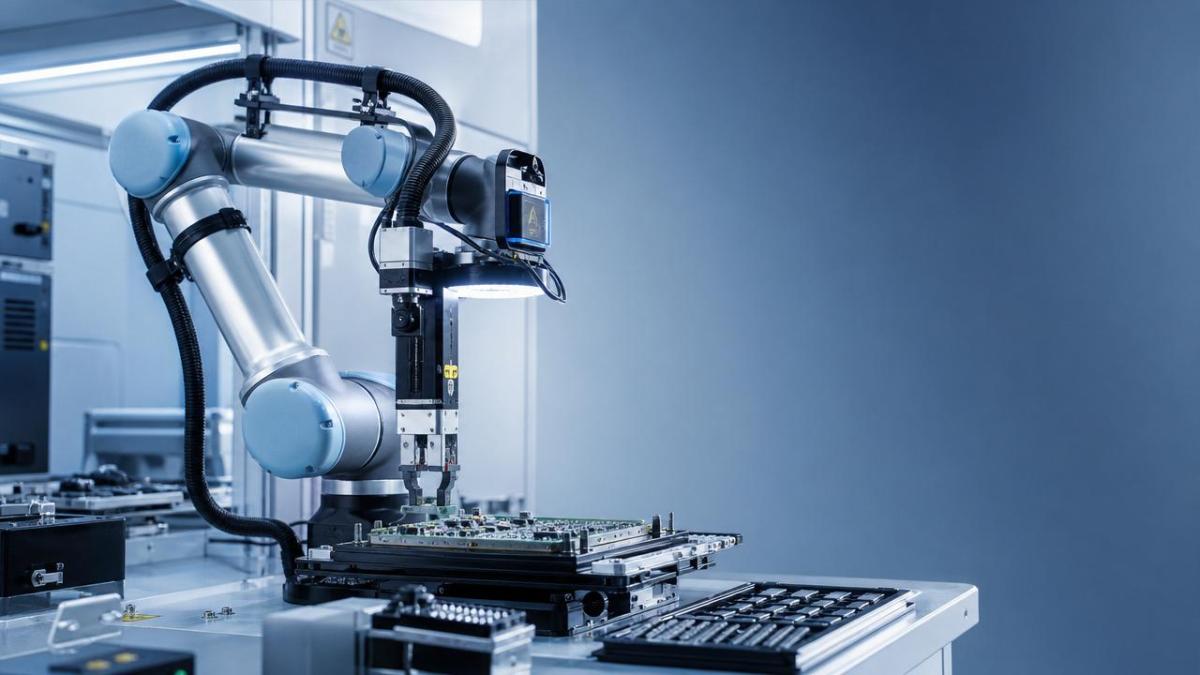
Enterprise buyers rarely search this topic because they want a general overview of robotics. They are usually trying to answer a capital allocation question: should we invest in collaborative automation for electronics lines now, wait for the technology to mature further, or stay with manual assembly and selective hard automation?
That decision typically sits at the intersection of five concerns. First, can cobots handle fragile components without damaging them? Second, will they maintain acceptable yield over long production runs? Third, can they integrate into existing manufacturing execution systems, inspection workflows, and ESD-controlled environments? Fourth, what is the payback period compared with labor and quality costs? Fifth, where is the operational risk if deployment fails?
These are not abstract concerns. In electronics assembly, a robot that places a component accurately but causes intermittent stress failures, contamination, or fixture variation is not a productivity asset. It becomes a yield liability. That is why executive evaluation must move beyond vendor claims and focus on process-specific evidence.
Are collaborative robots ready? Yes, but only for the right task categories
Collaborative robots are best understood as a flexible automation layer rather than a universal replacement for skilled manual assembly or high-speed dedicated automation. In delicate electronics production, their readiness depends heavily on task type.
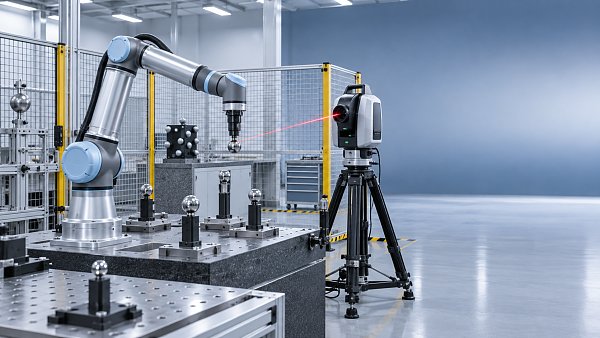
Cobots perform well in repetitive, medium-precision, lower-force operations such as screwdriving with torque verification, connector insertion with validated compliance control, adhesive dispensing, pick-and-place between trays and fixtures, PCB loading and unloading, testing station tending, and packaging of sensitive assemblies. These tasks benefit from repeatable motion, programmable workflows, and reduced operator fatigue.
They are also effective in mixed-model production where flexibility matters more than absolute line speed. For manufacturers dealing with frequent SKU changes, shorter product lifecycles, or labor shortages, collaborative robots can deliver value because they can be redeployed more easily than custom hard automation.
However, cobots remain less suitable for tasks requiring extremely high insertion sensitivity, ultrafast takt times, uncontrolled part orientation, or complex dexterity that depends on real-time human judgment. Examples include handling highly deformable micro-cables without precise fixturing, inserting delicate fine-pitch connectors with large upstream variation, or assembling components where tactile interpretation and adaptive alignment remain more human than robotic.
In other words, collaborative robots for electronics assembly are ready where the process can be engineered for robotic success. They are not a shortcut around poor upstream stability.
Precision is not the same as suitability: what technical metrics actually matter
Many automation discussions overemphasize advertised repeatability, often quoted in tenths or hundredths of a millimeter. While repeatability matters, it is only one variable in electronics assembly. A cobot can have acceptable positional repeatability and still fail in production if force control drifts, grippers generate electrostatic discharge, or the vision system cannot compensate for part presentation variation.
For decision-makers, the more relevant technical metrics include robot repeatability under actual payload, force sensing resolution and response latency, end-effector compliance, machine vision accuracy under production lighting, process capability across shifts, and stability after maintenance or changeover. In practical terms, the system must reproduce a successful assembly result, not just a path.
Force-limited tasks deserve particular scrutiny. Electronics components can be damaged by subtle overtravel, uneven insertion, or cumulative stress. A cobot intended for delicate work should be evaluated with real process data: insertion force profiles, pass-fail thresholds, false reject rates, and the relationship between robot motion and downstream field failure risk.
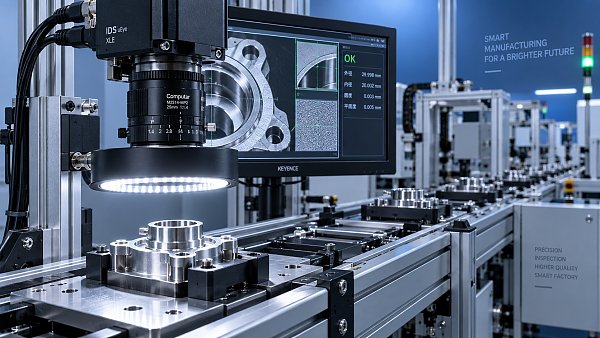
Vision is equally important. In electronics environments, slight part misalignment, reflective surfaces, and small tolerances can expose weakness in basic vision setups. The right question is not whether a cobot supports vision, but whether the full sensing stack can maintain detection confidence at the required takt time under real plant conditions.
Where collaborative robots create the strongest business case
For enterprise decision-makers, the strongest case for collaborative robots for electronics assembly usually appears in environments with one or more of the following characteristics: labor instability, rising quality costs, demand for flexible automation, product mix complexity, or a need to expand capacity without redesigning the entire line.
If a line depends on hard-to-staff manual stations for repetitive tasks, cobots can stabilize output and reduce dependence on operator availability. If defect rates are being driven by fatigue-sensitive operations such as repetitive screw fastening or inconsistent dispensing, a cobot can improve process consistency. If the business must support frequent product changes, collaborative systems can provide a more adaptable automation path than fixed-purpose machinery.
Another common use case is phased automation. Companies may not be ready to fully automate a complete electronics assembly line, but they can automate selected bottleneck stations where quality and labor pain are highest. This reduces capital risk while building internal experience with programming, maintenance, and validation.
There is also a strategic benefit. A well-implemented cobot program can shorten ramp-up times for new products, support nearshoring initiatives, and provide digital process traceability that manual workstations often lack. For firms operating in regulated or quality-sensitive markets, traceable torque, force, and cycle records can become a major operational advantage.
What often goes wrong in real deployments
Most cobot disappointments in electronics manufacturing do not happen because the robot itself is fundamentally incapable. They happen because the project is framed incorrectly. Companies sometimes buy a robot before defining a stable process window, underestimate the complexity of end-of-arm tooling, or assume collaborative safety automatically means simple deployment.
A common failure point is fixture design. Delicate assembly tasks are highly sensitive to part positioning. If the incoming part is not constrained consistently, the robot may execute the same motion repeatedly and still produce variable outcomes. Another issue is unrealistic cycle-time expectation. Collaborative robots are designed to operate safely around people, and that often means slower motion than conventional industrial robots in fenced environments.
Tooling is another major variable. A poorly chosen gripper can introduce particulate contamination, mark cosmetic surfaces, create ESD risk, or apply uneven force. In electronics assembly, the success of the cobot often depends more on tooling and fixturing than on the arm itself.
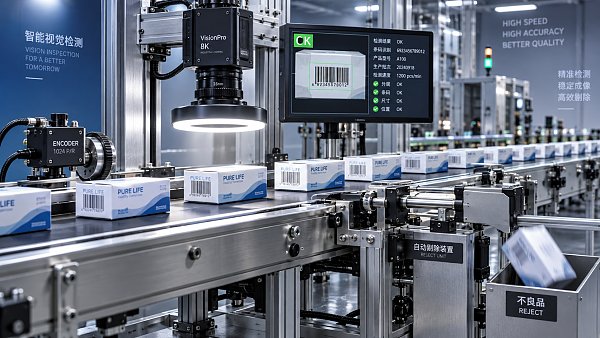
Integration risk is also frequently underestimated. A deployment may require synchronization with vision inspection, barcode tracking, MES data logging, torque tools, conveyors, and test equipment. Without strong systems integration, the robot becomes an isolated island rather than a productive part of the line.
How to judge readiness: a practical evaluation framework for buyers
Executives need a screening framework that translates engineering detail into investment judgment. A useful approach is to evaluate each candidate application across six dimensions: task stability, tolerance sensitivity, force sensitivity, throughput requirement, integration complexity, and quality risk.
Start with task stability. Is the part presented consistently, or does every cycle vary? Cobots thrive when fixturing and upstream handling reduce variation. Next, assess tolerance sensitivity. If the process requires near-perfect alignment, determine whether passive precision is enough or whether active vision and compliance are mandatory.
Then evaluate force sensitivity. If a component can be damaged by minor overforce, require force-displacement validation data rather than simple demo performance. Throughput comes next. Compare actual required takt time with the realistic speed of a collaborative system including sensing, settling time, and safety constraints.
Integration complexity should include software interfaces, traceability requirements, quality feedback loops, and changeover needs. Finally, quantify quality risk. A station that affects downstream warranty exposure deserves stricter validation than a packaging or test-loading task.
Before scaling, require a pilot with production-representative parts, operators, environmental conditions, and uptime expectations. A lab demo is not enough. The pilot should generate measurable evidence on cycle time, first-pass yield, intervention frequency, maintenance burden, and operator acceptance.
ROI depends on more than labor savings
One reason some automation projects underperform financially is that the business case is built only on direct labor replacement. In electronics assembly, the better ROI model includes avoided scrap, reduced rework, lower variability, improved traceability, faster changeovers, and lower dependency on hard-to-recruit labor.
For example, a cobot that removes one operator from a station may not justify itself on wages alone. But if it also reduces torque-related defects, prevents assembly omissions, and enables digital process logging for every unit, the economic picture changes. Likewise, if collaborative automation allows capacity expansion without major floorplan redesign, its strategic value exceeds simple payback arithmetic.
That said, ROI must be grounded in realistic assumptions. Include integration engineering, tooling iterations, validation time, maintenance training, spare parts, and possible line interruption during commissioning. A technically successful installation can still disappoint if total deployment costs were underestimated.
For many manufacturers, the most attractive return profile comes from targeting a narrow, painful application first, proving stability, and then replicating the architecture across similar stations or product families.
What procurement and operations teams should ask vendors before committing
When evaluating suppliers, buyers should move beyond generic claims about flexibility and ease of use. Ask for application-specific data. What repeatability is achieved at the real payload and reach? What force control performance has been demonstrated for similar electronics tasks? What ESD mitigation measures are included at the robot, tool, and workstation level?
Request evidence from production environments, not only trade-show demonstrations. Ask how the system handles variation in part presentation, what inspection feedback it can consume, how changeovers are managed, and what the expected mean time between failures is for the full cell, not just the arm.
It is also important to understand service capability. How quickly can the integrator respond to failures? Who owns software changes after commissioning? Can internal teams maintain and reprogram the system, or will every modification require external support? Long-term dependence on a niche integrator can become a hidden operational constraint.
Finally, ask for a clear acceptance plan. Define success metrics before purchase: cycle time, first-pass yield, uptime, intervention rate, traceability outputs, and recovery behavior after faults. A project without measurable acceptance criteria is difficult to govern.
The bottom line for executives considering collaborative robots for electronics assembly
Collaborative robots are no longer experimental in electronics manufacturing, but they are not universally ready for every delicate assembly task. Their readiness is conditional. They perform best where the process is stable, fixturing is disciplined, force and vision are validated, and flexibility matters enough to outweigh the speed advantage of traditional automation.
For decision-makers, the correct posture is neither blind enthusiasm nor blanket skepticism. It is disciplined application matching. If your target process suffers from labor inconsistency, repetitive quality escapes, or frequent product changeovers, collaborative robots for electronics assembly may offer meaningful gains in resilience, traceability, and scalable capacity.
If, however, the task depends on high-speed execution, uncontrolled variation, or extreme insertion sensitivity without robust sensing and fixturing, a cobot may not be the right tool yet. In those cases, either redesign the process for automation readiness or evaluate alternative architectures.
The strategic takeaway is simple: cobots are ready when the engineering case is real. The winners in electronics automation will be the companies that validate performance at the parameter level, build around process capability rather than vendor narrative, and invest where measurable stability can translate into durable business value.
Search News
Hot Articles
- Carbon Fiber StructuresHow to Specify Aerospace Carbon Fiber Assemblies for Lightweight, Load-Bearing PartsJul 11, 2026
- Machine VisionXiaomi, Alibaba DAMO Academy Drive Open-Source Robotics Model Ecosystem, Lowering Algorithm Development Barriers for Overseas SMEs Adopting Chinese Robotics SolutionsMar 30, 2026
- Cobots & ArmsShanxi 'AI+' Conference Showcases Embodied Intelligence with Multinational Buyer Engagement: Key Industry ImplicationsMar 30, 2026
Popular Tags
Recommended News
 Jul 11, 2026How to Specify Aerospace Carbon Fiber Assemblies for Lightweight, Load-Bearing PartsAerospace carbon fiber assemblies: learn how to specify laminate design, load data, joining methods, and inspection controls for lighter, reliable load-bearing aerospace parts.Elena Rostova (UAV Systems Researcher)
 Mar 30, 2026Xiaomi, Alibaba DAMO Academy Drive Open-Source Robotics Model Ecosystem, Lowering Algorithm Development Barriers for Overseas SMEs Adopting Chinese Robotics SolutionsXiaomi & Alibaba DAMO Academy's open-source robotics models lower algorithm barriers for global SMEs. Boost efficiency in manufacturing, logistics & smart retail with ROS 2 compatible solutions.TSV Data Lab
 Mar 30, 2026Shanxi 'AI+' Conference Showcases Embodied Intelligence with Multinational Buyer Engagement: Key Industry ImplicationsShanxi 'AI+' Conference highlights embodied intelligence with Tesla, Ubtech & Jiantao showcasing multimodal robotics. 40+ global buyers validated tech on-site, creating new B2B channels for industrial automation & AI solutions.Chen Wei (Automation Lead Engineer)
 Mar 30, 2026Zhongguancun Unveils 6G Integrated Sensing-Computing-Intelligence Platform to Empower Embodied Robots for Global Industrial ApplicationsZhongguancun's new 6G platform revolutionizes industrial robotics with <10ms latency, empowering global automotive, logistics & port automation. Discover how this tech boosts China's smart manufacturing exports.TSV Data Lab
 Mar 30, 2026Mech-Mind Tianjin Embodied Intelligence R&D and Production Base Goes Live, Cutting Delivery Time by 20%–30% for Global Customized AMR+Vision SolutionsMech-Mind's Tianjin AMR+Vision production base cuts delivery time by 20%-30% for欧美 & Latin American markets. Discover how this PLd-certified facility accelerates customized robotics solutions for smart manufacturing and logistics.Chen Wei (Automation Lead Engineer)
 Mar 30, 2026Boao Forum Reveals 'Co-evolution of Big and Small Brains' Trend in Humanoid Robots, China's Embodied Intelligence Accelerates Adaptation to Overseas Manufacturing Service ScenariosDiscover how China's humanoid robots, featuring 'Co-evolution of Big and Small Brains,' are revolutionizing global manufacturing. Learn about Embodied Tian Gong 3.0's ISO compliance and overseas deployment at Boao Forum 2026.Chen Wei (Automation Lead Engineer)
 Mar 30, 2026China Railway Industrial Secures Patent for Embodied Robotics in Material Handling, Boosting High-Precision Delivery Capabilities for Overseas Infrastructure and Manufacturing ProjectsChina Railway Industrial's new patent for embodied robotics in material handling boosts high-precision delivery for global infrastructure & manufacturing. Discover how this innovation enhances logistics accuracy in automotive, rail transit & EPC projects.Chen Wei (Automation Lead Engineer)
 Sep 29, 2026ISO 9283 Repeatability: How to Evaluate Cobot Positioning PerformanceISO 9283 cobot repeatability explained: learn how payload, reach, approach direction, and test conditions affect positioning performance and cell capability.Chen Wei (Automation Lead Engineer)
 Sep 28, 2026Spindle Runout Measurement in Germany: DIN Standards, Methods, and Acceptance LimitsSpindle runout measurement Germany: explore DIN standards, proven methods, acceptance limits, and audit-ready practices for reliable machining quality.Dr. Marcus Vance
 Sep 27, 2026How to Select Wall-Mount Edge Devices for Space-Constrained Factory NetworksWall mount edge devices for space-constrained factories: evaluate workload, thermal design, power resilience, cable access, and network reliability for smarter deployments.TSV Data Lab
 Sep 26, 2026Machining Tolerance Analysis: How to Set Limits That Meet Function and Cost TargetsMachining tolerance analysis: learn how to set functional limits, control tolerance stacks, reduce inspection risk, and balance precision with production cost.Dr. Marcus Vance
 Sep 25, 2026How to Evaluate an Industrial Infrastructure Data Platform for Multi-Site OperationsIndustrial infrastructure data platform evaluation guide for multi-site operations: compare data quality, edge resilience, interoperability, governance, and scalable proof-of-value criteria.Victor Lin (Chief Software Architect)
 Sep 24, 2026How to Select Machine Vision Optics for Accurate Inspection at Different Working DistancesMachine vision optics selection guide for accurate inspection at every working distance. Compare FOV, pixel scale, DOF, distortion, lighting, and telecentric options.TSV Data Lab
 Sep 23, 2026How to Evaluate a Machine Vision System Integrator for High-Speed Inspection LinesChoose a machine vision system integrator with proven expertise in high-speed inspection, reliable reject timing, robust optics, and measurable acceptance criteria.TSV Data Lab
 Sep 28, 2026When is a SCADA API the right choice for connecting plant systems?SCADA API guide: learn when governed plant data integration improves traceability, security, and scalability—without compromising real-time control.Victor Lin (Chief Software Architect)
 Sep 27, 2026How SCADA data integration improves traceability across production linesSCADA data integration connects production-line data to improve traceability, accelerate quality investigations, and strengthen safety decisions.Victor Lin (Chief Software Architect)
 Sep 26, 2026What to define before starting SCADA integration planningSCADA integration planning starts with clear scope, control boundaries, data models, cybersecurity, and testing. Discover the definitions that reduce risk and costly rework.Victor Lin (Chief Software Architect)
 Sep 25, 2026How a smart factory with Industrial IoT reduces production blind spotsDiscover how a smart factory with Industrial IoT turns real-time machine, quality, and workflow data into actionable insights that reduce production blind spots and delivery risks.Victor Lin (Chief Software Architect)
 Sep 24, 2026When does Industrial IoT make smart manufacturing easier to scale?Smart manufacturing Industrial IoT scales when trusted data, interoperable systems, and secure workflows turn connected assets into measurable gains.TSV Data Lab
 Sep 23, 2026What drives ultra-precision machining cost at 1-micron tolerance?Ultra precision machining cost per part at 1 micron tolerance depends on process, material, metrology, and yield. Learn how to compare quotes confidently.Dr. Marcus Vance
 Sep 22, 2026Drone Engine-T550CC Applications: Build the UAV Power System Around the MissionAn application guide for Drone Engine-T550CC integration, covering payload planning, airframe matching, cooling, fuel, vibration, test procedures, documentation, and service preparation.Elena Rostova (UAV Systems Researcher)
 Sep 22, 2026How to Evaluate Industrial Edge Computing Vendors for Factory DeploymentIndustrial edge computing vendor evaluation guide for factories: compare latency, protocol fit, reliability, security, and lifecycle support before deployment.TSV Data Lab
 Sep 21, 2026Drone Payload Integration: Matching Power, Data, and Center of Gravity for Reliable FlightsDrone payload integration made practical: balance power, data, center of gravity, and endurance to build safer, more reliable mission-ready flights.Elena Rostova (UAV Systems Researcher)
 Sep 20, 2026Autonomous Navigation Pricing: Cost Drivers and Budget Benchmarks for AMR ProjectsAutonomous navigation price explained: compare AMR cost drivers, software, sensors, integration, safety, and lifecycle budgets to build a scalable project plan.Chen Wei (Automation Lead Engineer)