AGV and AMR Fault Tolerance in Busy Warehouse Traffic
Publication Date
author
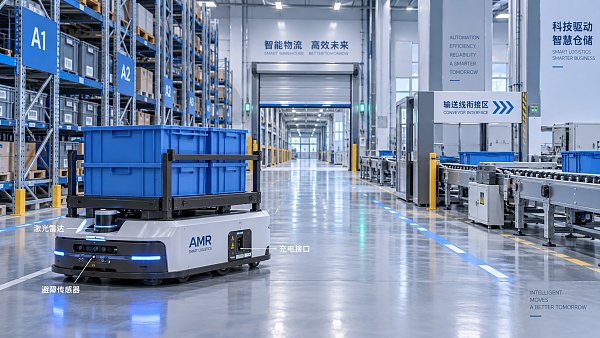
In high-traffic warehouses, even minor navigation errors can trigger congestion, delays, or safety risks for operators and nearby equipment. That is why AGV AMR dynamic navigation fault tolerance has become a critical benchmark for evaluating real-world automation performance. This article examines how fault-tolerant navigation strategies help mobile robots maintain stability, avoid collisions, and sustain workflow continuity under complex, fast-changing warehouse conditions.
For warehouse operators, the main question is not whether AGVs or AMRs can move from point A to point B under ideal conditions. The real question is what happens when aisles are blocked, forklifts cut across traffic lanes, pallets sit out of place, Wi-Fi drops briefly, or sensor visibility degrades. A fault-tolerant system is the difference between a robot that pauses safely, reroutes intelligently, and resumes work, and one that creates a traffic jam or forces repeated human intervention.
In practical terms, strong fault tolerance means safer mixed traffic, fewer avoidable stops, more predictable task completion, and less stress on frontline teams. For users and operators, it also means the robot fleet behaves in a way that is understandable, recoverable, and stable during peak shifts. That is why evaluating navigation fault tolerance should focus on behavior under disruption, not only vendor claims about speed, intelligence, or automation level.
What operators are really searching for when they look up AGV AMR dynamic navigation fault tolerance
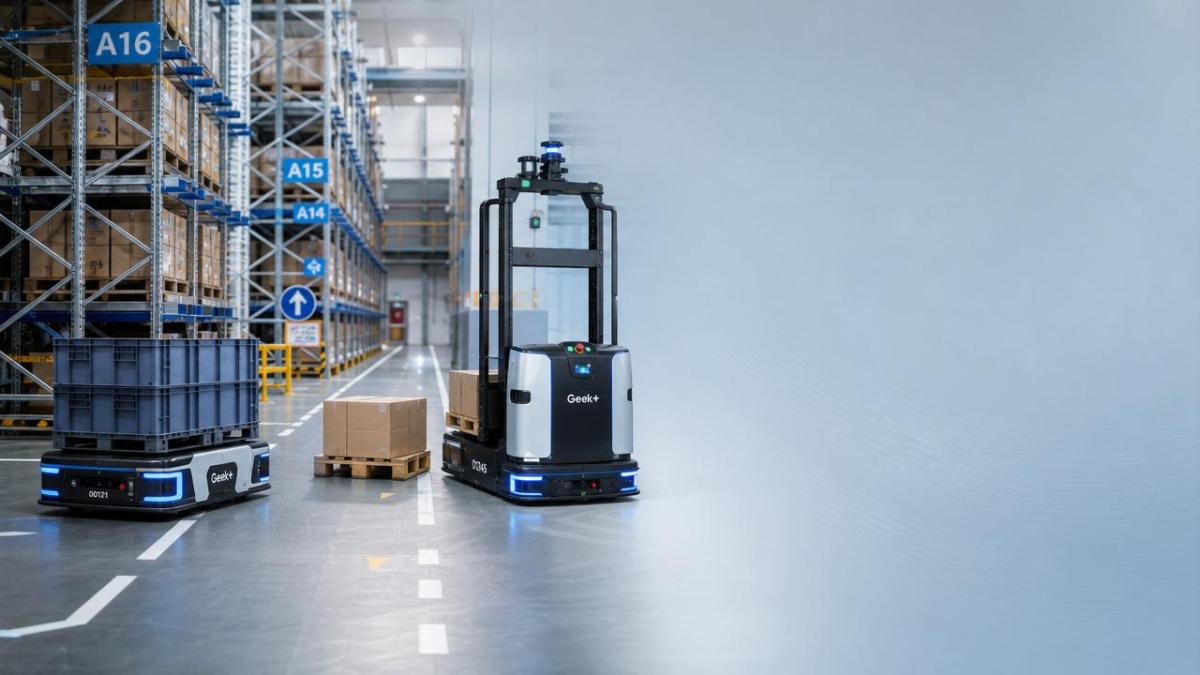
When users search for this topic, they are usually trying to answer a practical operational concern: Will these robots keep working safely and efficiently when the warehouse gets messy? They want to know whether a vehicle can handle interruptions without becoming a bottleneck, whether it can recover from common failures without technician support, and whether it will coexist well with people, forklifts, and other mobile equipment.
For operators, the most important concerns tend to be straightforward. Will the robot stop too often? Will it block aisles when the environment changes? Can it reroute around temporary obstacles without freezing? If the map becomes partially invalid or a sensor reading is noisy, does the machine fail safely and recover quickly? These are not abstract engineering details. They directly affect throughput, shift performance, and operator trust.
Because of that, the most useful way to understand AGV AMR dynamic navigation fault tolerance is to treat it as a real-world resilience measure. It reflects how well a robot continues functioning when inputs are imperfect, traffic is dense, and priorities change by the minute. In busy warehouses, these conditions are normal, not exceptional.
Why fault tolerance matters more in busy warehouses than in controlled test environments
Many navigation systems look capable in demos because demo conditions are clean. Routes are wide, obstacles are predictable, human movement is limited, and wireless coverage is stable. A busy warehouse is different. It is full of temporary exceptions: half-loaded pallets, parked trolleys, workers crossing unexpectedly, forklifts reversing into lanes, and racks that create blind spots for sensors.
In this environment, even a small navigation weakness can spread into a larger operational issue. One vehicle that stops in a narrow aisle may force others to queue behind it. A robot that takes too long to replan can delay replenishment tasks. A unit that misjudges spacing near human traffic can trigger safety slowdowns across the area. The result is not only one failed task but system-wide friction.
That is why fault tolerance should be viewed as a throughput protection mechanism as much as a safety feature. Good fault tolerance reduces cascading disruption. It helps the fleet absorb variability rather than amplify it. For operators, this often matters more than peak travel speed or advertised theoretical productivity.
What fault-tolerant navigation looks like in day-to-day warehouse operations
A fault-tolerant AGV or AMR does not need to be perfect. It needs to respond well when conditions are imperfect. In practice, that behavior can be recognized through several visible traits. The first is controlled reaction. Instead of making abrupt or confusing moves, the robot slows, reassesses, and selects a safe next action when uncertainty increases.
The second trait is graceful degradation. If part of the sensing stack becomes less reliable, the machine should reduce speed, increase following distance, or shift to a safer operating mode rather than continue with the same assumptions. This is essential in dusty zones, reflective floor areas, or locations with inconsistent lighting.
The third trait is structured recovery. When a route is blocked or a localization issue appears, the robot should not remain stuck in an indefinite wait state. It should attempt predefined recovery steps: pause, verify surroundings, recalculate, request clearance if needed, and then either resume or move to a safe fallback position.
Operators often recognize strong fault tolerance not through technical dashboards but through predictable behavior. The robot appears calm, understandable, and consistent. It does not create confusion for nearby workers. It does not trap itself easily. And when it encounters trouble, it either resolves it or clearly signals that assistance is needed.
Common failure scenarios operators should pay attention to
To judge real performance, it helps to think in terms of actual warehouse failure scenarios rather than broad claims. One common issue is obstacle persistence. A pallet left slightly outside its normal position may force repeated path recalculations. A weak system may oscillate between stopping and retrying without finding a practical alternative route.
Another common problem is mixed-traffic interaction. In facilities where forklifts, manual carts, and pedestrians share space with robots, timing matters. If a robot is too conservative, it slows the whole zone. If it is too aggressive, it increases safety risk and operator discomfort. Fault-tolerant navigation means finding a stable balance under real traffic pressure.
Localization drift is another concern. Floor changes, reflective surfaces, narrow rack corridors, and feature-poor areas can degrade positioning confidence. A robust robot should detect uncertainty early and compensate through sensor fusion, route adaptation, or controlled slow movement until confidence improves.
Communication interruptions also matter. Short Wi-Fi disruptions should not immediately break workflow. A well-designed vehicle should retain enough onboard intelligence to continue safely, stop in a controlled manner, or finish a local maneuver without creating danger. Dependence on continuous perfect connectivity is a weakness in busy operations.
Battery-related performance changes are also relevant. As charge levels drop, acceleration, braking behavior, or task planning may change. Good systems handle this predictably, reserving enough margin to avoid mid-aisle failures or unsafe degraded motion. Operators should not have to discover these limits during peak volume periods.
How AGVs and AMRs differ in fault tolerance under dynamic traffic
Although the terms are often grouped together, AGVs and AMRs can behave quite differently under disruption. Traditional AGVs usually follow more fixed routes or guide paths. Their reliability may be strong in repeatable layouts, but they can be more vulnerable when pathways are frequently obstructed or when the flow pattern changes several times during a shift.
AMRs generally offer more flexible route planning and obstacle avoidance, which can improve performance in dynamic environments. However, flexibility alone does not guarantee strong fault tolerance. A poorly tuned AMR may replan too often, choose inefficient detours, or create hesitation in crowded areas. More intelligence is only useful if it remains stable under pressure.
For operators, the practical takeaway is simple: do not assume AMR automatically means better resilience, and do not assume AGV automatically means less safe. The right question is how the system behaves in your warehouse’s traffic pattern, aisle geometry, obstacle frequency, and human interaction zones.
If the workflow is highly repetitive and lane discipline is strict, a well-designed AGV setup may perform very consistently. If routes change often and obstructions are common, an AMR may offer stronger adaptive capability. But in both cases, navigation fault tolerance depends heavily on sensing quality, control logic, recovery strategy, and fleet-level traffic management.
How operators can evaluate navigation fault tolerance before rollout
The most effective evaluation method is scenario-based testing. Instead of asking for generic performance claims, operators should ask vendors or internal engineering teams to demonstrate robot behavior during specific disruption events. For example: what happens when a pallet blocks 40 percent of an aisle, when two vehicles approach a narrow crossing, or when a pedestrian appears unexpectedly from behind a rack?
Another useful method is recovery-time observation. Do not only measure whether the robot eventually succeeds. Measure how long it takes to detect the issue, how it behaves while resolving it, and whether it disrupts nearby operations. A vehicle that clears a problem in twenty seconds may be operationally far better than one that succeeds in two minutes after blocking others.
Operators should also pay attention to intervention frequency. If successful performance depends on regular human resets, manual releases, or route overrides, fault tolerance is weaker than it appears on paper. A system that works only with frequent support creates hidden labor costs and frustrates shift teams.
It is also worth checking whether system alerts are understandable. When faults occur, the user interface should make the reason visible in plain operational terms. Clear messages such as “temporary obstacle ahead,” “localization confidence low,” or “manual clearance requested” are far more useful than generic alarms or opaque error codes for frontline teams.
Key performance indicators that actually matter on the warehouse floor
For users and operators, the most valuable indicators are not always the most advertised ones. Mean task completion time under normal and congested conditions is one important measure. Another is unplanned stop frequency per shift. Together, these show whether the robot remains productive when warehouse traffic intensity changes.
Obstacle recovery success rate is another meaningful KPI. This measures how often a robot can handle temporary obstructions without assistance. Near-miss incidents, forced emergency stops, and false-positive stops should also be tracked. A robot that stops too often due to sensor overreaction may be safe in theory but inefficient in practice.
Queue propagation is an especially useful fleet metric in busy warehouses. If one robot pauses, how many others are delayed behind it, and for how long? This helps operators understand whether navigation faults remain local or trigger wider congestion. Systems with strong fleet coordination contain problems rather than spreading them.
Finally, operators should review restart and resume performance. After a stop, how quickly and smoothly does the robot return to useful work? Repeated hesitation after recovery is a sign that the navigation stack may still be operating with low confidence or poor decision logic.
Best practices for improving fault tolerance after deployment
Fault tolerance is not only a design feature chosen at purchase. It can also be strengthened through better operational setup. Clear lane marking, controlled staging areas, and disciplined pallet placement reduce unnecessary uncertainty for both AGVs and AMRs. Good infrastructure cannot fix weak navigation, but it can prevent avoidable faults from overwhelming the system.
Traffic zoning is another effective measure. Separating high-speed forklift corridors from dense pedestrian areas and robot waiting points reduces conflict intensity. Where full separation is impossible, priority rules should be explicit and consistently enforced. Mixed traffic becomes safer and more efficient when all participants behave predictably.
Regular map maintenance also matters. Warehouses evolve constantly, but digital maps are not always updated at the same pace. Temporary storage becoming permanent, route widths changing, or reflective objects being added can slowly reduce navigation reliability. Operators should treat map validation as part of continuous process control, not a one-time commissioning task.
Sensor cleaning and inspection should not be overlooked. Dust, shrink-wrap reflections, vibration, and minor impacts can degrade perception quality gradually. A robot may still function, but its margin for safe decision-making shrinks. Preventive maintenance for sensors is directly tied to navigation fault tolerance.
Finally, frontline feedback should be captured systematically. Operators are usually the first to notice patterns such as repeated hesitation near a specific crossing or frequent reroutes around a staging zone. These observations are operational data. When combined with system logs, they can reveal layout or tuning issues before they become chronic productivity losses.
What a good purchasing or deployment decision should ultimately come down to
For end users and operators, the best automation system is not the one with the most impressive brochure language. It is the one that remains understandable, safe, and productive when the warehouse becomes crowded, imperfect, and unpredictable. That is the real test of AGV AMR dynamic navigation fault tolerance.
If a vehicle can detect uncertainty early, respond safely, recover quickly, and avoid turning a local issue into area-wide congestion, it is delivering practical value. If it depends on ideal layouts, constant human rescue, or perfect connectivity, its real-world usefulness is limited regardless of its advertised intelligence.
When evaluating options, operators should focus on disruption handling, recovery quality, traffic interaction, and intervention burden. These factors reveal whether the robot fleet will support daily work or complicate it. In busy warehouses, fault tolerance is not a secondary technical detail. It is a frontline performance requirement.
In summary, strong fault-tolerant navigation protects safety, preserves flow, and builds operator trust. It helps mobile robots continue delivering value when warehouse conditions are fast, crowded, and constantly changing. For any team considering or using warehouse robotics, that is the benchmark that matters most.
Search News
Hot Articles
- Carbon Fiber StructuresHow to Specify Aerospace Carbon Fiber Assemblies for Lightweight, Load-Bearing PartsJul 11, 2026
- Machine VisionXiaomi, Alibaba DAMO Academy Drive Open-Source Robotics Model Ecosystem, Lowering Algorithm Development Barriers for Overseas SMEs Adopting Chinese Robotics SolutionsMar 30, 2026
- Cobots & ArmsShanxi 'AI+' Conference Showcases Embodied Intelligence with Multinational Buyer Engagement: Key Industry ImplicationsMar 30, 2026
Popular Tags
Recommended News
 Jul 11, 2026How to Specify Aerospace Carbon Fiber Assemblies for Lightweight, Load-Bearing PartsAerospace carbon fiber assemblies: learn how to specify laminate design, load data, joining methods, and inspection controls for lighter, reliable load-bearing aerospace parts.Elena Rostova (UAV Systems Researcher)
 Mar 30, 2026Xiaomi, Alibaba DAMO Academy Drive Open-Source Robotics Model Ecosystem, Lowering Algorithm Development Barriers for Overseas SMEs Adopting Chinese Robotics SolutionsXiaomi & Alibaba DAMO Academy's open-source robotics models lower algorithm barriers for global SMEs. Boost efficiency in manufacturing, logistics & smart retail with ROS 2 compatible solutions.TSV Data Lab
 Mar 30, 2026Shanxi 'AI+' Conference Showcases Embodied Intelligence with Multinational Buyer Engagement: Key Industry ImplicationsShanxi 'AI+' Conference highlights embodied intelligence with Tesla, Ubtech & Jiantao showcasing multimodal robotics. 40+ global buyers validated tech on-site, creating new B2B channels for industrial automation & AI solutions.Chen Wei (Automation Lead Engineer)
 Mar 30, 2026Zhongguancun Unveils 6G Integrated Sensing-Computing-Intelligence Platform to Empower Embodied Robots for Global Industrial ApplicationsZhongguancun's new 6G platform revolutionizes industrial robotics with <10ms latency, empowering global automotive, logistics & port automation. Discover how this tech boosts China's smart manufacturing exports.TSV Data Lab
 Mar 30, 2026Mech-Mind Tianjin Embodied Intelligence R&D and Production Base Goes Live, Cutting Delivery Time by 20%–30% for Global Customized AMR+Vision SolutionsMech-Mind's Tianjin AMR+Vision production base cuts delivery time by 20%-30% for欧美 & Latin American markets. Discover how this PLd-certified facility accelerates customized robotics solutions for smart manufacturing and logistics.Chen Wei (Automation Lead Engineer)
 Mar 30, 2026Boao Forum Reveals 'Co-evolution of Big and Small Brains' Trend in Humanoid Robots, China's Embodied Intelligence Accelerates Adaptation to Overseas Manufacturing Service ScenariosDiscover how China's humanoid robots, featuring 'Co-evolution of Big and Small Brains,' are revolutionizing global manufacturing. Learn about Embodied Tian Gong 3.0's ISO compliance and overseas deployment at Boao Forum 2026.Chen Wei (Automation Lead Engineer)
 Mar 30, 2026China Railway Industrial Secures Patent for Embodied Robotics in Material Handling, Boosting High-Precision Delivery Capabilities for Overseas Infrastructure and Manufacturing ProjectsChina Railway Industrial's new patent for embodied robotics in material handling boosts high-precision delivery for global infrastructure & manufacturing. Discover how this innovation enhances logistics accuracy in automotive, rail transit & EPC projects.Chen Wei (Automation Lead Engineer)
 Sep 28, 2026Spindle Runout Measurement in Germany: DIN Standards, Methods, and Acceptance LimitsSpindle runout measurement Germany: explore DIN standards, proven methods, acceptance limits, and audit-ready practices for reliable machining quality.Dr. Marcus Vance
 Sep 27, 2026How to Select Wall-Mount Edge Devices for Space-Constrained Factory NetworksWall mount edge devices for space-constrained factories: evaluate workload, thermal design, power resilience, cable access, and network reliability for smarter deployments.TSV Data Lab
 Sep 26, 2026Machining Tolerance Analysis: How to Set Limits That Meet Function and Cost TargetsMachining tolerance analysis: learn how to set functional limits, control tolerance stacks, reduce inspection risk, and balance precision with production cost.Dr. Marcus Vance
 Sep 25, 2026How to Evaluate an Industrial Infrastructure Data Platform for Multi-Site OperationsIndustrial infrastructure data platform evaluation guide for multi-site operations: compare data quality, edge resilience, interoperability, governance, and scalable proof-of-value criteria.Victor Lin (Chief Software Architect)
 Sep 24, 2026How to Select Machine Vision Optics for Accurate Inspection at Different Working DistancesMachine vision optics selection guide for accurate inspection at every working distance. Compare FOV, pixel scale, DOF, distortion, lighting, and telecentric options.TSV Data Lab
 Sep 23, 2026How to Evaluate a Machine Vision System Integrator for High-Speed Inspection LinesChoose a machine vision system integrator with proven expertise in high-speed inspection, reliable reject timing, robust optics, and measurable acceptance criteria.TSV Data Lab
 Sep 28, 2026When is a SCADA API the right choice for connecting plant systems?SCADA API guide: learn when governed plant data integration improves traceability, security, and scalability—without compromising real-time control.Victor Lin (Chief Software Architect)
 Sep 27, 2026How SCADA data integration improves traceability across production linesSCADA data integration connects production-line data to improve traceability, accelerate quality investigations, and strengthen safety decisions.Victor Lin (Chief Software Architect)
 Sep 26, 2026What to define before starting SCADA integration planningSCADA integration planning starts with clear scope, control boundaries, data models, cybersecurity, and testing. Discover the definitions that reduce risk and costly rework.Victor Lin (Chief Software Architect)
 Sep 25, 2026How a smart factory with Industrial IoT reduces production blind spotsDiscover how a smart factory with Industrial IoT turns real-time machine, quality, and workflow data into actionable insights that reduce production blind spots and delivery risks.Victor Lin (Chief Software Architect)
 Sep 24, 2026When does Industrial IoT make smart manufacturing easier to scale?Smart manufacturing Industrial IoT scales when trusted data, interoperable systems, and secure workflows turn connected assets into measurable gains.TSV Data Lab
 Sep 23, 2026What drives ultra-precision machining cost at 1-micron tolerance?Ultra precision machining cost per part at 1 micron tolerance depends on process, material, metrology, and yield. Learn how to compare quotes confidently.Dr. Marcus Vance
 Sep 22, 2026Drone Engine-T550CC Applications: Build the UAV Power System Around the MissionAn application guide for Drone Engine-T550CC integration, covering payload planning, airframe matching, cooling, fuel, vibration, test procedures, documentation, and service preparation.Elena Rostova (UAV Systems Researcher)
 Sep 22, 2026How to Evaluate Industrial Edge Computing Vendors for Factory DeploymentIndustrial edge computing vendor evaluation guide for factories: compare latency, protocol fit, reliability, security, and lifecycle support before deployment.TSV Data Lab
 Sep 21, 2026Drone Payload Integration: Matching Power, Data, and Center of Gravity for Reliable FlightsDrone payload integration made practical: balance power, data, center of gravity, and endurance to build safer, more reliable mission-ready flights.Elena Rostova (UAV Systems Researcher)
 Sep 20, 2026Autonomous Navigation Pricing: Cost Drivers and Budget Benchmarks for AMR ProjectsAutonomous navigation price explained: compare AMR cost drivers, software, sensors, integration, safety, and lifecycle budgets to build a scalable project plan.Chen Wei (Automation Lead Engineer)
 Sep 19, 2026How to Scope Automation Integration Services for Multi-System Factory ProjectsAutomation integration services: learn how to scope multi-system factory projects with clear workflows, interface contracts, safety boundaries, and acceptance criteria.Victor Lin (Chief Software Architect)