Why AGV AMR fleet management software fails after scale-up
Publication Date
author
As AGV AMR fleet management software moves from pilot projects to plant-wide deployment, many enterprises discover that early performance gains do not survive scale. Hidden integration gaps, traffic conflicts, data latency, and weak orchestration logic can quickly erode uptime and ROI. For decision-makers, understanding why these systems fail after scale-up is essential to building a resilient, data-driven automation strategy.
The core issue is rarely the robot alone. In most failed scale-ups, the software layer becomes the bottleneck. A fleet platform that works with five vehicles in a controlled pilot may break down with fifty robots across mixed workflows, changing priorities, human traffic, and real-world system noise. For enterprise leaders, the key question is not whether AGV AMR fleet management software works in theory, but whether it can maintain throughput, safety, and operational predictability under full production pressure.
For decision-makers, the real search intent behind this topic is practical and commercial: why deployments lose performance after expansion, how to spot the hidden failure points early, and what evaluation criteria can reduce implementation risk. They want to know what goes wrong, what warning signals matter, and how to avoid buying software that looks strong in a demo but fails in a live facility.
Why scale-up exposes the real weaknesses of AGV AMR fleet management software
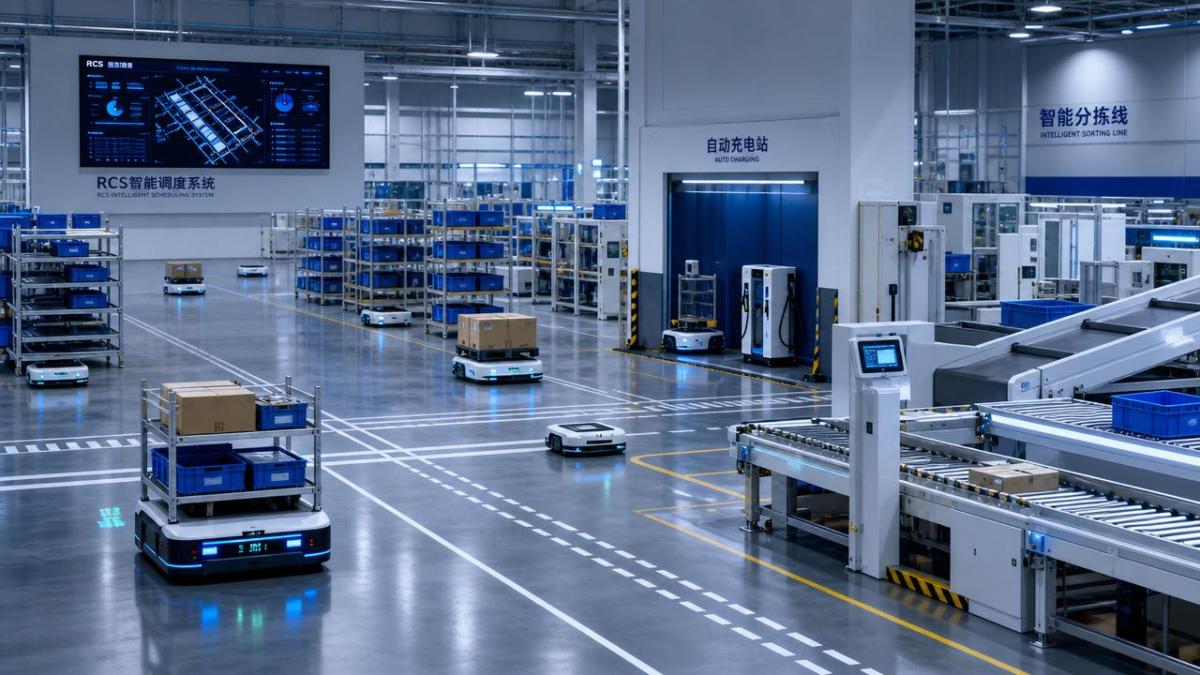
Small pilots are misleading by design. They usually run in a limited zone, with fewer route intersections, simpler task logic, cleaner connectivity, and dedicated support teams. Under those conditions, almost any modern AGV AMR fleet management software can appear stable. Scale-up changes the operating physics.
Once deployment expands across the plant, the software must coordinate more vehicles, more task types, more exceptions, and more dependencies on external systems. Battery charging, route allocation, congestion handling, elevator calls, MES instructions, ERP priorities, safety zones, and operator interventions all begin competing in real time. What looked like a navigation problem becomes a systems orchestration problem.
This is why failures after scale-up are often management surprises. The automation vendor may have met the pilot KPI, but the KPI itself was too narrow. It measured isolated movement efficiency, not enterprise-grade performance under load. Decision-makers should treat scale-up as a different operating regime, not as a simple extension of the pilot.
The most common reason for failure: orchestration logic does not match plant reality
At scale, fleet software succeeds or fails on orchestration quality. The platform must continuously decide which vehicle should do which task, in what sequence, on which route, with what priority, and with what fallback if conditions change. Weak orchestration logic creates invisible waste long before a total failure happens.
Typical symptoms include robots queuing at intersections, vehicles traveling empty for excessive distances, high-priority jobs waiting behind low-value tasks, and charging schedules that remove too many units from service at the same time. These issues may not trigger alarms, but they reduce throughput and asset utilization every hour.
Many enterprises underestimate how specific orchestration must be to their process. A warehouse with repetitive flows has different requirements from a mixed-model factory serving assembly cells, inspection zones, and line-side replenishment. If the fleet software was designed around generic dispatch rules, it may not reflect the actual economic priorities of the site.
For executives, this means software evaluation should go beyond feature lists. Ask whether the logic engine can handle dynamic reprioritization, zone-based restrictions, exception routing, and process-aware dispatching. If the answer is vague, scale-up risk is high.
Integration gaps destroy performance faster than navigation errors
Many buyers focus on robot hardware, SLAM performance, or obstacle avoidance. Those matter, but in scaled deployments, integration quality often has a larger business impact. AGV AMR fleet management software sits in the middle of a larger digital stack, and weak interfaces create delays that compound across the operation.
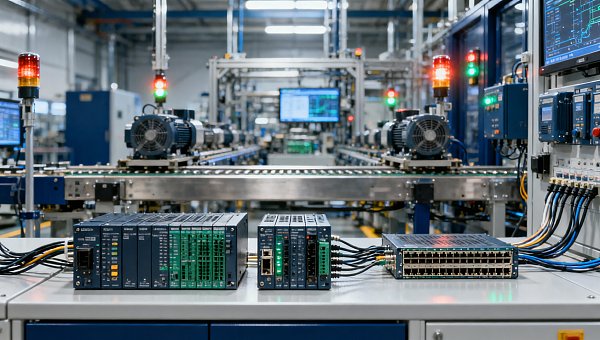
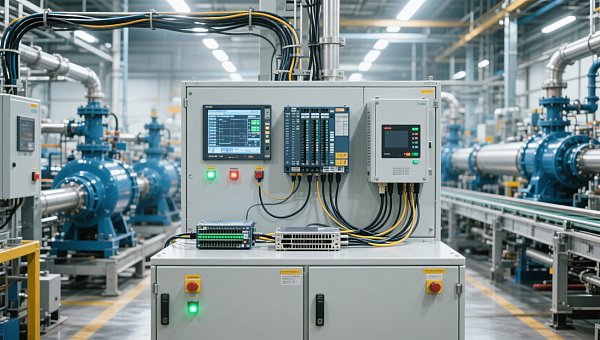
If the platform does not exchange clean, timely data with MES, WMS, ERP, PLCs, elevator controllers, fire systems, and access control systems, the robots cannot act with full context. Tasks arrive late, status updates become unreliable, and manual workarounds begin to spread. Once operators stop trusting the system state, automation loses strategic value.
Integration failures are especially damaging because they are often misdiagnosed. Management may think robot productivity is low, when the real problem is task release latency from upstream software or poor handshakes with downstream equipment. The fleet appears inefficient, but the system architecture is the root cause.
A useful executive test is simple: if a material movement is delayed, can the team trace whether the cause was route congestion, task assignment, external system latency, workstation readiness, or human intervention? If not, the operation lacks the observability needed for scale.
Traffic management breaks down when the digital map is too simple for the physical world
Another major reason AGV AMR fleet management software fails after scale-up is that traffic control logic is too static. In pilots, routes are often fixed, intersections are limited, and pedestrian interaction is reduced. In full operations, the environment is alive. Temporary pallets, maintenance activity, forklift crossings, blocked aisles, and shift-change surges create constant instability.
Software that cannot model and respond to these conditions in real time tends to create congestion spirals. One stalled vehicle delays another. Small queues become route-wide slowdowns. Recovery logic may be too slow or too conservative, causing throughput to collapse even though no major fault has occurred.
The digital map is often part of the problem. If it treats the facility as a simplified geometry rather than an operational ecosystem with dynamic constraints, the fleet manager cannot optimize effectively. The issue is not just where a robot can go, but when it should go, what alternative path is economically acceptable, and what traffic rules should apply under changing production priorities.
For plant leaders, the lesson is clear: evaluate traffic resilience, not only navigation accuracy. Ask how the software handles deadlock prevention, congestion forecasting, rerouting under partial blockage, and mixed traffic with humans and forklifts. These capabilities determine uptime at scale.
Data latency and poor system visibility turn minor inefficiencies into strategic failures
At small scale, a few seconds of delay in status synchronization may seem harmless. At large scale, latency distorts decision quality. If AGV AMR fleet management software acts on outdated location, battery, queue, or station-availability data, dispatch decisions become suboptimal. The result is not always a crash. More often, it is chronic underperformance.
This is where many enterprises lose ROI. On paper, the fleet is large enough. In practice, robots spend too much time waiting, repositioning, or resolving avoidable conflicts. Management then assumes more vehicles are needed, increasing capital cost without fixing the coordination problem.
Operational visibility also matters at the leadership level. A platform may display dashboards, but if the metrics are superficial, executives cannot see why service levels are deteriorating. Good visibility should reveal mission completion time by task type, route congestion heat maps, exception frequency, charger utilization, idle ratios, and causes of dispatch failure.
Without this data, continuous improvement becomes guesswork. For a decision-maker, software that cannot explain performance is almost as risky as software that cannot deliver performance.
Multi-vendor environments create hidden incompatibility at scale
Enterprise facilities increasingly combine legacy AGVs, newer AMRs, conveyors, lifts, and fixed automation from multiple vendors. In theory, the fleet management layer should unify them. In practice, interoperability is often partial, brittle, or highly customized.
This becomes dangerous after scale-up because every custom interface increases maintenance overhead and failure exposure. A software platform may support one vendor’s task model, battery reporting format, or safety handshake better than another’s. As system complexity grows, those differences create coordination blind spots.
Decision-makers should be careful with claims of vendor neutrality. The right question is not whether the platform can connect to multiple systems, but whether it can coordinate them under real operational constraints without heavy ongoing engineering support. If every process change requires custom code, the deployment will struggle to scale economically.
Long-term resilience depends on open architecture, stable APIs, event consistency, and well-documented integration governance. These are less visible than robot demos, but they are central to enterprise-grade automation.
Many deployments fail because the KPI model rewards the wrong outcomes
A common executive mistake is measuring fleet performance with narrow automation metrics rather than business metrics. For example, a team may focus on robot utilization, average speed, or mission count, while ignoring line stoppage reduction, labor redeployment, material availability, or order cycle time. This creates false confidence during early rollout.
AGV AMR fleet management software should be judged by how it supports the plant’s economic objective. In a production setting, that may mean preventing starvation at critical workstations. In intralogistics, it may mean smoothing peak load variation. In high-mix environments, it may mean handling exceptions without destabilizing the schedule.
When KPI design is weak, vendors optimize for visible dashboard numbers while real operational value remains flat. Scale-up then reveals the gap. The fleet is moving, but the business is not improving enough to justify the investment.
Executives should insist on a KPI structure that links software performance to business outcomes: throughput per shift, service-level adherence, exception recovery time, labor-hour displacement, OEE contribution, and expansion cost per additional workflow. This creates a better basis for software selection and governance.
How to evaluate AGV AMR fleet management software before expansion
For leaders planning a broader rollout, the best defense is a more rigorous evaluation model. Start by testing software under stress, not under ideal conditions. Ask vendors to simulate peak-hour load, blocked routes, charging conflicts, priority reversals, and external system delays. A demo that only shows smooth robot movement is not enough.
Second, assess architecture maturity. Review how the platform manages task orchestration, event handling, queue logic, failover, and observability. Ask whether the software has proven support for multi-zone deployments, mixed traffic, and phased expansion. Strong products can explain not just what they do, but how they behave when the plant becomes unstable.
Third, examine integration depth early. The practical success of a fleet often depends less on the robot and more on clean digital interaction with enterprise systems and physical infrastructure. Require interface ownership, latency expectations, exception logic, and change-control responsibilities to be defined before scale-up begins.
Fourth, validate operational governance. Who owns dispatch rules? Who tunes priorities? Who monitors charger policy and route bottlenecks? Who investigates recurring exceptions? Scaled automation needs cross-functional governance, not just an installation project.
What a scalable deployment strategy looks like for enterprise decision-makers
The most successful companies do not scale by simply adding more robots. They scale by increasing system intelligence, control discipline, and data transparency at the same time. That means treating AGV AMR fleet management software as a mission-critical operational platform rather than a supporting application.
A strong scale-up strategy usually includes phased area expansion, digital-twin or simulation validation, explicit integration architecture, congestion testing, battery and charging policy design, and business-level KPI reviews at each stage. It also includes fallback procedures for degraded operation so the plant does not become fragile when automation encounters unexpected conditions.
Importantly, enterprises should expect software tuning after each expansion wave. New routes, work cells, and process interactions change system behavior. Scale is not a one-time milestone. It is an ongoing engineering discipline.
This mindset aligns with what sophisticated manufacturing leaders increasingly recognize: automation value comes from stable orchestration and measurable operational truth, not from headline robot counts. The software layer is where that truth is either proven or exposed.
Conclusion: failure after scale-up is usually a systems problem, not a robot problem
When AGV AMR fleet management software fails after scale-up, the root cause is usually not that autonomous mobile systems are ineffective. It is that the software, integration architecture, traffic logic, and KPI model were not designed for enterprise complexity. Pilots hide these weaknesses. Full deployment reveals them.
For decision-makers, the practical takeaway is clear. Do not evaluate fleet software by pilot smoothness, marketing claims, or isolated navigation performance. Evaluate it by orchestration depth, integration maturity, latency tolerance, observability, and its ability to sustain business outcomes under operational stress.
In advanced manufacturing and industrial logistics, scale is where engineering truth emerges. The enterprises that win are the ones that ask harder questions before expansion, define clearer success metrics, and treat fleet management as a data-governed control system. That is how AGV AMR fleet management software becomes a source of resilience and ROI rather than a hidden constraint on growth.
Search News
Hot Articles
- Carbon Fiber StructuresHow to Specify Aerospace Carbon Fiber Assemblies for Lightweight, Load-Bearing PartsJul 11, 2026
- Machine VisionXiaomi, Alibaba DAMO Academy Drive Open-Source Robotics Model Ecosystem, Lowering Algorithm Development Barriers for Overseas SMEs Adopting Chinese Robotics SolutionsMar 30, 2026
- Cobots & ArmsShanxi 'AI+' Conference Showcases Embodied Intelligence with Multinational Buyer Engagement: Key Industry ImplicationsMar 30, 2026
Popular Tags
Recommended News
 Jul 11, 2026How to Specify Aerospace Carbon Fiber Assemblies for Lightweight, Load-Bearing PartsAerospace carbon fiber assemblies: learn how to specify laminate design, load data, joining methods, and inspection controls for lighter, reliable load-bearing aerospace parts.Elena Rostova (UAV Systems Researcher)
 Mar 30, 2026Xiaomi, Alibaba DAMO Academy Drive Open-Source Robotics Model Ecosystem, Lowering Algorithm Development Barriers for Overseas SMEs Adopting Chinese Robotics SolutionsXiaomi & Alibaba DAMO Academy's open-source robotics models lower algorithm barriers for global SMEs. Boost efficiency in manufacturing, logistics & smart retail with ROS 2 compatible solutions.TSV Data Lab
 Mar 30, 2026Shanxi 'AI+' Conference Showcases Embodied Intelligence with Multinational Buyer Engagement: Key Industry ImplicationsShanxi 'AI+' Conference highlights embodied intelligence with Tesla, Ubtech & Jiantao showcasing multimodal robotics. 40+ global buyers validated tech on-site, creating new B2B channels for industrial automation & AI solutions.Chen Wei (Automation Lead Engineer)
 Mar 30, 2026Zhongguancun Unveils 6G Integrated Sensing-Computing-Intelligence Platform to Empower Embodied Robots for Global Industrial ApplicationsZhongguancun's new 6G platform revolutionizes industrial robotics with <10ms latency, empowering global automotive, logistics & port automation. Discover how this tech boosts China's smart manufacturing exports.TSV Data Lab
 Mar 30, 2026Mech-Mind Tianjin Embodied Intelligence R&D and Production Base Goes Live, Cutting Delivery Time by 20%–30% for Global Customized AMR+Vision SolutionsMech-Mind's Tianjin AMR+Vision production base cuts delivery time by 20%-30% for欧美 & Latin American markets. Discover how this PLd-certified facility accelerates customized robotics solutions for smart manufacturing and logistics.Chen Wei (Automation Lead Engineer)
 Mar 30, 2026Boao Forum Reveals 'Co-evolution of Big and Small Brains' Trend in Humanoid Robots, China's Embodied Intelligence Accelerates Adaptation to Overseas Manufacturing Service ScenariosDiscover how China's humanoid robots, featuring 'Co-evolution of Big and Small Brains,' are revolutionizing global manufacturing. Learn about Embodied Tian Gong 3.0's ISO compliance and overseas deployment at Boao Forum 2026.Chen Wei (Automation Lead Engineer)
 Mar 30, 2026China Railway Industrial Secures Patent for Embodied Robotics in Material Handling, Boosting High-Precision Delivery Capabilities for Overseas Infrastructure and Manufacturing ProjectsChina Railway Industrial's new patent for embodied robotics in material handling boosts high-precision delivery for global infrastructure & manufacturing. Discover how this innovation enhances logistics accuracy in automotive, rail transit & EPC projects.Chen Wei (Automation Lead Engineer)
 Sep 28, 2026Spindle Runout Measurement in Germany: DIN Standards, Methods, and Acceptance LimitsSpindle runout measurement Germany: explore DIN standards, proven methods, acceptance limits, and audit-ready practices for reliable machining quality.Dr. Marcus Vance
 Sep 27, 2026How to Select Wall-Mount Edge Devices for Space-Constrained Factory NetworksWall mount edge devices for space-constrained factories: evaluate workload, thermal design, power resilience, cable access, and network reliability for smarter deployments.TSV Data Lab
 Sep 26, 2026Machining Tolerance Analysis: How to Set Limits That Meet Function and Cost TargetsMachining tolerance analysis: learn how to set functional limits, control tolerance stacks, reduce inspection risk, and balance precision with production cost.Dr. Marcus Vance
 Sep 25, 2026How to Evaluate an Industrial Infrastructure Data Platform for Multi-Site OperationsIndustrial infrastructure data platform evaluation guide for multi-site operations: compare data quality, edge resilience, interoperability, governance, and scalable proof-of-value criteria.Victor Lin (Chief Software Architect)
 Sep 24, 2026How to Select Machine Vision Optics for Accurate Inspection at Different Working DistancesMachine vision optics selection guide for accurate inspection at every working distance. Compare FOV, pixel scale, DOF, distortion, lighting, and telecentric options.TSV Data Lab
 Sep 23, 2026How to Evaluate a Machine Vision System Integrator for High-Speed Inspection LinesChoose a machine vision system integrator with proven expertise in high-speed inspection, reliable reject timing, robust optics, and measurable acceptance criteria.TSV Data Lab
 Sep 28, 2026When is a SCADA API the right choice for connecting plant systems?SCADA API guide: learn when governed plant data integration improves traceability, security, and scalability—without compromising real-time control.Victor Lin (Chief Software Architect)
 Sep 27, 2026How SCADA data integration improves traceability across production linesSCADA data integration connects production-line data to improve traceability, accelerate quality investigations, and strengthen safety decisions.Victor Lin (Chief Software Architect)
 Sep 26, 2026What to define before starting SCADA integration planningSCADA integration planning starts with clear scope, control boundaries, data models, cybersecurity, and testing. Discover the definitions that reduce risk and costly rework.Victor Lin (Chief Software Architect)
 Sep 25, 2026How a smart factory with Industrial IoT reduces production blind spotsDiscover how a smart factory with Industrial IoT turns real-time machine, quality, and workflow data into actionable insights that reduce production blind spots and delivery risks.Victor Lin (Chief Software Architect)
 Sep 24, 2026When does Industrial IoT make smart manufacturing easier to scale?Smart manufacturing Industrial IoT scales when trusted data, interoperable systems, and secure workflows turn connected assets into measurable gains.TSV Data Lab
 Sep 23, 2026What drives ultra-precision machining cost at 1-micron tolerance?Ultra precision machining cost per part at 1 micron tolerance depends on process, material, metrology, and yield. Learn how to compare quotes confidently.Dr. Marcus Vance
 Sep 22, 2026Drone Engine-T550CC Applications: Build the UAV Power System Around the MissionAn application guide for Drone Engine-T550CC integration, covering payload planning, airframe matching, cooling, fuel, vibration, test procedures, documentation, and service preparation.Elena Rostova (UAV Systems Researcher)
 Sep 22, 2026How to Evaluate Industrial Edge Computing Vendors for Factory DeploymentIndustrial edge computing vendor evaluation guide for factories: compare latency, protocol fit, reliability, security, and lifecycle support before deployment.TSV Data Lab
 Sep 21, 2026Drone Payload Integration: Matching Power, Data, and Center of Gravity for Reliable FlightsDrone payload integration made practical: balance power, data, center of gravity, and endurance to build safer, more reliable mission-ready flights.Elena Rostova (UAV Systems Researcher)
 Sep 20, 2026Autonomous Navigation Pricing: Cost Drivers and Budget Benchmarks for AMR ProjectsAutonomous navigation price explained: compare AMR cost drivers, software, sensors, integration, safety, and lifecycle budgets to build a scalable project plan.Chen Wei (Automation Lead Engineer)
 Sep 19, 2026How to Scope Automation Integration Services for Multi-System Factory ProjectsAutomation integration services: learn how to scope multi-system factory projects with clear workflows, interface contracts, safety boundaries, and acceptance criteria.Victor Lin (Chief Software Architect)