What Sets a Reliable Mecanum Wheel AGV Factory Apart
Publication Date
author
Choosing a reliable mecanum wheel AGV factory is no longer about polished claims—it is about verifiable engineering data, traceable manufacturing discipline, and real-world performance under demanding automation scenarios. In facilities where omnidirectional transport supports assembly, warehousing, battery handling, electronics flow, or aerospace subcomponent movement, the difference between a dependable supplier and a marketing-led vendor becomes visible in uptime, path accuracy, wheel wear, software interoperability, and service response. This article explains what separates a credible mecanum wheel AGV factory from less capable alternatives, with practical criteria for evaluating motion systems, quality control, deployment readiness, and lifecycle support.
What does a reliable mecanum wheel AGV factory actually deliver beyond the machine itself?
A serious mecanum wheel AGV factory does not simply assemble a mobile platform with four omnidirectional wheels. It delivers a repeatable engineering system: chassis design, drive matching, control architecture, navigation integration, electrical safety, software interfaces, test records, and after-sales traceability. The product is only the visible layer. The real value is the factory’s ability to control variation from design to field deployment.
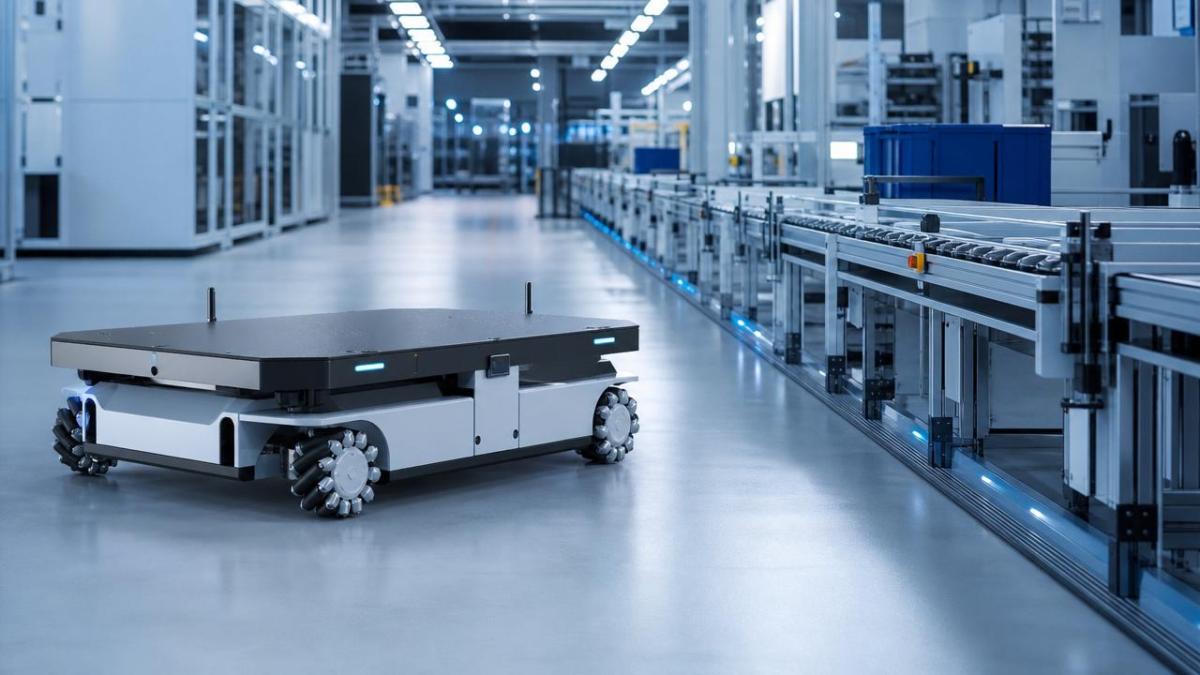
Mecanum wheel AGVs are attractive because they can move forward, sideways, diagonally, and rotate in place. That flexibility is useful in narrow aisles, precision docking stations, and production cells where turning radius is limited. However, omnidirectional movement also creates more demanding requirements for wheel geometry, motor synchronization, floor compatibility, and control tuning. A weak supplier may demonstrate smooth motion in a short showroom video, yet struggle when payload shifts, floor friction changes, or route density increases.
A dependable factory therefore offers more than basic specifications. It can explain wheel roller material selection, load distribution logic, encoder resolution, servo response characteristics, braking design, battery management strategy, and network communication protocols. It can also provide test evidence showing how the AGV behaves under rated load, peak load, long cycle duration, and emergency stop recovery conditions.
How can motion precision and load stability reveal the true strength of a mecanum wheel AGV factory?
Motion quality is one of the fastest ways to judge a mecanum wheel AGV factory. Because mecanum systems depend on coordinated wheel vectors, even small deviations in wheel diameter consistency, roller quality, motor control tuning, or frame stiffness can create drift, vibration, or poor docking repeatability. Reliable factories understand that omnidirectional movement is not just a feature; it is a precision control problem.
Several technical indicators deserve close attention:
- Positioning repeatability at docking points
- Lateral drift during sideways travel under load
- Rotation accuracy for in-place turning
- Vibration level when crossing joints or uneven floor segments
- Load stability during acceleration, deceleration, and direction changes
- Wheel wear rate and traction consistency over long duty cycles
A high-quality mecanum wheel AGV factory should be able to discuss how these values are measured, not merely claimed. For example, if an AGV is intended for precision line-side feeding, docking repeatability matters more than top speed. If it handles fragile electronics or optics, vibration control and micro-shock performance matter more than promotional payload headlines. In heavy-duty scenarios, frame rigidity and suspension strategy may determine whether wheel contact remains consistent enough for stable vector control.
The strongest suppliers also evaluate floor interaction honestly. Mecanum wheels are sensitive to surface conditions. Epoxy floors, polished concrete, metal transitions, dust accumulation, and embedded rails can all influence motion quality. A reliable factory will ask for floor flatness data, friction conditions, and route details before finalizing configuration. That behavior is often a better signal of competence than aggressive promises.
What manufacturing and quality control signs distinguish a credible mecanum wheel AGV factory?
The phrase mecanum wheel AGV factory should imply manufacturing discipline, not outsourced assembly with inconsistent sourcing. Since AGV performance depends on mechanical, electrical, and software coordination, quality must be controlled at multiple levels. A credible factory usually has documented incoming inspection standards, assembly checkpoints, calibration procedures, functional testing routines, and serial number traceability.
Useful evaluation points include:
- Wheel module consistency, including roller hardness, bearing quality, and dimensional tolerance
- Chassis machining accuracy and welded structure deformation control
- Cable routing, connector protection, and electromagnetic compatibility planning
- Controller, drive, battery, and safety PLC integration testing
- End-of-line testing with load simulation and route verification
- Documentation for spare parts, firmware versioning, and maintenance intervals
A reliable mecanum wheel AGV factory should also provide evidence of process maturity. That may include FAT records, key component source lists, safety compliance declarations, inspection reports, or examples of reliability testing. The point is not paperwork for its own sake. The point is whether the factory can prove that one delivered unit will behave like the next, with limited variance and predictable maintenance needs.
This is especially important in multi-site deployments. If a fleet is expanded six months later, inconsistent wheel modules, changed firmware logic, or undocumented controller revisions can create integration problems. The best factories are strong in change control. They know that industrial automation depends on stable baselines as much as innovation.
How important are software integration and application fit when selecting a mecanum wheel AGV factory?
Even an excellent mechanical platform can become a poor investment if the mecanum wheel AGV factory cannot support software integration. In real industrial environments, AGVs rarely operate alone. They need to communicate with WMS, MES, ERP, production scheduling systems, elevators, automatic doors, chargers, conveyors, and safety infrastructure. A trustworthy factory understands that integration capability often determines deployment speed and final ROI.
Questions worth asking include whether the AGV supports standard industrial communication methods, whether APIs are documented, whether traffic management is scalable, and whether navigation methods fit the site. Some applications require laser SLAM. Others need QR guidance, magnetic assistance, or hybrid localization for high-repeatability stations. The right answer depends on the environment, not on a one-size-fits-all sales script.
Application fit also includes safety logic and user workflow. For example, an AGV moving battery packs has different requirements from one transporting lightweight trays in electronics assembly. Payload center of gravity, route congestion, charging windows, and human-machine interaction all influence design decisions. A capable mecanum wheel AGV factory will request process details early and may even challenge assumptions that would reduce reliability later.
What are the most common risks and misleading signals when comparing mecanum wheel AGV factory options?
One major risk is overvaluing appearance and undervaluing test evidence. A polished enclosure, touchscreen panel, or clean demo floor does not confirm long-term field reliability. Another frequent mistake is comparing only payload and price. Two AGVs with the same rated capacity may differ significantly in wheel life, docking performance, control stability, and serviceability.
Be cautious if a mecanum wheel AGV factory cannot clearly answer the following:
- How is repeatability tested under full load?
- What happens when wheel wear changes traction over time?
- Which components are standard and which are custom?
- How are spare parts stocked and firmware changes managed?
- What is the recovery process after communication loss or emergency stop?
Another warning sign is unrealistic delivery speed for a customized solution. True application engineering requires route study, interface definition, safety review, and validation. If a factory skips those steps, implementation risk rises. The most reliable suppliers may not always be the fastest in early conversation, but they are usually faster at delivering a stable system that works after commissioning.
How should cost, lead time, and long-term support influence the final decision?
The best mecanum wheel AGV factory is rarely the one with the lowest initial quotation. A lower entry price can hide weaker wheel durability, shorter battery life, limited software support, or slow spare parts response. In automation projects, lifecycle cost matters more than purchase price alone. Downtime, repeated tuning visits, wheel replacement frequency, and integration delays can quickly erase a small upfront saving.
Lead time should be reviewed in layers: engineering confirmation, manufacturing, testing, shipment, commissioning, and post-launch stabilization. Factories with structured project management can usually define each stage with greater clarity. That transparency is valuable because it allows planning around real constraints rather than optimistic assumptions.
Long-term support is equally important. A strong mecanum wheel AGV factory offers training, fault diagnostics, maintenance guidance, software updates, and spare parts planning. If the AGV is expected to support continuous or multi-shift operation, response time commitments and remote troubleshooting capability deserve as much attention as the machine specification itself.
Quick FAQ: how can a mecanum wheel AGV factory be assessed more confidently?
A reliable mecanum wheel AGV factory stands apart through measurable motion performance, disciplined manufacturing, application-aware integration, and dependable lifecycle support. The strongest suppliers speak in test methods, tolerances, interfaces, and maintenance strategy—not vague claims. When comparing options, focus on evidence: repeatability under load, wheel and chassis consistency, software openness, safety logic, spare parts readiness, and project execution transparency. That approach leads to a better fit, lower operational risk, and stronger long-term automation value. The most effective next step is to convert broad interest into a structured technical evaluation checklist and request data-backed responses from each candidate factory.
Search News
Hot Articles
- Carbon Fiber StructuresHow to Specify Aerospace Carbon Fiber Assemblies for Lightweight, Load-Bearing PartsJul 11, 2026
- Machine VisionXiaomi, Alibaba DAMO Academy Drive Open-Source Robotics Model Ecosystem, Lowering Algorithm Development Barriers for Overseas SMEs Adopting Chinese Robotics SolutionsMar 30, 2026
- Cobots & ArmsShanxi 'AI+' Conference Showcases Embodied Intelligence with Multinational Buyer Engagement: Key Industry ImplicationsMar 30, 2026
Popular Tags
Recommended News
 Jul 11, 2026How to Specify Aerospace Carbon Fiber Assemblies for Lightweight, Load-Bearing PartsAerospace carbon fiber assemblies: learn how to specify laminate design, load data, joining methods, and inspection controls for lighter, reliable load-bearing aerospace parts.Elena Rostova (UAV Systems Researcher)
 Mar 30, 2026Xiaomi, Alibaba DAMO Academy Drive Open-Source Robotics Model Ecosystem, Lowering Algorithm Development Barriers for Overseas SMEs Adopting Chinese Robotics SolutionsXiaomi & Alibaba DAMO Academy's open-source robotics models lower algorithm barriers for global SMEs. Boost efficiency in manufacturing, logistics & smart retail with ROS 2 compatible solutions.TSV Data Lab
 Mar 30, 2026Shanxi 'AI+' Conference Showcases Embodied Intelligence with Multinational Buyer Engagement: Key Industry ImplicationsShanxi 'AI+' Conference highlights embodied intelligence with Tesla, Ubtech & Jiantao showcasing multimodal robotics. 40+ global buyers validated tech on-site, creating new B2B channels for industrial automation & AI solutions.Chen Wei (Automation Lead Engineer)
 Mar 30, 2026Zhongguancun Unveils 6G Integrated Sensing-Computing-Intelligence Platform to Empower Embodied Robots for Global Industrial ApplicationsZhongguancun's new 6G platform revolutionizes industrial robotics with <10ms latency, empowering global automotive, logistics & port automation. Discover how this tech boosts China's smart manufacturing exports.TSV Data Lab
 Mar 30, 2026Mech-Mind Tianjin Embodied Intelligence R&D and Production Base Goes Live, Cutting Delivery Time by 20%–30% for Global Customized AMR+Vision SolutionsMech-Mind's Tianjin AMR+Vision production base cuts delivery time by 20%-30% for欧美 & Latin American markets. Discover how this PLd-certified facility accelerates customized robotics solutions for smart manufacturing and logistics.Chen Wei (Automation Lead Engineer)
 Mar 30, 2026Boao Forum Reveals 'Co-evolution of Big and Small Brains' Trend in Humanoid Robots, China's Embodied Intelligence Accelerates Adaptation to Overseas Manufacturing Service ScenariosDiscover how China's humanoid robots, featuring 'Co-evolution of Big and Small Brains,' are revolutionizing global manufacturing. Learn about Embodied Tian Gong 3.0's ISO compliance and overseas deployment at Boao Forum 2026.Chen Wei (Automation Lead Engineer)
 Mar 30, 2026China Railway Industrial Secures Patent for Embodied Robotics in Material Handling, Boosting High-Precision Delivery Capabilities for Overseas Infrastructure and Manufacturing ProjectsChina Railway Industrial's new patent for embodied robotics in material handling boosts high-precision delivery for global infrastructure & manufacturing. Discover how this innovation enhances logistics accuracy in automotive, rail transit & EPC projects.Chen Wei (Automation Lead Engineer)
 Sep 28, 2026Spindle Runout Measurement in Germany: DIN Standards, Methods, and Acceptance LimitsSpindle runout measurement Germany: explore DIN standards, proven methods, acceptance limits, and audit-ready practices for reliable machining quality.Dr. Marcus Vance
 Sep 27, 2026How to Select Wall-Mount Edge Devices for Space-Constrained Factory NetworksWall mount edge devices for space-constrained factories: evaluate workload, thermal design, power resilience, cable access, and network reliability for smarter deployments.TSV Data Lab
 Sep 26, 2026Machining Tolerance Analysis: How to Set Limits That Meet Function and Cost TargetsMachining tolerance analysis: learn how to set functional limits, control tolerance stacks, reduce inspection risk, and balance precision with production cost.Dr. Marcus Vance
 Sep 25, 2026How to Evaluate an Industrial Infrastructure Data Platform for Multi-Site OperationsIndustrial infrastructure data platform evaluation guide for multi-site operations: compare data quality, edge resilience, interoperability, governance, and scalable proof-of-value criteria.Victor Lin (Chief Software Architect)
 Sep 24, 2026How to Select Machine Vision Optics for Accurate Inspection at Different Working DistancesMachine vision optics selection guide for accurate inspection at every working distance. Compare FOV, pixel scale, DOF, distortion, lighting, and telecentric options.TSV Data Lab
 Sep 23, 2026How to Evaluate a Machine Vision System Integrator for High-Speed Inspection LinesChoose a machine vision system integrator with proven expertise in high-speed inspection, reliable reject timing, robust optics, and measurable acceptance criteria.TSV Data Lab
 Sep 28, 2026When is a SCADA API the right choice for connecting plant systems?SCADA API guide: learn when governed plant data integration improves traceability, security, and scalability—without compromising real-time control.Victor Lin (Chief Software Architect)
 Sep 27, 2026How SCADA data integration improves traceability across production linesSCADA data integration connects production-line data to improve traceability, accelerate quality investigations, and strengthen safety decisions.Victor Lin (Chief Software Architect)
 Sep 26, 2026What to define before starting SCADA integration planningSCADA integration planning starts with clear scope, control boundaries, data models, cybersecurity, and testing. Discover the definitions that reduce risk and costly rework.Victor Lin (Chief Software Architect)
 Sep 25, 2026How a smart factory with Industrial IoT reduces production blind spotsDiscover how a smart factory with Industrial IoT turns real-time machine, quality, and workflow data into actionable insights that reduce production blind spots and delivery risks.Victor Lin (Chief Software Architect)
 Sep 24, 2026When does Industrial IoT make smart manufacturing easier to scale?Smart manufacturing Industrial IoT scales when trusted data, interoperable systems, and secure workflows turn connected assets into measurable gains.TSV Data Lab
 Sep 23, 2026What drives ultra-precision machining cost at 1-micron tolerance?Ultra precision machining cost per part at 1 micron tolerance depends on process, material, metrology, and yield. Learn how to compare quotes confidently.Dr. Marcus Vance
 Sep 22, 2026Drone Engine-T550CC Applications: Build the UAV Power System Around the MissionAn application guide for Drone Engine-T550CC integration, covering payload planning, airframe matching, cooling, fuel, vibration, test procedures, documentation, and service preparation.Elena Rostova (UAV Systems Researcher)
 Sep 22, 2026How to Evaluate Industrial Edge Computing Vendors for Factory DeploymentIndustrial edge computing vendor evaluation guide for factories: compare latency, protocol fit, reliability, security, and lifecycle support before deployment.TSV Data Lab
 Sep 21, 2026Drone Payload Integration: Matching Power, Data, and Center of Gravity for Reliable FlightsDrone payload integration made practical: balance power, data, center of gravity, and endurance to build safer, more reliable mission-ready flights.Elena Rostova (UAV Systems Researcher)
 Sep 20, 2026Autonomous Navigation Pricing: Cost Drivers and Budget Benchmarks for AMR ProjectsAutonomous navigation price explained: compare AMR cost drivers, software, sensors, integration, safety, and lifecycle budgets to build a scalable project plan.Chen Wei (Automation Lead Engineer)
 Sep 19, 2026How to Scope Automation Integration Services for Multi-System Factory ProjectsAutomation integration services: learn how to scope multi-system factory projects with clear workflows, interface contracts, safety boundaries, and acceptance criteria.Victor Lin (Chief Software Architect)