How to Compare an AGV Chassis Supplier Beyond Price
Publication Date
author
Choosing an agv chassis supplier on price alone can create expensive problems later: unstable navigation, poor payload performance, integration delays, weak documentation, and rising maintenance cost. In automated material handling, the chassis is not just a metal frame with wheels. It is the mobility foundation that affects safety, repeatability, battery life, software compatibility, and long-term uptime. A better sourcing decision starts with engineering evidence, not sales language. The right comparison method should examine technical capability, validation data, production discipline, and after-sales support in equal depth.
What should an agv chassis supplier be able to prove beyond a low quote?
A credible agv chassis supplier should be able to prove that its platform performs reliably in real operating conditions, not only in a showroom demo. That proof usually starts with measurable specifications: payload range, positioning accuracy, climbing ability, turning radius, braking distance, battery endurance, ingress protection, and communication interface support. If these values are vague or qualified with too many exceptions, the price advantage may hide future redesign work.
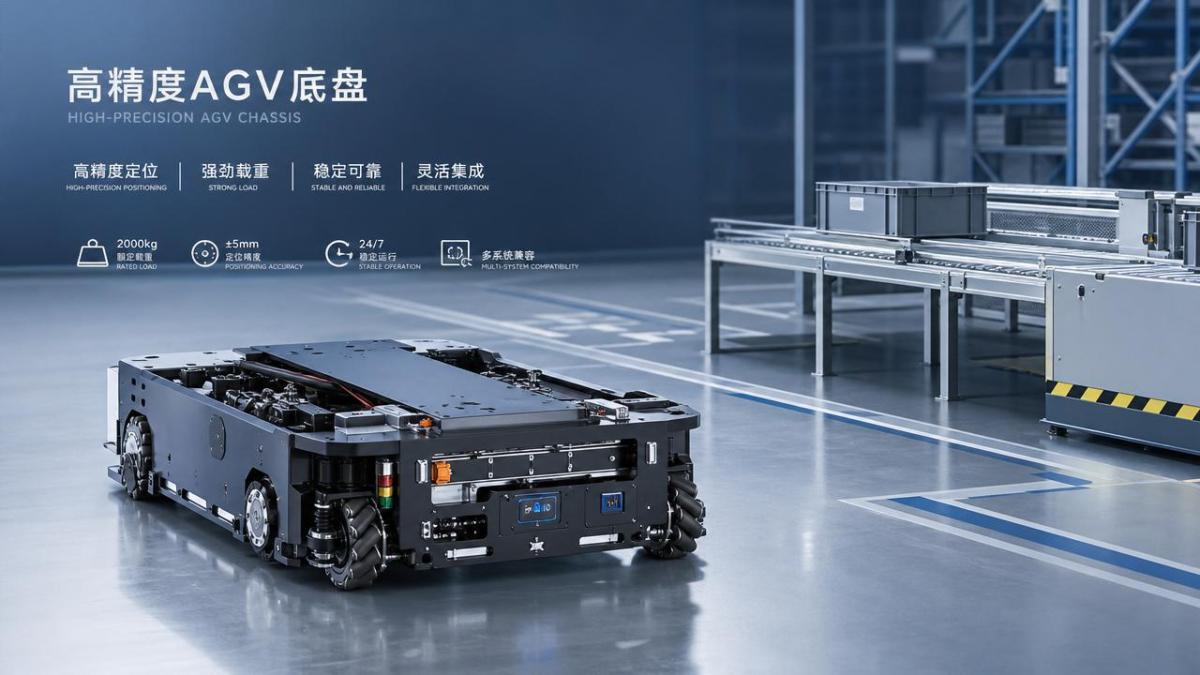
Ask for test evidence rather than brochures. For example, if a supplier claims high durability, request fatigue test data for the chassis frame, wheel module life-cycle data, motor thermal performance, and controller stability logs under continuous duty. In mixed-factory environments, vibration resistance and shock tolerance matter just as much as nominal payload. An agv chassis supplier that can produce structured engineering reports is usually easier to evaluate than one relying on general claims such as “industrial grade” or “high quality.”
It is also important to verify configuration transparency. A low initial quote may exclude battery management, safety laser interface, suspension options, or firmware customization. Comparing suppliers fairly means normalizing the scope of supply first. When specification boundaries are unclear, price comparison loses meaning.
How do you compare engineering quality when two agv chassis suppliers look similar on paper?
Two vendors may list similar payload, speed, and dimensions, yet their actual engineering maturity can be very different. The most useful way to compare an agv chassis supplier is to examine subsystem design depth. Look at wheel architecture, motor and gearbox sizing margin, braking redundancy, cable routing, sealing approach, frame stiffness, and ease of service. These details reveal whether the platform was designed for sustained deployment or only for basic demonstration projects.
Software and electrical integration are equally important. A robust agv chassis supplier should support mainstream communication protocols, provide API or SDK documentation where appropriate, and define I/O mapping clearly. If navigation, lift module, fleet software, and safety systems must be integrated later, unclear interfaces can become the biggest cost driver. Ask whether CAN, EtherCAT, Modbus, ROS compatibility, or custom middleware support is available, and whether the supplier has completed similar integrations before.
Another useful signal is design for maintainability. Can wheels, batteries, motor drivers, and sensors be replaced without disassembling half the unit? Are spare parts standardized across models? Is remote diagnostics available? The stronger the serviceability design, the lower the lifecycle burden. This is where a technically mature agv chassis supplier often separates itself from a low-cost option.
Quick engineering comparison checklist
- Measured payload at continuous duty, not peak-only rating
- Frame rigidity and fatigue validation data
- Motor, gearbox, and braking redundancy design
- Protocol compatibility and integration documentation
- Battery safety, charging logic, and thermal management
- Ease of maintenance and spare parts standardization
Which hidden risks matter most when selecting an agv chassis supplier?
The biggest hidden risk is treating the chassis as a commodity. In reality, the wrong agv chassis supplier can create risks across performance, compliance, and project timing. A platform that works in light indoor testing may struggle in sloped floors, narrow aisles, dusty workshops, cold storage, or multi-shift logistics operations. If real application variables are ignored during supplier evaluation, field failures become far more likely.
Another common risk is incomplete compliance readiness. Depending on the market and application, the chassis may need documentation related to CE, EMC, battery transport, machinery safety integration, and local industrial standards. A qualified agv chassis supplier should explain what is included, what must be completed at system level, and what test reports already exist. Compliance gaps often delay deployment more than hardware issues.
Delivery consistency is also underappreciated. Even when a prototype performs well, batch quality variation can damage the business case. Ask how incoming materials are controlled, whether key components are dual-sourced, what the outgoing inspection process looks like, and how firmware version control is managed. An agv chassis supplier with repeatable manufacturing discipline is usually safer than one that only offers a lower one-time prototype price.
How can lifecycle cost reveal the better agv chassis supplier?
A lower purchase price does not always mean a lower total cost. The better agv chassis supplier is often the one that reduces failures, accelerates integration, and extends service intervals. Lifecycle cost should include commissioning effort, software adaptation, spare parts consumption, battery replacement frequency, remote support availability, and downtime exposure. In high-utilization environments, one extra day of stoppage can erase the savings from a cheaper chassis.
Battery and drive-system efficiency deserve close attention. If one chassis consumes more energy due to poor control tuning or heavier structure, long-term operating expense increases. If wheel wear is excessive because of weak load distribution or aggressive steering geometry, maintenance cost rises as well. An experienced agv chassis supplier should be able to discuss these trade-offs with data, not assumptions.
Lead time has a cost dimension too. Delayed delivery can affect line automation plans, warehouse commissioning, or customer project milestones. Ask for standard lead time, customization lead time, prototype-to-mass-production transition timing, and historical on-time delivery performance. A reliable agv chassis supplier helps stabilize both technical and commercial planning.
What questions help validate support capability and long-term partnership value?
Support quality often becomes visible only after deployment, when changes, failures, or upgrades occur. To compare any agv chassis supplier properly, ask how technical issues are escalated, whether local or remote diagnostics are available, how firmware updates are managed, and what response times are realistic. If the answer is unclear, future downtime risk is higher.
It is wise to assess documentation discipline. Good drawings, electrical schematics, maintenance manuals, software interface notes, and version records reduce dependence on a single contact person. A dependable agv chassis supplier should not treat technical knowledge as informal memory. Strong documentation is a practical sign of process maturity.
Long-term roadmap alignment matters as well. If future deployments may require larger payloads, outdoor variants, omnidirectional movement, or compatibility with new fleet-control systems, ask whether the supplier platform can scale. The right agv chassis supplier is not just selling a current model; it is enabling a stable mobility architecture for future automation phases.
FAQ summary table
Comparing an agv chassis supplier beyond price means shifting the discussion from quotation sheets to engineering truth. The strongest decision usually comes from a structured review of performance data, validation method, compliance readiness, batch consistency, and support depth. Before selecting any agv chassis supplier, build a scoring matrix that weighs technical fit, lifecycle cost, and response capability together. That extra rigor reduces sourcing risk, improves deployment confidence, and leads to a chassis platform that performs reliably long after the first invoice is signed.
Search News
Hot Articles
- Carbon Fiber StructuresHow to Specify Aerospace Carbon Fiber Assemblies for Lightweight, Load-Bearing PartsJul 11, 2026
- Machine VisionXiaomi, Alibaba DAMO Academy Drive Open-Source Robotics Model Ecosystem, Lowering Algorithm Development Barriers for Overseas SMEs Adopting Chinese Robotics SolutionsMar 30, 2026
- Cobots & ArmsShanxi 'AI+' Conference Showcases Embodied Intelligence with Multinational Buyer Engagement: Key Industry ImplicationsMar 30, 2026
Popular Tags
Recommended News
 Jul 11, 2026How to Specify Aerospace Carbon Fiber Assemblies for Lightweight, Load-Bearing PartsAerospace carbon fiber assemblies: learn how to specify laminate design, load data, joining methods, and inspection controls for lighter, reliable load-bearing aerospace parts.Elena Rostova (UAV Systems Researcher)
 Mar 30, 2026Xiaomi, Alibaba DAMO Academy Drive Open-Source Robotics Model Ecosystem, Lowering Algorithm Development Barriers for Overseas SMEs Adopting Chinese Robotics SolutionsXiaomi & Alibaba DAMO Academy's open-source robotics models lower algorithm barriers for global SMEs. Boost efficiency in manufacturing, logistics & smart retail with ROS 2 compatible solutions.TSV Data Lab
 Mar 30, 2026Shanxi 'AI+' Conference Showcases Embodied Intelligence with Multinational Buyer Engagement: Key Industry ImplicationsShanxi 'AI+' Conference highlights embodied intelligence with Tesla, Ubtech & Jiantao showcasing multimodal robotics. 40+ global buyers validated tech on-site, creating new B2B channels for industrial automation & AI solutions.Chen Wei (Automation Lead Engineer)
 Mar 30, 2026Zhongguancun Unveils 6G Integrated Sensing-Computing-Intelligence Platform to Empower Embodied Robots for Global Industrial ApplicationsZhongguancun's new 6G platform revolutionizes industrial robotics with <10ms latency, empowering global automotive, logistics & port automation. Discover how this tech boosts China's smart manufacturing exports.TSV Data Lab
 Mar 30, 2026Mech-Mind Tianjin Embodied Intelligence R&D and Production Base Goes Live, Cutting Delivery Time by 20%–30% for Global Customized AMR+Vision SolutionsMech-Mind's Tianjin AMR+Vision production base cuts delivery time by 20%-30% for欧美 & Latin American markets. Discover how this PLd-certified facility accelerates customized robotics solutions for smart manufacturing and logistics.Chen Wei (Automation Lead Engineer)
 Mar 30, 2026Boao Forum Reveals 'Co-evolution of Big and Small Brains' Trend in Humanoid Robots, China's Embodied Intelligence Accelerates Adaptation to Overseas Manufacturing Service ScenariosDiscover how China's humanoid robots, featuring 'Co-evolution of Big and Small Brains,' are revolutionizing global manufacturing. Learn about Embodied Tian Gong 3.0's ISO compliance and overseas deployment at Boao Forum 2026.Chen Wei (Automation Lead Engineer)
 Mar 30, 2026China Railway Industrial Secures Patent for Embodied Robotics in Material Handling, Boosting High-Precision Delivery Capabilities for Overseas Infrastructure and Manufacturing ProjectsChina Railway Industrial's new patent for embodied robotics in material handling boosts high-precision delivery for global infrastructure & manufacturing. Discover how this innovation enhances logistics accuracy in automotive, rail transit & EPC projects.Chen Wei (Automation Lead Engineer)
 Sep 28, 2026Spindle Runout Measurement in Germany: DIN Standards, Methods, and Acceptance LimitsSpindle runout measurement Germany: explore DIN standards, proven methods, acceptance limits, and audit-ready practices for reliable machining quality.Dr. Marcus Vance
 Sep 27, 2026How to Select Wall-Mount Edge Devices for Space-Constrained Factory NetworksWall mount edge devices for space-constrained factories: evaluate workload, thermal design, power resilience, cable access, and network reliability for smarter deployments.TSV Data Lab
 Sep 26, 2026Machining Tolerance Analysis: How to Set Limits That Meet Function and Cost TargetsMachining tolerance analysis: learn how to set functional limits, control tolerance stacks, reduce inspection risk, and balance precision with production cost.Dr. Marcus Vance
 Sep 25, 2026How to Evaluate an Industrial Infrastructure Data Platform for Multi-Site OperationsIndustrial infrastructure data platform evaluation guide for multi-site operations: compare data quality, edge resilience, interoperability, governance, and scalable proof-of-value criteria.Victor Lin (Chief Software Architect)
 Sep 24, 2026How to Select Machine Vision Optics for Accurate Inspection at Different Working DistancesMachine vision optics selection guide for accurate inspection at every working distance. Compare FOV, pixel scale, DOF, distortion, lighting, and telecentric options.TSV Data Lab
 Sep 23, 2026How to Evaluate a Machine Vision System Integrator for High-Speed Inspection LinesChoose a machine vision system integrator with proven expertise in high-speed inspection, reliable reject timing, robust optics, and measurable acceptance criteria.TSV Data Lab
 Sep 28, 2026When is a SCADA API the right choice for connecting plant systems?SCADA API guide: learn when governed plant data integration improves traceability, security, and scalability—without compromising real-time control.Victor Lin (Chief Software Architect)
 Sep 27, 2026How SCADA data integration improves traceability across production linesSCADA data integration connects production-line data to improve traceability, accelerate quality investigations, and strengthen safety decisions.Victor Lin (Chief Software Architect)
 Sep 26, 2026What to define before starting SCADA integration planningSCADA integration planning starts with clear scope, control boundaries, data models, cybersecurity, and testing. Discover the definitions that reduce risk and costly rework.Victor Lin (Chief Software Architect)
 Sep 25, 2026How a smart factory with Industrial IoT reduces production blind spotsDiscover how a smart factory with Industrial IoT turns real-time machine, quality, and workflow data into actionable insights that reduce production blind spots and delivery risks.Victor Lin (Chief Software Architect)
 Sep 24, 2026When does Industrial IoT make smart manufacturing easier to scale?Smart manufacturing Industrial IoT scales when trusted data, interoperable systems, and secure workflows turn connected assets into measurable gains.TSV Data Lab
 Sep 23, 2026What drives ultra-precision machining cost at 1-micron tolerance?Ultra precision machining cost per part at 1 micron tolerance depends on process, material, metrology, and yield. Learn how to compare quotes confidently.Dr. Marcus Vance
 Sep 22, 2026Drone Engine-T550CC Applications: Build the UAV Power System Around the MissionAn application guide for Drone Engine-T550CC integration, covering payload planning, airframe matching, cooling, fuel, vibration, test procedures, documentation, and service preparation.Elena Rostova (UAV Systems Researcher)
 Sep 22, 2026How to Evaluate Industrial Edge Computing Vendors for Factory DeploymentIndustrial edge computing vendor evaluation guide for factories: compare latency, protocol fit, reliability, security, and lifecycle support before deployment.TSV Data Lab
 Sep 21, 2026Drone Payload Integration: Matching Power, Data, and Center of Gravity for Reliable FlightsDrone payload integration made practical: balance power, data, center of gravity, and endurance to build safer, more reliable mission-ready flights.Elena Rostova (UAV Systems Researcher)
 Sep 20, 2026Autonomous Navigation Pricing: Cost Drivers and Budget Benchmarks for AMR ProjectsAutonomous navigation price explained: compare AMR cost drivers, software, sensors, integration, safety, and lifecycle budgets to build a scalable project plan.Chen Wei (Automation Lead Engineer)
 Sep 19, 2026How to Scope Automation Integration Services for Multi-System Factory ProjectsAutomation integration services: learn how to scope multi-system factory projects with clear workflows, interface contracts, safety boundaries, and acceptance criteria.Victor Lin (Chief Software Architect)