
Warehouse Sorting Robot Wholesale and Hidden Service Gaps
Publication Date
author
In warehouse sorting robot wholesale, the biggest risk is rarely the quoted unit price—it is the hidden service gap behind deployment, integration, spare parts response, and long-term uptime. For channel-based industrial supply networks, a low entry quote can quickly turn into a higher total operating burden when software adaptation, site commissioning, training, and maintenance support are not clearly defined. This is why warehouse sorting robot wholesale should be assessed as a lifecycle decision rather than a catalog transaction. A data-driven review of service scope, response metrics, and support architecture reveals whether a wholesale offer can protect throughput, customer continuity, and long-term commercial credibility.
Warehouse Sorting Robot Wholesale: Definition and Evaluation Boundaries
Warehouse sorting robot wholesale usually refers to bulk procurement or channel distribution of robotic systems used for parcel sorting, item routing, bin transfer, order consolidation, and intelligent warehouse flow control. In practice, this category may include mobile sorting robots, conveyor-integrated robotic modules, vision-guided pick systems, and software-connected control units that communicate with WMS, MES, ERP, or edge devices.
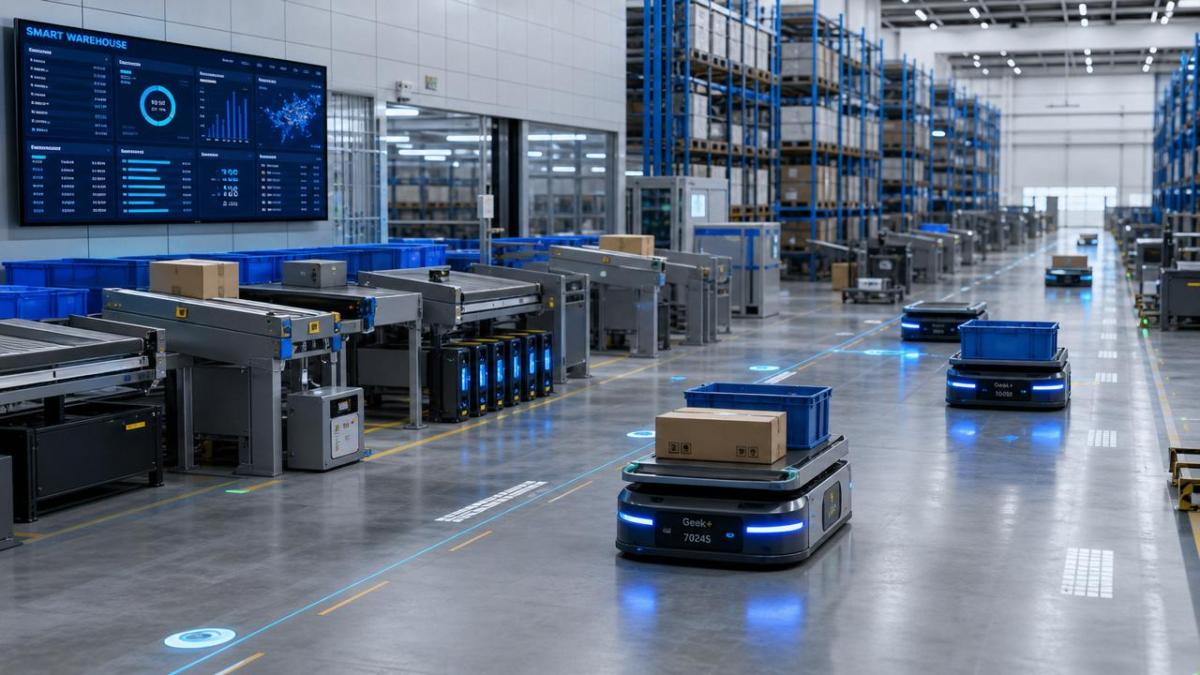
The problem is that many warehouse sorting robot wholesale offers are framed around hardware counts, battery capacity, travel speed, or nominal payload, while the real operating value depends on integration depth, fault recovery logic, map stability, consumable replacement cycles, and field service capability. Two suppliers may offer similar robot specifications but deliver very different outcomes after 12 months of operation.
A disciplined evaluation boundary should therefore include five dimensions: robot performance, software compatibility, service response, spare parts readiness, and upgrade path. Without this broader frame, warehouse sorting robot wholesale decisions often overestimate upfront savings and underestimate downstream friction.
Current Industry Signals Behind Service Gaps
The growth of e-commerce, omnichannel fulfillment, and labor volatility has accelerated demand for automated sortation. At the same time, more suppliers have entered the market with attractive warehouse sorting robot wholesale packages, creating greater variance in technical depth and after-sales discipline. This expansion has made comparison harder, not easier.
Several market signals explain why hidden service gaps have become a critical issue:
- Standardized hardware is increasingly common, but deployment environments remain highly non-standard.
- Robot fleets now depend more heavily on software orchestration, API stability, and data visibility.
- Lead times for controllers, sensors, batteries, and drive modules can disrupt service continuity.
- Many wholesale offers separate sales responsibility from technical support responsibility.
- Cross-border projects often face language, spare parts, and remote diagnosis limitations.
These factors mean warehouse sorting robot wholesale is no longer a simple equipment sourcing topic. It sits at the intersection of automation engineering, industrial software integration, and service supply chain resilience.
Where Warehouse Sorting Robot Wholesale Offers Commonly Fall Short
The most overlooked weakness in warehouse sorting robot wholesale is the assumption that technical support can be added later without affecting project economics. In reality, gaps formed at the quotation stage often become expensive constraints during scale-up.
Deployment and commissioning scope
Some wholesale contracts cover robot shipment but not path mapping, traffic rule tuning, rack alignment checks, workstation calibration, or safety parameter validation. If site conditions differ from demo conditions, performance may decline before the system reaches stable production.
Integration depth
Warehouse sorting robot wholesale must be reviewed against the quality of integration with upstream and downstream systems. Weak API documentation, unstable middleware, or limited exception handling can create bottlenecks even when robot hardware performs well. Integration debt is one of the fastest ways to erase initial price advantages.
Spare parts and maintenance architecture
A common hidden gap is the absence of defined spare part stocking strategy for batteries, wheel modules, sensors, controllers, and charging components. If replacement depends on overseas dispatch with uncertain lead time, small failures can escalate into prolonged downtime.
Software updates and version control
Warehouse sorting robot wholesale is not static because fleet management software evolves. If version upgrades break compatibility with existing WMS logic, or if patching requires paid intervention every time, the operating model becomes fragile. A clear software maintenance policy is essential.
Training and fault recovery
Basic operator training is not enough. The real issue is whether local teams can isolate navigation errors, charging faults, congestion anomalies, and sensor contamination without waiting for external support. Strong wholesale programs include tiered training for operation, maintenance, and system supervision.
Operational Value Beyond Unit Price
A stronger warehouse sorting robot wholesale framework measures value through operational stability, recovery speed, and scalability. This is especially important in sectors where fulfillment windows are narrow and labor substitution is tied directly to service-level performance.
The practical business value appears in four areas:
- Higher uptime through predictable maintenance planning and spare parts access.
- Lower integration risk through tested interfaces and exception-handling logic.
- Faster expansion from pilot to multi-site deployment because the support model is already structured.
- Better margin protection because service costs are visible before commitments are made.
From the perspective advocated by TechStat Vanguard, engineering truth matters more than promotional certainty. In warehouse sorting robot wholesale, the most credible offer is not the one with the strongest adjectives, but the one that can document uptime assumptions, intervention times, replacement logic, and interface constraints with measurable clarity.
Typical Application Scenarios and Service Priorities
Different warehouse environments expose different weaknesses in warehouse sorting robot wholesale programs. The service model should match the operational context rather than rely on a generic support promise.
This scenario-based view helps translate warehouse sorting robot wholesale from a broad sourcing category into a targeted technical decision. It also improves quote comparison by aligning service expectations with actual operating stress.
Practical Review Checklist for Wholesale Decision Quality
A more reliable warehouse sorting robot wholesale review process should test evidence, not slogans. The following checkpoints are practical and measurable:
- Request a service scope matrix covering installation, commissioning, software setup, training, and acceptance criteria.
- Confirm response SLAs for remote support, onsite intervention, and critical component replacement.
- Review spare parts lists with regional stocking plan and typical replenishment lead times.
- Check whether uptime data reflects real deployed environments rather than laboratory conditions.
- Verify compatibility with current WMS or ERP architecture, including API limits and upgrade dependencies.
- Ask for fault taxonomy and escalation process, including who owns root-cause resolution.
- Evaluate whether software licensing, version updates, and cybersecurity maintenance are included or extra.
In warehouse sorting robot wholesale, these details are not administrative fine print. They are core technical risk controls that shape lifecycle cost, deployment speed, and user confidence.
A Data-Driven Next Step
The most effective next step in evaluating warehouse sorting robot wholesale is to convert vendor comparison into an engineering scorecard. Instead of ranking offers only by unit price and nameplate specifications, compare them by commissioning completeness, software openness, spare parts resilience, support responsiveness, and documented uptime assumptions. This approach aligns with TSV’s principle that parameters do not lie and tolerances dictate success.
When warehouse sorting robot wholesale is reviewed through measurable service evidence, hidden gaps become visible before they affect operations. That creates a stronger basis for selecting systems that can scale, remain maintainable, and hold performance under commercial pressure. For any project moving from inquiry to qualification, the most practical action is clear: build a side-by-side evaluation sheet, demand service metrics in writing, and treat support architecture as part of the product itself.
Search News
Hot Articles
- Carbon Fiber StructuresHow to Specify Aerospace Carbon Fiber Assemblies for Lightweight, Load-Bearing PartsJul 11, 2026
- Machine VisionXiaomi, Alibaba DAMO Academy Drive Open-Source Robotics Model Ecosystem, Lowering Algorithm Development Barriers for Overseas SMEs Adopting Chinese Robotics SolutionsMar 30, 2026
- Cobots & ArmsShanxi 'AI+' Conference Showcases Embodied Intelligence with Multinational Buyer Engagement: Key Industry ImplicationsMar 30, 2026
Popular Tags
Recommended News
 Jul 11, 2026How to Specify Aerospace Carbon Fiber Assemblies for Lightweight, Load-Bearing PartsAerospace carbon fiber assemblies: learn how to specify laminate design, load data, joining methods, and inspection controls for lighter, reliable load-bearing aerospace parts.Elena Rostova (UAV Systems Researcher)
 Mar 30, 2026Xiaomi, Alibaba DAMO Academy Drive Open-Source Robotics Model Ecosystem, Lowering Algorithm Development Barriers for Overseas SMEs Adopting Chinese Robotics SolutionsXiaomi & Alibaba DAMO Academy's open-source robotics models lower algorithm barriers for global SMEs. Boost efficiency in manufacturing, logistics & smart retail with ROS 2 compatible solutions.TSV Data Lab
 Mar 30, 2026Shanxi 'AI+' Conference Showcases Embodied Intelligence with Multinational Buyer Engagement: Key Industry ImplicationsShanxi 'AI+' Conference highlights embodied intelligence with Tesla, Ubtech & Jiantao showcasing multimodal robotics. 40+ global buyers validated tech on-site, creating new B2B channels for industrial automation & AI solutions.Chen Wei (Automation Lead Engineer)
 Mar 30, 2026Zhongguancun Unveils 6G Integrated Sensing-Computing-Intelligence Platform to Empower Embodied Robots for Global Industrial ApplicationsZhongguancun's new 6G platform revolutionizes industrial robotics with <10ms latency, empowering global automotive, logistics & port automation. Discover how this tech boosts China's smart manufacturing exports.TSV Data Lab
 Mar 30, 2026Mech-Mind Tianjin Embodied Intelligence R&D and Production Base Goes Live, Cutting Delivery Time by 20%–30% for Global Customized AMR+Vision SolutionsMech-Mind's Tianjin AMR+Vision production base cuts delivery time by 20%-30% for欧美 & Latin American markets. Discover how this PLd-certified facility accelerates customized robotics solutions for smart manufacturing and logistics.Chen Wei (Automation Lead Engineer)
 Mar 30, 2026Boao Forum Reveals 'Co-evolution of Big and Small Brains' Trend in Humanoid Robots, China's Embodied Intelligence Accelerates Adaptation to Overseas Manufacturing Service ScenariosDiscover how China's humanoid robots, featuring 'Co-evolution of Big and Small Brains,' are revolutionizing global manufacturing. Learn about Embodied Tian Gong 3.0's ISO compliance and overseas deployment at Boao Forum 2026.Chen Wei (Automation Lead Engineer)
 Mar 30, 2026China Railway Industrial Secures Patent for Embodied Robotics in Material Handling, Boosting High-Precision Delivery Capabilities for Overseas Infrastructure and Manufacturing ProjectsChina Railway Industrial's new patent for embodied robotics in material handling boosts high-precision delivery for global infrastructure & manufacturing. Discover how this innovation enhances logistics accuracy in automotive, rail transit & EPC projects.Chen Wei (Automation Lead Engineer)
 Sep 28, 2026Spindle Runout Measurement in Germany: DIN Standards, Methods, and Acceptance LimitsSpindle runout measurement Germany: explore DIN standards, proven methods, acceptance limits, and audit-ready practices for reliable machining quality.Dr. Marcus Vance
 Sep 27, 2026How to Select Wall-Mount Edge Devices for Space-Constrained Factory NetworksWall mount edge devices for space-constrained factories: evaluate workload, thermal design, power resilience, cable access, and network reliability for smarter deployments.TSV Data Lab
 Sep 26, 2026Machining Tolerance Analysis: How to Set Limits That Meet Function and Cost TargetsMachining tolerance analysis: learn how to set functional limits, control tolerance stacks, reduce inspection risk, and balance precision with production cost.Dr. Marcus Vance
 Sep 25, 2026How to Evaluate an Industrial Infrastructure Data Platform for Multi-Site OperationsIndustrial infrastructure data platform evaluation guide for multi-site operations: compare data quality, edge resilience, interoperability, governance, and scalable proof-of-value criteria.Victor Lin (Chief Software Architect)
 Sep 24, 2026How to Select Machine Vision Optics for Accurate Inspection at Different Working DistancesMachine vision optics selection guide for accurate inspection at every working distance. Compare FOV, pixel scale, DOF, distortion, lighting, and telecentric options.TSV Data Lab
 Sep 23, 2026How to Evaluate a Machine Vision System Integrator for High-Speed Inspection LinesChoose a machine vision system integrator with proven expertise in high-speed inspection, reliable reject timing, robust optics, and measurable acceptance criteria.TSV Data Lab
 Sep 28, 2026When is a SCADA API the right choice for connecting plant systems?SCADA API guide: learn when governed plant data integration improves traceability, security, and scalability—without compromising real-time control.Victor Lin (Chief Software Architect)
 Sep 27, 2026How SCADA data integration improves traceability across production linesSCADA data integration connects production-line data to improve traceability, accelerate quality investigations, and strengthen safety decisions.Victor Lin (Chief Software Architect)
 Sep 26, 2026What to define before starting SCADA integration planningSCADA integration planning starts with clear scope, control boundaries, data models, cybersecurity, and testing. Discover the definitions that reduce risk and costly rework.Victor Lin (Chief Software Architect)
 Sep 25, 2026How a smart factory with Industrial IoT reduces production blind spotsDiscover how a smart factory with Industrial IoT turns real-time machine, quality, and workflow data into actionable insights that reduce production blind spots and delivery risks.Victor Lin (Chief Software Architect)
 Sep 24, 2026When does Industrial IoT make smart manufacturing easier to scale?Smart manufacturing Industrial IoT scales when trusted data, interoperable systems, and secure workflows turn connected assets into measurable gains.TSV Data Lab
 Sep 23, 2026What drives ultra-precision machining cost at 1-micron tolerance?Ultra precision machining cost per part at 1 micron tolerance depends on process, material, metrology, and yield. Learn how to compare quotes confidently.Dr. Marcus Vance
 Sep 22, 2026Drone Engine-T550CC Applications: Build the UAV Power System Around the MissionAn application guide for Drone Engine-T550CC integration, covering payload planning, airframe matching, cooling, fuel, vibration, test procedures, documentation, and service preparation.Elena Rostova (UAV Systems Researcher)
 Sep 22, 2026How to Evaluate Industrial Edge Computing Vendors for Factory DeploymentIndustrial edge computing vendor evaluation guide for factories: compare latency, protocol fit, reliability, security, and lifecycle support before deployment.TSV Data Lab
 Sep 21, 2026Drone Payload Integration: Matching Power, Data, and Center of Gravity for Reliable FlightsDrone payload integration made practical: balance power, data, center of gravity, and endurance to build safer, more reliable mission-ready flights.Elena Rostova (UAV Systems Researcher)
 Sep 20, 2026Autonomous Navigation Pricing: Cost Drivers and Budget Benchmarks for AMR ProjectsAutonomous navigation price explained: compare AMR cost drivers, software, sensors, integration, safety, and lifecycle budgets to build a scalable project plan.Chen Wei (Automation Lead Engineer)
 Sep 19, 2026How to Scope Automation Integration Services for Multi-System Factory ProjectsAutomation integration services: learn how to scope multi-system factory projects with clear workflows, interface contracts, safety boundaries, and acceptance criteria.Victor Lin (Chief Software Architect)























