Path planning algorithms that reduce AMR congestion
Publication Date
author
For technical evaluators comparing mobile automation systems, AGV AMR path planning algorithms are no longer a secondary software feature but a core determinant of throughput, safety, and congestion control. In high-density facilities, the right planning logic can reduce deadlocks, shorten travel time, and improve fleet-level coordination. This article examines how path planning strategies translate into measurable operational performance under real engineering constraints.
For most evaluators, the core search intent behind “Path planning algorithms that reduce AMR congestion” is not academic theory. It is a practical question: which planning methods actually improve traffic flow in real facilities, and how should those methods be evaluated during supplier comparison, simulation, pilot deployment, or factory acceptance testing?
The short answer is that no single algorithm eliminates congestion on its own. Congestion falls when global routing, local obstacle avoidance, traffic reservation, task allocation, and fleet control are designed as one system. Vendors that only advertise “AI navigation” or “dynamic rerouting” without explaining these layers usually leave critical performance questions unanswered.
What technical evaluators are really trying to verify
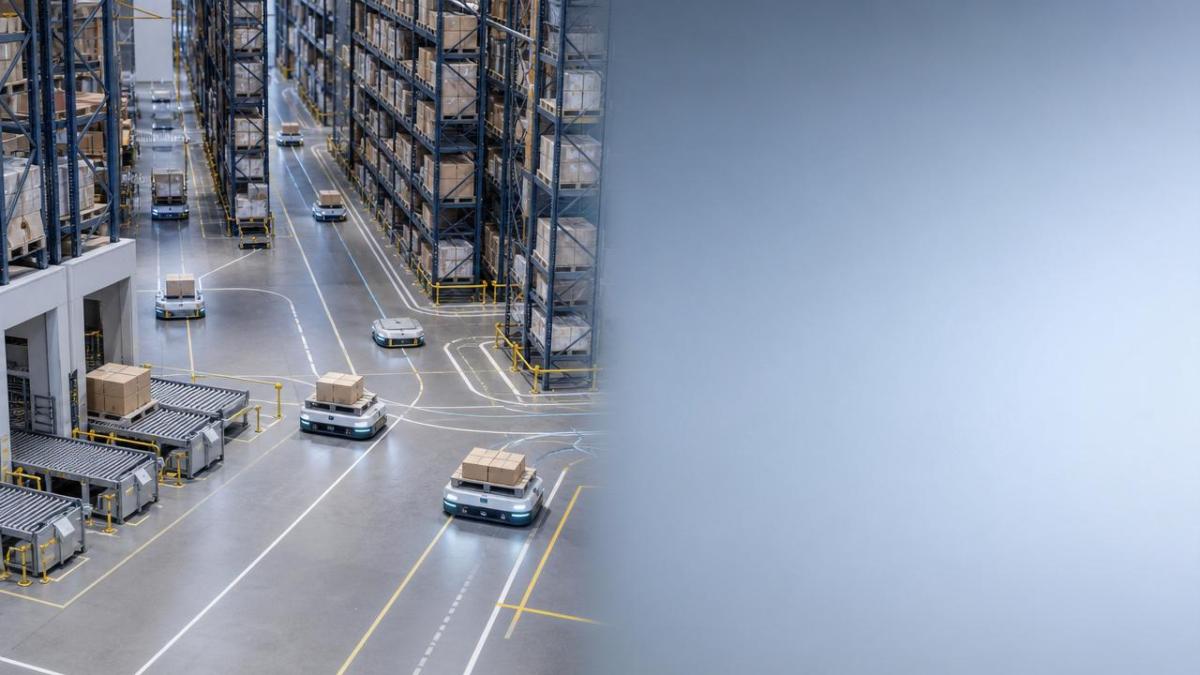
When technical assessment teams search for AGV AMR path planning algorithms, they are usually trying to determine whether a fleet will remain stable under peak operational density. They want to know if the system can maintain throughput when aisles are narrow, mission priorities conflict, and robots must share space with people, forklifts, and fixed equipment.
That means the primary concern is not whether a robot can navigate from point A to point B in a demo. The deeper question is whether the navigation stack can keep dozens or hundreds of missions moving without creating queue cascades, blocked intersections, idle robots, or long task completion tails.
For this audience, useful content must answer five practical concerns: how the algorithm behaves under congestion, what tradeoffs it makes between shortest path and fleet flow, how predictable it remains in mixed traffic, what performance indicators reveal actual quality, and which deployment conditions limit its effectiveness.
Broad descriptions of SLAM, autonomy, or “smart routing” are therefore less useful than engineering-level discussion of reservation logic, conflict resolution, map topology, replan frequency, and the fleet-level metrics that expose bottlenecks.
Why AMR congestion is rarely caused by one robot’s route alone
Congestion in AMR environments is a systems problem. A robot may appear to be slowed by a weak routing algorithm, but the true root cause often involves a combination of map design, mission release timing, pickup/drop-off node placement, battery dispatch rules, and right-of-way policies.
In practice, congestion emerges from three layers. First, there is structural congestion caused by facility layout: narrow aisles, too few bypasses, and shared chokepoints near workstations or elevators. Second, there is operational congestion caused by mission clustering, such as repeated dispatches to the same station. Third, there is control congestion caused by the fleet software itself, including poor conflict handling or delayed replanning.
This matters because evaluators should not judge path planning algorithms in isolation from the traffic environment they must handle. A mathematically elegant shortest-path planner may still underperform if the fleet manager continuously sends robots into the same constrained zone with no temporal spacing or reservation mechanism.
The best evaluation approach is to ask how the vendor coordinates route planning, task assignment, and traffic governance together. If those elements are disconnected, congestion reduction claims are often fragile outside controlled demos.
Which path planning algorithms matter most in congestion reduction
Several algorithm families appear frequently in AMR systems, but they contribute differently to congestion control. The most common baseline methods are graph-based global planners such as Dijkstra or A*. These are valuable because they compute efficient routes on mapped networks and are relatively interpretable. However, by themselves, they mainly minimize travel cost for individual robots rather than optimize crowd behavior across the fleet.
Time-augmented planning improves on this by considering not only where a robot travels, but when it occupies specific nodes or edges. This is important in warehouses and factories because many conflicts are temporal rather than purely spatial. Two robots may be assigned the same corridor, but only one can safely occupy the chokepoint during a given interval.
Cooperative path planning methods go further by explicitly coordinating multiple robots. Examples include conflict-based search variants, prioritized planning, reservation-based systems, and multi-agent pathfinding frameworks. These approaches can reduce deadlocks and repeated reroutes because they solve conflicts before they happen rather than after robots physically encounter each other.
Local planners also matter. Methods derived from dynamic window approaches, velocity obstacles, model predictive control, or reactive obstacle avoidance help robots handle humans, pallets, or temporary blockages. But local avoidance alone does not solve systemic congestion. In dense environments, local planners can actually worsen traffic if robots keep yielding or oscillating without fleet-level coordination.
For evaluators, the key insight is this: the most effective AGV AMR path planning algorithms for congestion reduction usually combine a global route planner, a cooperative conflict-resolution layer, and a local safety planner with predictable behavior near dynamic obstacles.
How high-performing systems balance shortest path against fleet throughput
A common mistake in supplier evaluation is to overvalue shortest-path efficiency. In congested operations, the route with the fewest meters is not always the route with the highest throughput. If multiple robots select the same shortest corridor, queueing delays can erase theoretical distance savings.
Stronger systems use traffic-aware cost functions. Instead of assigning cost only by distance, they include expected occupancy, historical delay, turn penalties, crossing risk, station dwell probability, and congestion forecasts. This allows the fleet to spread across the available map rather than collapse onto one “optimal” route.
Some platforms also support dynamic lane direction, geofenced speed controls, and one-way routing during peak windows. These are not always described as algorithmic features, but they directly shape congestion outcomes. In real plants, deterministic traffic rules often outperform purely opportunistic motion.
From an evaluation standpoint, this means the best planner is not the one that produces the visually cleanest path. It is the one that maintains stable mission completion times as fleet density rises. Stability under load is more valuable than isolated efficiency in light traffic.
What technical features actually indicate congestion-resistant planning
When reviewing vendor architecture, evaluators should look for evidence of specific congestion-control mechanisms. One of the most important is path reservation. If the fleet manager can reserve nodes, edges, or zones ahead of robot arrival, it can prevent many intersection conflicts before they occur.
Another important feature is deadlock detection and recovery. In narrow or bidirectional spaces, robots can enter mutually blocking states even when each local decision seems reasonable. The system should detect cyclical blockage patterns and resolve them through priority reassignment, backtracking, or controlled rerouting rather than waiting for manual intervention.
Queue management at stations is equally important. Many congestion events happen not in travel aisles, but at pickup, drop-off, charging, or inspection points. Good planning systems treat these nodes as capacity-constrained resources, not simple destinations. They may delay dispatch, assign virtual queues, or reroute staging positions to avoid spillback into traffic lanes.
Replanning behavior should also be examined closely. Frequent replanning sounds attractive, but excessive route churn can destabilize traffic and make robot behavior less predictable. Effective systems replan with purpose, balancing responsiveness with route commitment.
Finally, evaluators should ask whether the vendor supports digital twin simulation or scenario playback using actual traffic logs. A planner that performs well in synthetic benchmarks but cannot be tested against site-specific mission patterns should be treated cautiously.
How to evaluate algorithm quality using measurable performance indicators
Technical evaluators need metrics that expose congestion, not just navigation success. One useful metric is mission completion time distribution. Average task time matters, but the upper tail often matters more. A system with occasional severe delays can disrupt downstream production even if its average performance looks acceptable.
Intersection delay is another strong indicator. Measuring dwell time at critical crossings, merge points, and station approaches helps identify whether the path planning logic can coordinate shared space effectively. If delay grows sharply with fleet count, the control strategy may not scale.
Robot idle time caused by traffic should be separated from idle time caused by lack of work. This distinction is essential. A fleet may appear underutilized not because demand is low, but because robots spend too much time yielding, waiting, or rerouting around each other.
Other valuable indicators include path stretch ratio versus theoretical shortest route, blocked-node frequency, deadlock recovery count, queue length at service stations, and throughput per square meter under increasing dispatch density. For safety-sensitive environments, near-stop frequency and abrupt speed changes can also reveal poor local conflict handling.
The strongest comparison method is load-based testing. Ask vendors to show how these metrics change at 30%, 60%, 80%, and peak expected traffic levels. Congestion-resistant systems should degrade gradually, not collapse once a threshold is crossed.
Where different planning strategies fit best in real facilities
Not every site needs the same level of planning sophistication. In low-density environments with wide aisles and predictable routes, classical graph-based planning with basic traffic control may be sufficient. In these settings, simplicity can improve maintainability and reduce integration risk.
In medium-density facilities with repeated crossing flows, reservation-based routing and stronger zone control become more important. These sites often benefit from explicit right-of-way logic, controlled staging areas, and congestion-aware dispatch rules more than from highly experimental algorithms.
High-density manufacturing and fulfillment operations typically need true multi-robot coordination. Here, cooperative planning, time-based conflict resolution, and station-capacity management are not optional features. Without them, adding more robots may reduce rather than increase effective throughput.
Mixed environments introduce another challenge. If humans, forklifts, and AMRs share the same operational space, local planner predictability becomes critical. A robot that constantly yields in uncertain ways may remain safe but still harm productivity. Evaluators should therefore examine not only avoidance capability, but behavioral consistency around dynamic agents.
Questions to ask vendors before accepting congestion-reduction claims
Supplier presentations often use vague language around autonomy. To evaluate AGV AMR path planning algorithms properly, technical teams should ask direct and testable questions. Does the fleet manager reserve path segments in time as well as space? How are deadlocks identified? What happens when multiple high-priority jobs target the same zone? How are charging missions prevented from interfering with production missions?
It is also useful to ask whether the planning logic supports heterogeneous fleets. Congestion behavior changes when robots differ in speed, turning radius, payload, lift cycle time, or docking accuracy. An algorithm that works for one robot class may degrade when several classes share the same map.
Another key question is whether the vendor can demonstrate performance in layouts similar to yours. Technical evaluators should request evidence from comparable aisle widths, station densities, and mission concurrency levels, not just generic benchmark claims.
Finally, ask what assumptions the planner requires. Some algorithms perform well only if maps are tightly structured, traffic rules are fixed, and dynamic obstacles are limited. Those constraints are not necessarily problems, but they should be explicit during procurement and system design review.
Common evaluation mistakes that lead to poor algorithm selection
One frequent mistake is focusing on autonomous navigation capability while neglecting fleet orchestration. A robot that can avoid a person smoothly is not necessarily part of a fleet that can sustain high throughput without congestion.
Another mistake is judging performance from low-density pilot tests. Many systems look effective with a few robots and light traffic. The real differences between planners often appear only when mission release rates rise and shared resources become saturated.
Technical teams also sometimes underestimate map topology. If the site layout has too few alternate routes, even advanced planners will struggle. Congestion reduction may require a combination of algorithmic changes and physical process redesign, such as moving buffers or adding bypass lanes.
A final mistake is accepting broad AI claims without parameter-level evidence. For TSV-style technical evaluation, the important question is not whether a planner is “intelligent,” but whether it can produce measurable gains in task latency, queue control, deadlock avoidance, and fleet scalability under defined operating constraints.
Bottom line for technical evaluation teams
For technical evaluators, the most useful conclusion is straightforward: congestion reduction is not delivered by one routing formula alone. It comes from a coordinated planning stack that combines global route optimization, temporal conflict management, local obstacle handling, and dispatch logic aligned with site constraints.
When comparing systems, prioritize evidence over labels. The strongest AGV AMR path planning algorithms are the ones that maintain throughput as density increases, keep delay distributions narrow, avoid deadlock under realistic mission mixes, and remain understandable enough to tune during deployment.
In other words, path planning should be treated as a measurable operational capability, not a black-box software promise. For organizations making high-value automation decisions, that distinction is what turns navigation from a demo feature into a reliable production asset.
Search News
Hot Articles
- Carbon Fiber StructuresHow to Specify Aerospace Carbon Fiber Assemblies for Lightweight, Load-Bearing PartsJul 11, 2026
- Machine VisionXiaomi, Alibaba DAMO Academy Drive Open-Source Robotics Model Ecosystem, Lowering Algorithm Development Barriers for Overseas SMEs Adopting Chinese Robotics SolutionsMar 30, 2026
- Cobots & ArmsShanxi 'AI+' Conference Showcases Embodied Intelligence with Multinational Buyer Engagement: Key Industry ImplicationsMar 30, 2026
Popular Tags
Recommended News
 Jul 11, 2026How to Specify Aerospace Carbon Fiber Assemblies for Lightweight, Load-Bearing PartsAerospace carbon fiber assemblies: learn how to specify laminate design, load data, joining methods, and inspection controls for lighter, reliable load-bearing aerospace parts.Elena Rostova (UAV Systems Researcher)
 Mar 30, 2026Xiaomi, Alibaba DAMO Academy Drive Open-Source Robotics Model Ecosystem, Lowering Algorithm Development Barriers for Overseas SMEs Adopting Chinese Robotics SolutionsXiaomi & Alibaba DAMO Academy's open-source robotics models lower algorithm barriers for global SMEs. Boost efficiency in manufacturing, logistics & smart retail with ROS 2 compatible solutions.TSV Data Lab
 Mar 30, 2026Shanxi 'AI+' Conference Showcases Embodied Intelligence with Multinational Buyer Engagement: Key Industry ImplicationsShanxi 'AI+' Conference highlights embodied intelligence with Tesla, Ubtech & Jiantao showcasing multimodal robotics. 40+ global buyers validated tech on-site, creating new B2B channels for industrial automation & AI solutions.Chen Wei (Automation Lead Engineer)
 Mar 30, 2026Zhongguancun Unveils 6G Integrated Sensing-Computing-Intelligence Platform to Empower Embodied Robots for Global Industrial ApplicationsZhongguancun's new 6G platform revolutionizes industrial robotics with <10ms latency, empowering global automotive, logistics & port automation. Discover how this tech boosts China's smart manufacturing exports.TSV Data Lab
 Mar 30, 2026Mech-Mind Tianjin Embodied Intelligence R&D and Production Base Goes Live, Cutting Delivery Time by 20%–30% for Global Customized AMR+Vision SolutionsMech-Mind's Tianjin AMR+Vision production base cuts delivery time by 20%-30% for欧美 & Latin American markets. Discover how this PLd-certified facility accelerates customized robotics solutions for smart manufacturing and logistics.Chen Wei (Automation Lead Engineer)
 Mar 30, 2026Boao Forum Reveals 'Co-evolution of Big and Small Brains' Trend in Humanoid Robots, China's Embodied Intelligence Accelerates Adaptation to Overseas Manufacturing Service ScenariosDiscover how China's humanoid robots, featuring 'Co-evolution of Big and Small Brains,' are revolutionizing global manufacturing. Learn about Embodied Tian Gong 3.0's ISO compliance and overseas deployment at Boao Forum 2026.Chen Wei (Automation Lead Engineer)
 Mar 30, 2026China Railway Industrial Secures Patent for Embodied Robotics in Material Handling, Boosting High-Precision Delivery Capabilities for Overseas Infrastructure and Manufacturing ProjectsChina Railway Industrial's new patent for embodied robotics in material handling boosts high-precision delivery for global infrastructure & manufacturing. Discover how this innovation enhances logistics accuracy in automotive, rail transit & EPC projects.Chen Wei (Automation Lead Engineer)
 Sep 28, 2026Spindle Runout Measurement in Germany: DIN Standards, Methods, and Acceptance LimitsSpindle runout measurement Germany: explore DIN standards, proven methods, acceptance limits, and audit-ready practices for reliable machining quality.Dr. Marcus Vance
 Sep 27, 2026How to Select Wall-Mount Edge Devices for Space-Constrained Factory NetworksWall mount edge devices for space-constrained factories: evaluate workload, thermal design, power resilience, cable access, and network reliability for smarter deployments.TSV Data Lab
 Sep 26, 2026Machining Tolerance Analysis: How to Set Limits That Meet Function and Cost TargetsMachining tolerance analysis: learn how to set functional limits, control tolerance stacks, reduce inspection risk, and balance precision with production cost.Dr. Marcus Vance
 Sep 25, 2026How to Evaluate an Industrial Infrastructure Data Platform for Multi-Site OperationsIndustrial infrastructure data platform evaluation guide for multi-site operations: compare data quality, edge resilience, interoperability, governance, and scalable proof-of-value criteria.Victor Lin (Chief Software Architect)
 Sep 24, 2026How to Select Machine Vision Optics for Accurate Inspection at Different Working DistancesMachine vision optics selection guide for accurate inspection at every working distance. Compare FOV, pixel scale, DOF, distortion, lighting, and telecentric options.TSV Data Lab
 Sep 23, 2026How to Evaluate a Machine Vision System Integrator for High-Speed Inspection LinesChoose a machine vision system integrator with proven expertise in high-speed inspection, reliable reject timing, robust optics, and measurable acceptance criteria.TSV Data Lab
 Sep 28, 2026When is a SCADA API the right choice for connecting plant systems?SCADA API guide: learn when governed plant data integration improves traceability, security, and scalability—without compromising real-time control.Victor Lin (Chief Software Architect)
 Sep 27, 2026How SCADA data integration improves traceability across production linesSCADA data integration connects production-line data to improve traceability, accelerate quality investigations, and strengthen safety decisions.Victor Lin (Chief Software Architect)
 Sep 26, 2026What to define before starting SCADA integration planningSCADA integration planning starts with clear scope, control boundaries, data models, cybersecurity, and testing. Discover the definitions that reduce risk and costly rework.Victor Lin (Chief Software Architect)
 Sep 25, 2026How a smart factory with Industrial IoT reduces production blind spotsDiscover how a smart factory with Industrial IoT turns real-time machine, quality, and workflow data into actionable insights that reduce production blind spots and delivery risks.Victor Lin (Chief Software Architect)
 Sep 24, 2026When does Industrial IoT make smart manufacturing easier to scale?Smart manufacturing Industrial IoT scales when trusted data, interoperable systems, and secure workflows turn connected assets into measurable gains.TSV Data Lab
 Sep 23, 2026What drives ultra-precision machining cost at 1-micron tolerance?Ultra precision machining cost per part at 1 micron tolerance depends on process, material, metrology, and yield. Learn how to compare quotes confidently.Dr. Marcus Vance
 Sep 22, 2026Drone Engine-T550CC Applications: Build the UAV Power System Around the MissionAn application guide for Drone Engine-T550CC integration, covering payload planning, airframe matching, cooling, fuel, vibration, test procedures, documentation, and service preparation.Elena Rostova (UAV Systems Researcher)
 Sep 22, 2026How to Evaluate Industrial Edge Computing Vendors for Factory DeploymentIndustrial edge computing vendor evaluation guide for factories: compare latency, protocol fit, reliability, security, and lifecycle support before deployment.TSV Data Lab
 Sep 21, 2026Drone Payload Integration: Matching Power, Data, and Center of Gravity for Reliable FlightsDrone payload integration made practical: balance power, data, center of gravity, and endurance to build safer, more reliable mission-ready flights.Elena Rostova (UAV Systems Researcher)
 Sep 20, 2026Autonomous Navigation Pricing: Cost Drivers and Budget Benchmarks for AMR ProjectsAutonomous navigation price explained: compare AMR cost drivers, software, sensors, integration, safety, and lifecycle budgets to build a scalable project plan.Chen Wei (Automation Lead Engineer)
 Sep 19, 2026How to Scope Automation Integration Services for Multi-System Factory ProjectsAutomation integration services: learn how to scope multi-system factory projects with clear workflows, interface contracts, safety boundaries, and acceptance criteria.Victor Lin (Chief Software Architect)