How fault tolerance affects AGV AMR dynamic navigation uptime
Publication Date
author
For after-sales maintenance teams, uptime is won or lost in the seconds when a vehicle must recover from sensor noise, map drift, or unexpected obstacles. Understanding AGV AMR dynamic navigation fault tolerance is essential to reducing repeat failures, shortening troubleshooting time, and protecting fleet availability. This article examines how fault-tolerant navigation design directly affects uptime, service efficiency, and long-term reliability in demanding industrial environments.
Why does AGV AMR dynamic navigation fault tolerance matter so much for uptime?
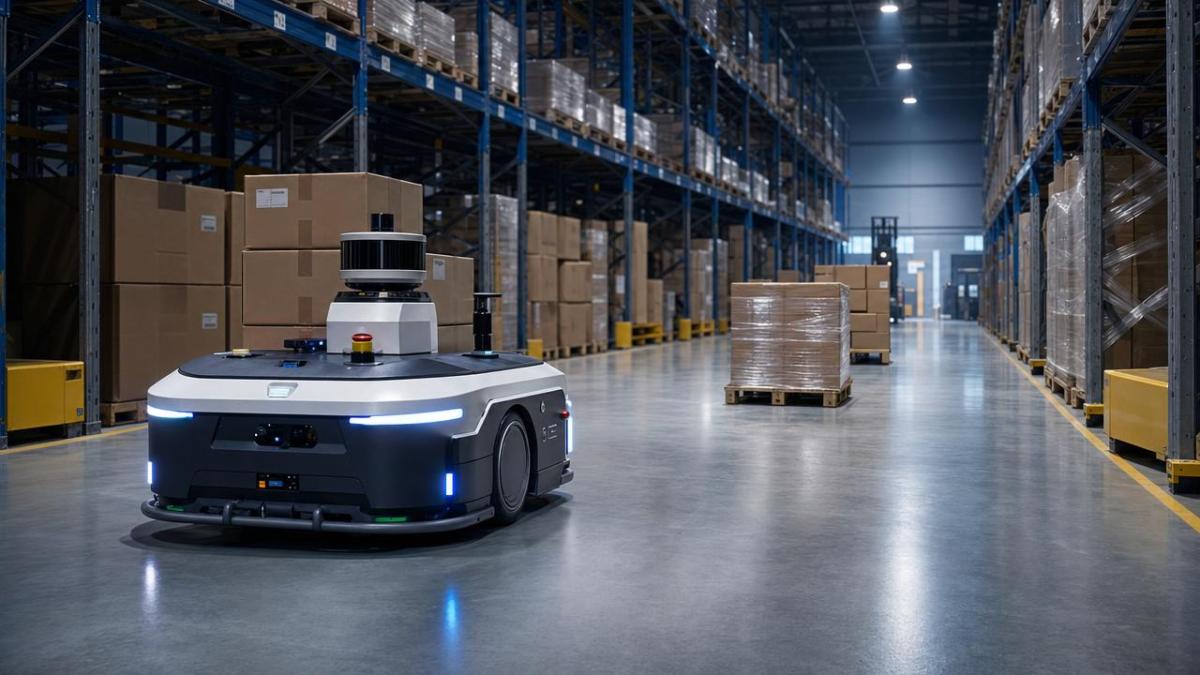
In real facilities, uptime is rarely lost because a vehicle simply stops forever. More often, it is lost through repeated micro-failures: a LiDAR confidence drop at a reflective aisle, a temporary localization mismatch near a pallet stack, a delayed obstacle classification, or a route planner that cannot recover gracefully after a blocked lane. For after-sales maintenance teams, these events create the most expensive kind of downtime: frequent, hard-to-reproduce interruptions.
That is why AGV AMR dynamic navigation fault tolerance should be treated as a serviceability metric, not just a software feature. A fault-tolerant platform does not assume ideal conditions. It detects degraded perception early, shifts to safe fallback behavior, preserves route continuity where possible, and records enough diagnostic data for maintenance teams to isolate the root cause without prolonged trial and error.
TechStat Vanguard approaches this topic from an engineering benchmark perspective. Instead of vague claims about “smart navigation,” the practical question is simpler: when the environment becomes messy, how long can the vehicle remain productive, how safely can it degrade, and how fast can technicians restore full performance? Those three answers define real uptime.
- A robust system keeps operating through partial sensor degradation instead of triggering immediate route abortion.
- A maintainable system produces logs, alarms, and event traces that shorten field diagnosis.
- A high-uptime system separates recoverable navigation faults from hardware-critical failures so service teams can prioritize correctly.
What does fault tolerance actually include in dynamic navigation?
AGV AMR dynamic navigation fault tolerance is often misunderstood as obstacle avoidance alone. In practice, it is a stack of design decisions that allow navigation to remain stable under uncertainty. That stack spans sensors, localization, path planning, motion control, fail-safe behavior, and diagnostics. If any layer lacks resilience, uptime suffers even when the rest of the vehicle is technically functional.
Core fault-tolerant functions maintenance teams should verify
- Sensor redundancy or sensor fusion logic, such as LiDAR combined with IMU, encoder, camera, or reflector-based reference updates.
- Localization confidence scoring that can detect map drift, poor feature density, or dynamic scene contamination before full loss of pose occurs.
- Fallback navigation modes, including reduced speed, temporary rerouting, safe stop zones, and controlled retreat behavior.
- Exception handling for blocked paths, persistent obstacles, low-visibility areas, and communication interruption between fleet manager and vehicle.
- Diagnostic transparency, including timestamped fault codes, sensor health indicators, localization residuals, and event replay capability.
For after-sales maintenance personnel, the presence of these functions determines whether a site issue becomes a 10-minute correction or a multi-shift outage. Systems that hide internal states force technicians to replace parts blindly, recalibrate unnecessarily, or escalate problems that should have been resolved onsite.
Which navigation faults most often reduce fleet availability?
Not all faults carry the same uptime impact. Some stop one vehicle briefly. Others ripple across the fleet by blocking lanes, delaying task queues, and increasing congestion. The maintenance priority should therefore focus on failure modes that multiply operational disruption.
The table below summarizes common AGV AMR dynamic navigation fault tolerance challenges from a service standpoint, with emphasis on what maintenance teams can observe and why each issue affects uptime.
The key insight is that many “navigation failures” are not isolated software bugs. They are interactions between environment, sensor quality, network behavior, and maintenance discipline. AGV AMR dynamic navigation fault tolerance improves uptime only when the system and the service process are designed together.
How should after-sales teams evaluate fault tolerance during acceptance and service?
Many service teams inherit systems selected by procurement or engineering without a practical maintenance checklist. That creates a predictable problem: the platform may perform well in a factory demonstration but become difficult to support after deployment. A more effective approach is to evaluate AGV AMR dynamic navigation fault tolerance through measurable recovery behavior, not vendor slogans.
Field evaluation checklist
- Trigger controlled sensor degradation and verify whether the vehicle enters reduced-speed recovery rather than immediate shutdown.
- Test blocked-path behavior with temporary obstacles and confirm whether rerouting is stable or oscillatory.
- Review fault logs for usable detail, including confidence metrics, raw event labels, and timestamp synchronization.
- Check whether map changes can be version-controlled and rolled back without extended downtime.
- Confirm spare parts and remote support workflows for navigation sensors, compute modules, and software updates.
TSV’s engineering-first method is useful here because it pushes teams to ask for parameter evidence. For example, what are the alarm thresholds for pose confidence? What happens if one sensing channel becomes unreliable? How long does event log extraction take? Those are the questions that reduce lifecycle cost.
What technical parameters reveal whether a platform can recover instead of simply stop?
Fault tolerance becomes visible when you compare operational behaviors under stress. Maintenance teams do not always need proprietary source data, but they do need a practical parameter framework for judging whether one system is easier to keep running than another.
The following parameter-oriented table can support acceptance tests, vendor comparison, and service planning for AGV AMR dynamic navigation fault tolerance.
These dimensions are more meaningful than generic automation claims because they directly affect service hours, spare-part consumption, and time to recovery. In mixed industrial environments, the most valuable system is often not the one with the most advanced feature list, but the one whose degraded-state behavior is predictable and observable.
Which operating scenarios put AGV AMR dynamic navigation fault tolerance under the most pressure?
Across the broader industrial sector, navigation reliability is stressed by environmental variability more than by laboratory-level complexity. Maintenance teams should know where failures are likely to cluster so inspection frequency and spare resource planning can match operational risk.
High-risk scenarios
- Warehouse aisles with reflective wrapping, metal racks, and dense forklift traffic, where LiDAR returns and obstacle interpretation can fluctuate.
- Production zones with layout changes, temporary workstations, or inconsistent pallet placement that slowly invalidate map assumptions.
- Cross-docking and staging areas where congestion changes by shift, forcing dynamic rerouting and repeated path negotiation.
- Facilities with mixed wireless conditions, where dispatch latency or edge device instability can resemble navigation faults.
In these scenarios, fault tolerance is not a luxury. It is the difference between a manageable exception rate and chronic uptime erosion. This is also why TSV emphasizes benchmark thinking: the same navigation stack may perform very differently depending on obstacle density, feature richness, and maintenance maturity.
Common maintenance mistakes that quietly reduce uptime
Even a well-designed platform loses resilience when field support focuses only on visible alarms. Many repeat failures come from service habits that treat symptoms instead of the fault chain. For AGV AMR dynamic navigation fault tolerance, disciplined maintenance is as important as controller logic.
Mistakes worth correcting early
- Replacing sensors before checking mounts, contamination, vibration exposure, and cable integrity.
- Remapping the entire site after every anomaly instead of identifying local environmental changes or confidence-threshold issues.
- Ignoring slow growth in recoverable events because the fleet still “eventually completes” tasks.
- Treating communication delay as a pure IT problem without evaluating how dispatch timeout logic affects navigation continuity.
- Accepting closed diagnostic tools that prevent field-level fault isolation and force every incident into vendor escalation.
For maintenance leads, the practical metric is not just failure count. It is the ratio between recoverable events and manual interventions. When that ratio worsens, uptime deterioration is already underway even if the fleet has not yet experienced a major outage.
How to improve service response without overspending on replacements
Budget pressure is a constant reality for after-sales teams. The good news is that stronger uptime does not always require a full platform upgrade. In many installations, the largest gains come from targeted changes to diagnostics, maintenance workflow, and environmental control.
Priority actions with practical value
- Create a fault taxonomy that separates sensor contamination, localization instability, planner deadlock, and communication timeout events.
- Track repeat incident locations by map zone to identify environmental root causes instead of vehicle-by-vehicle blame.
- Standardize inspection intervals for sensor windows, brackets, wheel encoders, and network nodes in high-traffic areas.
- Request usable benchmark data from suppliers: degraded-mode behavior, log export format, update rollback process, and recovery times.
- Use pilot tests when introducing map changes, new racking, or major traffic-flow modifications.
This is where TSV’s data-driven philosophy becomes commercially useful. Better decisions come from measurable behaviors, not broad promises. If a supplier cannot explain how a vehicle behaves when localization confidence drops or obstacles remain unresolved for a defined interval, maintenance cost risk is likely being transferred to the user.
FAQ: what do maintenance teams ask most about fault-tolerant navigation?
Is AGV AMR dynamic navigation fault tolerance mainly a software issue?
No. Software logic is central, but uptime depends on the interaction between sensors, compute hardware, mechanical stability, map governance, and site conditions. A strong algorithm cannot compensate indefinitely for dirty optics, loose mounts, inconsistent floor conditions, or untracked environmental changes.
What should be checked first when navigation faults appear intermittently?
Start with repeatability. Identify whether the issue happens in one zone, one shift, one vehicle family, or one traffic pattern. Then review sensor cleanliness, alignment, confidence trends, obstacle logs, and network latency together. Intermittent faults usually leave a pattern before they create a hard stop.
How can procurement support maintainability before purchase?
Procurement should ask for acceptance criteria tied to recovery behavior, diagnostic transparency, spare-part lead times, software update procedures, and map maintenance tools. The lowest initial price may generate the highest lifecycle cost if AGV AMR dynamic navigation fault tolerance is poorly documented or difficult to service.
Do stricter safety settings always reduce uptime?
Not necessarily. Poorly tuned safety and perception settings can create excessive stops, but well-designed fault tolerance improves both safety and availability by distinguishing transient uncertainty from critical loss of control. The goal is controlled degradation, not aggressive risk-taking.
Why choose us for engineering-led evaluation and consultation?
TechStat Vanguard helps industrial teams cut through marketing noise by focusing on parameters, tolerances, and observable recovery behavior. For organizations assessing AGV AMR dynamic navigation fault tolerance, our value is not generic promotion. It is structured technical interpretation that supports uptime, service planning, and procurement judgment.
You can contact us for targeted support on navigation parameter review, fault-tolerance comparison between solution paths, maintenance-oriented acceptance checklists, supplier question frameworks, delivery-risk evaluation, and service workflow benchmarking. If your team is facing recurring localization loss, difficult fault reproduction, unclear sensor replacement decisions, or uncertainty around retrofit versus replacement, those are exactly the issues worth bringing into a data-based discussion.
When uptime matters, vague claims are expensive. Engineering truth is more useful: what fails, how it recovers, how it is diagnosed, and how fast it returns to productive motion. That is the standard TSV is built to support.
Search News
Hot Articles
- Carbon Fiber StructuresHow to Specify Aerospace Carbon Fiber Assemblies for Lightweight, Load-Bearing PartsJul 11, 2026
- Machine VisionXiaomi, Alibaba DAMO Academy Drive Open-Source Robotics Model Ecosystem, Lowering Algorithm Development Barriers for Overseas SMEs Adopting Chinese Robotics SolutionsMar 30, 2026
- Cobots & ArmsShanxi 'AI+' Conference Showcases Embodied Intelligence with Multinational Buyer Engagement: Key Industry ImplicationsMar 30, 2026
Popular Tags
Recommended News
 Jul 11, 2026How to Specify Aerospace Carbon Fiber Assemblies for Lightweight, Load-Bearing PartsAerospace carbon fiber assemblies: learn how to specify laminate design, load data, joining methods, and inspection controls for lighter, reliable load-bearing aerospace parts.Elena Rostova (UAV Systems Researcher)
 Mar 30, 2026Xiaomi, Alibaba DAMO Academy Drive Open-Source Robotics Model Ecosystem, Lowering Algorithm Development Barriers for Overseas SMEs Adopting Chinese Robotics SolutionsXiaomi & Alibaba DAMO Academy's open-source robotics models lower algorithm barriers for global SMEs. Boost efficiency in manufacturing, logistics & smart retail with ROS 2 compatible solutions.TSV Data Lab
 Mar 30, 2026Shanxi 'AI+' Conference Showcases Embodied Intelligence with Multinational Buyer Engagement: Key Industry ImplicationsShanxi 'AI+' Conference highlights embodied intelligence with Tesla, Ubtech & Jiantao showcasing multimodal robotics. 40+ global buyers validated tech on-site, creating new B2B channels for industrial automation & AI solutions.Chen Wei (Automation Lead Engineer)
 Mar 30, 2026Zhongguancun Unveils 6G Integrated Sensing-Computing-Intelligence Platform to Empower Embodied Robots for Global Industrial ApplicationsZhongguancun's new 6G platform revolutionizes industrial robotics with <10ms latency, empowering global automotive, logistics & port automation. Discover how this tech boosts China's smart manufacturing exports.TSV Data Lab
 Mar 30, 2026Mech-Mind Tianjin Embodied Intelligence R&D and Production Base Goes Live, Cutting Delivery Time by 20%–30% for Global Customized AMR+Vision SolutionsMech-Mind's Tianjin AMR+Vision production base cuts delivery time by 20%-30% for欧美 & Latin American markets. Discover how this PLd-certified facility accelerates customized robotics solutions for smart manufacturing and logistics.Chen Wei (Automation Lead Engineer)
 Mar 30, 2026Boao Forum Reveals 'Co-evolution of Big and Small Brains' Trend in Humanoid Robots, China's Embodied Intelligence Accelerates Adaptation to Overseas Manufacturing Service ScenariosDiscover how China's humanoid robots, featuring 'Co-evolution of Big and Small Brains,' are revolutionizing global manufacturing. Learn about Embodied Tian Gong 3.0's ISO compliance and overseas deployment at Boao Forum 2026.Chen Wei (Automation Lead Engineer)
 Mar 30, 2026China Railway Industrial Secures Patent for Embodied Robotics in Material Handling, Boosting High-Precision Delivery Capabilities for Overseas Infrastructure and Manufacturing ProjectsChina Railway Industrial's new patent for embodied robotics in material handling boosts high-precision delivery for global infrastructure & manufacturing. Discover how this innovation enhances logistics accuracy in automotive, rail transit & EPC projects.Chen Wei (Automation Lead Engineer)
 Sep 29, 2026ISO 9283 Repeatability: How to Evaluate Cobot Positioning PerformanceISO 9283 cobot repeatability explained: learn how payload, reach, approach direction, and test conditions affect positioning performance and cell capability.Chen Wei (Automation Lead Engineer)
 Sep 28, 2026Spindle Runout Measurement in Germany: DIN Standards, Methods, and Acceptance LimitsSpindle runout measurement Germany: explore DIN standards, proven methods, acceptance limits, and audit-ready practices for reliable machining quality.Dr. Marcus Vance
 Sep 27, 2026How to Select Wall-Mount Edge Devices for Space-Constrained Factory NetworksWall mount edge devices for space-constrained factories: evaluate workload, thermal design, power resilience, cable access, and network reliability for smarter deployments.TSV Data Lab
 Sep 26, 2026Machining Tolerance Analysis: How to Set Limits That Meet Function and Cost TargetsMachining tolerance analysis: learn how to set functional limits, control tolerance stacks, reduce inspection risk, and balance precision with production cost.Dr. Marcus Vance
 Sep 25, 2026How to Evaluate an Industrial Infrastructure Data Platform for Multi-Site OperationsIndustrial infrastructure data platform evaluation guide for multi-site operations: compare data quality, edge resilience, interoperability, governance, and scalable proof-of-value criteria.Victor Lin (Chief Software Architect)
 Sep 24, 2026How to Select Machine Vision Optics for Accurate Inspection at Different Working DistancesMachine vision optics selection guide for accurate inspection at every working distance. Compare FOV, pixel scale, DOF, distortion, lighting, and telecentric options.TSV Data Lab
 Sep 23, 2026How to Evaluate a Machine Vision System Integrator for High-Speed Inspection LinesChoose a machine vision system integrator with proven expertise in high-speed inspection, reliable reject timing, robust optics, and measurable acceptance criteria.TSV Data Lab
 Sep 28, 2026When is a SCADA API the right choice for connecting plant systems?SCADA API guide: learn when governed plant data integration improves traceability, security, and scalability—without compromising real-time control.Victor Lin (Chief Software Architect)
 Sep 27, 2026How SCADA data integration improves traceability across production linesSCADA data integration connects production-line data to improve traceability, accelerate quality investigations, and strengthen safety decisions.Victor Lin (Chief Software Architect)
 Sep 26, 2026What to define before starting SCADA integration planningSCADA integration planning starts with clear scope, control boundaries, data models, cybersecurity, and testing. Discover the definitions that reduce risk and costly rework.Victor Lin (Chief Software Architect)
 Sep 25, 2026How a smart factory with Industrial IoT reduces production blind spotsDiscover how a smart factory with Industrial IoT turns real-time machine, quality, and workflow data into actionable insights that reduce production blind spots and delivery risks.Victor Lin (Chief Software Architect)
 Sep 24, 2026When does Industrial IoT make smart manufacturing easier to scale?Smart manufacturing Industrial IoT scales when trusted data, interoperable systems, and secure workflows turn connected assets into measurable gains.TSV Data Lab
 Sep 23, 2026What drives ultra-precision machining cost at 1-micron tolerance?Ultra precision machining cost per part at 1 micron tolerance depends on process, material, metrology, and yield. Learn how to compare quotes confidently.Dr. Marcus Vance
 Sep 22, 2026Drone Engine-T550CC Applications: Build the UAV Power System Around the MissionAn application guide for Drone Engine-T550CC integration, covering payload planning, airframe matching, cooling, fuel, vibration, test procedures, documentation, and service preparation.Elena Rostova (UAV Systems Researcher)
 Sep 22, 2026How to Evaluate Industrial Edge Computing Vendors for Factory DeploymentIndustrial edge computing vendor evaluation guide for factories: compare latency, protocol fit, reliability, security, and lifecycle support before deployment.TSV Data Lab
 Sep 21, 2026Drone Payload Integration: Matching Power, Data, and Center of Gravity for Reliable FlightsDrone payload integration made practical: balance power, data, center of gravity, and endurance to build safer, more reliable mission-ready flights.Elena Rostova (UAV Systems Researcher)
 Sep 20, 2026Autonomous Navigation Pricing: Cost Drivers and Budget Benchmarks for AMR ProjectsAutonomous navigation price explained: compare AMR cost drivers, software, sensors, integration, safety, and lifecycle budgets to build a scalable project plan.Chen Wei (Automation Lead Engineer)