Autonomous Mobile Robot Material Transport: Best-Fit Warehouse and Factory Use Cases
Publication Date
author
Where Autonomous Mobile Robot Material Transport Creates Real Operational Leverage
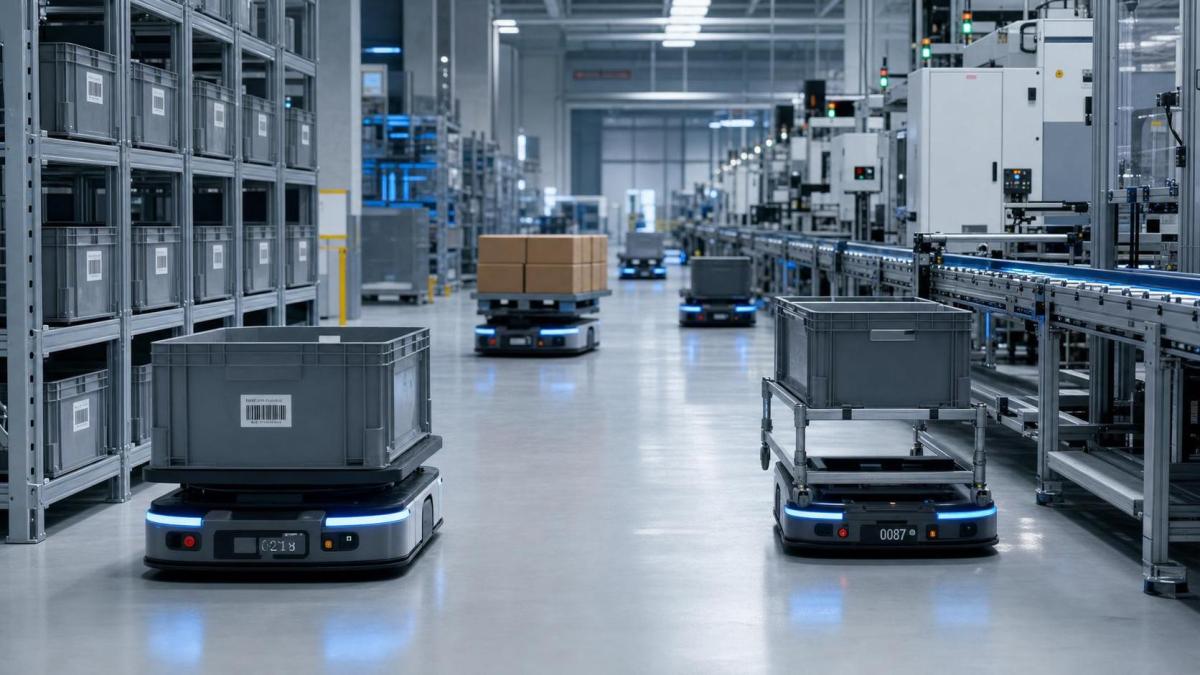
Autonomous mobile robot material transport has moved from pilot-stage curiosity to a practical intralogistics tool across mixed industries.
The strongest value usually appears where movement is repetitive, labor is unevenly utilized, and manual traffic competes with production flow.
That does not mean every site benefits in the same way.
In actual deployment, fit depends on route stability, load variation, handoff precision, floor conditions, and how tightly transport timing affects output.
This is where a data-first view matters.
TechStat Vanguard consistently argues that automation decisions should be grounded in measurable constraints, not broad claims about smart factories.
For autonomous mobile robot material transport, the useful question is simple: which warehouse and factory use cases convert technical capability into dependable throughput?
Why Similar Facilities Still Need Different AMR Logic
Two plants may both move pallets, totes, or carts, yet require very different autonomous mobile robot material transport strategies.
A consumer goods warehouse often values route density and order responsiveness.
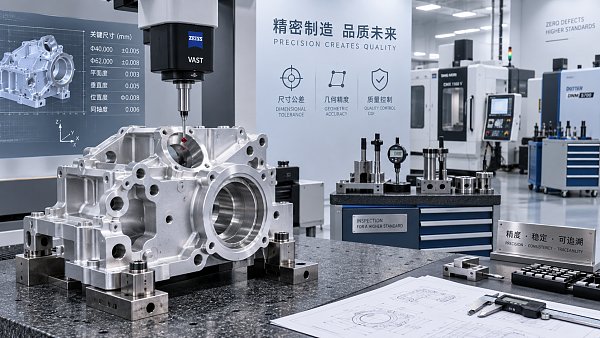
A precision machining facility usually cares more about line-side timing, traceability, and controlled handling around critical parts.
The same pattern appears in aerospace subassembly, electronics, pharmaceuticals, food processing, and general manufacturing.
Transport is never just movement.
It is linked to queue behavior, WIP exposure, labor allocation, battery windows, safety zoning, and digital integration with MES, WMS, or ERP layers.
That is why autonomous mobile robot material transport should be judged by scenario physics and process discipline, not by brochure-level payload claims alone.
The baseline conditions worth checking first
- Route repeatability across shifts and product mixes
- Pickup and drop-off tolerance at stations, racks, or conveyors
- Traffic interference from forklifts, pedestrians, and manual carts
- Material presentation consistency, including pallet quality and cart geometry
- System dependency on barcode, LiDAR, vision, or hybrid navigation
Warehouse Flows Usually Reward High-Repetition Autonomous Mobile Robot Material Transport
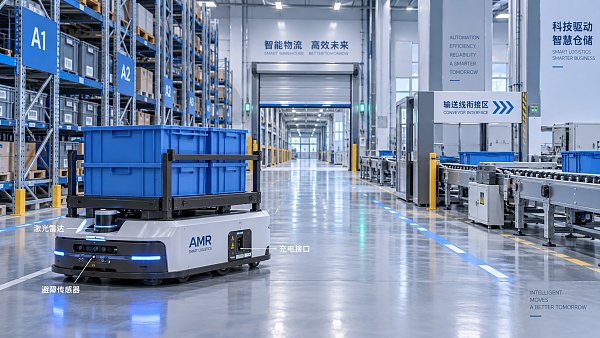
In warehouses, the best-fit use cases usually involve frequent transfers between receiving, buffer storage, picking, packing, and shipping.
Here, autonomous mobile robot material transport reduces walking distance and smooths movement between labor-intensive nodes.
The value is strongest when order profiles change daily but route families stay predictable.
Tote movement in e-commerce fulfillment is a common example.
AMRs can connect picking zones with consolidation stations without fixed conveyors.
That flexibility matters when SKU counts rise and slotting changes often.
Pallet transfer is another fit, but only when aisle widths, rack interfaces, and staging rules are tightly standardized.
Many projects underperform because the transport task looks simple while exception handling is left undefined.
A damaged pallet, blocked dock lane, or irregular load overhang can break otherwise solid autonomous mobile robot material transport performance.
Where warehouse deployment tends to work fastest
Closed-loop replenishment between reserve storage and forward picking usually goes live faster than fully dynamic dispatch.
The tasks are repetitive, travel paths are known, and cycle-time targets are easier to benchmark.
By contrast, mixed-case outbound handling needs stronger orchestration logic and better station discipline before AMR productivity becomes stable.
Factory Use Cases Depend More on Timing Than Distance
Inside factories, autonomous mobile robot material transport often matters less for travel reduction and more for production continuity.
A missed delivery at a machining cell or assembly line can create costly idle time far beyond the transport task itself.
Line-side replenishment is one of the most practical use cases.
AMRs can deliver bins, kits, fasteners, or semi-finished parts on trigger-based schedules, reducing manual towing and uneven operator movement.
This works especially well where consumption patterns are frequent but not perfectly uniform.
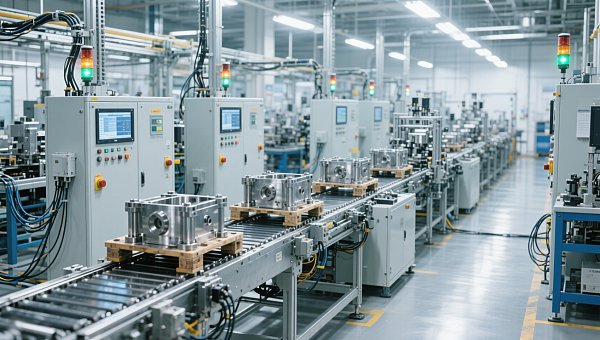
Another strong fit is inter-process transfer between machining, inspection, washing, coating, and subassembly.
In these environments, autonomous mobile robot material transport must preserve identity control and handoff certainty.
A transport delay is manageable.
A part mix-up is not.
That is why factories with serialized components, regulated quality records, or aerospace-grade routing often emphasize traceability integration before fleet size.
Precision environments need stricter fit checks
Facilities handling tight-tolerance parts should evaluate vibration exposure, docking repeatability, and how the AMR interacts with protective packaging.
The transport layer must support process integrity, not simply automate motion.
Different Use Cases Change the Technical Priorities
A useful way to judge autonomous mobile robot material transport is to compare operational priorities by setting.
This is why a single benchmark such as top speed rarely predicts field value.
Real fit comes from matching transport behavior to operational bottlenecks.
Where Projects Commonly Misjudge Autonomous Mobile Robot Material Transport
The first mistake is evaluating AMRs as isolated machines.
Autonomous mobile robot material transport is a system question involving layout, software, presentation standards, and operator interaction.
The second mistake is assuming similar routes mean similar complexity.
A plant with manual workarounds, irregular container types, and frequent priority overrides will challenge fleet stability more than distance maps suggest.
Another overlooked issue is lifecycle cost.
Battery replacement, software tuning, sensor contamination, floor maintenance, and connector wear can shift ROI if they are ignored during planning.
TSV’s engineering lens is useful here because it avoids vague claims and keeps attention on measurable thresholds.
Navigation fault tolerance, docking repeatability, MTBF under traffic stress, and recovery behavior after obstruction matter more than generic promises of intelligence.
A Practical Way to Match the Use Case Before Scaling
Before scaling autonomous mobile robot material transport, start with one transport family that has clear demand patterns and measurable failure costs.
That could be reserve-to-pick replenishment, line-side kit delivery, or WIP transfer between two controlled processes.
Then validate the fit with operational data rather than impressions.
- Map every pickup, drop-off, and obstruction point
- Measure actual load variation, not nominal load rating
- Define acceptable delay, reroute, and recovery windows
- Check system links with WMS, MES, scanners, doors, and conveyors
- Model maintenance windows and battery charging against production peaks
The strongest autonomous mobile robot material transport programs usually grow from disciplined scenario selection, not from the largest initial fleet purchase.
Where transport rules are stable, handoffs are standardized, and timing affects output, AMRs can deliver measurable gains with relatively fast payback.
Where conditions remain inconsistent, the right next step is often process cleanup first, automation second.
A credible evaluation should end with a site-specific fit standard covering flow, tolerance, integration, service burden, and long-term expansion limits.
Search News
Hot Articles
- Carbon Fiber StructuresHow to Specify Aerospace Carbon Fiber Assemblies for Lightweight, Load-Bearing PartsJul 11, 2026
- Machine VisionXiaomi, Alibaba DAMO Academy Drive Open-Source Robotics Model Ecosystem, Lowering Algorithm Development Barriers for Overseas SMEs Adopting Chinese Robotics SolutionsMar 30, 2026
- Cobots & ArmsShanxi 'AI+' Conference Showcases Embodied Intelligence with Multinational Buyer Engagement: Key Industry ImplicationsMar 30, 2026
Popular Tags
Recommended News
 Jul 11, 2026How to Specify Aerospace Carbon Fiber Assemblies for Lightweight, Load-Bearing PartsAerospace carbon fiber assemblies: learn how to specify laminate design, load data, joining methods, and inspection controls for lighter, reliable load-bearing aerospace parts.Elena Rostova (UAV Systems Researcher)
 Mar 30, 2026Xiaomi, Alibaba DAMO Academy Drive Open-Source Robotics Model Ecosystem, Lowering Algorithm Development Barriers for Overseas SMEs Adopting Chinese Robotics SolutionsXiaomi & Alibaba DAMO Academy's open-source robotics models lower algorithm barriers for global SMEs. Boost efficiency in manufacturing, logistics & smart retail with ROS 2 compatible solutions.TSV Data Lab
 Mar 30, 2026Shanxi 'AI+' Conference Showcases Embodied Intelligence with Multinational Buyer Engagement: Key Industry ImplicationsShanxi 'AI+' Conference highlights embodied intelligence with Tesla, Ubtech & Jiantao showcasing multimodal robotics. 40+ global buyers validated tech on-site, creating new B2B channels for industrial automation & AI solutions.Chen Wei (Automation Lead Engineer)
 Mar 30, 2026Zhongguancun Unveils 6G Integrated Sensing-Computing-Intelligence Platform to Empower Embodied Robots for Global Industrial ApplicationsZhongguancun's new 6G platform revolutionizes industrial robotics with <10ms latency, empowering global automotive, logistics & port automation. Discover how this tech boosts China's smart manufacturing exports.TSV Data Lab
 Mar 30, 2026Mech-Mind Tianjin Embodied Intelligence R&D and Production Base Goes Live, Cutting Delivery Time by 20%–30% for Global Customized AMR+Vision SolutionsMech-Mind's Tianjin AMR+Vision production base cuts delivery time by 20%-30% for欧美 & Latin American markets. Discover how this PLd-certified facility accelerates customized robotics solutions for smart manufacturing and logistics.Chen Wei (Automation Lead Engineer)
 Mar 30, 2026Boao Forum Reveals 'Co-evolution of Big and Small Brains' Trend in Humanoid Robots, China's Embodied Intelligence Accelerates Adaptation to Overseas Manufacturing Service ScenariosDiscover how China's humanoid robots, featuring 'Co-evolution of Big and Small Brains,' are revolutionizing global manufacturing. Learn about Embodied Tian Gong 3.0's ISO compliance and overseas deployment at Boao Forum 2026.Chen Wei (Automation Lead Engineer)
 Mar 30, 2026China Railway Industrial Secures Patent for Embodied Robotics in Material Handling, Boosting High-Precision Delivery Capabilities for Overseas Infrastructure and Manufacturing ProjectsChina Railway Industrial's new patent for embodied robotics in material handling boosts high-precision delivery for global infrastructure & manufacturing. Discover how this innovation enhances logistics accuracy in automotive, rail transit & EPC projects.Chen Wei (Automation Lead Engineer)
 Sep 28, 2026Spindle Runout Measurement in Germany: DIN Standards, Methods, and Acceptance LimitsSpindle runout measurement Germany: explore DIN standards, proven methods, acceptance limits, and audit-ready practices for reliable machining quality.Dr. Marcus Vance
 Sep 27, 2026How to Select Wall-Mount Edge Devices for Space-Constrained Factory NetworksWall mount edge devices for space-constrained factories: evaluate workload, thermal design, power resilience, cable access, and network reliability for smarter deployments.TSV Data Lab
 Sep 26, 2026Machining Tolerance Analysis: How to Set Limits That Meet Function and Cost TargetsMachining tolerance analysis: learn how to set functional limits, control tolerance stacks, reduce inspection risk, and balance precision with production cost.Dr. Marcus Vance
 Sep 25, 2026How to Evaluate an Industrial Infrastructure Data Platform for Multi-Site OperationsIndustrial infrastructure data platform evaluation guide for multi-site operations: compare data quality, edge resilience, interoperability, governance, and scalable proof-of-value criteria.Victor Lin (Chief Software Architect)
 Sep 24, 2026How to Select Machine Vision Optics for Accurate Inspection at Different Working DistancesMachine vision optics selection guide for accurate inspection at every working distance. Compare FOV, pixel scale, DOF, distortion, lighting, and telecentric options.TSV Data Lab
 Sep 23, 2026How to Evaluate a Machine Vision System Integrator for High-Speed Inspection LinesChoose a machine vision system integrator with proven expertise in high-speed inspection, reliable reject timing, robust optics, and measurable acceptance criteria.TSV Data Lab
 Sep 28, 2026When is a SCADA API the right choice for connecting plant systems?SCADA API guide: learn when governed plant data integration improves traceability, security, and scalability—without compromising real-time control.Victor Lin (Chief Software Architect)
 Sep 27, 2026How SCADA data integration improves traceability across production linesSCADA data integration connects production-line data to improve traceability, accelerate quality investigations, and strengthen safety decisions.Victor Lin (Chief Software Architect)
 Sep 26, 2026What to define before starting SCADA integration planningSCADA integration planning starts with clear scope, control boundaries, data models, cybersecurity, and testing. Discover the definitions that reduce risk and costly rework.Victor Lin (Chief Software Architect)
 Sep 25, 2026How a smart factory with Industrial IoT reduces production blind spotsDiscover how a smart factory with Industrial IoT turns real-time machine, quality, and workflow data into actionable insights that reduce production blind spots and delivery risks.Victor Lin (Chief Software Architect)
 Sep 24, 2026When does Industrial IoT make smart manufacturing easier to scale?Smart manufacturing Industrial IoT scales when trusted data, interoperable systems, and secure workflows turn connected assets into measurable gains.TSV Data Lab
 Sep 23, 2026What drives ultra-precision machining cost at 1-micron tolerance?Ultra precision machining cost per part at 1 micron tolerance depends on process, material, metrology, and yield. Learn how to compare quotes confidently.Dr. Marcus Vance
 Sep 22, 2026Drone Engine-T550CC Applications: Build the UAV Power System Around the MissionAn application guide for Drone Engine-T550CC integration, covering payload planning, airframe matching, cooling, fuel, vibration, test procedures, documentation, and service preparation.Elena Rostova (UAV Systems Researcher)
 Sep 22, 2026How to Evaluate Industrial Edge Computing Vendors for Factory DeploymentIndustrial edge computing vendor evaluation guide for factories: compare latency, protocol fit, reliability, security, and lifecycle support before deployment.TSV Data Lab
 Sep 21, 2026Drone Payload Integration: Matching Power, Data, and Center of Gravity for Reliable FlightsDrone payload integration made practical: balance power, data, center of gravity, and endurance to build safer, more reliable mission-ready flights.Elena Rostova (UAV Systems Researcher)
 Sep 20, 2026Autonomous Navigation Pricing: Cost Drivers and Budget Benchmarks for AMR ProjectsAutonomous navigation price explained: compare AMR cost drivers, software, sensors, integration, safety, and lifecycle budgets to build a scalable project plan.Chen Wei (Automation Lead Engineer)
 Sep 19, 2026How to Scope Automation Integration Services for Multi-System Factory ProjectsAutomation integration services: learn how to scope multi-system factory projects with clear workflows, interface contracts, safety boundaries, and acceptance criteria.Victor Lin (Chief Software Architect)