AGV AMR fleet management software becomes critical after the tenth vehicle
Publication Date
author
Once an operation scales beyond ten mobile robots, coordination errors, traffic conflicts, and downtime can quickly erode productivity gains. That is why AGV AMR fleet management software becomes a strategic layer rather than an optional tool. For project leaders and engineering managers, understanding how fleet orchestration impacts throughput, safety, and system reliability is now essential to building scalable automation with measurable operational control.
What AGV AMR fleet management software really does
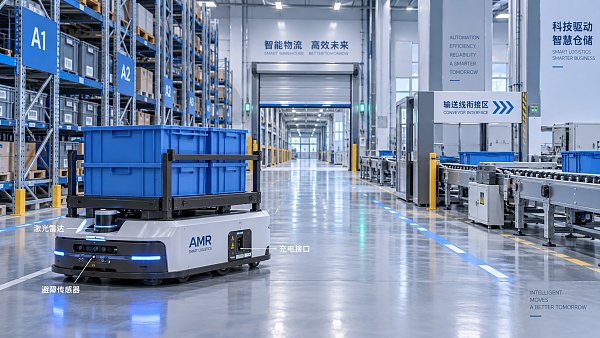
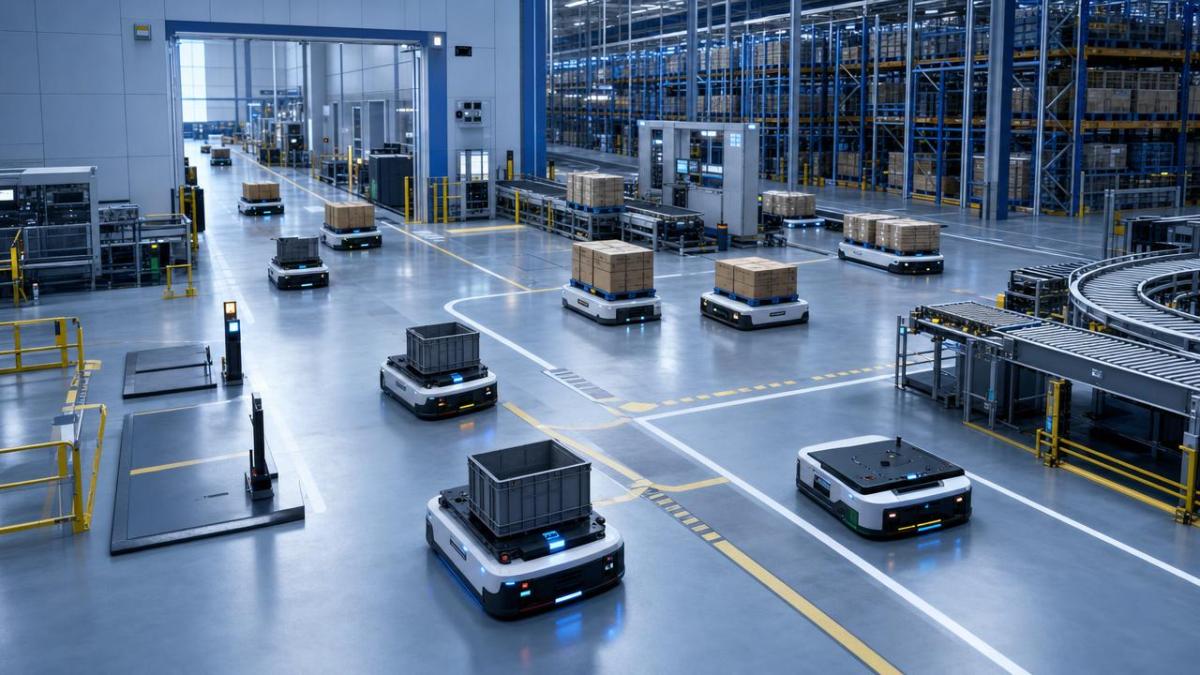
At a basic level, AGV AMR fleet management software is the control layer that coordinates multiple automated guided vehicles and autonomous mobile robots across a shared operating environment. It does not replace onboard navigation or local safety logic. Instead, it supervises the fleet as a system: assigning tasks, balancing workloads, preventing congestion, prioritizing jobs, managing charging cycles, and maintaining visibility over robot status in real time.
For small deployments, a few vehicles can often be managed with simple dispatch rules or vendor-native interfaces. After the tenth robot, however, the operating reality changes. Routes start to overlap. Picking, replenishment, towing, and line-feeding missions compete for the same corridors. Human operators, forklifts, conveyors, and production constraints create dynamic conditions that cannot be handled efficiently by isolated robot logic alone. This is where AGV AMR fleet management software becomes a core operational system rather than an accessory.
In data-driven operations, this layer also becomes the source of engineering truth. It reveals whether low throughput comes from traffic bottlenecks, poor task allocation, deadhead travel, charging imbalance, map design, or upstream process instability. For organizations aligned with measurable performance, software orchestration is not just a convenience feature; it is a diagnostic and optimization asset.
Why the industry pays attention after the tenth vehicle
The threshold of ten vehicles is not a rigid law, but it is a practical turning point seen across manufacturing, warehousing, aerospace components handling, electronics assembly, and mixed-material logistics. Below that level, inefficiencies may remain tolerable. Above it, coordination complexity rises faster than many teams expect.
The main reason is interaction density. Each added robot does not just add capacity; it adds possible conflicts with every other moving asset, every shared zone, and every task queue. Without centralized or well-structured decentralized orchestration, the fleet can produce hidden losses: waiting time at intersections, idle robots near chargers, duplicated assignments, delayed line supply, and rising intervention by supervisors. In other words, physical automation scales, but operational control may not.
This concern is especially relevant in hard-tech environments where tolerance for disruption is low. A missed delivery to an assembly cell, a delayed movement of precision workpieces, or a blocked path near a safety-critical station can have costs far beyond robot utilization metrics. Project managers therefore need to view AGV AMR fleet management software through the lens of system stability, not just robot count.
From isolated automation to coordinated operations
Many organizations begin with automation as a point solution. One robot route solves one transport pain point. Then another route is added for kitting, then one more for finished goods transfer, and eventually the site has a multi-vendor or multi-process mobile fleet. The operational challenge shifts from “Can this robot navigate?” to “Can the whole intralogistics system perform predictably under changing demand?”
That shift explains why AGV AMR fleet management software matters to engineering leaders. It becomes the place where operational priorities are translated into traffic policy, job dispatch logic, service-level rules, and exception handling. In advanced facilities, the software may also connect with MES, WMS, ERP, SCADA, elevator control, fire systems, automated doors, and conveyor handoff logic. As integration depth increases, the fleet manager influences not only movement, but the rhythm of production itself.
Core capabilities that create measurable value
Not all platforms offer the same maturity, but the most valuable AGV AMR fleet management software typically combines several essential functions into one operational layer.
Task orchestration
The software assigns jobs based on robot location, battery condition, payload capability, mission urgency, and zone availability. Better orchestration reduces empty travel and avoids sending the wrong vehicle to the wrong task.
Traffic and path coordination
When multiple robots share narrow aisles, crossings, lifts, or docking positions, traffic logic becomes fundamental. Reservation rules, priority layers, congestion avoidance, and rerouting improve flow and reduce stop-and-wait behavior.
Charging management
Poor charging strategy quietly damages throughput. Intelligent charging control avoids situations where too many robots seek power at the same time, or where available robots are removed from service during peak production windows.
Exception handling and visibility
Alerts, fault categorization, mission replay, and root-cause visibility help teams recover faster. Engineering managers need more than a red alarm; they need to know whether delays come from blocked paths, poor handoff timing, sensor faults, or integration errors.
Analytics and continuous improvement
High-quality AGV AMR fleet management software supports KPI tracking such as mission completion time, queue delay, path occupancy, charger usage, intervention rate, and fleet utilization by process area. These metrics support evidence-based optimization rather than guesswork.
Operational concerns by scale
The value of fleet orchestration grows as operations become more interconnected. The table below outlines how priorities often change with deployment scale.
Where project leaders see the business impact
For project managers and engineering project owners, the importance of AGV AMR fleet management software is rarely limited to IT architecture. It directly affects schedule confidence, operating cost, and expansion readiness.
First, it protects throughput. A fleet that appears large enough on paper may underperform badly if dispatch rules are weak or congestion is unmanaged. Second, it improves safety discipline by structuring movement behavior around shared resources and access conditions. Third, it lowers dependency on manual intervention, which is often underestimated during early automation phases. Finally, it supports phased growth. A site that starts with ten robots may soon need fifteen, twenty, or more. Without the right orchestration layer, every expansion round becomes a fresh operational risk.
This is consistent with TSV’s data-first perspective: automation success should be judged by measurable control, not by the number of robots deployed. If the fleet cannot sustain predictable service levels under variable conditions, the deployment is not yet mature.
Typical application categories across industries
Although sectors differ, the practical use cases of AGV AMR fleet management software tend to cluster into a few recognizable categories.
Evaluation points before implementation or expansion
Teams assessing AGV AMR fleet management software should avoid focusing only on dashboard appearance or vendor claims. A sound evaluation starts with operational questions.
Ask whether the platform can support mixed mission priorities without starving lower-priority but still essential tasks. Examine how it handles intersections, one-way corridors, queue zones, blocked paths, and charger contention. Review whether APIs and integration tools are mature enough for the site’s WMS or MES environment. Confirm that logs and analytics are detailed enough to support root-cause analysis. For expanding sites, check whether the system can manage more robots, more maps, and more process rules without a full redesign.
It is also important to evaluate governance. Who owns traffic policy? Who adjusts dispatch rules when production changes? Who validates KPI definitions? AGV AMR fleet management software delivers the best outcomes when operations, engineering, IT, and safety teams share a common control model.
Common implementation mistakes to avoid
One frequent mistake is assuming robot quantity alone will solve performance issues. If process timing is unstable or handoff stations are poorly designed, adding more robots may worsen congestion. Another mistake is ignoring charging as a fleet-level scheduling problem. A third is failing to define service priorities early, especially in facilities where production support and warehouse transport compete for the same resources.
Some teams also underestimate data quality. Poor location labels, inconsistent task triggers, and incomplete event logging can make a sophisticated platform behave like a basic dispatcher. For organizations that value engineering accuracy, this is where disciplined system design matters most. The software should help expose process truth, not bury it under vague utilization figures.
A practical path forward for engineering managers
A practical approach is to treat AGV AMR fleet management software as part of the operating architecture from the beginning, not as an add-on after fleet growth causes pain. Define key flows, resource conflicts, charger strategy, escalation rules, and performance metrics before scaling. Simulate expected traffic where possible. During rollout, measure queue time, task completion variance, intervention rate, and path blockage frequency. These are stronger indicators of long-term scalability than raw mission counts alone.
For project leaders in advanced manufacturing and industrial logistics, the central message is straightforward: once mobile automation reaches meaningful scale, coordination becomes the real productivity frontier. AGV AMR fleet management software is the layer that turns scattered robot activity into controlled, observable, and optimizable operations. Organizations that adopt this view early are better positioned to scale with less downtime, higher trust in automation, and stronger operational resilience.
Search News
Hot Articles
- Carbon Fiber StructuresHow to Specify Aerospace Carbon Fiber Assemblies for Lightweight, Load-Bearing PartsJul 11, 2026
- Machine VisionXiaomi, Alibaba DAMO Academy Drive Open-Source Robotics Model Ecosystem, Lowering Algorithm Development Barriers for Overseas SMEs Adopting Chinese Robotics SolutionsMar 30, 2026
- Cobots & ArmsShanxi 'AI+' Conference Showcases Embodied Intelligence with Multinational Buyer Engagement: Key Industry ImplicationsMar 30, 2026
Popular Tags
Recommended News
 Jul 11, 2026How to Specify Aerospace Carbon Fiber Assemblies for Lightweight, Load-Bearing PartsAerospace carbon fiber assemblies: learn how to specify laminate design, load data, joining methods, and inspection controls for lighter, reliable load-bearing aerospace parts.Elena Rostova (UAV Systems Researcher)
 Mar 30, 2026Xiaomi, Alibaba DAMO Academy Drive Open-Source Robotics Model Ecosystem, Lowering Algorithm Development Barriers for Overseas SMEs Adopting Chinese Robotics SolutionsXiaomi & Alibaba DAMO Academy's open-source robotics models lower algorithm barriers for global SMEs. Boost efficiency in manufacturing, logistics & smart retail with ROS 2 compatible solutions.TSV Data Lab
 Mar 30, 2026Shanxi 'AI+' Conference Showcases Embodied Intelligence with Multinational Buyer Engagement: Key Industry ImplicationsShanxi 'AI+' Conference highlights embodied intelligence with Tesla, Ubtech & Jiantao showcasing multimodal robotics. 40+ global buyers validated tech on-site, creating new B2B channels for industrial automation & AI solutions.Chen Wei (Automation Lead Engineer)
 Mar 30, 2026Zhongguancun Unveils 6G Integrated Sensing-Computing-Intelligence Platform to Empower Embodied Robots for Global Industrial ApplicationsZhongguancun's new 6G platform revolutionizes industrial robotics with <10ms latency, empowering global automotive, logistics & port automation. Discover how this tech boosts China's smart manufacturing exports.TSV Data Lab
 Mar 30, 2026Mech-Mind Tianjin Embodied Intelligence R&D and Production Base Goes Live, Cutting Delivery Time by 20%–30% for Global Customized AMR+Vision SolutionsMech-Mind's Tianjin AMR+Vision production base cuts delivery time by 20%-30% for欧美 & Latin American markets. Discover how this PLd-certified facility accelerates customized robotics solutions for smart manufacturing and logistics.Chen Wei (Automation Lead Engineer)
 Mar 30, 2026Boao Forum Reveals 'Co-evolution of Big and Small Brains' Trend in Humanoid Robots, China's Embodied Intelligence Accelerates Adaptation to Overseas Manufacturing Service ScenariosDiscover how China's humanoid robots, featuring 'Co-evolution of Big and Small Brains,' are revolutionizing global manufacturing. Learn about Embodied Tian Gong 3.0's ISO compliance and overseas deployment at Boao Forum 2026.Chen Wei (Automation Lead Engineer)
 Mar 30, 2026China Railway Industrial Secures Patent for Embodied Robotics in Material Handling, Boosting High-Precision Delivery Capabilities for Overseas Infrastructure and Manufacturing ProjectsChina Railway Industrial's new patent for embodied robotics in material handling boosts high-precision delivery for global infrastructure & manufacturing. Discover how this innovation enhances logistics accuracy in automotive, rail transit & EPC projects.Chen Wei (Automation Lead Engineer)
 Sep 28, 2026Spindle Runout Measurement in Germany: DIN Standards, Methods, and Acceptance LimitsSpindle runout measurement Germany: explore DIN standards, proven methods, acceptance limits, and audit-ready practices for reliable machining quality.Dr. Marcus Vance
 Sep 27, 2026How to Select Wall-Mount Edge Devices for Space-Constrained Factory NetworksWall mount edge devices for space-constrained factories: evaluate workload, thermal design, power resilience, cable access, and network reliability for smarter deployments.TSV Data Lab
 Sep 26, 2026Machining Tolerance Analysis: How to Set Limits That Meet Function and Cost TargetsMachining tolerance analysis: learn how to set functional limits, control tolerance stacks, reduce inspection risk, and balance precision with production cost.Dr. Marcus Vance
 Sep 25, 2026How to Evaluate an Industrial Infrastructure Data Platform for Multi-Site OperationsIndustrial infrastructure data platform evaluation guide for multi-site operations: compare data quality, edge resilience, interoperability, governance, and scalable proof-of-value criteria.Victor Lin (Chief Software Architect)
 Sep 24, 2026How to Select Machine Vision Optics for Accurate Inspection at Different Working DistancesMachine vision optics selection guide for accurate inspection at every working distance. Compare FOV, pixel scale, DOF, distortion, lighting, and telecentric options.TSV Data Lab
 Sep 23, 2026How to Evaluate a Machine Vision System Integrator for High-Speed Inspection LinesChoose a machine vision system integrator with proven expertise in high-speed inspection, reliable reject timing, robust optics, and measurable acceptance criteria.TSV Data Lab
 Sep 28, 2026When is a SCADA API the right choice for connecting plant systems?SCADA API guide: learn when governed plant data integration improves traceability, security, and scalability—without compromising real-time control.Victor Lin (Chief Software Architect)
 Sep 27, 2026How SCADA data integration improves traceability across production linesSCADA data integration connects production-line data to improve traceability, accelerate quality investigations, and strengthen safety decisions.Victor Lin (Chief Software Architect)
 Sep 26, 2026What to define before starting SCADA integration planningSCADA integration planning starts with clear scope, control boundaries, data models, cybersecurity, and testing. Discover the definitions that reduce risk and costly rework.Victor Lin (Chief Software Architect)
 Sep 25, 2026How a smart factory with Industrial IoT reduces production blind spotsDiscover how a smart factory with Industrial IoT turns real-time machine, quality, and workflow data into actionable insights that reduce production blind spots and delivery risks.Victor Lin (Chief Software Architect)
 Sep 24, 2026When does Industrial IoT make smart manufacturing easier to scale?Smart manufacturing Industrial IoT scales when trusted data, interoperable systems, and secure workflows turn connected assets into measurable gains.TSV Data Lab
 Sep 23, 2026What drives ultra-precision machining cost at 1-micron tolerance?Ultra precision machining cost per part at 1 micron tolerance depends on process, material, metrology, and yield. Learn how to compare quotes confidently.Dr. Marcus Vance
 Sep 22, 2026Drone Engine-T550CC Applications: Build the UAV Power System Around the MissionAn application guide for Drone Engine-T550CC integration, covering payload planning, airframe matching, cooling, fuel, vibration, test procedures, documentation, and service preparation.Elena Rostova (UAV Systems Researcher)
 Sep 22, 2026How to Evaluate Industrial Edge Computing Vendors for Factory DeploymentIndustrial edge computing vendor evaluation guide for factories: compare latency, protocol fit, reliability, security, and lifecycle support before deployment.TSV Data Lab
 Sep 21, 2026Drone Payload Integration: Matching Power, Data, and Center of Gravity for Reliable FlightsDrone payload integration made practical: balance power, data, center of gravity, and endurance to build safer, more reliable mission-ready flights.Elena Rostova (UAV Systems Researcher)
 Sep 20, 2026Autonomous Navigation Pricing: Cost Drivers and Budget Benchmarks for AMR ProjectsAutonomous navigation price explained: compare AMR cost drivers, software, sensors, integration, safety, and lifecycle budgets to build a scalable project plan.Chen Wei (Automation Lead Engineer)
 Sep 19, 2026How to Scope Automation Integration Services for Multi-System Factory ProjectsAutomation integration services: learn how to scope multi-system factory projects with clear workflows, interface contracts, safety boundaries, and acceptance criteria.Victor Lin (Chief Software Architect)