Why Does Inconel 718 Cause Rapid Tool Wear in CNC Machining?
Publication Date
author
Inconel 718 tool wear is not a minor machining issue. In production environments, it often becomes the first visible sign that a shop’s process window is narrower than its quotation suggests. For technical evaluators, that matters because rapid edge degradation does not only raise tooling spend; it directly affects dimensional drift, surface integrity, cycle predictability, and the credibility of any claimed capability in aerospace, energy, or other high-consequence applications.
The real question behind this topic is usually not “What is Inconel 718?” It is closer to this: why does a material widely used for high-temperature and high-strength service so quickly expose weak assumptions in CNC machining, and how should that influence supplier selection, process review, or equipment investment? That is the useful lens, because shops that can machine aluminum, stainless, or even titanium competently do not automatically have a stable process for 718.
Why 718 wears tools so fast
Inconel 718 combines several difficult behaviors in one material system. Each behavior is manageable on its own. In combination, they create a wear environment that is aggressive, expensive, and easy to underestimate.
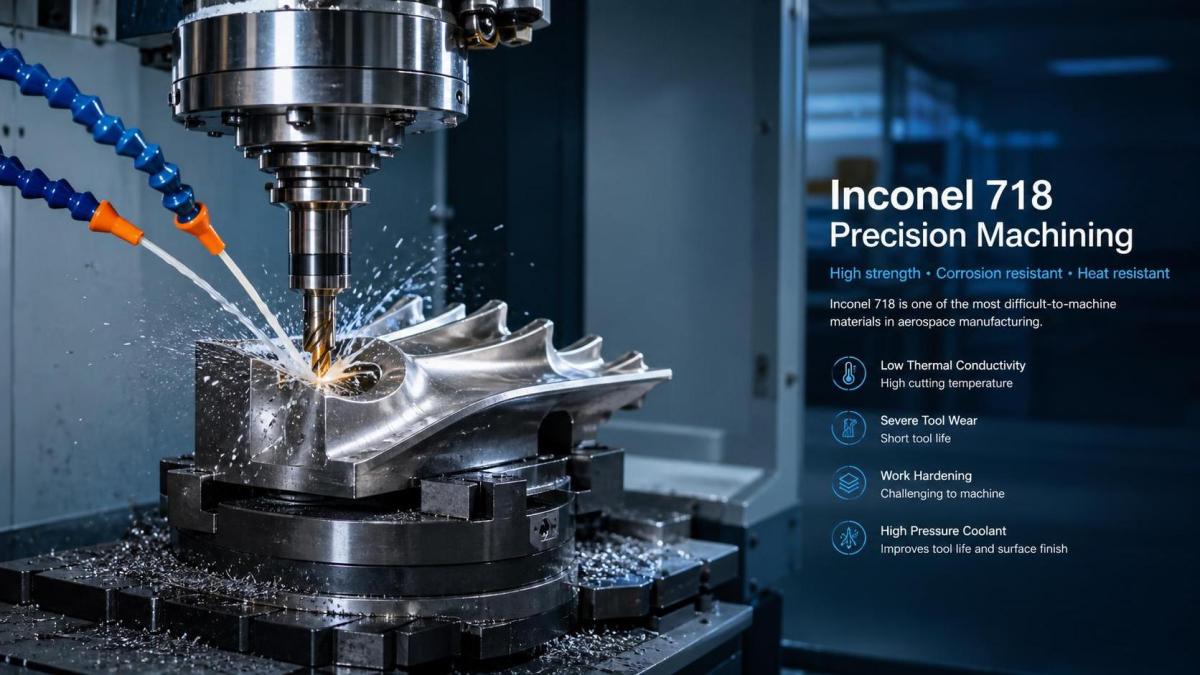
First, the alloy retains high strength at elevated temperature. In practical cutting terms, the material does not “soften away” from the tool edge as readily as more conventional alloys. Heat generated at the cutting zone therefore remains paired with high cutting resistance. That drives elevated stress at the edge exactly where carbide, coatings, and geometry are most vulnerable.
Second, 718 has relatively low thermal conductivity compared with many common engineering metals. Heat is not removed efficiently through the chip or workpiece, so a larger share stays concentrated near the tool-work interface. This is one reason shops often report that wear accelerates suddenly rather than gradually: once local temperature rises beyond a certain point, crater wear, flank wear, notch wear, and edge chipping can compound quickly.
Third, the material work-hardens. A tool that rubs instead of shearing cleanly is not merely losing efficiency; it is actively making the next pass harder. This is where unstable feeds, insufficient rigidity, poor entry strategy, or dwell marks become expensive. Even a brief period of rubbing can create a hardened surface layer that forces the next engagement into a more severe wear regime.
Fourth, Inconel 718 has strong chemical affinity with tool materials at cutting temperature. Adhesion at the cutting edge can produce built-up edge, micro-tearing, and coating damage. Once the coating is compromised, the substrate sees more heat and more friction, and wear rate increases again. The failure mode often looks “mechanical” at first glance, but chemistry is part of the story.
Finally, many 718 parts are not simple roughing blocks. They are often thin-wall aerospace structures, seal features, engine-related components, or complex geometries that force interrupted cuts, variable engagement, long reach, and strict tolerance control. In other words, the material challenge is frequently amplified by the part challenge.
Tool wear in 718 is usually a process signal, not just a tooling problem
One of the most common purchasing and process-review mistakes is to treat rapid wear as a consumables issue alone. Shops may respond by trying a different insert grade or a more expensive coating while leaving the machine condition, toolpath logic, coolant delivery, and part clamping strategy essentially unchanged. Sometimes that helps briefly. Often it does not resolve the underlying instability.
For evaluators, this is important: excessive wear in Inconel 718 usually reveals the total health of the machining system. If a supplier says they “cut 718 regularly,” that statement has limited value unless it is tied to process evidence such as tool life consistency, dimensional capability over tool life, burr behavior, recast or smear avoidance where relevant, and scrap rate at production scale.
A shop can achieve one good first article in 718 with aggressive operator intervention. The harder question is whether it can hold repeatability across shifts, lots, and tool-change intervals.
What the wear mechanisms typically indicate
This is why “tool wear” should be read as diagnostic evidence. It tells you whether the supplier really understands the interaction between material behavior and machine dynamics.
Why some common shop claims are only half true
Several familiar statements circulate in machining discussions around nickel alloys. Most contain some truth, but they are incomplete enough to mislead technical buyers.
“Just slow the cutting speed.” Lower speed can reduce temperature in some operations, but it can also increase rubbing if chip load and edge engagement are not kept healthy. In 718, overly conservative settings may worsen work hardening and shorten tool life rather than extend it.
“Use premium carbide and the problem goes away.” Tool grade matters, especially coating integrity, substrate toughness, and edge preparation. But premium tooling cannot compensate for spindle growth, weak fixturing, poor runout control, inadequate coolant pressure, or unstable CAM strategies.
“More coolant solves Inconel.” Coolant delivery is critical, but volume alone is not the point. Direction, pressure, access to the cut zone, and consistency matter more. In deep features or complex 5-axis postures, coolant may simply not reach the zone effectively. In some cases, the problem is not lack of coolant but false confidence in coolant coverage.
“If a shop machines titanium, 718 is a similar challenge.” There is overlap in difficulty, but the wear behavior is not interchangeable. Shops experienced in titanium may still struggle with Inconel 718 if their process discipline relies on assumptions that break down under stronger work hardening or more intense thermal loading.
What technical evaluators should actually ask suppliers
When supplier screening involves Inconel 718, broad capability decks are much less useful than specific process questions. The goal is to find out whether the supplier has a controlled method or only isolated experience.
- What cutting tool families and edge preparations are used for roughing versus finishing, and why?
- How is tool life defined: minutes in cut, number of parts, wear-land threshold, surface finish threshold, or dimensional drift limit?
- What is the observed wear mode at end of life in production, not in trial cuts?
- How is work hardening managed between roughing and finishing passes?
- What coolant strategy is used: flood, through-tool, high-pressure delivery, or another controlled approach?
- What spindle power, torque curve, and rigidity class support the quoted process? Exact values may be proprietary, but the supplier should be able to characterize the machine suitability clearly.
- How are chatter and tool deflection monitored on thin-wall or long-reach features?
- What evidence exists for tolerance retention over the full tool-change interval?
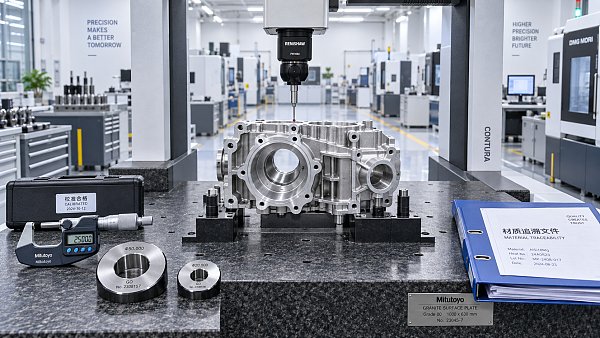
- For regulated or high-spec sectors, how are heat lot traceability, process revision control, and inspection records handled?
These questions tend to separate real capability from generic competence. In a material like 718, the difference appears quickly.
Machine capability matters more than many RFQs admit
Inconel 718 exposes weak machine-tool fundamentals. A nominally capable CNC platform may still struggle if thermal stability, spindle condition, axis stiffness, backlash control, or vibration behavior are not tightly managed. This becomes especially visible in longer cycle parts where heat buildup, wear progression, and dimensional drift interact over time.
For procurement and technical assessment, this means machine brand alone is not a sufficient proxy. Nor is axis count. A 5-axis machine can still be a poor 718 platform if its real-world rigidity and thermal behavior are not suited to sustained nickel-alloy cutting. Conversely, a well-maintained, appropriately sized machine with disciplined fixturing and proven process control can outperform a more expensive platform used carelessly.
Evaluators should also pay attention to whether the shop relies heavily on manual offsets and operator intuition to keep parts in tolerance. Experienced operators are valuable, but if process stability depends too much on heroics, scalability is limited.
The hidden cost is not the insert bill
When people discuss Inconel 718 tool wear, they often focus on cutting tools because the cost is visible and immediate. In many cases, however, the larger business impact comes from indirect effects:
- Cycle time inflation caused by conservative parameters introduced to protect tools
- More frequent stoppages for offset checks and tool changes
- Higher inspection burden due to anticipated drift
- Surface integrity risk on critical features, especially where fatigue performance matters
- Scrap or rework created late in the process after substantial value has already been added
- Reduced schedule confidence for low-volume, high-mix work
For aerospace and similar sectors, the concern extends beyond immediate machining economics. If aggressive wear contributes to microstructural damage, smeared surfaces, tensile residual stress, or other surface-condition issues, downstream part performance may be affected. The exact risk threshold depends on feature type and qualification requirements and should be verified against the application standard【待核实】, but the general principle is clear: in difficult alloys, tool wear is also a quality-risk variable.
What a stable 718 process usually looks like
There is no universal recipe, and exact parameters depend on tooling system, machine class, geometry, and condition of material supply. Still, robust machining of Inconel 718 usually shows a few common traits.
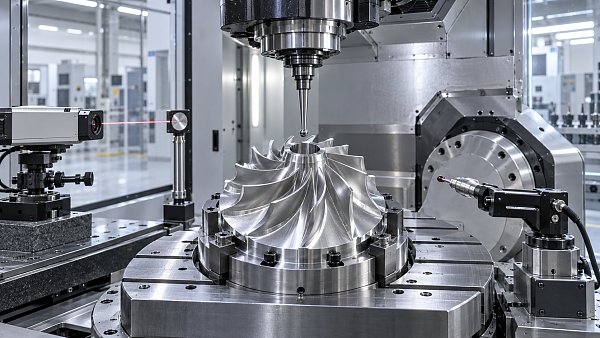
The process is segmented rather than generic. Roughing, semi-finishing, and finishing are treated as distinct engineering problems, with separate logic for engagement, chip evacuation, and wear control. Toolpaths are designed to minimize abrupt load changes. Radial and axial engagement are managed deliberately rather than inherited from a default CAM template. Runout is controlled, not assumed. Tool life is measured against part quality, not only against whether the insert physically survives.
Equally important, the shop understands which variables are sensitive. In some operations, a small change in overhang, coolant nozzle position, or actual chip thinning behavior can shift wear sharply. Suppliers who know their own sensitivity map are usually more trustworthy than those who present a single fixed “best parameter” as though 718 machining were static.
How this should shape supplier and investment decisions
For companies evaluating suppliers, Inconel 718 is a useful stress test because it exposes whether a shop’s process engineering is evidence-based. A supplier that can explain wear progression, offset policy, tool-change trigger logic, and surface-quality controls in concrete terms is generally lower risk than one that leans on generic statements about difficult-material experience.
For shops considering investment, the case for spending should not be framed as “buy better tools.” The stronger business question is where the bottleneck actually sits. If spindle rigidity, coolant delivery, toolholding quality, metrology feedback, or process engineering capacity is limiting performance, consumables alone will not fix margin erosion. The best return may come from machine condition restoration, toolpath optimization, higher-pressure coolant, improved holders, or stronger in-process monitoring before adding new capital equipment.
And for teams comparing quotations, a low initial price on 718 work deserves careful scrutiny. If the quoted process assumes optimistic tool life, unproven throughput, or weak control over wear-driven variation, the apparent savings may simply be deferred into delays, quality escapes, or engineering firefighting.
What to watch next
The broader manufacturing trend is toward tighter traceability, more difficult materials, and less tolerance for undocumented process variation. In that environment, understanding Inconel 718 tool wear is less about one alloy and more about how organizations prove machining competence. The relevant competitive signal is not whether a supplier claims to cut superalloys. It is whether they can translate wear behavior into predictable cost, quality, and delivery performance.
That is why rapid tool wear in 718 deserves attention. It is not simply a technical inconvenience at the spindle. It is a compressed indicator of whether the machining system, the supplier’s engineering discipline, and the commercial promise behind the quote are actually aligned.
Search News
Hot Articles
- Carbon Fiber StructuresHow to Specify Aerospace Carbon Fiber Assemblies for Lightweight, Load-Bearing PartsJul 11, 2026
- Machine VisionXiaomi, Alibaba DAMO Academy Drive Open-Source Robotics Model Ecosystem, Lowering Algorithm Development Barriers for Overseas SMEs Adopting Chinese Robotics SolutionsMar 30, 2026
- Cobots & ArmsShanxi 'AI+' Conference Showcases Embodied Intelligence with Multinational Buyer Engagement: Key Industry ImplicationsMar 30, 2026
Popular Tags
Recommended News
 Jul 11, 2026How to Specify Aerospace Carbon Fiber Assemblies for Lightweight, Load-Bearing PartsAerospace carbon fiber assemblies: learn how to specify laminate design, load data, joining methods, and inspection controls for lighter, reliable load-bearing aerospace parts.Elena Rostova (UAV Systems Researcher)
 Mar 30, 2026Xiaomi, Alibaba DAMO Academy Drive Open-Source Robotics Model Ecosystem, Lowering Algorithm Development Barriers for Overseas SMEs Adopting Chinese Robotics SolutionsXiaomi & Alibaba DAMO Academy's open-source robotics models lower algorithm barriers for global SMEs. Boost efficiency in manufacturing, logistics & smart retail with ROS 2 compatible solutions.TSV Data Lab
 Mar 30, 2026Shanxi 'AI+' Conference Showcases Embodied Intelligence with Multinational Buyer Engagement: Key Industry ImplicationsShanxi 'AI+' Conference highlights embodied intelligence with Tesla, Ubtech & Jiantao showcasing multimodal robotics. 40+ global buyers validated tech on-site, creating new B2B channels for industrial automation & AI solutions.Chen Wei (Automation Lead Engineer)
 Mar 30, 2026Zhongguancun Unveils 6G Integrated Sensing-Computing-Intelligence Platform to Empower Embodied Robots for Global Industrial ApplicationsZhongguancun's new 6G platform revolutionizes industrial robotics with <10ms latency, empowering global automotive, logistics & port automation. Discover how this tech boosts China's smart manufacturing exports.TSV Data Lab
 Mar 30, 2026Mech-Mind Tianjin Embodied Intelligence R&D and Production Base Goes Live, Cutting Delivery Time by 20%–30% for Global Customized AMR+Vision SolutionsMech-Mind's Tianjin AMR+Vision production base cuts delivery time by 20%-30% for欧美 & Latin American markets. Discover how this PLd-certified facility accelerates customized robotics solutions for smart manufacturing and logistics.Chen Wei (Automation Lead Engineer)
 Mar 30, 2026Boao Forum Reveals 'Co-evolution of Big and Small Brains' Trend in Humanoid Robots, China's Embodied Intelligence Accelerates Adaptation to Overseas Manufacturing Service ScenariosDiscover how China's humanoid robots, featuring 'Co-evolution of Big and Small Brains,' are revolutionizing global manufacturing. Learn about Embodied Tian Gong 3.0's ISO compliance and overseas deployment at Boao Forum 2026.Chen Wei (Automation Lead Engineer)
 Mar 30, 2026China Railway Industrial Secures Patent for Embodied Robotics in Material Handling, Boosting High-Precision Delivery Capabilities for Overseas Infrastructure and Manufacturing ProjectsChina Railway Industrial's new patent for embodied robotics in material handling boosts high-precision delivery for global infrastructure & manufacturing. Discover how this innovation enhances logistics accuracy in automotive, rail transit & EPC projects.Chen Wei (Automation Lead Engineer)
 Oct 06, 2026Navigation Fault Tolerance Standards for AMRs: What Safety Teams Must VerifyNavigation fault tolerance standards: learn what AMR safety teams must verify, from localization loss and sensor faults to stopping distance, safe restart, and site-specific validation.Chen Wei (Automation Lead Engineer)
 Oct 05, 2026Calculating Edge Computing Total Cost of Ownership Across Distributed SitesEdge computing ownership cost explained: calculate deployment, energy, connectivity, security, remote support, and refresh costs across distributed sites.TSV Data Lab
 Oct 04, 2026CAD/CAM Benchmarking in the GCC: What Manufacturers Should Ask a ConsultantCAD CAM benchmark consultant GCC guide: learn the key questions manufacturers should ask to validate post-processors, workflows, machine performance, and production risk.Victor Lin (Chief Software Architect)
 Oct 03, 2026Selecting Automotive Radar Sensor Modules for ADAS Range, Resolution, and IntegrationAutomotive radar sensor module selection guide for ADAS: compare range, resolution, field of view, latency, and integration to build safer, reliable vehicle systems.TSV Data Lab
 Oct 02, 2026How to Qualify Machined Parts Suppliers for Hard Tech ProgramsHard tech supply chain machined parts demand rigorous supplier qualification. Learn how to assess capability, traceability, quality controls, and delivery resilience.Dr. Marcus Vance
 Oct 01, 2026How to Select an Outdoor Security Radar Sensor for Perimeter Detection?Outdoor security radar sensor selection guide: compare range, accuracy, false-alarm control, integration, and field testing for reliable perimeter detection.TSV Data Lab
 Sep 30, 2026How to Evaluate Solid-State LiDAR Hardware for Outdoor Autonomous VehiclesSolid state LiDAR hardware evaluation guide for outdoor autonomous vehicles—compare range, point-cloud quality, environmental resilience, integration, and safety.TSV Data Lab
 Sep 29, 2026ISO 9283 Repeatability: How to Evaluate Cobot Positioning PerformanceISO 9283 cobot repeatability explained: learn how payload, reach, approach direction, and test conditions affect positioning performance and cell capability.Chen Wei (Automation Lead Engineer)
 Oct 06, 2026Are Collaborative Robots Safe Enough to Operate Without Fencing?Are collaborative robots safe enough to work without fencing? Explore risk assessment, safeguarding options, and practical guidance for safer, productive cobot cells.Chen Wei (Automation Lead Engineer)
 Oct 05, 2026What Causes Machine Vision Systems to Miss Small Defects?What causes machine vision systems to miss small defects? Discover how lighting, optics, motion, and AI thresholds affect detection—and prevent costly escapes.TSV Data Lab
 Oct 04, 2026How Should You Compare 5-Axis CNC Machine Accuracy Claims?How do I compare 5-axis CNC machine accuracy claims? Learn how to assess standards, thermal stability, TCP accuracy, and real-world test evidence.Dr. Marcus Vance
 Oct 03, 2026Is Edge Computing Necessary for Real-Time Quality Inspection?Is industrial edge computing necessary for real-time quality inspection? Explore how latency, data volume, reliability, and control integration shape the right architecture.TSV Data Lab
 Oct 02, 2026What Documents Prove a Precision Machining Supplier Can Hold Tolerance?What documents prove a precision machining supplier can hold tolerance? Explore certificates, FAI reports, calibration, SPC, and traceability evidence to qualify suppliers with confidence.Dr. Marcus Vance
 Oct 01, 2026Can a Machining Supplier Meet Aerospace Fatigue Testing Requirements?Can a machining supplier meet aerospace fatigue testing requirements? Learn the traceability, process control, and test evidence needed for reliable aerospace parts.Dr. Marcus Vance
 Sep 30, 2026Which Industrial Robot Specifications Matter for High-Precision Assembly?Which industrial robot specifications matter most for high-precision assembly? Explore repeatability, accuracy, stiffness, vibration, calibration, and force control for reliable yields.Chen Wei (Automation Lead Engineer)
 Sep 29, 2026How Do You Verify Servo Motor Torque Under Continuous Load?How do I verify servo motor torque under continuous load? Learn RMS torque checks, torque-speed limits, thermal derating, and real-machine testing.Chen Wei (Automation Lead Engineer)
 Oct 02, 2026ZD330 Software Configuration: Verifying Cut-List Import Before PurchaseZD330 software and machine configuration: verify cut-list imports, data mapping, labels, and workflow before purchase to reduce errors and choose with confidence.Victor Lin (Chief Software Architect)