Medical machining for orthopedic implants leaves no room for burrs
Publication Date
author
In medical machining for orthopedic implants, even microscopic burrs can compromise fit, biocompatibility, and patient safety. For quality control and safety leaders, burr-free precision is not a marketing claim but a measurable requirement tied to ISO 13485 compliance, traceable process control, and risk reduction. This article examines why defect-free machining standards are essential and how data-driven inspection helps prevent costly failures before implants reach the operating room.
Why burr control in orthopedic implant machining is becoming a strategic issue
A clear industry shift is underway. Medical machining for orthopedic implants is no longer judged only by dimensional accuracy at the print or by whether a supplier can hold a tight tolerance during a pilot run. The market is moving toward a stricter expectation: every machined edge, thread, slot, bore, and surface transition must be verified not only for geometry, but also for burr risk, debris generation, and downstream patient safety.
Several signals explain this change. Orthopedic devices are becoming more complex, material portfolios are expanding, and audit expectations are rising. At the same time, quality teams are under pressure to reduce nonconformance, shorten supplier qualification cycles, and document process capability with more discipline. In this environment, burrs are no longer treated as cosmetic defects or finishing nuisances. They are increasingly viewed as process instability indicators that can trigger regulatory concern, rework cost, delayed release, and elevated clinical risk.
For quality control personnel and safety managers, the key trend is not simply tighter machining. It is the transition from reactive burr removal to proactive burr prevention in medical machining for orthopedic implants. That shift affects inspection planning, equipment validation, supplier audits, and acceptance criteria across the entire manufacturing chain.
The trend signals quality leaders should pay attention to now
The most relevant change is that burr-related risk is being pulled upstream. Instead of discovering edge defects during final visual checks or assembly trials, manufacturers are being pushed to control burr formation at the toolpath, fixturing, cutting parameter, and tool wear stages. This is especially important in medical machining for orthopedic implants because edge condition directly influences implant seating, fixation behavior, surface cleaning effectiveness, and long-term functional performance.
These signals matter because burrs in orthopedic implant production create a chain of consequences. A small raised edge can interfere with mating features, produce particulate contamination, alter insertion feel during surgery, or compromise coating and cleaning performance. Even when a burr does not immediately fail dimensional inspection, it can still create hidden quality exposure.
What is driving tighter expectations in medical machining for orthopedic implants
The push for burr-free production is being shaped by a combination of technical, regulatory, and commercial forces. Understanding those drivers helps quality and safety teams decide where to focus resources.
1. Regulatory discipline is extending beyond paperwork
Medical device compliance frameworks increasingly reward manufacturers that can show objective process control rather than rely on end-of-line sorting. Burr management fits directly into that expectation. If a supplier cannot define how burrs are prevented, detected, measured, and documented, then quality assurance becomes dependent on operator judgment, which is harder to defend during audits.
2. Implant design complexity is amplifying edge-risk sensitivity
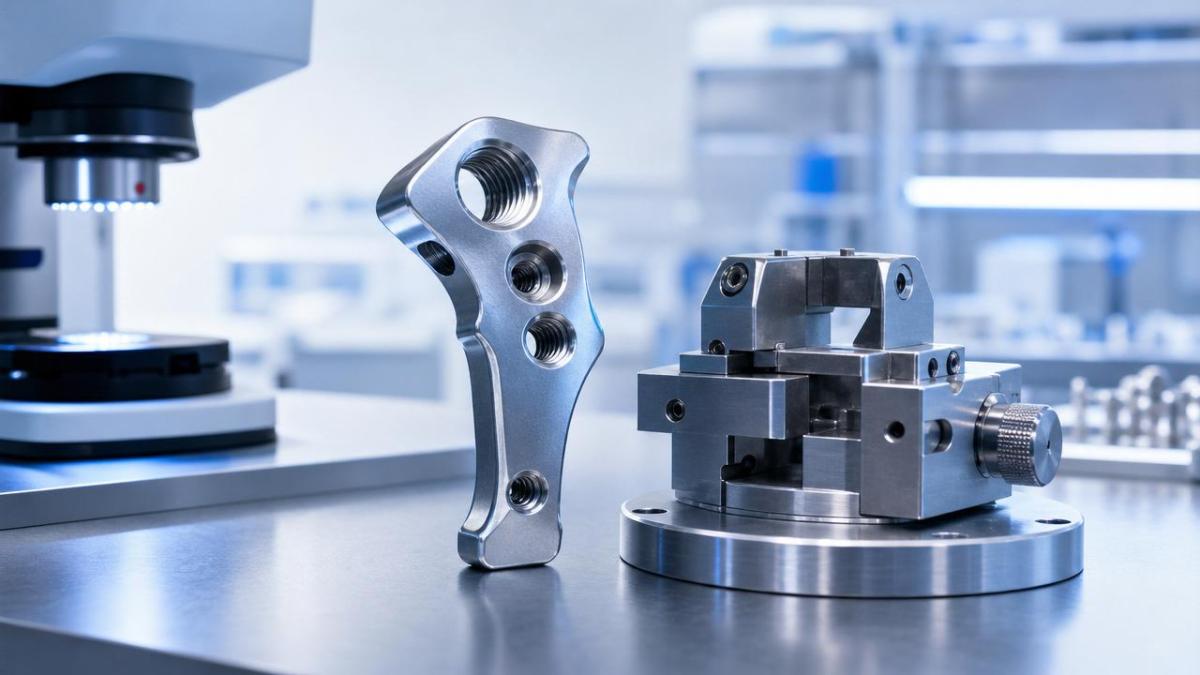
Modern orthopedic implants often incorporate intricate contours, small radii, threaded sections, locking interfaces, and engineered surfaces. These geometries improve clinical performance but leave less room for machining variation. In medical machining for orthopedic implants, every added feature creates another location where a burr may form, remain trapped, or be difficult to inspect.
3. Advanced materials make burr behavior harder to generalize
Titanium and cobalt-based materials are valued for strength, corrosion resistance, and biocompatibility, but they also present machining challenges. Tool wear progression, heat concentration, smearing, and micro-edge deformation can alter burr morphology. This means old deburring assumptions may no longer work reliably across programs.
4. Procurement standards are becoming more evidence-based
Senior buyers and supplier quality engineers are asking more detailed questions before approving a machining partner. They want evidence of process capability, edge-condition standards, contamination control, and inspection repeatability. As a result, medical machining for orthopedic implants is being evaluated not only on price and lead time, but on how convincingly a supplier can demonstrate stable burr control.
How the shift affects quality control and safety management roles
This trend does not impact every function in the same way. For quality and safety leaders, the burden is practical: they must translate broad risk awareness into measurable control points. That means defining acceptance standards for burrs, validating cleaning effectiveness, checking visual inspection consistency, and building escalation rules when process drift appears.
One important implication is that inspection alone cannot solve the problem. If a plant relies on final manual deburring to compensate for unstable machining, variation remains hidden until labor skill, lighting conditions, or production pace changes. Quality control professionals should therefore watch for a broader maturity signal: whether the organization treats burrs as isolated defects or as measurable outputs of process physics.
From visual checks to data-driven burr prevention
A major technology and management trend in medical machining for orthopedic implants is the move from subjective inspection toward data-backed control. Visual inspection remains necessary, but on its own it is not enough for high-risk parts and repeatable compliance. Data-driven methods strengthen confidence in three ways.
First, they make burr risk visible earlier
Tool wear trends, spindle load variation, edge breakout patterns, and nonconformance clustering can reveal where burr formation is becoming more likely. This allows intervention before final inspection rejects accumulate.
Second, they reduce dependence on inconsistent judgment
When magnification levels, image references, sampling plans, and acceptance rules are standardized, quality decisions become more repeatable across shifts, operators, and supplier sites.
Third, they improve audit defensibility
For regulated products, the ability to show process records, inspection data, and documented response thresholds is often as important as the physical part itself. In medical machining for orthopedic implants, that documentation can support investigations into complaints, deviations, or supplier disputes.
What good organizations are starting to do differently
The most capable organizations are not waiting for rejection events to improve their burr-control strategy. They are making several practical changes that quality and safety leaders should consider benchmarking against.
- Defining edge-condition standards by feature type instead of using vague pass/fail language
- Linking deburring methods to material, feature accessibility, and surface sensitivity
- Separating cosmetic edge treatment from safety-critical burr removal requirements
- Using first-article and in-process reviews to confirm burr behavior before production ramps
- Building supplier qualification checklists around process capability, not brochure claims
These actions are especially relevant when outsourcing medical machining for orthopedic implants. A supplier may appear technically strong based on machine count or material experience, yet still lack disciplined burr-prevention methods. For procurement and safety stakeholders, that gap often becomes visible only after repeated rework, cleaning failures, or inconsistent inspection findings.
The next phase: what to monitor over the next 12 to 24 months
Looking ahead, the direction is clear: burr control will become more integrated with digital quality systems, supplier benchmarking, and risk-based manufacturing decisions. Several developments deserve close monitoring.
One is the growing use of image-based inspection records that create a stronger historical baseline for edge quality. Another is the tighter integration between machining data and quality events, making it easier to connect burr defects with tool life, machine condition, or specific operations. A third is the likely expansion of customer-driven documentation requirements, especially for parts with critical interfaces or difficult-to-clean geometries.
For teams responsible for medical machining for orthopedic implants, this means the definition of a qualified supplier will keep evolving. It will not be enough to say that deburring is performed. Buyers and auditors will increasingly ask how burrs are characterized, what process windows prevent them, how repeatability is measured, and how evidence is retained.
Practical judgment framework for companies reviewing their current risk
If an organization wants to judge whether its current approach is aligned with market direction, it should start with a few direct questions:
- Are burr acceptance criteria written clearly enough that two inspectors would make the same decision?
- Can the team identify which features and operations generate the highest burr risk?
- Is burr control handled mainly through rework, or through stable machining and validated finishing steps?
- Are tool wear, process drift, and edge-related nonconformance connected in one review loop?
- Do supplier audits test real burr-prevention capability or only review general quality certificates?
Where the answers are weak or incomplete, the exposure is not just operational. It can affect compliance confidence, complaint investigation speed, launch readiness, and the credibility of the entire manufacturing control plan.
A measured path forward for quality and safety decision-makers
The central takeaway is simple: medical machining for orthopedic implants is moving toward a higher standard of proof. Burr-free claims must be supported by process evidence, inspection discipline, and documented risk control. For quality control and safety leaders, the most effective response is not to add more final inspection alone, but to create a system where machining, deburring, cleaning, and verification work together as one controlled pathway.
At a practical level, companies should prioritize feature-specific standards, upstream process monitoring, supplier capability reviews, and traceable digital inspection records. Those actions align with the broader hard-tech direction described by TechStat Vanguard: decisions should be grounded in measurable engineering truth, not vague quality language.
If your organization is evaluating how trends in medical machining for orthopedic implants may affect current quality systems, the first step is to verify where burr risk is still being managed by habit instead of data. That single distinction often determines whether a process is merely acceptable today or robust enough for the stricter expectations already taking shape across the orthopedic manufacturing landscape.
Search News
Hot Articles
- Carbon Fiber StructuresHow to Specify Aerospace Carbon Fiber Assemblies for Lightweight, Load-Bearing PartsJul 11, 2026
- Machine VisionXiaomi, Alibaba DAMO Academy Drive Open-Source Robotics Model Ecosystem, Lowering Algorithm Development Barriers for Overseas SMEs Adopting Chinese Robotics SolutionsMar 30, 2026
- Cobots & ArmsShanxi 'AI+' Conference Showcases Embodied Intelligence with Multinational Buyer Engagement: Key Industry ImplicationsMar 30, 2026
Popular Tags
Recommended News
 Jul 11, 2026How to Specify Aerospace Carbon Fiber Assemblies for Lightweight, Load-Bearing PartsAerospace carbon fiber assemblies: learn how to specify laminate design, load data, joining methods, and inspection controls for lighter, reliable load-bearing aerospace parts.Elena Rostova (UAV Systems Researcher)
 Mar 30, 2026Xiaomi, Alibaba DAMO Academy Drive Open-Source Robotics Model Ecosystem, Lowering Algorithm Development Barriers for Overseas SMEs Adopting Chinese Robotics SolutionsXiaomi & Alibaba DAMO Academy's open-source robotics models lower algorithm barriers for global SMEs. Boost efficiency in manufacturing, logistics & smart retail with ROS 2 compatible solutions.TSV Data Lab
 Mar 30, 2026Shanxi 'AI+' Conference Showcases Embodied Intelligence with Multinational Buyer Engagement: Key Industry ImplicationsShanxi 'AI+' Conference highlights embodied intelligence with Tesla, Ubtech & Jiantao showcasing multimodal robotics. 40+ global buyers validated tech on-site, creating new B2B channels for industrial automation & AI solutions.Chen Wei (Automation Lead Engineer)
 Mar 30, 2026Zhongguancun Unveils 6G Integrated Sensing-Computing-Intelligence Platform to Empower Embodied Robots for Global Industrial ApplicationsZhongguancun's new 6G platform revolutionizes industrial robotics with <10ms latency, empowering global automotive, logistics & port automation. Discover how this tech boosts China's smart manufacturing exports.TSV Data Lab
 Mar 30, 2026Mech-Mind Tianjin Embodied Intelligence R&D and Production Base Goes Live, Cutting Delivery Time by 20%–30% for Global Customized AMR+Vision SolutionsMech-Mind's Tianjin AMR+Vision production base cuts delivery time by 20%-30% for欧美 & Latin American markets. Discover how this PLd-certified facility accelerates customized robotics solutions for smart manufacturing and logistics.Chen Wei (Automation Lead Engineer)
 Mar 30, 2026Boao Forum Reveals 'Co-evolution of Big and Small Brains' Trend in Humanoid Robots, China's Embodied Intelligence Accelerates Adaptation to Overseas Manufacturing Service ScenariosDiscover how China's humanoid robots, featuring 'Co-evolution of Big and Small Brains,' are revolutionizing global manufacturing. Learn about Embodied Tian Gong 3.0's ISO compliance and overseas deployment at Boao Forum 2026.Chen Wei (Automation Lead Engineer)
 Mar 30, 2026China Railway Industrial Secures Patent for Embodied Robotics in Material Handling, Boosting High-Precision Delivery Capabilities for Overseas Infrastructure and Manufacturing ProjectsChina Railway Industrial's new patent for embodied robotics in material handling boosts high-precision delivery for global infrastructure & manufacturing. Discover how this innovation enhances logistics accuracy in automotive, rail transit & EPC projects.Chen Wei (Automation Lead Engineer)
 Sep 28, 2026Spindle Runout Measurement in Germany: DIN Standards, Methods, and Acceptance LimitsSpindle runout measurement Germany: explore DIN standards, proven methods, acceptance limits, and audit-ready practices for reliable machining quality.Dr. Marcus Vance
 Sep 27, 2026How to Select Wall-Mount Edge Devices for Space-Constrained Factory NetworksWall mount edge devices for space-constrained factories: evaluate workload, thermal design, power resilience, cable access, and network reliability for smarter deployments.TSV Data Lab
 Sep 26, 2026Machining Tolerance Analysis: How to Set Limits That Meet Function and Cost TargetsMachining tolerance analysis: learn how to set functional limits, control tolerance stacks, reduce inspection risk, and balance precision with production cost.Dr. Marcus Vance
 Sep 25, 2026How to Evaluate an Industrial Infrastructure Data Platform for Multi-Site OperationsIndustrial infrastructure data platform evaluation guide for multi-site operations: compare data quality, edge resilience, interoperability, governance, and scalable proof-of-value criteria.Victor Lin (Chief Software Architect)
 Sep 24, 2026How to Select Machine Vision Optics for Accurate Inspection at Different Working DistancesMachine vision optics selection guide for accurate inspection at every working distance. Compare FOV, pixel scale, DOF, distortion, lighting, and telecentric options.TSV Data Lab
 Sep 23, 2026How to Evaluate a Machine Vision System Integrator for High-Speed Inspection LinesChoose a machine vision system integrator with proven expertise in high-speed inspection, reliable reject timing, robust optics, and measurable acceptance criteria.TSV Data Lab
 Sep 28, 2026When is a SCADA API the right choice for connecting plant systems?SCADA API guide: learn when governed plant data integration improves traceability, security, and scalability—without compromising real-time control.Victor Lin (Chief Software Architect)
 Sep 27, 2026How SCADA data integration improves traceability across production linesSCADA data integration connects production-line data to improve traceability, accelerate quality investigations, and strengthen safety decisions.Victor Lin (Chief Software Architect)
 Sep 26, 2026What to define before starting SCADA integration planningSCADA integration planning starts with clear scope, control boundaries, data models, cybersecurity, and testing. Discover the definitions that reduce risk and costly rework.Victor Lin (Chief Software Architect)
 Sep 25, 2026How a smart factory with Industrial IoT reduces production blind spotsDiscover how a smart factory with Industrial IoT turns real-time machine, quality, and workflow data into actionable insights that reduce production blind spots and delivery risks.Victor Lin (Chief Software Architect)
 Sep 24, 2026When does Industrial IoT make smart manufacturing easier to scale?Smart manufacturing Industrial IoT scales when trusted data, interoperable systems, and secure workflows turn connected assets into measurable gains.TSV Data Lab
 Sep 23, 2026What drives ultra-precision machining cost at 1-micron tolerance?Ultra precision machining cost per part at 1 micron tolerance depends on process, material, metrology, and yield. Learn how to compare quotes confidently.Dr. Marcus Vance
 Sep 22, 2026Drone Engine-T550CC Applications: Build the UAV Power System Around the MissionAn application guide for Drone Engine-T550CC integration, covering payload planning, airframe matching, cooling, fuel, vibration, test procedures, documentation, and service preparation.Elena Rostova (UAV Systems Researcher)
 Sep 22, 2026How to Evaluate Industrial Edge Computing Vendors for Factory DeploymentIndustrial edge computing vendor evaluation guide for factories: compare latency, protocol fit, reliability, security, and lifecycle support before deployment.TSV Data Lab
 Sep 21, 2026Drone Payload Integration: Matching Power, Data, and Center of Gravity for Reliable FlightsDrone payload integration made practical: balance power, data, center of gravity, and endurance to build safer, more reliable mission-ready flights.Elena Rostova (UAV Systems Researcher)
 Sep 20, 2026Autonomous Navigation Pricing: Cost Drivers and Budget Benchmarks for AMR ProjectsAutonomous navigation price explained: compare AMR cost drivers, software, sensors, integration, safety, and lifecycle budgets to build a scalable project plan.Chen Wei (Automation Lead Engineer)
 Sep 19, 2026How to Scope Automation Integration Services for Multi-System Factory ProjectsAutomation integration services: learn how to scope multi-system factory projects with clear workflows, interface contracts, safety boundaries, and acceptance criteria.Victor Lin (Chief Software Architect)