Custom brass CNC parts can fail when plating is overlooked
Publication Date
author
When plating is treated as an afterthought, custom brass CNC parts can suffer from corrosion, poor conductivity, premature wear, and failed compliance checks—turning a cost-saving decision into a supply chain risk. For procurement teams, understanding how surface finishing affects performance, durability, and supplier qualification is essential before placing orders that must meet real engineering standards.
Why scenario differences matter before buying custom brass CNC parts
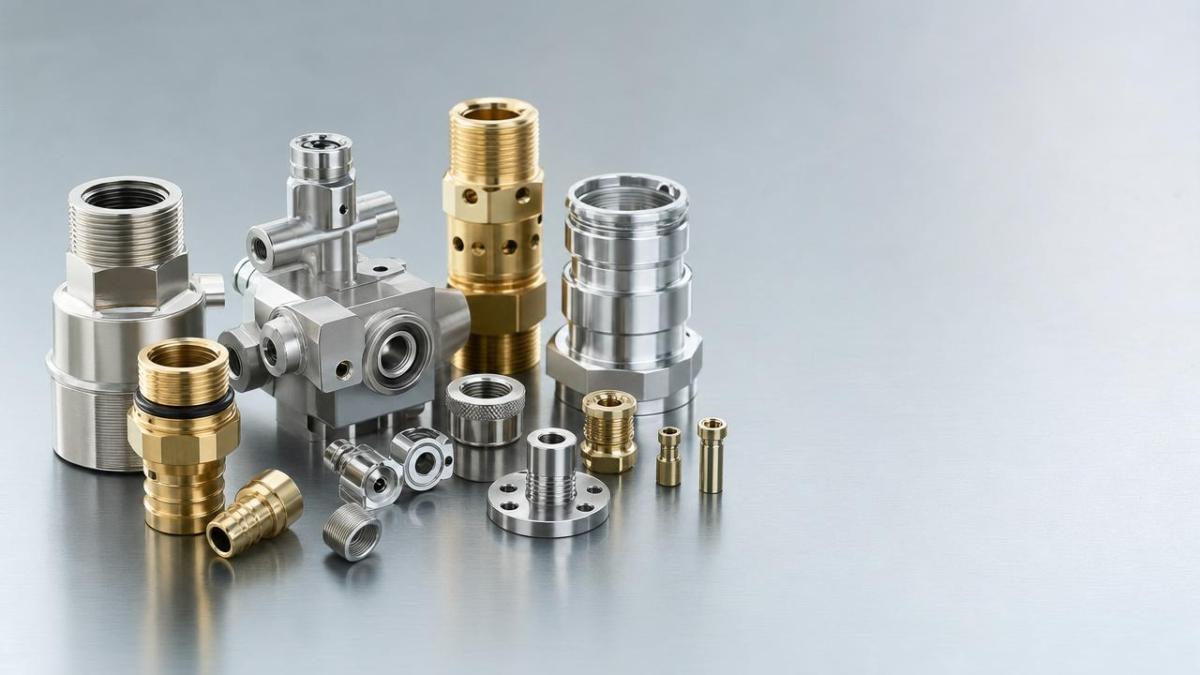
For buyers, the biggest mistake is assuming that plating is a cosmetic choice with little effect on function. In reality, the same custom brass CNC parts may perform very differently depending on where they are used, what they contact, how often they are handled, and which standards govern the final product. A connector pin in a humid telecom cabinet, a valve component in a fluid system, and a decorative-but-functional hardware piece all place different demands on the brass substrate and the plated surface.
That is why procurement should not ask only for material grade, machining tolerance, and unit price. The more complete question is: what operating scenario will these custom brass CNC parts face, and what plating system is technically appropriate for that scenario? Once this is clear, supplier screening becomes faster, drawing notes become more accurate, and downstream quality disputes are easier to avoid.
At TechStat Vanguard’s engineering-first perspective, plating is part of the performance architecture. It affects corrosion resistance, solderability, electrical contact stability, wear life, friction behavior, appearance retention, and sometimes regulatory acceptance. For procurement personnel managing risk across multiple suppliers, plating should be treated as a sourcing variable that deserves the same discipline as tolerance control or incoming inspection.
Common business scenarios where plating decisions change the outcome
The practical value of plating becomes obvious when custom brass CNC parts move from drawings into actual use. Different industries may order visually similar components, yet the plating requirements can be completely different. A purchasing team that understands these distinctions is less likely to overbuy, under-specify, or qualify the wrong supplier.
Electrical and signal transmission components
In terminals, contact pins, RF fittings, and low-voltage connection hardware, brass is valued for machinability and conductivity. But unprotected brass can oxidize, and oxidation raises contact resistance. In these scenarios, plating is often chosen to preserve electrical performance rather than appearance. Tin may be acceptable for some cost-sensitive connector applications, while nickel or gold over suitable underlayers may be preferred where low contact resistance, corrosion stability, or repeated mating cycles matter.
Fluid control and valve assemblies
For custom brass CNC parts used in valves, manifolds, fittings, and metering systems, plating can influence corrosion behavior, sealing integrity, and long-term dimensional consistency at contact surfaces. If parts are exposed to moisture, cleaning agents, process fluids, or outdoor storage, plating selection must consider the full media environment. A low-cost finish that looks acceptable at incoming inspection may degrade quickly once exposed to field conditions.
Wear-prone moving interfaces
Bushings, threaded inserts, adjustment screws, and small mechanical interfaces often rely on plated surfaces to improve wear resistance or reduce friction variability. In such use cases, custom brass CNC parts may fail not because the base brass was machined incorrectly, but because plating thickness was inconsistent, adhesion was poor, or the finish cracked under repeated motion.
Visible hardware with brand and environmental exposure demands
In premium fixtures, instrument knobs, architectural accessories, and branded equipment hardware, appearance and durability are linked. Tarnish, uneven color, or peeling finish can become a customer-facing issue. Here, plating needs to be specified not just for decorative appeal, but for abrasion resistance, color consistency between batches, and resistance to fingerprint, humidity, or salt-laden air depending on the market.
Scenario comparison: what procurement teams should focus on
The table below shows how the right plating strategy for custom brass CNC parts depends on actual use conditions rather than on a generic “high quality” claim.
How requirements change by buyer type and project stage
Not every procurement team evaluates custom brass CNC parts in the same way. A sourcing manager for prototype builds may prioritize lead time and design flexibility, while a procurement director in a regulated or export-driven supply chain may care more about documentation discipline, RoHS or REACH alignment, and process stability across lots. Understanding your own buying context helps determine how deeply plating must be controlled.
Prototype and low-volume projects
At the prototype stage, plating is often deferred to “save time.” This can be reasonable only if the team clearly knows that test results will not depend on corrosion, conductivity, or wear behavior. If prototype validation includes assembly fit, field testing, environmental exposure, or customer demonstration, unplated or poorly specified custom brass CNC parts can produce misleading results and trigger avoidable redesign.
Production purchasing for stable SKUs
In repetitive production, the issue is process consistency. The buyer should verify whether plating is performed in-house or outsourced, how thickness is measured, what incoming brass condition is accepted, and how suppliers handle batch traceability. In this stage, plating failures create hidden costs through rejects, field returns, assembly interruption, or supplier disputes over responsibility.
Multi-region sourcing and export programs
For export-oriented procurement, custom brass CNC parts may need plating processes that align with restricted substance requirements, customer-specific material declarations, or sector expectations. Even if the part itself is mechanically acceptable, insufficient compliance records can delay PPAP-style approval, customs documentation, or end-customer signoff. In these cases, documentation quality becomes as important as the plated finish itself.
What to confirm before selecting plated custom brass CNC parts
A reliable buying decision starts with a structured technical review. Instead of asking suppliers for a vague recommendation, procurement teams should work from scenario-driven questions that narrow down the right finish and qualification path.
- What environment will the part see: indoor, humid, chemically exposed, outdoor, or marine-adjacent?
- Is the plated surface functional, decorative, or both?
- Will the part carry current, transmit signals, or require stable contact resistance?
- Is the part subject to repeated motion, torque, insertion cycles, or abrasion?
- What plating thickness, adhesion test, and corrosion test must be documented?
- Does the plating add measurable thickness that could affect fit, threads, or sealing areas?
- Are there compliance requirements such as RoHS, REACH, or customer-specific declarations?
These questions help move the discussion from general promises to verifiable criteria. This is especially important for custom brass CNC parts because brass is easy to machine into complex forms, which means many buyers focus first on geometry. Yet in real service conditions, surface engineering often determines whether the part remains reliable.
Frequent scenario misjudgments that create avoidable procurement risk
Several recurring mistakes appear across industries when teams source custom brass CNC parts without a plating strategy tied to the final application.
Treating indoor use as low risk by default
Indoor environments are not automatically benign. Server rooms, control cabinets, laboratory spaces, and factories can still expose brass parts to condensation cycles, chemical residue, human handling, or airborne contaminants. If the component has electrical or appearance requirements, indoor service may still justify controlled plating.
Specifying plating without considering tolerance stack-up
On precision threads, mating diameters, and sealing surfaces, finish thickness matters. Procurement teams sometimes approve custom brass CNC parts based on machined dimensions alone, only to face assembly interference after plating. The correct approach is to specify pre-plate dimensions or final dimensions together with allowed plating build-up and critical no-plate zones where necessary.
Using one finish across all SKUs for administrative simplicity
Standardizing finishes can reduce purchasing complexity, but over-standardization may create technical mismatch. A finish chosen for cosmetic uniformity may underperform in electrical service, while a finish optimized for conductivity may be unnecessary and expensive for non-functional hardware. Scenario-based segmentation usually produces better lifecycle value than one-finish-fits-all sourcing.
Approving samples without demanding process evidence
A good-looking sample does not prove stable production. For custom brass CNC parts, plating quality depends on surface preparation, bath control, masking discipline, rack design, cleaning sequence, and inspection capability. Procurement should request process flow, thickness verification method, adhesion criteria, and relevant test data, especially for critical applications.
How to align supplier qualification with application reality
The most effective supplier qualification process connects actual application demands to measurable checkpoints. For custom brass CNC parts, this means qualifying not only CNC capability, but also finish control and the handoff between machining and plating. If machining is excellent but edges are not prepared for coating, adhesion problems can still emerge. If plating is outsourced without traceability, response time during quality incidents may become unacceptable.
A practical qualification workflow includes drawing review, finish callout verification, sample inspection after plating, dimensional confirmation on critical surfaces, corrosion or wear testing when relevant, and documentation review. Buyers should also clarify whether the supplier understands application-specific restrictions such as solderability needs, appearance grade acceptance, or prohibited chemistry in destination markets.
For high-value programs, it is also wise to distinguish between acceptable for quote, acceptable for prototype, and acceptable for production. This prevents early-stage assumptions from becoming locked into a procurement specification that later proves incomplete.
FAQ: application-focused questions buyers ask about custom brass CNC parts
Do all custom brass CNC parts need plating?
No. Some custom brass CNC parts can function well unplated in controlled, non-critical, low-exposure conditions. But if the part depends on electrical stability, corrosion resistance, wear performance, visual consistency, or compliance documentation, plating usually becomes an engineering requirement rather than an optional upgrade.
What is the biggest buying risk when plating is not specified clearly?
The biggest risk is receiving parts that pass visual inspection but fail in service. Without clear plating requirements, suppliers may choose different finish systems, thickness ranges, or subcontractors, creating inconsistency between batches and making root-cause analysis difficult.
Should procurement or engineering own the plating decision?
Engineering should define the performance need, but procurement must ensure that the sourcing package converts that need into enforceable specifications, supplier controls, and test expectations. For custom brass CNC parts, the strongest outcomes usually come from joint review rather than isolated decision-making.
Final decision path for procurement teams
If you are sourcing custom brass CNC parts, plating should be evaluated through the lens of application scenario, not habit or price alone. Ask where the part will operate, what failure mode matters most, which dimensions become critical after finishing, and what proof the supplier can provide. That discipline reduces qualification time, improves supplier comparability, and lowers lifecycle cost.
For buyers working in data-driven manufacturing environments, the best sourcing outcome comes from translating real operating conditions into measurable finish requirements. In other words, do not buy plated brass parts as a commodity if the application is not commodity-grade. Define the scenario, verify the finish, and qualify the supplier accordingly.
Search News
Hot Articles
- Carbon Fiber StructuresHow to Specify Aerospace Carbon Fiber Assemblies for Lightweight, Load-Bearing PartsJul 11, 2026
- Machine VisionXiaomi, Alibaba DAMO Academy Drive Open-Source Robotics Model Ecosystem, Lowering Algorithm Development Barriers for Overseas SMEs Adopting Chinese Robotics SolutionsMar 30, 2026
- Cobots & ArmsShanxi 'AI+' Conference Showcases Embodied Intelligence with Multinational Buyer Engagement: Key Industry ImplicationsMar 30, 2026
Popular Tags
Recommended News
 Jul 11, 2026How to Specify Aerospace Carbon Fiber Assemblies for Lightweight, Load-Bearing PartsAerospace carbon fiber assemblies: learn how to specify laminate design, load data, joining methods, and inspection controls for lighter, reliable load-bearing aerospace parts.Elena Rostova (UAV Systems Researcher)
 Mar 30, 2026Xiaomi, Alibaba DAMO Academy Drive Open-Source Robotics Model Ecosystem, Lowering Algorithm Development Barriers for Overseas SMEs Adopting Chinese Robotics SolutionsXiaomi & Alibaba DAMO Academy's open-source robotics models lower algorithm barriers for global SMEs. Boost efficiency in manufacturing, logistics & smart retail with ROS 2 compatible solutions.TSV Data Lab
 Mar 30, 2026Shanxi 'AI+' Conference Showcases Embodied Intelligence with Multinational Buyer Engagement: Key Industry ImplicationsShanxi 'AI+' Conference highlights embodied intelligence with Tesla, Ubtech & Jiantao showcasing multimodal robotics. 40+ global buyers validated tech on-site, creating new B2B channels for industrial automation & AI solutions.Chen Wei (Automation Lead Engineer)
 Mar 30, 2026Zhongguancun Unveils 6G Integrated Sensing-Computing-Intelligence Platform to Empower Embodied Robots for Global Industrial ApplicationsZhongguancun's new 6G platform revolutionizes industrial robotics with <10ms latency, empowering global automotive, logistics & port automation. Discover how this tech boosts China's smart manufacturing exports.TSV Data Lab
 Mar 30, 2026Mech-Mind Tianjin Embodied Intelligence R&D and Production Base Goes Live, Cutting Delivery Time by 20%–30% for Global Customized AMR+Vision SolutionsMech-Mind's Tianjin AMR+Vision production base cuts delivery time by 20%-30% for欧美 & Latin American markets. Discover how this PLd-certified facility accelerates customized robotics solutions for smart manufacturing and logistics.Chen Wei (Automation Lead Engineer)
 Mar 30, 2026Boao Forum Reveals 'Co-evolution of Big and Small Brains' Trend in Humanoid Robots, China's Embodied Intelligence Accelerates Adaptation to Overseas Manufacturing Service ScenariosDiscover how China's humanoid robots, featuring 'Co-evolution of Big and Small Brains,' are revolutionizing global manufacturing. Learn about Embodied Tian Gong 3.0's ISO compliance and overseas deployment at Boao Forum 2026.Chen Wei (Automation Lead Engineer)
 Mar 30, 2026China Railway Industrial Secures Patent for Embodied Robotics in Material Handling, Boosting High-Precision Delivery Capabilities for Overseas Infrastructure and Manufacturing ProjectsChina Railway Industrial's new patent for embodied robotics in material handling boosts high-precision delivery for global infrastructure & manufacturing. Discover how this innovation enhances logistics accuracy in automotive, rail transit & EPC projects.Chen Wei (Automation Lead Engineer)
 Sep 29, 2026ISO 9283 Repeatability: How to Evaluate Cobot Positioning PerformanceISO 9283 cobot repeatability explained: learn how payload, reach, approach direction, and test conditions affect positioning performance and cell capability.Chen Wei (Automation Lead Engineer)
 Sep 28, 2026Spindle Runout Measurement in Germany: DIN Standards, Methods, and Acceptance LimitsSpindle runout measurement Germany: explore DIN standards, proven methods, acceptance limits, and audit-ready practices for reliable machining quality.Dr. Marcus Vance
 Sep 27, 2026How to Select Wall-Mount Edge Devices for Space-Constrained Factory NetworksWall mount edge devices for space-constrained factories: evaluate workload, thermal design, power resilience, cable access, and network reliability for smarter deployments.TSV Data Lab
 Sep 26, 2026Machining Tolerance Analysis: How to Set Limits That Meet Function and Cost TargetsMachining tolerance analysis: learn how to set functional limits, control tolerance stacks, reduce inspection risk, and balance precision with production cost.Dr. Marcus Vance
 Sep 25, 2026How to Evaluate an Industrial Infrastructure Data Platform for Multi-Site OperationsIndustrial infrastructure data platform evaluation guide for multi-site operations: compare data quality, edge resilience, interoperability, governance, and scalable proof-of-value criteria.Victor Lin (Chief Software Architect)
 Sep 24, 2026How to Select Machine Vision Optics for Accurate Inspection at Different Working DistancesMachine vision optics selection guide for accurate inspection at every working distance. Compare FOV, pixel scale, DOF, distortion, lighting, and telecentric options.TSV Data Lab
 Sep 23, 2026How to Evaluate a Machine Vision System Integrator for High-Speed Inspection LinesChoose a machine vision system integrator with proven expertise in high-speed inspection, reliable reject timing, robust optics, and measurable acceptance criteria.TSV Data Lab
 Sep 28, 2026When is a SCADA API the right choice for connecting plant systems?SCADA API guide: learn when governed plant data integration improves traceability, security, and scalability—without compromising real-time control.Victor Lin (Chief Software Architect)
 Sep 27, 2026How SCADA data integration improves traceability across production linesSCADA data integration connects production-line data to improve traceability, accelerate quality investigations, and strengthen safety decisions.Victor Lin (Chief Software Architect)
 Sep 26, 2026What to define before starting SCADA integration planningSCADA integration planning starts with clear scope, control boundaries, data models, cybersecurity, and testing. Discover the definitions that reduce risk and costly rework.Victor Lin (Chief Software Architect)
 Sep 25, 2026How a smart factory with Industrial IoT reduces production blind spotsDiscover how a smart factory with Industrial IoT turns real-time machine, quality, and workflow data into actionable insights that reduce production blind spots and delivery risks.Victor Lin (Chief Software Architect)
 Sep 24, 2026When does Industrial IoT make smart manufacturing easier to scale?Smart manufacturing Industrial IoT scales when trusted data, interoperable systems, and secure workflows turn connected assets into measurable gains.TSV Data Lab
 Sep 23, 2026What drives ultra-precision machining cost at 1-micron tolerance?Ultra precision machining cost per part at 1 micron tolerance depends on process, material, metrology, and yield. Learn how to compare quotes confidently.Dr. Marcus Vance
 Sep 22, 2026Drone Engine-T550CC Applications: Build the UAV Power System Around the MissionAn application guide for Drone Engine-T550CC integration, covering payload planning, airframe matching, cooling, fuel, vibration, test procedures, documentation, and service preparation.Elena Rostova (UAV Systems Researcher)
 Sep 22, 2026How to Evaluate Industrial Edge Computing Vendors for Factory DeploymentIndustrial edge computing vendor evaluation guide for factories: compare latency, protocol fit, reliability, security, and lifecycle support before deployment.TSV Data Lab
 Sep 21, 2026Drone Payload Integration: Matching Power, Data, and Center of Gravity for Reliable FlightsDrone payload integration made practical: balance power, data, center of gravity, and endurance to build safer, more reliable mission-ready flights.Elena Rostova (UAV Systems Researcher)
 Sep 20, 2026Autonomous Navigation Pricing: Cost Drivers and Budget Benchmarks for AMR ProjectsAutonomous navigation price explained: compare AMR cost drivers, software, sensors, integration, safety, and lifecycle budgets to build a scalable project plan.Chen Wei (Automation Lead Engineer)