Inconel machining for turbine blades is slower for good reasons
Publication Date
author
Inconel machining for turbine blades is slower for good reasons: the alloy’s heat resistance, work hardening, and tight aerospace tolerances leave little room for aggressive cutting. For engineers and sourcing teams, understanding why cycle times increase is essential to evaluating quality, risk, and supplier capability. This article examines the machining constraints behind the numbers and what they reveal about true manufacturing performance.
What Inconel machining for turbine blades actually involves
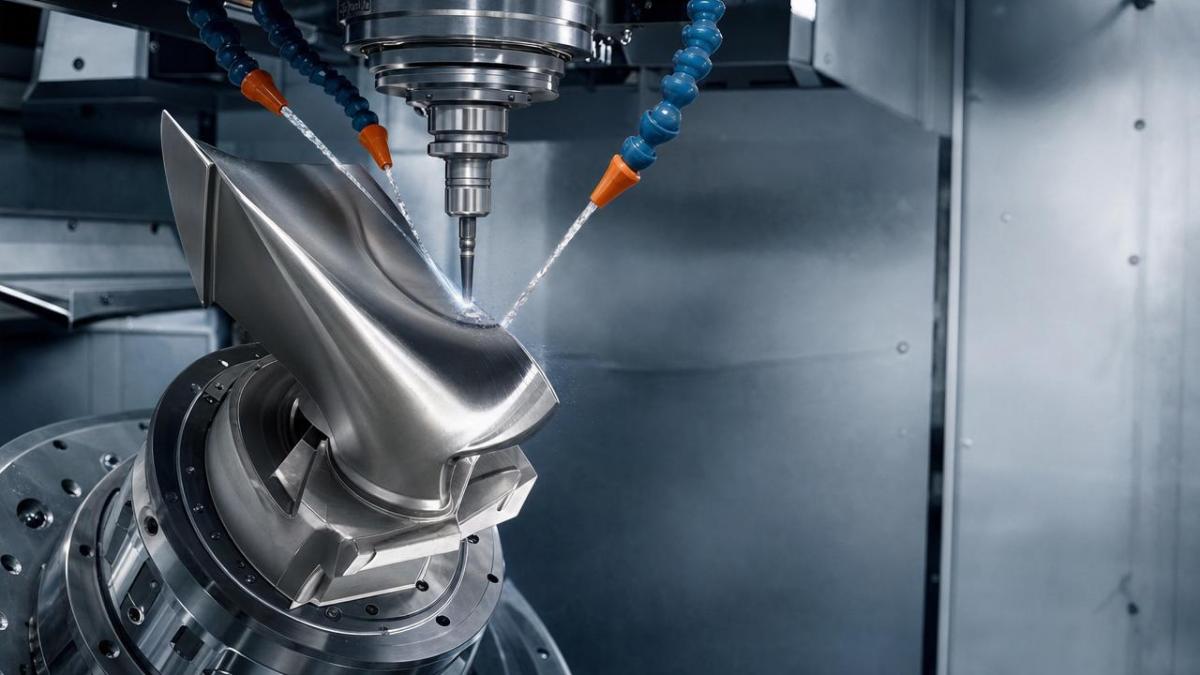
At a basic level, Inconel machining for turbine blades means removing material from a nickel-based superalloy that was designed to survive where ordinary steels and aluminum alloys fail. In turbine environments, components may face sustained high temperatures, oxidation, thermal cycling, vibration, and extreme centrifugal stress. That is why designers choose Inconel grades for hot-section aerospace and power-generation parts, even though the same properties that make the alloy valuable in service also make it difficult to machine.
For a turbine blade, machining is rarely a simple rough-and-finish sequence. The process typically includes multi-axis contouring, root form generation, platform machining, airfoil profiling, hole preparation, edge control, surface integrity management, and final inspection. Every stage must protect the part’s dimensional accuracy and metallurgical condition. In practical terms, slower feed rates, lighter depths of cut, stable toolpaths, and frequent tool changes are not signs of poor efficiency. They are often signs of process discipline.
This distinction matters for information researchers and technical buyers. In a noise-heavy market, fast quoted cycle times can sound attractive, but for Inconel machining for turbine blades, speed alone is a weak indicator. The more meaningful questions involve temperature control, tool wear strategy, consistency across batches, burr management, and the supplier’s ability to hold aerospace-level tolerances without degrading the material surface.
Why the industry pays close attention to machining speed
Across aerospace, energy, and advanced industrial manufacturing, machining speed is not only a cost variable. It is also a technical signal. When a supplier explains that Inconel machining for turbine blades takes longer, the explanation should connect directly to heat generation, work hardening, tool pressure, and inspection burden. If that explanation is missing, the quote may not reflect the real process complexity.
TechStat Vanguard’s engineering-first perspective is especially relevant here. Parameters do not lie, and in this category the key parameters include spindle stability, cutter engagement, coolant delivery method, surface roughness targets, profile tolerance, and post-machining verification. These are not marketing details. They are the technical basis for whether a blade will fit, perform, and endure under service loads.
The technical reasons slower cutting is often the correct choice
The first reason is heat. Inconel retains strength at elevated temperatures and does not dissipate heat as easily as more machinable metals. Much of the cutting energy stays concentrated near the cutting edge, accelerating tool wear and increasing the chance of thermal damage. If the process is pushed too hard, the result may be a shortened tool life, unstable dimensions, smeared surfaces, or microstructural changes that are unacceptable in critical rotating hardware.
The second reason is work hardening. As the cutting edge rubs or dwells, the material can harden locally, making subsequent passes even more difficult. This is why chip control, sharp tooling, and continuous engagement matter so much. A conservative-looking process can actually be the most efficient route to predictable output because it avoids turning the next operation into a harder one.
The third reason is geometry. Turbine blades are not simple blocks or shafts. Their airfoil surfaces, roots, and transitions require precise multi-axis interpolation. On thin sections, the part can deflect. On complex curves, excess force can distort the profile. On critical edges, aggressive cuts can create burrs or local damage that is costly to remove. Slower, controlled machining helps maintain form accuracy while reducing the risk of scrap.
The fourth reason is surface integrity. In high-performance applications, a blade is judged not only by nominal dimensions but also by the condition of the surface and subsurface. Residual stress, recast layers from secondary operations, microcracks, or excessive roughness can all affect fatigue performance. Inconel machining for turbine blades therefore includes a quality objective that extends beyond visible shape. The acceptable part is the one that meets the drawing and preserves material performance.
Industry overview: what decision-makers should evaluate
For engineering managers, CTOs, and procurement teams, the challenge is separating credible process claims from generic promises. The table below summarizes the main evaluation areas behind Inconel machining for turbine blades and why they matter.
Where the value of slower machining becomes visible
The value of careful Inconel machining for turbine blades becomes visible in areas that are expensive to fix later. One is dimensional consistency. A blade set must behave predictably within an assembly. If one supplier delivers faster but with larger variation from part to part, the downstream cost can exceed any savings from the initial quote.
Another value area is fatigue and service life. Even if two parts appear similar on a basic drawing check, differences in edge quality, residual stress, and surface condition can affect long-term durability. For hot-section or high-speed rotating components, this is not a cosmetic issue. It is central to reliability.
A third value area is process predictability. Conservative but validated machining plans often support better scheduling than aggressive processes that suffer from tool breakage, frequent rework, or unstable yield. In advanced manufacturing, throughput depends on repeatability as much as on nominal cycle time.
Typical blade-related scenarios and their machining implications
Not all turbine blade programs present the same level of machining difficulty. The following categories help researchers and buyers interpret why one project may require more time than another.
Practical guidance for evaluating supplier capability
If you are assessing Inconel machining for turbine blades as a researcher, engineer, or procurement lead, focus on evidence that connects process choices to engineering outcomes. Ask suppliers how they manage heat, how they detect tool wear before quality drifts, and how they verify blade profiles beyond basic dimensions. Request examples of tolerance bands, inspection records, and nonconformance control methods where confidentiality allows.
It is also useful to ask how they balance roughing and finishing. A mature shop will usually discuss stock allowance planning, fixture stability, cutter reach, machine dynamics, and post-process verification in a coherent way. Generic claims about “high quality” or “advanced machines” are far less informative than a clear explanation of process windows and control points.
For organizations building technical sourcing criteria, a data-first approach is essential. Instead of rewarding the shortest promised cycle time, compare suppliers on repeatability, traceability, material handling, inspection depth, and historical performance on nickel-based superalloys. In sectors influenced by AS9100 culture and aerospace-grade accountability, those factors are often more predictive of success than headline productivity claims.
Common misunderstandings about cycle time and quality
One common misunderstanding is that slower machining always means poor manufacturing efficiency. In reality, Inconel machining for turbine blades is constrained by physics and quality requirements. The right benchmark is not absolute speed but stable output per qualified part.
Another misunderstanding is that advanced CNC equipment alone solves the problem. High-end 5-axis machines help, but process engineering still determines results. Toolpath design, holder rigidity, coolant access, fixturing, and inspection discipline remain decisive.
A third misunderstanding is that all Inconel work should be quoted similarly. Blade geometry, alloy grade, heat treatment condition, tolerance stack-up, and acceptance criteria can shift the difficulty level significantly. Responsible suppliers usually qualify their cycle-time estimates with these details.
A grounded way to interpret manufacturing performance
For the information researcher, the key takeaway is simple: when Inconel machining for turbine blades is slower, the explanation should map to measurable engineering realities. Heat resistance, work hardening, geometric complexity, and surface integrity concerns are valid reasons. Vague statements are not. The best manufacturing partners communicate in terms of tolerances, process stability, and inspection evidence.
That is also where a benchmark-driven perspective adds value. In a market full of promotional language, technical understanding creates better sourcing decisions. When you evaluate a machining source, look beyond the promise of speed and ask whether the process protects the part, the assembly, and the final operating risk.
In short, slower cutting is often not a weakness but a signal of respect for the material and the application. For turbine blade programs, that distinction matters. If your team is comparing manufacturing partners or building a more rigorous supplier qualification framework, use Inconel machining for turbine blades as a test case for what real capability looks like: controlled parameters, proven consistency, and engineering truth backed by data.
Search News
Hot Articles
- Carbon Fiber StructuresHow to Specify Aerospace Carbon Fiber Assemblies for Lightweight, Load-Bearing PartsJul 11, 2026
- Machine VisionXiaomi, Alibaba DAMO Academy Drive Open-Source Robotics Model Ecosystem, Lowering Algorithm Development Barriers for Overseas SMEs Adopting Chinese Robotics SolutionsMar 30, 2026
- Cobots & ArmsShanxi 'AI+' Conference Showcases Embodied Intelligence with Multinational Buyer Engagement: Key Industry ImplicationsMar 30, 2026
Popular Tags
Recommended News
 Jul 11, 2026How to Specify Aerospace Carbon Fiber Assemblies for Lightweight, Load-Bearing PartsAerospace carbon fiber assemblies: learn how to specify laminate design, load data, joining methods, and inspection controls for lighter, reliable load-bearing aerospace parts.Elena Rostova (UAV Systems Researcher)
 Mar 30, 2026Xiaomi, Alibaba DAMO Academy Drive Open-Source Robotics Model Ecosystem, Lowering Algorithm Development Barriers for Overseas SMEs Adopting Chinese Robotics SolutionsXiaomi & Alibaba DAMO Academy's open-source robotics models lower algorithm barriers for global SMEs. Boost efficiency in manufacturing, logistics & smart retail with ROS 2 compatible solutions.TSV Data Lab
 Mar 30, 2026Shanxi 'AI+' Conference Showcases Embodied Intelligence with Multinational Buyer Engagement: Key Industry ImplicationsShanxi 'AI+' Conference highlights embodied intelligence with Tesla, Ubtech & Jiantao showcasing multimodal robotics. 40+ global buyers validated tech on-site, creating new B2B channels for industrial automation & AI solutions.Chen Wei (Automation Lead Engineer)
 Mar 30, 2026Zhongguancun Unveils 6G Integrated Sensing-Computing-Intelligence Platform to Empower Embodied Robots for Global Industrial ApplicationsZhongguancun's new 6G platform revolutionizes industrial robotics with <10ms latency, empowering global automotive, logistics & port automation. Discover how this tech boosts China's smart manufacturing exports.TSV Data Lab
 Mar 30, 2026Mech-Mind Tianjin Embodied Intelligence R&D and Production Base Goes Live, Cutting Delivery Time by 20%–30% for Global Customized AMR+Vision SolutionsMech-Mind's Tianjin AMR+Vision production base cuts delivery time by 20%-30% for欧美 & Latin American markets. Discover how this PLd-certified facility accelerates customized robotics solutions for smart manufacturing and logistics.Chen Wei (Automation Lead Engineer)
 Mar 30, 2026Boao Forum Reveals 'Co-evolution of Big and Small Brains' Trend in Humanoid Robots, China's Embodied Intelligence Accelerates Adaptation to Overseas Manufacturing Service ScenariosDiscover how China's humanoid robots, featuring 'Co-evolution of Big and Small Brains,' are revolutionizing global manufacturing. Learn about Embodied Tian Gong 3.0's ISO compliance and overseas deployment at Boao Forum 2026.Chen Wei (Automation Lead Engineer)
 Mar 30, 2026China Railway Industrial Secures Patent for Embodied Robotics in Material Handling, Boosting High-Precision Delivery Capabilities for Overseas Infrastructure and Manufacturing ProjectsChina Railway Industrial's new patent for embodied robotics in material handling boosts high-precision delivery for global infrastructure & manufacturing. Discover how this innovation enhances logistics accuracy in automotive, rail transit & EPC projects.Chen Wei (Automation Lead Engineer)
 Sep 28, 2026Spindle Runout Measurement in Germany: DIN Standards, Methods, and Acceptance LimitsSpindle runout measurement Germany: explore DIN standards, proven methods, acceptance limits, and audit-ready practices for reliable machining quality.Dr. Marcus Vance
 Sep 27, 2026How to Select Wall-Mount Edge Devices for Space-Constrained Factory NetworksWall mount edge devices for space-constrained factories: evaluate workload, thermal design, power resilience, cable access, and network reliability for smarter deployments.TSV Data Lab
 Sep 26, 2026Machining Tolerance Analysis: How to Set Limits That Meet Function and Cost TargetsMachining tolerance analysis: learn how to set functional limits, control tolerance stacks, reduce inspection risk, and balance precision with production cost.Dr. Marcus Vance
 Sep 25, 2026How to Evaluate an Industrial Infrastructure Data Platform for Multi-Site OperationsIndustrial infrastructure data platform evaluation guide for multi-site operations: compare data quality, edge resilience, interoperability, governance, and scalable proof-of-value criteria.Victor Lin (Chief Software Architect)
 Sep 24, 2026How to Select Machine Vision Optics for Accurate Inspection at Different Working DistancesMachine vision optics selection guide for accurate inspection at every working distance. Compare FOV, pixel scale, DOF, distortion, lighting, and telecentric options.TSV Data Lab
 Sep 23, 2026How to Evaluate a Machine Vision System Integrator for High-Speed Inspection LinesChoose a machine vision system integrator with proven expertise in high-speed inspection, reliable reject timing, robust optics, and measurable acceptance criteria.TSV Data Lab
 Sep 28, 2026When is a SCADA API the right choice for connecting plant systems?SCADA API guide: learn when governed plant data integration improves traceability, security, and scalability—without compromising real-time control.Victor Lin (Chief Software Architect)
 Sep 27, 2026How SCADA data integration improves traceability across production linesSCADA data integration connects production-line data to improve traceability, accelerate quality investigations, and strengthen safety decisions.Victor Lin (Chief Software Architect)
 Sep 26, 2026What to define before starting SCADA integration planningSCADA integration planning starts with clear scope, control boundaries, data models, cybersecurity, and testing. Discover the definitions that reduce risk and costly rework.Victor Lin (Chief Software Architect)
 Sep 25, 2026How a smart factory with Industrial IoT reduces production blind spotsDiscover how a smart factory with Industrial IoT turns real-time machine, quality, and workflow data into actionable insights that reduce production blind spots and delivery risks.Victor Lin (Chief Software Architect)
 Sep 24, 2026When does Industrial IoT make smart manufacturing easier to scale?Smart manufacturing Industrial IoT scales when trusted data, interoperable systems, and secure workflows turn connected assets into measurable gains.TSV Data Lab
 Sep 23, 2026What drives ultra-precision machining cost at 1-micron tolerance?Ultra precision machining cost per part at 1 micron tolerance depends on process, material, metrology, and yield. Learn how to compare quotes confidently.Dr. Marcus Vance
 Sep 22, 2026Drone Engine-T550CC Applications: Build the UAV Power System Around the MissionAn application guide for Drone Engine-T550CC integration, covering payload planning, airframe matching, cooling, fuel, vibration, test procedures, documentation, and service preparation.Elena Rostova (UAV Systems Researcher)
 Sep 22, 2026How to Evaluate Industrial Edge Computing Vendors for Factory DeploymentIndustrial edge computing vendor evaluation guide for factories: compare latency, protocol fit, reliability, security, and lifecycle support before deployment.TSV Data Lab
 Sep 21, 2026Drone Payload Integration: Matching Power, Data, and Center of Gravity for Reliable FlightsDrone payload integration made practical: balance power, data, center of gravity, and endurance to build safer, more reliable mission-ready flights.Elena Rostova (UAV Systems Researcher)
 Sep 20, 2026Autonomous Navigation Pricing: Cost Drivers and Budget Benchmarks for AMR ProjectsAutonomous navigation price explained: compare AMR cost drivers, software, sensors, integration, safety, and lifecycle budgets to build a scalable project plan.Chen Wei (Automation Lead Engineer)
 Sep 19, 2026How to Scope Automation Integration Services for Multi-System Factory ProjectsAutomation integration services: learn how to scope multi-system factory projects with clear workflows, interface contracts, safety boundaries, and acceptance criteria.Victor Lin (Chief Software Architect)