Aluminum 7075 vs 6061 strength in parts that see impact
Publication Date
author
When impact loading is part of the design brief, choosing the right alloy is more than a basic strength comparison. This guide examines aluminum 7075 vs 6061 strength in parts that see impact, focusing on how yield strength, toughness, fatigue behavior, and manufacturability influence real engineering outcomes. For technical evaluators, the goal is not marketing claims, but a clearer basis for material selection under demanding service conditions.
In procurement reviews, test planning, and supplier qualification, impact performance is often misread as a simple extension of tensile strength. That shortcut can create avoidable field failures, especially in UAV structures, robotic brackets, machine frames, fixtures, and aerospace-adjacent components that see drops, shocks, strike loads, or repeated vibration.
For teams working under hard tolerances, weight limits, and multi-cycle service requirements, the aluminum 7075 vs 6061 strength question must be answered through a wider engineering lens. Yield strength matters, but so do notch sensitivity, crack growth behavior, section thickness, temper condition, machining risk, and the practical realities of finishing and replacement.
Why impact-loaded parts require more than a basic strength comparison
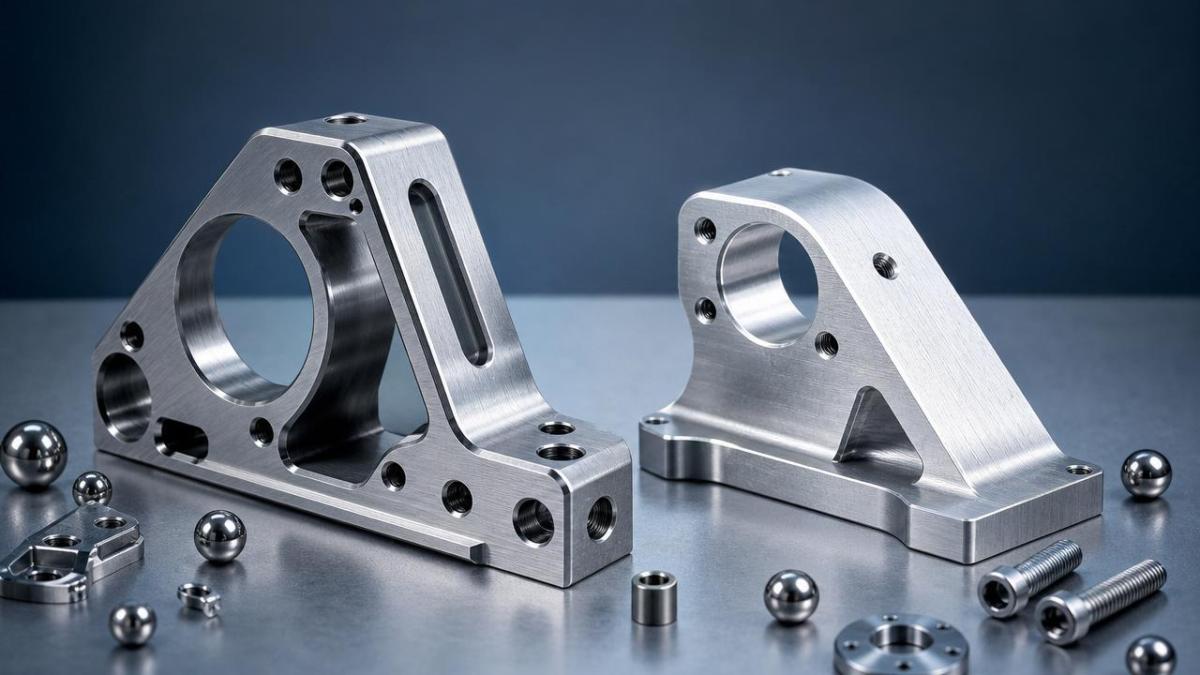
Impact events are short-duration loads with high local stress concentration. In many assemblies, the peak force may last less than 0.1 second, yet that brief event can drive permanent deformation, surface denting, crack initiation, or fastener hole elongation. A material that looks stronger on paper may still underperform if toughness or damage tolerance is not adequate for the geometry.
This is where aluminum 7075 vs 6061 strength becomes a decision with trade-offs. 7075 is widely selected when designers prioritize high static strength and low weight. 6061 is often preferred when the part must balance moderate strength, better corrosion behavior, easier welding, lower cost, and more forgiving fabrication routes.
What technical evaluators should check first
Before comparing datasheets, define the actual impact mode. A dropped enclosure, a rotor-arm strike, and a palletized machine component under shipping shock do not fail in the same way. Most evaluation plans should separate at least 3 conditions: single-event impact, repeated low-energy strikes, and impact combined with fatigue loading.
- Part geometry: plate, billet, tube, or machined pocketed structure
- Critical thickness: below 6 mm, 6–20 mm, or above 20 mm
- Failure tolerance: cosmetic dent, allowable bend, or no yield permitted
- Environment: indoor dry use, marine exposure, or cyclic temperature swings
- Manufacturing route: machined only, welded assembly, or anodized final part
These five checks often narrow the answer faster than headline strength values alone. In many sourcing decisions, the wrong choice is not caused by poor alloy quality, but by comparing two alloys without defining the service condition with enough precision.
Typical property ranges that shape impact decisions
The table below summarizes typical engineering ranges used in early-stage assessment. Values vary by temper, product form, and supplier process route, so final selection should always be tied to the exact material condition on the print or purchase order.
The headline result is clear: 7075 is significantly stronger in yield and ultimate terms, often by 60% to 80% in common tempers. However, 6061 can offer better ductility and a more forgiving response in parts where local deformation is preferable to brittle-like crack propagation from a notch or impact point.
Why static strength does not automatically predict impact survival
An impact-loaded component does not fail only when nominal stress exceeds tensile strength. Real parts fail at corners, threads, fillets, pockets, and interfaces with fasteners. If a design has a stress concentration factor of 2.0 to 3.5 near a bolt hole, the stronger alloy may still lose advantage if crack initiation occurs earlier under repeated strike conditions.
That is why technical evaluations should include at least 4 data groups: static properties, fatigue behavior, fracture sensitivity, and process constraints. A material decision that ignores one of those groups is often incomplete for mission-critical or high-cycle assemblies.
Aluminum 7075 vs 6061 strength under real impact and fatigue conditions
In practical service, impact is rarely isolated. A drone arm may absorb a landing shock after 200 flight hours of vibration. A robot end-effector bracket may see intermittent collision loads after 1 million positioning cycles. A machined fixture may survive a drop test once, then fail months later due to crack growth from the original damage site.
Where 7075 usually wins
7075 is typically favored when the design is stiffness-sensitive, weight-critical, and not dependent on welding. In aerospace-adjacent brackets, UAV structural plates, lightweight mounts, and high-load clamping features, its high yield strength allows smaller cross-sections or lower mass for the same load target. That can deliver a 10% to 25% section reduction in some machined parts, depending on geometry and safety factor.
For parts where impact means “avoid permanent set,” 7075 often performs better. If the service requirement is no visible bend after a moderate strike or no hole elongation after a shock event, the higher yield threshold of 7075 provides a direct design advantage.
Where 6061 may be the smarter engineering choice
6061 is commonly the better option when the part must be welded, corrosion exposure is meaningful, or the assembly benefits from a more damage-tolerant response. In industrial automation guards, support frames, housings, and mixed-use equipment structures, the lower strength is often acceptable because thickness can be increased by 1–3 mm without major mass penalties.
In those cases, 6061 can outperform expectations in total system value. It is easier to machine in many shops, easier to source globally, and often lower risk in finishing and post-process handling. For technical evaluators balancing purchase price, rework risk, and lead time, those factors may outweigh the raw strength gap.
Impact plus fatigue is the critical combination
A part that survives one impact can still fail early if the event leaves a small crack root. In repeated-service environments, the post-impact fatigue margin becomes more important than the initial dent resistance. This is especially relevant for UAV joints, machine tooling plates, and actuator-linked brackets where dynamic loading continues after the shock event.
For that reason, engineers should not ask only which alloy is stronger. They should ask how each alloy behaves after a minor impact at the highest stress location and whether inspection intervals can realistically catch the damage before the next 100,000 to 500,000 cycles.
Decision matrix for technical review
The next table helps translate the aluminum 7075 vs 6061 strength question into selection logic that procurement and engineering teams can both use during supplier RFQ and design review stages.
The practical takeaway is not that one alloy is universally better. It is that 7075 is usually the better answer for compact, high-load, machined impact parts, while 6061 is often the better answer for broader industrial assemblies where fabrication flexibility, cost control, and service resilience matter more.
Manufacturing, finishing, and sourcing implications
Material selection for impact-loaded parts is incomplete if it ends at mechanical properties. Production route changes actual part performance. A technically correct alloy can become a sourcing problem if machining distortion, thin-wall chatter, finish sensitivity, or long procurement cycles introduce variability into the final component.
Machining behavior and tolerance risk
7075 is often chosen for precision CNC work because it can support high-strength lightweight geometries with strong dimensional integrity. However, thin ribs, deep pockets, and asymmetrical stock removal still require careful process planning. In 5-axis work, tolerance targets such as ±0.05 mm or flatness under 0.1 mm may demand staged roughing, stress relief strategy, or fixture redesign.
6061 is generally more forgiving in mixed-complexity machining programs, especially when the part includes broad faces, moderate walls, and follow-up weldment integration. For many industrial buyers, this reduces scrap exposure during first-article approval and shortens the path from prototype to stable batch production.
Welding, anodizing, and corrosion control
If the design includes welded joints, 6061 usually has a clear advantage. 7075 is generally not the preferred choice for welded structural parts because welding can significantly degrade local properties and increase process risk. For assemblies that require cut, weld, machine, and finish in sequence, 6061 often lowers qualification complexity by 1 to 2 process steps.
Corrosion performance also matters in impact applications because a scratch or dent can expose fresh metal. In humid or outdoor use, 6061 is commonly easier to manage. 7075 can still perform well with proper surface treatment, but the finish specification, edge preparation, and inspection discipline need tighter control.
Supplier review checklist
Technical evaluators should ask suppliers for process-specific evidence, not only a material callout. A disciplined review should include these 6 checkpoints before approving a part for impact service:
- Exact temper and product form on the quote and drawing
- Critical thickness and any thin-wall machining strategy
- Surface finish plan, including deburring around impact-prone edges
- Inspection method for holes, pockets, and post-process distortion
- Whether welding is involved before or after final machining
- Recommended replacement interval or reinspection cycle if impact marks appear
This checklist is especially important when comparing multiple global suppliers. Two vendors may quote the same alloy, but differ meaningfully in stock source, heat treatment control, CNC capability, and edge conditioning. Those differences often drive field outcome more than nominal alloy selection alone.
How to choose between 7075 and 6061 for specific impact-use cases
The most reliable way to resolve aluminum 7075 vs 6061 strength is to classify the part by mission, consequence of failure, and practical repair model. In high-value hardware programs, one alloy may even be used for the primary impact path and the other for non-critical interfaces to optimize both cost and manufacturability.
Use-case guidance by part type
- UAV arm plates and compact flight-load brackets: 7075 is often preferred for maximum stiffness and lower section mass.
- Robot cell guards, machine covers, and welded support members: 6061 is frequently the more practical choice.
- Portable equipment frames with occasional drop risk: 6061 can offer a better cost-to-repair balance.
- Precision machined clamps, fixtures, and high-load interface plates: 7075 often delivers better no-yield performance.
- Outdoor industrial mounts with moderate impact and moisture exposure: 6061 may reduce long-term maintenance burden.
Common selection mistakes
A frequent mistake is choosing 7075 because the number is higher, then discovering the part needed welding or field-friendly repair. Another is choosing 6061 for convenience without checking whether the larger section needed to match impact resistance will violate mass, space, or inertia limits. Both errors come from evaluating alloy grade before defining the real design constraint.
Another common issue is failing to specify temper. “7075” and “6061” alone are incomplete for purchasing and validation. Temper can shift the performance picture materially, and technical reviewers should ensure the RFQ, drawing, inspection plan, and certification package all reference the same condition.
A practical 4-step decision framework
For most B2B engineering teams, a simple 4-step method improves decision quality without slowing development timelines:
- Define the impact case with energy level, contact area, and allowable damage mode.
- Check if welding, corrosion exposure, or field repair is part of the lifecycle.
- Compare section mass and geometry needed for each alloy to meet the same safety margin.
- Validate the final choice through prototype drop, strike, or combined fatigue-impact testing.
Even one controlled test series with 3 to 5 representative parts can reveal whether higher nominal strength or broader manufacturability creates the better total outcome. For evaluators responsible for supplier selection, that is usually a better investment than relying only on catalog data.
For impact-loaded parts, the aluminum 7075 vs 6061 strength decision should be anchored in actual failure mode, not marketing shorthand. 7075 usually leads when the program demands maximum strength-to-weight ratio, low permanent deformation, and precision-machined geometry. 6061 often leads when welding, corrosion resistance, fabrication flexibility, and service practicality define the success criteria.
At TechStat Vanguard, material selection is treated as an engineering benchmark problem, not a branding exercise. If your team is evaluating alloy options for UAV structures, automation equipment, or precision machined assemblies, contact us to review the load case, sourcing risk, and manufacturability pathway in more detail. Get a tailored evaluation framework and move from generic material comparison to a defensible technical decision.
Search News
Hot Articles
- Carbon Fiber StructuresHow to Specify Aerospace Carbon Fiber Assemblies for Lightweight, Load-Bearing PartsJul 11, 2026
- Machine VisionXiaomi, Alibaba DAMO Academy Drive Open-Source Robotics Model Ecosystem, Lowering Algorithm Development Barriers for Overseas SMEs Adopting Chinese Robotics SolutionsMar 30, 2026
- Cobots & ArmsShanxi 'AI+' Conference Showcases Embodied Intelligence with Multinational Buyer Engagement: Key Industry ImplicationsMar 30, 2026
Popular Tags
Recommended News
 Jul 11, 2026How to Specify Aerospace Carbon Fiber Assemblies for Lightweight, Load-Bearing PartsAerospace carbon fiber assemblies: learn how to specify laminate design, load data, joining methods, and inspection controls for lighter, reliable load-bearing aerospace parts.Elena Rostova (UAV Systems Researcher)
 Mar 30, 2026Xiaomi, Alibaba DAMO Academy Drive Open-Source Robotics Model Ecosystem, Lowering Algorithm Development Barriers for Overseas SMEs Adopting Chinese Robotics SolutionsXiaomi & Alibaba DAMO Academy's open-source robotics models lower algorithm barriers for global SMEs. Boost efficiency in manufacturing, logistics & smart retail with ROS 2 compatible solutions.TSV Data Lab
 Mar 30, 2026Shanxi 'AI+' Conference Showcases Embodied Intelligence with Multinational Buyer Engagement: Key Industry ImplicationsShanxi 'AI+' Conference highlights embodied intelligence with Tesla, Ubtech & Jiantao showcasing multimodal robotics. 40+ global buyers validated tech on-site, creating new B2B channels for industrial automation & AI solutions.Chen Wei (Automation Lead Engineer)
 Mar 30, 2026Zhongguancun Unveils 6G Integrated Sensing-Computing-Intelligence Platform to Empower Embodied Robots for Global Industrial ApplicationsZhongguancun's new 6G platform revolutionizes industrial robotics with <10ms latency, empowering global automotive, logistics & port automation. Discover how this tech boosts China's smart manufacturing exports.TSV Data Lab
 Mar 30, 2026Mech-Mind Tianjin Embodied Intelligence R&D and Production Base Goes Live, Cutting Delivery Time by 20%–30% for Global Customized AMR+Vision SolutionsMech-Mind's Tianjin AMR+Vision production base cuts delivery time by 20%-30% for欧美 & Latin American markets. Discover how this PLd-certified facility accelerates customized robotics solutions for smart manufacturing and logistics.Chen Wei (Automation Lead Engineer)
 Mar 30, 2026Boao Forum Reveals 'Co-evolution of Big and Small Brains' Trend in Humanoid Robots, China's Embodied Intelligence Accelerates Adaptation to Overseas Manufacturing Service ScenariosDiscover how China's humanoid robots, featuring 'Co-evolution of Big and Small Brains,' are revolutionizing global manufacturing. Learn about Embodied Tian Gong 3.0's ISO compliance and overseas deployment at Boao Forum 2026.Chen Wei (Automation Lead Engineer)
 Mar 30, 2026China Railway Industrial Secures Patent for Embodied Robotics in Material Handling, Boosting High-Precision Delivery Capabilities for Overseas Infrastructure and Manufacturing ProjectsChina Railway Industrial's new patent for embodied robotics in material handling boosts high-precision delivery for global infrastructure & manufacturing. Discover how this innovation enhances logistics accuracy in automotive, rail transit & EPC projects.Chen Wei (Automation Lead Engineer)
 Sep 29, 2026ISO 9283 Repeatability: How to Evaluate Cobot Positioning PerformanceISO 9283 cobot repeatability explained: learn how payload, reach, approach direction, and test conditions affect positioning performance and cell capability.Chen Wei (Automation Lead Engineer)
 Sep 28, 2026Spindle Runout Measurement in Germany: DIN Standards, Methods, and Acceptance LimitsSpindle runout measurement Germany: explore DIN standards, proven methods, acceptance limits, and audit-ready practices for reliable machining quality.Dr. Marcus Vance
 Sep 27, 2026How to Select Wall-Mount Edge Devices for Space-Constrained Factory NetworksWall mount edge devices for space-constrained factories: evaluate workload, thermal design, power resilience, cable access, and network reliability for smarter deployments.TSV Data Lab
 Sep 26, 2026Machining Tolerance Analysis: How to Set Limits That Meet Function and Cost TargetsMachining tolerance analysis: learn how to set functional limits, control tolerance stacks, reduce inspection risk, and balance precision with production cost.Dr. Marcus Vance
 Sep 25, 2026How to Evaluate an Industrial Infrastructure Data Platform for Multi-Site OperationsIndustrial infrastructure data platform evaluation guide for multi-site operations: compare data quality, edge resilience, interoperability, governance, and scalable proof-of-value criteria.Victor Lin (Chief Software Architect)
 Sep 24, 2026How to Select Machine Vision Optics for Accurate Inspection at Different Working DistancesMachine vision optics selection guide for accurate inspection at every working distance. Compare FOV, pixel scale, DOF, distortion, lighting, and telecentric options.TSV Data Lab
 Sep 23, 2026How to Evaluate a Machine Vision System Integrator for High-Speed Inspection LinesChoose a machine vision system integrator with proven expertise in high-speed inspection, reliable reject timing, robust optics, and measurable acceptance criteria.TSV Data Lab
 Sep 28, 2026When is a SCADA API the right choice for connecting plant systems?SCADA API guide: learn when governed plant data integration improves traceability, security, and scalability—without compromising real-time control.Victor Lin (Chief Software Architect)
 Sep 27, 2026How SCADA data integration improves traceability across production linesSCADA data integration connects production-line data to improve traceability, accelerate quality investigations, and strengthen safety decisions.Victor Lin (Chief Software Architect)
 Sep 26, 2026What to define before starting SCADA integration planningSCADA integration planning starts with clear scope, control boundaries, data models, cybersecurity, and testing. Discover the definitions that reduce risk and costly rework.Victor Lin (Chief Software Architect)
 Sep 25, 2026How a smart factory with Industrial IoT reduces production blind spotsDiscover how a smart factory with Industrial IoT turns real-time machine, quality, and workflow data into actionable insights that reduce production blind spots and delivery risks.Victor Lin (Chief Software Architect)
 Sep 24, 2026When does Industrial IoT make smart manufacturing easier to scale?Smart manufacturing Industrial IoT scales when trusted data, interoperable systems, and secure workflows turn connected assets into measurable gains.TSV Data Lab
 Sep 23, 2026What drives ultra-precision machining cost at 1-micron tolerance?Ultra precision machining cost per part at 1 micron tolerance depends on process, material, metrology, and yield. Learn how to compare quotes confidently.Dr. Marcus Vance
 Sep 22, 2026Drone Engine-T550CC Applications: Build the UAV Power System Around the MissionAn application guide for Drone Engine-T550CC integration, covering payload planning, airframe matching, cooling, fuel, vibration, test procedures, documentation, and service preparation.Elena Rostova (UAV Systems Researcher)
 Sep 22, 2026How to Evaluate Industrial Edge Computing Vendors for Factory DeploymentIndustrial edge computing vendor evaluation guide for factories: compare latency, protocol fit, reliability, security, and lifecycle support before deployment.TSV Data Lab
 Sep 21, 2026Drone Payload Integration: Matching Power, Data, and Center of Gravity for Reliable FlightsDrone payload integration made practical: balance power, data, center of gravity, and endurance to build safer, more reliable mission-ready flights.Elena Rostova (UAV Systems Researcher)
 Sep 20, 2026Autonomous Navigation Pricing: Cost Drivers and Budget Benchmarks for AMR ProjectsAutonomous navigation price explained: compare AMR cost drivers, software, sensors, integration, safety, and lifecycle budgets to build a scalable project plan.Chen Wei (Automation Lead Engineer)