Why Inconel blade machining fails when heat control is weak
Publication Date
author
Weak heat control is one of the fastest ways to turn high-value Inconel blade production into scrap, delays, and unstable performance. In inconel machining for turbine blades, excessive cutting heat accelerates tool wear, distorts tolerances, hardens the surface, and raises downstream quality risks. For project managers, understanding this failure chain is essential to protecting delivery schedules, cost targets, and aerospace-grade reliability.
Why does weak heat control break inconel machining for turbine blades?
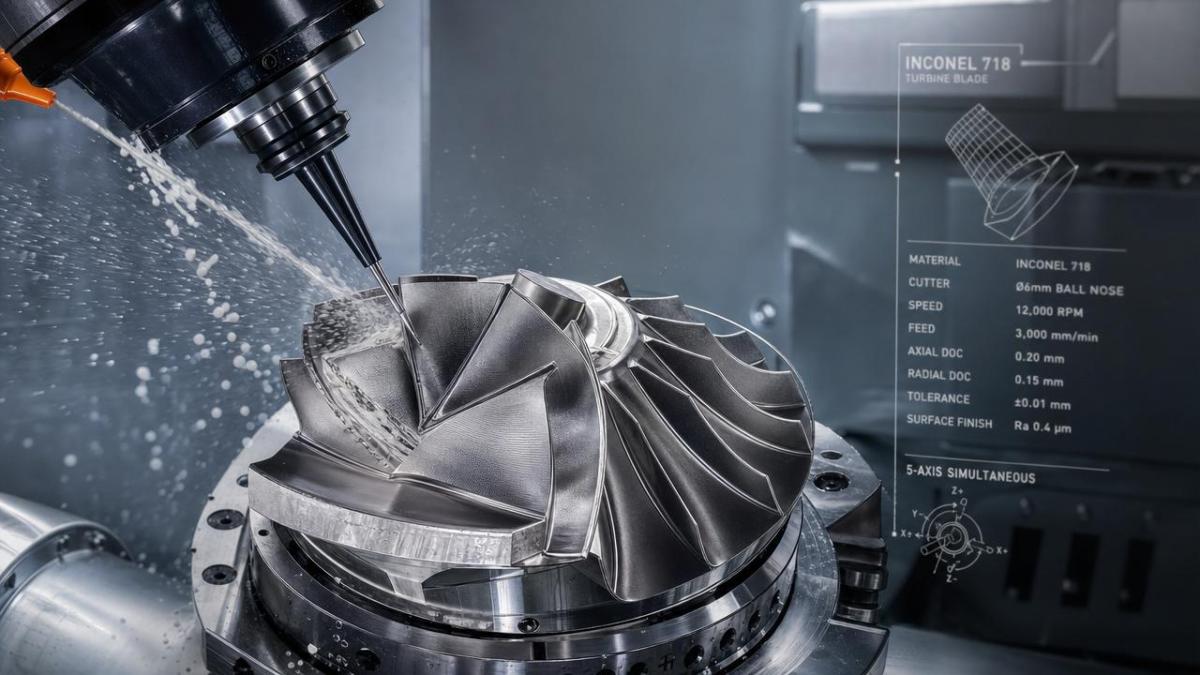
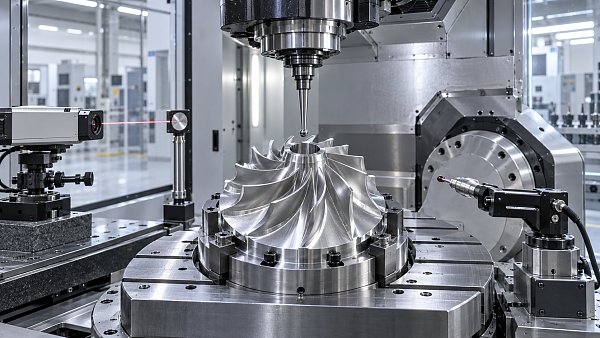
Inconel is selected for turbine blade work because it keeps strength at elevated temperature, resists oxidation, and survives aggressive service cycles. Those same properties also make it difficult to cut. Heat does not leave the cutting zone easily, so it concentrates at the tool edge and on the work surface.
For a project manager, the issue is not only a machining variable. It is a full-program risk. When the shop cannot control heat during inconel machining for turbine blades, the impact quickly spreads into scrap exposure, schedule instability, reinspection loops, and supplier qualification concerns.
What usually happens first?
- Tool flank wear rises early, especially at the leading edge where chip load and contact time are highest.
- Built-up edge or edge chipping appears, reducing surface integrity and dimensional predictability.
- The work surface begins to work harden, making the next pass more difficult and more expensive.
- Localized thermal distortion increases the risk of out-of-tolerance airfoil geometry and root features.
This is why data-led suppliers and evaluators focus on measurable process capability instead of generic quality claims. At TSV, the practical question is simple: can the supplier show stable control of cutting temperature, tool life trend, and geometry retention under actual blade complexity?
Where does the failure chain start in real production?
Heat failure in inconel machining for turbine blades rarely comes from one mistake. It usually starts from stacked weaknesses across planning, tooling, machine dynamics, coolant delivery, and inspection response. A project leader should look at the process as a chain, not a single operation.
The table below summarizes the most common heat-related breakdown points and the business consequences they create in advanced manufacturing programs.
For sourcing and program control, this table matters because each technical weakness has a direct commercial cost. A supplier may quote competitively, but if heat control is weak, the actual cost shows up later through schedule slips, excess tooling, and low confidence in delivered blade quality.
Why heat is more dangerous on blade geometry
Turbine blades are not simple blocks. Thin walls, twisted airfoils, root forms, platform transitions, and tight profile tolerances create uneven stiffness. That means heat and cutting force do not behave uniformly. A parameter set that looks acceptable on a coupon can fail on a finished blade feature.
This is where many procurement reviews go wrong. They evaluate a supplier by equipment list and headline tolerance only, without asking whether the supplier has feature-specific thermal control strategies for roughing, semi-finishing, and finishing.
What signs should project managers monitor before scrap rates rise?
Inconel machining for turbine blades gives early warning signals. Waiting for formal nonconformance reports is too late. Program owners should ask for process indicators that reveal thermal instability before it becomes visible scrap.
Early operational indicators
- Tool life varies sharply between nominally identical batches or shifts.
- Cycle time increases because operators reduce feed to protect tools.
- Surface finish trends worsen near trailing edges, root fillets, or platform transitions.
- More offsets are applied during production to recover geometry drift.
- Final inspection shows pattern-based deviations instead of random variation.
Quality risks that follow thermal overload
Once heat rises beyond stable control, dimensional error is only one concern. Surface integrity becomes equally important. White layer formation, residual stress changes, smeared material, and microstructural alteration can affect fatigue resistance and downstream coating performance, even if dimensions still appear recoverable.
For aerospace and other high-consequence sectors, that means the cost of poor heat control is not limited to machining. It can migrate into later operations such as inspection, balancing, coating, assembly, and field reliability review.
Which process controls matter most in inconel machining for turbine blades?
Project teams often ask for a single best parameter. That is the wrong approach. Stable inconel machining for turbine blades depends on a coordinated control stack. The supplier must manage temperature through tooling, machine condition, coolant, toolpath logic, and in-process verification.
The following matrix can be used during technical review, RFQ clarification, or supplier benchmarking.
A useful procurement lesson is that no single control area can compensate for weak fundamentals elsewhere. High-end tooling will not rescue poor coolant access. A rigid machine alone will not fix a thermal hot-spot toolpath. TSV’s benchmarking approach therefore emphasizes multi-variable capability evidence rather than marketing-driven claims.
How should buyers compare suppliers beyond quoted tolerances?
When evaluating partners for inconel machining for turbine blades, many teams compare only price, nominal tolerance, and lead time. Those are necessary, but not sufficient. A project manager needs indicators that reveal whether the supplier can maintain thermal control under production pressure, not just in a sample run.
Better comparison questions for RFQ and audit
- Ask how tool life is monitored by feature type, not just by part count.
- Request evidence of process segmentation between roughing, semi-finishing, and finishing on Inconel blades.
- Verify whether coolant delivery is engineered around airfoil access and root geometry.
- Check how nonconformance trends are linked back to thermal behavior and corrective action.
- Review whether the supplier can discuss surface integrity risks, not only dimensional inspection results.
These questions align with TSV’s core philosophy: parameters do not lie, and tolerances dictate success. The value is not in hearing that a process is mature. The value is in seeing whether the supplier can explain failure modes with engineering clarity and support claims with traceable process data.
What are the cost and schedule consequences of weak heat control?
The financial damage in inconel machining for turbine blades is often underestimated because it appears in multiple budgets. Tooling cost rises first, but the larger burden often lands in schedule recovery, extra inspection, rework routing, and delayed assembly commitments.
Typical hidden costs
- Short and erratic tool life makes cost-per-part forecasting unreliable.
- More process interruptions reduce spindle utilization and increase queue time.
- Surface integrity concerns can trigger additional NDT or metallurgical review.
- Repeated thermal drift may force lot segregation and partial shipment complications.
From a program standpoint, weak heat control also damages confidence. Engineering teams lose trust in planning assumptions. Procurement loses confidence in lead time promises. Quality teams spend more time on containment than prevention. That is why supplier selection for critical Inconel work should be based on verified process discipline, not optimistic commercial language.
Which standards and compliance expectations should be part of the review?
The exact certification requirement depends on the end market, but project managers should still apply structured compliance thinking early. For turbine-related components, process control, traceability, inspection discipline, and document consistency are as important as nominal machining capability.
Practical compliance checkpoints
- Material traceability should remain linked through each machining stage and any rework route.
- Inspection plans should define profile, root, platform, and surface-related checkpoints clearly.
- Process changes such as tool substitution or coolant adjustment should be controlled and recorded.
- If the application is aerospace-related, review the relevance of systems aligned with standards such as AS9100 in the broader supply chain context.
TSV’s precision machining perspective is especially useful here because benchmarking should connect shop-floor evidence with spec-sheet decisions. A compliant document set is necessary, but by itself it does not prove robust thermal control. Both must be reviewed together.
FAQ: what do project managers ask most about inconel machining for turbine blades?
Is slower cutting always the safest way to reduce heat?
No. Cutting too slowly can increase rubbing instead of efficient shearing, which may raise local temperature and worsen work hardening. The goal is not simply to reduce speed. The goal is to achieve stable chip formation, predictable engagement, and effective heat removal.
Can a supplier prove heat control without disclosing proprietary process details?
Yes. Buyers can ask for structured evidence such as tool life consistency by feature, inspection trend stability, documented process windows, and examples of corrective actions tied to thermal issues. That level of transparency supports evaluation without forcing disclosure of protected programming details.
What matters more in inconel machining for turbine blades: machine brand or process method?
Process method usually matters more. A premium machine helps, but without correct tooling logic, coolant access, and thermal monitoring, performance will still be unstable. The strongest suppliers can explain how their full process stack manages heat on actual blade geometry.
When should procurement escalate concern during pilot production?
Escalate when tool life swings widely, offsets increase frequently, cycle times are quietly extended, or inspection drift follows a repeated geometric pattern. Those are common indicators that thermal instability is already affecting process capability.
Why choose us for data-led evaluation and supplier decision support?
TechStat Vanguard supports engineering teams, CTOs, and procurement leaders who need facts instead of hype. In precision machining benchmarks, we focus on what determines program success: tolerances, repeatability, fatigue-related implications, process traceability, and realistic supplier capability under demanding materials such as Inconel.
If your team is assessing inconel machining for turbine blades, you can contact us for practical decision support around the topics that matter most:
- Parameter review for cutting heat risk, tool wear stability, and surface integrity exposure.
- Supplier comparison frameworks for RFQ, pilot qualification, and benchmark-driven sourcing.
- Evaluation guidance on delivery feasibility, process maturity, and inspection feedback loops.
- Discussion support for custom specification sheets, quality checkpoints, and compliance expectations.
- Structured communication for sample review, quotation alignment, and risk-focused technical clarification.
When the cost of one unstable machining decision can spread across tooling, yield, quality, and schedule, engineering truth matters. TSV helps you filter noise, compare capabilities with discipline, and move from vague claims to measurable manufacturing confidence.
Search News
Hot Articles
- Carbon Fiber StructuresHow to Specify Aerospace Carbon Fiber Assemblies for Lightweight, Load-Bearing PartsJul 11, 2026
- Machine VisionXiaomi, Alibaba DAMO Academy Drive Open-Source Robotics Model Ecosystem, Lowering Algorithm Development Barriers for Overseas SMEs Adopting Chinese Robotics SolutionsMar 30, 2026
- Cobots & ArmsShanxi 'AI+' Conference Showcases Embodied Intelligence with Multinational Buyer Engagement: Key Industry ImplicationsMar 30, 2026
Popular Tags
Recommended News
 Jul 11, 2026How to Specify Aerospace Carbon Fiber Assemblies for Lightweight, Load-Bearing PartsAerospace carbon fiber assemblies: learn how to specify laminate design, load data, joining methods, and inspection controls for lighter, reliable load-bearing aerospace parts.Elena Rostova (UAV Systems Researcher)
 Mar 30, 2026Xiaomi, Alibaba DAMO Academy Drive Open-Source Robotics Model Ecosystem, Lowering Algorithm Development Barriers for Overseas SMEs Adopting Chinese Robotics SolutionsXiaomi & Alibaba DAMO Academy's open-source robotics models lower algorithm barriers for global SMEs. Boost efficiency in manufacturing, logistics & smart retail with ROS 2 compatible solutions.TSV Data Lab
 Mar 30, 2026Shanxi 'AI+' Conference Showcases Embodied Intelligence with Multinational Buyer Engagement: Key Industry ImplicationsShanxi 'AI+' Conference highlights embodied intelligence with Tesla, Ubtech & Jiantao showcasing multimodal robotics. 40+ global buyers validated tech on-site, creating new B2B channels for industrial automation & AI solutions.Chen Wei (Automation Lead Engineer)
 Mar 30, 2026Zhongguancun Unveils 6G Integrated Sensing-Computing-Intelligence Platform to Empower Embodied Robots for Global Industrial ApplicationsZhongguancun's new 6G platform revolutionizes industrial robotics with <10ms latency, empowering global automotive, logistics & port automation. Discover how this tech boosts China's smart manufacturing exports.TSV Data Lab
 Mar 30, 2026Mech-Mind Tianjin Embodied Intelligence R&D and Production Base Goes Live, Cutting Delivery Time by 20%–30% for Global Customized AMR+Vision SolutionsMech-Mind's Tianjin AMR+Vision production base cuts delivery time by 20%-30% for欧美 & Latin American markets. Discover how this PLd-certified facility accelerates customized robotics solutions for smart manufacturing and logistics.Chen Wei (Automation Lead Engineer)
 Mar 30, 2026Boao Forum Reveals 'Co-evolution of Big and Small Brains' Trend in Humanoid Robots, China's Embodied Intelligence Accelerates Adaptation to Overseas Manufacturing Service ScenariosDiscover how China's humanoid robots, featuring 'Co-evolution of Big and Small Brains,' are revolutionizing global manufacturing. Learn about Embodied Tian Gong 3.0's ISO compliance and overseas deployment at Boao Forum 2026.Chen Wei (Automation Lead Engineer)
 Mar 30, 2026China Railway Industrial Secures Patent for Embodied Robotics in Material Handling, Boosting High-Precision Delivery Capabilities for Overseas Infrastructure and Manufacturing ProjectsChina Railway Industrial's new patent for embodied robotics in material handling boosts high-precision delivery for global infrastructure & manufacturing. Discover how this innovation enhances logistics accuracy in automotive, rail transit & EPC projects.Chen Wei (Automation Lead Engineer)
 Oct 04, 2026CAD/CAM Benchmarking in the GCC: What Manufacturers Should Ask a ConsultantCAD CAM benchmark consultant GCC guide: learn the key questions manufacturers should ask to validate post-processors, workflows, machine performance, and production risk.Victor Lin (Chief Software Architect)
 Oct 03, 2026Selecting Automotive Radar Sensor Modules for ADAS Range, Resolution, and IntegrationAutomotive radar sensor module selection guide for ADAS: compare range, resolution, field of view, latency, and integration to build safer, reliable vehicle systems.TSV Data Lab
 Oct 02, 2026How to Qualify Machined Parts Suppliers for Hard Tech ProgramsHard tech supply chain machined parts demand rigorous supplier qualification. Learn how to assess capability, traceability, quality controls, and delivery resilience.Dr. Marcus Vance
 Oct 01, 2026How to Select an Outdoor Security Radar Sensor for Perimeter Detection?Outdoor security radar sensor selection guide: compare range, accuracy, false-alarm control, integration, and field testing for reliable perimeter detection.TSV Data Lab
 Sep 30, 2026How to Evaluate Solid-State LiDAR Hardware for Outdoor Autonomous VehiclesSolid state LiDAR hardware evaluation guide for outdoor autonomous vehicles—compare range, point-cloud quality, environmental resilience, integration, and safety.TSV Data Lab
 Sep 29, 2026ISO 9283 Repeatability: How to Evaluate Cobot Positioning PerformanceISO 9283 cobot repeatability explained: learn how payload, reach, approach direction, and test conditions affect positioning performance and cell capability.Chen Wei (Automation Lead Engineer)
 Oct 04, 2026How Should You Compare 5-Axis CNC Machine Accuracy Claims?How do I compare 5-axis CNC machine accuracy claims? Learn how to assess standards, thermal stability, TCP accuracy, and real-world test evidence.Dr. Marcus Vance
 Oct 03, 2026Is Edge Computing Necessary for Real-Time Quality Inspection?Is industrial edge computing necessary for real-time quality inspection? Explore how latency, data volume, reliability, and control integration shape the right architecture.TSV Data Lab
 Oct 02, 2026What Documents Prove a Precision Machining Supplier Can Hold Tolerance?What documents prove a precision machining supplier can hold tolerance? Explore certificates, FAI reports, calibration, SPC, and traceability evidence to qualify suppliers with confidence.Dr. Marcus Vance
 Oct 01, 2026Can a Machining Supplier Meet Aerospace Fatigue Testing Requirements?Can a machining supplier meet aerospace fatigue testing requirements? Learn the traceability, process control, and test evidence needed for reliable aerospace parts.Dr. Marcus Vance
 Sep 30, 2026Which Industrial Robot Specifications Matter for High-Precision Assembly?Which industrial robot specifications matter most for high-precision assembly? Explore repeatability, accuracy, stiffness, vibration, calibration, and force control for reliable yields.Chen Wei (Automation Lead Engineer)
 Sep 29, 2026How Do You Verify Servo Motor Torque Under Continuous Load?How do I verify servo motor torque under continuous load? Learn RMS torque checks, torque-speed limits, thermal derating, and real-machine testing.Chen Wei (Automation Lead Engineer)
 Oct 02, 2026ZD330 Software Configuration: Verifying Cut-List Import Before PurchaseZD330 software and machine configuration: verify cut-list imports, data mapping, labels, and workflow before purchase to reduce errors and choose with confidence.Victor Lin (Chief Software Architect)
 Sep 28, 2026Spindle Runout Measurement in Germany: DIN Standards, Methods, and Acceptance LimitsSpindle runout measurement Germany: explore DIN standards, proven methods, acceptance limits, and audit-ready practices for reliable machining quality.Dr. Marcus Vance
 Sep 27, 2026How to Select Wall-Mount Edge Devices for Space-Constrained Factory NetworksWall mount edge devices for space-constrained factories: evaluate workload, thermal design, power resilience, cable access, and network reliability for smarter deployments.TSV Data Lab
 Sep 26, 2026Machining Tolerance Analysis: How to Set Limits That Meet Function and Cost TargetsMachining tolerance analysis: learn how to set functional limits, control tolerance stacks, reduce inspection risk, and balance precision with production cost.Dr. Marcus Vance
 Sep 25, 2026How to Evaluate an Industrial Infrastructure Data Platform for Multi-Site OperationsIndustrial infrastructure data platform evaluation guide for multi-site operations: compare data quality, edge resilience, interoperability, governance, and scalable proof-of-value criteria.Victor Lin (Chief Software Architect)