When Aerospace Tolerance Standards Are Stricter Than Necessary
Publication Date
author
In aerospace manufacturing, tighter is not always smarter. When aerospace machining precision tolerance standards exceed actual functional requirements, costs rise, lead times stretch, and supplier options shrink—often without improving performance. For commercial evaluators and sourcing teams, the real challenge is knowing where precision creates value and where it becomes waste. This article examines how to judge tolerance requirements through engineering logic, risk, and procurement impact.
Why scenario-based tolerance decisions matter in procurement
For business evaluators, the phrase aerospace machining precision tolerance standards often sounds non-negotiable. In practice, however, tolerance is not a prestige metric; it is a functional decision tied to load path, assembly method, thermal environment, certification risk, and maintenance consequences. A ±0.005 mm requirement may be essential for one component and economically irrational for another.
This distinction matters because sourcing outcomes change dramatically when tolerances are over-specified. Quotation pools get smaller, scrap rates climb, inspection costs increase, process capability falls, and the procurement team may end up paying for machine time that creates no measurable operational value. For organizations comparing suppliers across regions, tolerance inflation can also distort apples-to-apples benchmarking.
At TechStat Vanguard, the useful question is not “How tight can the supplier machine?” but “Which aerospace machining precision tolerance standards are justified by the actual use case?” That shift helps commercial teams align engineering truth with total cost, lead-time resilience, and supplier qualification efficiency.
Where over-strict aerospace machining precision tolerance standards usually appear
Overly tight tolerances commonly appear in five business situations. First, legacy drawings get copied into new programs without reviewing whether the geometry still drives function. Second, engineering teams use tight tolerances as a “safety blanket” when design uncertainty is high. Third, buyers request aerospace-grade specs for commercial UAV or industrial platforms mainly to reduce perceived risk. Fourth, multi-tier supply chains translate broad quality expectations into unnecessarily narrow dimensional limits. Fifth, competitive bidding environments encourage suppliers to accept unrealistic tolerances before manufacturing reality catches up.
None of these situations are unusual. The problem is that they mix certification language, engineering caution, and commercial pressure into one specification package. For sourcing teams, this means the print may look authoritative while still being economically misaligned.
Typical application scenarios: when tight tolerances create value and when they do not
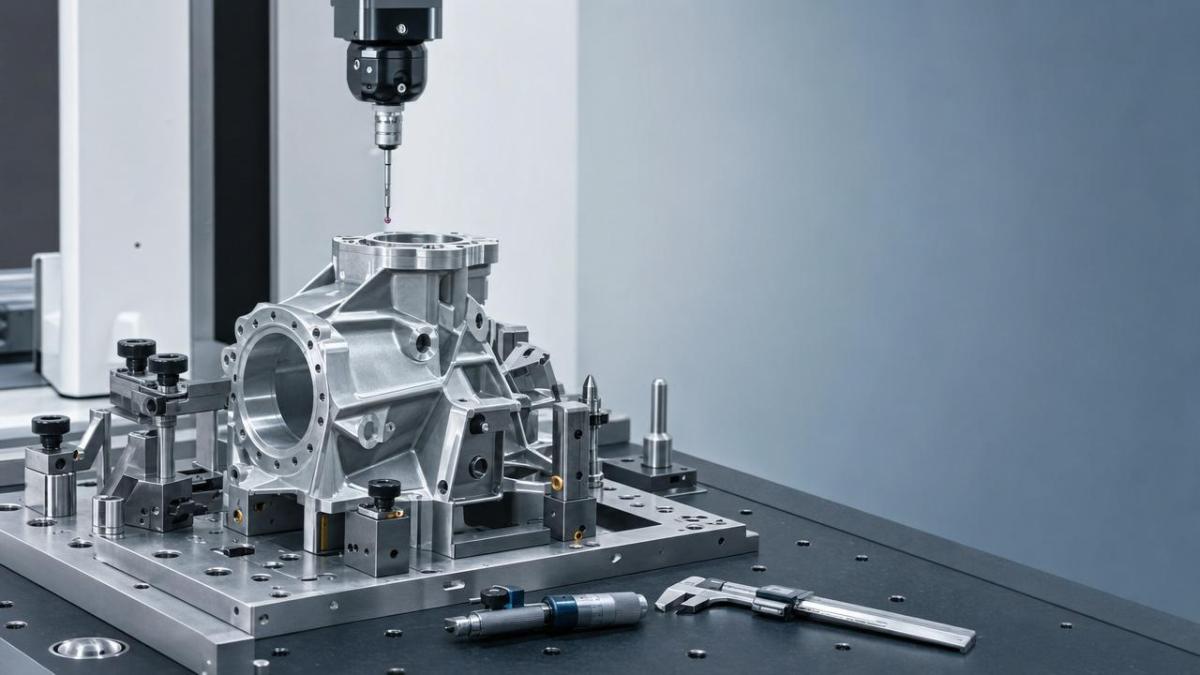
The fastest way to evaluate aerospace machining precision tolerance standards is to classify the part by application scenario instead of by industry label alone. A structural bracket in a commercial drone, a sealing surface in a fuel system, and a fixture used during assembly may all be “aerospace-related,” but their tolerance logic is fundamentally different.
The table highlights a core buying principle: the more directly a feature influences load transfer, sealing, dynamic balance, sensor alignment, or airworthiness evidence, the more likely tighter aerospace machining precision tolerance standards are justified. If the feature mainly affects packaging, appearance, or convenience, tolerance relaxation may unlock major cost savings with little downside.
Scenario 1: Certified aerospace platforms versus commercial UAV programs
This is one of the most common misjudgment areas. Certified aerospace programs often need traceable evidence showing that dimensional variation does not undermine airworthiness, fatigue assumptions, or repeatable assembly. In such cases, aerospace machining precision tolerance standards are part of a larger compliance architecture. They interact with material certification, process validation, inspection plans, and configuration control.
Commercial UAV programs, by contrast, may operate under very different economic pressures. Mission endurance, payload modularity, field repairability, and speed-to-market often matter as much as absolute dimensional tightness. A sourcing team that inherits legacy aerospace tolerances for a commercial drone frame can end up paying a premium for dimensions that do not improve flight stability or mission output.
A practical rule is to separate “certification-driven tolerances” from “performance-driven tolerances.” If a requirement exists mainly because the product category historically used it, review it. If it is linked to measurable outcomes such as bearing life, alignment repeatability, or fuel sealing integrity, preserve it.
Scenario 2: Prototype builds versus serial production sourcing
Tolerance choices that seem harmless during prototyping can become expensive during volume ramp. In prototype work, engineers sometimes request very tight tolerances to reduce variables during testing. That can be reasonable for design validation. But if those same aerospace machining precision tolerance standards carry directly into production without capability review, the procurement burden grows quickly.
For evaluators, the key difference is process capability. A supplier may deliver ten parts at a very tight tolerance with extensive operator intervention, selective tooling, and heavy inspection. Delivering ten thousand parts the same way is a different business case entirely. Unit economics, capacity risk, and on-time performance can degrade sharply.
Before locking tolerance into a serial contract, ask whether the requirement is stable under Cp/Cpk expectations, tool wear patterns, thermal variation, and incoming material spread. If not, the print may be technically achievable but commercially fragile.
Scenario 3: Machined interfaces versus free-form structural geometry
Not all dimensions carry equal value. Features that define mating, concentricity, hole position, sealing, or bearing fit usually deserve closer scrutiny. Free-form geometry, non-contact surfaces, and bulk material removal zones often do not need the same control level. Yet many drawings apply blanket tolerances that ignore feature criticality.
This is where feature-based sourcing analysis becomes useful. A component may be expensive not because the whole part is difficult, but because one or two dimensions force specialized inspection, extra setups, or slower machining strategies. If those dimensions are non-functional, relaxing them can widen the supplier pool without affecting downstream performance.
A buyer-friendly review checklist
- Which dimensions directly affect assembly success?
- Which dimensions control fatigue, sealing, vibration, or sensor alignment?
- Which dimensions are legacy defaults rather than verified functional needs?
- Which tolerances drive most of the quote premium?
- Can datum strategy or GD&T be improved instead of tightening every linear dimension?
Scenario 4: Global sourcing, dual sourcing, and supplier qualification
From a procurement perspective, aerospace machining precision tolerance standards also determine market accessibility. The tighter the specification, the fewer qualified suppliers can quote confidently. This may be acceptable for highly critical parts, but it creates strategic risk if used indiscriminately across an entire bill of materials.
In dual-sourcing programs, over-tight tolerances often undermine resilience. One supplier may have a process tuned to the print, while a second supplier can meet the nominal geometry only with lower yield or slower throughput. The result is an approved vendor list that looks robust on paper but lacks practical interchangeability.
For commercial evaluators, this means tolerance review should be part of supplier risk assessment. A requirement that eliminates 70% of capable suppliers should face a tougher justification threshold than one that only affects a niche critical feature.
How to decide whether the standard is stricter than necessary
A useful decision framework combines engineering consequence and business consequence. Start with the engineering side: if tolerance variation changes safety margin, fatigue life, aerodynamic alignment, thermal behavior, leakage, or mission accuracy, keep the control tight. Then examine the business side: how much cost, lead time, and sourcing concentration does that tolerance create?
This approach prevents one common error: evaluating aerospace machining precision tolerance standards only through engineering pride or only through purchasing pressure. Good specifications survive both tests.
Common misjudgments business teams should watch for
One misjudgment is assuming that tighter tolerances always indicate a better supplier. In reality, the best supplier may be the one that challenges non-functional requirements and proposes a more robust, measurable specification. Another is treating AS9100 environment capability as proof that every feature should be machined to extreme limits. Quality systems matter, but they do not replace feature-level engineering logic.
A third mistake is ignoring stack-up context. A very tight single-part tolerance can be meaningless if the assembly absorbs variation elsewhere through slotting, shimming, compliant interfaces, or adjustable fixtures. Conversely, a modest-looking dimension may be critical if it controls the datum chain. Commercial teams should not review tolerance values in isolation.
FAQ for evaluators reviewing aerospace machining precision tolerance standards
When should a buyer challenge the drawing?
Challenge it when suppliers consistently flag the same dimensions, when quote spreads are unusually wide, when lead times are driven by inspection rather than machining, or when the part is non-flight-critical but carries extreme tolerances across many non-functional features.
Do looser tolerances automatically mean lower quality?
No. Quality means conformance to functional requirements. If aerospace machining precision tolerance standards are aligned with true use conditions, a selectively relaxed print can improve manufacturability while preserving performance.
What is the safest way to reduce tolerance risk?
Relax by feature category, not by global rule. Start with non-critical surfaces, validate assembly impact, and use test data, GD&T refinement, or pilot builds before changing high-risk interfaces.
Practical next steps for sourcing and evaluation teams
If your team is reviewing RFQs, supplier qualification packages, or cost-down opportunities, treat aerospace machining precision tolerance standards as a scenario-specific decision set rather than a fixed badge of seriousness. Segment parts by application, identify truly critical features, compare tolerance-driven quote premiums, and ask suppliers where process capability is naturally stable versus artificially forced.
The strongest procurement outcomes come from collaboration between design, manufacturing, quality, and sourcing. When each tolerance can be linked to a real operating requirement, you reduce waste without weakening technical integrity. That is the standard worth defending: precision where it protects performance, and flexibility where it protects business value.
Search News
Hot Articles
- Carbon Fiber StructuresHow to Specify Aerospace Carbon Fiber Assemblies for Lightweight, Load-Bearing PartsJul 11, 2026
- Machine VisionXiaomi, Alibaba DAMO Academy Drive Open-Source Robotics Model Ecosystem, Lowering Algorithm Development Barriers for Overseas SMEs Adopting Chinese Robotics SolutionsMar 30, 2026
- Cobots & ArmsShanxi 'AI+' Conference Showcases Embodied Intelligence with Multinational Buyer Engagement: Key Industry ImplicationsMar 30, 2026
Popular Tags
Recommended News
 Jul 11, 2026How to Specify Aerospace Carbon Fiber Assemblies for Lightweight, Load-Bearing PartsAerospace carbon fiber assemblies: learn how to specify laminate design, load data, joining methods, and inspection controls for lighter, reliable load-bearing aerospace parts.Elena Rostova (UAV Systems Researcher)
 Mar 30, 2026Xiaomi, Alibaba DAMO Academy Drive Open-Source Robotics Model Ecosystem, Lowering Algorithm Development Barriers for Overseas SMEs Adopting Chinese Robotics SolutionsXiaomi & Alibaba DAMO Academy's open-source robotics models lower algorithm barriers for global SMEs. Boost efficiency in manufacturing, logistics & smart retail with ROS 2 compatible solutions.TSV Data Lab
 Mar 30, 2026Shanxi 'AI+' Conference Showcases Embodied Intelligence with Multinational Buyer Engagement: Key Industry ImplicationsShanxi 'AI+' Conference highlights embodied intelligence with Tesla, Ubtech & Jiantao showcasing multimodal robotics. 40+ global buyers validated tech on-site, creating new B2B channels for industrial automation & AI solutions.Chen Wei (Automation Lead Engineer)
 Mar 30, 2026Zhongguancun Unveils 6G Integrated Sensing-Computing-Intelligence Platform to Empower Embodied Robots for Global Industrial ApplicationsZhongguancun's new 6G platform revolutionizes industrial robotics with <10ms latency, empowering global automotive, logistics & port automation. Discover how this tech boosts China's smart manufacturing exports.TSV Data Lab
 Mar 30, 2026Mech-Mind Tianjin Embodied Intelligence R&D and Production Base Goes Live, Cutting Delivery Time by 20%–30% for Global Customized AMR+Vision SolutionsMech-Mind's Tianjin AMR+Vision production base cuts delivery time by 20%-30% for欧美 & Latin American markets. Discover how this PLd-certified facility accelerates customized robotics solutions for smart manufacturing and logistics.Chen Wei (Automation Lead Engineer)
 Mar 30, 2026Boao Forum Reveals 'Co-evolution of Big and Small Brains' Trend in Humanoid Robots, China's Embodied Intelligence Accelerates Adaptation to Overseas Manufacturing Service ScenariosDiscover how China's humanoid robots, featuring 'Co-evolution of Big and Small Brains,' are revolutionizing global manufacturing. Learn about Embodied Tian Gong 3.0's ISO compliance and overseas deployment at Boao Forum 2026.Chen Wei (Automation Lead Engineer)
 Mar 30, 2026China Railway Industrial Secures Patent for Embodied Robotics in Material Handling, Boosting High-Precision Delivery Capabilities for Overseas Infrastructure and Manufacturing ProjectsChina Railway Industrial's new patent for embodied robotics in material handling boosts high-precision delivery for global infrastructure & manufacturing. Discover how this innovation enhances logistics accuracy in automotive, rail transit & EPC projects.Chen Wei (Automation Lead Engineer)
 Sep 28, 2026Spindle Runout Measurement in Germany: DIN Standards, Methods, and Acceptance LimitsSpindle runout measurement Germany: explore DIN standards, proven methods, acceptance limits, and audit-ready practices for reliable machining quality.Dr. Marcus Vance
 Sep 27, 2026How to Select Wall-Mount Edge Devices for Space-Constrained Factory NetworksWall mount edge devices for space-constrained factories: evaluate workload, thermal design, power resilience, cable access, and network reliability for smarter deployments.TSV Data Lab
 Sep 26, 2026Machining Tolerance Analysis: How to Set Limits That Meet Function and Cost TargetsMachining tolerance analysis: learn how to set functional limits, control tolerance stacks, reduce inspection risk, and balance precision with production cost.Dr. Marcus Vance
 Sep 25, 2026How to Evaluate an Industrial Infrastructure Data Platform for Multi-Site OperationsIndustrial infrastructure data platform evaluation guide for multi-site operations: compare data quality, edge resilience, interoperability, governance, and scalable proof-of-value criteria.Victor Lin (Chief Software Architect)
 Sep 24, 2026How to Select Machine Vision Optics for Accurate Inspection at Different Working DistancesMachine vision optics selection guide for accurate inspection at every working distance. Compare FOV, pixel scale, DOF, distortion, lighting, and telecentric options.TSV Data Lab
 Sep 23, 2026How to Evaluate a Machine Vision System Integrator for High-Speed Inspection LinesChoose a machine vision system integrator with proven expertise in high-speed inspection, reliable reject timing, robust optics, and measurable acceptance criteria.TSV Data Lab
 Sep 28, 2026When is a SCADA API the right choice for connecting plant systems?SCADA API guide: learn when governed plant data integration improves traceability, security, and scalability—without compromising real-time control.Victor Lin (Chief Software Architect)
 Sep 27, 2026How SCADA data integration improves traceability across production linesSCADA data integration connects production-line data to improve traceability, accelerate quality investigations, and strengthen safety decisions.Victor Lin (Chief Software Architect)
 Sep 26, 2026What to define before starting SCADA integration planningSCADA integration planning starts with clear scope, control boundaries, data models, cybersecurity, and testing. Discover the definitions that reduce risk and costly rework.Victor Lin (Chief Software Architect)
 Sep 25, 2026How a smart factory with Industrial IoT reduces production blind spotsDiscover how a smart factory with Industrial IoT turns real-time machine, quality, and workflow data into actionable insights that reduce production blind spots and delivery risks.Victor Lin (Chief Software Architect)
 Sep 24, 2026When does Industrial IoT make smart manufacturing easier to scale?Smart manufacturing Industrial IoT scales when trusted data, interoperable systems, and secure workflows turn connected assets into measurable gains.TSV Data Lab
 Sep 23, 2026What drives ultra-precision machining cost at 1-micron tolerance?Ultra precision machining cost per part at 1 micron tolerance depends on process, material, metrology, and yield. Learn how to compare quotes confidently.Dr. Marcus Vance
 Sep 22, 2026Drone Engine-T550CC Applications: Build the UAV Power System Around the MissionAn application guide for Drone Engine-T550CC integration, covering payload planning, airframe matching, cooling, fuel, vibration, test procedures, documentation, and service preparation.Elena Rostova (UAV Systems Researcher)
 Sep 22, 2026How to Evaluate Industrial Edge Computing Vendors for Factory DeploymentIndustrial edge computing vendor evaluation guide for factories: compare latency, protocol fit, reliability, security, and lifecycle support before deployment.TSV Data Lab
 Sep 21, 2026Drone Payload Integration: Matching Power, Data, and Center of Gravity for Reliable FlightsDrone payload integration made practical: balance power, data, center of gravity, and endurance to build safer, more reliable mission-ready flights.Elena Rostova (UAV Systems Researcher)
 Sep 20, 2026Autonomous Navigation Pricing: Cost Drivers and Budget Benchmarks for AMR ProjectsAutonomous navigation price explained: compare AMR cost drivers, software, sensors, integration, safety, and lifecycle budgets to build a scalable project plan.Chen Wei (Automation Lead Engineer)
 Sep 19, 2026How to Scope Automation Integration Services for Multi-System Factory ProjectsAutomation integration services: learn how to scope multi-system factory projects with clear workflows, interface contracts, safety boundaries, and acceptance criteria.Victor Lin (Chief Software Architect)