5-axis CNC machining for turbine blades: why setup strategy decides yield
Publication Date
author
In 5-axis CNC machining for turbine blades, yield is rarely lost in cutting alone—it is won or lost in setup strategy. For project managers balancing tolerance, cycle time, and scrap risk, fixture design, datum selection, and tool access directly shape consistency across every blade. Understanding why setup strategy matters is the first step toward reducing rework, protecting aero-grade quality, and improving production predictability.
Why does setup strategy decide yield in 5-axis CNC machining for turbine blades?
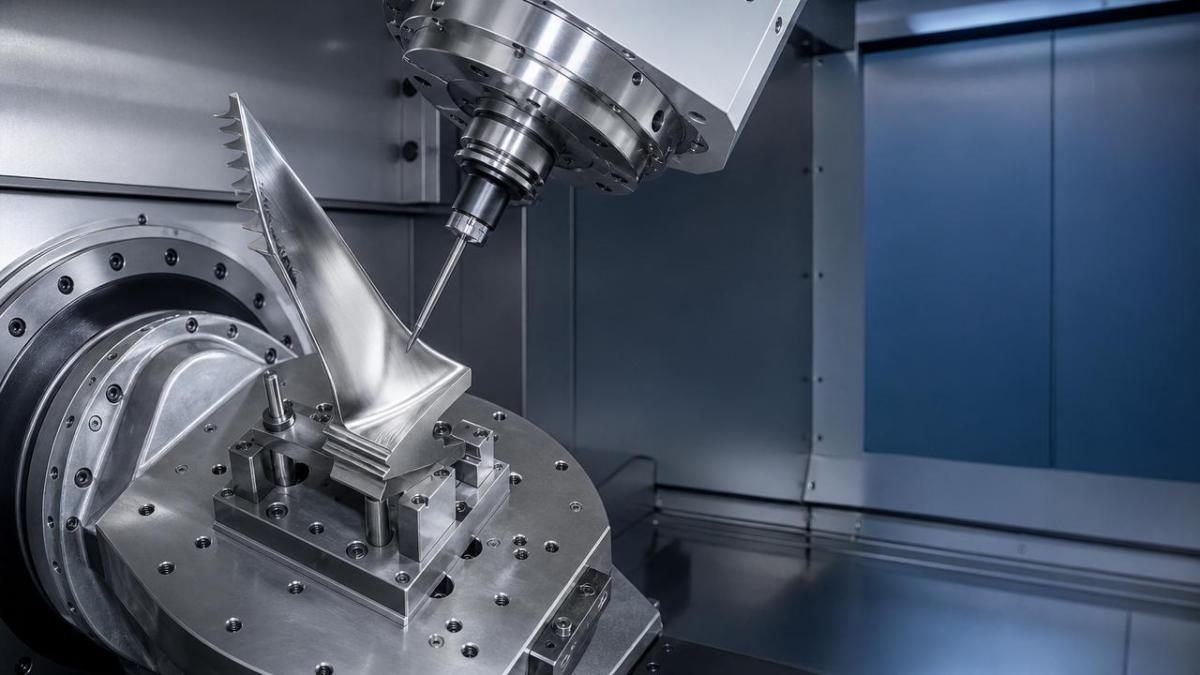
In turbine blade production, geometry is unforgiving. Airfoil curvature, platform transitions, root features, and trailing-edge thin walls all interact with each other. A machine can be highly capable, a CAM path can be sophisticated, and a cutting tool can be premium grade, yet yield can still collapse if the setup strategy introduces instability, datum drift, or inaccessible cutting angles.
For project managers, this is not only a machining topic. It is a delivery risk topic. Poor setup planning can trigger scrap, extra inspection loops, delayed first article approval, and unstable lot-to-lot output. In aerospace-linked supply chains, that instability also affects supplier qualification, traceability confidence, and customer trust.
TechStat Vanguard approaches 5-axis CNC machining for turbine blades from a data-first viewpoint. Instead of broad claims about precision, the real question is simpler: which setup decisions most directly affect repeatability, tolerance stack-up, surface integrity, and throughput? Once that is measured, yield stops looking mysterious and becomes manageable.
- Datum strategy determines whether critical profiles are referenced from stable functional surfaces or from dimensions that shift after roughing.
- Fixture stiffness controls vibration, local deflection, and whether thin features remain within profile tolerance after unclamping.
- Tool access planning affects collision risk, tool overhang, and whether a blade can be finished in one controlled orientation set or multiple risky repositioning steps.
- Clamping sequence influences distortion, especially on heat-resistant alloys where residual stress release can alter the final shape.
What project managers should evaluate before approving the machining plan
Many project delays begin when setup review happens too late. By the time scrap appears on the shop floor, the real cause may already be embedded in fixture assumptions, operation sequencing, or inspection reference logic. That is why project leaders should require a setup review before freezing production routing.
The table below highlights the core setup variables in 5-axis CNC machining for turbine blades and the yield consequences attached to each one. It is useful for supplier assessment, first article planning, and internal process audits.
A useful pattern appears here: most yield losses in 5-axis CNC machining for turbine blades are cumulative rather than dramatic. A minor datum mismatch, slight fixture compliance, and one extra setup may each look acceptable in isolation, but together they create unstable output. This is exactly where project oversight adds value.
Three review questions that save time later
- Are the machining datums identical, or at least traceable, to the inspection datums used for acceptance?
- Can the supplier explain how clamping deformation is measured before and after release?
- Is the process capable of holding critical features without adding an avoidable extra setup?
Single-setup ambition vs multi-setup reality: which approach is safer?
A common belief is that fewer setups automatically mean better results. In 5-axis CNC machining for turbine blades, that is often true, but not universally. A single-setup strategy can reduce re-clamping error and preserve datum consistency. However, if fixture access is poor or rigidity drops too much, the theoretical advantage disappears.
Project managers should compare setup count against process stability, not against a slogan. A two-setup process may outperform a one-setup process when it improves support on critical sections, shortens tool overhang, and aligns finishing passes with more stable reference conditions.
The comparison below can help teams decide whether a reduced setup count is genuinely beneficial or simply attractive on paper.
The best setup strategy in 5-axis CNC machining for turbine blades is the one that balances access, rigidity, datum logic, and inspection flow. A lower setup count is useful only when those four conditions remain intact.
Where setup errors usually appear on turbine blades
Not all blade regions fail for the same reason. Airfoil surfaces, roots, platforms, and edge features each respond differently to clamping and tool path orientation. This is why generalized supplier claims are not enough. Decision-makers need feature-level process understanding.
Airfoil surfaces
The airfoil is highly sensitive to vibration, thermal drift, and local deflection. Setup weakness here usually shows up as profile deviation, waviness, or inconsistent blending near transition zones. Long-reach tooling combined with weak workholding is a common root cause.
Root and attachment features
Root geometry often carries tight fit requirements. If datum transfer from root to airfoil is unstable, parts may pass one feature set while failing assembly-critical interfaces. A process that machines the root accurately but disturbs the airfoil during later repositioning can still become a yield problem.
Platform and blend radii
Platform regions often sit at the intersection of feature complexity and reduced accessibility. Setup strategy must allow clean entry and exit angles for the cutter while keeping support close enough to resist local movement. This area frequently exposes whether the fixturing concept was built around real cutting forces or only around CAD convenience.
Leading and trailing edges
Thin-edge regions amplify even small instability. Over-clamping may distort the section before machining. Under-support may cause edge flutter during finishing. Both cases reduce yield. For project managers, any process plan for 5-axis CNC machining for turbine blades should explain how edge geometry is protected during both machining and inspection.
How to evaluate suppliers beyond machine count and marketing claims
A supplier with advanced 5-axis equipment is not automatically a safe choice for turbine blade work. Machine kinematics matter, but setup discipline matters more. TechStat Vanguard repeatedly sees procurement teams compare spindle speed, control brand, or machine envelope while overlooking fixture methodology, inspection linkage, and process capability evidence.
When screening vendors for 5-axis CNC machining for turbine blades, ask for process evidence that connects setup decisions to quality outcomes. If the supplier cannot explain that chain clearly, the machine list alone should not carry the decision.
- Request a setup flow description from raw stock location through final inspection, including when datums change and why.
- Ask how fixture stiffness is validated for thin-wall or high-aspect-ratio sections, especially under finishing loads.
- Verify whether in-process probing is used to detect stock imbalance, thermal shift, or orientation drift before final passes.
- Confirm how first article findings are fed back into setup optimization rather than treated as isolated inspection events.
- Review whether the supplier works within recognized quality systems such as AS9100-relevant aerospace process discipline when applicable.
A practical procurement checklist
For project managers with tight schedules, a short checklist often works better than a long technical debate. Focus on evidence that predicts repeatability, not only capability at prototype stage.
- Can the supplier define the critical features that drive blade function and show how each feature is protected by setup design?
- Is there a documented route for roughing, stress relief if needed, semi-finishing, finishing, and measurement transfer?
- What is the plan for nonconformance containment if profile drift appears mid-batch?
- How much process variation comes from material behavior versus setup variation, and how is each isolated?
Cost, lead time, and yield: what is the real trade-off?
In many sourcing discussions, setup optimization is treated as an engineering preference rather than a cost lever. That is misleading. In 5-axis CNC machining for turbine blades, setup quality influences not only scrap but also inspection burden, machine occupancy, fixture maintenance, and schedule confidence.
A cheaper quote may rely on a simplified fixture concept, extra manual intervention, or a weak datum transfer strategy. That can reduce the visible unit price while increasing hidden costs through delayed approvals, excess metrology hours, and emergency rework. For project managers, the safer comparison is total production risk, not nominal machining price alone.
This is especially important in hard-tech supply chains where qualification cycles are expensive. A stable setup strategy can shorten the path from sample approval to controlled batch release. That outcome is often worth more than a small saving on the initial purchase order.
Standards, traceability, and compliance considerations
Turbine blade projects often sit close to demanding quality environments, especially in aerospace, energy, and advanced industrial systems. Even when a component is not flying hardware, buyers increasingly expect traceability, documented inspection logic, and process discipline aligned with recognized standards.
For 5-axis CNC machining for turbine blades, setup strategy should support compliance rather than fight it. If the machining datums differ from the measurement datums without clear traceability, root-cause analysis becomes difficult. If fixture repeatability is undocumented, lot-level consistency becomes harder to defend during audits or customer review.
- Use process documents that clearly define setup references, clamping conditions, tool family logic, and in-process measurement checkpoints.
- Ensure inspection planning links directly to functional dimensions and profile requirements instead of relying on informal shop-floor adjustments.
- Where aerospace-related requirements apply, align process control, traceability, and nonconformance handling with the discipline expected in AS9100-oriented environments.
FAQ: what do teams usually ask about 5-axis CNC machining for turbine blades?
How many setups are usually acceptable for turbine blade machining?
There is no universal number. The right count depends on geometry, alloy behavior, fixture rigidity, and required tolerance. In general, fewer setups reduce transfer error, but only if access and stiffness remain strong. A controlled two-setup process is often safer than a single setup that forces long tools and unstable cutting conditions.
What should buyers ask for during supplier evaluation?
Ask for the setup sequence, datum logic, fixture concept, in-process probing method, and inspection handoff plan. Also ask how the supplier manages distortion after roughing and after unclamping. For 5-axis CNC machining for turbine blades, these answers are more predictive than broad statements about precision capability.
Why do some turbine blade projects pass prototype stage but fail in batch production?
Prototype success can hide setup weakness because operators compensate manually, tool life is less stressed, and inspection volume is lower. In batch production, small setup flaws repeat across more parts and reveal themselves as profile drift, clamping distortion, or unstable cycle times. That is why scalable setup strategy matters from the beginning.
Is fixture design more important than the machine itself?
They are interdependent, but fixture design often has a more immediate effect on yield. A high-end machine cannot eliminate poor datum selection or workholding-induced distortion. In many cases, improving fixturing and setup logic produces a faster yield gain than upgrading the machine platform.
Why work with TechStat Vanguard for sourcing and process benchmarking?
TechStat Vanguard was built for engineering teams and procurement leaders who need more than polished claims. We focus on parameter-led evaluation, traceable benchmarking, and hard-tech supply chain clarity. In precision machining topics such as 5-axis CNC machining for turbine blades, that means helping teams separate machine capability from setup capability, and marketing language from process evidence.
If you are evaluating a supplier, qualifying a new blade program, or trying to reduce scrap risk before batch launch, the most useful discussion is usually specific. Share the drawing sensitivity, target material, tolerance priorities, annual volume, and expected delivery window. From there, the right conversation includes datum strategy, fixture assumptions, inspection flow, and realistic yield risks.
You can contact us to discuss parameter confirmation, supplier comparison, setup strategy review, delivery cycle planning, custom process benchmarking, certification-related questions, sample evaluation logic, and quotation communication criteria. For project managers under pressure to decide quickly, that kind of structured technical screening can reduce trial-and-error cost and shorten the path to a dependable manufacturing decision.
Search News
Hot Articles
- Carbon Fiber StructuresHow to Specify Aerospace Carbon Fiber Assemblies for Lightweight, Load-Bearing PartsJul 11, 2026
- Machine VisionXiaomi, Alibaba DAMO Academy Drive Open-Source Robotics Model Ecosystem, Lowering Algorithm Development Barriers for Overseas SMEs Adopting Chinese Robotics SolutionsMar 30, 2026
- Cobots & ArmsShanxi 'AI+' Conference Showcases Embodied Intelligence with Multinational Buyer Engagement: Key Industry ImplicationsMar 30, 2026
Popular Tags
Recommended News
 Jul 11, 2026How to Specify Aerospace Carbon Fiber Assemblies for Lightweight, Load-Bearing PartsAerospace carbon fiber assemblies: learn how to specify laminate design, load data, joining methods, and inspection controls for lighter, reliable load-bearing aerospace parts.Elena Rostova (UAV Systems Researcher)
 Mar 30, 2026Xiaomi, Alibaba DAMO Academy Drive Open-Source Robotics Model Ecosystem, Lowering Algorithm Development Barriers for Overseas SMEs Adopting Chinese Robotics SolutionsXiaomi & Alibaba DAMO Academy's open-source robotics models lower algorithm barriers for global SMEs. Boost efficiency in manufacturing, logistics & smart retail with ROS 2 compatible solutions.TSV Data Lab
 Mar 30, 2026Shanxi 'AI+' Conference Showcases Embodied Intelligence with Multinational Buyer Engagement: Key Industry ImplicationsShanxi 'AI+' Conference highlights embodied intelligence with Tesla, Ubtech & Jiantao showcasing multimodal robotics. 40+ global buyers validated tech on-site, creating new B2B channels for industrial automation & AI solutions.Chen Wei (Automation Lead Engineer)
 Mar 30, 2026Zhongguancun Unveils 6G Integrated Sensing-Computing-Intelligence Platform to Empower Embodied Robots for Global Industrial ApplicationsZhongguancun's new 6G platform revolutionizes industrial robotics with <10ms latency, empowering global automotive, logistics & port automation. Discover how this tech boosts China's smart manufacturing exports.TSV Data Lab
 Mar 30, 2026Mech-Mind Tianjin Embodied Intelligence R&D and Production Base Goes Live, Cutting Delivery Time by 20%–30% for Global Customized AMR+Vision SolutionsMech-Mind's Tianjin AMR+Vision production base cuts delivery time by 20%-30% for欧美 & Latin American markets. Discover how this PLd-certified facility accelerates customized robotics solutions for smart manufacturing and logistics.Chen Wei (Automation Lead Engineer)
 Mar 30, 2026Boao Forum Reveals 'Co-evolution of Big and Small Brains' Trend in Humanoid Robots, China's Embodied Intelligence Accelerates Adaptation to Overseas Manufacturing Service ScenariosDiscover how China's humanoid robots, featuring 'Co-evolution of Big and Small Brains,' are revolutionizing global manufacturing. Learn about Embodied Tian Gong 3.0's ISO compliance and overseas deployment at Boao Forum 2026.Chen Wei (Automation Lead Engineer)
 Mar 30, 2026China Railway Industrial Secures Patent for Embodied Robotics in Material Handling, Boosting High-Precision Delivery Capabilities for Overseas Infrastructure and Manufacturing ProjectsChina Railway Industrial's new patent for embodied robotics in material handling boosts high-precision delivery for global infrastructure & manufacturing. Discover how this innovation enhances logistics accuracy in automotive, rail transit & EPC projects.Chen Wei (Automation Lead Engineer)
 Sep 29, 2026ISO 9283 Repeatability: How to Evaluate Cobot Positioning PerformanceISO 9283 cobot repeatability explained: learn how payload, reach, approach direction, and test conditions affect positioning performance and cell capability.Chen Wei (Automation Lead Engineer)
 Sep 28, 2026Spindle Runout Measurement in Germany: DIN Standards, Methods, and Acceptance LimitsSpindle runout measurement Germany: explore DIN standards, proven methods, acceptance limits, and audit-ready practices for reliable machining quality.Dr. Marcus Vance
 Sep 27, 2026How to Select Wall-Mount Edge Devices for Space-Constrained Factory NetworksWall mount edge devices for space-constrained factories: evaluate workload, thermal design, power resilience, cable access, and network reliability for smarter deployments.TSV Data Lab
 Sep 26, 2026Machining Tolerance Analysis: How to Set Limits That Meet Function and Cost TargetsMachining tolerance analysis: learn how to set functional limits, control tolerance stacks, reduce inspection risk, and balance precision with production cost.Dr. Marcus Vance
 Sep 25, 2026How to Evaluate an Industrial Infrastructure Data Platform for Multi-Site OperationsIndustrial infrastructure data platform evaluation guide for multi-site operations: compare data quality, edge resilience, interoperability, governance, and scalable proof-of-value criteria.Victor Lin (Chief Software Architect)
 Sep 24, 2026How to Select Machine Vision Optics for Accurate Inspection at Different Working DistancesMachine vision optics selection guide for accurate inspection at every working distance. Compare FOV, pixel scale, DOF, distortion, lighting, and telecentric options.TSV Data Lab
 Sep 23, 2026How to Evaluate a Machine Vision System Integrator for High-Speed Inspection LinesChoose a machine vision system integrator with proven expertise in high-speed inspection, reliable reject timing, robust optics, and measurable acceptance criteria.TSV Data Lab
 Sep 28, 2026When is a SCADA API the right choice for connecting plant systems?SCADA API guide: learn when governed plant data integration improves traceability, security, and scalability—without compromising real-time control.Victor Lin (Chief Software Architect)
 Sep 27, 2026How SCADA data integration improves traceability across production linesSCADA data integration connects production-line data to improve traceability, accelerate quality investigations, and strengthen safety decisions.Victor Lin (Chief Software Architect)
 Sep 26, 2026What to define before starting SCADA integration planningSCADA integration planning starts with clear scope, control boundaries, data models, cybersecurity, and testing. Discover the definitions that reduce risk and costly rework.Victor Lin (Chief Software Architect)
 Sep 25, 2026How a smart factory with Industrial IoT reduces production blind spotsDiscover how a smart factory with Industrial IoT turns real-time machine, quality, and workflow data into actionable insights that reduce production blind spots and delivery risks.Victor Lin (Chief Software Architect)
 Sep 24, 2026When does Industrial IoT make smart manufacturing easier to scale?Smart manufacturing Industrial IoT scales when trusted data, interoperable systems, and secure workflows turn connected assets into measurable gains.TSV Data Lab
 Sep 23, 2026What drives ultra-precision machining cost at 1-micron tolerance?Ultra precision machining cost per part at 1 micron tolerance depends on process, material, metrology, and yield. Learn how to compare quotes confidently.Dr. Marcus Vance
 Sep 22, 2026Drone Engine-T550CC Applications: Build the UAV Power System Around the MissionAn application guide for Drone Engine-T550CC integration, covering payload planning, airframe matching, cooling, fuel, vibration, test procedures, documentation, and service preparation.Elena Rostova (UAV Systems Researcher)
 Sep 22, 2026How to Evaluate Industrial Edge Computing Vendors for Factory DeploymentIndustrial edge computing vendor evaluation guide for factories: compare latency, protocol fit, reliability, security, and lifecycle support before deployment.TSV Data Lab
 Sep 21, 2026Drone Payload Integration: Matching Power, Data, and Center of Gravity for Reliable FlightsDrone payload integration made practical: balance power, data, center of gravity, and endurance to build safer, more reliable mission-ready flights.Elena Rostova (UAV Systems Researcher)
 Sep 20, 2026Autonomous Navigation Pricing: Cost Drivers and Budget Benchmarks for AMR ProjectsAutonomous navigation price explained: compare AMR cost drivers, software, sensors, integration, safety, and lifecycle budgets to build a scalable project plan.Chen Wei (Automation Lead Engineer)