CNC milling for automotive engine blocks without scrap creep
Publication Date
author
In high-volume powertrain manufacturing, cnc milling for automotive engine blocks is only profitable when precision remains stable and scrap creep is stopped before it spreads across batches. For project leaders balancing cycle time, tolerance control, and supplier risk, the real challenge is not headline capability but measurable process discipline. This article examines how data-driven machining benchmarks help prevent hidden waste while protecting engine block quality at scale.
Why scrap creep is the real threat in cnc milling for automotive engine blocks
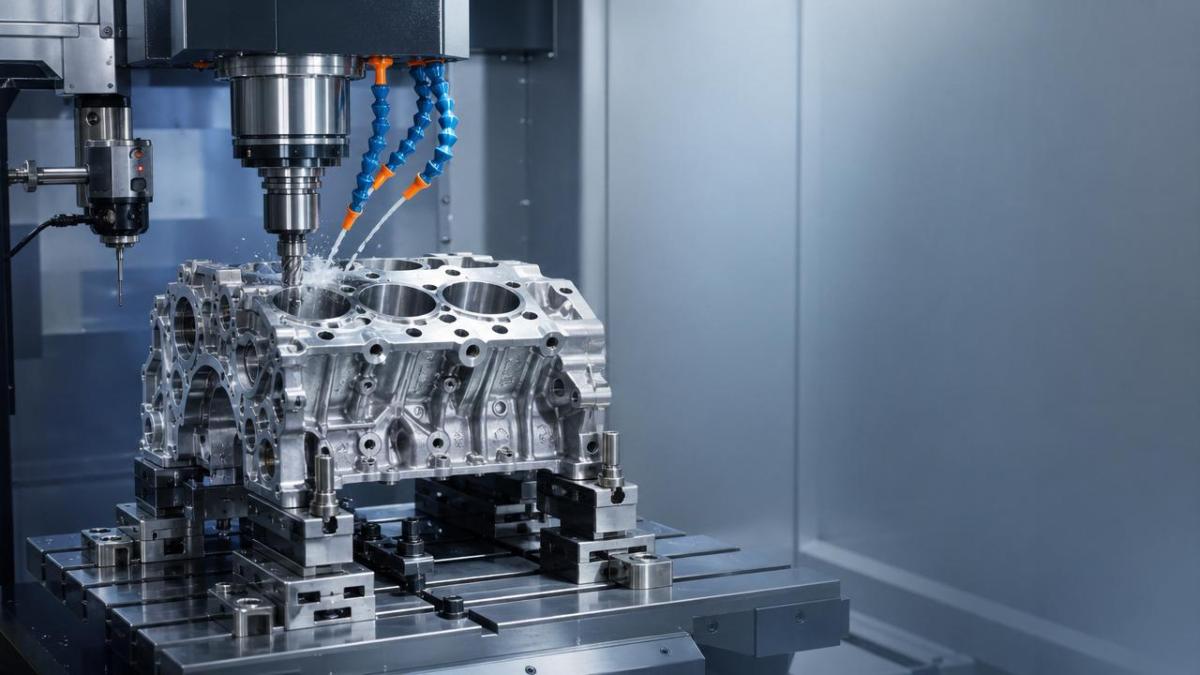
For project managers, the main issue is rarely whether a supplier can machine an engine block once. The real question is whether they can hold performance over thousands of parts.
Scrap creep describes the gradual rise of defects across production runs. It often begins quietly with tool wear, thermal drift, fixture instability, coolant variation, or inconsistent incoming castings.
At first, these shifts may stay inside inspection tolerance bands. However, they reduce process margin. Soon, bore geometry, deck flatness, datum relationships, or surface condition begin moving toward failure.
That is why cnc milling for automotive engine blocks should be evaluated as a stability problem, not simply a machining capacity problem. Stable outputs matter more than isolated demonstration samples.
For an engine block program, even a small increase in scrap has a multiplied effect. It affects machining cost, assembly yield, line scheduling, warranty risk, and supplier credibility.
Project leaders therefore need a practical filter: not “Can this shop machine engine blocks?” but “Can this process resist drift while meeting cost and timing targets under production conditions?”
What project leaders care about most before approving a machining source
Engineering teams may focus on dimensional detail, but project owners must connect technical behavior to business outcomes. Their concerns usually fall into five measurable decision areas.
First is process capability over time. A supplier that can show repeatable Cp and Cpk performance on critical features gives stronger evidence than one-off first article success.
Second is scrap containment speed. When variation appears, how quickly can operators and engineers identify the root cause, quarantine suspect parts, and recover the process window?
Third is cycle time discipline. Fast quoted cycle times look attractive, but aggressive cutting strategies can accelerate tool degradation and create delayed scrap later in the batch.
Fourth is fixture and datum control. Engine blocks contain many interdependent features, so small locating errors can cascade into bore misalignment, sealing issues, or downstream assembly problems.
Fifth is traceability. Project managers need confidence that every nonconformance can be linked to machine, tool life state, operator action, material lot, and inspection timestamp.
These factors matter because the buyer is not purchasing spindle hours. They are buying predictable throughput, controlled risk, and confidence that quality losses will not appear after launch.
Critical failure points in engine block milling that often drive hidden waste
Automotive engine blocks are unforgiving parts. Their geometry combines large cast structures with tight functional relationships across decks, bores, threaded features, and sealing interfaces.
One common failure area is deck milling. If flatness, parallelism, or surface finish drifts, gasket sealing performance can be compromised even when dimensions still appear close to nominal.
Main bearing bore relationships are another major risk. Even when final boring is controlled, earlier milling stages can distort references or create misalignment that reduces later process margin.
Threaded hole position and perpendicularity can also become recurring scrap sources. In engine block production, these issues often emerge from cumulative datum shift rather than a single dramatic setup error.
Water jacket walls and thin local sections add sensitivity. Excessive clamping force, poor casting consistency, or thermal input may induce deformation that appears only during later inspection stages.
Surface integrity should not be ignored. Burr formation, chatter marks, smeared material, or unstable finish can trigger cleaning issues, sealing concerns, or assembly interruptions downstream.
In many programs, scrap does not come from spectacular machine failure. It comes from several modest deviations interacting until the process loses the buffer needed for production reality.
How to judge whether a supplier can prevent scrap creep instead of merely reacting to it
The most valuable suppliers do not wait for scrap reports to tell them a process is unstable. They build monitoring systems that detect movement before defects become visible in final inspection.
Ask how they define critical-to-function features for each engine block family. A serious machining partner should separate cosmetic dimensions from features that directly affect assembly and durability.
Then examine tool life strategy. Do they rely on fixed replacement intervals, or do they correlate wear patterns with dimensional drift, spindle load, and surface finish trends?
Review fixture verification routines as well. In cnc milling for automotive engine blocks, fixture repeatability can influence multiple features simultaneously, making it a high-leverage control point.
Probe their in-process metrology structure. The strongest operations combine machine probing, off-line verification, SPC charts, and escalation triggers tied to feature-specific control limits.
Also ask for evidence of trend management, not just pass-fail records. A supplier that can show drift slopes across batches is usually more mature than one that only shows final acceptance rates.
Finally, inspect their reaction plan. If one machine starts showing bore position drift, who owns the decision, how many parts are isolated, and how quickly is root cause verified?
Data benchmarks that matter more than generic quality claims
Marketing phrases such as “high precision” or “strict quality control” provide little value to a project leader. Decision-grade evaluation depends on benchmark data linked to production behavior.
Start with critical feature capability. Request capability data for deck flatness, bore position, bore diameter consistency, thread location, and any sealing or mounting interface with functional consequence.
Next, review machine-to-machine variation if the supplier plans parallel production. A robust launch requires confidence that transferred programs behave similarly across the approved equipment set.
Tool consumption per acceptable part is another useful benchmark. It connects machining economics to stability and helps expose unrealistic cycle time assumptions hidden in aggressive quotations.
Look at first-pass yield by operation, not only final line yield. This reveals where loss is actually introduced and whether recovery depends on rework rather than a healthy primary process.
Measure containment responsiveness too. Time from abnormal signal to production hold, and time from hold to corrective confirmation, can determine whether a small issue becomes a batch-level loss.
For strategic sourcing, benchmark traceability depth. If a supplier cannot connect inspection data, tooling state, machine condition, and operator action, future corrective action will be slower and weaker.
Balancing cycle time, tolerance, and cost without creating delayed failure
Many sourcing decisions fail because buyers compare quoted piece price without evaluating the control strategy behind it. Low price often reflects compressed safeguards rather than true process efficiency.
In engine block machining, shortening cycle time can be rational, but only if thermal behavior, cutter engagement, evacuation, and fixturing remain stable across the planned production window.
If faster roughing increases heat and deformation, finishing results may become less predictable. The apparent savings then disappear through offsets, inspection load, rework, and scrap accumulation.
Similarly, extending tool life beyond the stable wear zone may reduce direct tooling cost per part while quietly increasing variation on critical dimensions that matter to assembly performance.
Project leaders should therefore ask suppliers to show the trade-off logic behind the chosen process window. Why this feed, this insert grade, this coolant method, and this replacement interval?
When a supplier can explain cost through controlled engineering assumptions instead of optimistic averages, their quote becomes more credible. This is especially important for multi-shift automotive production.
The goal is not the lowest machining cost on paper. The goal is the lowest validated cost per conforming engine block delivered without schedule disruption or quality escalation.
A practical qualification checklist for cnc milling for automotive engine blocks
Before nominating a supplier, project managers can use a focused checklist to test whether the proposed process is likely to resist scrap creep in real production.
Confirm that critical datums are defined consistently from casting receipt through final machining. Weak datum logic often causes recurring dimensional conflict between operations and departments.
Check whether incoming casting variation is measured and classified. If the machining plan assumes ideal castings, real-world stock variation may erode stability almost immediately after launch.
Verify fixture repeatability studies, including maintenance intervals and wear inspection rules. For engine blocks, fixture health should be treated as a monitored production variable, not a background assumption.
Request evidence of controlled warm-up procedures and thermal compensation practices. Large metal parts and long cycle times make thermal effects more significant than many quotations admit.
Review the escalation matrix for out-of-trend dimensions. You want documented thresholds, stop criteria, authority assignments, and feedback loops that work across quality, production, and engineering.
Finally, validate that inspection frequency matches feature risk. Overinspection wastes capacity, while underinspection allows drift to travel too far before containment begins.
When to intervene internally and when to change suppliers
Not every rise in scrap means a supplier is fundamentally unqualified. Some issues can be corrected through stronger launch governance, clearer control plans, or better cross-functional communication.
Intervention makes sense when the supplier has visible engineering discipline, transparent data, and fast corrective action, but lacks alignment on reporting cadence or feature prioritization.
However, supplier replacement should be considered when variation is repeatedly discovered late, root cause remains vague, or process knowledge depends on a few individuals instead of documented systems.
Another warning sign is defensive reporting. If a supplier shares pass rates but avoids trend charts, capability history, or machine-specific performance, project risk is probably higher than it appears.
For strategic programs, the best partners are not those with the most polished presentations. They are the ones willing to expose process limits early and improve them with evidence.
That mindset aligns directly with long-term automotive launch success. Problems disclosed early are manageable; hidden instability discovered after volume ramp is expensive for everyone involved.
Conclusion: stable process discipline is the real benchmark
For project leaders evaluating cnc milling for automotive engine blocks, the decisive factor is not advertised precision. It is whether the process can stay centered, traceable, and economically stable at scale.
Scrap creep is dangerous because it spreads quietly through normal production conditions. Preventing it requires disciplined tooling strategy, fixture control, in-process monitoring, and data-based escalation.
When suppliers are judged by trend behavior, containment speed, and capability on critical features, sourcing decisions become stronger and launch risk becomes easier to manage.
In practical terms, the best machining partner is the one that converts engineering truth into predictable output. For engine block programs, that is what protects margin, schedule, and quality together.
Search News
Hot Articles
- Carbon Fiber StructuresHow to Specify Aerospace Carbon Fiber Assemblies for Lightweight, Load-Bearing PartsJul 11, 2026
- Machine VisionXiaomi, Alibaba DAMO Academy Drive Open-Source Robotics Model Ecosystem, Lowering Algorithm Development Barriers for Overseas SMEs Adopting Chinese Robotics SolutionsMar 30, 2026
- Cobots & ArmsShanxi 'AI+' Conference Showcases Embodied Intelligence with Multinational Buyer Engagement: Key Industry ImplicationsMar 30, 2026
Popular Tags
Recommended News
 Jul 11, 2026How to Specify Aerospace Carbon Fiber Assemblies for Lightweight, Load-Bearing PartsAerospace carbon fiber assemblies: learn how to specify laminate design, load data, joining methods, and inspection controls for lighter, reliable load-bearing aerospace parts.Elena Rostova (UAV Systems Researcher)
 Mar 30, 2026Xiaomi, Alibaba DAMO Academy Drive Open-Source Robotics Model Ecosystem, Lowering Algorithm Development Barriers for Overseas SMEs Adopting Chinese Robotics SolutionsXiaomi & Alibaba DAMO Academy's open-source robotics models lower algorithm barriers for global SMEs. Boost efficiency in manufacturing, logistics & smart retail with ROS 2 compatible solutions.TSV Data Lab
 Mar 30, 2026Shanxi 'AI+' Conference Showcases Embodied Intelligence with Multinational Buyer Engagement: Key Industry ImplicationsShanxi 'AI+' Conference highlights embodied intelligence with Tesla, Ubtech & Jiantao showcasing multimodal robotics. 40+ global buyers validated tech on-site, creating new B2B channels for industrial automation & AI solutions.Chen Wei (Automation Lead Engineer)
 Mar 30, 2026Zhongguancun Unveils 6G Integrated Sensing-Computing-Intelligence Platform to Empower Embodied Robots for Global Industrial ApplicationsZhongguancun's new 6G platform revolutionizes industrial robotics with <10ms latency, empowering global automotive, logistics & port automation. Discover how this tech boosts China's smart manufacturing exports.TSV Data Lab
 Mar 30, 2026Mech-Mind Tianjin Embodied Intelligence R&D and Production Base Goes Live, Cutting Delivery Time by 20%–30% for Global Customized AMR+Vision SolutionsMech-Mind's Tianjin AMR+Vision production base cuts delivery time by 20%-30% for欧美 & Latin American markets. Discover how this PLd-certified facility accelerates customized robotics solutions for smart manufacturing and logistics.Chen Wei (Automation Lead Engineer)
 Mar 30, 2026Boao Forum Reveals 'Co-evolution of Big and Small Brains' Trend in Humanoid Robots, China's Embodied Intelligence Accelerates Adaptation to Overseas Manufacturing Service ScenariosDiscover how China's humanoid robots, featuring 'Co-evolution of Big and Small Brains,' are revolutionizing global manufacturing. Learn about Embodied Tian Gong 3.0's ISO compliance and overseas deployment at Boao Forum 2026.Chen Wei (Automation Lead Engineer)
 Mar 30, 2026China Railway Industrial Secures Patent for Embodied Robotics in Material Handling, Boosting High-Precision Delivery Capabilities for Overseas Infrastructure and Manufacturing ProjectsChina Railway Industrial's new patent for embodied robotics in material handling boosts high-precision delivery for global infrastructure & manufacturing. Discover how this innovation enhances logistics accuracy in automotive, rail transit & EPC projects.Chen Wei (Automation Lead Engineer)
 Sep 28, 2026Spindle Runout Measurement in Germany: DIN Standards, Methods, and Acceptance LimitsSpindle runout measurement Germany: explore DIN standards, proven methods, acceptance limits, and audit-ready practices for reliable machining quality.Dr. Marcus Vance
 Sep 27, 2026How to Select Wall-Mount Edge Devices for Space-Constrained Factory NetworksWall mount edge devices for space-constrained factories: evaluate workload, thermal design, power resilience, cable access, and network reliability for smarter deployments.TSV Data Lab
 Sep 26, 2026Machining Tolerance Analysis: How to Set Limits That Meet Function and Cost TargetsMachining tolerance analysis: learn how to set functional limits, control tolerance stacks, reduce inspection risk, and balance precision with production cost.Dr. Marcus Vance
 Sep 25, 2026How to Evaluate an Industrial Infrastructure Data Platform for Multi-Site OperationsIndustrial infrastructure data platform evaluation guide for multi-site operations: compare data quality, edge resilience, interoperability, governance, and scalable proof-of-value criteria.Victor Lin (Chief Software Architect)
 Sep 24, 2026How to Select Machine Vision Optics for Accurate Inspection at Different Working DistancesMachine vision optics selection guide for accurate inspection at every working distance. Compare FOV, pixel scale, DOF, distortion, lighting, and telecentric options.TSV Data Lab
 Sep 23, 2026How to Evaluate a Machine Vision System Integrator for High-Speed Inspection LinesChoose a machine vision system integrator with proven expertise in high-speed inspection, reliable reject timing, robust optics, and measurable acceptance criteria.TSV Data Lab
 Sep 28, 2026When is a SCADA API the right choice for connecting plant systems?SCADA API guide: learn when governed plant data integration improves traceability, security, and scalability—without compromising real-time control.Victor Lin (Chief Software Architect)
 Sep 27, 2026How SCADA data integration improves traceability across production linesSCADA data integration connects production-line data to improve traceability, accelerate quality investigations, and strengthen safety decisions.Victor Lin (Chief Software Architect)
 Sep 26, 2026What to define before starting SCADA integration planningSCADA integration planning starts with clear scope, control boundaries, data models, cybersecurity, and testing. Discover the definitions that reduce risk and costly rework.Victor Lin (Chief Software Architect)
 Sep 25, 2026How a smart factory with Industrial IoT reduces production blind spotsDiscover how a smart factory with Industrial IoT turns real-time machine, quality, and workflow data into actionable insights that reduce production blind spots and delivery risks.Victor Lin (Chief Software Architect)
 Sep 24, 2026When does Industrial IoT make smart manufacturing easier to scale?Smart manufacturing Industrial IoT scales when trusted data, interoperable systems, and secure workflows turn connected assets into measurable gains.TSV Data Lab
 Sep 23, 2026What drives ultra-precision machining cost at 1-micron tolerance?Ultra precision machining cost per part at 1 micron tolerance depends on process, material, metrology, and yield. Learn how to compare quotes confidently.Dr. Marcus Vance
 Sep 22, 2026Drone Engine-T550CC Applications: Build the UAV Power System Around the MissionAn application guide for Drone Engine-T550CC integration, covering payload planning, airframe matching, cooling, fuel, vibration, test procedures, documentation, and service preparation.Elena Rostova (UAV Systems Researcher)
 Sep 22, 2026How to Evaluate Industrial Edge Computing Vendors for Factory DeploymentIndustrial edge computing vendor evaluation guide for factories: compare latency, protocol fit, reliability, security, and lifecycle support before deployment.TSV Data Lab
 Sep 21, 2026Drone Payload Integration: Matching Power, Data, and Center of Gravity for Reliable FlightsDrone payload integration made practical: balance power, data, center of gravity, and endurance to build safer, more reliable mission-ready flights.Elena Rostova (UAV Systems Researcher)
 Sep 20, 2026Autonomous Navigation Pricing: Cost Drivers and Budget Benchmarks for AMR ProjectsAutonomous navigation price explained: compare AMR cost drivers, software, sensors, integration, safety, and lifecycle budgets to build a scalable project plan.Chen Wei (Automation Lead Engineer)
 Sep 19, 2026How to Scope Automation Integration Services for Multi-System Factory ProjectsAutomation integration services: learn how to scope multi-system factory projects with clear workflows, interface contracts, safety boundaries, and acceptance criteria.Victor Lin (Chief Software Architect)