5-axis CNC machining for medical devices: where tolerances tighten
Publication Date
author
In regulated manufacturing, 5-axis CNC machining for medical devices is where engineering claims face their toughest test. For quality and safety leaders, success depends on more than speed—it requires verified tolerances, stable surface integrity, and process control that holds under audit. This article examines how tighter specifications reshape machining strategy, supplier evaluation, and risk management in medical production.
For quality managers and safety leaders, the issue is rarely whether a supplier can machine a complex part once. The real question is whether that supplier can hold the same dimensional accuracy over 30, 300, or 3,000 parts while maintaining traceability, biocompatibility safeguards, and documented process stability. In this environment, 5-axis CNC machining for medical devices becomes less a production method and more a controlled system of evidence.
That distinction matters because medical programs often involve tight positional tolerances, burr-sensitive geometries, thin-wall features, and demanding finishing requirements on titanium, stainless steel, PEEK, cobalt-chrome, and other specialty materials. A deviation of ±0.01 mm may be acceptable in one industrial context, while another medical feature may require ±0.005 mm or better, along with Ra values in the sub-micron range and full lot-level documentation.
TechStat Vanguard’s data-first perspective is especially relevant here: marketing language does not reduce audit risk, but measurable process capability does. When buyers evaluate 5-axis CNC machining for medical devices, they need concrete answers on spindle stability, fixture repeatability, in-process verification, first article methodology, and nonconformance response time. Those answers determine whether a component can move safely from prototype to validated production.
Why Tolerance Compression Changes the Entire Machining Strategy
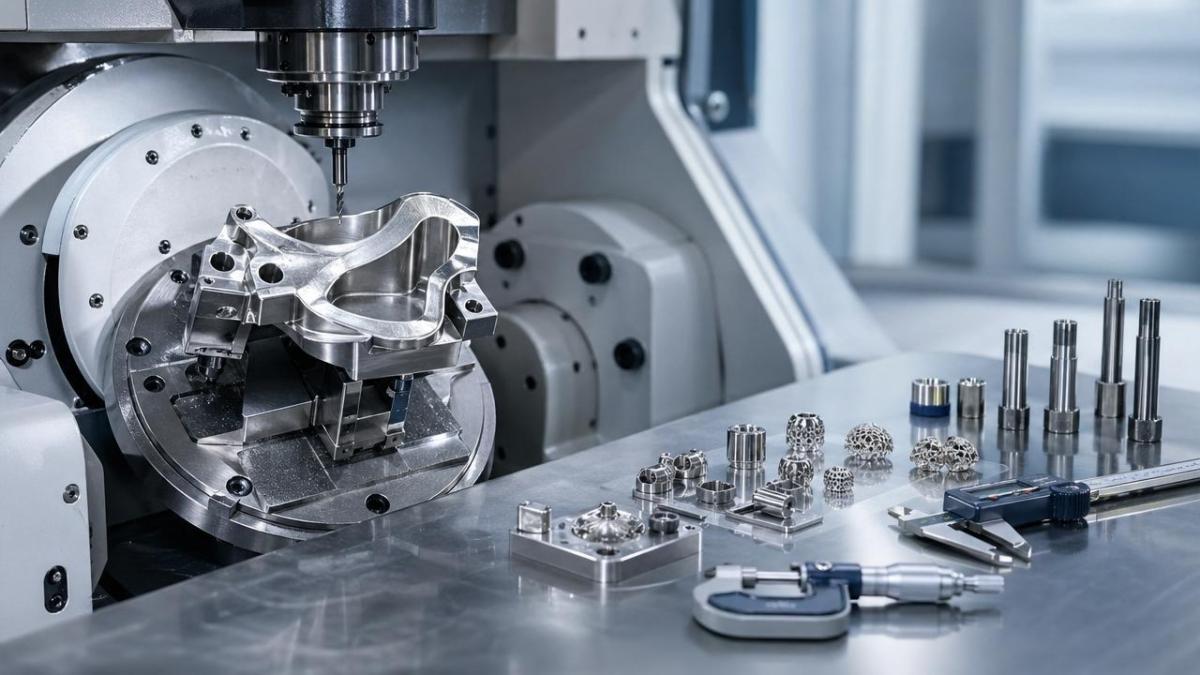
In medical manufacturing, tighter tolerances do not simply increase inspection burden; they change toolpath design, material handling, machine qualification, and quality planning from the start. A 5-axis machine may reduce setups from 3 or 4 to a single clamping, but that benefit only translates into better medical outcomes when angular accuracy, thermal control, and datum consistency are managed as one system.
For example, a bone screw driver, spinal implant component, endoscopic housing, or robotic surgery instrument may combine deep pockets, compound angles, micro-features, and polished sealing surfaces in one part. In 3-axis or indexed setups, each additional reposition introduces stack-up error. In 5-axis CNC machining for medical devices, simultaneous motion can reduce cumulative variation, but only if kinematics are calibrated and the CAM strategy matches the feature-critical surfaces.
Where quality risk typically increases
Quality teams usually see risk rise in 4 areas: feature-to-feature relationship error, surface damage during repositioning, hidden burr formation, and inconsistent edge break control. These are not theoretical issues. On small medical parts, a burr height of 0.02 mm can interfere with assembly, cleaning, or patient-contact safety, especially when internal channels or threaded features are involved.
- Thermal drift over runs lasting 2–6 hours
- Tool wear effects on thin walls below 1.0 mm
- Fixture distortion on delicate geometries
- Surface integrity shifts after aggressive cycle-time optimization
Why “tight tolerance” is not one single requirement
A common sourcing mistake is to reduce capability assessment to a single dimensional claim. In practice, 5-axis CNC machining for medical devices must be evaluated across at least 5 dimensions: size tolerance, true position, flatness or profile, surface roughness, and lot-to-lot repeatability. A supplier that can hold ±0.005 mm on a turned diameter may still struggle to maintain profile on a freeform surface or angularity across compound features.
Typical technical checkpoints for medical parts
The table below summarizes common control points that quality and safety teams review before approving a machining route for regulated medical components.
The key takeaway is that tolerances should be read as a bundle, not as an isolated print note. A machining partner may advertise advanced 5-axis capability, yet still create quality risk if surface condition, burr control, or documentation maturity falls below medical expectations.
What Quality and Safety Teams Should Verify Before Supplier Approval
Supplier approval for 5-axis CNC machining for medical devices should follow a structured review rather than a price-first conversation. In regulated supply chains, a lower unit price can be erased quickly by one deviation event, one delayed NCR closure, or one failed validation lot. A practical screening process usually includes 6 checkpoints before pilot production begins.
1. Quality system maturity and medical documentation discipline
A capable shop should show not only machining competence but also document control, revision management, nonconformance handling, and inspection traceability aligned with medical manufacturing expectations. If the supplier works under ISO 13485-aligned processes or supports customers with medical device requirements, review how they manage DHR-related records, FAI packages, process changes, and operator training logs.
2. Machine capability relative to part geometry
Not every 5-axis platform is equally suitable for medical parts. Teams should verify travel limits, spindle speed, machine probing, thermal compensation routines, and axis calibration frequency. For miniature or high-value components, repeatability over 8-hour or 12-hour operating windows may matter more than peak spindle power. Ask how often volumetric accuracy checks are performed and what triggers recalibration.
3. Material-specific process knowledge
Medical materials often punish generic machining practices. Titanium can build heat and stress tools rapidly. PEEK can deform if clamping pressure is excessive. Stainless grades may smear or work harden. Cobalt-chrome can accelerate wear and alter edge condition. A supplier should be able to explain tooling strategy, coolant logic, chip evacuation, and post-machining handling for each material family.
4. In-process and final inspection architecture
Inspection should not be limited to final CMM reporting. On critical parts, effective 5-axis CNC machining for medical devices often includes in-machine probing, first-off verification, periodic in-run checks every 10, 25, or 50 parts, and final dimensional review tied to control plans. Quality teams should ask which dimensions are checked in process, which are verified offline, and how reaction plans are triggered when trend drift appears.
5. Cleaning, contamination, and packaging controls
Safety managers know that a part can pass dimensional inspection and still fail practical medical use if contamination control is weak. Debris, residual coolant, embedded media, or mixed-lot packaging can create downstream risk. Review whether the supplier separates medical work cells, documents cleaning steps, validates packaging methods for sharp or polished parts, and controls foreign material introduction.
6. Response speed for deviations and engineering changes
In medical supply chains, the speed of response matters almost as much as the deviation itself. A useful benchmark is whether the supplier can provide initial containment feedback within 24 hours, formal root-cause progress within 72 hours, and corrective action closure on an agreed schedule. The same discipline should apply to drawing revisions, process changes, and tooling replacements.
The comparison below helps procurement, QA, and EHS teams separate cosmetic capability claims from operational readiness.
The stronger signal is not always the supplier with the longest brochure. It is the one that can show measurable control points, disciplined escalation paths, and evidence that its process remains stable under repeat production.
Critical Process Controls in 5-Axis CNC Machining for Medical Devices
When tolerances tighten, process control becomes the main defense against hidden risk. In 5-axis CNC machining for medical devices, the difference between an acceptable lot and a rejected lot can come from small upstream variables: tool holder runout, coolant concentration drift, fixture contact pressure, or machine warm-up inconsistency. Quality leaders should review how those variables are controlled before the first approved shipment.
Tooling and tool life management
A controlled tool life plan reduces unpredictable dimensional drift and protects surface finish. For critical medical features, many suppliers set tool replacement by part count, spindle time, or wear trend rather than waiting for visible failure. For instance, a shop may limit a finishing tool to 20–50 parts on a titanium implant feature, even if the tool could technically cut longer, because repeatability matters more than maximizing tool utilization.
Workholding strategy for delicate and high-value parts
Workholding should protect datums without introducing deformation. Vacuum, soft jaws, modular nests, and custom low-contact fixtures may all be valid depending on geometry and material. The important question is whether clamping force is measured, repeatable, and suitable for features such as thin walls below 0.8 mm or long unsupported sections prone to deflection during simultaneous 5-axis moves.
Environmental and machine condition controls
Temperature stability is often underestimated. A controlled area around 20°C, with limited variation during the shift, helps reduce thermal movement in both part and machine structure. Equally important are spindle warm-up routines, axis backlash checks, probe verification, and periodic ball-bar or volumetric testing. Without these controls, even an advanced machine can produce unstable data across a multi-day run.
Practical control plan elements
- Machine warm-up and probe validation at shift start
- First-off approval before full run release
- Defined sampling frequency based on risk level, such as every 10 or 25 parts
- Tool change triggers linked to wear trends, not operator guesswork
- Segregated handling for finished surfaces and patient-contact parts
These controls matter because medical device machining is judged not only by nominal dimensions, but by process behavior over time. A short successful trial proves possibility; a stable control plan proves manufacturability.
Audit Readiness, Risk Management, and Procurement Decisions
For procurement, QA, and safety stakeholders, the best sourcing decision is usually the one that minimizes total quality cost over the life of the program. In 5-axis CNC machining for medical devices, that means balancing piece price against validation effort, deviation frequency, documentation completeness, and change-control reliability. A supplier with a 7% lower quote may create a much higher internal burden if its process requires repeated first article resubmissions or extensive incoming inspection.
Common sourcing mistakes
Three mistakes appear frequently. First, buyers approve a shop based on prototype success without testing repeatability at low-volume production scale, such as 50–200 parts. Second, they review dimensional reports but overlook cleaning and packaging controls. Third, they focus on machine count rather than engineering response quality, especially how quickly the supplier contains a drift, updates documents, and communicates risk.
A practical approval workflow
- Review drawing risk by feature criticality, material, and downstream use.
- Request process flow, inspection plan, and sample documentation pack.
- Run pilot parts with first article and surface review.
- Assess repeatability over a defined quantity or time window.
- Approve with control conditions, escalation rules, and revision discipline.
This 5-step approach gives quality and safety managers a clearer basis for approval than brochure language alone. It also shortens supplier qualification cycles because the discussion stays anchored to measurable evidence: tolerance capability, process controls, and response discipline.
Questions worth asking in every technical review
Ask how the supplier verifies critical dimensions during the run, how often machine calibration is checked, what the expected response time is for an NCR, and how tool wear is controlled on difficult materials. Also ask how many setups the part requires, whether those setups are locked and repeatable, and how packaging protects finished surfaces during transit. These questions reveal real process maturity far better than generic capability statements.
For organizations guided by engineering data rather than marketing claims, the value of 5-axis CNC machining for medical devices lies in measurable control: fewer stacked errors, better access to complex geometry, stronger surface consistency, and more reliable audit evidence. When tolerance windows narrow, supplier selection should become more technical, not more promotional.
TechStat Vanguard’s hard-tech lens is simple: parameters do not lie, and tolerances dictate success. If your team is evaluating machining partners for regulated medical production, focus on feature-level capability, process stability, traceability depth, and deviation response speed. To reduce qualification risk and improve sourcing confidence, contact us to discuss your application, request a customized evaluation framework, or learn more about precision machining benchmark criteria for medical programs.
Search News
Hot Articles
- Carbon Fiber StructuresHow to Specify Aerospace Carbon Fiber Assemblies for Lightweight, Load-Bearing PartsJul 11, 2026
- Machine VisionXiaomi, Alibaba DAMO Academy Drive Open-Source Robotics Model Ecosystem, Lowering Algorithm Development Barriers for Overseas SMEs Adopting Chinese Robotics SolutionsMar 30, 2026
- Cobots & ArmsShanxi 'AI+' Conference Showcases Embodied Intelligence with Multinational Buyer Engagement: Key Industry ImplicationsMar 30, 2026
Popular Tags
Recommended News
 Jul 11, 2026How to Specify Aerospace Carbon Fiber Assemblies for Lightweight, Load-Bearing PartsAerospace carbon fiber assemblies: learn how to specify laminate design, load data, joining methods, and inspection controls for lighter, reliable load-bearing aerospace parts.Elena Rostova (UAV Systems Researcher)
 Mar 30, 2026Xiaomi, Alibaba DAMO Academy Drive Open-Source Robotics Model Ecosystem, Lowering Algorithm Development Barriers for Overseas SMEs Adopting Chinese Robotics SolutionsXiaomi & Alibaba DAMO Academy's open-source robotics models lower algorithm barriers for global SMEs. Boost efficiency in manufacturing, logistics & smart retail with ROS 2 compatible solutions.TSV Data Lab
 Mar 30, 2026Shanxi 'AI+' Conference Showcases Embodied Intelligence with Multinational Buyer Engagement: Key Industry ImplicationsShanxi 'AI+' Conference highlights embodied intelligence with Tesla, Ubtech & Jiantao showcasing multimodal robotics. 40+ global buyers validated tech on-site, creating new B2B channels for industrial automation & AI solutions.Chen Wei (Automation Lead Engineer)
 Mar 30, 2026Zhongguancun Unveils 6G Integrated Sensing-Computing-Intelligence Platform to Empower Embodied Robots for Global Industrial ApplicationsZhongguancun's new 6G platform revolutionizes industrial robotics with <10ms latency, empowering global automotive, logistics & port automation. Discover how this tech boosts China's smart manufacturing exports.TSV Data Lab
 Mar 30, 2026Mech-Mind Tianjin Embodied Intelligence R&D and Production Base Goes Live, Cutting Delivery Time by 20%–30% for Global Customized AMR+Vision SolutionsMech-Mind's Tianjin AMR+Vision production base cuts delivery time by 20%-30% for欧美 & Latin American markets. Discover how this PLd-certified facility accelerates customized robotics solutions for smart manufacturing and logistics.Chen Wei (Automation Lead Engineer)
 Mar 30, 2026Boao Forum Reveals 'Co-evolution of Big and Small Brains' Trend in Humanoid Robots, China's Embodied Intelligence Accelerates Adaptation to Overseas Manufacturing Service ScenariosDiscover how China's humanoid robots, featuring 'Co-evolution of Big and Small Brains,' are revolutionizing global manufacturing. Learn about Embodied Tian Gong 3.0's ISO compliance and overseas deployment at Boao Forum 2026.Chen Wei (Automation Lead Engineer)
 Mar 30, 2026China Railway Industrial Secures Patent for Embodied Robotics in Material Handling, Boosting High-Precision Delivery Capabilities for Overseas Infrastructure and Manufacturing ProjectsChina Railway Industrial's new patent for embodied robotics in material handling boosts high-precision delivery for global infrastructure & manufacturing. Discover how this innovation enhances logistics accuracy in automotive, rail transit & EPC projects.Chen Wei (Automation Lead Engineer)
 Sep 28, 2026Spindle Runout Measurement in Germany: DIN Standards, Methods, and Acceptance LimitsSpindle runout measurement Germany: explore DIN standards, proven methods, acceptance limits, and audit-ready practices for reliable machining quality.Dr. Marcus Vance
 Sep 27, 2026How to Select Wall-Mount Edge Devices for Space-Constrained Factory NetworksWall mount edge devices for space-constrained factories: evaluate workload, thermal design, power resilience, cable access, and network reliability for smarter deployments.TSV Data Lab
 Sep 26, 2026Machining Tolerance Analysis: How to Set Limits That Meet Function and Cost TargetsMachining tolerance analysis: learn how to set functional limits, control tolerance stacks, reduce inspection risk, and balance precision with production cost.Dr. Marcus Vance
 Sep 25, 2026How to Evaluate an Industrial Infrastructure Data Platform for Multi-Site OperationsIndustrial infrastructure data platform evaluation guide for multi-site operations: compare data quality, edge resilience, interoperability, governance, and scalable proof-of-value criteria.Victor Lin (Chief Software Architect)
 Sep 24, 2026How to Select Machine Vision Optics for Accurate Inspection at Different Working DistancesMachine vision optics selection guide for accurate inspection at every working distance. Compare FOV, pixel scale, DOF, distortion, lighting, and telecentric options.TSV Data Lab
 Sep 23, 2026How to Evaluate a Machine Vision System Integrator for High-Speed Inspection LinesChoose a machine vision system integrator with proven expertise in high-speed inspection, reliable reject timing, robust optics, and measurable acceptance criteria.TSV Data Lab
 Sep 28, 2026When is a SCADA API the right choice for connecting plant systems?SCADA API guide: learn when governed plant data integration improves traceability, security, and scalability—without compromising real-time control.Victor Lin (Chief Software Architect)
 Sep 27, 2026How SCADA data integration improves traceability across production linesSCADA data integration connects production-line data to improve traceability, accelerate quality investigations, and strengthen safety decisions.Victor Lin (Chief Software Architect)
 Sep 26, 2026What to define before starting SCADA integration planningSCADA integration planning starts with clear scope, control boundaries, data models, cybersecurity, and testing. Discover the definitions that reduce risk and costly rework.Victor Lin (Chief Software Architect)
 Sep 25, 2026How a smart factory with Industrial IoT reduces production blind spotsDiscover how a smart factory with Industrial IoT turns real-time machine, quality, and workflow data into actionable insights that reduce production blind spots and delivery risks.Victor Lin (Chief Software Architect)
 Sep 24, 2026When does Industrial IoT make smart manufacturing easier to scale?Smart manufacturing Industrial IoT scales when trusted data, interoperable systems, and secure workflows turn connected assets into measurable gains.TSV Data Lab
 Sep 23, 2026What drives ultra-precision machining cost at 1-micron tolerance?Ultra precision machining cost per part at 1 micron tolerance depends on process, material, metrology, and yield. Learn how to compare quotes confidently.Dr. Marcus Vance
 Sep 22, 2026Drone Engine-T550CC Applications: Build the UAV Power System Around the MissionAn application guide for Drone Engine-T550CC integration, covering payload planning, airframe matching, cooling, fuel, vibration, test procedures, documentation, and service preparation.Elena Rostova (UAV Systems Researcher)
 Sep 22, 2026How to Evaluate Industrial Edge Computing Vendors for Factory DeploymentIndustrial edge computing vendor evaluation guide for factories: compare latency, protocol fit, reliability, security, and lifecycle support before deployment.TSV Data Lab
 Sep 21, 2026Drone Payload Integration: Matching Power, Data, and Center of Gravity for Reliable FlightsDrone payload integration made practical: balance power, data, center of gravity, and endurance to build safer, more reliable mission-ready flights.Elena Rostova (UAV Systems Researcher)
 Sep 20, 2026Autonomous Navigation Pricing: Cost Drivers and Budget Benchmarks for AMR ProjectsAutonomous navigation price explained: compare AMR cost drivers, software, sensors, integration, safety, and lifecycle budgets to build a scalable project plan.Chen Wei (Automation Lead Engineer)
 Sep 19, 2026How to Scope Automation Integration Services for Multi-System Factory ProjectsAutomation integration services: learn how to scope multi-system factory projects with clear workflows, interface contracts, safety boundaries, and acceptance criteria.Victor Lin (Chief Software Architect)