SCADA polling rate limit: when faster data starts hurting the system
Publication Date
author
For field service and maintenance teams, raising a SCADA polling rate limit may seem like the fastest path to better visibility. In practice, overly aggressive polling can overload PLCs, congest networks, distort timestamps, and create the very blind spots you are trying to eliminate. This article explains when faster data starts hurting system stability, how to recognize the warning signs, and how to balance responsiveness with reliable operations.
What does a SCADA polling rate limit really control in maintenance operations?
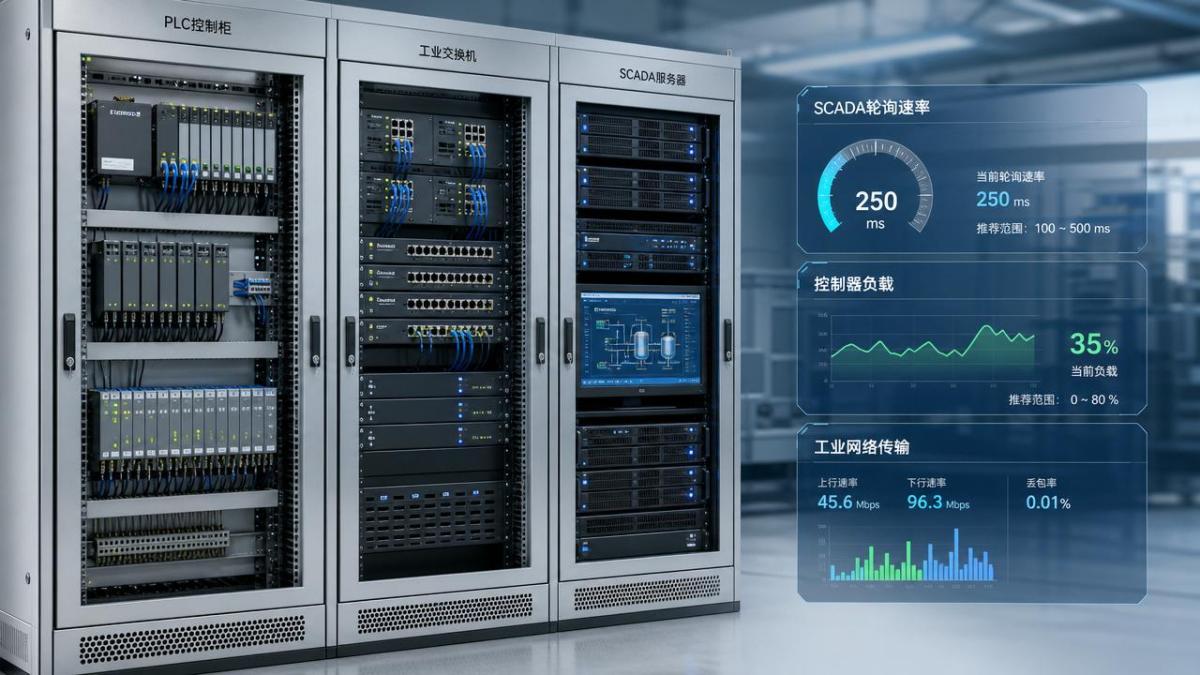
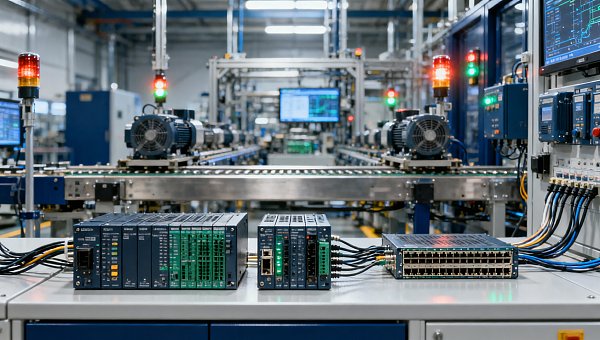
A SCADA polling rate limit defines how frequently the supervisory layer requests values, statuses, alarms, counters, and diagnostic data from PLCs, RTUs, drives, gateways, or smart instruments. For after-sales maintenance personnel, this setting influences how quickly faults appear on screen, how responsive trends look, and how much load is pushed into controllers and industrial networks.
The common mistake is to treat faster polling as a universal upgrade. It is not. A lower polling interval can improve situational awareness for critical signals, but only if the entire chain can sustain the traffic: controller scan time, communication protocol overhead, gateway buffering, switch performance, historian write rate, and HMI rendering speed.
In mixed environments across manufacturing, utilities, warehousing, process plants, and high-value hard-tech systems, the SCADA polling rate limit becomes a balancing parameter. It is not just an HMI setting. It is a system-wide engineering choice that affects diagnostics, maintenance response, and lifecycle reliability.
- If polling is too slow, operators may miss short-duration faults, intermittent trips, or unstable process transitions.
- If polling is too fast, controllers may spend more time serving requests than executing control logic or communicating with peer devices.
- If polling is inconsistent, maintenance teams may misread event order, leading to incorrect root-cause analysis and unnecessary parts replacement.
When does faster polling start hurting the system?
The SCADA polling rate limit becomes dangerous when it outruns the practical capacity of field assets. This usually happens in retrofit projects, multi-vendor lines, or remote sites where maintenance teams inherit systems built over several expansion phases. The issue is rarely one single bottleneck. More often, several small inefficiencies combine into a measurable reliability problem.
Controller load rises before anyone notices
A PLC can appear healthy while communication servicing quietly consumes CPU time. Field engineers may see no obvious alarm, yet scan time increases, noncritical tasks lag, and event handling becomes less deterministic. In packaging, motion, robotic cells, and utility skids, this can create nuisance trips that look mechanical but are actually data timing issues.
Network congestion is not always obvious
On lightly loaded Ethernet, aggressive polling may seem harmless during commissioning. Under full production, however, the same configuration competes with drive traffic, vision systems, MES uploads, VPN access, and historian replication. A SCADA polling rate limit that looked acceptable on a test bench may become unstable on a live plant network.
Timestamps become less trustworthy
Polling is not the same as event capture. If a tag changes state several times between poll cycles, the SCADA layer may show only the final value. Maintenance teams then reconstruct incidents from incomplete data. Faster polling reduces this risk only to a point. Beyond that point, overloaded communications can introduce delay, queue buildup, or dropped transactions that make time-sequencing worse, not better.
Historian and HMI performance can degrade
Even if PLCs and switches survive the load, the upper layers may not. Large tag sets polled at high frequency generate more trend points, more alarm evaluations, and more screen refresh activity. The result can be laggy graphics, delayed alarm pages, inflated storage consumption, and harder troubleshooting during service visits.
The table below helps maintenance teams identify where a SCADA polling rate limit usually breaks first and what symptoms tend to appear in the field.
The practical takeaway is simple: a SCADA polling rate limit should be validated against the weakest layer in the chain, not the fastest one. Maintenance success depends on stable visibility, not on the smallest possible number in a configuration screen.
Which signals deserve fast polling, and which do not?
Not every tag should be treated equally. One of the most effective ways to optimize a SCADA polling rate limit is to classify data by operational importance. This is especially useful for after-sales teams supporting diverse sites where legacy PLCs, new edge devices, and third-party skids share the same supervisory platform.
High-priority tags
- Safety-related status indications that are permitted to be monitored at SCADA level, while respecting the fact that SCADA is not a safety function.
- Fast-changing process variables tied to trips, quality loss, or equipment protection.
- Critical maintenance diagnostics such as drive faults, motor overloads, vibration alarms, and communication health bits.
Medium-priority tags
- Operator-facing process values that support trending but do not require sub-second updates.
- Batch status, production counts, tank levels, energy values, or ambient condition readings.
Low-priority tags
- Static configuration values, equipment nameplate data, maintenance notes, and infrequently changing settings.
- Diagnostic counters that support periodic review rather than real-time action.
A tag-priority model reduces wasted traffic and makes fault detection more meaningful. It also aligns with TSV’s engineering-first approach: parameters should be selected by measurable operational need, not by generic claims of “more real-time” performance.
The next table offers a practical tag grouping method for setting a SCADA polling rate limit in multi-industry maintenance environments.
This structure works well across robotics cells, utility plants, process skids, warehouse automation, and aerospace-related production support systems. It is scalable, easy to document, and easier to defend during audits or handovers.
How can maintenance teams diagnose a bad SCADA polling rate limit before failures escalate?
After-sales teams rarely receive perfect design documentation. They often arrive after symptoms appear: random communication alarms, unexplained PLC slowdowns, HMI freezing, or customers reporting that “the system feels delayed.” In these cases, a structured diagnostic workflow is more useful than guessing.
- Record controller scan time, communication task utilization, and connection counts before changing anything. A baseline prevents misleading comparisons later.
- Review tag counts per device, not just total tag counts. A single overloaded PLC often causes more trouble than a high overall system count distributed across many nodes.
- Check whether fast polling is being applied to tags that do not support maintenance decisions. Removing unnecessary high-frequency reads often solves the problem faster than hardware replacement.
- Inspect network performance during real production load. Maintenance windows can hide bottlenecks that occur only when drives, vision systems, and historians are active together.
- Compare SCADA timestamps with controller event logs where available. If event order differs, the SCADA polling rate limit may be creating a false incident narrative.
Warning signs usually appear in clusters. If you see rising scan time, delayed alarm pages, and occasional comms retries together, the supervisory layer is likely polling more aggressively than the system can sustain. Replacing field devices before validating the polling strategy can waste budget and extend downtime.
SCADA polling rate limit vs event-driven data: which approach is better?
For many maintenance organizations, this is the real decision point. Polling is simple and widely supported. Event-driven data collection can be more efficient, but it depends on platform capability, protocol features, and disciplined engineering. The best answer is often a hybrid architecture rather than a single method.
Where polling remains useful
Polling is reliable for slow or moderate signals, cross-vendor environments, and legacy equipment where exception reporting is limited. It is also easier to standardize for support teams responsible for many installed bases with different ages and software revisions.
Where event-driven collection adds value
For alarms, state changes, and rapid diagnostics, event-based transfer reduces unnecessary traffic while improving sequence accuracy. This matters in applications where short disturbances trigger costly maintenance interventions, such as servo faults, intermittent sensor dropout, or gateway failover events.
A practical rule is to avoid using a low SCADA polling rate limit to imitate true event capture. If the platform supports buffered events, alarm journaling at source, or edge aggregation, those tools often deliver better evidence with less communication strain.
What should buyers and service managers evaluate before changing the polling strategy?
Maintenance teams do not always control procurement, but they often suffer the consequences of rushed choices. When specifying upgrades, service contracts, or retrofit scopes, ask for measurable parameters rather than vague promises of faster visibility. This is where TSV’s data-driven filtering philosophy is especially useful: engineering decisions should be anchored in tested communication limits, controller overhead, and fault-capture requirements.
- Request the expected tag count per controller, per protocol, and per polling group rather than only a total system tag count.
- Ask whether alarm and event capture can occur at source, at edge gateway level, or only at SCADA server level.
- Verify network topology, managed switch diagnostics, VLAN separation, and remote access policies before assuming communications can be accelerated safely.
- Confirm historian compression, deadband handling, storage retention, and backup behavior, because data overload often shifts upstream.
- Define service objectives clearly: faster alarm visibility, better root-cause evidence, fewer nuisance trips, or lower bandwidth use. These goals do not always require the same SCADA polling rate limit.
In regulated or quality-sensitive environments, documenting the rationale for polling changes also supports validation and change control. While the exact compliance framework varies by sector, disciplined records help avoid disputes over whether a communication adjustment affected process integrity or maintenance traceability.
Common misconceptions and FAQ about SCADA polling rate limit
Does a faster SCADA polling rate limit always improve troubleshooting?
No. It improves troubleshooting only when the source device, network, and data infrastructure can support the added load without timing distortion. Otherwise, you may collect more samples but less trustworthy evidence.
Can polling solve missed short-duration faults by itself?
Not always. Very brief faults are better captured by controller-side event logs, alarm latching, sequence-of-events recording, or edge buffering. Polling alone may still miss changes that occur between requests.
What is the biggest field mistake when changing polling settings?
Applying the same aggressive polling interval to all tags. This wastes bandwidth and CPU time on low-value data while giving teams a false sense of diagnostic improvement.
Should older installations use a conservative SCADA polling rate limit?
Usually yes, unless testing proves otherwise. Legacy PLCs, serial gateways, and mixed-protocol networks often have tighter margins. Incremental optimization with measured validation is safer than blanket acceleration.
Why choose us when you need data-driven guidance on polling, diagnostics, and retrofit decisions?
TechStat Vanguard approaches the SCADA polling rate limit the same way we approach hard-tech benchmarking across automation, sensors, edge systems, and precision industrial infrastructure: parameters first, marketing claims last. For maintenance and service teams, that means practical guidance rooted in system behavior, not generic advice copied from software brochures.
You can contact TSV for support on parameter confirmation, tag-priority strategy, polling group design, retrofit risk review, remote-site communication constraints, diagnostic data quality assessment, and vendor comparison during upgrade planning. If your challenge involves controller load, historian performance, delivery planning for a site modification, or the need to align service decisions with real engineering limits, we can help structure the evaluation around evidence that matters.
For teams preparing quotations, service proposals, or customer-facing improvement plans, we can also help translate technical findings into a clearer scope: what should be polled faster, what should be event-driven, what should remain slow, and what infrastructure should be verified before any change is approved. That is how better data starts supporting uptime instead of quietly undermining it.
Search News
Hot Articles
- Carbon Fiber StructuresHow to Specify Aerospace Carbon Fiber Assemblies for Lightweight, Load-Bearing PartsJul 11, 2026
- Machine VisionXiaomi, Alibaba DAMO Academy Drive Open-Source Robotics Model Ecosystem, Lowering Algorithm Development Barriers for Overseas SMEs Adopting Chinese Robotics SolutionsMar 30, 2026
- Cobots & ArmsShanxi 'AI+' Conference Showcases Embodied Intelligence with Multinational Buyer Engagement: Key Industry ImplicationsMar 30, 2026
Popular Tags
Recommended News
 Jul 11, 2026How to Specify Aerospace Carbon Fiber Assemblies for Lightweight, Load-Bearing PartsAerospace carbon fiber assemblies: learn how to specify laminate design, load data, joining methods, and inspection controls for lighter, reliable load-bearing aerospace parts.Elena Rostova (UAV Systems Researcher)
 Mar 30, 2026Xiaomi, Alibaba DAMO Academy Drive Open-Source Robotics Model Ecosystem, Lowering Algorithm Development Barriers for Overseas SMEs Adopting Chinese Robotics SolutionsXiaomi & Alibaba DAMO Academy's open-source robotics models lower algorithm barriers for global SMEs. Boost efficiency in manufacturing, logistics & smart retail with ROS 2 compatible solutions.TSV Data Lab
 Mar 30, 2026Shanxi 'AI+' Conference Showcases Embodied Intelligence with Multinational Buyer Engagement: Key Industry ImplicationsShanxi 'AI+' Conference highlights embodied intelligence with Tesla, Ubtech & Jiantao showcasing multimodal robotics. 40+ global buyers validated tech on-site, creating new B2B channels for industrial automation & AI solutions.Chen Wei (Automation Lead Engineer)
 Mar 30, 2026Zhongguancun Unveils 6G Integrated Sensing-Computing-Intelligence Platform to Empower Embodied Robots for Global Industrial ApplicationsZhongguancun's new 6G platform revolutionizes industrial robotics with <10ms latency, empowering global automotive, logistics & port automation. Discover how this tech boosts China's smart manufacturing exports.TSV Data Lab
 Mar 30, 2026Mech-Mind Tianjin Embodied Intelligence R&D and Production Base Goes Live, Cutting Delivery Time by 20%–30% for Global Customized AMR+Vision SolutionsMech-Mind's Tianjin AMR+Vision production base cuts delivery time by 20%-30% for欧美 & Latin American markets. Discover how this PLd-certified facility accelerates customized robotics solutions for smart manufacturing and logistics.Chen Wei (Automation Lead Engineer)
 Mar 30, 2026Boao Forum Reveals 'Co-evolution of Big and Small Brains' Trend in Humanoid Robots, China's Embodied Intelligence Accelerates Adaptation to Overseas Manufacturing Service ScenariosDiscover how China's humanoid robots, featuring 'Co-evolution of Big and Small Brains,' are revolutionizing global manufacturing. Learn about Embodied Tian Gong 3.0's ISO compliance and overseas deployment at Boao Forum 2026.Chen Wei (Automation Lead Engineer)
 Mar 30, 2026China Railway Industrial Secures Patent for Embodied Robotics in Material Handling, Boosting High-Precision Delivery Capabilities for Overseas Infrastructure and Manufacturing ProjectsChina Railway Industrial's new patent for embodied robotics in material handling boosts high-precision delivery for global infrastructure & manufacturing. Discover how this innovation enhances logistics accuracy in automotive, rail transit & EPC projects.Chen Wei (Automation Lead Engineer)
 Sep 29, 2026ISO 9283 Repeatability: How to Evaluate Cobot Positioning PerformanceISO 9283 cobot repeatability explained: learn how payload, reach, approach direction, and test conditions affect positioning performance and cell capability.Chen Wei (Automation Lead Engineer)
 Sep 29, 2026How Do You Verify Servo Motor Torque Under Continuous Load?How do I verify servo motor torque under continuous load? Learn RMS torque checks, torque-speed limits, thermal derating, and real-machine testing.Chen Wei (Automation Lead Engineer)
 Sep 28, 2026Spindle Runout Measurement in Germany: DIN Standards, Methods, and Acceptance LimitsSpindle runout measurement Germany: explore DIN standards, proven methods, acceptance limits, and audit-ready practices for reliable machining quality.Dr. Marcus Vance
 Sep 27, 2026How to Select Wall-Mount Edge Devices for Space-Constrained Factory NetworksWall mount edge devices for space-constrained factories: evaluate workload, thermal design, power resilience, cable access, and network reliability for smarter deployments.TSV Data Lab
 Sep 26, 2026Machining Tolerance Analysis: How to Set Limits That Meet Function and Cost TargetsMachining tolerance analysis: learn how to set functional limits, control tolerance stacks, reduce inspection risk, and balance precision with production cost.Dr. Marcus Vance
 Sep 25, 2026How to Evaluate an Industrial Infrastructure Data Platform for Multi-Site OperationsIndustrial infrastructure data platform evaluation guide for multi-site operations: compare data quality, edge resilience, interoperability, governance, and scalable proof-of-value criteria.Victor Lin (Chief Software Architect)
 Sep 24, 2026How to Select Machine Vision Optics for Accurate Inspection at Different Working DistancesMachine vision optics selection guide for accurate inspection at every working distance. Compare FOV, pixel scale, DOF, distortion, lighting, and telecentric options.TSV Data Lab
 Sep 23, 2026How to Evaluate a Machine Vision System Integrator for High-Speed Inspection LinesChoose a machine vision system integrator with proven expertise in high-speed inspection, reliable reject timing, robust optics, and measurable acceptance criteria.TSV Data Lab
 Sep 29, 2026How MES and OEE work together to identify production lossesMES and OEE work together to uncover hidden production losses, connect downtime, speed, and quality data, and drive smarter shop-floor improvements.Victor Lin (Chief Software Architect)
 Sep 28, 2026When is a SCADA API the right choice for connecting plant systems?SCADA API guide: learn when governed plant data integration improves traceability, security, and scalability—without compromising real-time control.Victor Lin (Chief Software Architect)
 Sep 27, 2026How SCADA data integration improves traceability across production linesSCADA data integration connects production-line data to improve traceability, accelerate quality investigations, and strengthen safety decisions.Victor Lin (Chief Software Architect)
 Sep 26, 2026What to define before starting SCADA integration planningSCADA integration planning starts with clear scope, control boundaries, data models, cybersecurity, and testing. Discover the definitions that reduce risk and costly rework.Victor Lin (Chief Software Architect)
 Sep 25, 2026How a smart factory with Industrial IoT reduces production blind spotsDiscover how a smart factory with Industrial IoT turns real-time machine, quality, and workflow data into actionable insights that reduce production blind spots and delivery risks.Victor Lin (Chief Software Architect)
 Sep 24, 2026When does Industrial IoT make smart manufacturing easier to scale?Smart manufacturing Industrial IoT scales when trusted data, interoperable systems, and secure workflows turn connected assets into measurable gains.TSV Data Lab
 Sep 23, 2026What drives ultra-precision machining cost at 1-micron tolerance?Ultra precision machining cost per part at 1 micron tolerance depends on process, material, metrology, and yield. Learn how to compare quotes confidently.Dr. Marcus Vance
 Sep 22, 2026Drone Engine-T550CC Applications: Build the UAV Power System Around the MissionAn application guide for Drone Engine-T550CC integration, covering payload planning, airframe matching, cooling, fuel, vibration, test procedures, documentation, and service preparation.Elena Rostova (UAV Systems Researcher)
 Sep 22, 2026How to Evaluate Industrial Edge Computing Vendors for Factory DeploymentIndustrial edge computing vendor evaluation guide for factories: compare latency, protocol fit, reliability, security, and lifecycle support before deployment.TSV Data Lab