
RTOS Software Vendor Selection: What to Compare for Industrial Control Projects
Publication Date
author
RTOS Software Vendor Selection: What to Compare for Industrial Control Projects
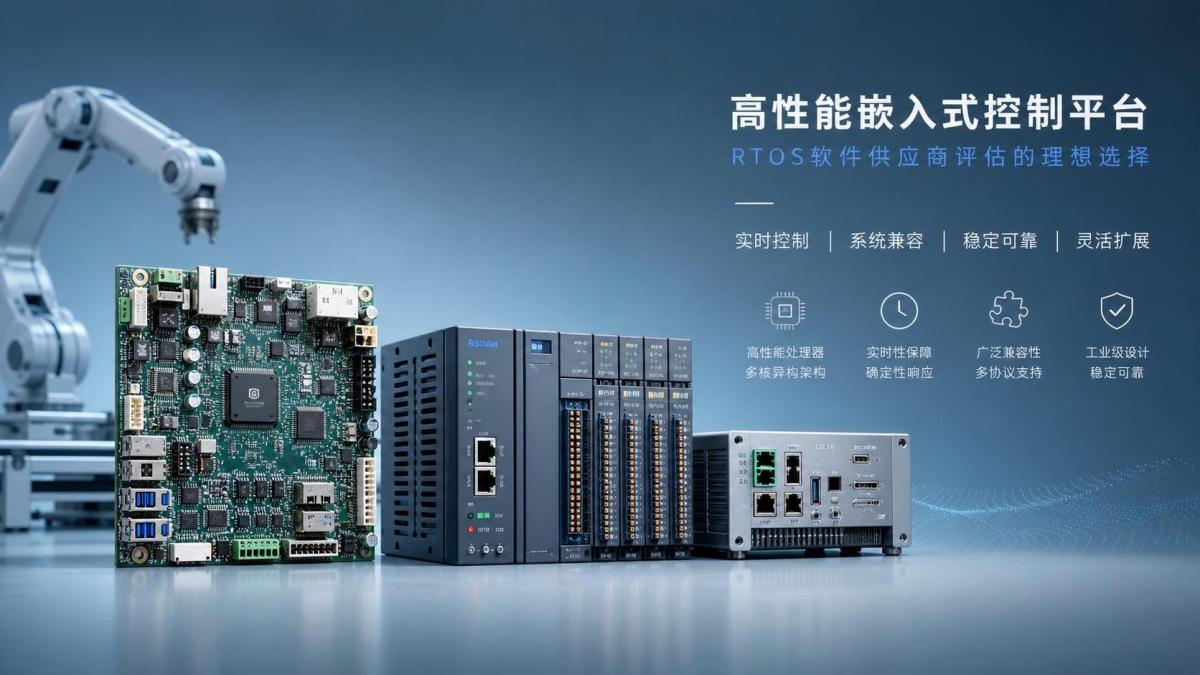
Choosing an rtos software vendor for industrial control projects is not a branding exercise.
It is a decision about timing behavior, failure containment, maintainability, and supplier accountability.
That matters even more in motion control, PLC platforms, edge gateways, robotics cells, and safety-related machine subsystems.
In practice, many teams still compare vendors through brochures, feature grids, and demo performance.
The better path is to compare measurable engineering evidence across the full product lifecycle.
For TechStat Vanguard, that means looking past claims and back to parameters, tolerances, and support realities.
A capable rtos software vendor should prove deterministic execution, document architectural limits, and support long deployment horizons.
The sections below focus on what to compare before your control stack becomes expensive to unwind.
Start With Determinism, Not Feature Count
The first question for any rtos software vendor is simple: how predictable is the kernel under real load?
Industrial control systems do not fail because a dashboard looks weak.
They fail when interrupt latency spikes, scheduling jitter grows, or shared resources block critical tasks.
Ask vendors for benchmark data under conditions close to your workload.
Synthetic idle figures have limited value for servo loops, fieldbus stacks, or machine vision triggers.
Compare at least these timing metrics:
- Worst-case interrupt latency
- Context switch time
- Task wake-up jitter
- Timer resolution and drift behavior
- Priority inversion handling
- Memory allocation determinism
More importantly, ask how those numbers were captured.
A strong rtos software vendor will explain processor type, interrupt mix, compiler settings, and background traffic.
If the test method is vague, the timing claim is weak.
Check Architecture Fit for the Control System You Actually Build
Not every real-time operating system fits every industrial design.
Some kernels are excellent for deeply embedded controllers.
Others are better for connected edge devices with mixed workloads.
This is where rtos software vendor selection often becomes more nuanced.
Look at the scheduler model, memory protection approach, IPC mechanisms, SMP support, and user-space isolation options.
If your project must combine control tasks, networking, diagnostics, and remote updates, partitioning matters.
If your device is a small motor controller, footprint and boot determinism may matter more.
Use a fit check around these practical points:
- Control loop frequency and allowable jitter
- Networking stack load, including Ethernet, TSN, CAN, or fieldbus traffic
- Need for process isolation, fault containment, or secure boot
- CPU architecture roadmap across current and future hardware
- Required middleware, drivers, and protocol certification paths
A good rtos software vendor will map product architecture to your deployment profile without hiding tradeoffs.
Certification Readiness Is a Supply Risk Issue
For industrial control projects, compliance rarely arrives at the end as a paperwork step.
It shapes requirements, design reviews, tool qualification, and evidence collection from the start.
That is why certification readiness should be central in rtos software vendor selection.
Depending on the application, you may need support for IEC 61508, ISO 13849, IEC 62304, DO-178C, or sector-specific standards.
Even when formal certification is not required, structured evidence still reduces audit friction.
Ask the vendor for concrete artifacts, not broad assurances:
- Safety manuals and usage constraints
- Traceability of requirements, defects, and fixes
- Toolchain qualification support
- Change impact documentation between releases
- Third-party assessment reports or certification kits
The stronger rtos software vendor is usually the one that makes scope boundaries explicit.
That clarity prevents assumptions from becoming certification delays later.
Toolchain and Debug Visibility Often Decide Project Speed
Teams often underestimate how much delivery speed depends on debugging depth and integration maturity.
A real-time kernel can benchmark well and still slow the program if observability is poor.
During rtos software vendor evaluation, inspect the development workflow end to end.
That includes compiler support, IDE options, trace tools, crash analysis, profiling, CI integration, and simulation coverage.
Recent changes in distributed engineering teams make this even more important.
Remote debugging, reproducible builds, and automation-friendly licensing are no longer secondary concerns.
Compare toolchain quality through working questions:
A mature rtos software vendor reduces diagnosis time when field behavior stops matching lab behavior.
Source Access, Patch Policy, and Support Depth Matter More Over Time
Industrial control programs live longer than many software procurement plans assume.
Machines may stay active for ten to fifteen years.
That makes vendor durability a technical variable, not just a commercial one.
When comparing an rtos software vendor, review what happens after the initial integration milestone.
Can your team inspect kernel code, diagnose faults independently, and maintain a frozen branch when hardware changes slowly?
How are CVEs handled, and how fast are security advisories published?
What is the patch backport policy for older supported releases?
Look closely at these lifecycle controls:
- Full or partial source availability
- Escrow or continuity options
- LTS release duration
- Security response workflow
- Regional support coverage and escalation path
- Ability to support legacy BSP branches
This is often where a lower-priced rtos software vendor becomes more expensive over the system lifetime.
Compare Commercial Terms Through Engineering Consequences
Licensing should be reviewed with the same discipline as latency metrics.
Per-seat, per-device, royalty, and support-linked license models can all affect scaling decisions.
The key is to connect contract structure to deployment behavior.
For example, a restrictive BSP update policy can delay board migration.
A license tied to build nodes can complicate factory software replication.
An unclear indemnity clause can shift IP risk back to the integrator.
During rtos software vendor comparison, review:
- Royalty exposure at projected shipment volumes
- Upgrade rights across major kernel releases
- BSP ownership and maintenance responsibility
- SLA response terms for production incidents
- Export, security, and regional compliance constraints
Clear commercial structure supports cleaner engineering planning.
Build a Weighted Evaluation Model Before Final Selection
The final choice should not come from a single demo or one persuasive workshop.
A better method is a weighted model tied to project risk.
This keeps the rtos software vendor decision aligned with real operating constraints.
A practical scoring framework might include:
- 30% deterministic performance and timing evidence
- 20% architecture fit and middleware compatibility
- 15% certification readiness and documentation quality
- 15% tooling, traceability, and CI integration
- 10% support depth and lifecycle policy
- 10% commercial structure and legal clarity
Run a short proof of concept with realistic task loads, driver interactions, and fault injection.
Then compare measured outputs against vendor promises.
That step usually reveals the difference between market positioning and engineering readiness.
In industrial control, the best rtos software vendor is rarely the one with the loudest message.
It is the one that can show deterministic data, controlled lifecycle processes, and credible support under pressure.
That approach fits the TSV view of supplier evaluation: parameters first, claims second.
If your next selection round is approaching, define the timing thresholds, evidence requests, and lifecycle checkpoints before vendor meetings begin.
Search News
Hot Articles
- Carbon Fiber StructuresHow to Specify Aerospace Carbon Fiber Assemblies for Lightweight, Load-Bearing PartsJul 11, 2026
- Machine VisionXiaomi, Alibaba DAMO Academy Drive Open-Source Robotics Model Ecosystem, Lowering Algorithm Development Barriers for Overseas SMEs Adopting Chinese Robotics SolutionsMar 30, 2026
- Cobots & ArmsShanxi 'AI+' Conference Showcases Embodied Intelligence with Multinational Buyer Engagement: Key Industry ImplicationsMar 30, 2026
Popular Tags
Recommended News
 Jul 11, 2026How to Specify Aerospace Carbon Fiber Assemblies for Lightweight, Load-Bearing PartsAerospace carbon fiber assemblies: learn how to specify laminate design, load data, joining methods, and inspection controls for lighter, reliable load-bearing aerospace parts.Elena Rostova (UAV Systems Researcher)
 Mar 30, 2026Xiaomi, Alibaba DAMO Academy Drive Open-Source Robotics Model Ecosystem, Lowering Algorithm Development Barriers for Overseas SMEs Adopting Chinese Robotics SolutionsXiaomi & Alibaba DAMO Academy's open-source robotics models lower algorithm barriers for global SMEs. Boost efficiency in manufacturing, logistics & smart retail with ROS 2 compatible solutions.TSV Data Lab
 Mar 30, 2026Shanxi 'AI+' Conference Showcases Embodied Intelligence with Multinational Buyer Engagement: Key Industry ImplicationsShanxi 'AI+' Conference highlights embodied intelligence with Tesla, Ubtech & Jiantao showcasing multimodal robotics. 40+ global buyers validated tech on-site, creating new B2B channels for industrial automation & AI solutions.Chen Wei (Automation Lead Engineer)
 Mar 30, 2026Zhongguancun Unveils 6G Integrated Sensing-Computing-Intelligence Platform to Empower Embodied Robots for Global Industrial ApplicationsZhongguancun's new 6G platform revolutionizes industrial robotics with <10ms latency, empowering global automotive, logistics & port automation. Discover how this tech boosts China's smart manufacturing exports.TSV Data Lab
 Mar 30, 2026Mech-Mind Tianjin Embodied Intelligence R&D and Production Base Goes Live, Cutting Delivery Time by 20%–30% for Global Customized AMR+Vision SolutionsMech-Mind's Tianjin AMR+Vision production base cuts delivery time by 20%-30% for欧美 & Latin American markets. Discover how this PLd-certified facility accelerates customized robotics solutions for smart manufacturing and logistics.Chen Wei (Automation Lead Engineer)
 Mar 30, 2026Boao Forum Reveals 'Co-evolution of Big and Small Brains' Trend in Humanoid Robots, China's Embodied Intelligence Accelerates Adaptation to Overseas Manufacturing Service ScenariosDiscover how China's humanoid robots, featuring 'Co-evolution of Big and Small Brains,' are revolutionizing global manufacturing. Learn about Embodied Tian Gong 3.0's ISO compliance and overseas deployment at Boao Forum 2026.Chen Wei (Automation Lead Engineer)
 Mar 30, 2026China Railway Industrial Secures Patent for Embodied Robotics in Material Handling, Boosting High-Precision Delivery Capabilities for Overseas Infrastructure and Manufacturing ProjectsChina Railway Industrial's new patent for embodied robotics in material handling boosts high-precision delivery for global infrastructure & manufacturing. Discover how this innovation enhances logistics accuracy in automotive, rail transit & EPC projects.Chen Wei (Automation Lead Engineer)
 Oct 13, 2026Smart Cameras vs. PC-Based Machine Vision: Which Fits High-Speed Inspection?This industrial product comparison for machine vision weighs smart cameras vs. PC-based systems on latency, throughput, and cost. Discover your best fit for high-speed inspection.TSV Data Lab
 Oct 12, 2026How to Verify RoHS Compliance in Industrial Sensing Systems Before DeploymentRoHS compliant sensing systems: learn how to verify materials, supplier declarations, testing, and configuration controls before industrial deployment.TSV Data Lab
 Oct 11, 2026How Procurement-Oriented Content Taxonomy Improves B2B Buying JourneysProcurement-oriented content taxonomy streamlines B2B buying journeys with clearer evidence, supplier comparisons, risk visibility, and faster approvals.TSV Data Lab
 Oct 10, 2026How to Select a Machine Performance Monitoring Platform for OEE and Downtime ReductionMachine performance monitoring platform selection guide: validate machine states, OEE data, downtime reasons, integrations, and scalability to reduce losses with confidence.TSV Data Lab
 Oct 08, 2026How to Machine Inconel 625 Blades Without Heat Cracks or Edge ChippingInconel 625 blade machining guide: prevent heat cracks, edge chipping, chatter, and work hardening with proven tooling, cooling, fixturing, and inspection strategies.Dr. Marcus Vance
 Oct 07, 2026How to Evaluate an HMI Panel Distributor for Industrial Automation ProjectsHMI panel distributor evaluation guide: verify technical compatibility, traceability, supply reliability, lifecycle support, and total cost for automation projects.Victor Lin (Chief Software Architect)
 Oct 06, 2026Navigation Fault Tolerance Standards for AMRs: What Safety Teams Must VerifyNavigation fault tolerance standards: learn what AMR safety teams must verify, from localization loss and sensor faults to stopping distance, safe restart, and site-specific validation.Chen Wei (Automation Lead Engineer)
 Oct 05, 2026Calculating Edge Computing Total Cost of Ownership Across Distributed SitesEdge computing ownership cost explained: calculate deployment, energy, connectivity, security, remote support, and refresh costs across distributed sites.TSV Data Lab
 Oct 04, 2026CAD/CAM Benchmarking in the GCC: What Manufacturers Should Ask a ConsultantCAD CAM benchmark consultant GCC guide: learn the key questions manufacturers should ask to validate post-processors, workflows, machine performance, and production risk.Victor Lin (Chief Software Architect)
 Oct 03, 2026Selecting Automotive Radar Sensor Modules for ADAS Range, Resolution, and IntegrationAutomotive radar sensor module selection guide for ADAS: compare range, resolution, field of view, latency, and integration to build safer, reliable vehicle systems.TSV Data Lab
 Oct 02, 2026How to Qualify Machined Parts Suppliers for Hard Tech ProgramsHard tech supply chain machined parts demand rigorous supplier qualification. Learn how to assess capability, traceability, quality controls, and delivery resilience.Dr. Marcus Vance
 Oct 01, 2026How to Select an Outdoor Security Radar Sensor for Perimeter Detection?Outdoor security radar sensor selection guide: compare range, accuracy, false-alarm control, integration, and field testing for reliable perimeter detection.TSV Data Lab
 Sep 30, 2026How to Evaluate Solid-State LiDAR Hardware for Outdoor Autonomous VehiclesSolid state LiDAR hardware evaluation guide for outdoor autonomous vehicles—compare range, point-cloud quality, environmental resilience, integration, and safety.TSV Data Lab
 Sep 29, 2026ISO 9283 Repeatability: How to Evaluate Cobot Positioning PerformanceISO 9283 cobot repeatability explained: learn how payload, reach, approach direction, and test conditions affect positioning performance and cell capability.Chen Wei (Automation Lead Engineer)
 Oct 13, 2026How to keep an industrial robotic integration project on scheduleIndustrial robotic integration project management: keep automation on schedule with proven controls for interfaces, suppliers, FAT, commissioning, and change risk.Victor Lin (Chief Software Architect)
 Oct 12, 2026What should be included in predictive maintenance pricing for factories?Predictive maintenance pricing for factories: compare sensors, software, integration, support, and total cost to secure measurable uptime gains and avoid hidden expenses.TSV Data Lab
 Oct 11, 2026How payload and reach change the cost of an industrial robotCost of industrial robot systems depends heavily on payload and reach. Learn how sizing, torque, tooling, safety, and lifecycle factors shape smarter automation investments.Chen Wei (Automation Lead Engineer)























