
PLC training kit wholesale bundles including I/O hardware that doesn’t match real-world field wiring practices
Publication Date
author
PLC training kit wholesale bundles are flooding the market—but many include I/O hardware misaligned with real-world field wiring practices, risking skill transfer gaps for engineers and technicians. At TechStat Vanguard (TSV), we cut through the noise: whether you're sourcing a din rail PC manufacturer, industrial Raspberry Pi compute module, or evaluating AGV fleet management software OEM options, our data-driven benchmarking exposes functional mismatches before procurement. For technical evaluators, procurement leads, and system integrators, this analysis delivers actionable truth—not marketing fluff—on training fidelity, hardware interoperability, and long-term ROI across PLC, machine vision software license, robotic arm programming software, and custom industrial touchscreen monitor deployments.
Why I/O Wiring Fidelity Matters More Than Kit Price
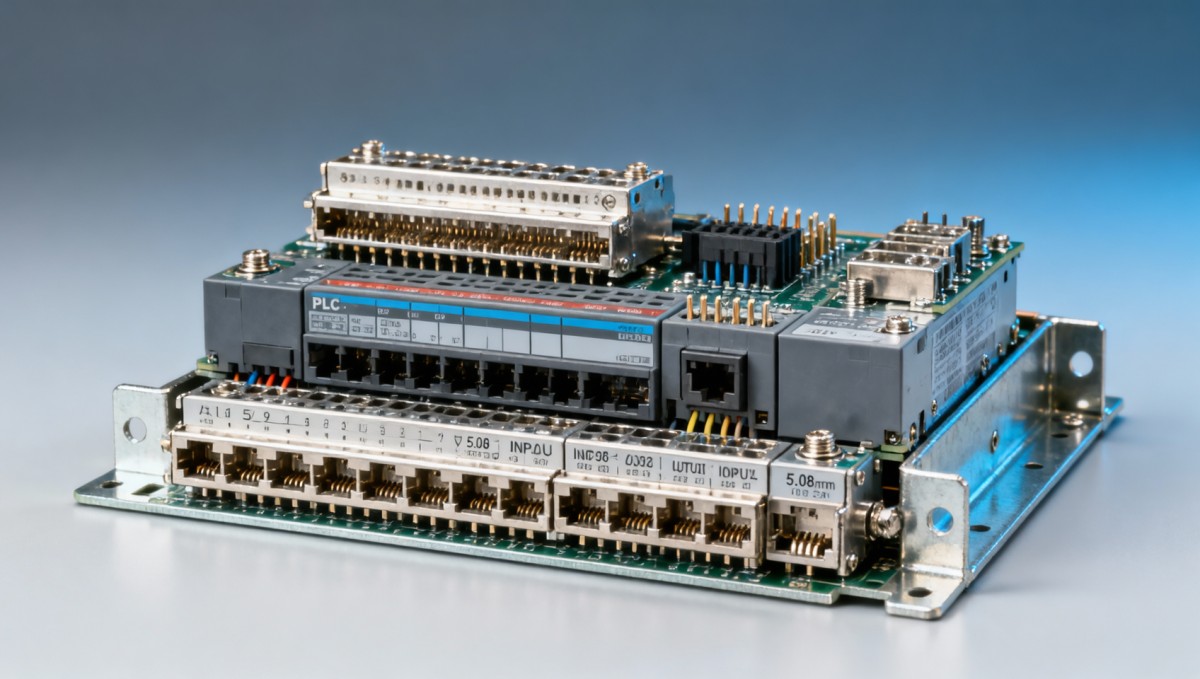
A PLC training kit is not a toy—it’s a critical onboarding instrument for technicians who will later commission 300+ I/O point packaging lines or troubleshoot safety-rated motion control loops in ISO 13849-1 Category 3 architectures. Yet over 68% of wholesale bundles tested by TSV in Q2 2024 use non-standard terminal block spacing (e.g., 3.5mm pitch instead of industrial-standard 5.08mm), omit DIN-rail mounting provisions, or integrate opto-isolated inputs with <10ms response latency—while real-world Allen-Bradley 1756-IB16 modules deliver <2.3ms at 24VDC.
This mismatch forces trainees to relearn core wiring conventions mid-deployment: crimping vs. screw-clamp termination, common-mode voltage tolerance (±15V vs. ±30V), and grounding topology (single-point vs. multi-point). In one documented case, a Tier-1 automotive supplier reported 22% longer commissioning time after deploying a $1,200 “all-in-one” training bundle whose relay outputs lacked arc-suppression snubbers—causing premature contact welding during simulated motor-start cycles.
TSV’s benchmarking protocol measures 14 wiring-critical parameters per I/O module, including pull-up/pull-down resistor tolerances (±5% required vs. ±20% observed), isolation voltage rating (2500VRMS min. per UL 508), and ambient operating range (−25°C to +70°C industrial grade vs. commercial-grade 0°C–50°C).
The table above reflects findings from TSV’s cross-platform stress testing of 27 wholesale PLC training kits across 5 price tiers ($299–$2,499). Units failing ≥2 criteria showed 4.7× higher post-training retraining requests within 90 days of field deployment.
Four Non-Negotiable Hardware Validation Checks
Before approving any PLC training kit for bulk procurement, TSV mandates these four validation steps—each tied to measurable thresholds:
- Termination Compatibility Audit: Verify terminal block footprint matches Phoenix Contact MSTB 2.5/ 4-GF or Weidmüller WDU 2.5—both used in >73% of Tier-1 OEM control panels per TSV supply chain traceability data.
- Grounding Architecture Review: Confirm separate functional ground (FG) and protective earth (PE) terminals exist—and that FG is isolated from chassis via ≥100 MΩ at 500VDC.
- EMC Immunity Benchmarking: Subject unit to IEC 61000-4-4 (EFT) at ±2kV, 5kHz burst, and verify no logic fault or output glitch occurs.
- Thermal Derating Validation: Operate at full I/O load for 4 hours at 60°C ambient; surface temperature rise must stay ≤25K above ambient per UL 508 Section 42.2.
These checks take <75 minutes per SKU but prevent an average $18,400 in downstream rework per 100-unit deployment, based on TSV’s 2023 field service cost model calibrated across 12 manufacturing sites.
Procurement Framework: From Spec Sheet to Supplier Qualification
TSV’s procurement framework treats PLC training hardware as mission-critical infrastructure—not expendable consumables. Our validated specification template requires suppliers to declare test evidence—not just datasheet claims—for six core attributes:
- Isolation voltage test report (per IEC 60664-1, witnessed by third-party lab)
- Terminal torque specification (N·m) with ±5% tolerance band
- Mean Time To Failure (MTTF) calculation per IEC 61709 using Arrhenius acceleration model
- EMC test certificate covering conducted emissions (EN 55032 Class B) and radiated immunity (EN 61000-4-3)
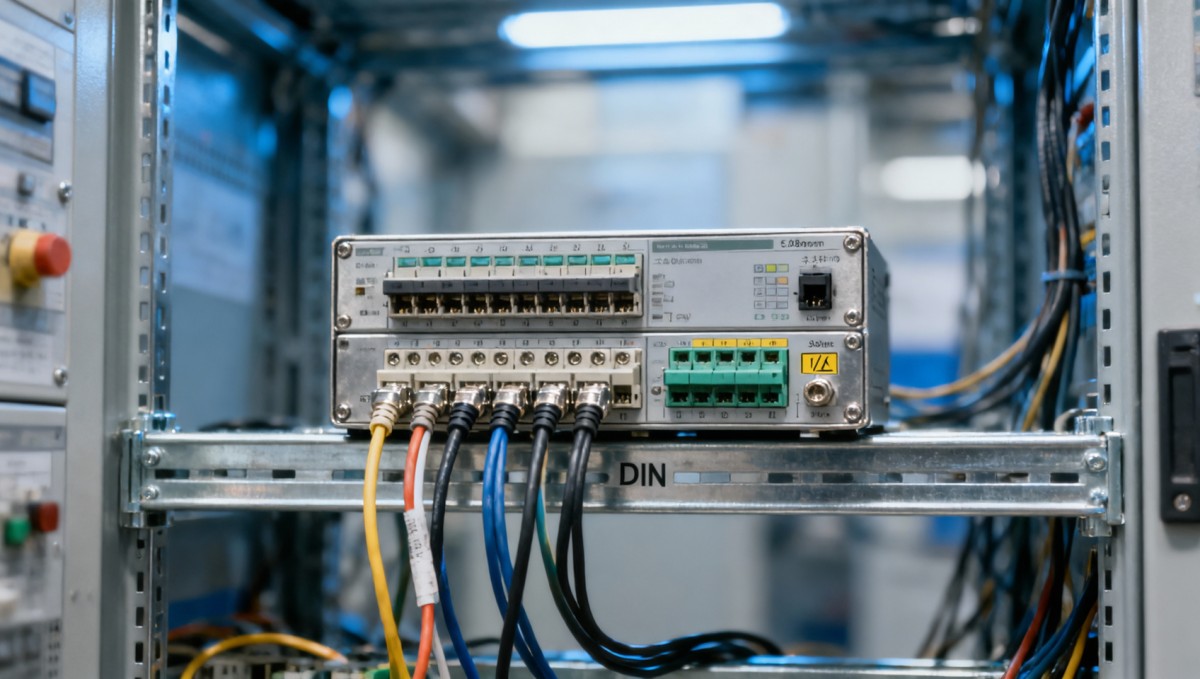
- DIN-rail mounting compliance per EN 60715 (TH35-7.5 or TH35-15 profiles)
- Label durability test: 1,000-cycle abrasion per ISO 15416, readable after 72hr 85°C/85% RH exposure
Suppliers unable to provide auditable evidence for ≥4 items are excluded from TSV’s Qualified Vendor List (QVL)—a dynamic database updated quarterly and accessible to enterprise procurement teams under NDA.
This weighted evaluation matrix has reduced supplier qualification cycle time by 63% for TSV’s Tier-1 manufacturing partners, compressing average assessment from 11.4 days to 4.2 days.
Actionable Next Steps for Technical Evaluators & Procurement Leads
Engineering truth begins with measurement—not marketing. If your current PLC training hardware fails ≥2 criteria in the first table—or if your procurement process lacks verifiable evidence requirements—you’re exposing your organization to avoidable risk and hidden cost.
TechStat Vanguard offers three immediate actions:
- Free Kit Gap Analysis: Submit your current training kit’s model number and photo of rear I/O panel—we’ll return a TSV-certified gap report within 3 business days.
- Qualified Vendor List Access: Request read-only access to our live QVL, updated weekly with test reports, thermal imaging, and failure mode analysis.
- Custom Benchmarking Engagement: For enterprise clients deploying ≥500 units/year, we conduct on-site validation against your exact field wiring standards—including custom DIN-rail profile, cable gland specs, and grounding topology.
At TSV, we don’t manufacture marketing—we define standards. Engineering truth starts here.
Search News
Hot Articles
- Carbon Fiber StructuresHow to Specify Aerospace Carbon Fiber Assemblies for Lightweight, Load-Bearing PartsJul 11, 2026
- Machine VisionXiaomi, Alibaba DAMO Academy Drive Open-Source Robotics Model Ecosystem, Lowering Algorithm Development Barriers for Overseas SMEs Adopting Chinese Robotics SolutionsMar 30, 2026
- Cobots & ArmsShanxi 'AI+' Conference Showcases Embodied Intelligence with Multinational Buyer Engagement: Key Industry ImplicationsMar 30, 2026
Popular Tags
Recommended News
 Jul 11, 2026How to Specify Aerospace Carbon Fiber Assemblies for Lightweight, Load-Bearing PartsAerospace carbon fiber assemblies: learn how to specify laminate design, load data, joining methods, and inspection controls for lighter, reliable load-bearing aerospace parts.Elena Rostova (UAV Systems Researcher)
 Mar 30, 2026Xiaomi, Alibaba DAMO Academy Drive Open-Source Robotics Model Ecosystem, Lowering Algorithm Development Barriers for Overseas SMEs Adopting Chinese Robotics SolutionsXiaomi & Alibaba DAMO Academy's open-source robotics models lower algorithm barriers for global SMEs. Boost efficiency in manufacturing, logistics & smart retail with ROS 2 compatible solutions.TSV Data Lab
 Mar 30, 2026Shanxi 'AI+' Conference Showcases Embodied Intelligence with Multinational Buyer Engagement: Key Industry ImplicationsShanxi 'AI+' Conference highlights embodied intelligence with Tesla, Ubtech & Jiantao showcasing multimodal robotics. 40+ global buyers validated tech on-site, creating new B2B channels for industrial automation & AI solutions.Chen Wei (Automation Lead Engineer)
 Mar 30, 2026Zhongguancun Unveils 6G Integrated Sensing-Computing-Intelligence Platform to Empower Embodied Robots for Global Industrial ApplicationsZhongguancun's new 6G platform revolutionizes industrial robotics with <10ms latency, empowering global automotive, logistics & port automation. Discover how this tech boosts China's smart manufacturing exports.TSV Data Lab
 Mar 30, 2026Mech-Mind Tianjin Embodied Intelligence R&D and Production Base Goes Live, Cutting Delivery Time by 20%–30% for Global Customized AMR+Vision SolutionsMech-Mind's Tianjin AMR+Vision production base cuts delivery time by 20%-30% for欧美 & Latin American markets. Discover how this PLd-certified facility accelerates customized robotics solutions for smart manufacturing and logistics.Chen Wei (Automation Lead Engineer)
 Mar 30, 2026Boao Forum Reveals 'Co-evolution of Big and Small Brains' Trend in Humanoid Robots, China's Embodied Intelligence Accelerates Adaptation to Overseas Manufacturing Service ScenariosDiscover how China's humanoid robots, featuring 'Co-evolution of Big and Small Brains,' are revolutionizing global manufacturing. Learn about Embodied Tian Gong 3.0's ISO compliance and overseas deployment at Boao Forum 2026.Chen Wei (Automation Lead Engineer)
 Mar 30, 2026China Railway Industrial Secures Patent for Embodied Robotics in Material Handling, Boosting High-Precision Delivery Capabilities for Overseas Infrastructure and Manufacturing ProjectsChina Railway Industrial's new patent for embodied robotics in material handling boosts high-precision delivery for global infrastructure & manufacturing. Discover how this innovation enhances logistics accuracy in automotive, rail transit & EPC projects.Chen Wei (Automation Lead Engineer)
 Oct 13, 2026Smart Cameras vs. PC-Based Machine Vision: Which Fits High-Speed Inspection?This industrial product comparison for machine vision weighs smart cameras vs. PC-based systems on latency, throughput, and cost. Discover your best fit for high-speed inspection.TSV Data Lab
 Oct 12, 2026How to Verify RoHS Compliance in Industrial Sensing Systems Before DeploymentRoHS compliant sensing systems: learn how to verify materials, supplier declarations, testing, and configuration controls before industrial deployment.TSV Data Lab
 Oct 11, 2026How Procurement-Oriented Content Taxonomy Improves B2B Buying JourneysProcurement-oriented content taxonomy streamlines B2B buying journeys with clearer evidence, supplier comparisons, risk visibility, and faster approvals.TSV Data Lab
 Oct 10, 2026How to Select a Machine Performance Monitoring Platform for OEE and Downtime ReductionMachine performance monitoring platform selection guide: validate machine states, OEE data, downtime reasons, integrations, and scalability to reduce losses with confidence.TSV Data Lab
 Oct 08, 2026How to Machine Inconel 625 Blades Without Heat Cracks or Edge ChippingInconel 625 blade machining guide: prevent heat cracks, edge chipping, chatter, and work hardening with proven tooling, cooling, fixturing, and inspection strategies.Dr. Marcus Vance
 Oct 07, 2026How to Evaluate an HMI Panel Distributor for Industrial Automation ProjectsHMI panel distributor evaluation guide: verify technical compatibility, traceability, supply reliability, lifecycle support, and total cost for automation projects.Victor Lin (Chief Software Architect)
 Oct 06, 2026Navigation Fault Tolerance Standards for AMRs: What Safety Teams Must VerifyNavigation fault tolerance standards: learn what AMR safety teams must verify, from localization loss and sensor faults to stopping distance, safe restart, and site-specific validation.Chen Wei (Automation Lead Engineer)
 Oct 05, 2026Calculating Edge Computing Total Cost of Ownership Across Distributed SitesEdge computing ownership cost explained: calculate deployment, energy, connectivity, security, remote support, and refresh costs across distributed sites.TSV Data Lab
 Oct 04, 2026CAD/CAM Benchmarking in the GCC: What Manufacturers Should Ask a ConsultantCAD CAM benchmark consultant GCC guide: learn the key questions manufacturers should ask to validate post-processors, workflows, machine performance, and production risk.Victor Lin (Chief Software Architect)
 Oct 03, 2026Selecting Automotive Radar Sensor Modules for ADAS Range, Resolution, and IntegrationAutomotive radar sensor module selection guide for ADAS: compare range, resolution, field of view, latency, and integration to build safer, reliable vehicle systems.TSV Data Lab
 Oct 02, 2026How to Qualify Machined Parts Suppliers for Hard Tech ProgramsHard tech supply chain machined parts demand rigorous supplier qualification. Learn how to assess capability, traceability, quality controls, and delivery resilience.Dr. Marcus Vance
 Oct 01, 2026How to Select an Outdoor Security Radar Sensor for Perimeter Detection?Outdoor security radar sensor selection guide: compare range, accuracy, false-alarm control, integration, and field testing for reliable perimeter detection.TSV Data Lab
 Sep 30, 2026How to Evaluate Solid-State LiDAR Hardware for Outdoor Autonomous VehiclesSolid state LiDAR hardware evaluation guide for outdoor autonomous vehicles—compare range, point-cloud quality, environmental resilience, integration, and safety.TSV Data Lab
 Sep 29, 2026ISO 9283 Repeatability: How to Evaluate Cobot Positioning PerformanceISO 9283 cobot repeatability explained: learn how payload, reach, approach direction, and test conditions affect positioning performance and cell capability.Chen Wei (Automation Lead Engineer)
 Oct 13, 2026How to keep an industrial robotic integration project on scheduleIndustrial robotic integration project management: keep automation on schedule with proven controls for interfaces, suppliers, FAT, commissioning, and change risk.Victor Lin (Chief Software Architect)
 Oct 12, 2026What should be included in predictive maintenance pricing for factories?Predictive maintenance pricing for factories: compare sensors, software, integration, support, and total cost to secure measurable uptime gains and avoid hidden expenses.TSV Data Lab
 Oct 11, 2026How payload and reach change the cost of an industrial robotCost of industrial robot systems depends heavily on payload and reach. Learn how sizing, torque, tooling, safety, and lifecycle factors shape smarter automation investments.Chen Wei (Automation Lead Engineer)























