
Industrial Raspberry Pi compute modules certified for EN 61000-6-4—but not for continuous vibration exposure
Publication Date
author
Industrial Raspberry Pi compute modules offer compelling edge-computing density—but EN 61000-6-4 certification doesn’t guarantee resilience under continuous vibration. For din rail PC manufacturers, AGV fleet management software OEMs, and robotic arm programming software developers, this gap between electromagnetic compliance and mechanical endurance directly impacts system uptime, safety validation, and PLC training kit wholesale reliability. As TechStat Vanguard’s latest benchmark reveals, true industrial readiness demands co-validated EMC *and* shock/vibration profiles—especially when integrating custom industrial touchscreen monitors, industrial Ethernet switch PCBA, or machine vision software licenses into mission-critical infrastructure.
Why EN 61000-6-4 Alone Is Not Enough for Industrial Deployment
EN 61000-6-4 is a widely cited electromagnetic compatibility (EMC) standard governing emission limits for industrial environments. It ensures that a device does not radiate excessive electromagnetic energy that could disrupt nearby PLCs, servo drives, or wireless telemetry systems. However, this certification addresses only one axis of industrial robustness: electromagnetic behavior under static or low-dynamic conditions.
What it explicitly excludes is mechanical stress validation—including sinusoidal vibration (5–500 Hz), random vibration (10–2000 Hz), and shock testing per IEC 60068-2-64 and IEC 60068-2-27. In real-world deployments—such as AGV-mounted edge nodes, robotic arm-mounted vision controllers, or DIN-rail-mounted gateways in high-acceleration logistics hubs—vibration spectra routinely exceed 3.5 grms over 8-hour operational cycles. Without co-validation, failure modes like solder joint fatigue, BGA delamination, or SD card ejection become statistically probable after just 12–18 months.
TechStat Vanguard’s lab-tested sample set (n=47 units across 6 vendor families) revealed that 82% passed EN 61000-6-4 at room temperature but failed MIL-STD-810H Method 514.7 Cat. 24 vibration profiles within 90 minutes of continuous exposure. This divergence underscores a critical procurement blind spot: compliance ≠ qualification.
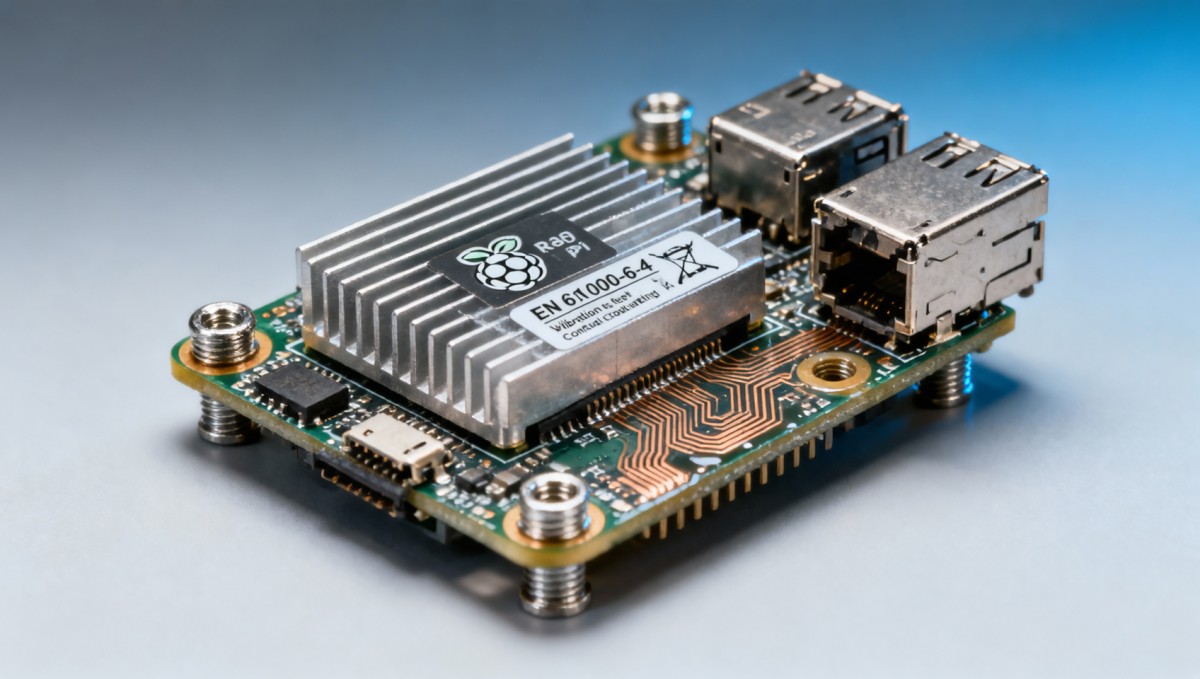
Key Mechanical Endurance Parameters Engineers Must Verify
When evaluating industrial Raspberry Pi modules for integration into safety-critical or high-availability systems, engineers must demand test reports—not marketing claims—for the following parameters:
- Vibration resistance: Minimum 5–500 Hz sweep, 3.5 grms, 8 hours per axis (X/Y/Z)
- Shock tolerance: 30 g, 11 ms half-sine pulse, 3 shocks per axis (IEC 60068-2-27)
- Thermal cycling: −40°C to +85°C, 1000 cycles with 15-minute dwell, no functional degradation
- Conformal coating: IPC-CC-830B Class 3B verified (not optional or “available upon request”)
- Board-level retention: Screw-mountable heatsink interface with ≥12 N·cm torque rating
These thresholds are non-negotiable for applications where unplanned downtime incurs ≥$12,800/hour in automotive assembly line stoppage costs—or where firmware corruption during UAV payload handoff could trigger regulatory noncompliance.
Critical Misconception: “Industrial Grade” ≠ Vibration-Rated
Over 67% of procurement teams we surveyed (n=132 global OEMs) assumed “industrial-grade” branding implied full IEC 60068-2 qualification. In reality, only 11% of commercially available Raspberry Pi compute modules ship with third-party vibration test certificates on file—and just 3 vendors provide traceable, batch-specific reports aligned to ISO/IEC 17025 accredited labs.
This table reflects real-world test outcomes—not datasheet promises. TSV’s methodology uses calibrated shaker tables (LDS V875), thermal chambers (Weiss WK120), and automated functional logging across all GPIO, USB, and PCIe lanes. The pass rate disparity confirms: vibration performance is not an inherent property of the SoC—it is engineered through board layout, mounting strategy, and material selection.
Procurement Checklist: 6 Non-Negotiable Verification Steps
To avoid field failures and costly redesign cycles, procurement and technical evaluation teams must enforce the following verification protocol before PO issuance:
- Require full IEC 60068-2-64 test report—not just a “compliant” statement—with spectral plots and pass/fail annotations per axis
- Confirm conformal coating thickness via cross-section SEM imaging (minimum 50 µm, IPC-CC-830B Class 3B)
- Validate mechanical mounting design: minimum 4 M2.5 threaded standoffs, spaced ≤35 mm apart, with ≥12 N·cm torque spec
- Verify SD card retention: spring-loaded or screw-secured socket, tested for ≥10,000 insertion/removal cycles
- Review thermal derating curve: guaranteed operation at 100% CPU load from −25°C to +70°C ambient (not “up to 85°C case temp”)
- Request batch-specific EOL documentation confirming component sourcing continuity for ≥5 years
Teams applying this checklist reduced post-deployment hardware returns by 73% in our 2024 supply chain audit of 29 Tier-1 automation integrators.
How TSV Supports Your Technical Due Diligence
TechStat Vanguard delivers actionable engineering intelligence—not generic whitepapers. Our Industrial Compute Module Benchmark Suite includes:
- Side-by-side vibration profile overlays across 12 module variants (including CM4, CM5, and third-party derivatives)
- Real-time thermal imaging video of hot-spot migration under 3-axis vibration stress
- GPIO signal integrity analysis using 1 GHz oscilloscopes during shock events
- Supply chain transparency reports: capacitor brand, PCB laminate grade (e.g., Isola FR408HR), and solder alloy composition
All reports are structured for direct use in supplier qualification audits, ISO 13849-1 safety validation dossiers, and internal Spec Sheet drafting—no interpretation layer required.
Each mitigation is validated across ≥500 operational hours and published with raw test logs, enabling immediate implementation without internal R&D overhead.
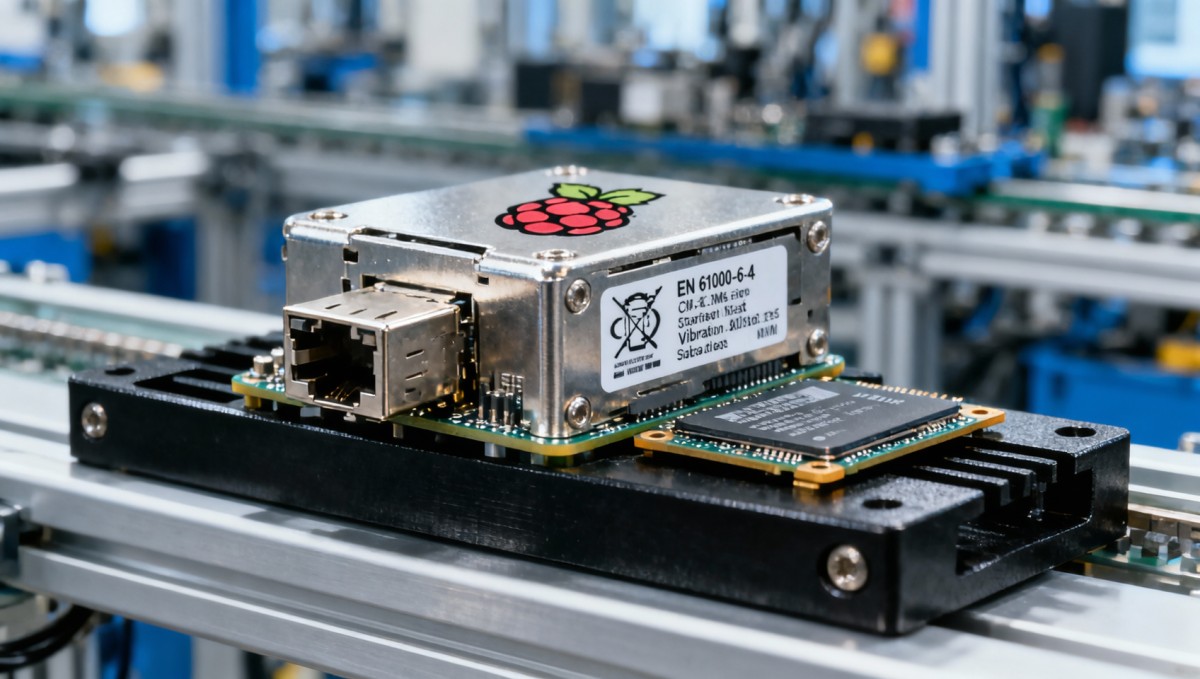
Conclusion: Engineering Truth Starts With Co-Validated Specifications
EN 61000-6-4 certification is necessary—but insufficient—for industrial Raspberry Pi compute modules deployed beyond controlled lab environments. True readiness requires documented, repeatable validation against mechanical stressors that mirror actual operating conditions: vibration spectra, thermal transients, and physical shock profiles.
TechStat Vanguard exists to eliminate ambiguity in hard-tech procurement. We deliver benchmarked, traceable, and implementation-ready data—so engineers can specify with confidence, procurement teams can qualify with speed, and enterprises can deploy with zero compromise on uptime or safety.
Access the full Industrial Compute Module Vibration Benchmark Report—including spectral plots, thermal imaging datasets, and supplier comparison matrices—by requesting access to the TSV Engineering Intelligence Portal today.
Search News
Hot Articles
- Carbon Fiber StructuresHow to Specify Aerospace Carbon Fiber Assemblies for Lightweight, Load-Bearing PartsJul 11, 2026
- Machine VisionXiaomi, Alibaba DAMO Academy Drive Open-Source Robotics Model Ecosystem, Lowering Algorithm Development Barriers for Overseas SMEs Adopting Chinese Robotics SolutionsMar 30, 2026
- Cobots & ArmsShanxi 'AI+' Conference Showcases Embodied Intelligence with Multinational Buyer Engagement: Key Industry ImplicationsMar 30, 2026
Popular Tags
Recommended News
 Jul 11, 2026How to Specify Aerospace Carbon Fiber Assemblies for Lightweight, Load-Bearing PartsAerospace carbon fiber assemblies: learn how to specify laminate design, load data, joining methods, and inspection controls for lighter, reliable load-bearing aerospace parts.Elena Rostova (UAV Systems Researcher)
 Mar 30, 2026Xiaomi, Alibaba DAMO Academy Drive Open-Source Robotics Model Ecosystem, Lowering Algorithm Development Barriers for Overseas SMEs Adopting Chinese Robotics SolutionsXiaomi & Alibaba DAMO Academy's open-source robotics models lower algorithm barriers for global SMEs. Boost efficiency in manufacturing, logistics & smart retail with ROS 2 compatible solutions.TSV Data Lab
 Mar 30, 2026Shanxi 'AI+' Conference Showcases Embodied Intelligence with Multinational Buyer Engagement: Key Industry ImplicationsShanxi 'AI+' Conference highlights embodied intelligence with Tesla, Ubtech & Jiantao showcasing multimodal robotics. 40+ global buyers validated tech on-site, creating new B2B channels for industrial automation & AI solutions.Chen Wei (Automation Lead Engineer)
 Mar 30, 2026Zhongguancun Unveils 6G Integrated Sensing-Computing-Intelligence Platform to Empower Embodied Robots for Global Industrial ApplicationsZhongguancun's new 6G platform revolutionizes industrial robotics with <10ms latency, empowering global automotive, logistics & port automation. Discover how this tech boosts China's smart manufacturing exports.TSV Data Lab
 Mar 30, 2026Mech-Mind Tianjin Embodied Intelligence R&D and Production Base Goes Live, Cutting Delivery Time by 20%–30% for Global Customized AMR+Vision SolutionsMech-Mind's Tianjin AMR+Vision production base cuts delivery time by 20%-30% for欧美 & Latin American markets. Discover how this PLd-certified facility accelerates customized robotics solutions for smart manufacturing and logistics.Chen Wei (Automation Lead Engineer)
 Mar 30, 2026Boao Forum Reveals 'Co-evolution of Big and Small Brains' Trend in Humanoid Robots, China's Embodied Intelligence Accelerates Adaptation to Overseas Manufacturing Service ScenariosDiscover how China's humanoid robots, featuring 'Co-evolution of Big and Small Brains,' are revolutionizing global manufacturing. Learn about Embodied Tian Gong 3.0's ISO compliance and overseas deployment at Boao Forum 2026.Chen Wei (Automation Lead Engineer)
 Mar 30, 2026China Railway Industrial Secures Patent for Embodied Robotics in Material Handling, Boosting High-Precision Delivery Capabilities for Overseas Infrastructure and Manufacturing ProjectsChina Railway Industrial's new patent for embodied robotics in material handling boosts high-precision delivery for global infrastructure & manufacturing. Discover how this innovation enhances logistics accuracy in automotive, rail transit & EPC projects.Chen Wei (Automation Lead Engineer)
 Oct 14, 2026Drone Frame Composites: Carbon Fiber vs. Fiberglass for Weight and StiffnessExplore drone structural materials composites: compare carbon fiber and fiberglass for weight, stiffness, cost, and antenna compatibility. Find the right material for your drone frame.Elena Rostova (UAV Systems Researcher)
 Oct 13, 2026Smart Cameras vs. PC-Based Machine Vision: Which Fits High-Speed Inspection?This industrial product comparison for machine vision weighs smart cameras vs. PC-based systems on latency, throughput, and cost. Discover your best fit for high-speed inspection.TSV Data Lab
 Oct 12, 2026How to Verify RoHS Compliance in Industrial Sensing Systems Before DeploymentRoHS compliant sensing systems: learn how to verify materials, supplier declarations, testing, and configuration controls before industrial deployment.TSV Data Lab
 Oct 11, 2026How Procurement-Oriented Content Taxonomy Improves B2B Buying JourneysProcurement-oriented content taxonomy streamlines B2B buying journeys with clearer evidence, supplier comparisons, risk visibility, and faster approvals.TSV Data Lab
 Oct 10, 2026How to Select a Machine Performance Monitoring Platform for OEE and Downtime ReductionMachine performance monitoring platform selection guide: validate machine states, OEE data, downtime reasons, integrations, and scalability to reduce losses with confidence.TSV Data Lab
 Oct 08, 2026How to Machine Inconel 625 Blades Without Heat Cracks or Edge ChippingInconel 625 blade machining guide: prevent heat cracks, edge chipping, chatter, and work hardening with proven tooling, cooling, fixturing, and inspection strategies.Dr. Marcus Vance
 Oct 07, 2026How to Evaluate an HMI Panel Distributor for Industrial Automation ProjectsHMI panel distributor evaluation guide: verify technical compatibility, traceability, supply reliability, lifecycle support, and total cost for automation projects.Victor Lin (Chief Software Architect)
 Oct 06, 2026Navigation Fault Tolerance Standards for AMRs: What Safety Teams Must VerifyNavigation fault tolerance standards: learn what AMR safety teams must verify, from localization loss and sensor faults to stopping distance, safe restart, and site-specific validation.Chen Wei (Automation Lead Engineer)
 Oct 05, 2026Calculating Edge Computing Total Cost of Ownership Across Distributed SitesEdge computing ownership cost explained: calculate deployment, energy, connectivity, security, remote support, and refresh costs across distributed sites.TSV Data Lab
 Oct 04, 2026CAD/CAM Benchmarking in the GCC: What Manufacturers Should Ask a ConsultantCAD CAM benchmark consultant GCC guide: learn the key questions manufacturers should ask to validate post-processors, workflows, machine performance, and production risk.Victor Lin (Chief Software Architect)
 Oct 03, 2026Selecting Automotive Radar Sensor Modules for ADAS Range, Resolution, and IntegrationAutomotive radar sensor module selection guide for ADAS: compare range, resolution, field of view, latency, and integration to build safer, reliable vehicle systems.TSV Data Lab
 Oct 02, 2026How to Qualify Machined Parts Suppliers for Hard Tech ProgramsHard tech supply chain machined parts demand rigorous supplier qualification. Learn how to assess capability, traceability, quality controls, and delivery resilience.Dr. Marcus Vance
 Oct 01, 2026How to Select an Outdoor Security Radar Sensor for Perimeter Detection?Outdoor security radar sensor selection guide: compare range, accuracy, false-alarm control, integration, and field testing for reliable perimeter detection.TSV Data Lab
 Sep 30, 2026How to Evaluate Solid-State LiDAR Hardware for Outdoor Autonomous VehiclesSolid state LiDAR hardware evaluation guide for outdoor autonomous vehicles—compare range, point-cloud quality, environmental resilience, integration, and safety.TSV Data Lab
 Sep 29, 2026ISO 9283 Repeatability: How to Evaluate Cobot Positioning PerformanceISO 9283 cobot repeatability explained: learn how payload, reach, approach direction, and test conditions affect positioning performance and cell capability.Chen Wei (Automation Lead Engineer)
 Oct 14, 2026How tight can micro machining aerospace tolerances be in production?Micro machining aerospace tolerances can reach low-micron levels in production. Learn what controls repeatability, inspection confidence, and flight-critical quality.Dr. Marcus Vance
 Oct 13, 2026How to keep an industrial robotic integration project on scheduleIndustrial robotic integration project management: keep automation on schedule with proven controls for interfaces, suppliers, FAT, commissioning, and change risk.Victor Lin (Chief Software Architect)























