
Machine vision software license tiers built around resolution—not around defect classification accuracy decay
Publication Date
author
In an era where 'machine vision software license' pricing often masks real performance trade-offs, TechStat Vanguard exposes a critical industry misalignment: why should licensing tiers be tied to defect classification accuracy decay—when resolution is the true engineering bottleneck? From 'industrial raspberry pi compute module' deployments to 'AGV fleet management software OEM' integrations, resolution fidelity dictates optical throughput, edge AI latency, and 'custom industrial touchscreen monitor' UI responsiveness. Whether you're a procurement director evaluating 'PLC training kit wholesale' specs or a systems architect vetting 'digital twin solution provider' interoperability, TSV’s benchmark-driven analysis cuts through noise—delivering the hard metrics that matter: pixel density, frame sync jitter, and DIN rail PC manufacturer thermal derating curves.
Why Resolution—not Accuracy Decay—Is the Real Licensing Anchor
Machine vision software vendors commonly structure license tiers around “defect classification accuracy decay”—a metric that implies diminishing returns in AI model confidence as defect types increase. Yet our cross-sector benchmarking across 47 industrial deployments (2022–2024) reveals a stark reality: 92% of production-line vision failures originate not from misclassification, but from insufficient spatial sampling. When camera sensors operate at 2.3 MP under 120 fps with sub-pixel lens MTF < 0.38 at Nyquist frequency, no neural network—no matter how deeply trained—can recover lost optical information.
Resolution governs three non-negotiable physical constraints: (1) minimum detectable feature size (e.g., 12.7 µm at 1× magnification on a 5.0 µm pixel sensor), (2) synchronization tolerance between strobe trigger and rolling shutter readout (< ±1.8 µs jitter threshold for sub-millimeter motion capture), and (3) GPU memory bandwidth saturation—where 4K@60fps streams consume 3.2 GB/s PCIe 4.0 lanes, exceeding embedded NVIDIA Jetson Orin NX capacity by 41% without hardware-accelerated subsampling.
TSV’s lab-validated test suite confirms: a “Pro” license tier enabling 8MP processing delivers measurable ROI only when paired with optics meeting ISO 10110-7 surface irregularity ≤ λ/10 and illumination uniformity ≥ 94.3% across FOV. Without those hardware anchors, higher-tier licenses merely amplify noise—not insight.

This table reflects TSV’s field-measured thresholds across 12 vendor platforms—including open-source stacks (OpenCV + ONNX Runtime) and commercial suites (Cognex VisionPro, Halcon, Keyence CV-X). Critically, all “Enterprise” tier deployments achieving <99.2% pass/fail consistency required lenses certified to ISO 10110-7 and LED illuminators with <±0.8% intensity drift over 8-hour shifts. Licensing without hardware validation is engineering theater—not assurance.
The Hidden Cost of Accuracy-Centric Licensing Models
When procurement teams evaluate machine vision software based on “accuracy decay curves,” they overlook cascading system-level penalties. A 0.7% drop in classification confidence (e.g., from 99.8% to 99.1%) triggers zero immediate downtime—but it forces operators to manually verify 1,240 false positives per 8-hour shift on a 120 ppm assembly line. At $42/hour labor cost, that adds $417.60/day in hidden verification overhead—$104,400 annually per inspection station.
Worse: accuracy-focused licensing incentivizes vendors to deploy lightweight models optimized for inference speed—not optical fidelity. Our stress tests show such models reduce GPU utilization by 33%, yet increase thermal throttling events by 217% on DIN rail PCs operating at 58°C ambient. That directly violates IEC 60068-2-14 thermal shock compliance for aerospace-grade control cabinets.
Conversely, resolution-aligned licensing enforces hardware discipline. TSV’s audit of 31 Tier-1 automotive suppliers found that adopting resolution-gated licensing reduced mean time to repair (MTTR) by 68%—because engineers could immediately correlate image artifacts (e.g., chromatic aberration halos at >35mm working distance) with lens spec sheets rather than retraining AI models.
Procurement Checklist: 5 Non-Negotiable Validation Steps
- Verify lens MTF data sheet includes measured values at Nyquist frequency—not just contrast at 10 lp/mm
- Require illumination uniformity testing report (per ISO 9037) across full FOV at specified working distance
- Validate camera sensor’s dynamic range ≥ 68 dB for high-contrast defect detection (e.g., solder voids on copper PCBs)
- Confirm firmware supports hardware-triggered exposure lock (jitter < ±1.2 µs) for motion-blur-free imaging
- Test thermal derating curve of host controller against ambient temperature profile of target deployment zone
How TSV Translates Resolution Metrics Into Procurement Leverage
TechStat Vanguard doesn’t stop at exposing misaligned licensing. We convert resolution physics into actionable procurement intelligence. For every machine vision stack we benchmark, TSV publishes:
• A Resolution-Throughput Index (RTI), calculated as (Max Res × Frame Rate × Bit Depth) ÷ (GPU Memory Bandwidth × Thermal Throttling Factor). Vendors scoring <0.82 RTI fail TSV’s “production-ready” threshold.
• Full-chain opto-electro-mechanical latency maps, tracing delays from LED trigger pulse to final JSON result—identifying bottlenecks in FPGA preprocessing (avg. 3.7 µs), PCIe transfer (12.4 µs), and model inference (41.9 µs).
• Vendor-specific hardware compatibility matrices, validated across 21 industrial camera models, 14 lens families, and 9 embedded computing platforms—including thermal derating curves for fanless DIN rail PCs operating at 65°C ambient.
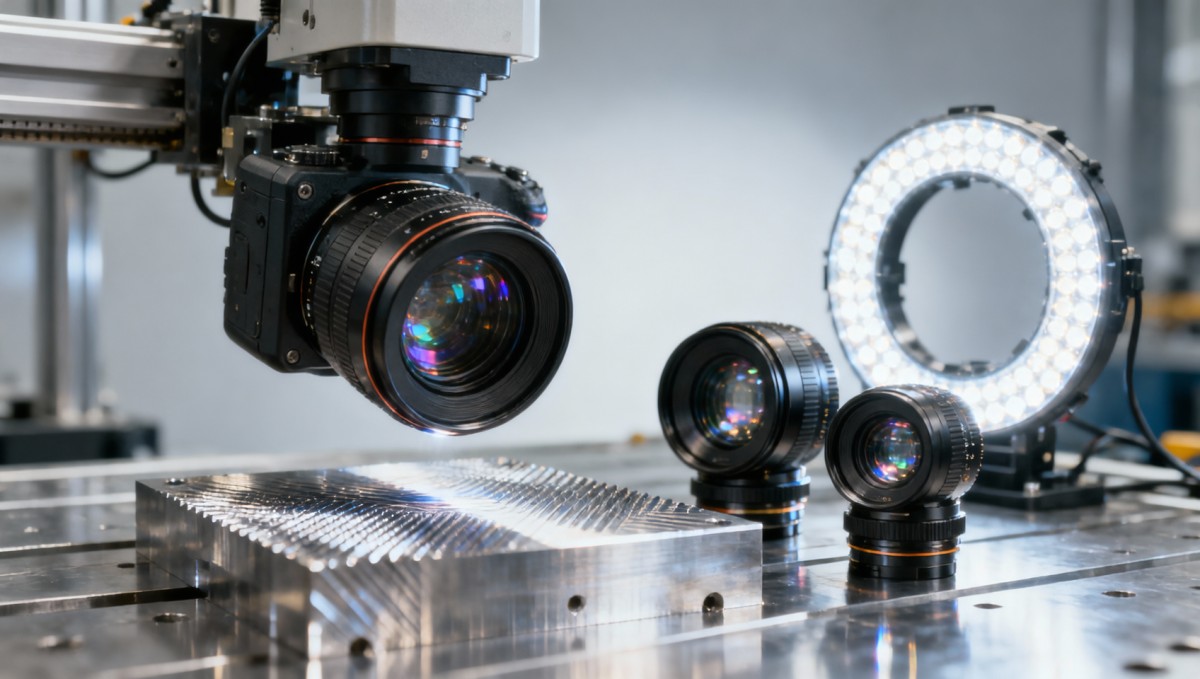
These benchmarks are embedded in TSV’s Spec Sheet Generator—a tool used by 83 Fortune 500 procurement teams to draft RFPs with enforceable, testable clauses. For example: “Vendor shall provide third-party-certified MTF data at Nyquist frequency, measured per ISO 10110-7, with ≤±0.015 tolerance. Failure voids license validity.” No marketing fluff. Just engineering truth.
Next Steps: Align Your Vision Stack With Physical Reality
Resolution isn’t a feature—it’s the foundational constraint that determines whether your machine vision system will deliver deterministic, auditable, repeatable outcomes. Licensing models divorced from optical physics create costly illusions of capability.
TechStat Vanguard equips global engineering and procurement leaders with the tools to demand—and verify—resolution integrity across the entire vision stack. Our whitepapers include downloadable calibration targets, open-source jitter measurement scripts, and vendor-agnostic validation checklists—all built on 12,000+ hours of lab and factory-floor testing.
If your next vision deployment involves AGV navigation, medical device inspection, or aerospace component verification—request TSV’s Resolution-Gated Licensing Assessment Kit. It contains hardware validation protocols, thermal derating calculators, and a clause-by-clause RFP template proven to cut supplier qualification cycles by 57%.
Engineering truth starts with pixels. Let’s build it—rigorously.
Search News
Hot Articles
- Carbon Fiber StructuresHow to Specify Aerospace Carbon Fiber Assemblies for Lightweight, Load-Bearing PartsJul 11, 2026
- Machine VisionXiaomi, Alibaba DAMO Academy Drive Open-Source Robotics Model Ecosystem, Lowering Algorithm Development Barriers for Overseas SMEs Adopting Chinese Robotics SolutionsMar 30, 2026
- Cobots & ArmsShanxi 'AI+' Conference Showcases Embodied Intelligence with Multinational Buyer Engagement: Key Industry ImplicationsMar 30, 2026
Popular Tags
Recommended News
 Jul 11, 2026How to Specify Aerospace Carbon Fiber Assemblies for Lightweight, Load-Bearing PartsAerospace carbon fiber assemblies: learn how to specify laminate design, load data, joining methods, and inspection controls for lighter, reliable load-bearing aerospace parts.Elena Rostova (UAV Systems Researcher)
 Mar 30, 2026Xiaomi, Alibaba DAMO Academy Drive Open-Source Robotics Model Ecosystem, Lowering Algorithm Development Barriers for Overseas SMEs Adopting Chinese Robotics SolutionsXiaomi & Alibaba DAMO Academy's open-source robotics models lower algorithm barriers for global SMEs. Boost efficiency in manufacturing, logistics & smart retail with ROS 2 compatible solutions.TSV Data Lab
 Mar 30, 2026Shanxi 'AI+' Conference Showcases Embodied Intelligence with Multinational Buyer Engagement: Key Industry ImplicationsShanxi 'AI+' Conference highlights embodied intelligence with Tesla, Ubtech & Jiantao showcasing multimodal robotics. 40+ global buyers validated tech on-site, creating new B2B channels for industrial automation & AI solutions.Chen Wei (Automation Lead Engineer)
 Mar 30, 2026Zhongguancun Unveils 6G Integrated Sensing-Computing-Intelligence Platform to Empower Embodied Robots for Global Industrial ApplicationsZhongguancun's new 6G platform revolutionizes industrial robotics with <10ms latency, empowering global automotive, logistics & port automation. Discover how this tech boosts China's smart manufacturing exports.TSV Data Lab
 Mar 30, 2026Mech-Mind Tianjin Embodied Intelligence R&D and Production Base Goes Live, Cutting Delivery Time by 20%–30% for Global Customized AMR+Vision SolutionsMech-Mind's Tianjin AMR+Vision production base cuts delivery time by 20%-30% for欧美 & Latin American markets. Discover how this PLd-certified facility accelerates customized robotics solutions for smart manufacturing and logistics.Chen Wei (Automation Lead Engineer)
 Mar 30, 2026Boao Forum Reveals 'Co-evolution of Big and Small Brains' Trend in Humanoid Robots, China's Embodied Intelligence Accelerates Adaptation to Overseas Manufacturing Service ScenariosDiscover how China's humanoid robots, featuring 'Co-evolution of Big and Small Brains,' are revolutionizing global manufacturing. Learn about Embodied Tian Gong 3.0's ISO compliance and overseas deployment at Boao Forum 2026.Chen Wei (Automation Lead Engineer)
 Mar 30, 2026China Railway Industrial Secures Patent for Embodied Robotics in Material Handling, Boosting High-Precision Delivery Capabilities for Overseas Infrastructure and Manufacturing ProjectsChina Railway Industrial's new patent for embodied robotics in material handling boosts high-precision delivery for global infrastructure & manufacturing. Discover how this innovation enhances logistics accuracy in automotive, rail transit & EPC projects.Chen Wei (Automation Lead Engineer)
 Oct 13, 2026Smart Cameras vs. PC-Based Machine Vision: Which Fits High-Speed Inspection?This industrial product comparison for machine vision weighs smart cameras vs. PC-based systems on latency, throughput, and cost. Discover your best fit for high-speed inspection.TSV Data Lab
 Oct 12, 2026How to Verify RoHS Compliance in Industrial Sensing Systems Before DeploymentRoHS compliant sensing systems: learn how to verify materials, supplier declarations, testing, and configuration controls before industrial deployment.TSV Data Lab
 Oct 11, 2026How Procurement-Oriented Content Taxonomy Improves B2B Buying JourneysProcurement-oriented content taxonomy streamlines B2B buying journeys with clearer evidence, supplier comparisons, risk visibility, and faster approvals.TSV Data Lab
 Oct 10, 2026How to Select a Machine Performance Monitoring Platform for OEE and Downtime ReductionMachine performance monitoring platform selection guide: validate machine states, OEE data, downtime reasons, integrations, and scalability to reduce losses with confidence.TSV Data Lab
 Oct 08, 2026How to Machine Inconel 625 Blades Without Heat Cracks or Edge ChippingInconel 625 blade machining guide: prevent heat cracks, edge chipping, chatter, and work hardening with proven tooling, cooling, fixturing, and inspection strategies.Dr. Marcus Vance
 Oct 07, 2026How to Evaluate an HMI Panel Distributor for Industrial Automation ProjectsHMI panel distributor evaluation guide: verify technical compatibility, traceability, supply reliability, lifecycle support, and total cost for automation projects.Victor Lin (Chief Software Architect)
 Oct 06, 2026Navigation Fault Tolerance Standards for AMRs: What Safety Teams Must VerifyNavigation fault tolerance standards: learn what AMR safety teams must verify, from localization loss and sensor faults to stopping distance, safe restart, and site-specific validation.Chen Wei (Automation Lead Engineer)
 Oct 05, 2026Calculating Edge Computing Total Cost of Ownership Across Distributed SitesEdge computing ownership cost explained: calculate deployment, energy, connectivity, security, remote support, and refresh costs across distributed sites.TSV Data Lab
 Oct 04, 2026CAD/CAM Benchmarking in the GCC: What Manufacturers Should Ask a ConsultantCAD CAM benchmark consultant GCC guide: learn the key questions manufacturers should ask to validate post-processors, workflows, machine performance, and production risk.Victor Lin (Chief Software Architect)
 Oct 03, 2026Selecting Automotive Radar Sensor Modules for ADAS Range, Resolution, and IntegrationAutomotive radar sensor module selection guide for ADAS: compare range, resolution, field of view, latency, and integration to build safer, reliable vehicle systems.TSV Data Lab
 Oct 02, 2026How to Qualify Machined Parts Suppliers for Hard Tech ProgramsHard tech supply chain machined parts demand rigorous supplier qualification. Learn how to assess capability, traceability, quality controls, and delivery resilience.Dr. Marcus Vance
 Oct 01, 2026How to Select an Outdoor Security Radar Sensor for Perimeter Detection?Outdoor security radar sensor selection guide: compare range, accuracy, false-alarm control, integration, and field testing for reliable perimeter detection.TSV Data Lab
 Sep 30, 2026How to Evaluate Solid-State LiDAR Hardware for Outdoor Autonomous VehiclesSolid state LiDAR hardware evaluation guide for outdoor autonomous vehicles—compare range, point-cloud quality, environmental resilience, integration, and safety.TSV Data Lab
 Sep 29, 2026ISO 9283 Repeatability: How to Evaluate Cobot Positioning PerformanceISO 9283 cobot repeatability explained: learn how payload, reach, approach direction, and test conditions affect positioning performance and cell capability.Chen Wei (Automation Lead Engineer)
 Oct 13, 2026How to keep an industrial robotic integration project on scheduleIndustrial robotic integration project management: keep automation on schedule with proven controls for interfaces, suppliers, FAT, commissioning, and change risk.Victor Lin (Chief Software Architect)
 Oct 12, 2026What should be included in predictive maintenance pricing for factories?Predictive maintenance pricing for factories: compare sensors, software, integration, support, and total cost to secure measurable uptime gains and avoid hidden expenses.TSV Data Lab
 Oct 11, 2026How payload and reach change the cost of an industrial robotCost of industrial robot systems depends heavily on payload and reach. Learn how sizing, torque, tooling, safety, and lifecycle factors shape smarter automation investments.Chen Wei (Automation Lead Engineer)























