
PLC control for packaging machinery often fails at product changeover
Publication Date
author
PLC control for packaging machinery often fails at product changeover because recipes, timing windows, sensor thresholds, and motion coordination are rarely tuned as one system. For engineers, operators, buyers, and decision-makers, this creates downtime, scrap, and unstable output. This article explains the root causes, practical diagnostics, and data-driven optimization priorities needed to make changeovers faster, safer, and repeatable.
Why does PLC control break down during packaging changeovers?
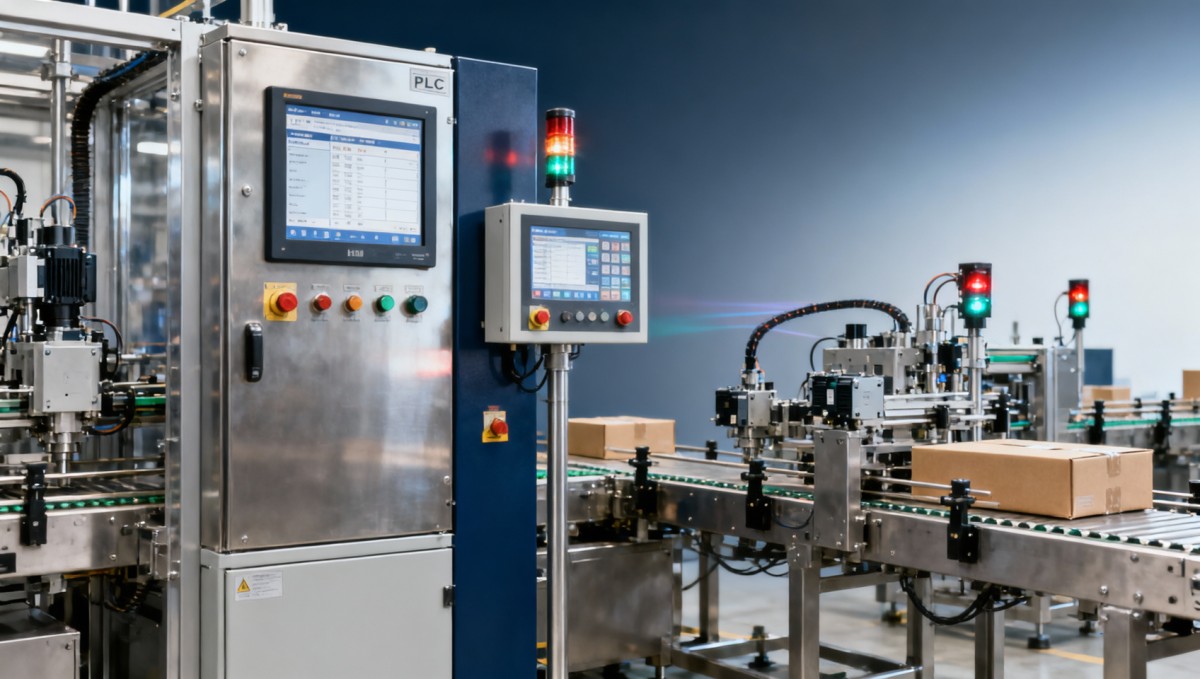
In most packaging lines, a product changeover is not one action. It is a chain of coordinated adjustments involving PLC logic, HMI recipes, servo positions, sensor filtering, infeed spacing, sealing temperature, reject timing, and alarm handling. When one variable changes without the others being validated, PLC control for packaging machinery often appears unreliable even though the real issue is system mismatch.
This problem is common across cartoning, flow wrapping, case packing, labeling, pouch filling, and end-of-line handling. A machine may run well for one SKU at 80–120 packs per minute, then become unstable after switching to a shorter product, softer film, lighter tray, or different print mark. The PLC is blamed first, but the fault usually sits at the boundary between software, mechanics, and process physics.
For operators, the visible symptoms are frequent stops, nuisance alarms, and inconsistent machine response. For engineering teams, the deeper concern is that changeover performance is not predictable. A planned 15-minute recipe switch can turn into 45–90 minutes of trial-and-error because the line was never mapped with acceptable parameter windows for each product family.
For procurement and executive teams, the cost is larger than downtime alone. It affects Overall Equipment Effectiveness, waste rate, labor utilization, and customer delivery confidence. At TechStat Vanguard, we focus on engineering truth rather than marketing language. That means asking whether recipe management, sensor robustness, motion synchronization, and machine tolerance stack-up were quantified before the machine was selected or approved.
The most common failure pattern at changeover
A typical failure sequence starts with a valid recipe load but an invalid process state. The PLC may correctly call the new product values, yet the machine remains physically in the previous setup range. Guide rails, conveyors, vacuum settings, or jaw timing may still be offset by a few millimeters or a few tens of milliseconds. That small gap is enough to trigger misfeeds, registration loss, or bad seals.
- Recipe values are stored, but the mechanical setup sheet is incomplete or outdated.
- Sensor thresholds are copied from one SKU to another despite different reflectivity, color, shape, or transparency.
- Servo motion profiles remain aggressive when product mass or friction changes, causing overshoot or unstable indexing.
- Alarm logic is too generic, so teams cannot distinguish timing drift from mechanical interference within the first 3–5 minutes.
Which technical layers should engineers check first?
When PLC control for packaging machinery fails during changeover, troubleshooting should move from the most measurable layer to the least visible layer. This reduces diagnostic time and avoids random edits to code or hardware. In practice, a structured 4-step sequence works better than broad fault hunting: verify recipe integrity, confirm I/O behavior, validate motion coordination, and then review mechanical tolerance and product variability.
Recipe integrity means more than checking whether the correct SKU name appears on the HMI. Engineers should confirm the full parameter map: dwell time, cut length, encoder scaling, acceleration ramps, print mark window, reject delay, photoeye debounce, and any temperature or pressure interlocks. On many lines, 20–50 recipe fields are visible, but another 10–30 control values remain hidden in maintenance pages or PLC data blocks.
I/O validation comes next. Sensors often fail changeovers because the new product changes contrast, gap pattern, gloss, or transparency. A photoelectric sensor that works on matte cartons can become unstable on glossy film. A sensor set for a 5–8 mm product gap may miss products when the gap shrinks to 2–3 mm. Noise filtering that is acceptable at 60 cycles per minute may be too slow at 140 cycles per minute.
Motion validation is critical on servo-driven systems. The PLC may execute the sequence correctly while motion controllers or drives apply profiles unsuited to the new SKU. Heavier products, lower friction belts, or different center of gravity can alter settling time. If the machine has less than 50–100 ms of timing margin between detection and actuation, a modest servo lag or oscillation can create repeat faults.
A practical diagnostic table for changeover failures
The table below helps maintenance, controls engineers, and line managers classify changeover failures by symptom, likely cause, and preferred test method. This is especially useful when teams need to separate true PLC logic issues from sensor, drive, or mechanical setup errors.
The main lesson is that effective troubleshooting depends on time correlation. A single alarm message rarely explains a changeover failure. Teams need event history, axis behavior, and sensor timing grouped within the same diagnostic window. That is why TSV consistently favors machines and integrators that expose engineering-level data instead of hiding critical variables behind generic HMI pages.
What data should be logged during the first production run?
The first 10–15 minutes after changeover should be treated as a controlled validation phase, not normal production. At minimum, log product sensor transitions, encoder counts, speed changes, reject events, and the first 5–10 alarm timestamps. If the machine uses registration marks or vision guidance, include trigger-to-actuation delay and any offset correction values. Without this dataset, teams often make adjustments that solve one symptom while degrading another station downstream.
How should buyers and decision-makers evaluate a packaging control system before purchase?
Many procurement teams compare packaging machines by throughput, footprint, and price, but miss the variables that determine real changeover reliability. For mixed-SKU operations, the better purchase question is not only “What is the top speed?” but “How much validated process window exists across product formats?” A machine rated for 180 packs per minute is less valuable than one that repeatedly changes formats in 20–30 minutes with stable first-pass yield.
This matters in food, personal care, pharma-adjacent packaging, industrial consumables, and contract packaging environments where product sizes vary and demand schedules shift weekly. Decision-makers should ask for evidence that the PLC control architecture supports structured recipe governance, user-level permissions, traceable parameter changes, and clear separation between operator settings and engineering settings. These details reduce avoidable variability over a 12–36 month operating period.
At TSV, we encourage buyers to evaluate packaging control systems as a data and tolerance management problem. A credible supplier should explain what parameters are product-dependent, what values are auto-loaded, what values still need mechanical confirmation, and what acceptance criteria are used after each switch. If those answers are vague, future downtime risk is already visible.
The table below converts these engineering concerns into a procurement review structure. It can be used during supplier meetings, FAT preparation, or technical due diligence before capex approval.
A buyer does not need every value in advance, but they do need a disciplined framework. A supplier that can define parameter ownership, tolerance ranges, and validation steps is usually better prepared for mixed-format production than one relying on broad speed claims. This approach aligns with TSV’s data-driven filtering model: remove exaggeration, focus on measurable control behavior.
A 5-point procurement checklist
- Confirm whether recipe changes cover both process values and linked motion parameters, not only operator-facing fields.
- Ask for a documented changeover sequence with expected duration, for example 15–30 minutes for same-family SKUs and 30–60 minutes for tooling changes.
- Review what engineering data is accessible on-site without waiting for remote support.
- Check whether the supplier defines acceptance by startup stability, waste rate, and alarm frequency, not speed only.
- Verify spare parts and sensor replacement strategy for lead times of 2–8 weeks, depending on source and specification.
What implementation steps make changeovers faster and more repeatable?
Improving PLC control for packaging machinery is rarely a one-time software patch. The strongest results come from combining controls review, setup standardization, operator guidance, and validation metrics. In many facilities, meaningful improvement can be achieved in 3 stages over 2–6 weeks, starting with baseline measurement, then parameter cleanup, and finally locked validation by product family.
Stage one is baseline capture. Select 3 representative SKUs: an easy-running product, a problematic product, and a high-speed product. Measure actual changeover time, first-pass startup yield, number of manual tweaks, alarm count in the first 15 minutes, and stable production speed after 30 minutes. These numbers show whether the issue is isolated or structural across the machine.
Stage two is parameter cleanup. Remove duplicate recipe fields, separate operator and engineering access, and define acceptable setup ranges. If a guide rail should be set within ±0.5 mm or a sensor bracket within ±1.0 mm, document it. If a reject delay must remain within a 20–40 ms band, make that visible. Undefined setup tolerance is one of the biggest hidden causes of repeat changeover failure.
Stage three is controlled validation. Run each priority SKU for a fixed verification window, such as 500–1,000 cycles or 20–30 minutes of stable production. Record whether the machine reaches target speed without alarm escalation, excessive scrap, or repeated manual correction. This turns tribal knowledge into transferable operating discipline.
Recommended execution workflow
- Map all product-dependent variables, including hidden PLC and drive values that change with format.
- Create a changeover matrix by product family, material type, speed range, and tooling status.
- Define hard acceptance criteria such as startup waste, alarm frequency per hour, and time-to-stable-run.
- Train operators on what they may adjust and what must remain locked or engineer-approved.
- Review the first 4–6 weeks of production data to refine parameter windows and remove recurring exception cases.
Where standards and compliance fit in
Although changeover reliability is mainly an engineering issue, compliance discipline supports it. Packaging machinery projects often reference ISO 12100 for machine safety principles, IEC 60204-1 for electrical equipment of machines, and IEC 61131-3 for PLC programming structure. In regulated sectors, documented change control and traceability also matter because untracked parameter changes create quality and audit risk, not only downtime risk.
FAQ: what do teams usually misunderstand about PLC changeover problems?
Search intent around packaging control failures is often practical: teams want to know whether the machine is underspecified, misconfigured, or simply poorly maintained. The questions below address the most common misunderstandings seen in multi-SKU production environments.
Is the PLC program usually the main problem?
Not always. Pure PLC logic faults do occur, especially where recipe transfer, interlock sequencing, or alarm handling was designed poorly. However, many failures blamed on the PLC are caused by sensor mismatch, mechanical setup drift, or motion tuning outside the valid range of a new product. The fastest way to know is to compare code state, I/O state, and mechanical state during the same 1–3 minute failure window.
How many recipes should a packaging machine support reliably?
There is no universal number because recipe count depends on product family similarity. A machine may store 50, 100, or more recipes, but the important issue is whether those recipes were validated across meaningful ranges of length, weight, film behavior, and speed. Ten well-validated recipes are more valuable than 100 unverified entries that still require operator trial-and-error.
What is a reasonable changeover benchmark?
For same-family SKUs with minimal tooling changes, many lines target 10–30 minutes. For larger format shifts or tooling swaps, 30–60 minutes is common. The benchmark should include startup stability, not just physical adjustment time. If the machine changes format in 15 minutes but needs another 25 minutes of manual correction and scrap reduction, the true changeover is 40 minutes.
Should buyers prioritize remote support features?
Yes, but only after confirming local diagnostic visibility. Remote support is valuable for complex motion or software issues, especially when global plants operate across time zones. Still, the machine should provide on-site teams with enough alarm context, recipe traceability, and trend data to isolate common faults within the first shift. Otherwise, every changeover issue becomes a support ticket instead of a manageable production event.
Why work with a data-driven technical partner before selecting or optimizing a line?
Packaging control decisions are often made under pressure: capex windows are short, SKU counts are expanding, and suppliers present polished claims that sound similar. That is where TechStat Vanguard adds value. We do not evaluate machinery by slogans. We examine parameter ownership, tolerance windows, sensor suitability, motion stability, and the traceability of changeover performance. In short, we help teams filter signal from noise.
For information researchers, TSV can help structure a technical comparison before supplier engagement. For operators and engineering teams, we can frame what data to capture during troubleshooting, FAT, SAT, or post-installation optimization. For procurement leaders, we help convert broad machine claims into measurable review points tied to recipe control, diagnostics, and lifecycle support. For executives, this reduces expensive uncertainty during supplier qualification.
If your packaging machinery suffers repeated PLC-related changeover failures, the most useful next step is not a generic brochure request. It is a parameter-focused discussion. Bring your current recipe structure, changeover duration, alarm patterns, speed targets, and key product differences. With that input, the conversation can quickly move toward system fit, risk exposure, and practical improvement priorities.
Contact TechStat Vanguard to discuss specific issues such as parameter confirmation, product-family recipe strategy, sensor and motion suitability, delivery and retrofit planning, control-system benchmarking, compliance expectations, sample validation scope, or quotation review. In advanced manufacturing, tolerance determines outcomes. Our role is to help you make decisions on evidence, not adjectives.
Search News
Hot Articles
- Carbon Fiber StructuresHow to Specify Aerospace Carbon Fiber Assemblies for Lightweight, Load-Bearing PartsJul 11, 2026
- Machine VisionXiaomi, Alibaba DAMO Academy Drive Open-Source Robotics Model Ecosystem, Lowering Algorithm Development Barriers for Overseas SMEs Adopting Chinese Robotics SolutionsMar 30, 2026
- Cobots & ArmsShanxi 'AI+' Conference Showcases Embodied Intelligence with Multinational Buyer Engagement: Key Industry ImplicationsMar 30, 2026
Popular Tags
Recommended News
 Jul 11, 2026How to Specify Aerospace Carbon Fiber Assemblies for Lightweight, Load-Bearing PartsAerospace carbon fiber assemblies: learn how to specify laminate design, load data, joining methods, and inspection controls for lighter, reliable load-bearing aerospace parts.Elena Rostova (UAV Systems Researcher)
 Mar 30, 2026Xiaomi, Alibaba DAMO Academy Drive Open-Source Robotics Model Ecosystem, Lowering Algorithm Development Barriers for Overseas SMEs Adopting Chinese Robotics SolutionsXiaomi & Alibaba DAMO Academy's open-source robotics models lower algorithm barriers for global SMEs. Boost efficiency in manufacturing, logistics & smart retail with ROS 2 compatible solutions.TSV Data Lab
 Mar 30, 2026Shanxi 'AI+' Conference Showcases Embodied Intelligence with Multinational Buyer Engagement: Key Industry ImplicationsShanxi 'AI+' Conference highlights embodied intelligence with Tesla, Ubtech & Jiantao showcasing multimodal robotics. 40+ global buyers validated tech on-site, creating new B2B channels for industrial automation & AI solutions.Chen Wei (Automation Lead Engineer)
 Mar 30, 2026Zhongguancun Unveils 6G Integrated Sensing-Computing-Intelligence Platform to Empower Embodied Robots for Global Industrial ApplicationsZhongguancun's new 6G platform revolutionizes industrial robotics with <10ms latency, empowering global automotive, logistics & port automation. Discover how this tech boosts China's smart manufacturing exports.TSV Data Lab
 Mar 30, 2026Mech-Mind Tianjin Embodied Intelligence R&D and Production Base Goes Live, Cutting Delivery Time by 20%–30% for Global Customized AMR+Vision SolutionsMech-Mind's Tianjin AMR+Vision production base cuts delivery time by 20%-30% for欧美 & Latin American markets. Discover how this PLd-certified facility accelerates customized robotics solutions for smart manufacturing and logistics.Chen Wei (Automation Lead Engineer)
 Mar 30, 2026Boao Forum Reveals 'Co-evolution of Big and Small Brains' Trend in Humanoid Robots, China's Embodied Intelligence Accelerates Adaptation to Overseas Manufacturing Service ScenariosDiscover how China's humanoid robots, featuring 'Co-evolution of Big and Small Brains,' are revolutionizing global manufacturing. Learn about Embodied Tian Gong 3.0's ISO compliance and overseas deployment at Boao Forum 2026.Chen Wei (Automation Lead Engineer)
 Mar 30, 2026China Railway Industrial Secures Patent for Embodied Robotics in Material Handling, Boosting High-Precision Delivery Capabilities for Overseas Infrastructure and Manufacturing ProjectsChina Railway Industrial's new patent for embodied robotics in material handling boosts high-precision delivery for global infrastructure & manufacturing. Discover how this innovation enhances logistics accuracy in automotive, rail transit & EPC projects.Chen Wei (Automation Lead Engineer)
 Oct 14, 2026Drone Frame Composites: Carbon Fiber vs. Fiberglass for Weight and StiffnessExplore drone structural materials composites: compare carbon fiber and fiberglass for weight, stiffness, cost, and antenna compatibility. Find the right material for your drone frame.Elena Rostova (UAV Systems Researcher)
 Oct 13, 2026Smart Cameras vs. PC-Based Machine Vision: Which Fits High-Speed Inspection?This industrial product comparison for machine vision weighs smart cameras vs. PC-based systems on latency, throughput, and cost. Discover your best fit for high-speed inspection.TSV Data Lab
 Oct 12, 2026How to Verify RoHS Compliance in Industrial Sensing Systems Before DeploymentRoHS compliant sensing systems: learn how to verify materials, supplier declarations, testing, and configuration controls before industrial deployment.TSV Data Lab
 Oct 11, 2026How Procurement-Oriented Content Taxonomy Improves B2B Buying JourneysProcurement-oriented content taxonomy streamlines B2B buying journeys with clearer evidence, supplier comparisons, risk visibility, and faster approvals.TSV Data Lab
 Oct 10, 2026How to Select a Machine Performance Monitoring Platform for OEE and Downtime ReductionMachine performance monitoring platform selection guide: validate machine states, OEE data, downtime reasons, integrations, and scalability to reduce losses with confidence.TSV Data Lab
 Oct 08, 2026How to Machine Inconel 625 Blades Without Heat Cracks or Edge ChippingInconel 625 blade machining guide: prevent heat cracks, edge chipping, chatter, and work hardening with proven tooling, cooling, fixturing, and inspection strategies.Dr. Marcus Vance
 Oct 07, 2026How to Evaluate an HMI Panel Distributor for Industrial Automation ProjectsHMI panel distributor evaluation guide: verify technical compatibility, traceability, supply reliability, lifecycle support, and total cost for automation projects.Victor Lin (Chief Software Architect)
 Oct 06, 2026Navigation Fault Tolerance Standards for AMRs: What Safety Teams Must VerifyNavigation fault tolerance standards: learn what AMR safety teams must verify, from localization loss and sensor faults to stopping distance, safe restart, and site-specific validation.Chen Wei (Automation Lead Engineer)
 Oct 05, 2026Calculating Edge Computing Total Cost of Ownership Across Distributed SitesEdge computing ownership cost explained: calculate deployment, energy, connectivity, security, remote support, and refresh costs across distributed sites.TSV Data Lab
 Oct 04, 2026CAD/CAM Benchmarking in the GCC: What Manufacturers Should Ask a ConsultantCAD CAM benchmark consultant GCC guide: learn the key questions manufacturers should ask to validate post-processors, workflows, machine performance, and production risk.Victor Lin (Chief Software Architect)
 Oct 03, 2026Selecting Automotive Radar Sensor Modules for ADAS Range, Resolution, and IntegrationAutomotive radar sensor module selection guide for ADAS: compare range, resolution, field of view, latency, and integration to build safer, reliable vehicle systems.TSV Data Lab
 Oct 02, 2026How to Qualify Machined Parts Suppliers for Hard Tech ProgramsHard tech supply chain machined parts demand rigorous supplier qualification. Learn how to assess capability, traceability, quality controls, and delivery resilience.Dr. Marcus Vance
 Oct 01, 2026How to Select an Outdoor Security Radar Sensor for Perimeter Detection?Outdoor security radar sensor selection guide: compare range, accuracy, false-alarm control, integration, and field testing for reliable perimeter detection.TSV Data Lab
 Sep 30, 2026How to Evaluate Solid-State LiDAR Hardware for Outdoor Autonomous VehiclesSolid state LiDAR hardware evaluation guide for outdoor autonomous vehicles—compare range, point-cloud quality, environmental resilience, integration, and safety.TSV Data Lab
 Sep 29, 2026ISO 9283 Repeatability: How to Evaluate Cobot Positioning PerformanceISO 9283 cobot repeatability explained: learn how payload, reach, approach direction, and test conditions affect positioning performance and cell capability.Chen Wei (Automation Lead Engineer)
 Oct 14, 2026How tight can micro machining aerospace tolerances be in production?Micro machining aerospace tolerances can reach low-micron levels in production. Learn what controls repeatability, inspection confidence, and flight-critical quality.Dr. Marcus Vance
 Oct 13, 2026How to keep an industrial robotic integration project on scheduleIndustrial robotic integration project management: keep automation on schedule with proven controls for interfaces, suppliers, FAT, commissioning, and change risk.Victor Lin (Chief Software Architect)























