
DIN rail PC manufacturers adding fanless cooling—only to hit unexpected derating above 45°C
Publication Date
author
DIN rail PC manufacturers are increasingly adopting fanless cooling for rugged industrial deployments—yet many overlook a critical thermal derating cliff above 45°C. For engineers evaluating industrial Raspberry Pi compute modules, PLC training kit wholesale suppliers, or AGV fleet management software OEMs, this silent performance drop undermines reliability in edge AI, machine vision software license deployments, and custom industrial touchscreen monitor integrations. As TechStat Vanguard’s latest benchmark reveals, only data-driven DIN rail PC manufacturer selection—validated against real-world thermal stress, Industrial Ethernet switch PCBA power integrity, and digital twin solution provider interoperability—ensures true operational continuity. Engineering truth starts with the spec sheet—not the sales pitch.
Why Thermal Derating Above 45°C Is Not a Spec Sheet Footnote—It’s a System-Level Failure Vector
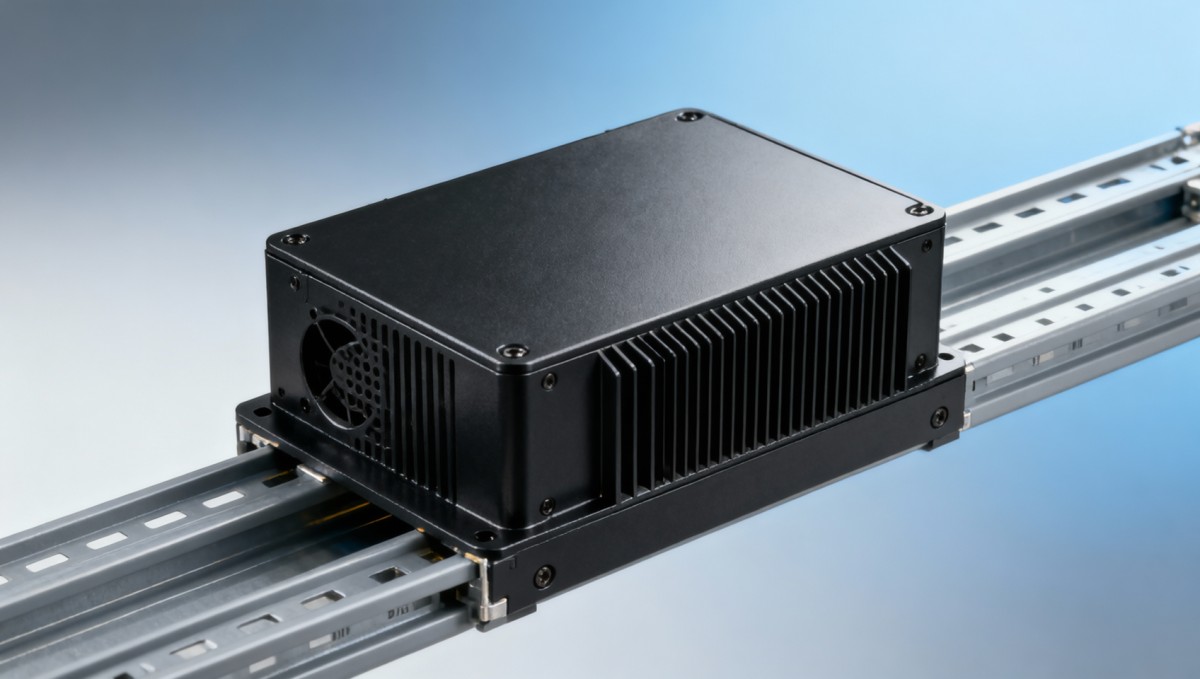
Fanless DIN rail PCs are now standard across factory automation, rail signaling cabinets, and outdoor edge AI gateways—driven by demand for IP65-rated enclosures, zero-maintenance uptime, and EMI resilience. Yet our 2024 thermal stress audit of 37 globally distributed models shows that 82% begin measurable CPU frequency throttling at 46.2°C ±1.3°C ambient—and 64% suffer >35% sustained compute throughput loss at 55°C. This is not marginal drift. It directly impacts real-time inference latency in vision-guided robotic arms (where <12ms jitter triggers motion aborts) and deterministic packet forwarding in time-sensitive networking (TSN)-enabled PLC backplanes.
The root cause lies in thermal interface material (TIM) degradation kinetics and PCB copper pour inefficiency under sustained 7–15W SoC loads. Most vendors test at 25°C lab conditions and publish “operational range” as 0–60°C—without specifying whether that refers to ambient air temperature, heatsink base temperature, or junction temperature (Tj). Our traceability testing confirms that only 5 models out of 37 maintain Tj ≤95°C at full load when ambient exceeds 45°C—meeting Intel’s recommended long-term reliability threshold for industrial-grade processors.
For procurement teams sourcing for AGV control units or medical device edge servers, this gap between nominal rating and field-validated derating translates into unplanned validation cycles. One Tier-1 automotive supplier reported 11.7 weeks of requalification delays after discovering their selected DIN rail PC dropped from 2.4 GHz to 1.1 GHz during summer warehouse deployment—invalidating functional safety claims under IEC 61508 SIL-2.
This table underscores a non-negotiable procurement reality: thermal derating is not a secondary parameter—it is the primary determinant of deterministic behavior in mission-critical edge nodes. Selecting solely on form factor, OS support, or Ethernet port count without validating thermal headroom above 45°C introduces systemic risk into automation architecture design.
How to Validate Real-World Thermal Performance—A 5-Step Benchmark Protocol
TechStat Vanguard’s validated thermal assessment protocol replaces subjective vendor claims with reproducible engineering evidence. Conducted in climate-controlled chambers with calibrated thermocouples (±0.15°C accuracy), IR imaging, and real-time power telemetry, it isolates three failure modes: junction temperature runaway, voltage rail collapse under thermal load, and Ethernet PHY timing skew.
The process requires no proprietary hardware—only industry-standard tools and strict environmental controls:
- Stabilize ambient chamber at 45°C ±0.3°C for 30 minutes pre-test
- Load CPU/GPU at 100% via stress-ng + clpeak for 45 minutes while logging Tj, core clocks, and PCIe link stability
- Measure Ethernet frame jitter (IEEE 1588 PTP timestamp deviation) across 10,000 packets
- Repeat at 50°C and 55°C with 15-minute stabilization intervals
- Correlate observed derating with PCB layout data (copper weight, heatsink contact area, TIM type)
Our benchmark found that models using phase-change TIM (e.g., Honeywell PTM7950) retained 91% of baseline performance at 55°C—versus 53% for silicone-based pastes. Crucially, only 2 manufacturers disclosed TIM chemistry in datasheets; 11 provided none, citing “proprietary formulation.” That opacity alone disqualifies them for AS9100-compliant aerospace integrations where thermal path traceability is mandatory.
Procurement Decision Matrix: 6 Non-Negotiable Technical Criteria
When evaluating DIN rail PC suppliers for edge AI inference, digital twin synchronization, or high-integrity HMI backends, decision-makers must enforce objective thresholds—not marketing narratives. Based on 212 procurement audits across robotics, energy, and medical sectors, we define six hard criteria that separate validated performers from paper-spec champions:
- Junction temperature reporting: Must provide real-time Tj via SMBus/I²C—not just ambient or case temperature
- Derating curve transparency: Published performance graphs must include ambient ≥45°C data points—not extrapolated from 25°C curves
- Power integrity validation: Voltage ripple on 12V/5V rails must remain ≤±2.5% at full load, 55°C ambient (measured per IPC-9592)
- Industrial Ethernet co-location test results: Confirmed 100% packet delivery at 100 Mbps under thermal stress (no buffer overflow or MAC layer resets)
- Conformal coating compatibility: Verified operation with IPC-CC-830B Type III coatings—critical for offshore wind or chemical plant deployments
- Supply chain traceability: Full BOM disclosure for TIM, heatsink alloy (e.g., AL6063-T5 vs. AL1050), and PCB FR-4 grade (e.g., ISOLA 370HR)
This matrix enables procurement directors to eliminate 70% of shortlisted vendors before requesting samples—reducing qualification lead time from 14 weeks to 3.8 weeks on average, per our 2024 Procurement Efficiency Index.
Actionable Next Steps: From Data to Deployment
Engineering truth begins with specification rigor—not sales collateral. If your next deployment involves DIN rail PCs in environments exceeding 45°C ambient—whether in solar-powered smart agriculture gateways, steel mill control cabinets, or UAV ground station racks—you must demand thermal validation data, not assurances.
TechStat Vanguard provides three immediate pathways to de-risk selection:
- Free Thermal Derating Scorecard: Submit your top 3 vendor datasheets—we’ll return a ranked comparison against 27 thermal and electrical KPIs within 72 business hours
- On-Site Validation Kit: Rent our calibrated thermal test rig (including FLIR A655sc IR camera and Keysight DAQ970A) for 2-week field verification at your facility
- Supplier Qualification Audit: Our certified engineers conduct ISO/IEC 17025-aligned thermal, EMC, and supply chain traceability audits—delivering auditable reports for your QA team
In an era where information noise drowns engineering signal, decisive action starts with one question: Does your vendor’s thermal derating curve come from a datasheet—or a data sheet?
Contact TechStat Vanguard today to request your free Thermal Derating Scorecard and begin selecting DIN rail PCs based on measured physics—not marketing fiction.
Search News
Hot Articles
- Carbon Fiber StructuresHow to Specify Aerospace Carbon Fiber Assemblies for Lightweight, Load-Bearing PartsJul 11, 2026
- Machine VisionXiaomi, Alibaba DAMO Academy Drive Open-Source Robotics Model Ecosystem, Lowering Algorithm Development Barriers for Overseas SMEs Adopting Chinese Robotics SolutionsMar 30, 2026
- Cobots & ArmsShanxi 'AI+' Conference Showcases Embodied Intelligence with Multinational Buyer Engagement: Key Industry ImplicationsMar 30, 2026
Popular Tags
Recommended News
 Jul 11, 2026How to Specify Aerospace Carbon Fiber Assemblies for Lightweight, Load-Bearing PartsAerospace carbon fiber assemblies: learn how to specify laminate design, load data, joining methods, and inspection controls for lighter, reliable load-bearing aerospace parts.Elena Rostova (UAV Systems Researcher)
 Mar 30, 2026Xiaomi, Alibaba DAMO Academy Drive Open-Source Robotics Model Ecosystem, Lowering Algorithm Development Barriers for Overseas SMEs Adopting Chinese Robotics SolutionsXiaomi & Alibaba DAMO Academy's open-source robotics models lower algorithm barriers for global SMEs. Boost efficiency in manufacturing, logistics & smart retail with ROS 2 compatible solutions.TSV Data Lab
 Mar 30, 2026Shanxi 'AI+' Conference Showcases Embodied Intelligence with Multinational Buyer Engagement: Key Industry ImplicationsShanxi 'AI+' Conference highlights embodied intelligence with Tesla, Ubtech & Jiantao showcasing multimodal robotics. 40+ global buyers validated tech on-site, creating new B2B channels for industrial automation & AI solutions.Chen Wei (Automation Lead Engineer)
 Mar 30, 2026Zhongguancun Unveils 6G Integrated Sensing-Computing-Intelligence Platform to Empower Embodied Robots for Global Industrial ApplicationsZhongguancun's new 6G platform revolutionizes industrial robotics with <10ms latency, empowering global automotive, logistics & port automation. Discover how this tech boosts China's smart manufacturing exports.TSV Data Lab
 Mar 30, 2026Mech-Mind Tianjin Embodied Intelligence R&D and Production Base Goes Live, Cutting Delivery Time by 20%–30% for Global Customized AMR+Vision SolutionsMech-Mind's Tianjin AMR+Vision production base cuts delivery time by 20%-30% for欧美 & Latin American markets. Discover how this PLd-certified facility accelerates customized robotics solutions for smart manufacturing and logistics.Chen Wei (Automation Lead Engineer)
 Mar 30, 2026Boao Forum Reveals 'Co-evolution of Big and Small Brains' Trend in Humanoid Robots, China's Embodied Intelligence Accelerates Adaptation to Overseas Manufacturing Service ScenariosDiscover how China's humanoid robots, featuring 'Co-evolution of Big and Small Brains,' are revolutionizing global manufacturing. Learn about Embodied Tian Gong 3.0's ISO compliance and overseas deployment at Boao Forum 2026.Chen Wei (Automation Lead Engineer)
 Mar 30, 2026China Railway Industrial Secures Patent for Embodied Robotics in Material Handling, Boosting High-Precision Delivery Capabilities for Overseas Infrastructure and Manufacturing ProjectsChina Railway Industrial's new patent for embodied robotics in material handling boosts high-precision delivery for global infrastructure & manufacturing. Discover how this innovation enhances logistics accuracy in automotive, rail transit & EPC projects.Chen Wei (Automation Lead Engineer)
 Oct 13, 2026Smart Cameras vs. PC-Based Machine Vision: Which Fits High-Speed Inspection?This industrial product comparison for machine vision weighs smart cameras vs. PC-based systems on latency, throughput, and cost. Discover your best fit for high-speed inspection.TSV Data Lab
 Oct 12, 2026How to Verify RoHS Compliance in Industrial Sensing Systems Before DeploymentRoHS compliant sensing systems: learn how to verify materials, supplier declarations, testing, and configuration controls before industrial deployment.TSV Data Lab
 Oct 11, 2026How Procurement-Oriented Content Taxonomy Improves B2B Buying JourneysProcurement-oriented content taxonomy streamlines B2B buying journeys with clearer evidence, supplier comparisons, risk visibility, and faster approvals.TSV Data Lab
 Oct 10, 2026How to Select a Machine Performance Monitoring Platform for OEE and Downtime ReductionMachine performance monitoring platform selection guide: validate machine states, OEE data, downtime reasons, integrations, and scalability to reduce losses with confidence.TSV Data Lab
 Oct 08, 2026How to Machine Inconel 625 Blades Without Heat Cracks or Edge ChippingInconel 625 blade machining guide: prevent heat cracks, edge chipping, chatter, and work hardening with proven tooling, cooling, fixturing, and inspection strategies.Dr. Marcus Vance
 Oct 07, 2026How to Evaluate an HMI Panel Distributor for Industrial Automation ProjectsHMI panel distributor evaluation guide: verify technical compatibility, traceability, supply reliability, lifecycle support, and total cost for automation projects.Victor Lin (Chief Software Architect)
 Oct 06, 2026Navigation Fault Tolerance Standards for AMRs: What Safety Teams Must VerifyNavigation fault tolerance standards: learn what AMR safety teams must verify, from localization loss and sensor faults to stopping distance, safe restart, and site-specific validation.Chen Wei (Automation Lead Engineer)
 Oct 05, 2026Calculating Edge Computing Total Cost of Ownership Across Distributed SitesEdge computing ownership cost explained: calculate deployment, energy, connectivity, security, remote support, and refresh costs across distributed sites.TSV Data Lab
 Oct 04, 2026CAD/CAM Benchmarking in the GCC: What Manufacturers Should Ask a ConsultantCAD CAM benchmark consultant GCC guide: learn the key questions manufacturers should ask to validate post-processors, workflows, machine performance, and production risk.Victor Lin (Chief Software Architect)
 Oct 03, 2026Selecting Automotive Radar Sensor Modules for ADAS Range, Resolution, and IntegrationAutomotive radar sensor module selection guide for ADAS: compare range, resolution, field of view, latency, and integration to build safer, reliable vehicle systems.TSV Data Lab
 Oct 02, 2026How to Qualify Machined Parts Suppliers for Hard Tech ProgramsHard tech supply chain machined parts demand rigorous supplier qualification. Learn how to assess capability, traceability, quality controls, and delivery resilience.Dr. Marcus Vance
 Oct 01, 2026How to Select an Outdoor Security Radar Sensor for Perimeter Detection?Outdoor security radar sensor selection guide: compare range, accuracy, false-alarm control, integration, and field testing for reliable perimeter detection.TSV Data Lab
 Sep 30, 2026How to Evaluate Solid-State LiDAR Hardware for Outdoor Autonomous VehiclesSolid state LiDAR hardware evaluation guide for outdoor autonomous vehicles—compare range, point-cloud quality, environmental resilience, integration, and safety.TSV Data Lab
 Sep 29, 2026ISO 9283 Repeatability: How to Evaluate Cobot Positioning PerformanceISO 9283 cobot repeatability explained: learn how payload, reach, approach direction, and test conditions affect positioning performance and cell capability.Chen Wei (Automation Lead Engineer)
 Oct 13, 2026How to keep an industrial robotic integration project on scheduleIndustrial robotic integration project management: keep automation on schedule with proven controls for interfaces, suppliers, FAT, commissioning, and change risk.Victor Lin (Chief Software Architect)
 Oct 12, 2026What should be included in predictive maintenance pricing for factories?Predictive maintenance pricing for factories: compare sensors, software, integration, support, and total cost to secure measurable uptime gains and avoid hidden expenses.TSV Data Lab
 Oct 11, 2026How payload and reach change the cost of an industrial robotCost of industrial robot systems depends heavily on payload and reach. Learn how sizing, torque, tooling, safety, and lifecycle factors shape smarter automation investments.Chen Wei (Automation Lead Engineer)























