When a custom drone for power line inspection makes sense
Publication Date
author
For utilities, EPC firms, and infrastructure owners, deciding when a custom drone for power line inspection is justified should start with measurable thresholds. A custom drone for power line inspection becomes rational when terrain, payload, endurance, data fidelity, and compliance requirements move beyond the safe operating envelope of standard UAV platforms. In those cases, customization is less about novelty and more about reducing repeat flights, improving defect detection, controlling outage risk, and lowering total lifecycle cost.
Why a checklist is the right way to evaluate a custom drone for power line inspection
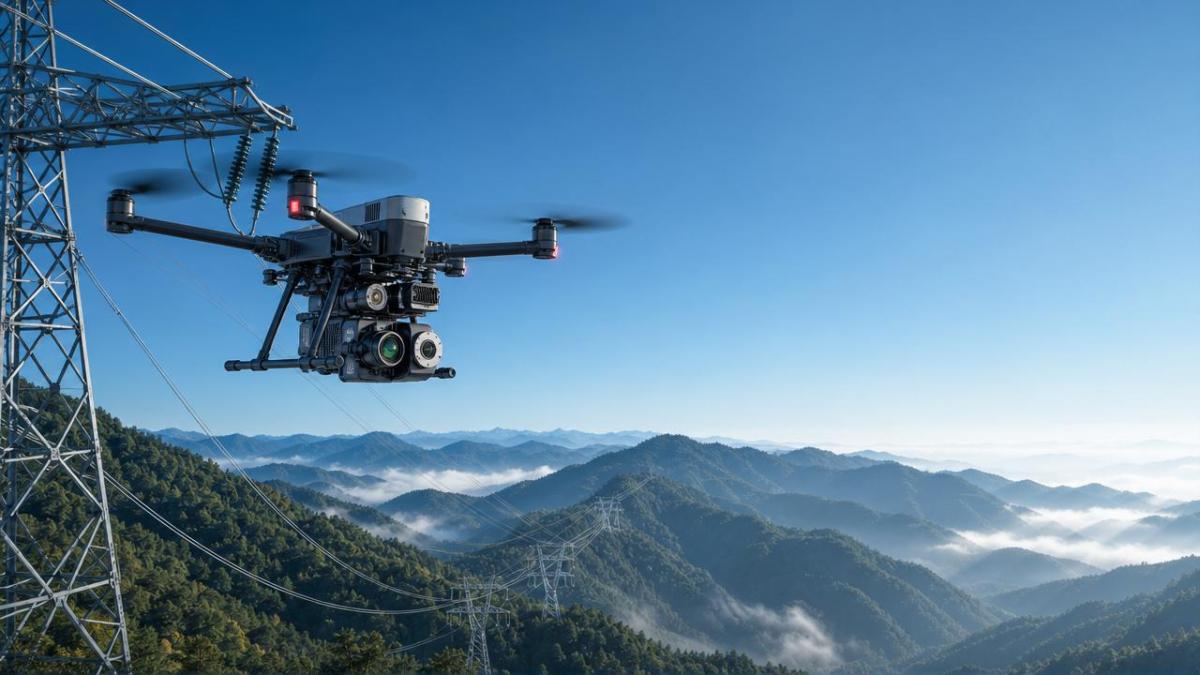
Power line inspection decisions often fail when teams compare marketing brochures instead of mission data. TSV’s engineering-first view is simple: parameters matter more than slogans.
A checklist forces the evaluation toward payload mass, flight time under wind load, EMI resilience, georeferencing accuracy, and maintenance intervals. That structure also makes supplier comparison easier.
For a custom drone for power line inspection, the business case should be built from hard constraints. If three or more constraints consistently break standard platform limits, customization deserves serious review.
Core checklist: when a custom drone for power line inspection makes sense
- Define mission range and segment length. Choose customization when one sortie must cover long corridors that exceed standard battery endurance after accounting for reserve power, climb load, and return distance.
- Measure terrain complexity. Specify a custom drone for power line inspection if steep valleys, forest canyons, offshore spans, or mountain ridges create unstable GPS coverage and difficult visual line management.
- Calculate payload stack mass. Move to a tailored airframe when RGB, thermal, LiDAR, corona, zoom optics, and edge compute modules together exceed safe thrust margins on commercial systems.
- Verify data accuracy targets. Customize when required conductor clearance models, tower geometry reconstruction, or hotspot localization demand tighter positional consistency than off-the-shelf integration normally provides.
- Assess electromagnetic exposure. Select hardened flight control, shielding, and wiring layouts when inspection paths pass close to energized assets that can disrupt compass, GNSS, or telemetry stability.
- Check weather operating envelope. Upgrade propulsion, sealing, and vibration isolation if missions must continue in higher wind, light rain, dust, salt fog, or winter temperature swings.
- Review launch and recovery constraints. Adopt custom VTOL, winch-safe operation, or compact fold geometry when substations, roadside shoulders, and remote rights-of-way limit deployment space.
- Compare workflow integration needs. Customize interfaces when image tagging, GIS export, defect taxonomy, and maintenance software linkage must fit existing utility asset management systems without manual rework.
- Examine compliance requirements. A custom drone for power line inspection is justified when operations demand auditable redundancy, geofencing logic, encrypted data paths, or documented component traceability.
- Model lifecycle economics. Approve customization when fewer repeat missions, lower outage exposure, and reduced contractor dependence offset higher upfront engineering and qualification cost within a defined payback period.
How the decision changes across operating scenarios
Mountain and forest transmission corridors
In rugged terrain, a custom drone for power line inspection often makes sense earlier than expected. Elevation change, gusting crosswinds, and obstructed access roads increase the value of endurance and stable sensing.
A custom propulsion setup, tuned flight controller, and terrain-aware navigation can reduce aborted missions. That matters when each redeployment adds hours of travel and safety exposure.
Urban distribution and dense substations
In cities, compactness and precision usually matter more than pure endurance. Obstacles, RF congestion, and tighter operational boundaries favor smaller airframes with stable hover, shielding, and accurate close-range optics.
Here, customization is justified when a standard platform cannot maintain safe standoff distance while still resolving connectors, insulators, clamps, and localized thermal anomalies with repeatable image quality.
Offshore, coastal, and high-corrosion environments
Salt exposure changes the economics. Corrosion-resistant materials, sealed connectors, conformal coating, and predictable maintenance intervals can turn a custom drone for power line inspection into a risk-control tool.
If standard drones require frequent replacement, the lower capital price becomes misleading. Engineering durability into the platform may deliver better availability over the service life.
Multi-sensor digital twin and asset analytics programs
When inspection data feeds a broader analytics pipeline, customization should be judged by data quality, not by aircraft appearance. Sensor synchronization and timestamp integrity become central design issues.
A tailored platform can support precise boresight alignment, power distribution, thermal management, and onboard processing. Those details directly affect whether data is decision-grade or only visually useful.
Commonly overlooked issues before selecting a custom drone for power line inspection
Ignoring payload power draw
Payload weight is visible; payload power demand is often not. High-draw sensors and onboard compute reduce endurance faster than nominal battery specifications suggest.
Underestimating EMI validation
Bench testing away from energized infrastructure can hide serious stability problems. EMI hardening must be verified near representative assets, not assumed from component datasheets.
Confusing sensor presence with usable data
Adding thermal or LiDAR does not guarantee actionable results. Mount rigidity, calibration discipline, and synchronized metadata determine whether defects can be trusted and traced.
Skipping maintainability analysis
A custom drone for power line inspection should simplify field service, not complicate it. Fast battery swaps, accessible harness routing, spare part traceability, and modular payload replacement matter.
Using purchase price as the main filter
The cheapest airframe can become the most expensive option if it causes repeat flights, manual data cleanup, or missed defects that escalate into unplanned maintenance events.
Practical execution steps
- Start with three recent inspection routes and map actual flight distance, wind profile, altitude change, and defect-resolution requirements before discussing airframe type.
- Build a mission payload matrix listing sensor mass, power draw, mounting orientation, cooling need, and required geospatial accuracy for each inspection task.
- Define acceptance thresholds for endurance, hover stability, image sharpness, thermal localization error, telemetry resilience, and safe return reserve under representative load.
- Request evidence, not claims: EMI test notes, environmental sealing details, maintenance intervals, component traceability, and sample datasets from comparable line environments.
- Run a pilot on the hardest corridor, not the easiest one. The value of a custom drone for power line inspection appears fastest under the most demanding conditions.
Conclusion and next action
A custom drone for power line inspection makes sense when operational demands exceed the validated limits of standard UAV systems in repeatable, measurable ways. The key triggers are not branding or feature count, but endurance under load, sensor integration quality, EMI resilience, environmental hardening, compliance traceability, and data reliability.
The most effective next step is to convert one inspection route into an engineering scorecard. Document payload mass, target defect classes, required accuracy, weather envelope, launch constraints, and acceptable lifecycle cost. If standard platforms fail that scorecard without major compromise, customization is no longer optional—it is the technically sound path.
Search News
Hot Articles
- Carbon Fiber StructuresHow to Specify Aerospace Carbon Fiber Assemblies for Lightweight, Load-Bearing PartsJul 11, 2026
- Machine VisionXiaomi, Alibaba DAMO Academy Drive Open-Source Robotics Model Ecosystem, Lowering Algorithm Development Barriers for Overseas SMEs Adopting Chinese Robotics SolutionsMar 30, 2026
- Cobots & ArmsShanxi 'AI+' Conference Showcases Embodied Intelligence with Multinational Buyer Engagement: Key Industry ImplicationsMar 30, 2026
Popular Tags
Recommended News
 Jul 11, 2026How to Specify Aerospace Carbon Fiber Assemblies for Lightweight, Load-Bearing PartsAerospace carbon fiber assemblies: learn how to specify laminate design, load data, joining methods, and inspection controls for lighter, reliable load-bearing aerospace parts.Elena Rostova (UAV Systems Researcher)
 Mar 30, 2026Xiaomi, Alibaba DAMO Academy Drive Open-Source Robotics Model Ecosystem, Lowering Algorithm Development Barriers for Overseas SMEs Adopting Chinese Robotics SolutionsXiaomi & Alibaba DAMO Academy's open-source robotics models lower algorithm barriers for global SMEs. Boost efficiency in manufacturing, logistics & smart retail with ROS 2 compatible solutions.TSV Data Lab
 Mar 30, 2026Shanxi 'AI+' Conference Showcases Embodied Intelligence with Multinational Buyer Engagement: Key Industry ImplicationsShanxi 'AI+' Conference highlights embodied intelligence with Tesla, Ubtech & Jiantao showcasing multimodal robotics. 40+ global buyers validated tech on-site, creating new B2B channels for industrial automation & AI solutions.Chen Wei (Automation Lead Engineer)
 Mar 30, 2026Zhongguancun Unveils 6G Integrated Sensing-Computing-Intelligence Platform to Empower Embodied Robots for Global Industrial ApplicationsZhongguancun's new 6G platform revolutionizes industrial robotics with <10ms latency, empowering global automotive, logistics & port automation. Discover how this tech boosts China's smart manufacturing exports.TSV Data Lab
 Mar 30, 2026Mech-Mind Tianjin Embodied Intelligence R&D and Production Base Goes Live, Cutting Delivery Time by 20%–30% for Global Customized AMR+Vision SolutionsMech-Mind's Tianjin AMR+Vision production base cuts delivery time by 20%-30% for欧美 & Latin American markets. Discover how this PLd-certified facility accelerates customized robotics solutions for smart manufacturing and logistics.Chen Wei (Automation Lead Engineer)
 Mar 30, 2026Boao Forum Reveals 'Co-evolution of Big and Small Brains' Trend in Humanoid Robots, China's Embodied Intelligence Accelerates Adaptation to Overseas Manufacturing Service ScenariosDiscover how China's humanoid robots, featuring 'Co-evolution of Big and Small Brains,' are revolutionizing global manufacturing. Learn about Embodied Tian Gong 3.0's ISO compliance and overseas deployment at Boao Forum 2026.Chen Wei (Automation Lead Engineer)
 Mar 30, 2026China Railway Industrial Secures Patent for Embodied Robotics in Material Handling, Boosting High-Precision Delivery Capabilities for Overseas Infrastructure and Manufacturing ProjectsChina Railway Industrial's new patent for embodied robotics in material handling boosts high-precision delivery for global infrastructure & manufacturing. Discover how this innovation enhances logistics accuracy in automotive, rail transit & EPC projects.Chen Wei (Automation Lead Engineer)
 Oct 03, 2026Selecting Automotive Radar Sensor Modules for ADAS Range, Resolution, and IntegrationAutomotive radar sensor module selection guide for ADAS: compare range, resolution, field of view, latency, and integration to build safer, reliable vehicle systems.TSV Data Lab
 Oct 02, 2026How to Qualify Machined Parts Suppliers for Hard Tech ProgramsHard tech supply chain machined parts demand rigorous supplier qualification. Learn how to assess capability, traceability, quality controls, and delivery resilience.Dr. Marcus Vance
 Oct 01, 2026How to Select an Outdoor Security Radar Sensor for Perimeter Detection?Outdoor security radar sensor selection guide: compare range, accuracy, false-alarm control, integration, and field testing for reliable perimeter detection.TSV Data Lab
 Sep 30, 2026How to Evaluate Solid-State LiDAR Hardware for Outdoor Autonomous VehiclesSolid state LiDAR hardware evaluation guide for outdoor autonomous vehicles—compare range, point-cloud quality, environmental resilience, integration, and safety.TSV Data Lab
 Sep 29, 2026ISO 9283 Repeatability: How to Evaluate Cobot Positioning PerformanceISO 9283 cobot repeatability explained: learn how payload, reach, approach direction, and test conditions affect positioning performance and cell capability.Chen Wei (Automation Lead Engineer)
 Oct 03, 2026Is Edge Computing Necessary for Real-Time Quality Inspection?Is industrial edge computing necessary for real-time quality inspection? Explore how latency, data volume, reliability, and control integration shape the right architecture.TSV Data Lab
 Oct 02, 2026What Documents Prove a Precision Machining Supplier Can Hold Tolerance?What documents prove a precision machining supplier can hold tolerance? Explore certificates, FAI reports, calibration, SPC, and traceability evidence to qualify suppliers with confidence.Dr. Marcus Vance
 Oct 01, 2026Can a Machining Supplier Meet Aerospace Fatigue Testing Requirements?Can a machining supplier meet aerospace fatigue testing requirements? Learn the traceability, process control, and test evidence needed for reliable aerospace parts.Dr. Marcus Vance
 Sep 30, 2026Which Industrial Robot Specifications Matter for High-Precision Assembly?Which industrial robot specifications matter most for high-precision assembly? Explore repeatability, accuracy, stiffness, vibration, calibration, and force control for reliable yields.Chen Wei (Automation Lead Engineer)
 Sep 29, 2026How Do You Verify Servo Motor Torque Under Continuous Load?How do I verify servo motor torque under continuous load? Learn RMS torque checks, torque-speed limits, thermal derating, and real-machine testing.Chen Wei (Automation Lead Engineer)
 Oct 02, 2026ZD330 Software Configuration: Verifying Cut-List Import Before PurchaseZD330 software and machine configuration: verify cut-list imports, data mapping, labels, and workflow before purchase to reduce errors and choose with confidence.Victor Lin (Chief Software Architect)
 Sep 28, 2026Spindle Runout Measurement in Germany: DIN Standards, Methods, and Acceptance LimitsSpindle runout measurement Germany: explore DIN standards, proven methods, acceptance limits, and audit-ready practices for reliable machining quality.Dr. Marcus Vance
 Sep 27, 2026How to Select Wall-Mount Edge Devices for Space-Constrained Factory NetworksWall mount edge devices for space-constrained factories: evaluate workload, thermal design, power resilience, cable access, and network reliability for smarter deployments.TSV Data Lab
 Sep 26, 2026Machining Tolerance Analysis: How to Set Limits That Meet Function and Cost TargetsMachining tolerance analysis: learn how to set functional limits, control tolerance stacks, reduce inspection risk, and balance precision with production cost.Dr. Marcus Vance
 Sep 25, 2026How to Evaluate an Industrial Infrastructure Data Platform for Multi-Site OperationsIndustrial infrastructure data platform evaluation guide for multi-site operations: compare data quality, edge resilience, interoperability, governance, and scalable proof-of-value criteria.Victor Lin (Chief Software Architect)
 Sep 24, 2026How to Select Machine Vision Optics for Accurate Inspection at Different Working DistancesMachine vision optics selection guide for accurate inspection at every working distance. Compare FOV, pixel scale, DOF, distortion, lighting, and telecentric options.TSV Data Lab
 Sep 23, 2026How to Evaluate a Machine Vision System Integrator for High-Speed Inspection LinesChoose a machine vision system integrator with proven expertise in high-speed inspection, reliable reject timing, robust optics, and measurable acceptance criteria.TSV Data Lab