Water Treatment SCADA Cost Breakdown: Licensing, Integration, and Long-Term Maintenance
Publication Date
author
Why does water treatment SCADA cost vary so much between projects?
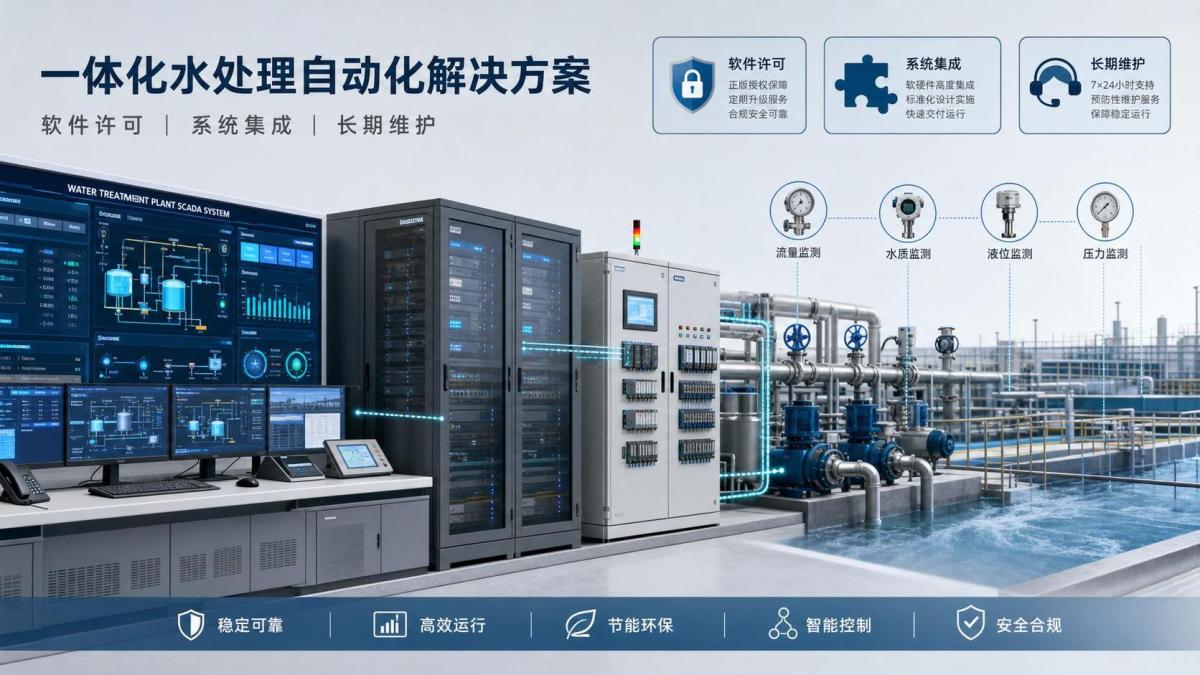
Water treatment SCADA cost looks simple at first glance, yet budgets rarely stop at software purchase. The real number is shaped by architecture, site conditions, compliance scope, and support expectations.
In utility environments, SCADA is not a generic dashboard. It sits between PLCs, instruments, historians, alarms, networks, operators, and reporting workflows. Each connection changes project effort.
That is why two systems with similar screen counts can carry very different total cost. One may be a clean upgrade. Another may require protocol conversion, network segmentation, and legacy database migration.
A more useful question is not, “What is the software price?” It is, “What must this system securely connect, monitor, archive, and sustain over its operating life?”
This is also where a data-first review matters. TechStat Vanguard often frames industrial investment around verifiable parameters, not marketing language, because infrastructure decisions fail when assumptions stay vague.
When people ask about licensing, what are they really paying for?
Licensing usually covers more than the core SCADA runtime. It may include development seats, client access, historian modules, reporting tools, mobile views, redundancy, and cybersecurity add-ons.
Vendors package these costs differently. Some price by tag count. Others use server tiers, client sessions, plant size, or annual subscriptions. The same proposal can appear cheaper only because important modules sit elsewhere.
In practice, water treatment SCADA cost often rises after the initial quote when the project team realizes the base license excludes historian depth, failover capability, or remote engineering access.
A practical review should confirm these items before approval:
- How many tags are licensed today, and what growth margin is included?
- Are operator clients, web clients, and engineering clients counted separately?
- Is redundancy licensed as standard or as an extra module?
- Does the annual fee include upgrades, security patches, and vendor support?
- Will historians, reports, and alarm analytics require separate subscriptions?
Licensing becomes manageable when the commercial model matches the technical plan. Problems start when the project scope assumes capabilities that the contract never actually includes.
Is integration usually the largest hidden driver in water treatment SCADA cost?
Very often, yes. Integration is where budget estimates move from theory to field reality. Water plants rarely operate as clean-sheet digital environments.
A new SCADA layer may need to communicate with mixed-generation PLCs, pump stations, analyzers, VFDs, power monitoring, laboratory systems, and enterprise reporting tools. Each interface adds engineering time.
The more legacy equipment involved, the less predictable the effort. Documentation may be incomplete. Communications may be unstable. Tag naming may be inconsistent across sites.
Integration cost also rises when uptime constraints are strict. Cutovers during active water treatment operations require staging, simulation, fallback plans, and carefully scheduled commissioning windows.
A proposal that looks low can simply mean integration assumptions were light. That does not reduce water treatment SCADA cost. It only delays where the spend appears.
This table is useful during vendor comparison because it separates visible line items from the areas where costs typically surface later.
How should cybersecurity and compliance be treated in the budget?
They should be treated as core system cost, not optional polish. Water treatment operations depend on resilient control and traceable events, especially where public health, discharge limits, or critical infrastructure requirements apply.
Cybersecurity spending may include firewalls, segmented architectures, secure remote access, patch validation, endpoint controls, backup strategies, and event logging. These are not always bundled into SCADA proposals.
Longer approval cycles often happen when this portion is overlooked. A project team may submit only software and integration figures, while the actual deployable system needs more controls to meet internal standards.
A useful way to check water treatment SCADA cost is to separate “system works” from “system is supportable and defensible.” The second category is where many lifecycle surprises originate.
TSV’s broader industrial view is relevant here. Across automation, edge systems, and high-value infrastructure, the most expensive failures usually come from weak validation around interfaces, thresholds, and operating conditions.
What does long-term maintenance really include after go-live?
Maintenance is more than fixing a server when it fails. It includes software updates, patch compatibility checks, alarm tuning, historian upkeep, backups, antivirus coordination, user administration, and periodic disaster recovery testing.
Hardware refresh should also be expected. Industrial servers, networking devices, and operator workstations do not remain economically efficient forever. A low first-year number can hide a much larger five-year ownership profile.
Support models differ as well. Some contracts include phone support only. Others include remote diagnostics, annual health checks, software upgrades, and limited engineering hours.
When comparing water treatment SCADA cost, it helps to ask whether maintenance is reactive or managed. Reactive support is cheaper on paper. Managed support is often cheaper after unplanned downtime and emergency callouts are considered.
A sensible review timeline usually covers at least these horizons:
- Year 1: commissioning support, stabilization, and training corrections
- Years 2 to 3: upgrades, cybersecurity reviews, and historian tuning
- Years 4 to 5: hardware renewal planning and license expansion
Which pricing assumptions deserve the closest scrutiny before approval?
The risky assumptions are usually the quiet ones. Vendors may state “by others,” “if required,” or “based on available documentation.” Those phrases often signal future change orders.
It helps to turn the review into a set of direct validation questions rather than a generic cost check.
A short approval checklist
- Are all interfaces listed by device, protocol, and responsibility?
- Is tag growth allowance documented, not assumed?
- Are FAT, SAT, and operator training priced explicitly?
- Is cybersecurity scope tied to internal standards and site architecture?
- Does the maintenance number include upgrade labor as well as license renewal?
- Is there a clear boundary between integrator scope and plant-side work?
More often than not, water treatment SCADA cost is not misjudged because the technology is mysterious. It is misjudged because the scope language is loose.
So what is the smartest next step when comparing proposals?
Start by converting each proposal into the same cost structure: licensing, integration, cybersecurity, commissioning, and five-year maintenance. That exposes whether a low bid is truly efficient or simply incomplete.
Then test the technical assumptions behind the numbers. In industrial controls, precision matters more than presentation. A credible proposal explains interfaces, recovery strategy, growth path, and support obligations in measurable terms.
That discipline aligns with TSV’s core view of hard-tech sourcing: remove the noise, inspect the parameters, and let engineering facts shape commercial decisions.
If a budget review is happening now, the most useful next move is to build a side-by-side comparison sheet, confirm hidden scope items, and recast water treatment SCADA cost as lifecycle cost rather than purchase price alone.
Search News
Hot Articles
- Carbon Fiber StructuresHow to Specify Aerospace Carbon Fiber Assemblies for Lightweight, Load-Bearing PartsJul 11, 2026
- Machine VisionXiaomi, Alibaba DAMO Academy Drive Open-Source Robotics Model Ecosystem, Lowering Algorithm Development Barriers for Overseas SMEs Adopting Chinese Robotics SolutionsMar 30, 2026
- Cobots & ArmsShanxi 'AI+' Conference Showcases Embodied Intelligence with Multinational Buyer Engagement: Key Industry ImplicationsMar 30, 2026
Popular Tags
Recommended News
 Jul 11, 2026How to Specify Aerospace Carbon Fiber Assemblies for Lightweight, Load-Bearing PartsAerospace carbon fiber assemblies: learn how to specify laminate design, load data, joining methods, and inspection controls for lighter, reliable load-bearing aerospace parts.Elena Rostova (UAV Systems Researcher)
 Mar 30, 2026Xiaomi, Alibaba DAMO Academy Drive Open-Source Robotics Model Ecosystem, Lowering Algorithm Development Barriers for Overseas SMEs Adopting Chinese Robotics SolutionsXiaomi & Alibaba DAMO Academy's open-source robotics models lower algorithm barriers for global SMEs. Boost efficiency in manufacturing, logistics & smart retail with ROS 2 compatible solutions.TSV Data Lab
 Mar 30, 2026Shanxi 'AI+' Conference Showcases Embodied Intelligence with Multinational Buyer Engagement: Key Industry ImplicationsShanxi 'AI+' Conference highlights embodied intelligence with Tesla, Ubtech & Jiantao showcasing multimodal robotics. 40+ global buyers validated tech on-site, creating new B2B channels for industrial automation & AI solutions.Chen Wei (Automation Lead Engineer)
 Mar 30, 2026Zhongguancun Unveils 6G Integrated Sensing-Computing-Intelligence Platform to Empower Embodied Robots for Global Industrial ApplicationsZhongguancun's new 6G platform revolutionizes industrial robotics with <10ms latency, empowering global automotive, logistics & port automation. Discover how this tech boosts China's smart manufacturing exports.TSV Data Lab
 Mar 30, 2026Mech-Mind Tianjin Embodied Intelligence R&D and Production Base Goes Live, Cutting Delivery Time by 20%–30% for Global Customized AMR+Vision SolutionsMech-Mind's Tianjin AMR+Vision production base cuts delivery time by 20%-30% for欧美 & Latin American markets. Discover how this PLd-certified facility accelerates customized robotics solutions for smart manufacturing and logistics.Chen Wei (Automation Lead Engineer)
 Mar 30, 2026Boao Forum Reveals 'Co-evolution of Big and Small Brains' Trend in Humanoid Robots, China's Embodied Intelligence Accelerates Adaptation to Overseas Manufacturing Service ScenariosDiscover how China's humanoid robots, featuring 'Co-evolution of Big and Small Brains,' are revolutionizing global manufacturing. Learn about Embodied Tian Gong 3.0's ISO compliance and overseas deployment at Boao Forum 2026.Chen Wei (Automation Lead Engineer)
 Mar 30, 2026China Railway Industrial Secures Patent for Embodied Robotics in Material Handling, Boosting High-Precision Delivery Capabilities for Overseas Infrastructure and Manufacturing ProjectsChina Railway Industrial's new patent for embodied robotics in material handling boosts high-precision delivery for global infrastructure & manufacturing. Discover how this innovation enhances logistics accuracy in automotive, rail transit & EPC projects.Chen Wei (Automation Lead Engineer)
 Oct 02, 2026How to Qualify Machined Parts Suppliers for Hard Tech ProgramsHard tech supply chain machined parts demand rigorous supplier qualification. Learn how to assess capability, traceability, quality controls, and delivery resilience.Dr. Marcus Vance
 Oct 01, 2026How to Select an Outdoor Security Radar Sensor for Perimeter Detection?Outdoor security radar sensor selection guide: compare range, accuracy, false-alarm control, integration, and field testing for reliable perimeter detection.TSV Data Lab
 Sep 30, 2026How to Evaluate Solid-State LiDAR Hardware for Outdoor Autonomous VehiclesSolid state LiDAR hardware evaluation guide for outdoor autonomous vehicles—compare range, point-cloud quality, environmental resilience, integration, and safety.TSV Data Lab
 Sep 29, 2026ISO 9283 Repeatability: How to Evaluate Cobot Positioning PerformanceISO 9283 cobot repeatability explained: learn how payload, reach, approach direction, and test conditions affect positioning performance and cell capability.Chen Wei (Automation Lead Engineer)
 Oct 01, 2026Can a Machining Supplier Meet Aerospace Fatigue Testing Requirements?Can a machining supplier meet aerospace fatigue testing requirements? Learn the traceability, process control, and test evidence needed for reliable aerospace parts.Dr. Marcus Vance
 Sep 30, 2026Which Industrial Robot Specifications Matter for High-Precision Assembly?Which industrial robot specifications matter most for high-precision assembly? Explore repeatability, accuracy, stiffness, vibration, calibration, and force control for reliable yields.Chen Wei (Automation Lead Engineer)
 Sep 29, 2026How Do You Verify Servo Motor Torque Under Continuous Load?How do I verify servo motor torque under continuous load? Learn RMS torque checks, torque-speed limits, thermal derating, and real-machine testing.Chen Wei (Automation Lead Engineer)
 Oct 02, 2026ZD330 Software Configuration: Verifying Cut-List Import Before PurchaseZD330 software and machine configuration: verify cut-list imports, data mapping, labels, and workflow before purchase to reduce errors and choose with confidence.Victor Lin (Chief Software Architect)
 Sep 28, 2026Spindle Runout Measurement in Germany: DIN Standards, Methods, and Acceptance LimitsSpindle runout measurement Germany: explore DIN standards, proven methods, acceptance limits, and audit-ready practices for reliable machining quality.Dr. Marcus Vance
 Sep 27, 2026How to Select Wall-Mount Edge Devices for Space-Constrained Factory NetworksWall mount edge devices for space-constrained factories: evaluate workload, thermal design, power resilience, cable access, and network reliability for smarter deployments.TSV Data Lab
 Sep 26, 2026Machining Tolerance Analysis: How to Set Limits That Meet Function and Cost TargetsMachining tolerance analysis: learn how to set functional limits, control tolerance stacks, reduce inspection risk, and balance precision with production cost.Dr. Marcus Vance
 Sep 25, 2026How to Evaluate an Industrial Infrastructure Data Platform for Multi-Site OperationsIndustrial infrastructure data platform evaluation guide for multi-site operations: compare data quality, edge resilience, interoperability, governance, and scalable proof-of-value criteria.Victor Lin (Chief Software Architect)
 Sep 24, 2026How to Select Machine Vision Optics for Accurate Inspection at Different Working DistancesMachine vision optics selection guide for accurate inspection at every working distance. Compare FOV, pixel scale, DOF, distortion, lighting, and telecentric options.TSV Data Lab
 Sep 23, 2026How to Evaluate a Machine Vision System Integrator for High-Speed Inspection LinesChoose a machine vision system integrator with proven expertise in high-speed inspection, reliable reject timing, robust optics, and measurable acceptance criteria.TSV Data Lab
 Oct 01, 2026What is included in a robotic system integration project cost?Robotic system integration project cost explained: compare equipment, engineering, safety, testing, installation, and lifecycle factors for smarter automation investments.Chen Wei (Automation Lead Engineer)
 Sep 30, 2026How much does warehouse automation cost for a growing distribution center?How much does warehouse automation cost? Explore equipment, integration, facility upgrades, lifecycle expenses, and ROI factors for a growing distribution center.Chen Wei (Automation Lead Engineer)
 Sep 29, 2026How MES and OEE work together to identify production lossesMES and OEE work together to uncover hidden production losses, connect downtime, speed, and quality data, and drive smarter shop-floor improvements.Victor Lin (Chief Software Architect)