Portable Tethered Drone System Applications for Persistent Monitoring and Site Security
Publication Date
author
Where a Portable Tethered Drone System Creates Real Operational Value
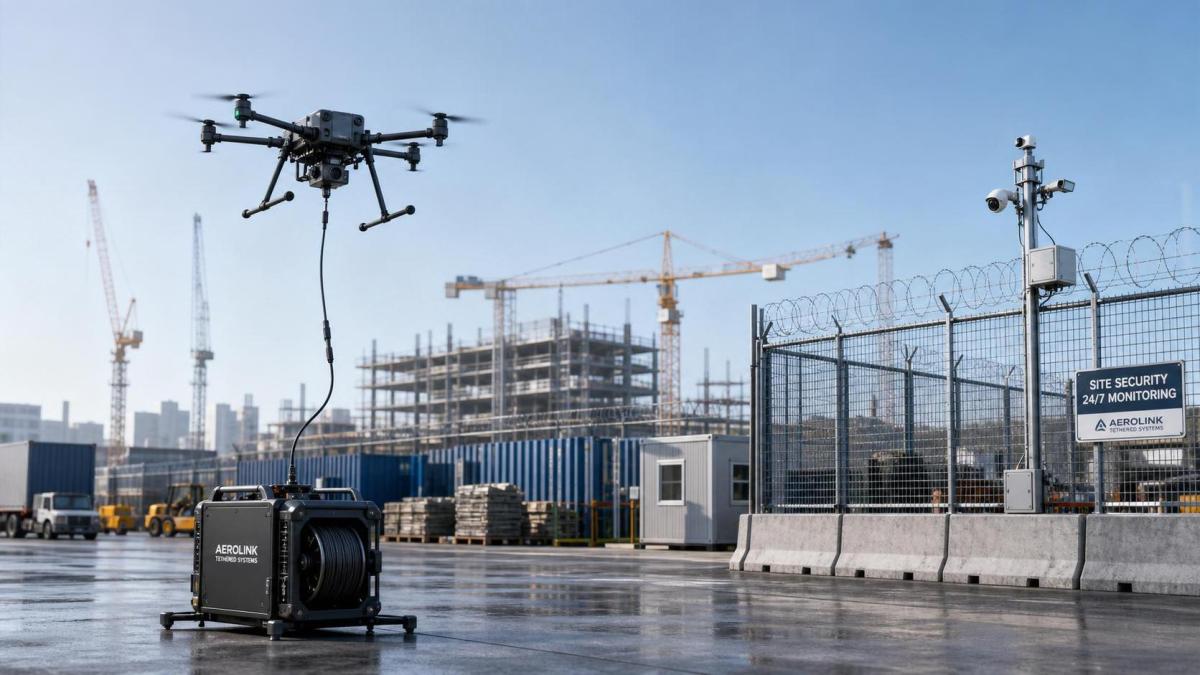
A portable tethered drone system is rarely chosen for novelty. It is usually selected when uninterrupted aerial visibility matters more than range.
That distinction changes the business case. Battery-only UAVs support fast missions, but fixed-duration flights limit continuous observation and repeatable security coverage.
In practice, persistent monitoring is valuable when the site changes by the minute, access routes are exposed, or incident response depends on immediate overhead awareness.
A portable tethered drone system fits those conditions because power delivery and secure data linkage reduce landing cycles, blind intervals, and repositioning delays.
For a data-driven platform such as TechStat Vanguard, the relevant question is not whether tethering sounds advanced. The relevant question is where measurable uptime justifies deployment complexity.
That is why application context matters. A construction perimeter, a substation, and a temporary logistics yard may all need aerial oversight, but their decision criteria differ.
Actual Use Starts With Why the Site Needs Persistence
Different sites ask different things from the same portable tethered drone system. The gap usually comes from risk profile, airspace limits, staffing pattern, and evidence requirements.
Some locations need deterrence. Others need documentation. In more sensitive environments, the priority becomes stable sensor coverage and dependable command continuity.
This is where inflated marketing language becomes unhelpful. A serious evaluation should compare endurance, operating height stability, payload support, wind tolerance, and deployment time under field conditions.
TSV’s engineering-first perspective is useful here. Parameters matter more than slogans, especially when a monitoring platform must support site security decisions, not just produce attractive demos.
A portable tethered drone system also sits between fixed mast surveillance and free-flying UAV operations. It is more mobile than a permanent tower, yet more persistent than untethered aircraft.
That middle position explains its strongest applications. It works best where the site moves, but not so fast that long-range flight is the main requirement.
Construction and Infrastructure Sites Need More Than Perimeter Video
On large construction projects, the value of a portable tethered drone system often begins with elevation. Ground cameras miss material flow, blind corners, crane interaction, and changing access points.
Overhead persistence helps verify whether vehicle routes remain clear, restricted zones stay respected, and overnight conditions match handover reports. That reduces ambiguity during shift changes.
The same platform becomes useful during concrete pours, heavy lifts, or phased shutdown work. In those moments, uninterrupted visibility matters more than broad exploration.
Critical infrastructure sites create a different requirement. Substations, pipeline nodes, and telecom assets often need persistent observation for intrusion detection, thermal anomalies, and maintenance coordination.
Here, a portable tethered drone system is less about documenting progress and more about maintaining a stable overwatch position without repeated launch cycles.
The judgment point is whether the site benefits from temporary elevated surveillance that can be moved between assets without building permanent poles or towers.
Where temporary logistics yards and event perimeters differ
Temporary logistics compounds usually focus on flow control, night visibility, and incident verification. Their risk is operational disruption as much as unauthorized entry.
Event perimeters, by contrast, depend on crowd observation, queue monitoring, and rapid escalation awareness. The surveillance objective changes quickly as density and movement patterns shift.
In both cases, a portable tethered drone system can outperform patrol-based observation. Still, sensor choice, flight altitude, and privacy controls need different treatment.
Different Scenarios Change the Technical Priority
The same airborne platform should not be judged by one universal checklist. A better approach is to map site conditions to the technical variables that actually affect outcome.
This comparison shows why portable tethered drone system selection should follow site logic first, then specification filtering. That order prevents overbuying and under-scoping.
What Usually Gets Misread Before Deployment
A common mistake is to compare only flight endurance claims. Persistent monitoring quality also depends on tether handling, launch footprint, recovery time, and operator workload.
Another mistake is treating similar sites as identical. Two industrial yards may look comparable, yet wind corridors, electromagnetic conditions, and line-of-sight obstruction can differ sharply.
There is also a cost illusion. A low entry price may hide higher maintenance burden, cable wear, sensor swaps, vehicle integration work, or additional training requirements.
For a portable tethered drone system, transport and redeployment are often underestimated. If the equipment is technically mobile but operationally cumbersome, persistence loses value.
Sensor assumptions can also create blind spots. A daylight camera may satisfy basic overview needs, but thermal imaging or low-light performance may determine whether security alerts are actionable.
- Do not separate airframe endurance from payload power demand.
- Do not judge suitability without checking local wind and interference conditions.
- Do not assume site security goals are solved by altitude alone.
- Do not ignore data retention, chain-of-custody, and integration with existing alarms.
A Practical Way to Match the Portable Tethered Drone System to the Job
A useful starting point is to define the observation task in measurable terms. Coverage duration, altitude window, image requirement, and reposition frequency should be written before vendor comparison.
Next, separate primary from secondary tasks. If the main need is perimeter deterrence, that points toward a different payload and deployment model than incident reconstruction.
In TSV-style technical assessment, the strongest evaluations combine field constraints with benchmarkable parameters. That means checking more than brochure language.
- Confirm continuous operating duration under the intended payload, not an empty configuration.
- Measure launch and pack-down time with the actual ground crew model.
- Verify data link security and integration with command, VMS, or edge AI systems.
- Test the portable tethered drone system at the expected wind profile and cable length.
- Review maintenance intervals for tether, winch, connectors, and sensor mounts.
When those checks are documented, application fit becomes clearer. Some sites need a rapidly movable overwatch tool. Others need a semi-fixed elevated node for repeated daily use.
Persistent Monitoring Works Best When the Standard Is Defined Early
The strongest deployments are usually the ones that define success before procurement. That includes visibility objectives, escalation workflow, expected uptime, and acceptable maintenance interruption.
A portable tethered drone system becomes far more useful when it is treated as part of the site sensing architecture, not as an isolated flying camera.
For mixed industrial environments, the right next step is to break down actual operating scenarios, compare environmental constraints, and rank the parameters that influence continuous monitoring quality.
That process also makes later benchmarking easier. It aligns with the broader TSV principle that engineering truth comes from verifiable operating data, not generic claims.
When the site, payload, risk profile, and deployment rhythm are defined clearly, the portable tethered drone system can be evaluated on evidence. That is where persistent monitoring decisions become reliable.
Search News
Hot Articles
- Carbon Fiber StructuresHow to Specify Aerospace Carbon Fiber Assemblies for Lightweight, Load-Bearing PartsJul 11, 2026
- Machine VisionXiaomi, Alibaba DAMO Academy Drive Open-Source Robotics Model Ecosystem, Lowering Algorithm Development Barriers for Overseas SMEs Adopting Chinese Robotics SolutionsMar 30, 2026
- Cobots & ArmsShanxi 'AI+' Conference Showcases Embodied Intelligence with Multinational Buyer Engagement: Key Industry ImplicationsMar 30, 2026
Popular Tags
Recommended News
 Jul 11, 2026How to Specify Aerospace Carbon Fiber Assemblies for Lightweight, Load-Bearing PartsAerospace carbon fiber assemblies: learn how to specify laminate design, load data, joining methods, and inspection controls for lighter, reliable load-bearing aerospace parts.Elena Rostova (UAV Systems Researcher)
 Mar 30, 2026Xiaomi, Alibaba DAMO Academy Drive Open-Source Robotics Model Ecosystem, Lowering Algorithm Development Barriers for Overseas SMEs Adopting Chinese Robotics SolutionsXiaomi & Alibaba DAMO Academy's open-source robotics models lower algorithm barriers for global SMEs. Boost efficiency in manufacturing, logistics & smart retail with ROS 2 compatible solutions.TSV Data Lab
 Mar 30, 2026Shanxi 'AI+' Conference Showcases Embodied Intelligence with Multinational Buyer Engagement: Key Industry ImplicationsShanxi 'AI+' Conference highlights embodied intelligence with Tesla, Ubtech & Jiantao showcasing multimodal robotics. 40+ global buyers validated tech on-site, creating new B2B channels for industrial automation & AI solutions.Chen Wei (Automation Lead Engineer)
 Mar 30, 2026Zhongguancun Unveils 6G Integrated Sensing-Computing-Intelligence Platform to Empower Embodied Robots for Global Industrial ApplicationsZhongguancun's new 6G platform revolutionizes industrial robotics with <10ms latency, empowering global automotive, logistics & port automation. Discover how this tech boosts China's smart manufacturing exports.TSV Data Lab
 Mar 30, 2026Mech-Mind Tianjin Embodied Intelligence R&D and Production Base Goes Live, Cutting Delivery Time by 20%–30% for Global Customized AMR+Vision SolutionsMech-Mind's Tianjin AMR+Vision production base cuts delivery time by 20%-30% for欧美 & Latin American markets. Discover how this PLd-certified facility accelerates customized robotics solutions for smart manufacturing and logistics.Chen Wei (Automation Lead Engineer)
 Mar 30, 2026Boao Forum Reveals 'Co-evolution of Big and Small Brains' Trend in Humanoid Robots, China's Embodied Intelligence Accelerates Adaptation to Overseas Manufacturing Service ScenariosDiscover how China's humanoid robots, featuring 'Co-evolution of Big and Small Brains,' are revolutionizing global manufacturing. Learn about Embodied Tian Gong 3.0's ISO compliance and overseas deployment at Boao Forum 2026.Chen Wei (Automation Lead Engineer)
 Mar 30, 2026China Railway Industrial Secures Patent for Embodied Robotics in Material Handling, Boosting High-Precision Delivery Capabilities for Overseas Infrastructure and Manufacturing ProjectsChina Railway Industrial's new patent for embodied robotics in material handling boosts high-precision delivery for global infrastructure & manufacturing. Discover how this innovation enhances logistics accuracy in automotive, rail transit & EPC projects.Chen Wei (Automation Lead Engineer)
 Oct 02, 2026How to Qualify Machined Parts Suppliers for Hard Tech ProgramsHard tech supply chain machined parts demand rigorous supplier qualification. Learn how to assess capability, traceability, quality controls, and delivery resilience.Dr. Marcus Vance
 Oct 01, 2026How to Select an Outdoor Security Radar Sensor for Perimeter Detection?Outdoor security radar sensor selection guide: compare range, accuracy, false-alarm control, integration, and field testing for reliable perimeter detection.TSV Data Lab
 Sep 30, 2026How to Evaluate Solid-State LiDAR Hardware for Outdoor Autonomous VehiclesSolid state LiDAR hardware evaluation guide for outdoor autonomous vehicles—compare range, point-cloud quality, environmental resilience, integration, and safety.TSV Data Lab
 Sep 29, 2026ISO 9283 Repeatability: How to Evaluate Cobot Positioning PerformanceISO 9283 cobot repeatability explained: learn how payload, reach, approach direction, and test conditions affect positioning performance and cell capability.Chen Wei (Automation Lead Engineer)
 Oct 01, 2026Can a Machining Supplier Meet Aerospace Fatigue Testing Requirements?Can a machining supplier meet aerospace fatigue testing requirements? Learn the traceability, process control, and test evidence needed for reliable aerospace parts.Dr. Marcus Vance
 Sep 30, 2026Which Industrial Robot Specifications Matter for High-Precision Assembly?Which industrial robot specifications matter most for high-precision assembly? Explore repeatability, accuracy, stiffness, vibration, calibration, and force control for reliable yields.Chen Wei (Automation Lead Engineer)
 Sep 29, 2026How Do You Verify Servo Motor Torque Under Continuous Load?How do I verify servo motor torque under continuous load? Learn RMS torque checks, torque-speed limits, thermal derating, and real-machine testing.Chen Wei (Automation Lead Engineer)
 Oct 02, 2026ZD330 Software Configuration: Verifying Cut-List Import Before PurchaseZD330 software and machine configuration: verify cut-list imports, data mapping, labels, and workflow before purchase to reduce errors and choose with confidence.Victor Lin (Chief Software Architect)
 Sep 28, 2026Spindle Runout Measurement in Germany: DIN Standards, Methods, and Acceptance LimitsSpindle runout measurement Germany: explore DIN standards, proven methods, acceptance limits, and audit-ready practices for reliable machining quality.Dr. Marcus Vance
 Sep 27, 2026How to Select Wall-Mount Edge Devices for Space-Constrained Factory NetworksWall mount edge devices for space-constrained factories: evaluate workload, thermal design, power resilience, cable access, and network reliability for smarter deployments.TSV Data Lab
 Sep 26, 2026Machining Tolerance Analysis: How to Set Limits That Meet Function and Cost TargetsMachining tolerance analysis: learn how to set functional limits, control tolerance stacks, reduce inspection risk, and balance precision with production cost.Dr. Marcus Vance
 Sep 25, 2026How to Evaluate an Industrial Infrastructure Data Platform for Multi-Site OperationsIndustrial infrastructure data platform evaluation guide for multi-site operations: compare data quality, edge resilience, interoperability, governance, and scalable proof-of-value criteria.Victor Lin (Chief Software Architect)
 Sep 24, 2026How to Select Machine Vision Optics for Accurate Inspection at Different Working DistancesMachine vision optics selection guide for accurate inspection at every working distance. Compare FOV, pixel scale, DOF, distortion, lighting, and telecentric options.TSV Data Lab
 Sep 23, 2026How to Evaluate a Machine Vision System Integrator for High-Speed Inspection LinesChoose a machine vision system integrator with proven expertise in high-speed inspection, reliable reject timing, robust optics, and measurable acceptance criteria.TSV Data Lab
 Oct 01, 2026What is included in a robotic system integration project cost?Robotic system integration project cost explained: compare equipment, engineering, safety, testing, installation, and lifecycle factors for smarter automation investments.Chen Wei (Automation Lead Engineer)
 Sep 30, 2026How much does warehouse automation cost for a growing distribution center?How much does warehouse automation cost? Explore equipment, integration, facility upgrades, lifecycle expenses, and ROI factors for a growing distribution center.Chen Wei (Automation Lead Engineer)
 Sep 29, 2026How MES and OEE work together to identify production lossesMES and OEE work together to uncover hidden production losses, connect downtime, speed, and quality data, and drive smarter shop-floor improvements.Victor Lin (Chief Software Architect)