Supplier Qualification Support Firm: What Services Matter Before Vendor Onboarding?
Publication Date
author
Supplier qualification support firm: what should be checked before onboarding starts?

A vendor rarely becomes risky on day one. The bigger problem is usually hidden before approval, inside untested claims, incomplete records, and vague technical language.
That is why many sourcing programs use a supplier qualification support firm before adding a new name to the approved list.
The role is not just administrative. A strong supplier qualification support firm verifies whether a supplier can actually meet specification, compliance, delivery, and traceability requirements.
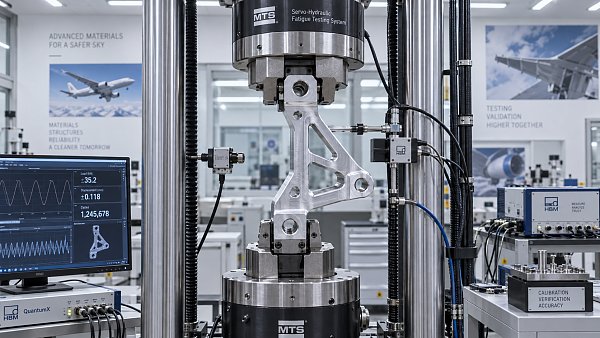
In high-value industrial sourcing, early verification matters more than polished sales material. Parameters, tolerances, fatigue limits, audit trails, and process discipline tell the real story.
That view aligns with the broader hard-tech direction seen across robotics, aerospace, sensors, edge AI, and precision machining: engineering truth beats marketing noise.
So which services matter most before vendor onboarding? The answer depends on risk, but several checks repeatedly separate a useful partner from a paper-qualified one.
What does a supplier qualification support firm actually do?
At a practical level, a supplier qualification support firm sits between sourcing intent and supplier approval.
It converts broad requirements into verifiable evidence. That includes business legitimacy, production capability, quality systems, compliance status, and operational resilience.
More importantly, it reduces the gap between what a supplier says and what the data supports.
In practice, the work often covers:
- document collection and validation
- quality management and certification review
- technical capability assessment against drawings or specs
- factory audit preparation or on-site coordination
- compliance and traceability screening
- risk scoring for supply continuity and onboarding readiness
The strongest firms do not stop at certificates. They ask whether the certified system is reflected in real process control, inspection discipline, and corrective action history.
That distinction matters. A vendor may hold ISO credentials and still struggle with repeatability, change control, or sub-tier visibility.
Which pre-onboarding services matter most when cost and risk both matter?
Not every sourcing category needs the same depth. Still, several services usually create the best return before onboarding begins.
The first is technical capability verification. If the supplier cannot hold tolerance, test to the required threshold, or document process stability, later savings are often illusionary.
The second is compliance mapping. Regulated and export-sensitive sectors need more than a compliance statement. They need evidence tied to standards, materials, and process records.
The third is traceability review. This becomes critical when sourcing machined parts, electronic assemblies, aerospace components, sensors, or safety-linked systems.
The fourth is capacity and continuity assessment. A supplier that passes a sample run may still fail under volume, schedule compression, or engineering change pressure.
A useful way to judge service priority is to match each check to a likely onboarding failure point.
When budgets are tight, these reviews help prevent a more expensive outcome: approving a supplier too early, then paying for failure in launches, rework, or emergency resourcing.
How can you tell whether the firm is validating facts or just collecting paperwork?
This is one of the most important questions. Some services are document-heavy but insight-light.
A credible supplier qualification support firm tests substance, not presentation. It looks for evidence chains that connect certification, process, measurement, and output.
For example, a quality certificate alone says little about actual machining discipline. A better review asks for control plans, gauge calibration, sample inspection records, and nonconformance closure patterns.
In electronics or sensor programs, the same logic applies. Claimed performance should connect to validation protocols, environmental testing, component traceability, and revision control.
This data-first mindset mirrors the approach used by engineering benchmarking organizations such as TSV, where technical truth is established through measurable evidence rather than adjectives.
A firm is usually doing real qualification work when it can answer questions like these:
- Which process step is most likely to drift?
- Where does sub-tier dependency create hidden delivery risk?
- Can the supplier prove repeatability across different lots?
- Do audit findings show systemic issues or isolated events?
- Is the approved scope aligned with the exact part family being sourced?
If the output only says “qualified” without a risk narrative, the review may be too shallow to support meaningful onboarding decisions.
When is deeper qualification worth the extra time?
Deeper review is worth it when the cost of supplier failure exceeds the cost of slower approval.
That threshold appears faster than many teams expect. It is not limited to aerospace or medical categories.
In actual sourcing, a more rigorous supplier qualification support firm becomes valuable when any of these conditions are present:
- tight tolerance or high-repeatability requirements
- materials with certification or origin sensitivity
- new geography or unfamiliar regulatory exposure
- single-source dependency or narrow capacity buffer
- customer-driven auditability expectations
- products involving robotics, UAV systems, sensors, or precision machining
The timeline impact is often smaller than expected when the qualification sequence is staged properly.
A practical model starts with desktop screening, then moves to technical evidence review, then adds remote or on-site audit support only where risk remains unresolved.
That staged approach keeps cost under control while preserving decision quality.
What are the most common mistakes when choosing a supplier qualification support firm?
The biggest mistake is choosing on speed alone. Fast onboarding looks attractive until technical exceptions start appearing after release.
Another common mistake is treating all categories the same. A packaging supplier and a flight-control electronics supplier should not pass through identical review depth.
A third problem is accepting generic risk reports. Broad wording hides where the real exposure sits.
Watch for these warning signs:
- no clear method for technical validation
- heavy dependence on self-declared supplier data
- little experience with traceability or special-process controls
- reports that summarize status but avoid decision criteria
- no distinction between certification presence and process effectiveness
A capable supplier qualification support firm should also understand how engineering documents drive sourcing decisions.
That means reading drawings, recognizing critical characteristics, and linking qualification questions to measurable production realities.
Without that capability, vendor approval can become a compliance exercise detached from operational truth.
How should pre-onboarding findings shape the final onboarding decision?
The goal is not to create a perfect supplier. It is to make a controlled decision with visible risk boundaries.
In many cases, the right outcome is conditional approval rather than full approval or outright rejection.
That decision becomes easier when the supplier qualification support firm translates findings into action thresholds.
A useful onboarding conclusion usually defines:
- what is fully verified
- what still requires evidence
- which parts or processes need first-article or pilot controls
- what monitoring should apply during the first production window
This is where a data-grounded perspective matters most. Whether the category involves AGV components, LiDAR modules, machined housings, or industrial electronics, the onboarding file should reflect measurable readiness.
A supplier qualification support firm adds the most value when it helps turn scattered supplier information into a defensible approval decision.
Before moving forward, map the sourcing requirement to critical specifications, required standards, traceability depth, and acceptable lead-time risk. Then compare firms based on how well they validate those exact points.
That next step is usually more useful than asking who offers the fastest checklist. In supplier onboarding, the better question is whether the evidence is strong enough to trust the relationship under real operating conditions.
Search News
Hot Articles
- Carbon Fiber StructuresHow to Specify Aerospace Carbon Fiber Assemblies for Lightweight, Load-Bearing PartsJul 11, 2026
- Machine VisionXiaomi, Alibaba DAMO Academy Drive Open-Source Robotics Model Ecosystem, Lowering Algorithm Development Barriers for Overseas SMEs Adopting Chinese Robotics SolutionsMar 30, 2026
- Cobots & ArmsShanxi 'AI+' Conference Showcases Embodied Intelligence with Multinational Buyer Engagement: Key Industry ImplicationsMar 30, 2026
Popular Tags
Recommended News
 Jul 11, 2026How to Specify Aerospace Carbon Fiber Assemblies for Lightweight, Load-Bearing PartsAerospace carbon fiber assemblies: learn how to specify laminate design, load data, joining methods, and inspection controls for lighter, reliable load-bearing aerospace parts.Elena Rostova (UAV Systems Researcher)
 Mar 30, 2026Xiaomi, Alibaba DAMO Academy Drive Open-Source Robotics Model Ecosystem, Lowering Algorithm Development Barriers for Overseas SMEs Adopting Chinese Robotics SolutionsXiaomi & Alibaba DAMO Academy's open-source robotics models lower algorithm barriers for global SMEs. Boost efficiency in manufacturing, logistics & smart retail with ROS 2 compatible solutions.TSV Data Lab
 Mar 30, 2026Shanxi 'AI+' Conference Showcases Embodied Intelligence with Multinational Buyer Engagement: Key Industry ImplicationsShanxi 'AI+' Conference highlights embodied intelligence with Tesla, Ubtech & Jiantao showcasing multimodal robotics. 40+ global buyers validated tech on-site, creating new B2B channels for industrial automation & AI solutions.Chen Wei (Automation Lead Engineer)
 Mar 30, 2026Zhongguancun Unveils 6G Integrated Sensing-Computing-Intelligence Platform to Empower Embodied Robots for Global Industrial ApplicationsZhongguancun's new 6G platform revolutionizes industrial robotics with <10ms latency, empowering global automotive, logistics & port automation. Discover how this tech boosts China's smart manufacturing exports.TSV Data Lab
 Mar 30, 2026Mech-Mind Tianjin Embodied Intelligence R&D and Production Base Goes Live, Cutting Delivery Time by 20%–30% for Global Customized AMR+Vision SolutionsMech-Mind's Tianjin AMR+Vision production base cuts delivery time by 20%-30% for欧美 & Latin American markets. Discover how this PLd-certified facility accelerates customized robotics solutions for smart manufacturing and logistics.Chen Wei (Automation Lead Engineer)
 Mar 30, 2026Boao Forum Reveals 'Co-evolution of Big and Small Brains' Trend in Humanoid Robots, China's Embodied Intelligence Accelerates Adaptation to Overseas Manufacturing Service ScenariosDiscover how China's humanoid robots, featuring 'Co-evolution of Big and Small Brains,' are revolutionizing global manufacturing. Learn about Embodied Tian Gong 3.0's ISO compliance and overseas deployment at Boao Forum 2026.Chen Wei (Automation Lead Engineer)
 Mar 30, 2026China Railway Industrial Secures Patent for Embodied Robotics in Material Handling, Boosting High-Precision Delivery Capabilities for Overseas Infrastructure and Manufacturing ProjectsChina Railway Industrial's new patent for embodied robotics in material handling boosts high-precision delivery for global infrastructure & manufacturing. Discover how this innovation enhances logistics accuracy in automotive, rail transit & EPC projects.Chen Wei (Automation Lead Engineer)
 Oct 06, 2026Navigation Fault Tolerance Standards for AMRs: What Safety Teams Must VerifyNavigation fault tolerance standards: learn what AMR safety teams must verify, from localization loss and sensor faults to stopping distance, safe restart, and site-specific validation.Chen Wei (Automation Lead Engineer)
 Oct 05, 2026Calculating Edge Computing Total Cost of Ownership Across Distributed SitesEdge computing ownership cost explained: calculate deployment, energy, connectivity, security, remote support, and refresh costs across distributed sites.TSV Data Lab
 Oct 04, 2026CAD/CAM Benchmarking in the GCC: What Manufacturers Should Ask a ConsultantCAD CAM benchmark consultant GCC guide: learn the key questions manufacturers should ask to validate post-processors, workflows, machine performance, and production risk.Victor Lin (Chief Software Architect)
 Oct 03, 2026Selecting Automotive Radar Sensor Modules for ADAS Range, Resolution, and IntegrationAutomotive radar sensor module selection guide for ADAS: compare range, resolution, field of view, latency, and integration to build safer, reliable vehicle systems.TSV Data Lab
 Oct 02, 2026How to Qualify Machined Parts Suppliers for Hard Tech ProgramsHard tech supply chain machined parts demand rigorous supplier qualification. Learn how to assess capability, traceability, quality controls, and delivery resilience.Dr. Marcus Vance
 Oct 01, 2026How to Select an Outdoor Security Radar Sensor for Perimeter Detection?Outdoor security radar sensor selection guide: compare range, accuracy, false-alarm control, integration, and field testing for reliable perimeter detection.TSV Data Lab
 Sep 30, 2026How to Evaluate Solid-State LiDAR Hardware for Outdoor Autonomous VehiclesSolid state LiDAR hardware evaluation guide for outdoor autonomous vehicles—compare range, point-cloud quality, environmental resilience, integration, and safety.TSV Data Lab
 Sep 29, 2026ISO 9283 Repeatability: How to Evaluate Cobot Positioning PerformanceISO 9283 cobot repeatability explained: learn how payload, reach, approach direction, and test conditions affect positioning performance and cell capability.Chen Wei (Automation Lead Engineer)
 Oct 06, 2026Are Collaborative Robots Safe Enough to Operate Without Fencing?Are collaborative robots safe enough to work without fencing? Explore risk assessment, safeguarding options, and practical guidance for safer, productive cobot cells.Chen Wei (Automation Lead Engineer)
 Oct 05, 2026What Causes Machine Vision Systems to Miss Small Defects?What causes machine vision systems to miss small defects? Discover how lighting, optics, motion, and AI thresholds affect detection—and prevent costly escapes.TSV Data Lab
 Oct 04, 2026How Should You Compare 5-Axis CNC Machine Accuracy Claims?How do I compare 5-axis CNC machine accuracy claims? Learn how to assess standards, thermal stability, TCP accuracy, and real-world test evidence.Dr. Marcus Vance
 Oct 03, 2026Is Edge Computing Necessary for Real-Time Quality Inspection?Is industrial edge computing necessary for real-time quality inspection? Explore how latency, data volume, reliability, and control integration shape the right architecture.TSV Data Lab
 Oct 02, 2026What Documents Prove a Precision Machining Supplier Can Hold Tolerance?What documents prove a precision machining supplier can hold tolerance? Explore certificates, FAI reports, calibration, SPC, and traceability evidence to qualify suppliers with confidence.Dr. Marcus Vance
 Oct 01, 2026Can a Machining Supplier Meet Aerospace Fatigue Testing Requirements?Can a machining supplier meet aerospace fatigue testing requirements? Learn the traceability, process control, and test evidence needed for reliable aerospace parts.Dr. Marcus Vance
 Sep 30, 2026Which Industrial Robot Specifications Matter for High-Precision Assembly?Which industrial robot specifications matter most for high-precision assembly? Explore repeatability, accuracy, stiffness, vibration, calibration, and force control for reliable yields.Chen Wei (Automation Lead Engineer)
 Sep 29, 2026How Do You Verify Servo Motor Torque Under Continuous Load?How do I verify servo motor torque under continuous load? Learn RMS torque checks, torque-speed limits, thermal derating, and real-machine testing.Chen Wei (Automation Lead Engineer)
 Oct 02, 2026ZD330 Software Configuration: Verifying Cut-List Import Before PurchaseZD330 software and machine configuration: verify cut-list imports, data mapping, labels, and workflow before purchase to reduce errors and choose with confidence.Victor Lin (Chief Software Architect)