METI Launches Smart Factory Subsidy for ERP-MES-IoT
Publication Date
author
On July 11, 2026, Japan’s Ministry of Economy, Trade and Industry (METI) formally launched the Smart Factory Acceleration Program, opening a factory digitalization subsidy for small and medium-sized manufacturers. The measure is drawing attention across industrial software, manufacturing systems integration, and industrial IoT procurement because it directly supports purchases of ERP-MES-IoT integrated systems while tying eligibility to IEC 62443-4-2 certification. For buyers, vendors, and delivery partners, the policy matters not only because of the cost support, but because it raises the practical importance of integration capability and cybersecurity compliance in the same decision cycle.
What the program officially covers
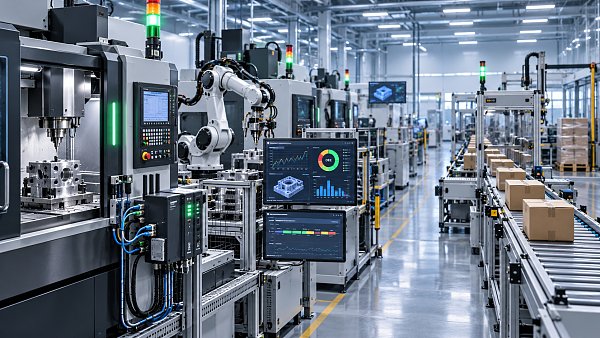
According to the information provided, METI started the program on July 11, 2026 and made the factory digitalization subsidy available to small and medium-sized manufacturing enterprises in Japan. The subsidy applies to purchases of domestic or imported systems that include three-layer ERP-MES-IoT integration capability. Eligible systems must meet IEC 62443-4-2 certification requirements. The support can cover up to 50% of procurement costs, with a ceiling of JPY 300 million.
The provided summary also states that the policy has significantly increased the willingness of Japanese companies to procure Chinese industrial software and IoT platforms, while at the same time strengthening the security certification threshold.
Where the impact is likely to be felt first
Manufacturers evaluating digital upgrades
From an industry perspective, small and medium-sized manufacturers in Japan are the most immediate decision-makers affected by this measure because the subsidy is attached to actual system procurement. The impact is likely to appear first in budgeting, vendor screening, and project scoping. What deserves closer attention is whether target systems can demonstrate both integrated ERP-MES-IoT functionality and the required certification status, since cost support alone does not remove compliance risk.
Industrial software and IoT suppliers entering Japanese demand
Vendors of ERP, MES, and industrial IoT platforms may see stronger commercial interest from Japanese buyers, especially where integrated offerings are already in place. Analysis shows that the policy may benefit suppliers that can present a clearer combined value proposition rather than isolated software modules. At the same time, suppliers without recognized security credentials may face a narrower path to conversion even if buyer interest increases.
System integrators and delivery partners
For service providers involved in implementation, integration, and deployment, the likely effect is concentrated in solution design, documentation, and customer qualification. Because the subsidy is tied to a three-layer architecture, delivery teams may need to align technical scope more tightly with procurement requirements. Observably, security evidence and integration boundaries may become more central in pre-sales and project preparation.
Cross-border procurement and supplier coordination
The summary specifically notes stronger Japanese interest in Chinese industrial software and IoT platforms. For companies involved in cross-border supply and procurement coordination, the main influence may be in supplier onboarding, compliance review, and customer communication. What deserves closer attention is that market interest and final eligibility are not the same thing; certification and supporting materials may become the decisive filter.
What companies should monitor in practice
Whether product qualification is clearly documented
Companies selling into this demand should focus on whether their systems can be presented as genuine ERP-MES-IoT integrated solutions under the program’s stated conditions. In practice, customer discussions are likely to turn quickly from product capability claims to qualification evidence, especially around IEC 62443-4-2.
The gap between policy intent and project execution
Analysis shows that a subsidy announcement can increase buyer willingness before procurement processes are fully standardized at the business level. Companies should therefore distinguish between policy momentum and executable orders. Internal preparation should cover technical scope, compliance materials, and delivery assumptions rather than relying on headline demand alone.
Customer communication around certification thresholds
For vendors and channel-side teams, a key issue is how to communicate security readiness without overstating eligibility. The stronger certification threshold means that sales discussions may increasingly depend on whether suppliers can explain compliance status clearly and consistently. This is especially relevant where imported systems are competing for projects under local policy conditions.
Changes in official wording and operational rules
What deserves closer attention is whether subsequent official wording, application details, or implementation rules further clarify how integrated capability and certification are assessed. Companies exposed to this opportunity should keep tracking rule interpretation, because the commercial effect of the policy will depend on how those conditions are applied in actual procurement.
Why this looks more like a policy signal than a finished market outcome
Observably, this development carries two messages at once: Japan is supporting factory digitalization purchases with meaningful cost coverage, and it is doing so under a stricter security framework. Analysis shows that this combination is important for the market because it encourages demand for integrated industrial systems while also narrowing the field to solutions that can meet certification expectations.
It is more appropriate to understand this as a strong near-term policy signal rather than a fully settled market result. The provided information indicates increased procurement willingness, but willingness does not automatically translate into completed projects, broad adoption, or stable supplier positions. Continued observation is necessary because qualification standards and execution details will shape the actual outcome.
How this news should be read now
At this stage, the significance of the METI program lies in the way it links subsidy support, integration depth, and cybersecurity requirements within one procurement framework. For manufacturers, it may alter how digitalization projects are prioritized. For software, IoT, and integration providers, it raises the value of certification-backed readiness. A neutral reading is that the policy creates a clearer commercial opening, but the practical advantage will depend on who can meet the stated requirements and convert buyer interest into compliant delivery.
Basis of this article and points for follow-up
This article is based on the user-provided news title, event date, and event summary. For this type of development, relevant source categories would usually include official government announcements, company statements, industry association updates, authoritative media coverage, and standard-related documentation. A specific official source link was not provided in the input, so further verification remains necessary.
Areas that still merit continued monitoring include any later official clarification on application rules, the practical interpretation of ERP-MES-IoT integration requirements, and how IEC 62443-4-2 certification is checked during procurement and project approval.
Search News
Hot Articles
- Carbon Fiber StructuresHow to Specify Aerospace Carbon Fiber Assemblies for Lightweight, Load-Bearing PartsJul 11, 2026
- Machine VisionXiaomi, Alibaba DAMO Academy Drive Open-Source Robotics Model Ecosystem, Lowering Algorithm Development Barriers for Overseas SMEs Adopting Chinese Robotics SolutionsMar 30, 2026
- Cobots & ArmsShanxi 'AI+' Conference Showcases Embodied Intelligence with Multinational Buyer Engagement: Key Industry ImplicationsMar 30, 2026
Popular Tags
Recommended News
 Jul 11, 2026How to Specify Aerospace Carbon Fiber Assemblies for Lightweight, Load-Bearing PartsAerospace carbon fiber assemblies: learn how to specify laminate design, load data, joining methods, and inspection controls for lighter, reliable load-bearing aerospace parts.Elena Rostova (UAV Systems Researcher)
 Mar 30, 2026Xiaomi, Alibaba DAMO Academy Drive Open-Source Robotics Model Ecosystem, Lowering Algorithm Development Barriers for Overseas SMEs Adopting Chinese Robotics SolutionsXiaomi & Alibaba DAMO Academy's open-source robotics models lower algorithm barriers for global SMEs. Boost efficiency in manufacturing, logistics & smart retail with ROS 2 compatible solutions.TSV Data Lab
 Mar 30, 2026Shanxi 'AI+' Conference Showcases Embodied Intelligence with Multinational Buyer Engagement: Key Industry ImplicationsShanxi 'AI+' Conference highlights embodied intelligence with Tesla, Ubtech & Jiantao showcasing multimodal robotics. 40+ global buyers validated tech on-site, creating new B2B channels for industrial automation & AI solutions.Chen Wei (Automation Lead Engineer)
 Mar 30, 2026Zhongguancun Unveils 6G Integrated Sensing-Computing-Intelligence Platform to Empower Embodied Robots for Global Industrial ApplicationsZhongguancun's new 6G platform revolutionizes industrial robotics with <10ms latency, empowering global automotive, logistics & port automation. Discover how this tech boosts China's smart manufacturing exports.TSV Data Lab
 Mar 30, 2026Mech-Mind Tianjin Embodied Intelligence R&D and Production Base Goes Live, Cutting Delivery Time by 20%–30% for Global Customized AMR+Vision SolutionsMech-Mind's Tianjin AMR+Vision production base cuts delivery time by 20%-30% for欧美 & Latin American markets. Discover how this PLd-certified facility accelerates customized robotics solutions for smart manufacturing and logistics.Chen Wei (Automation Lead Engineer)
 Mar 30, 2026Boao Forum Reveals 'Co-evolution of Big and Small Brains' Trend in Humanoid Robots, China's Embodied Intelligence Accelerates Adaptation to Overseas Manufacturing Service ScenariosDiscover how China's humanoid robots, featuring 'Co-evolution of Big and Small Brains,' are revolutionizing global manufacturing. Learn about Embodied Tian Gong 3.0's ISO compliance and overseas deployment at Boao Forum 2026.Chen Wei (Automation Lead Engineer)
 Mar 30, 2026China Railway Industrial Secures Patent for Embodied Robotics in Material Handling, Boosting High-Precision Delivery Capabilities for Overseas Infrastructure and Manufacturing ProjectsChina Railway Industrial's new patent for embodied robotics in material handling boosts high-precision delivery for global infrastructure & manufacturing. Discover how this innovation enhances logistics accuracy in automotive, rail transit & EPC projects.Chen Wei (Automation Lead Engineer)
 Oct 11, 2026How Procurement-Oriented Content Taxonomy Improves B2B Buying JourneysProcurement-oriented content taxonomy streamlines B2B buying journeys with clearer evidence, supplier comparisons, risk visibility, and faster approvals.TSV Data Lab
 Oct 10, 2026How to Select a Machine Performance Monitoring Platform for OEE and Downtime ReductionMachine performance monitoring platform selection guide: validate machine states, OEE data, downtime reasons, integrations, and scalability to reduce losses with confidence.TSV Data Lab
 Oct 08, 2026How to Machine Inconel 625 Blades Without Heat Cracks or Edge ChippingInconel 625 blade machining guide: prevent heat cracks, edge chipping, chatter, and work hardening with proven tooling, cooling, fixturing, and inspection strategies.Dr. Marcus Vance
 Oct 07, 2026How to Evaluate an HMI Panel Distributor for Industrial Automation ProjectsHMI panel distributor evaluation guide: verify technical compatibility, traceability, supply reliability, lifecycle support, and total cost for automation projects.Victor Lin (Chief Software Architect)
 Oct 06, 2026Navigation Fault Tolerance Standards for AMRs: What Safety Teams Must VerifyNavigation fault tolerance standards: learn what AMR safety teams must verify, from localization loss and sensor faults to stopping distance, safe restart, and site-specific validation.Chen Wei (Automation Lead Engineer)
 Oct 05, 2026Calculating Edge Computing Total Cost of Ownership Across Distributed SitesEdge computing ownership cost explained: calculate deployment, energy, connectivity, security, remote support, and refresh costs across distributed sites.TSV Data Lab
 Oct 04, 2026CAD/CAM Benchmarking in the GCC: What Manufacturers Should Ask a ConsultantCAD CAM benchmark consultant GCC guide: learn the key questions manufacturers should ask to validate post-processors, workflows, machine performance, and production risk.Victor Lin (Chief Software Architect)
 Oct 03, 2026Selecting Automotive Radar Sensor Modules for ADAS Range, Resolution, and IntegrationAutomotive radar sensor module selection guide for ADAS: compare range, resolution, field of view, latency, and integration to build safer, reliable vehicle systems.TSV Data Lab
 Oct 02, 2026How to Qualify Machined Parts Suppliers for Hard Tech ProgramsHard tech supply chain machined parts demand rigorous supplier qualification. Learn how to assess capability, traceability, quality controls, and delivery resilience.Dr. Marcus Vance
 Oct 01, 2026How to Select an Outdoor Security Radar Sensor for Perimeter Detection?Outdoor security radar sensor selection guide: compare range, accuracy, false-alarm control, integration, and field testing for reliable perimeter detection.TSV Data Lab
 Sep 30, 2026How to Evaluate Solid-State LiDAR Hardware for Outdoor Autonomous VehiclesSolid state LiDAR hardware evaluation guide for outdoor autonomous vehicles—compare range, point-cloud quality, environmental resilience, integration, and safety.TSV Data Lab
 Sep 29, 2026ISO 9283 Repeatability: How to Evaluate Cobot Positioning PerformanceISO 9283 cobot repeatability explained: learn how payload, reach, approach direction, and test conditions affect positioning performance and cell capability.Chen Wei (Automation Lead Engineer)
 Oct 10, 2026When does the cost of industrial robots pay back in high-volume production?Cost of industrial robots: discover how high-volume manufacturers calculate payback through uptime, cycle time, labor, quality, and integration before investing.Chen Wei (Automation Lead Engineer)
 Oct 09, 2026What does a manufacturing robot really cost beyond the purchase price?Manufacturing robot cost goes far beyond the purchase price. Explore integration, tooling, safety, uptime, and total ownership factors for smarter automation investments.Chen Wei (Automation Lead Engineer)
 Oct 08, 2026AGV vs. AMR: Which Is Better for Frequently Changing Routes?Which is better for changing routes? Compare AGVs and AMRs for flexible navigation, docking precision, traffic control, and faster facility reconfiguration.Chen Wei (Automation Lead Engineer)
 Oct 07, 2026How Much Does an Automated Guided Vehicle Cost in 2026?How much does an automated guided vehicle cost in 2026? Explore AGV price ranges, hidden deployment costs, and smart buying factors for stronger ROI.Chen Wei (Automation Lead Engineer)
 Oct 06, 2026Are Collaborative Robots Safe Enough to Operate Without Fencing?Are collaborative robots safe enough to work without fencing? Explore risk assessment, safeguarding options, and practical guidance for safer, productive cobot cells.Chen Wei (Automation Lead Engineer)