How to Improve Factory Automation Uptime: 7 Root Causes of Downtime and Practical Fixes
Publication Date
author
Why factory automation uptime breaks differently from one line to another

Factory automation uptime is often discussed as a maintenance metric, yet real downtime rarely starts with maintenance alone.
It usually begins where operating conditions, control logic, component limits, and response speed stop matching the line’s actual workload.
A packaging cell, a CNC transfer line, and an electronics assembly station can all report the same alarm frequency.
The root cause, however, may be entirely different.
In high-speed motion systems, short stops often come from servo drift, encoder feedback noise, or power instability.
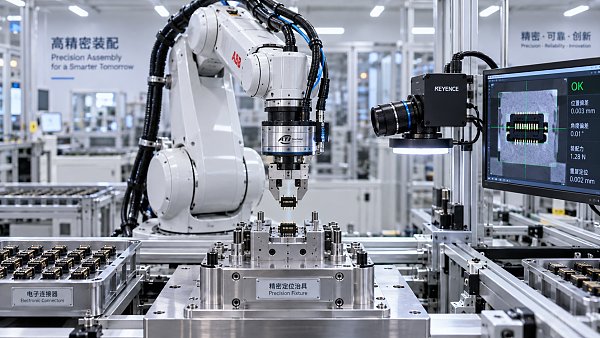
In inspection-heavy processes, factory automation uptime is more sensitive to sensor contamination, lighting shifts, and network latency.
That is why hard-tech operations benefit from the TSV approach: start with measurable conditions, not vendor adjectives.
Parameters do not lie, and uptime recovery gets faster when fault isolation is built on evidence.
The seven causes below appear across robotics, edge devices, machining, and mixed industrial lines.
What changes is the priority order, the warning signs, and the practical fix that fits each environment.
Sensor faults often look small until they trigger repeated micro-stops
Many factory automation uptime losses begin with sensors that still work, but no longer work cleanly.
Photoelectric sensors may drift because of dust, reflective materials, or bracket vibration.
Proximity sensors can miss targets when metal shavings build up or target distance changes after mechanical wear.
Vision systems have their own version of the same problem.
A lens that passes validation in a clean setup may fail after lamp aging, glare variation, or slight conveyor wander.
The practical fix is not just replacement.
It is to record signal margin, contamination rate, mounting stability, and actual false-trigger frequency.
For stronger factory automation uptime, schedule cleaning by contamination trend rather than by calendar alone.
Where failure cost is high, add redundant sensing or diagnostic thresholds before the machine hard-stops.
Drive and motor issues become expensive in high-cycle motion environments
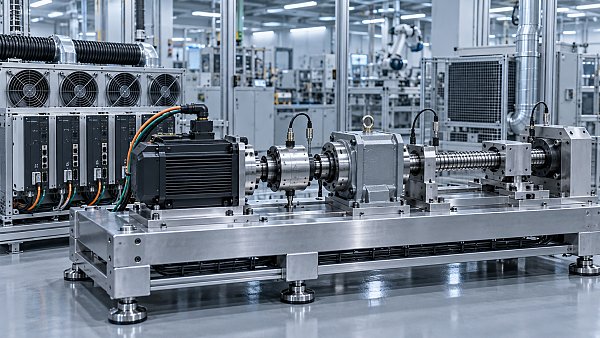
Servo alarms are often treated as isolated electrical events, but they usually reflect a wider mismatch.
Torque reserve may be too low for real payload variation.
Acceleration settings may be copied from commissioning data that no longer matches production speed.
In robotic pick-and-place lines, this shows up as intermittent overload or following error.
In conveyors and transfer axes, it appears as creeping position loss or thermal trips late in the shift.
The better judgment is to compare commanded load, actual current, brake condition, gearbox backlash, and peak duty cycle together.
For factory automation uptime, a drive swap without motion profile review often creates the same failure again.
A practical correction includes retuning, thermal inspection, shaft alignment checks, and verification under worst-case cycle time.
Power quality problems are easy to overlook because alarms point elsewhere
When HMIs reboot, PLCs log communication faults, or drives reset without a clear overload, power quality deserves attention early.
Voltage sag, grounding faults, harmonic distortion, and loose terminals can create symptoms that imitate software or device failure.
This matters even more in mixed facilities where welding equipment, large compressors, and sensitive automation share infrastructure.
In practice, factory automation uptime improves when teams log disturbances at the panel level and correlate them with exact stop times.
A portable power analyzer often reveals patterns that event logs alone cannot show.
Typical fixes include dedicated grounding review, line conditioning, terminal torque verification, and separation of noisy loads.
Control logic downtime usually appears after process changes, not at startup
A line can run for months and then begin losing factory automation uptime after recipe expansion, station bypass logic, or added inspection points.
The issue is rarely that the PLC code is simply bad.
More often, the original logic was never designed for the new sequence complexity.
Handshake timing between robot, PLC, vision, and MES can become fragile under edge cases.
Timeouts that looked generous in simulation may be too tight during peak production or network congestion.
The practical fix is disciplined change control.
Every modification should include version traceability, alarm rationalization, and a failure-mode test using abnormal but realistic conditions.
For better factory automation uptime, review nuisance alarms and hidden interlocks before they become emergency calls.
When network latency rises, downtime spreads beyond one machine
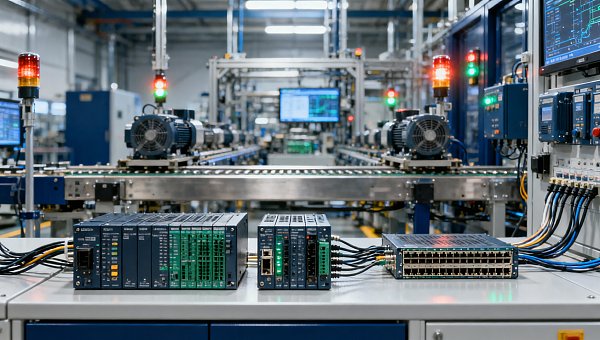
In edge-connected production, one unstable switch or overloaded gateway can create plant-wide disruption.
This is common where vision data, historians, remote diagnostics, and machine control share the same network path.
The symptom may look random: robot lag, camera timeout, AGV hesitation, or missing production records.
In actual use, factory automation uptime depends on knowing which traffic is deterministic and which traffic can tolerate delay.
A flat network is easy to build and hard to defend.
Segment control traffic, measure latency under load, and review switch health before blaming field devices.
Where remote support is essential, failover paths and local fallback logic should be tested, not assumed.
Mechanical wear still drives factory automation uptime more than many dashboards admit
Digital monitoring helps, but many recurring stops remain mechanical at their core.
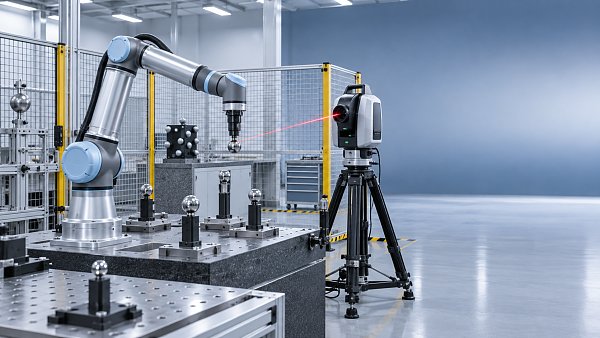
Loose couplings, belt tracking error, guide rail wear, poor lubrication, and fixture drift often degrade slowly.
Because the decline is gradual, teams normalize the behavior until a hard failure forces action.
This pattern is common in machining transfer systems, palletizers, and heavy-load handling cells.
The fix is condition-based inspection tied to measurable thresholds.
Track vibration, backlash, lubrication consumption, and repeatability drift instead of relying only on run hours.
That method aligns with TSV’s preference for evidence over assumptions and supports more stable factory automation uptime.
Spare parts readiness decides whether a minor fault becomes a major production event
Not every downtime problem is technical.
Some failures last hours because a low-cost relay, encoder, cable, or fan assembly is unavailable locally.
In global supply chains, lead time risk now matters almost as much as component quality.
For factory automation uptime, criticality analysis should separate parts that stop one station from parts that stop the entire line.
It should also distinguish between generic items and firmware-bound replacements that require validation.
A practical spare strategy includes minimum stock levels, interchangeability review, and documented replacement steps with tested backups.
Different production settings do not ask for the same uptime strategy
The reason factory automation uptime plans often disappoint is simple: similar equipment does not mean similar risk.
A line with frequent product changeovers needs flexible diagnostics.
A highly regulated machining or aerospace-related process needs traceable parameter control.
A remote site values recoverability and parts access more than dashboard depth.
This is where broad uptime claims become misleading.
The useful question is not whether a solution improves factory automation uptime in theory.
It is whether it matches the failure pattern of the process in front of you.
Misjudgments that keep downtime recurring
Several mistakes appear repeatedly across otherwise advanced operations.
- Treating nameplate specifications as proof of factory automation uptime under real contamination, vibration, or load swings.
- Replacing failed parts without checking the upstream reason they failed.
- Tracking total downtime, but not separating micro-stops, nuisance alarms, and true catastrophic failures.
- Choosing low purchase cost while ignoring lead time, commissioning effort, and maintenance complexity.
- Assuming one successful line standard applies unchanged to every plant or product mix.
These are not strategic errors in the abstract.
They are exactly the kind of avoidable judgment gaps that turn short disturbances into repeated production loss.
What to do next if factory automation uptime is slipping
Start by ranking downtime events by production impact, recurrence, and mean time to recovery.
Then map each event to one of the seven root cause groups above.
That simple structure exposes whether the line mainly suffers from sensing, motion, power, logic, network, mechanical wear, or spares delay.
After that, define a short verification list for each critical asset:
- actual operating limits versus design assumptions
- fault signatures and alarm timing
- maintenance interval versus observed degradation rate
- recovery steps, parts availability, and validation time
Factory automation uptime improves when troubleshooting becomes repeatable, traceable, and grounded in measurable evidence.
That is also the most reliable way to cut through noise, build internal standards, and keep complex industrial systems running with confidence.
Search News
Hot Articles
- Carbon Fiber StructuresHow to Specify Aerospace Carbon Fiber Assemblies for Lightweight, Load-Bearing PartsJul 11, 2026
- Machine VisionXiaomi, Alibaba DAMO Academy Drive Open-Source Robotics Model Ecosystem, Lowering Algorithm Development Barriers for Overseas SMEs Adopting Chinese Robotics SolutionsMar 30, 2026
- Cobots & ArmsShanxi 'AI+' Conference Showcases Embodied Intelligence with Multinational Buyer Engagement: Key Industry ImplicationsMar 30, 2026
Popular Tags
Recommended News
 Jul 11, 2026How to Specify Aerospace Carbon Fiber Assemblies for Lightweight, Load-Bearing PartsAerospace carbon fiber assemblies: learn how to specify laminate design, load data, joining methods, and inspection controls for lighter, reliable load-bearing aerospace parts.Elena Rostova (UAV Systems Researcher)
 Mar 30, 2026Xiaomi, Alibaba DAMO Academy Drive Open-Source Robotics Model Ecosystem, Lowering Algorithm Development Barriers for Overseas SMEs Adopting Chinese Robotics SolutionsXiaomi & Alibaba DAMO Academy's open-source robotics models lower algorithm barriers for global SMEs. Boost efficiency in manufacturing, logistics & smart retail with ROS 2 compatible solutions.TSV Data Lab
 Mar 30, 2026Shanxi 'AI+' Conference Showcases Embodied Intelligence with Multinational Buyer Engagement: Key Industry ImplicationsShanxi 'AI+' Conference highlights embodied intelligence with Tesla, Ubtech & Jiantao showcasing multimodal robotics. 40+ global buyers validated tech on-site, creating new B2B channels for industrial automation & AI solutions.Chen Wei (Automation Lead Engineer)
 Mar 30, 2026Zhongguancun Unveils 6G Integrated Sensing-Computing-Intelligence Platform to Empower Embodied Robots for Global Industrial ApplicationsZhongguancun's new 6G platform revolutionizes industrial robotics with <10ms latency, empowering global automotive, logistics & port automation. Discover how this tech boosts China's smart manufacturing exports.TSV Data Lab
 Mar 30, 2026Mech-Mind Tianjin Embodied Intelligence R&D and Production Base Goes Live, Cutting Delivery Time by 20%–30% for Global Customized AMR+Vision SolutionsMech-Mind's Tianjin AMR+Vision production base cuts delivery time by 20%-30% for欧美 & Latin American markets. Discover how this PLd-certified facility accelerates customized robotics solutions for smart manufacturing and logistics.Chen Wei (Automation Lead Engineer)
 Mar 30, 2026Boao Forum Reveals 'Co-evolution of Big and Small Brains' Trend in Humanoid Robots, China's Embodied Intelligence Accelerates Adaptation to Overseas Manufacturing Service ScenariosDiscover how China's humanoid robots, featuring 'Co-evolution of Big and Small Brains,' are revolutionizing global manufacturing. Learn about Embodied Tian Gong 3.0's ISO compliance and overseas deployment at Boao Forum 2026.Chen Wei (Automation Lead Engineer)
 Mar 30, 2026China Railway Industrial Secures Patent for Embodied Robotics in Material Handling, Boosting High-Precision Delivery Capabilities for Overseas Infrastructure and Manufacturing ProjectsChina Railway Industrial's new patent for embodied robotics in material handling boosts high-precision delivery for global infrastructure & manufacturing. Discover how this innovation enhances logistics accuracy in automotive, rail transit & EPC projects.Chen Wei (Automation Lead Engineer)
 Sep 30, 2026How to Evaluate Solid-State LiDAR Hardware for Outdoor Autonomous VehiclesSolid state LiDAR hardware evaluation guide for outdoor autonomous vehicles—compare range, point-cloud quality, environmental resilience, integration, and safety.TSV Data Lab
 Sep 29, 2026ISO 9283 Repeatability: How to Evaluate Cobot Positioning PerformanceISO 9283 cobot repeatability explained: learn how payload, reach, approach direction, and test conditions affect positioning performance and cell capability.Chen Wei (Automation Lead Engineer)
 Sep 30, 2026Which Industrial Robot Specifications Matter for High-Precision Assembly?Which industrial robot specifications matter most for high-precision assembly? Explore repeatability, accuracy, stiffness, vibration, calibration, and force control for reliable yields.Chen Wei (Automation Lead Engineer)
 Sep 29, 2026How Do You Verify Servo Motor Torque Under Continuous Load?How do I verify servo motor torque under continuous load? Learn RMS torque checks, torque-speed limits, thermal derating, and real-machine testing.Chen Wei (Automation Lead Engineer)
 Sep 28, 2026Spindle Runout Measurement in Germany: DIN Standards, Methods, and Acceptance LimitsSpindle runout measurement Germany: explore DIN standards, proven methods, acceptance limits, and audit-ready practices for reliable machining quality.Dr. Marcus Vance
 Sep 27, 2026How to Select Wall-Mount Edge Devices for Space-Constrained Factory NetworksWall mount edge devices for space-constrained factories: evaluate workload, thermal design, power resilience, cable access, and network reliability for smarter deployments.TSV Data Lab
 Sep 26, 2026Machining Tolerance Analysis: How to Set Limits That Meet Function and Cost TargetsMachining tolerance analysis: learn how to set functional limits, control tolerance stacks, reduce inspection risk, and balance precision with production cost.Dr. Marcus Vance
 Sep 25, 2026How to Evaluate an Industrial Infrastructure Data Platform for Multi-Site OperationsIndustrial infrastructure data platform evaluation guide for multi-site operations: compare data quality, edge resilience, interoperability, governance, and scalable proof-of-value criteria.Victor Lin (Chief Software Architect)
 Sep 24, 2026How to Select Machine Vision Optics for Accurate Inspection at Different Working DistancesMachine vision optics selection guide for accurate inspection at every working distance. Compare FOV, pixel scale, DOF, distortion, lighting, and telecentric options.TSV Data Lab
 Sep 23, 2026How to Evaluate a Machine Vision System Integrator for High-Speed Inspection LinesChoose a machine vision system integrator with proven expertise in high-speed inspection, reliable reject timing, robust optics, and measurable acceptance criteria.TSV Data Lab
 Sep 30, 2026How much does warehouse automation cost for a growing distribution center?How much does warehouse automation cost? Explore equipment, integration, facility upgrades, lifecycle expenses, and ROI factors for a growing distribution center.Chen Wei (Automation Lead Engineer)
 Sep 29, 2026How MES and OEE work together to identify production lossesMES and OEE work together to uncover hidden production losses, connect downtime, speed, and quality data, and drive smarter shop-floor improvements.Victor Lin (Chief Software Architect)
 Sep 28, 2026When is a SCADA API the right choice for connecting plant systems?SCADA API guide: learn when governed plant data integration improves traceability, security, and scalability—without compromising real-time control.Victor Lin (Chief Software Architect)
 Sep 27, 2026How SCADA data integration improves traceability across production linesSCADA data integration connects production-line data to improve traceability, accelerate quality investigations, and strengthen safety decisions.Victor Lin (Chief Software Architect)
 Sep 26, 2026What to define before starting SCADA integration planningSCADA integration planning starts with clear scope, control boundaries, data models, cybersecurity, and testing. Discover the definitions that reduce risk and costly rework.Victor Lin (Chief Software Architect)
 Sep 25, 2026How a smart factory with Industrial IoT reduces production blind spotsDiscover how a smart factory with Industrial IoT turns real-time machine, quality, and workflow data into actionable insights that reduce production blind spots and delivery risks.Victor Lin (Chief Software Architect)
 Sep 24, 2026When does Industrial IoT make smart manufacturing easier to scale?Smart manufacturing Industrial IoT scales when trusted data, interoperable systems, and secure workflows turn connected assets into measurable gains.TSV Data Lab