How to Assess a Supplier’s Production Capability Before an RFQ
Publication Date
author
How to Assess a Supplier’s Production Capability Before an RFQ
An RFQ is often treated as the start of supplier evaluation. In demanding manufacturing work, that is usually too late. Once drawings, target pricing, annual volumes, and delivery assumptions have been sent out, an incapable supplier can still submit an attractive quotation. The real problem only appears during prototype build, first-article inspection, process validation, or the first production disruption.
How should I assess a supplier's production capability before RFQ? Start by treating capability as an engineering question rather than a commercial one. A supplier’s website, machine list, certification badges, and broad statements about “high precision” are only initial signals. What matters is whether that supplier can repeatedly make your part, from the specified material, within the required tolerance, at the required rate, with evidence that the process remains under control when conditions are less than ideal.
This distinction becomes sharper in robotics, UAV structures, industrial sensing, edge-computing hardware, medical components, and aerospace-adjacent machining. A shop may own a modern five-axis machine and still be a poor fit for thin-wall aluminum housings, fatigue-sensitive titanium parts, low-volume traceable assemblies, or optical and sensor interfaces. Equipment is necessary; process discipline is what turns equipment into production capability.
Begin with the part’s actual failure modes
Before assessing suppliers, define what can go wrong with the product. This sounds obvious, but many sourcing teams issue an RFQ based on a drawing package that states dimensions without identifying the dimensions that truly drive performance. If a bore is only a mounting feature, its tolerance may be commercially important but technically forgiving. If that same bore locates an optical sensor, seals a fluid path, or controls bearing preload, the production risk is entirely different.
A useful internal review separates characteristics into three groups: functional-critical features, process-sensitive features, and ordinary features. Functional-critical features influence safety, fit, motion accuracy, sealing, thermal behavior, electromagnetic performance, or load transfer. Process-sensitive features are those likely to drift because of tool wear, material variation, heat treatment, fixturing, coating build-up, or operator handling. Ordinary features can often be inspected conventionally without defining the supplier’s whole process.
That exercise changes the supplier conversation. Instead of asking, “Can you hold this tolerance?” ask, “How do you establish this datum after the first operation?” “What happens after anodizing or heat treatment?” “Which dimensions are checked in-process rather than only at final inspection?” A credible supplier should answer in terms of sequence, fixturing, measurement method, and risk controls—not merely say yes.
Look beyond the machine list
Machine capacity is easy to overestimate. A supplier may advertise multi-axis CNC equipment, automated CMM inspection, laser cutting, molding presses, or SMT lines. Those assets matter, but they do not explain how much usable capacity exists, whether the equipment is appropriate for the work envelope, or whether the supplier has the supporting operations needed to finish the component without uncontrolled outsourcing.
Ask for a capability profile that connects equipment to representative work. For machining, that may include spindle range, table envelope, palletization, workholding approach, inspection equipment, and whether difficult secondary operations are performed internally. For electronics, it should clarify component traceability, moisture-sensitive device handling, rework controls, test fixtures, and the handoff between assembly and functional testing. For composite or UAV structural parts, cure control, trimming strategy, bonded-joint preparation, and material storage may matter more than the headline size of the autoclave or cutting table.
Capacity also has a time dimension. A factory can have spare machines today while lacking enough trained operators, quality engineers, programmers, tooling personnel, or approved subcontractors to support a ramp six months later. Request a practical view of loading: typical lead time by process, shift pattern, bottleneck operations, and the supplier’s policy for urgent engineering changes. You are not trying to obtain confidential production schedules. You are trying to identify whether their quoted lead time rests on a stable operating model or on optimism.
Tolerance claims need measurement evidence
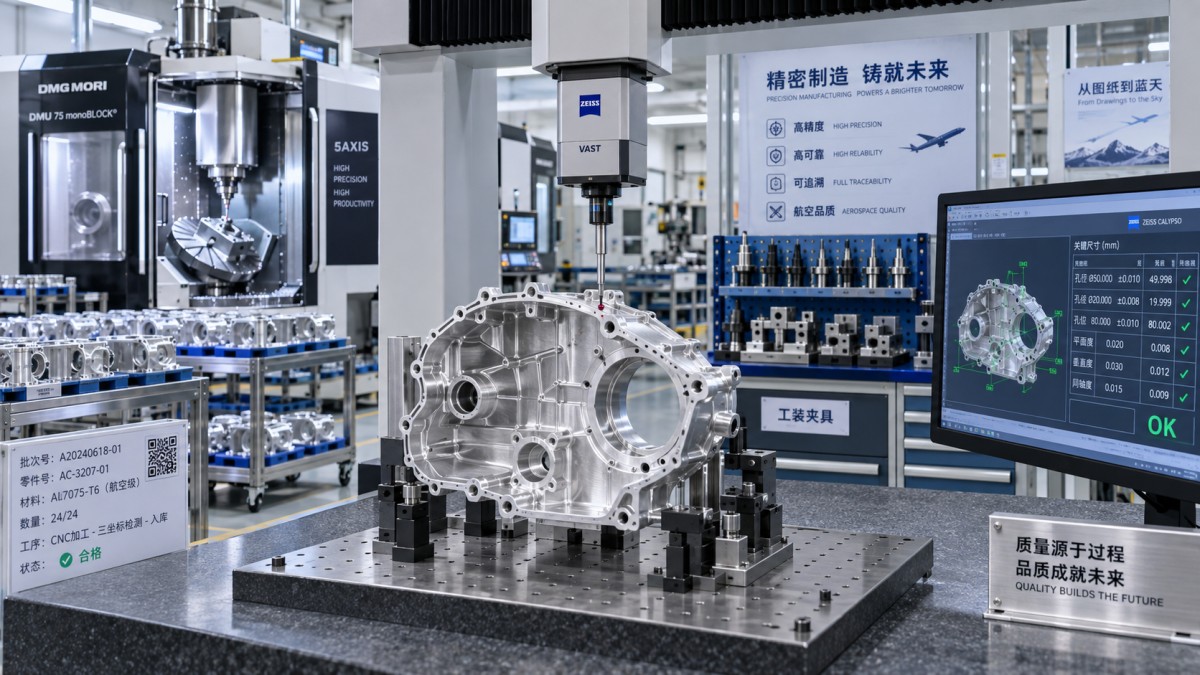
“We can achieve ±0.01 mm” is not a capability statement unless it includes context. On what geometry? In what material? Across what dimension length? Measured with which instrument? Before or after surface treatment? On one successful sample or across a controlled production run?
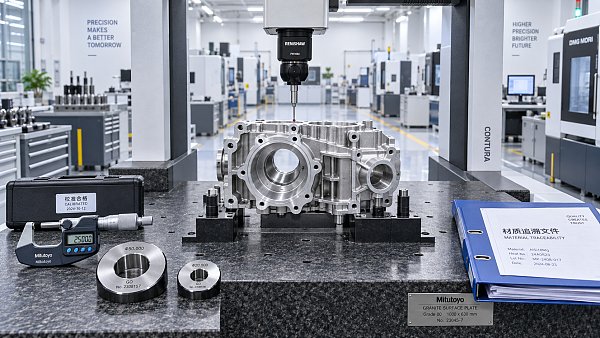
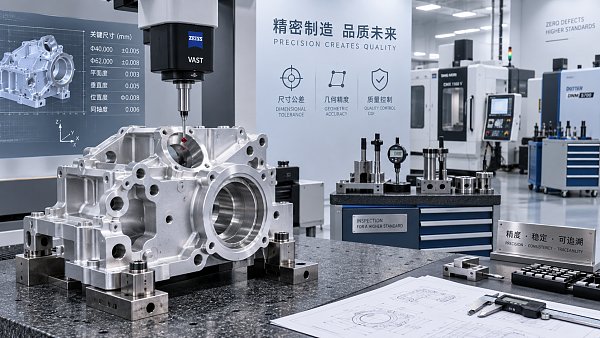
The more demanding the requirement, the more important it is to inspect the measurement system behind the claim. A supplier should be able to explain whether the feature is verified by CMM, vision measurement, air gauging, pin gauges, surface profiling, optical inspection, electrical test, or a purpose-built fixture. The measurement method must be suitable for the characteristic. A general-purpose caliper reading is not persuasive evidence for a critical precision bore, a fine surface finish, a complex freeform profile, or a sub-pixel vision alignment requirement.
For tight-tolerance work, request anonymized examples of inspection reports for comparable parts where commercially possible. Pay attention to the structure of the report, not just whether results are in tolerance. Are datums clearly defined? Are revision levels controlled? Is there evidence of repeatable sampling, gage calibration, or documented nonconformance handling? If statistical process control, capability studies, or measurement-system analysis are claimed, ask how they are applied to the actual process. Not every project needs formal capability indices, especially early prototypes, but unexplained numbers are no substitute for a controlled inspection plan.
Traceability is a production control, not paperwork
Material traceability becomes essential whenever material properties affect product safety, fatigue life, thermal performance, corrosion resistance, electrical behavior, or regulatory acceptance. It is particularly relevant for aerospace components, medical-device parts, pressure-related hardware, specialty alloys, carbon-fiber structures, and electronics exposed to reliability requirements.
A good pre-RFQ question is not simply, “Do you provide certificates?” Ask how material identity remains linked to the part through receiving, cutting, machining, heat treatment, finishing, assembly, and shipment. Small production failures often arise at these handoffs. A correct mill certificate attached to the wrong batch is not traceability. Neither is a system that tracks raw stock but loses the connection after parts are split between operations.
The same principle applies to outsourced processes. Many capable suppliers rely on external anodizing, plating, coating, heat treatment, PCB fabrication, environmental testing, or nondestructive testing. Outsourcing is not inherently a weakness. In fact, specialized external processing can be the sensible choice. The question is whether the supplier qualifies those partners, defines acceptance criteria, verifies incoming results, and maintains a documented route for each lot. If a finishing operation changes dimensions, surface conductivity, adhesion, or fatigue behavior, it belongs in the process review before pricing begins.
Quality systems matter only when they reach the shop floor
Certifications can be useful screening tools, but they should not end the assessment. ISO 9001 may indicate a documented quality-management framework. AS9100 and ISO 13485 are commonly relevant in aerospace and medical-device supply chains, respectively, where the intended product and customer requirements call for them. Yet a certificate does not automatically prove that a supplier can manage your specific geometry, material, process risk, or documentation burden.
Ask for the operational evidence behind the system: revision control, incoming inspection, first-article procedure, nonconformance reporting, corrective-action workflow, calibration records, training controls, and final release authority. It is also worth asking who can stop production when a critical feature drifts. If the answer is vague, the quality system may be administrative rather than functional.
For engineering-led procurement teams, one of the most revealing documents is a sample control plan or process flow for comparable work. It shows whether the supplier has thought through where defects can be created and where they will be detected. A final inspection report is useful, but it cannot repair a process that has already produced an unstable batch.
Test the supplier’s engineering communication before testing its factory
Early communication is a low-cost proxy for later execution. Send a focused technical inquiry before the RFQ and observe the quality of the response. Strong suppliers identify missing tolerances, ambiguous datum schemes, inaccessible tool paths, impractical inspection requirements, material availability concerns, or surface-treatment conflicts. They may challenge an assumption. That is often a positive sign.
Be wary of instant, unqualified acceptance of every requirement. In complex manufacturing, a supplier that never asks questions may not have reviewed the work deeply, or may be planning to resolve problems after the purchase order is issued. A more trustworthy response distinguishes confirmed capability from assumptions needing verification.
This is where data-led benchmarking is useful. TechStat Vanguard’s approach—engineering truth through data—reflects a practical sourcing discipline: compare suppliers using evidence that can be tied to performance. In robotics, that could mean repeatability and operating conditions rather than generic automation claims. In edge AI or industrial sensing, it may mean latency, data throughput, anti-interference performance, test conditions, and thermal limits. In precision machining, the relevant evidence may be tolerance stability, inspection strategy, alloy handling, and fatigue-related process controls. The correct benchmark always depends on the application, but the principle remains the same: parameters need context.
Assess throughput stability, not just prototype skill
A supplier that produces excellent prototypes is not necessarily prepared for recurring production. Prototype work can rely on extra setup time, senior machinists, manual inspection, and selective rework. These are sometimes appropriate in development, but they are not a scalable plan for a production program.
Before the RFQ, establish the expected transition: prototype quantities, engineering iterations, pilot build, annual demand, order-release pattern, and likely revision frequency. Then ask how the process will evolve. Will there be dedicated fixtures? When does inspection move from full measurement to rational sampling? What is the plan for tooling wear? How are alternate material sources evaluated? Which operation limits cycle time?
Use a staged decision instead of a single supplier score
A single scorecard can be helpful, but it often hides the difference between disqualifying risks and negotiable gaps. Separate the assessment into gates. The first gate is technical feasibility: can the supplier make and verify the critical characteristics? The second is process confidence: are traceability, quality controls, and external operations sufficiently controlled? The third is production readiness: can the supplier support the required schedule and volume without relying on heroic effort? Commercial comparison comes after these questions are reasonably answered.
This also avoids a common purchasing mistake: selecting the supplier with the lowest quote and attempting to buy risk protection through contract language. Contracts are necessary, but they do not create fixturing expertise, metrology discipline, available capacity, or material-control habits. Those must already exist, or be deliberately developed during qualification.
The best RFQ package is therefore not just a request for price. It is a controlled technical test. Define the few requirements that cannot fail, state the evidence expected with the quotation, identify assumptions that need supplier confirmation, and make room for manufacturability feedback. When suppliers are assessed this way, polished marketing language becomes far less influential. The decision returns to what matters on the factory floor: tolerances, process stability, traceable materials, credible test methods, and the ability to explain exactly how a part will be made.
Search News
Hot Articles
- Carbon Fiber StructuresHow to Specify Aerospace Carbon Fiber Assemblies for Lightweight, Load-Bearing PartsJul 11, 2026
- Machine VisionXiaomi, Alibaba DAMO Academy Drive Open-Source Robotics Model Ecosystem, Lowering Algorithm Development Barriers for Overseas SMEs Adopting Chinese Robotics SolutionsMar 30, 2026
- Cobots & ArmsShanxi 'AI+' Conference Showcases Embodied Intelligence with Multinational Buyer Engagement: Key Industry ImplicationsMar 30, 2026
Popular Tags
Recommended News
 Jul 11, 2026How to Specify Aerospace Carbon Fiber Assemblies for Lightweight, Load-Bearing PartsAerospace carbon fiber assemblies: learn how to specify laminate design, load data, joining methods, and inspection controls for lighter, reliable load-bearing aerospace parts.Elena Rostova (UAV Systems Researcher)
 Mar 30, 2026Xiaomi, Alibaba DAMO Academy Drive Open-Source Robotics Model Ecosystem, Lowering Algorithm Development Barriers for Overseas SMEs Adopting Chinese Robotics SolutionsXiaomi & Alibaba DAMO Academy's open-source robotics models lower algorithm barriers for global SMEs. Boost efficiency in manufacturing, logistics & smart retail with ROS 2 compatible solutions.TSV Data Lab
 Mar 30, 2026Shanxi 'AI+' Conference Showcases Embodied Intelligence with Multinational Buyer Engagement: Key Industry ImplicationsShanxi 'AI+' Conference highlights embodied intelligence with Tesla, Ubtech & Jiantao showcasing multimodal robotics. 40+ global buyers validated tech on-site, creating new B2B channels for industrial automation & AI solutions.Chen Wei (Automation Lead Engineer)
 Mar 30, 2026Zhongguancun Unveils 6G Integrated Sensing-Computing-Intelligence Platform to Empower Embodied Robots for Global Industrial ApplicationsZhongguancun's new 6G platform revolutionizes industrial robotics with <10ms latency, empowering global automotive, logistics & port automation. Discover how this tech boosts China's smart manufacturing exports.TSV Data Lab
 Mar 30, 2026Mech-Mind Tianjin Embodied Intelligence R&D and Production Base Goes Live, Cutting Delivery Time by 20%–30% for Global Customized AMR+Vision SolutionsMech-Mind's Tianjin AMR+Vision production base cuts delivery time by 20%-30% for欧美 & Latin American markets. Discover how this PLd-certified facility accelerates customized robotics solutions for smart manufacturing and logistics.Chen Wei (Automation Lead Engineer)
 Mar 30, 2026Boao Forum Reveals 'Co-evolution of Big and Small Brains' Trend in Humanoid Robots, China's Embodied Intelligence Accelerates Adaptation to Overseas Manufacturing Service ScenariosDiscover how China's humanoid robots, featuring 'Co-evolution of Big and Small Brains,' are revolutionizing global manufacturing. Learn about Embodied Tian Gong 3.0's ISO compliance and overseas deployment at Boao Forum 2026.Chen Wei (Automation Lead Engineer)
 Mar 30, 2026China Railway Industrial Secures Patent for Embodied Robotics in Material Handling, Boosting High-Precision Delivery Capabilities for Overseas Infrastructure and Manufacturing ProjectsChina Railway Industrial's new patent for embodied robotics in material handling boosts high-precision delivery for global infrastructure & manufacturing. Discover how this innovation enhances logistics accuracy in automotive, rail transit & EPC projects.Chen Wei (Automation Lead Engineer)
 Oct 04, 2026CAD/CAM Benchmarking in the GCC: What Manufacturers Should Ask a ConsultantCAD CAM benchmark consultant GCC guide: learn the key questions manufacturers should ask to validate post-processors, workflows, machine performance, and production risk.Victor Lin (Chief Software Architect)
 Oct 03, 2026Selecting Automotive Radar Sensor Modules for ADAS Range, Resolution, and IntegrationAutomotive radar sensor module selection guide for ADAS: compare range, resolution, field of view, latency, and integration to build safer, reliable vehicle systems.TSV Data Lab
 Oct 02, 2026How to Qualify Machined Parts Suppliers for Hard Tech ProgramsHard tech supply chain machined parts demand rigorous supplier qualification. Learn how to assess capability, traceability, quality controls, and delivery resilience.Dr. Marcus Vance
 Oct 01, 2026How to Select an Outdoor Security Radar Sensor for Perimeter Detection?Outdoor security radar sensor selection guide: compare range, accuracy, false-alarm control, integration, and field testing for reliable perimeter detection.TSV Data Lab
 Sep 30, 2026How to Evaluate Solid-State LiDAR Hardware for Outdoor Autonomous VehiclesSolid state LiDAR hardware evaluation guide for outdoor autonomous vehicles—compare range, point-cloud quality, environmental resilience, integration, and safety.TSV Data Lab
 Sep 29, 2026ISO 9283 Repeatability: How to Evaluate Cobot Positioning PerformanceISO 9283 cobot repeatability explained: learn how payload, reach, approach direction, and test conditions affect positioning performance and cell capability.Chen Wei (Automation Lead Engineer)
 Oct 04, 2026How Should You Compare 5-Axis CNC Machine Accuracy Claims?How do I compare 5-axis CNC machine accuracy claims? Learn how to assess standards, thermal stability, TCP accuracy, and real-world test evidence.Dr. Marcus Vance
 Oct 03, 2026Is Edge Computing Necessary for Real-Time Quality Inspection?Is industrial edge computing necessary for real-time quality inspection? Explore how latency, data volume, reliability, and control integration shape the right architecture.TSV Data Lab
 Oct 02, 2026What Documents Prove a Precision Machining Supplier Can Hold Tolerance?What documents prove a precision machining supplier can hold tolerance? Explore certificates, FAI reports, calibration, SPC, and traceability evidence to qualify suppliers with confidence.Dr. Marcus Vance
 Oct 01, 2026Can a Machining Supplier Meet Aerospace Fatigue Testing Requirements?Can a machining supplier meet aerospace fatigue testing requirements? Learn the traceability, process control, and test evidence needed for reliable aerospace parts.Dr. Marcus Vance
 Sep 30, 2026Which Industrial Robot Specifications Matter for High-Precision Assembly?Which industrial robot specifications matter most for high-precision assembly? Explore repeatability, accuracy, stiffness, vibration, calibration, and force control for reliable yields.Chen Wei (Automation Lead Engineer)
 Sep 29, 2026How Do You Verify Servo Motor Torque Under Continuous Load?How do I verify servo motor torque under continuous load? Learn RMS torque checks, torque-speed limits, thermal derating, and real-machine testing.Chen Wei (Automation Lead Engineer)
 Oct 02, 2026ZD330 Software Configuration: Verifying Cut-List Import Before PurchaseZD330 software and machine configuration: verify cut-list imports, data mapping, labels, and workflow before purchase to reduce errors and choose with confidence.Victor Lin (Chief Software Architect)
 Sep 28, 2026Spindle Runout Measurement in Germany: DIN Standards, Methods, and Acceptance LimitsSpindle runout measurement Germany: explore DIN standards, proven methods, acceptance limits, and audit-ready practices for reliable machining quality.Dr. Marcus Vance
 Sep 27, 2026How to Select Wall-Mount Edge Devices for Space-Constrained Factory NetworksWall mount edge devices for space-constrained factories: evaluate workload, thermal design, power resilience, cable access, and network reliability for smarter deployments.TSV Data Lab
 Sep 26, 2026Machining Tolerance Analysis: How to Set Limits That Meet Function and Cost TargetsMachining tolerance analysis: learn how to set functional limits, control tolerance stacks, reduce inspection risk, and balance precision with production cost.Dr. Marcus Vance
 Sep 25, 2026How to Evaluate an Industrial Infrastructure Data Platform for Multi-Site OperationsIndustrial infrastructure data platform evaluation guide for multi-site operations: compare data quality, edge resilience, interoperability, governance, and scalable proof-of-value criteria.Victor Lin (Chief Software Architect)