Hard Tech Supply Chain Sourcing: How to Vet Suppliers for Lead Time, MOQ, and Traceability
Publication Date
author
Why does hard tech supply chain sourcing require deeper supplier vetting?
Hard tech supply chain sourcing looks simple on a spreadsheet, yet risk usually hides in operational detail.
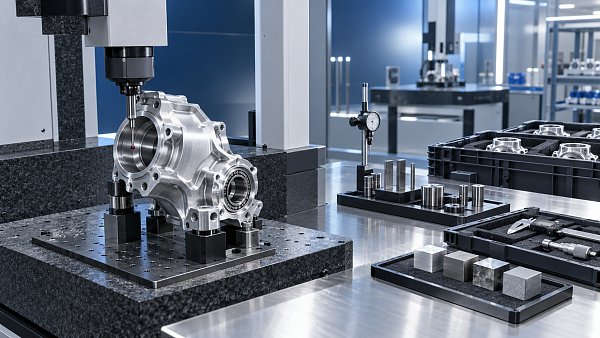
A quoted price rarely tells you whether a supplier can hold tolerance, sustain output, or trace each batch after shipment.
That matters more in robotics, aerospace assemblies, edge AI hardware, and precision machining, where one unstable component can slow an entire program.
The usual problem is information noise. Marketing claims are broad, while engineering requirements are narrow and measurable.
A credible sourcing process therefore asks different questions. What is the actual lead time by process step? Which MOQ rules are fixed? What data proves traceability?
This is where the TSV view is useful. Engineering truth comes from parameters, tolerances, and documented repeatability, not from polished supplier decks.
In practice, strong hard tech supply chain sourcing is less about finding the cheapest offer and more about reducing qualification surprises before they become schedule losses.
What should you verify first when a supplier promises short lead times?
Start by separating quoted lead time from demonstrated lead time. Those are often not the same thing.
A reliable supplier should explain lead time as a chain of events, not a single number.
That chain usually includes raw material release, tooling availability, queue time, processing time, inspection, packaging, and export preparation.
If any step is vague, the quoted schedule is probably optimistic.
A more useful way to check capability is to request recent delivery data for comparable parts.
Look for on-time delivery rate, average delay in days, and variance between prototype and production orders.
It also helps to ask whether the supplier depends on a single upstream source for castings, chips, specialty alloys, or surface treatment.
In hard tech supply chain sourcing, lead time risk often sits upstream, not on the final assembly line.
The table below helps translate common claims into practical verification points.
When these details are available, hard tech supply chain sourcing becomes easier to compare across suppliers on facts rather than confidence levels.
MOQ sounds straightforward, but what should you really look for?
MOQ is rarely just a volume threshold. It is usually a signal of how the supplier manages setup cost, process stability, and material exposure.
For machined parts, MOQ may reflect fixture time, inspection setup, or scrap risk on expensive alloys.
For electronics or sensor modules, MOQ may come from component reels, PCB panelization, or subcontract assembly constraints.
That is why a low MOQ is not automatically better. Sometimes it shifts hidden cost into unit pricing, slower delivery, or weaker process control.
A better question is whether MOQ can change by project stage.
In actual sourcing decisions, many teams need one rule for prototypes, another for validation builds, and another for serial production.
Useful points to confirm include:
- Whether NRE, tooling, or test fixture charges replace a higher MOQ
- Whether blanket orders can support smaller staggered releases
- Whether material buys are dedicated, shared, or refundable
- Whether the supplier can support engineering change orders without resetting MOQ terms
In hard tech supply chain sourcing, MOQ flexibility is valuable when development cycles are uncertain and design iterations remain open.
Still, flexibility should be documented. Verbal accommodation is not a sourcing strategy.
How much traceability is enough before you place a hard tech order?
The right answer depends on failure impact, compliance exposure, and field service needs.
For cosmetic items, lot-level records may be acceptable. For aerospace structures, motion systems, LiDAR modules, or safety-critical power electronics, that is usually insufficient.
Hard tech supply chain sourcing should define traceability before quotation, not after a problem appears.
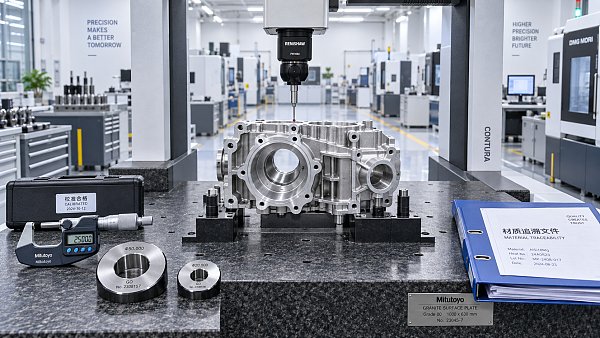
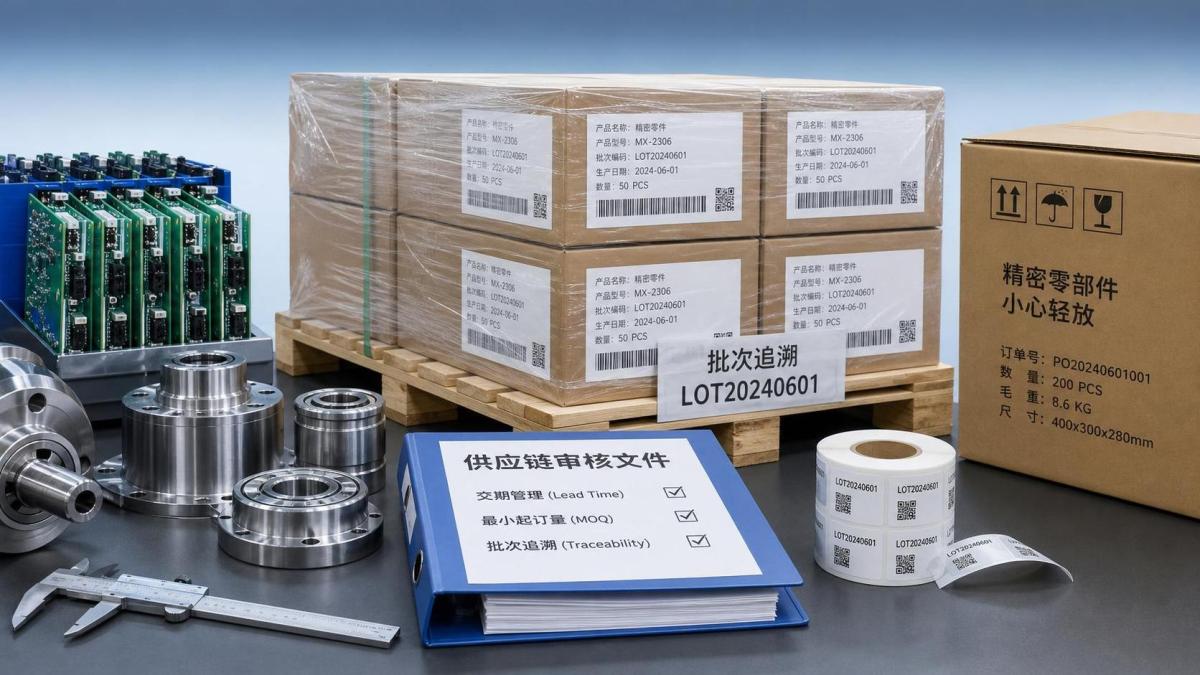
At minimum, ask whether the supplier can link each shipment to raw material heat number, process records, inspection data, and revision-controlled drawings.
For more demanding categories, you may also need operator records, calibration status, sub-tier certifications, and serialized genealogy.
This is especially important in sectors monitored by standards such as AS9100 or ISO13485, where documentation discipline directly affects qualification confidence.
A supplier does not need to sound impressive. The supplier needs to retrieve the right data quickly and consistently.
That distinction fits the TSV philosophy well. Parameters do not lie, and records should make those parameters traceable across the manufacturing path.
A practical traceability check
Ask for one sample document pack from a completed order. Review it as if a field failure happened yesterday.
- Can the supplier trace the exact batch within minutes?
- Can inspection results be tied to the shipped lot?
- Can nonconforming material be isolated without stopping all shipments?
If the answer is unclear, the traceability system is weaker than it appears.
Which warning signs usually appear before supplier qualification fails?
Most failed supplier onboarding efforts show early signals, but they are often ignored because pricing looks attractive.
One warning sign is inconsistent language between sales, quality, and engineering contacts. If each team gives a different answer, internal process control may be weak.
Another is selective transparency. Some suppliers share certificates quickly, but avoid actual SPC data, capacity detail, or scrap history.
That usually means they can document compliance, yet cannot prove repeatability.
Be cautious when lead time is short, MOQ is flexible, and price is low all at once.
In hard tech supply chain sourcing, three unusually favorable answers together often indicate omitted constraints.
Other common warning signs include:
- Drawing revisions handled by email without formal change control
- Sub-tier processors not disclosed until after PO issuance
- Inspection reports that summarize pass or fail without measured values
- No clear escalation path for quality escapes or delayed lots
When these signs show up early, it is usually cheaper to slow qualification than to fix downstream disruption later.
What does a practical decision framework look like before final supplier approval?
A workable framework should compare suppliers on evidence, not on presentation style.
One useful method is to score only the variables that directly affect launch risk and lifecycle cost.
That usually means lead time stability, MOQ structure, traceability depth, process capability, and change responsiveness.
You can also weight categories differently by application. A UAV flight controller and a five-axis machined fixture should not be reviewed with identical priorities.
Before final approval, keep the checklist tight:
- Define the required traceability level in the RFQ package
- Request evidence from comparable past orders
- Validate prototype, pilot, and production MOQs separately
- Review upstream supply dependencies and alternate paths
- Test document retrieval speed during the qualification stage
This is also where a data-first approach adds value. The most dependable hard tech supply chain sourcing decisions come from structured comparisons and engineering-grade evidence.
That is the broader lesson behind TSV’s benchmarking mindset. Strip away broad claims, then compare what can be measured, audited, and repeated.
So how should you move forward with hard tech supply chain sourcing?
Begin with the sourcing risks that could delay validation, production release, or field support.
Then turn those risks into supplier questions that demand evidence.
For most hard tech supply chain sourcing programs, the decisive factors are not broad capability claims. They are lead time stability, stage-specific MOQ logic, and traceability that works under pressure.
A sensible next step is to revise RFQ templates, supplier scorecards, and qualification reviews around those three areas.
That approach reduces trial-and-error cost, shortens qualification cycles, and makes supplier selection more resilient when programs scale.
In a market crowded with claims, better sourcing decisions come from the same discipline used in engineering: verify the parameters, challenge the assumptions, and document what the supplier can actually repeat.
Search News
Hot Articles
- Carbon Fiber StructuresHow to Specify Aerospace Carbon Fiber Assemblies for Lightweight, Load-Bearing PartsJul 11, 2026
- Machine VisionXiaomi, Alibaba DAMO Academy Drive Open-Source Robotics Model Ecosystem, Lowering Algorithm Development Barriers for Overseas SMEs Adopting Chinese Robotics SolutionsMar 30, 2026
- Cobots & ArmsShanxi 'AI+' Conference Showcases Embodied Intelligence with Multinational Buyer Engagement: Key Industry ImplicationsMar 30, 2026
Popular Tags
Recommended News
 Jul 11, 2026How to Specify Aerospace Carbon Fiber Assemblies for Lightweight, Load-Bearing PartsAerospace carbon fiber assemblies: learn how to specify laminate design, load data, joining methods, and inspection controls for lighter, reliable load-bearing aerospace parts.Elena Rostova (UAV Systems Researcher)
 Mar 30, 2026Xiaomi, Alibaba DAMO Academy Drive Open-Source Robotics Model Ecosystem, Lowering Algorithm Development Barriers for Overseas SMEs Adopting Chinese Robotics SolutionsXiaomi & Alibaba DAMO Academy's open-source robotics models lower algorithm barriers for global SMEs. Boost efficiency in manufacturing, logistics & smart retail with ROS 2 compatible solutions.TSV Data Lab
 Mar 30, 2026Shanxi 'AI+' Conference Showcases Embodied Intelligence with Multinational Buyer Engagement: Key Industry ImplicationsShanxi 'AI+' Conference highlights embodied intelligence with Tesla, Ubtech & Jiantao showcasing multimodal robotics. 40+ global buyers validated tech on-site, creating new B2B channels for industrial automation & AI solutions.Chen Wei (Automation Lead Engineer)
 Mar 30, 2026Zhongguancun Unveils 6G Integrated Sensing-Computing-Intelligence Platform to Empower Embodied Robots for Global Industrial ApplicationsZhongguancun's new 6G platform revolutionizes industrial robotics with <10ms latency, empowering global automotive, logistics & port automation. Discover how this tech boosts China's smart manufacturing exports.TSV Data Lab
 Mar 30, 2026Mech-Mind Tianjin Embodied Intelligence R&D and Production Base Goes Live, Cutting Delivery Time by 20%–30% for Global Customized AMR+Vision SolutionsMech-Mind's Tianjin AMR+Vision production base cuts delivery time by 20%-30% for欧美 & Latin American markets. Discover how this PLd-certified facility accelerates customized robotics solutions for smart manufacturing and logistics.Chen Wei (Automation Lead Engineer)
 Mar 30, 2026Boao Forum Reveals 'Co-evolution of Big and Small Brains' Trend in Humanoid Robots, China's Embodied Intelligence Accelerates Adaptation to Overseas Manufacturing Service ScenariosDiscover how China's humanoid robots, featuring 'Co-evolution of Big and Small Brains,' are revolutionizing global manufacturing. Learn about Embodied Tian Gong 3.0's ISO compliance and overseas deployment at Boao Forum 2026.Chen Wei (Automation Lead Engineer)
 Mar 30, 2026China Railway Industrial Secures Patent for Embodied Robotics in Material Handling, Boosting High-Precision Delivery Capabilities for Overseas Infrastructure and Manufacturing ProjectsChina Railway Industrial's new patent for embodied robotics in material handling boosts high-precision delivery for global infrastructure & manufacturing. Discover how this innovation enhances logistics accuracy in automotive, rail transit & EPC projects.Chen Wei (Automation Lead Engineer)
 Oct 03, 2026Selecting Automotive Radar Sensor Modules for ADAS Range, Resolution, and IntegrationAutomotive radar sensor module selection guide for ADAS: compare range, resolution, field of view, latency, and integration to build safer, reliable vehicle systems.TSV Data Lab
 Oct 02, 2026How to Qualify Machined Parts Suppliers for Hard Tech ProgramsHard tech supply chain machined parts demand rigorous supplier qualification. Learn how to assess capability, traceability, quality controls, and delivery resilience.Dr. Marcus Vance
 Oct 01, 2026How to Select an Outdoor Security Radar Sensor for Perimeter Detection?Outdoor security radar sensor selection guide: compare range, accuracy, false-alarm control, integration, and field testing for reliable perimeter detection.TSV Data Lab
 Sep 30, 2026How to Evaluate Solid-State LiDAR Hardware for Outdoor Autonomous VehiclesSolid state LiDAR hardware evaluation guide for outdoor autonomous vehicles—compare range, point-cloud quality, environmental resilience, integration, and safety.TSV Data Lab
 Sep 29, 2026ISO 9283 Repeatability: How to Evaluate Cobot Positioning PerformanceISO 9283 cobot repeatability explained: learn how payload, reach, approach direction, and test conditions affect positioning performance and cell capability.Chen Wei (Automation Lead Engineer)
 Oct 03, 2026Is Edge Computing Necessary for Real-Time Quality Inspection?Is industrial edge computing necessary for real-time quality inspection? Explore how latency, data volume, reliability, and control integration shape the right architecture.TSV Data Lab
 Oct 02, 2026What Documents Prove a Precision Machining Supplier Can Hold Tolerance?What documents prove a precision machining supplier can hold tolerance? Explore certificates, FAI reports, calibration, SPC, and traceability evidence to qualify suppliers with confidence.Dr. Marcus Vance
 Oct 01, 2026Can a Machining Supplier Meet Aerospace Fatigue Testing Requirements?Can a machining supplier meet aerospace fatigue testing requirements? Learn the traceability, process control, and test evidence needed for reliable aerospace parts.Dr. Marcus Vance
 Sep 30, 2026Which Industrial Robot Specifications Matter for High-Precision Assembly?Which industrial robot specifications matter most for high-precision assembly? Explore repeatability, accuracy, stiffness, vibration, calibration, and force control for reliable yields.Chen Wei (Automation Lead Engineer)
 Sep 29, 2026How Do You Verify Servo Motor Torque Under Continuous Load?How do I verify servo motor torque under continuous load? Learn RMS torque checks, torque-speed limits, thermal derating, and real-machine testing.Chen Wei (Automation Lead Engineer)
 Oct 02, 2026ZD330 Software Configuration: Verifying Cut-List Import Before PurchaseZD330 software and machine configuration: verify cut-list imports, data mapping, labels, and workflow before purchase to reduce errors and choose with confidence.Victor Lin (Chief Software Architect)
 Sep 28, 2026Spindle Runout Measurement in Germany: DIN Standards, Methods, and Acceptance LimitsSpindle runout measurement Germany: explore DIN standards, proven methods, acceptance limits, and audit-ready practices for reliable machining quality.Dr. Marcus Vance
 Sep 27, 2026How to Select Wall-Mount Edge Devices for Space-Constrained Factory NetworksWall mount edge devices for space-constrained factories: evaluate workload, thermal design, power resilience, cable access, and network reliability for smarter deployments.TSV Data Lab
 Sep 26, 2026Machining Tolerance Analysis: How to Set Limits That Meet Function and Cost TargetsMachining tolerance analysis: learn how to set functional limits, control tolerance stacks, reduce inspection risk, and balance precision with production cost.Dr. Marcus Vance
 Sep 25, 2026How to Evaluate an Industrial Infrastructure Data Platform for Multi-Site OperationsIndustrial infrastructure data platform evaluation guide for multi-site operations: compare data quality, edge resilience, interoperability, governance, and scalable proof-of-value criteria.Victor Lin (Chief Software Architect)
 Sep 24, 2026How to Select Machine Vision Optics for Accurate Inspection at Different Working DistancesMachine vision optics selection guide for accurate inspection at every working distance. Compare FOV, pixel scale, DOF, distortion, lighting, and telecentric options.TSV Data Lab
 Sep 23, 2026How to Evaluate a Machine Vision System Integrator for High-Speed Inspection LinesChoose a machine vision system integrator with proven expertise in high-speed inspection, reliable reject timing, robust optics, and measurable acceptance criteria.TSV Data Lab