Factory Automation with SCADA: When It Fits, What It Connects, and Where It Falls Short
Publication Date
author
Where factory automation with SCADA creates measurable value

Factory automation with SCADA is most useful when operations need visibility across machines, utilities, alarms, and production conditions at the same time.
That matters in mixed industrial environments, where one line may depend on PLC logic, another on legacy drives, and a third on newer edge-connected devices.
In practice, the question is rarely whether SCADA is modern enough. The better question is whether centralized supervision solves a real operational bottleneck.
This is where a data-first perspective becomes useful. Engineering decisions improve when dashboards, alarms, and historian records are tied to actual tolerances, downtime patterns, and process drift.
That approach aligns with the broader hard-tech discipline promoted by TechStat Vanguard: remove vague claims, inspect parameters, and judge systems by measurable behavior.
Factory automation with SCADA can support that discipline well, but only in the right operating context. Some facilities need supervisory control. Others need tighter motion control, MES coordination, or analytics first.
Why the same SCADA architecture does not fit every plant
Different factories generate different automation priorities because process tempo, asset diversity, and quality risk are not the same.
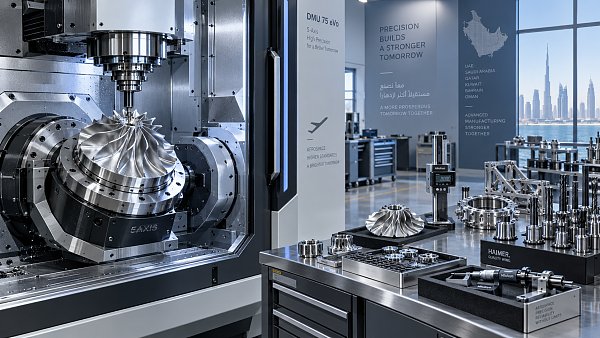
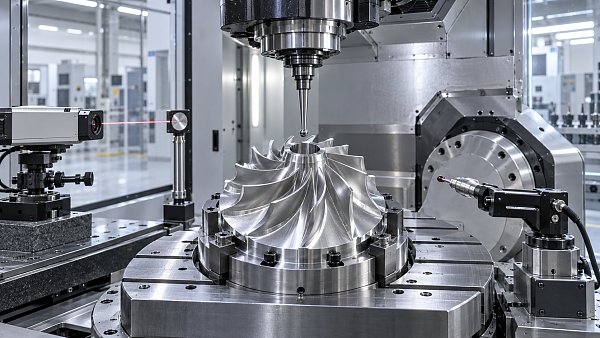
A packaging line usually values fast fault visibility and changeover tracking. A precision machining cell may care more about spindle load trends, coolant status, and tolerance-sensitive machine conditions.
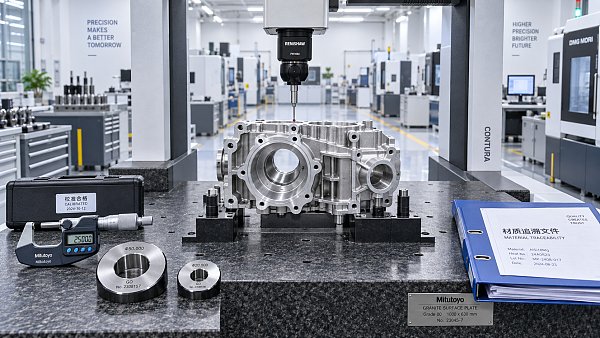
In electronics or aerospace-related production, traceability depth can outweigh simple screen-level monitoring. In water treatment or energy-intensive utilities, alarm integrity and remote supervision may dominate.
That is why factory automation with SCADA should be judged by operational role, not by feature count. More tags and more screens do not automatically produce better control.
A useful evaluation starts with three questions: what must be seen in real time, what must be acted on immediately, and what must be stored for later engineering review.
High-frequency production lines usually need coordination more than visualization
On high-throughput lines, factory automation with SCADA works best when multiple stations must stay synchronized despite frequent minor interruptions.
The value is not the screen itself. The value comes from correlating stoppages, buffer levels, sensor states, recipe changes, and operator interventions across the whole line.
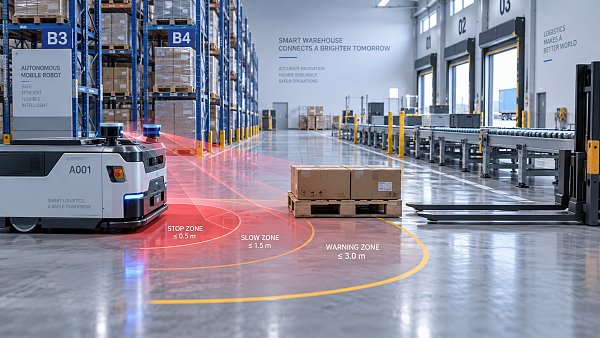
This is common in food, packaging, consumer goods, and discrete assembly operations. Line speed is important, but the real issue is often hidden interaction between upstream and downstream assets.
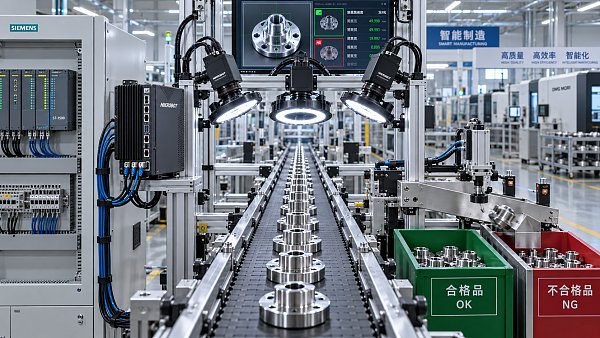
In these cases, factory automation with SCADA should connect conveyors, fillers, torque tools, vision systems, reject stations, and utility conditions that affect uptime.
A weak deployment only mirrors PLC points. A stronger one shows cause-and-effect relationships, alarm sequence context, and downtime categories that maintenance teams can actually use.
Where response time below the supervisory layer is critical, SCADA should not be treated as the primary control engine. PLCs and motion controllers still own deterministic actions.
Batch, process, and utility environments ask for a different SCADA logic
In batch production, water systems, chemical handling, boilers, or compressed air networks, factory automation with SCADA often earns its place faster.
These environments depend on sequences, thresholds, setpoints, and alarm management across distributed assets. Operators need one supervisory layer to understand state changes clearly.
More important, historians become operational evidence. Trends reveal whether a pressure deviation is random, load-related, or tied to recurring process instability.
For regulated or validation-heavy production, factory automation with SCADA also supports cleaner audit trails, event logging, and exception review.
Still, this is where many teams overestimate SCADA. It can supervise and record. It does not replace strong process design, instrumentation quality, or disciplined calibration.
Precision cells and advanced equipment need selective SCADA integration
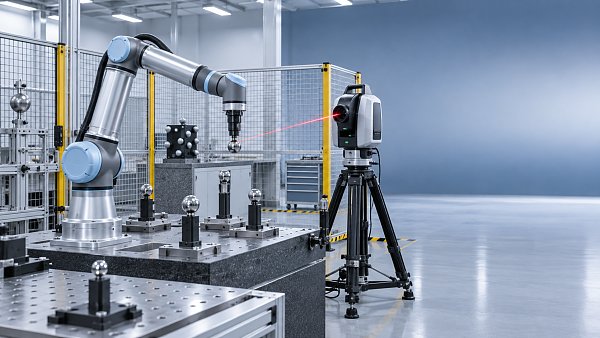
In CNC machining, robotics, aerospace component processing, and sensor-rich inspection cells, the fit is more selective.
These environments often already include high-performance machine controllers, vendor software, and specialized data formats. Adding SCADA without a clear signal strategy creates noise.
What usually matters is not full data capture. It is choosing the variables that affect quality, availability, or traceability.
For example, factory automation with SCADA may be valuable for machine state, cycle completion, spindle load bands, coolant alarms, environmental conditions, and energy anomalies.
It may be less useful for ultra-high-frequency motion data that belongs closer to controller-native diagnostics or edge analytics.
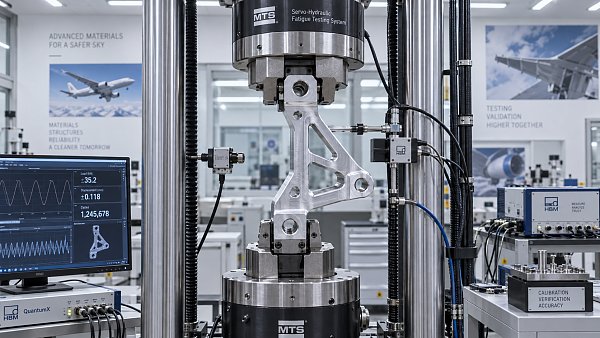
This distinction matters in hard-tech supply chains, where tolerance windows and fatigue risks matter more than attractive dashboards. Parameters must stay tied to engineering consequence.
What factory automation with SCADA should connect first
A practical rollout usually starts by separating assets into control-critical, visibility-critical, and traceability-critical layers.
In most facilities, factory automation with SCADA should connect alarms, status data, utility conditions, and production context before chasing every available device signal.
That sequencing reduces integration waste and keeps the system aligned with actual operational decisions.
Where SCADA falls short and other platforms become necessary
Factory automation with SCADA has limits, and most failed projects start by ignoring them.
SCADA is not a substitute for MES when work order logic, genealogy, and complex production execution need formal orchestration.
It is not an ERP replacement for inventory, planning, or commercial transactions. It is also not the right home for advanced predictive models that require heavier analytics pipelines.
Another weak point appears in highly distributed operations. If architecture depends on cloud-native scaling, mobile-first field workflows, or enterprise-wide data normalization, SCADA alone may be too narrow.
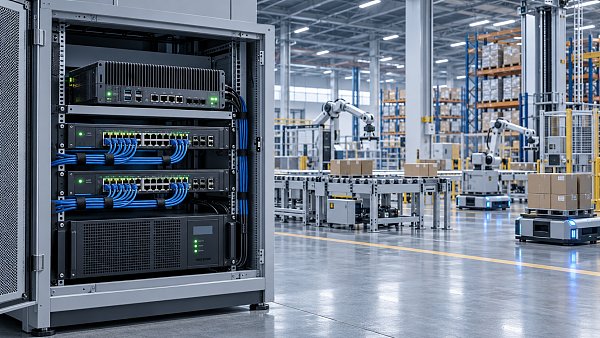
In those situations, a better design may combine SCADA with historians, edge gateways, MES, CMMS, or industrial data platforms.
- Use SCADA for supervision, alarms, and operational context.
- Use MES for execution rules, genealogy, and dispatching.
- Use edge analytics for high-speed condition monitoring.
- Use enterprise platforms for long-range optimization and governance.
Common misreads before a SCADA project moves forward
One common mistake is treating factory automation with SCADA as a universal modernization label instead of a specific supervisory layer.
Another is focusing on software features while ignoring field instrumentation, network segmentation, and controller data quality.
There is also a recurring cost error. Initial licensing may look manageable, but tag expansion, validation effort, cybersecurity work, and maintenance obligations can reshape the budget.
A more subtle misread appears when similar lines are assumed to need identical dashboards. In reality, alarm philosophy and usable context often differ by product mix, shift pattern, and downtime sensitivity.
The stronger evaluation method is straightforward: inspect event frequency, response urgency, data granularity, integration burden, and the operational cost of getting those assumptions wrong.
A grounded way to decide the next step
Factory automation with SCADA fits best where cross-asset visibility, alarm discipline, and historical process evidence directly improve uptime, consistency, or traceability.
It fits less well when the real need sits deeper in deterministic control, higher in execution management, or wider in enterprise analytics.
A practical next move is to map one production area in detail. List the assets, decisions, delays, and records that matter most.
Then define which signals belong in SCADA, which should stay at controller level, and which require adjacent platforms.
That kind of disciplined scoping reflects the same engineering standard that serious industrial benchmarking demands: fewer claims, more verified parameters, and clearer fit between system design and real operating conditions.
Search News
Hot Articles
- Carbon Fiber StructuresHow to Specify Aerospace Carbon Fiber Assemblies for Lightweight, Load-Bearing PartsJul 11, 2026
- Machine VisionXiaomi, Alibaba DAMO Academy Drive Open-Source Robotics Model Ecosystem, Lowering Algorithm Development Barriers for Overseas SMEs Adopting Chinese Robotics SolutionsMar 30, 2026
- Cobots & ArmsShanxi 'AI+' Conference Showcases Embodied Intelligence with Multinational Buyer Engagement: Key Industry ImplicationsMar 30, 2026
Popular Tags
Recommended News
 Jul 11, 2026How to Specify Aerospace Carbon Fiber Assemblies for Lightweight, Load-Bearing PartsAerospace carbon fiber assemblies: learn how to specify laminate design, load data, joining methods, and inspection controls for lighter, reliable load-bearing aerospace parts.Elena Rostova (UAV Systems Researcher)
 Mar 30, 2026Xiaomi, Alibaba DAMO Academy Drive Open-Source Robotics Model Ecosystem, Lowering Algorithm Development Barriers for Overseas SMEs Adopting Chinese Robotics SolutionsXiaomi & Alibaba DAMO Academy's open-source robotics models lower algorithm barriers for global SMEs. Boost efficiency in manufacturing, logistics & smart retail with ROS 2 compatible solutions.TSV Data Lab
 Mar 30, 2026Shanxi 'AI+' Conference Showcases Embodied Intelligence with Multinational Buyer Engagement: Key Industry ImplicationsShanxi 'AI+' Conference highlights embodied intelligence with Tesla, Ubtech & Jiantao showcasing multimodal robotics. 40+ global buyers validated tech on-site, creating new B2B channels for industrial automation & AI solutions.Chen Wei (Automation Lead Engineer)
 Mar 30, 2026Zhongguancun Unveils 6G Integrated Sensing-Computing-Intelligence Platform to Empower Embodied Robots for Global Industrial ApplicationsZhongguancun's new 6G platform revolutionizes industrial robotics with <10ms latency, empowering global automotive, logistics & port automation. Discover how this tech boosts China's smart manufacturing exports.TSV Data Lab
 Mar 30, 2026Mech-Mind Tianjin Embodied Intelligence R&D and Production Base Goes Live, Cutting Delivery Time by 20%–30% for Global Customized AMR+Vision SolutionsMech-Mind's Tianjin AMR+Vision production base cuts delivery time by 20%-30% for欧美 & Latin American markets. Discover how this PLd-certified facility accelerates customized robotics solutions for smart manufacturing and logistics.Chen Wei (Automation Lead Engineer)
 Mar 30, 2026Boao Forum Reveals 'Co-evolution of Big and Small Brains' Trend in Humanoid Robots, China's Embodied Intelligence Accelerates Adaptation to Overseas Manufacturing Service ScenariosDiscover how China's humanoid robots, featuring 'Co-evolution of Big and Small Brains,' are revolutionizing global manufacturing. Learn about Embodied Tian Gong 3.0's ISO compliance and overseas deployment at Boao Forum 2026.Chen Wei (Automation Lead Engineer)
 Mar 30, 2026China Railway Industrial Secures Patent for Embodied Robotics in Material Handling, Boosting High-Precision Delivery Capabilities for Overseas Infrastructure and Manufacturing ProjectsChina Railway Industrial's new patent for embodied robotics in material handling boosts high-precision delivery for global infrastructure & manufacturing. Discover how this innovation enhances logistics accuracy in automotive, rail transit & EPC projects.Chen Wei (Automation Lead Engineer)
 Oct 06, 2026Navigation Fault Tolerance Standards for AMRs: What Safety Teams Must VerifyNavigation fault tolerance standards: learn what AMR safety teams must verify, from localization loss and sensor faults to stopping distance, safe restart, and site-specific validation.Chen Wei (Automation Lead Engineer)
 Oct 05, 2026Calculating Edge Computing Total Cost of Ownership Across Distributed SitesEdge computing ownership cost explained: calculate deployment, energy, connectivity, security, remote support, and refresh costs across distributed sites.TSV Data Lab
 Oct 04, 2026CAD/CAM Benchmarking in the GCC: What Manufacturers Should Ask a ConsultantCAD CAM benchmark consultant GCC guide: learn the key questions manufacturers should ask to validate post-processors, workflows, machine performance, and production risk.Victor Lin (Chief Software Architect)
 Oct 03, 2026Selecting Automotive Radar Sensor Modules for ADAS Range, Resolution, and IntegrationAutomotive radar sensor module selection guide for ADAS: compare range, resolution, field of view, latency, and integration to build safer, reliable vehicle systems.TSV Data Lab
 Oct 02, 2026How to Qualify Machined Parts Suppliers for Hard Tech ProgramsHard tech supply chain machined parts demand rigorous supplier qualification. Learn how to assess capability, traceability, quality controls, and delivery resilience.Dr. Marcus Vance
 Oct 01, 2026How to Select an Outdoor Security Radar Sensor for Perimeter Detection?Outdoor security radar sensor selection guide: compare range, accuracy, false-alarm control, integration, and field testing for reliable perimeter detection.TSV Data Lab
 Sep 30, 2026How to Evaluate Solid-State LiDAR Hardware for Outdoor Autonomous VehiclesSolid state LiDAR hardware evaluation guide for outdoor autonomous vehicles—compare range, point-cloud quality, environmental resilience, integration, and safety.TSV Data Lab
 Sep 29, 2026ISO 9283 Repeatability: How to Evaluate Cobot Positioning PerformanceISO 9283 cobot repeatability explained: learn how payload, reach, approach direction, and test conditions affect positioning performance and cell capability.Chen Wei (Automation Lead Engineer)
 Oct 05, 2026What Causes Machine Vision Systems to Miss Small Defects?What causes machine vision systems to miss small defects? Discover how lighting, optics, motion, and AI thresholds affect detection—and prevent costly escapes.TSV Data Lab
 Oct 04, 2026How Should You Compare 5-Axis CNC Machine Accuracy Claims?How do I compare 5-axis CNC machine accuracy claims? Learn how to assess standards, thermal stability, TCP accuracy, and real-world test evidence.Dr. Marcus Vance
 Oct 03, 2026Is Edge Computing Necessary for Real-Time Quality Inspection?Is industrial edge computing necessary for real-time quality inspection? Explore how latency, data volume, reliability, and control integration shape the right architecture.TSV Data Lab
 Oct 02, 2026What Documents Prove a Precision Machining Supplier Can Hold Tolerance?What documents prove a precision machining supplier can hold tolerance? Explore certificates, FAI reports, calibration, SPC, and traceability evidence to qualify suppliers with confidence.Dr. Marcus Vance
 Oct 01, 2026Can a Machining Supplier Meet Aerospace Fatigue Testing Requirements?Can a machining supplier meet aerospace fatigue testing requirements? Learn the traceability, process control, and test evidence needed for reliable aerospace parts.Dr. Marcus Vance
 Sep 30, 2026Which Industrial Robot Specifications Matter for High-Precision Assembly?Which industrial robot specifications matter most for high-precision assembly? Explore repeatability, accuracy, stiffness, vibration, calibration, and force control for reliable yields.Chen Wei (Automation Lead Engineer)
 Sep 29, 2026How Do You Verify Servo Motor Torque Under Continuous Load?How do I verify servo motor torque under continuous load? Learn RMS torque checks, torque-speed limits, thermal derating, and real-machine testing.Chen Wei (Automation Lead Engineer)
 Oct 02, 2026ZD330 Software Configuration: Verifying Cut-List Import Before PurchaseZD330 software and machine configuration: verify cut-list imports, data mapping, labels, and workflow before purchase to reduce errors and choose with confidence.Victor Lin (Chief Software Architect)
 Sep 28, 2026Spindle Runout Measurement in Germany: DIN Standards, Methods, and Acceptance LimitsSpindle runout measurement Germany: explore DIN standards, proven methods, acceptance limits, and audit-ready practices for reliable machining quality.Dr. Marcus Vance