
Offline robotic welding programs that look right but fail on the line
Publication Date
author
Robotic welding offline programming often produces simulations that look flawless on screen yet collapse under real shop-floor conditions. For engineers, operators, buyers, and decision-makers, the gap between digital validation and production reality can drive scrap, downtime, and supplier risk. This article examines why offline robotic welding programs fail on the line, what process variables are usually missed, and how data-driven verification improves deployment confidence.
Why do offline robotic welding programs fail after successful simulation?
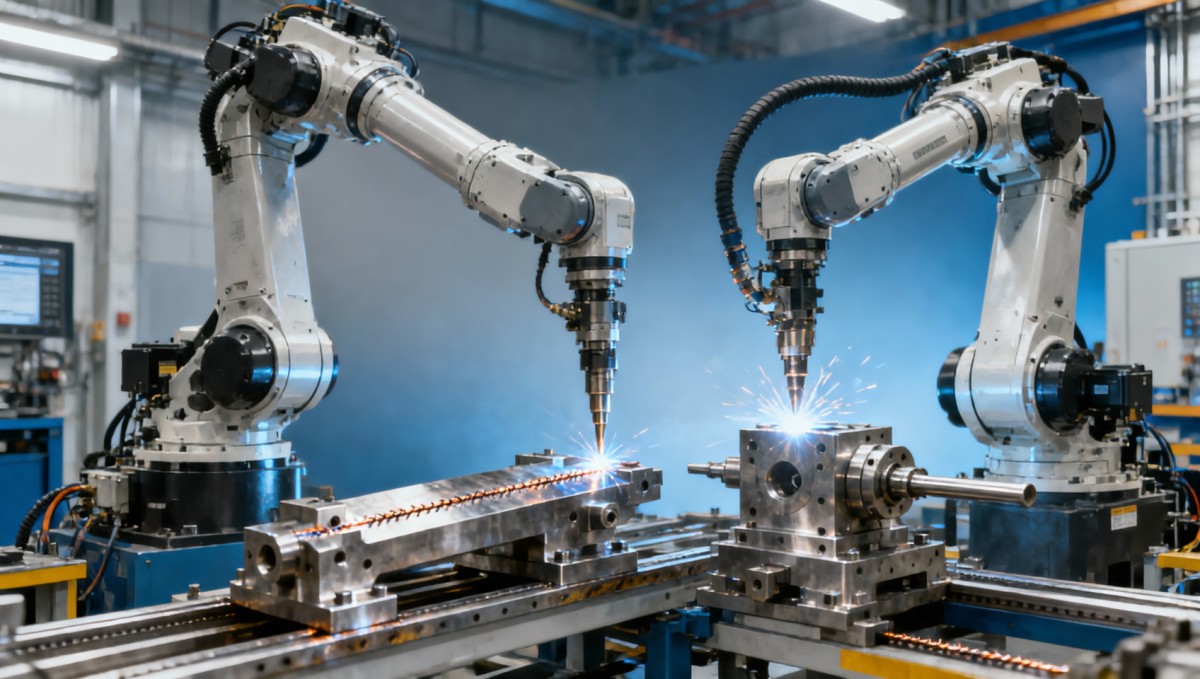
In many factories, an offline robotic welding program passes the virtual cell review because the digital model assumes stable geometry, perfect fixturing, ideal torch access, and repeatable arc behavior. Real production is different. Part variation, tack distortion, cable interference, torch wear, wire feed fluctuation, and positional error can accumulate within a few millimeters and break a path that looked correct in simulation.
This gap matters across sectors, from heavy fabrication and automotive subassemblies to aerospace brackets and agricultural equipment. Information researchers want objective causes, operators need fewer re-teaches, procurement teams need lower commissioning risk, and executives want predictable ramp-up within the first 2–6 weeks after installation. A visually clean simulation is not the same as a production-ready welding process.
At TechStat Vanguard, the practical question is not whether offline programming works in theory. It is whether the program survives the full stack of real variables: robot accuracy, fixture repeatability, part tolerance chain, weld sequence heat input, and sensing feedback. Parameters do not lie, and welding success is usually decided by cumulative deviation rather than one dramatic error.
A common failure pattern appears when path planning is validated only against nominal CAD. The robot may hit all points in empty space, yet the actual joint root shifts by 0.5–2.0 mm, the torch angle changes by 5°–12°, or the clamp sequence pulls the joint out of alignment after the first pass. The result is undercut, lack of fusion, burn-through, spatter, or collision alarms during production.
The most overlooked root causes
Most failed deployments are not caused by one bad programmer. They come from incomplete data inputs. Offline robotic welding programs often ignore as-built part variation, real TCP drift, contact tip wear, fixture deflection under heat, and line-side accessibility for nozzle cleaning or wire change. When those variables are not captured, the simulation becomes a geometry exercise rather than a process validation tool.
- Nominal CAD does not reflect incoming part conditions, especially when cut edges, formed parts, or welded subassemblies carry tolerance stack-up from upstream processes.
- Robot path validation may ignore weld metallurgy and heat sequence, even though pass order can change distortion behavior within the same shift.
- Digital cells may model robot reach and collision, but miss hose package movement, spatter buildup, sensor contamination, and maintenance access.
- Factory commissioning often compresses testing into 1–3 days, leaving too little time for multi-part verification across low, mid, and high tolerance conditions.
The key lesson is simple: offline robotic welding programs fail on the line when the digital twin is only a kinematic twin. Production needs a process twin that includes tolerance, thermal behavior, fixture reality, and operator intervention points.
Which process variables should engineers and buyers verify before launch?
For both technical and commercial teams, the most useful approach is to separate robot programming quality from process readiness. A supplier may demonstrate excellent offline programming skill, but that alone does not confirm line stability. Before sign-off, teams should review at least 5 core domains: part variation, fixture performance, robot and TCP accuracy, welding procedure stability, and sensing or adaptive correction capability.
In practice, these domains should be checked across at least 3 part conditions: nominal, near upper tolerance, and near lower tolerance. That structure is especially important when joint fit-up is sensitive to gap, bevel consistency, or torch access. For operations teams, this reduces emergency touch-ups. For procurement, it reduces the risk of buying software capacity without buying process robustness.
The table below summarizes the variables that most often separate a program that looks right from one that actually runs for 8–16 hours per shift with acceptable weld quality and manageable intervention frequency.
For decision-makers, this table also clarifies vendor discussions. The right supplier conversation should move beyond software screenshots and toward measurable readiness checks. If a proposal cannot define tolerance inputs, calibration intervals, or verification lots, the offline robotic welding program is being sold as a promise rather than a controlled deployment method.
A practical pre-launch checklist
Before factory acceptance or production release, teams should verify at least 6 items in sequence. This discipline is useful in mixed-model lines, new product introduction, and supplier transfer projects where hidden geometry issues often surface late.
- Confirm the as-built part condition using sampled production parts, not only CAD or prototype geometry.
- Measure fixture repeatability over multiple clamp cycles, ideally across cold and warmed conditions.
- Recalibrate TCP and verify torch condition before final path validation.
- Run weld trials using actual consumables, gas settings, and intended shift-level duty cycle.
- Check whether seam finding or correction is needed for gaps beyond the nominal tolerance window.
- Approve the program only after repeated production parts meet quality and cycle expectations, not after one successful demo run.
This approach aligns with TSV’s engineering-first philosophy: reduce trial-and-error cost by turning assumptions into inspectable parameters. In hard-tech procurement, the difference between low-risk automation and chronic launch instability is often decided before the first production shift.
Offline programming only vs data-driven deployment: what is the real difference?
Many teams compare software features, but the more useful comparison is deployment model versus deployment model. An offline robotic welding program based only on CAD and reach simulation may be cheaper at the quotation stage. A data-driven deployment, however, adds as-built measurement, trial parts, fixture checks, and process validation. Upfront effort increases, but launch risk usually falls.
For procurement teams, this is where hidden cost often sits. A lower initial programming quote can become expensive if it triggers 2–4 weeks of line debugging, repeated engineer travel, overtime production recovery, or scrap from unstable weld quality. The decision is not software cost alone. It is total cost of commissioning and production stability.
The comparison below helps technical buyers and plant leaders evaluate proposals using operational criteria rather than presentation quality alone.
The point is not that every cell needs the most advanced sensing package. The point is that the deployment method must match the risk profile. If your parts have tight repeatability and stable fixtures, a simpler offline robotic welding program may be sufficient. If your parts carry variable fit-up, heat distortion, or frequent model changes, the cheaper method can become the more expensive one within a single quarter.
When is offline-only acceptable?
Offline-only programming tends to work better in controlled scenarios: stable family parts, limited joint variation, proven fixture design, low distortion sensitivity, and a maintenance team that holds TCP discipline. Even then, acceptance should be based on repeated production runs, not simulation confidence. A common benchmark is to verify across multiple parts over several cycles rather than approving after one good pass.
Where geometry or process variation is moderate to high, it is safer to add touch sensing, seam tracking, or regular path correction logic. That choice is especially relevant for job shops, heavy weldments, and multi-supplier lines where upstream consistency may change month to month.
How should procurement and operations teams evaluate suppliers and implementation plans?
A strong robotic welding supplier evaluation should combine technical readiness, project execution, and commercial clarity. Too many RFQs ask for robot brand, reach, payload, and software license details, but fail to ask how the offline robotic welding program will be validated against actual part conditions. That omission creates avoidable risk at the exact moment when launch deadlines are least flexible.
For procurement teams, the objective is to compare proposals on implementation evidence, not adjectives. For operators and manufacturing engineers, the objective is to ensure the program can survive normal plant variation without daily rescue work. For executives, the objective is faster qualification with lower rework exposure and fewer supplier disputes over what “ready for production” actually means.
Questions worth putting into the RFQ or technical review
The following questions help expose whether a supplier is offering only programming labor or a robust deployment methodology. They are useful in new cell builds, retrofits, and line transfers.
- What part and fixture data will be used: nominal CAD only, measured fixtures, or sampled production parts from at least one real lot?
- How many validation stages are planned: virtual review, dry run, arc-on pilot, and production trial?
- What acceptance criteria will be documented: cycle time band, weld placement tolerance, intervention frequency, and first-pass quality checks?
- What is the recalibration and maintenance expectation for TCP, torch consumables, and fixture wear over the first 30–90 days?
- If the line misses target performance, who owns rework, software updates, or additional site support, and within what response window?
These questions improve supplier qualification because they force alignment on evidence. A line can meet software completion milestones and still fail operationally. Procurement language should therefore connect payment or sign-off to measured line behavior, not only program delivery.
Implementation phases that reduce launch risk
A realistic robotic welding implementation usually works best in 4 phases over several weeks rather than in one compressed handover. Phase 1 covers data collection and cell assumptions. Phase 2 validates the offline robotic welding program against measured geometry. Phase 3 runs arc-on pilot parts. Phase 4 finalizes production acceptance and operator handover.
This staged approach matters because each phase catches a different failure mode. Early phases reveal reach and clash issues. Mid phases reveal fit-up and torch access problems. Final phases reveal repeatability, thermal drift, and intervention rates during real throughput. When these phases are skipped, problems arrive together during production, when correction costs are highest.
For plants with high mix or demanding quality documentation, teams should also define a revalidation trigger. Common triggers include fixture repair, torch replacement, new material thickness, revised joint design, and supplier changes upstream. This keeps the offline robotic welding program from becoming stale while production conditions evolve.
Common misconceptions, FAQs, and what line teams should expect
Search behavior around robotic welding often mixes software expectations with process expectations. The result is confusion during buying and commissioning. The questions below address common misconceptions using practical guidance for researchers, users, buyers, and plant decision-makers.
Does a more detailed simulation guarantee line success?
No. Better simulation helps, but success depends on whether the model includes real inputs. A visually rich digital cell can still fail if part deviation, fixture wear, torch condition, and heat distortion are missing from the validation process. Treat simulation as a decision tool, not as final proof.
How much line-side tuning is normal after offline robotic welding programming?
Some tuning is normal, especially during first article release and ramp-up. However, if the cell needs repeated point-by-point teaching across many parts after launch, the issue is usually weak front-end validation rather than normal commissioning. A healthy process should converge quickly within the first pilot lot, not remain unstable for weeks.
Should every robotic welding cell include seam tracking or vision?
Not necessarily. If part repeatability, fixture quality, and process stability are strong, simpler correction methods may be enough. But when joint location drifts beyond practical manual tolerance, or when product mix changes frequently, sensing can be more economical than constant re-teaching and scrap. The decision should follow measured variation, not trend-driven buying.
What standards or compliance considerations are relevant?
Requirements depend on industry and customer specification. In general, teams should align robot safety integration, welding procedure documentation, inspection criteria, and traceability rules with the applicable plant and sector framework. In regulated or high-consequence sectors, process documentation, change control, and repeatability evidence usually matter as much as the robot path itself.
The consistent message across these FAQs is that an offline robotic welding program should be judged as part of a manufacturing system. Software logic, fixture design, welding procedure, maintenance discipline, and operator usability all shape the final result on the line.
Why work with a data-driven technical partner before you commit?
In hard-tech procurement, the costliest mistake is often not the wrong robot. It is the wrong validation method. TechStat Vanguard helps engineering teams, sourcing groups, and executives cut through supplier noise by focusing on measurable inputs: tolerance conditions, fixture behavior, process windows, verification logic, and acceptance criteria. That approach reduces trial-and-error cost and shortens supplier qualification cycles.
If you are evaluating offline robotic welding programs, we can help you frame the right technical questions before purchase or launch. This includes parameter confirmation, deployment risk review, supplier comparison, validation scope, expected commissioning stages, and practical decision criteria for when sensing or adaptive correction is justified.
For teams already facing line-side failures, we can support a structured review of the gap between simulation and production reality. Typical focus areas include tolerance mapping, fixture repeatability checks, TCP discipline, verification lot design, and acceptance metrics that are specific enough to support engineering and procurement decisions.
Contact TechStat Vanguard to discuss your robotic welding project with an engineering-first lens. You can consult us on specification drafting, supplier screening, delivery timeline assumptions, customization paths, quality documentation expectations, sample or pilot validation strategy, and quotation comparisons anchored in real operational risk rather than marketing language.
Search News
Hot Articles
- Carbon Fiber StructuresHow to Specify Aerospace Carbon Fiber Assemblies for Lightweight, Load-Bearing PartsJul 11, 2026
- Machine VisionXiaomi, Alibaba DAMO Academy Drive Open-Source Robotics Model Ecosystem, Lowering Algorithm Development Barriers for Overseas SMEs Adopting Chinese Robotics SolutionsMar 30, 2026
- Cobots & ArmsShanxi 'AI+' Conference Showcases Embodied Intelligence with Multinational Buyer Engagement: Key Industry ImplicationsMar 30, 2026
Popular Tags
Recommended News
 Jul 11, 2026How to Specify Aerospace Carbon Fiber Assemblies for Lightweight, Load-Bearing PartsAerospace carbon fiber assemblies: learn how to specify laminate design, load data, joining methods, and inspection controls for lighter, reliable load-bearing aerospace parts.Elena Rostova (UAV Systems Researcher)
 Mar 30, 2026Xiaomi, Alibaba DAMO Academy Drive Open-Source Robotics Model Ecosystem, Lowering Algorithm Development Barriers for Overseas SMEs Adopting Chinese Robotics SolutionsXiaomi & Alibaba DAMO Academy's open-source robotics models lower algorithm barriers for global SMEs. Boost efficiency in manufacturing, logistics & smart retail with ROS 2 compatible solutions.TSV Data Lab
 Mar 30, 2026Shanxi 'AI+' Conference Showcases Embodied Intelligence with Multinational Buyer Engagement: Key Industry ImplicationsShanxi 'AI+' Conference highlights embodied intelligence with Tesla, Ubtech & Jiantao showcasing multimodal robotics. 40+ global buyers validated tech on-site, creating new B2B channels for industrial automation & AI solutions.Chen Wei (Automation Lead Engineer)
 Mar 30, 2026Zhongguancun Unveils 6G Integrated Sensing-Computing-Intelligence Platform to Empower Embodied Robots for Global Industrial ApplicationsZhongguancun's new 6G platform revolutionizes industrial robotics with <10ms latency, empowering global automotive, logistics & port automation. Discover how this tech boosts China's smart manufacturing exports.TSV Data Lab
 Mar 30, 2026Mech-Mind Tianjin Embodied Intelligence R&D and Production Base Goes Live, Cutting Delivery Time by 20%–30% for Global Customized AMR+Vision SolutionsMech-Mind's Tianjin AMR+Vision production base cuts delivery time by 20%-30% for欧美 & Latin American markets. Discover how this PLd-certified facility accelerates customized robotics solutions for smart manufacturing and logistics.Chen Wei (Automation Lead Engineer)
 Mar 30, 2026Boao Forum Reveals 'Co-evolution of Big and Small Brains' Trend in Humanoid Robots, China's Embodied Intelligence Accelerates Adaptation to Overseas Manufacturing Service ScenariosDiscover how China's humanoid robots, featuring 'Co-evolution of Big and Small Brains,' are revolutionizing global manufacturing. Learn about Embodied Tian Gong 3.0's ISO compliance and overseas deployment at Boao Forum 2026.Chen Wei (Automation Lead Engineer)
 Mar 30, 2026China Railway Industrial Secures Patent for Embodied Robotics in Material Handling, Boosting High-Precision Delivery Capabilities for Overseas Infrastructure and Manufacturing ProjectsChina Railway Industrial's new patent for embodied robotics in material handling boosts high-precision delivery for global infrastructure & manufacturing. Discover how this innovation enhances logistics accuracy in automotive, rail transit & EPC projects.Chen Wei (Automation Lead Engineer)
 Oct 13, 2026Smart Cameras vs. PC-Based Machine Vision: Which Fits High-Speed Inspection?This industrial product comparison for machine vision weighs smart cameras vs. PC-based systems on latency, throughput, and cost. Discover your best fit for high-speed inspection.TSV Data Lab
 Oct 12, 2026How to Verify RoHS Compliance in Industrial Sensing Systems Before DeploymentRoHS compliant sensing systems: learn how to verify materials, supplier declarations, testing, and configuration controls before industrial deployment.TSV Data Lab
 Oct 11, 2026How Procurement-Oriented Content Taxonomy Improves B2B Buying JourneysProcurement-oriented content taxonomy streamlines B2B buying journeys with clearer evidence, supplier comparisons, risk visibility, and faster approvals.TSV Data Lab
 Oct 10, 2026How to Select a Machine Performance Monitoring Platform for OEE and Downtime ReductionMachine performance monitoring platform selection guide: validate machine states, OEE data, downtime reasons, integrations, and scalability to reduce losses with confidence.TSV Data Lab
 Oct 08, 2026How to Machine Inconel 625 Blades Without Heat Cracks or Edge ChippingInconel 625 blade machining guide: prevent heat cracks, edge chipping, chatter, and work hardening with proven tooling, cooling, fixturing, and inspection strategies.Dr. Marcus Vance
 Oct 07, 2026How to Evaluate an HMI Panel Distributor for Industrial Automation ProjectsHMI panel distributor evaluation guide: verify technical compatibility, traceability, supply reliability, lifecycle support, and total cost for automation projects.Victor Lin (Chief Software Architect)
 Oct 06, 2026Navigation Fault Tolerance Standards for AMRs: What Safety Teams Must VerifyNavigation fault tolerance standards: learn what AMR safety teams must verify, from localization loss and sensor faults to stopping distance, safe restart, and site-specific validation.Chen Wei (Automation Lead Engineer)
 Oct 05, 2026Calculating Edge Computing Total Cost of Ownership Across Distributed SitesEdge computing ownership cost explained: calculate deployment, energy, connectivity, security, remote support, and refresh costs across distributed sites.TSV Data Lab
 Oct 04, 2026CAD/CAM Benchmarking in the GCC: What Manufacturers Should Ask a ConsultantCAD CAM benchmark consultant GCC guide: learn the key questions manufacturers should ask to validate post-processors, workflows, machine performance, and production risk.Victor Lin (Chief Software Architect)
 Oct 03, 2026Selecting Automotive Radar Sensor Modules for ADAS Range, Resolution, and IntegrationAutomotive radar sensor module selection guide for ADAS: compare range, resolution, field of view, latency, and integration to build safer, reliable vehicle systems.TSV Data Lab
 Oct 02, 2026How to Qualify Machined Parts Suppliers for Hard Tech ProgramsHard tech supply chain machined parts demand rigorous supplier qualification. Learn how to assess capability, traceability, quality controls, and delivery resilience.Dr. Marcus Vance
 Oct 01, 2026How to Select an Outdoor Security Radar Sensor for Perimeter Detection?Outdoor security radar sensor selection guide: compare range, accuracy, false-alarm control, integration, and field testing for reliable perimeter detection.TSV Data Lab
 Sep 30, 2026How to Evaluate Solid-State LiDAR Hardware for Outdoor Autonomous VehiclesSolid state LiDAR hardware evaluation guide for outdoor autonomous vehicles—compare range, point-cloud quality, environmental resilience, integration, and safety.TSV Data Lab
 Sep 29, 2026ISO 9283 Repeatability: How to Evaluate Cobot Positioning PerformanceISO 9283 cobot repeatability explained: learn how payload, reach, approach direction, and test conditions affect positioning performance and cell capability.Chen Wei (Automation Lead Engineer)
 Oct 13, 2026How to keep an industrial robotic integration project on scheduleIndustrial robotic integration project management: keep automation on schedule with proven controls for interfaces, suppliers, FAT, commissioning, and change risk.Victor Lin (Chief Software Architect)
 Oct 12, 2026What should be included in predictive maintenance pricing for factories?Predictive maintenance pricing for factories: compare sensors, software, integration, support, and total cost to secure measurable uptime gains and avoid hidden expenses.TSV Data Lab
 Oct 11, 2026How payload and reach change the cost of an industrial robotCost of industrial robot systems depends heavily on payload and reach. Learn how sizing, torque, tooling, safety, and lifecycle factors shape smarter automation investments.Chen Wei (Automation Lead Engineer)























