
HVAC control logic mistakes that waste energy after commissioning
Publication Date
author
Even after commissioning, hidden HVAC automation control logic errors can quietly drive up energy use, shorten equipment life, and distort performance data. For engineers, operators, buyers, and decision-makers comparing smart grid SCADA solutions, industrial IoT dashboard visualization, or OPC UA server response time, understanding these post-handover mistakes is essential to turning building data into measurable efficiency gains.
Why post-commissioning HVAC control logic mistakes remain expensive
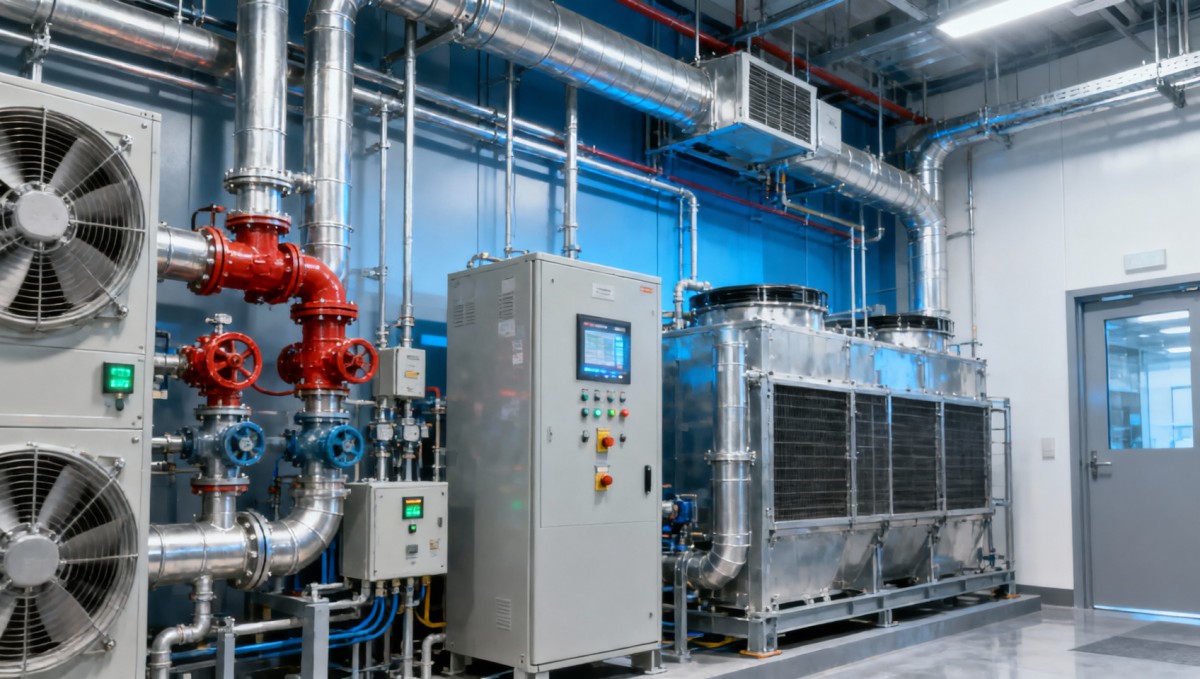
Commissioning is often treated as the finish line, but in practice it is only the start of stable HVAC control performance. Many systems pass functional checks during a 1–2 week handover window, yet begin wasting energy within the next 30–90 days because scheduling, sensor validation, reset logic, and sequence interactions were never tuned under real occupancy and seasonal load conditions.
This gap matters in mixed commercial, industrial, and mission-critical facilities where building automation systems connect to SCADA layers, industrial IoT dashboards, and OPC UA data pipelines. If the control logic is wrong, the data may still look busy, but not truthful. TechStat Vanguard approaches this problem from an engineering evidence perspective: parameters, thresholds, and response behavior matter more than polished front-end graphics.
For operators, the pain shows up as simultaneous heating and cooling, unstable discharge air temperature, hunting valves, and unexplained alarms. For procurement teams, it appears as rising utility bills despite recent modernization spending. For enterprise decision-makers, it creates a deeper issue: unreliable performance data that weakens capital planning, supplier evaluation, and ROI verification.
In most facilities, the highest-cost logic mistakes are not dramatic failures. They are quiet inefficiencies repeated every 5–15 minutes by the control loop. A fan that never resets static pressure, a chiller plant that stages too early, or an AHU that ignores occupancy zones can waste energy daily while still appearing “operational” in trend logs.
Where these errors usually originate
Post-commissioning mistakes often come from sequence copy-paste, rushed integration between field devices and supervisory software, or unclear ownership between mechanical contractors, controls integrators, and facility teams. A sequence may be valid on paper but fail when sensor drift, network latency, or equipment minimum turndown limits are introduced.
- Setpoint resets are enabled, but no guardrails define minimum and maximum allowable operating bands.
- Occupancy schedules exist in the BAS, but local overrides at the equipment level are never reconciled.
- Trend intervals are set too wide, such as 15 minutes instead of 1–5 minutes, hiding short cycling and oscillation.
- Control graphics show values, but point mapping errors make the displayed logic different from actual field behavior.
That is why data-driven verification matters after handover. TSV’s analytical lens is useful here because it focuses on what can be measured and benchmarked: response time, deadband stability, trend integrity, device communication health, and sequence compliance under variable load.
Which HVAC control logic mistakes waste the most energy in real buildings?
The most common HVAC control logic mistakes are rarely isolated. They interact across airside, waterside, schedules, and supervisory layers. A useful review should separate visible symptoms from underlying logic faults so operators and procurement teams can identify whether the issue is a software sequence problem, a sensor issue, or a system architecture limitation.
The table below summarizes frequent post-commissioning HVAC automation errors, their operational signature, and the resulting energy impact. These are common evaluation points when comparing BAS upgrades, smart grid SCADA integration, and industrial IoT dashboard visualization tools intended to improve post-handover performance.
These mistakes are expensive because they scale with operating hours and equipment count. A single weak sequence applied to 20–50 terminal zones, 3–6 AHUs, or a multi-chiller plant can multiply waste far beyond what the original commissioning report suggested. The issue is not only energy cost. It also undermines confidence in data analytics, fault detection, and supplier claims.
Four patterns that deserve immediate review
1. Schedule logic that does not match real occupancy
Many facilities still use fixed occupied periods such as 06:00–19:00 across all weekdays, even when real use varies by zone, shift, or production cell. If warm-up, purge, and post-occupancy run-on are not bounded, equipment may operate 2–4 extra hours daily. In buildings with partial weekend use, this becomes a persistent base-load penalty.
2. Reset strategies without field feedback validation
Supply air temperature reset, duct static pressure reset, and condenser water reset can reduce energy when they follow real demand. They become harmful when driven by a single bad sensor, stale average, or delayed network point. If BAS polling and OPC UA server response time are inconsistent, the reset loop may react too slowly or overcorrect.
3. Deadband and hysteresis values that are too narrow
A deadband of 0.2°C–0.5°C may look precise, but in real systems it can create hunting, valve chatter, and unstable VFD modulation. Practical control often needs wider and equipment-specific hysteresis depending on sensor accuracy, actuator travel time, and loop update interval. Precision is not the same as control quality.
4. Alarm logic that creates noise instead of action
If alarms trigger too often, operators ignore them. If alarm delays are too long, faults are missed. Effective post-commissioning control should define 3 layers: advisory, action-required, and critical shutdown. This is where industrial IoT dashboard visualization can help, but only if the raw control logic and threshold rules are clean.
How should engineers, operators, and buyers evaluate HVAC control quality after handover?
A practical evaluation framework should go beyond “the system is running.” It should test whether HVAC control logic remains stable under part-load, occupancy variation, and communication delays. For B2B teams, especially those reviewing upgrades or supplier changes, the best method is to evaluate sequence transparency, field data integrity, and measurable control behavior in the same workflow.
The checklist below is useful for information researchers, operators, procurement managers, and enterprise decision-makers who need to compare control providers, building analytics vendors, and smart grid SCADA integrations on something more rigorous than a software demo. It also helps define what should appear in a post-commissioning verification scope.
For many buyers, the hidden risk is purchasing software visibility instead of control accuracy. A polished dashboard can summarize 200–500 points, yet still miss the fact that the sequence is wrong. TechStat Vanguard’s engineering-first perspective is valuable because it encourages teams to compare hard parameters: trend granularity, latency ranges, threshold logic, and sequence traceability.
A 4-step post-commissioning review process
- Define the top 10–20 energy-critical loops, such as AHU discharge control, static pressure reset, plant staging, and economizer sequence.
- Collect 2–4 weeks of trend data at intervals short enough to reveal oscillation, overrides, and start-stop behavior.
- Compare sequence intent against actual field response, including sensor plausibility and command-feedback agreement.
- Prioritize fixes by payback potential, equipment protection value, and operational risk rather than by alarm count alone.
This process is especially useful when a facility is deciding whether to retune the existing BAS, add industrial IoT analytics, integrate a smart grid SCADA layer, or replace a controls contractor. Good procurement decisions begin with measurable failure modes, not marketing labels.
What standards, controls architecture, and implementation details should not be ignored?
HVAC control quality depends on both sequence design and architecture discipline. In modern facilities, airside and plant logic increasingly sit within broader digital environments that include BACnet, Modbus, OPC UA, edge gateways, and enterprise dashboards. If naming conventions, time synchronization, alarm philosophy, and fallback behavior are poorly defined, energy waste often follows.
Organizations in regulated or high-value production environments also need stronger documentation. Even where no special sector-specific certification is required, teams should preserve point lists, sequence revisions, trend retention policy, alarm priorities, and manual override procedures. A common failure mode is upgrading the interface without updating the control narrative, which leaves operators with modern graphics but outdated logic assumptions.
Useful reference practices include structured functional performance testing, device addressing discipline, standard engineering units, and periodic sensor verification. For many sites, quarterly review of critical loops and annual seasonal retuning are realistic operating intervals. This is not excessive. HVAC systems see different failure patterns in cooling season, heating season, and shoulder months, and control logic should be reviewed accordingly.
Implementation details that have outsized impact
- Use consistent engineering units and point naming so analytics tools do not compare incompatible values across devices or sites.
- Confirm time synchronization across controllers, gateways, and dashboards to prevent false cause-and-effect interpretation in trend analysis.
- Define fail-safe and fallback states for communication loss lasting 30 seconds, 5 minutes, and longer intervals depending on system criticality.
- Retain trend data long enough to compare at least 2 seasonal periods when validating post-commissioning optimization claims.
These details support better supplier benchmarking. TSV’s position as a data-driven hard-tech think tank aligns with this need: buyers and engineering teams should ask what the system measures, how often it measures it, what thresholds trigger action, and how sequence changes are documented. Parameters do not lie; undocumented assumptions do.
Common misconceptions after commissioning
“If comfort complaints are low, the logic must be fine.”
Not necessarily. A system can maintain acceptable zone temperature while wasting large amounts of fan, reheat, or plant energy. Comfort is one outcome, not proof of control efficiency.
“More points on the dashboard mean better control.”
Visibility is useful, but only when point quality, mapping accuracy, and response timing are controlled. More data without validation increases noise.
“Commissioning documents cover future performance.”
Commissioning proves a condition in time. It does not replace seasonal verification, trend review, or control retuning after occupancy and load patterns become real.
FAQ for buyers and operators comparing controls upgrades, analytics, and integration partners
The questions below reflect common search intent from facility engineers, operations teams, procurement staff, and executives who need to decide whether post-commissioning HVAC control issues require retuning, analytics software, device replacement, or a broader controls integration strategy.
How do I know whether the problem is control logic or bad hardware?
Start with 3 checks: command versus feedback agreement, sensor plausibility, and trend stability. If a valve command changes smoothly but the leaving air temperature is erratic, the issue may be hardware or sensor related. If multiple devices behave consistently wrong at the same schedule or threshold, the issue is more likely logic. A 2–4 week trend review usually reveals the pattern.
What should procurement ask when comparing BAS or HVAC analytics vendors?
Ask for sequence transparency, trend interval capability, alarm philosophy, protocol support, and change-management method. Also ask how the platform handles OPC UA server response time variation, missing data, and point quality flags. Procurement should request sample deliverables: point list structure, trend export format, and a redlined sequence report after logic changes.
How long does a meaningful post-commissioning logic review usually take?
For a single building or moderate plant, an initial review often takes 7–15 days including data collection, sequence mapping, and operator interviews. Multi-site or highly integrated environments can take 2–6 weeks, especially when SCADA, industrial IoT dashboard visualization, and legacy BAS layers must be reconciled before tuning recommendations are issued.
Is adding industrial IoT analytics enough to fix HVAC energy waste?
Not by itself. Analytics can identify anomalies faster, but they do not automatically correct bad deadbands, poor staging, or conflicting schedules. The best outcomes come when analytics, sequence review, and field validation are combined. If the underlying control narrative is weak, more analytics may only document the waste more clearly.
Why work with a data-driven technical partner instead of relying on marketing claims?
When HVAC control logic mistakes persist after commissioning, the real cost is uncertainty. Teams cannot easily tell whether the issue sits in software, field devices, network response, or supplier execution. That uncertainty slows procurement, stretches qualification cycles, and increases trial-and-error spending. This is exactly the information noise problem TechStat Vanguard was built to solve.
TSV brings a hard-tech benchmarking mindset to controls and building data questions. Instead of vague claims, the focus stays on measurable engineering criteria: response behavior, tolerance bands, trend integrity, communication latency, sequence clarity, and implementation traceability. That approach is useful not only for HVAC operators, but also for CTOs, procurement directors, and engineering teams comparing suppliers across broader industrial infrastructure ecosystems.
If you are evaluating post-commissioning HVAC control performance, planning a BAS optimization project, or comparing smart grid SCADA and industrial IoT integration paths, the most valuable next step is a structured technical review. The right discussion should cover at least 6 items: control narrative verification, key point mapping, trend interval definition, seasonal tuning scope, protocol compatibility, and decision-ready procurement criteria.
What you can contact us about
- Parameter confirmation for HVAC control logic, including setpoint reset ranges, deadband strategy, and staging thresholds.
- Solution selection for BAS upgrades, smart grid SCADA integration, industrial IoT dashboard visualization, and OPC UA data architecture.
- Review of delivery scope, project timeline, and phased implementation plans such as 2-stage audits or 4-step optimization workflows.
- Support for supplier comparison, specification drafting, data-point requirements, and quotation discussions grounded in measurable criteria.
- Assessment of documentation completeness, operating risk, and practical post-handover tuning priorities for multi-stakeholder projects.
For teams that want engineering truth rather than dashboard theater, TSV can help translate noisy vendor claims into a cleaner decision framework. The goal is simple: reduce uncertainty, shorten evaluation cycles, and turn building automation data into actionable performance improvements with procurement-grade technical clarity.
Search News
Hot Articles
- Carbon Fiber StructuresHow to Specify Aerospace Carbon Fiber Assemblies for Lightweight, Load-Bearing PartsJul 11, 2026
- Machine VisionXiaomi, Alibaba DAMO Academy Drive Open-Source Robotics Model Ecosystem, Lowering Algorithm Development Barriers for Overseas SMEs Adopting Chinese Robotics SolutionsMar 30, 2026
- Cobots & ArmsShanxi 'AI+' Conference Showcases Embodied Intelligence with Multinational Buyer Engagement: Key Industry ImplicationsMar 30, 2026
Popular Tags
Recommended News
 Jul 11, 2026How to Specify Aerospace Carbon Fiber Assemblies for Lightweight, Load-Bearing PartsAerospace carbon fiber assemblies: learn how to specify laminate design, load data, joining methods, and inspection controls for lighter, reliable load-bearing aerospace parts.Elena Rostova (UAV Systems Researcher)
 Mar 30, 2026Xiaomi, Alibaba DAMO Academy Drive Open-Source Robotics Model Ecosystem, Lowering Algorithm Development Barriers for Overseas SMEs Adopting Chinese Robotics SolutionsXiaomi & Alibaba DAMO Academy's open-source robotics models lower algorithm barriers for global SMEs. Boost efficiency in manufacturing, logistics & smart retail with ROS 2 compatible solutions.TSV Data Lab
 Mar 30, 2026Shanxi 'AI+' Conference Showcases Embodied Intelligence with Multinational Buyer Engagement: Key Industry ImplicationsShanxi 'AI+' Conference highlights embodied intelligence with Tesla, Ubtech & Jiantao showcasing multimodal robotics. 40+ global buyers validated tech on-site, creating new B2B channels for industrial automation & AI solutions.Chen Wei (Automation Lead Engineer)
 Mar 30, 2026Zhongguancun Unveils 6G Integrated Sensing-Computing-Intelligence Platform to Empower Embodied Robots for Global Industrial ApplicationsZhongguancun's new 6G platform revolutionizes industrial robotics with <10ms latency, empowering global automotive, logistics & port automation. Discover how this tech boosts China's smart manufacturing exports.TSV Data Lab
 Mar 30, 2026Mech-Mind Tianjin Embodied Intelligence R&D and Production Base Goes Live, Cutting Delivery Time by 20%–30% for Global Customized AMR+Vision SolutionsMech-Mind's Tianjin AMR+Vision production base cuts delivery time by 20%-30% for欧美 & Latin American markets. Discover how this PLd-certified facility accelerates customized robotics solutions for smart manufacturing and logistics.Chen Wei (Automation Lead Engineer)
 Mar 30, 2026Boao Forum Reveals 'Co-evolution of Big and Small Brains' Trend in Humanoid Robots, China's Embodied Intelligence Accelerates Adaptation to Overseas Manufacturing Service ScenariosDiscover how China's humanoid robots, featuring 'Co-evolution of Big and Small Brains,' are revolutionizing global manufacturing. Learn about Embodied Tian Gong 3.0's ISO compliance and overseas deployment at Boao Forum 2026.Chen Wei (Automation Lead Engineer)
 Mar 30, 2026China Railway Industrial Secures Patent for Embodied Robotics in Material Handling, Boosting High-Precision Delivery Capabilities for Overseas Infrastructure and Manufacturing ProjectsChina Railway Industrial's new patent for embodied robotics in material handling boosts high-precision delivery for global infrastructure & manufacturing. Discover how this innovation enhances logistics accuracy in automotive, rail transit & EPC projects.Chen Wei (Automation Lead Engineer)
 Oct 14, 2026Drone Frame Composites: Carbon Fiber vs. Fiberglass for Weight and StiffnessExplore drone structural materials composites: compare carbon fiber and fiberglass for weight, stiffness, cost, and antenna compatibility. Find the right material for your drone frame.Elena Rostova (UAV Systems Researcher)
 Oct 13, 2026Smart Cameras vs. PC-Based Machine Vision: Which Fits High-Speed Inspection?This industrial product comparison for machine vision weighs smart cameras vs. PC-based systems on latency, throughput, and cost. Discover your best fit for high-speed inspection.TSV Data Lab
 Oct 12, 2026How to Verify RoHS Compliance in Industrial Sensing Systems Before DeploymentRoHS compliant sensing systems: learn how to verify materials, supplier declarations, testing, and configuration controls before industrial deployment.TSV Data Lab
 Oct 11, 2026How Procurement-Oriented Content Taxonomy Improves B2B Buying JourneysProcurement-oriented content taxonomy streamlines B2B buying journeys with clearer evidence, supplier comparisons, risk visibility, and faster approvals.TSV Data Lab
 Oct 10, 2026How to Select a Machine Performance Monitoring Platform for OEE and Downtime ReductionMachine performance monitoring platform selection guide: validate machine states, OEE data, downtime reasons, integrations, and scalability to reduce losses with confidence.TSV Data Lab
 Oct 08, 2026How to Machine Inconel 625 Blades Without Heat Cracks or Edge ChippingInconel 625 blade machining guide: prevent heat cracks, edge chipping, chatter, and work hardening with proven tooling, cooling, fixturing, and inspection strategies.Dr. Marcus Vance
 Oct 07, 2026How to Evaluate an HMI Panel Distributor for Industrial Automation ProjectsHMI panel distributor evaluation guide: verify technical compatibility, traceability, supply reliability, lifecycle support, and total cost for automation projects.Victor Lin (Chief Software Architect)
 Oct 06, 2026Navigation Fault Tolerance Standards for AMRs: What Safety Teams Must VerifyNavigation fault tolerance standards: learn what AMR safety teams must verify, from localization loss and sensor faults to stopping distance, safe restart, and site-specific validation.Chen Wei (Automation Lead Engineer)
 Oct 05, 2026Calculating Edge Computing Total Cost of Ownership Across Distributed SitesEdge computing ownership cost explained: calculate deployment, energy, connectivity, security, remote support, and refresh costs across distributed sites.TSV Data Lab
 Oct 04, 2026CAD/CAM Benchmarking in the GCC: What Manufacturers Should Ask a ConsultantCAD CAM benchmark consultant GCC guide: learn the key questions manufacturers should ask to validate post-processors, workflows, machine performance, and production risk.Victor Lin (Chief Software Architect)
 Oct 03, 2026Selecting Automotive Radar Sensor Modules for ADAS Range, Resolution, and IntegrationAutomotive radar sensor module selection guide for ADAS: compare range, resolution, field of view, latency, and integration to build safer, reliable vehicle systems.TSV Data Lab
 Oct 02, 2026How to Qualify Machined Parts Suppliers for Hard Tech ProgramsHard tech supply chain machined parts demand rigorous supplier qualification. Learn how to assess capability, traceability, quality controls, and delivery resilience.Dr. Marcus Vance
 Oct 01, 2026How to Select an Outdoor Security Radar Sensor for Perimeter Detection?Outdoor security radar sensor selection guide: compare range, accuracy, false-alarm control, integration, and field testing for reliable perimeter detection.TSV Data Lab
 Sep 30, 2026How to Evaluate Solid-State LiDAR Hardware for Outdoor Autonomous VehiclesSolid state LiDAR hardware evaluation guide for outdoor autonomous vehicles—compare range, point-cloud quality, environmental resilience, integration, and safety.TSV Data Lab
 Sep 29, 2026ISO 9283 Repeatability: How to Evaluate Cobot Positioning PerformanceISO 9283 cobot repeatability explained: learn how payload, reach, approach direction, and test conditions affect positioning performance and cell capability.Chen Wei (Automation Lead Engineer)
 Oct 14, 2026How tight can micro machining aerospace tolerances be in production?Micro machining aerospace tolerances can reach low-micron levels in production. Learn what controls repeatability, inspection confidence, and flight-critical quality.Dr. Marcus Vance
 Oct 13, 2026How to keep an industrial robotic integration project on scheduleIndustrial robotic integration project management: keep automation on schedule with proven controls for interfaces, suppliers, FAT, commissioning, and change risk.Victor Lin (Chief Software Architect)























