
What a Drone Telemetry Range Test Should Really Measure
Publication Date
author
A drone telemetry range test should reveal far more than the maximum distance shown in a marketing chart. For technical evaluation, the real purpose is to understand how the data link behaves as conditions become less ideal: whether packets are dropped, whether latency grows beyond safe control margins, whether telemetry remains readable near noise sources, and whether command-and-return reliability holds under realistic mission profiles. In other words, a useful drone telemetry range test is not a single-number exercise. It is a structured measurement framework that helps separate nominal range claims from engineering-grade operational performance.
What a Drone Telemetry Range Test Means in Practical Terms
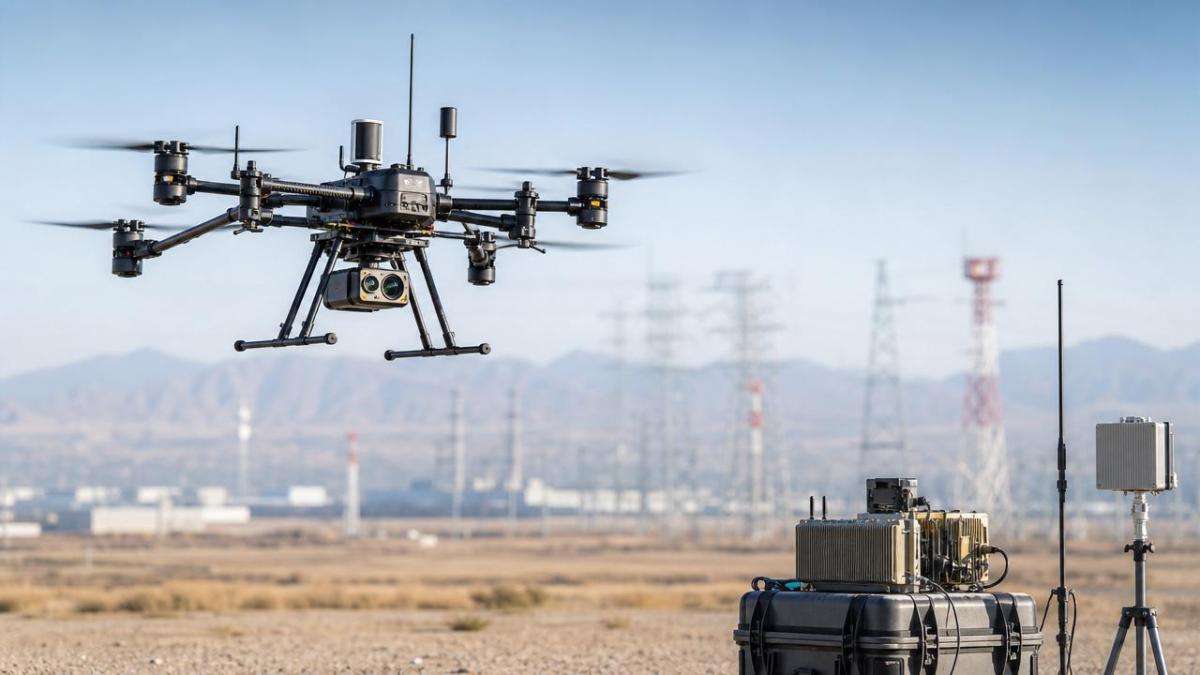
At its simplest, a drone telemetry range test evaluates how well a UAV maintains communication between the airframe, flight controller, ground station, and any attached payload systems over distance. However, distance alone is an incomplete metric. A credible drone telemetry range test should measure the health of the communication link across changing altitude, antenna orientation, terrain obstruction, electromagnetic interference, weather variation, and payload power demand.
Telemetry is not only about receiving position or battery status. In modern UAV operations, it often carries flight-state data, sensor status, mission updates, return-to-home triggers, payload feedback, and safety alerts. If the telemetry link degrades before the control link visibly fails, the aircraft may still be airborne while the operator loses meaningful situational awareness. That is why a drone telemetry range test should assess both communication continuity and data usefulness.
For engineering review, the most important distinction is between advertised maximum range and validated operational range. Advertised figures are usually derived in ideal line-of-sight conditions with low RF noise, optimized antennas, low packet load, and favorable orientation. Validated operational range is the distance at which telemetry remains stable enough for the intended mission, with acceptable latency, packet integrity, update rate, and control confidence.
Core Metrics a Drone Telemetry Range Test Should Measure
A rigorous drone telemetry range test should produce a dataset, not a headline claim. The following parameters are more valuable than distance alone because they indicate whether the communication system remains usable under real field conditions.
- RSSI and link margin: Received Signal Strength Indicator helps show how much signal headroom remains before failure. Link margin is often more useful than raw RSSI because it reflects resilience, not just visibility.
- Packet loss rate: Even moderate packet loss can corrupt telemetry quality, especially for flight-state updates or payload synchronization.
- Latency and jitter: A drone telemetry range test should record average delay and delay variation. Stable low latency is essential for command confidence and emergency response timing.
- Update frequency: Telemetry that arrives slowly or inconsistently may satisfy connection criteria while still being operationally weak.
- Failsafe trigger distance: This identifies where return-to-home, hold, or autonomous fallback modes activate as the link deteriorates.
- Control-to-telemetry correlation: The test should compare command response with telemetry reporting to detect hidden asymmetry between uplink and downlink performance.
- Interference tolerance: Performance should be tracked near Wi-Fi congestion, industrial electronics, mobile towers, or power infrastructure.
- Recovery behavior: A temporary dropout is not only about loss; it is also about how fast and how cleanly the link reestablishes.
These measurements turn a drone telemetry range test into a meaningful engineering benchmark. Without them, a long-range result may hide unstable behavior that would be unacceptable in mapping, inspection, public safety, or agricultural flight paths.
Current Industry Focus in Drone Telemetry Range Test Evaluation
Across the UAV ecosystem, attention has shifted from nominal communication distance to mission-grade reliability. This reflects broader changes in commercial aerospace, edge computing, autonomous systems, and data-centric field operations. A drone telemetry range test is now expected to support specification review, compliance evidence, system integration, and supplier comparison.
This is why engineering-focused organizations increasingly reject vague claims such as “up to 30 km” unless the accompanying drone telemetry range test explains packet success thresholds, antenna conditions, frequency band, weather, and terrain profile. In technical environments, parameters only matter when test context is transparent.
Why These Measurements Matter for Real Operations
The business value of a drone telemetry range test lies in reducing uncertainty. When teams select a UAV platform, radio module, or telemetry architecture, poor link characterization can lead to unexpected field failure, oversized safety margins, repeated trial flights, or expensive redesign. A strong test protocol shortens that uncertainty cycle by showing where the system remains trustworthy and where it starts to degrade.
For example, a platform may demonstrate impressive maximum range in open rural terrain yet perform poorly near substations, coastal wind farms, warehouses, or urban rooflines. Another system may preserve control connection but show excessive telemetry jitter, making battery estimation, payload synchronization, or route supervision less dependable. In both cases, the drone telemetry range test becomes a decision tool rather than a marketing artifact.
This matters across the broader hard-tech value chain as well. Better telemetry measurement supports more accurate specification sheets, clearer acceptance criteria, stronger supplier benchmarking, and lower validation cost. It aligns with data-driven engineering practice: tolerance bands, repeatability, and threshold behavior are more useful than promotional superlatives.
Typical Test Scenarios and What Each One Reveals
Not every drone telemetry range test should look the same. The best test design depends on the mission profile, radio architecture, and surrounding environment. The following scenarios help expose different failure modes.
A complete drone telemetry range test often combines several of these scenarios. That mixed approach is important because many communication issues are not visible in straight-line maximum-distance trials.
Practical Recommendations for a More Defensible Drone Telemetry Range Test
To make a drone telemetry range test technically credible, several testing disciplines should be applied consistently.
- Define pass/fail thresholds before the test begins, including acceptable latency, packet loss, and telemetry update interval.
- Log both environmental conditions and system conditions, such as RF band, antenna type, firmware version, payload state, and battery voltage.
- Measure repeated runs, not single flights, so the resulting range envelope reflects repeatability rather than luck.
- Separate uplink, downlink, and combined link performance whenever possible, because failure may not occur symmetrically.
- Record the exact point where telemetry becomes operationally insufficient, not just where the link collapses completely.
- Document recovery time and behavior after temporary shadowing or interference events.
One of the most common mistakes is treating a drone telemetry range test as a proof of absolute capability instead of a map of performance limits. The stronger approach is to identify thresholds: where warnings begin, where data quality becomes questionable, where safe intervention narrows, and where autonomy must take over.
Next-Step Use of Test Results
The most useful outcome of a drone telemetry range test is not a promotional range number but an evidence-based operating profile. That profile can inform flight planning, radio selection, antenna placement, payload integration, redundancy design, and supplier comparison. It also creates a cleaner technical basis for internal review and future validation.
When reviewing any drone telemetry range test, the next step is to ask four questions: What metrics were measured beyond distance? Under what environmental and RF conditions? At what threshold did the link stop being operationally reliable? And how repeatable were the results across multiple runs? Those questions quickly reveal whether the data supports engineering decisions or only supports marketing language.
In a field increasingly shaped by autonomy, dense sensing, and precision integration, communication integrity must be measured with the same discipline applied to structural loads, power budgets, and sensor accuracy. A drone telemetry range test should therefore measure not only how far the link can reach, but how truthfully, consistently, and safely it continues to serve the mission.
Search News
Hot Articles
- Carbon Fiber StructuresHow to Specify Aerospace Carbon Fiber Assemblies for Lightweight, Load-Bearing PartsJul 11, 2026
- Machine VisionXiaomi, Alibaba DAMO Academy Drive Open-Source Robotics Model Ecosystem, Lowering Algorithm Development Barriers for Overseas SMEs Adopting Chinese Robotics SolutionsMar 30, 2026
- Cobots & ArmsShanxi 'AI+' Conference Showcases Embodied Intelligence with Multinational Buyer Engagement: Key Industry ImplicationsMar 30, 2026
Popular Tags
Recommended News
 Jul 11, 2026How to Specify Aerospace Carbon Fiber Assemblies for Lightweight, Load-Bearing PartsAerospace carbon fiber assemblies: learn how to specify laminate design, load data, joining methods, and inspection controls for lighter, reliable load-bearing aerospace parts.Elena Rostova (UAV Systems Researcher)
 Mar 30, 2026Xiaomi, Alibaba DAMO Academy Drive Open-Source Robotics Model Ecosystem, Lowering Algorithm Development Barriers for Overseas SMEs Adopting Chinese Robotics SolutionsXiaomi & Alibaba DAMO Academy's open-source robotics models lower algorithm barriers for global SMEs. Boost efficiency in manufacturing, logistics & smart retail with ROS 2 compatible solutions.TSV Data Lab
 Mar 30, 2026Shanxi 'AI+' Conference Showcases Embodied Intelligence with Multinational Buyer Engagement: Key Industry ImplicationsShanxi 'AI+' Conference highlights embodied intelligence with Tesla, Ubtech & Jiantao showcasing multimodal robotics. 40+ global buyers validated tech on-site, creating new B2B channels for industrial automation & AI solutions.Chen Wei (Automation Lead Engineer)
 Mar 30, 2026Zhongguancun Unveils 6G Integrated Sensing-Computing-Intelligence Platform to Empower Embodied Robots for Global Industrial ApplicationsZhongguancun's new 6G platform revolutionizes industrial robotics with <10ms latency, empowering global automotive, logistics & port automation. Discover how this tech boosts China's smart manufacturing exports.TSV Data Lab
 Mar 30, 2026Mech-Mind Tianjin Embodied Intelligence R&D and Production Base Goes Live, Cutting Delivery Time by 20%–30% for Global Customized AMR+Vision SolutionsMech-Mind's Tianjin AMR+Vision production base cuts delivery time by 20%-30% for欧美 & Latin American markets. Discover how this PLd-certified facility accelerates customized robotics solutions for smart manufacturing and logistics.Chen Wei (Automation Lead Engineer)
 Mar 30, 2026Boao Forum Reveals 'Co-evolution of Big and Small Brains' Trend in Humanoid Robots, China's Embodied Intelligence Accelerates Adaptation to Overseas Manufacturing Service ScenariosDiscover how China's humanoid robots, featuring 'Co-evolution of Big and Small Brains,' are revolutionizing global manufacturing. Learn about Embodied Tian Gong 3.0's ISO compliance and overseas deployment at Boao Forum 2026.Chen Wei (Automation Lead Engineer)
 Mar 30, 2026China Railway Industrial Secures Patent for Embodied Robotics in Material Handling, Boosting High-Precision Delivery Capabilities for Overseas Infrastructure and Manufacturing ProjectsChina Railway Industrial's new patent for embodied robotics in material handling boosts high-precision delivery for global infrastructure & manufacturing. Discover how this innovation enhances logistics accuracy in automotive, rail transit & EPC projects.Chen Wei (Automation Lead Engineer)
 Sep 29, 2026ISO 9283 Repeatability: How to Evaluate Cobot Positioning PerformanceISO 9283 cobot repeatability explained: learn how payload, reach, approach direction, and test conditions affect positioning performance and cell capability.Chen Wei (Automation Lead Engineer)
 Sep 28, 2026Spindle Runout Measurement in Germany: DIN Standards, Methods, and Acceptance LimitsSpindle runout measurement Germany: explore DIN standards, proven methods, acceptance limits, and audit-ready practices for reliable machining quality.Dr. Marcus Vance
 Sep 27, 2026How to Select Wall-Mount Edge Devices for Space-Constrained Factory NetworksWall mount edge devices for space-constrained factories: evaluate workload, thermal design, power resilience, cable access, and network reliability for smarter deployments.TSV Data Lab
 Sep 26, 2026Machining Tolerance Analysis: How to Set Limits That Meet Function and Cost TargetsMachining tolerance analysis: learn how to set functional limits, control tolerance stacks, reduce inspection risk, and balance precision with production cost.Dr. Marcus Vance
 Sep 25, 2026How to Evaluate an Industrial Infrastructure Data Platform for Multi-Site OperationsIndustrial infrastructure data platform evaluation guide for multi-site operations: compare data quality, edge resilience, interoperability, governance, and scalable proof-of-value criteria.Victor Lin (Chief Software Architect)
 Sep 24, 2026How to Select Machine Vision Optics for Accurate Inspection at Different Working DistancesMachine vision optics selection guide for accurate inspection at every working distance. Compare FOV, pixel scale, DOF, distortion, lighting, and telecentric options.TSV Data Lab
 Sep 23, 2026How to Evaluate a Machine Vision System Integrator for High-Speed Inspection LinesChoose a machine vision system integrator with proven expertise in high-speed inspection, reliable reject timing, robust optics, and measurable acceptance criteria.TSV Data Lab
 Sep 28, 2026When is a SCADA API the right choice for connecting plant systems?SCADA API guide: learn when governed plant data integration improves traceability, security, and scalability—without compromising real-time control.Victor Lin (Chief Software Architect)
 Sep 27, 2026How SCADA data integration improves traceability across production linesSCADA data integration connects production-line data to improve traceability, accelerate quality investigations, and strengthen safety decisions.Victor Lin (Chief Software Architect)
 Sep 26, 2026What to define before starting SCADA integration planningSCADA integration planning starts with clear scope, control boundaries, data models, cybersecurity, and testing. Discover the definitions that reduce risk and costly rework.Victor Lin (Chief Software Architect)
 Sep 25, 2026How a smart factory with Industrial IoT reduces production blind spotsDiscover how a smart factory with Industrial IoT turns real-time machine, quality, and workflow data into actionable insights that reduce production blind spots and delivery risks.Victor Lin (Chief Software Architect)
 Sep 24, 2026When does Industrial IoT make smart manufacturing easier to scale?Smart manufacturing Industrial IoT scales when trusted data, interoperable systems, and secure workflows turn connected assets into measurable gains.TSV Data Lab
 Sep 23, 2026What drives ultra-precision machining cost at 1-micron tolerance?Ultra precision machining cost per part at 1 micron tolerance depends on process, material, metrology, and yield. Learn how to compare quotes confidently.Dr. Marcus Vance
 Sep 22, 2026Drone Engine-T550CC Applications: Build the UAV Power System Around the MissionAn application guide for Drone Engine-T550CC integration, covering payload planning, airframe matching, cooling, fuel, vibration, test procedures, documentation, and service preparation.Elena Rostova (UAV Systems Researcher)
 Sep 22, 2026How to Evaluate Industrial Edge Computing Vendors for Factory DeploymentIndustrial edge computing vendor evaluation guide for factories: compare latency, protocol fit, reliability, security, and lifecycle support before deployment.TSV Data Lab
 Sep 21, 2026Drone Payload Integration: Matching Power, Data, and Center of Gravity for Reliable FlightsDrone payload integration made practical: balance power, data, center of gravity, and endurance to build safer, more reliable mission-ready flights.Elena Rostova (UAV Systems Researcher)
 Sep 20, 2026Autonomous Navigation Pricing: Cost Drivers and Budget Benchmarks for AMR ProjectsAutonomous navigation price explained: compare AMR cost drivers, software, sensors, integration, safety, and lifecycle budgets to build a scalable project plan.Chen Wei (Automation Lead Engineer)























