
What Makes a Good UAV Ground Control Station Wholesale Deal
Publication Date
author
A strong uav ground control station wholesale deal is not defined by price alone, but by verified system compatibility, mission reliability, and long-term support. For buyers comparing a fixed wing uav supplier, pixhawk flight controller supplier, or heavy payload uav supplier, the real value lies in data-backed specifications, integration efficiency, and procurement transparency that reduce technical risk and lifecycle cost.
What should buyers really evaluate in a UAV ground control station wholesale deal?
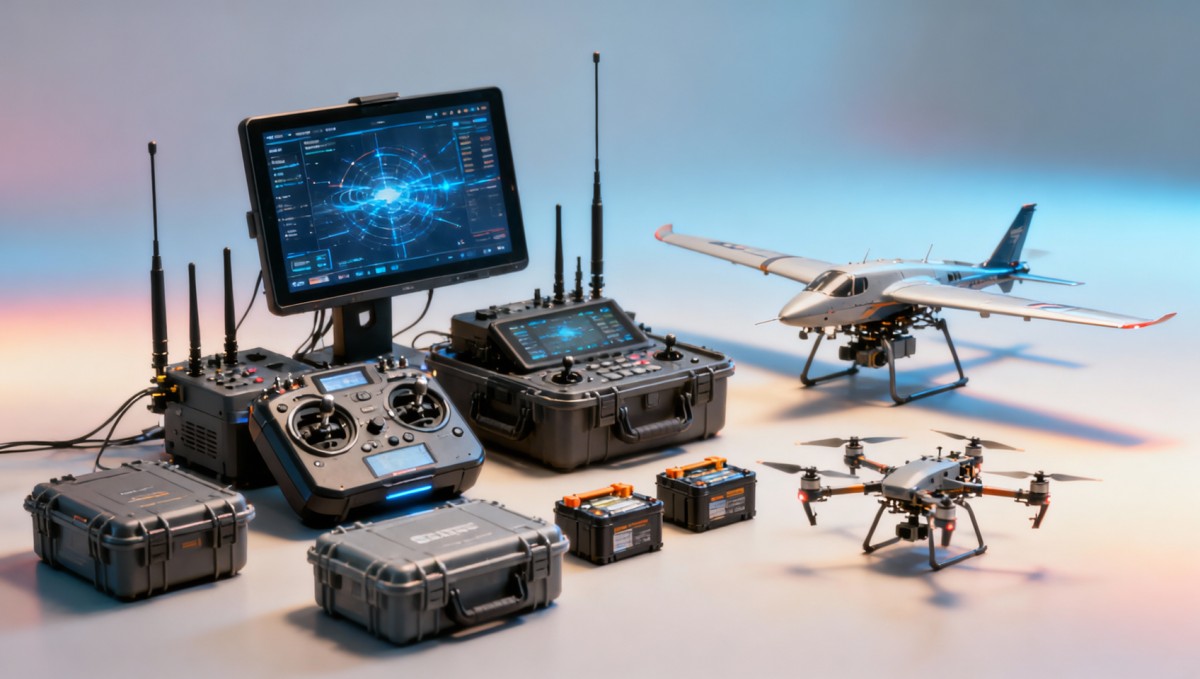
In hard-tech procurement, a UAV ground control station wholesale package is not just a box with screens, radios, and mission software. It is the decision center that links pilot input, telemetry visibility, route planning, payload data review, and field safety management. When that system is mismatched with the aircraft, the mission risk increases long before the UAV leaves the ground.
For information researchers and enterprise decision-makers, the first filter should be technical clarity. A serious supplier should state supported communication links, operating temperature range, interface types, display brightness range, protocol compatibility, and update policy. In many commercial deployments, buyers compare systems that must perform across 2–4 mission profiles, from mapping to inspection to agricultural tasks. Without a structured review, apparently low-cost offers often create hidden integration expense.
For operators, the practical questions are even more direct. Can the station remain readable in strong outdoor light? Does it support glove operation? Can it maintain stable control during a 30–90 minute field session without overheating or battery-swapping disruption? A ground station that looks impressive in a catalog but fails in field ergonomics is not a good wholesale decision.
For procurement teams, a good deal must also lower qualification time. TechStat Vanguard focuses on filtering out vague claims and bringing attention back to engineering facts: interface lists, power input range, software compatibility, failure recovery logic, and maintenance responsibilities. In wholesale negotiations, these details often matter more than a headline discount.
The 5 core dimensions that define value
- System compatibility: support for mainstream autopilot ecosystems such as Pixhawk-based architectures, telemetry radios, and mission planning workflows already used by the buyer.
- Mission reliability: stable communication, readable interface, manageable thermal behavior, and predictable performance during repeated field operations.
- Serviceability: availability of firmware support, spare parts, replacement policy, and troubleshooting guidance within a realistic response window such as 24–72 hours.
- Procurement transparency: clear bill of materials, accessory list, licensing terms, and shipping scope for single units, pilot lots, and batch orders.
- Lifecycle economics: total cost over 12–36 months, including repairs, retraining, software transitions, and field downtime risk.
A good UAV ground control station wholesale deal therefore combines technical fit with operational continuity. This is especially important when the procurement chain also includes a fixed wing uav supplier, a heavy payload uav supplier, or a pixhawk flight controller supplier, because interface misalignment between subsystems can erode schedule and budget at the same time.
How do different mission scenarios change the right wholesale choice?
Not every buyer needs the same ground control station configuration. A team managing agricultural spraying, corridor inspection, or mapping flights will prioritize different things. The right wholesale deal depends on how many aircraft are managed, how often missions are repeated, how much field mobility is required, and whether payload data must be reviewed live or only after landing.
In fixed wing operations, endurance and route planning depth often matter more than touch-heavy manual piloting features. A buyer working with a fixed wing uav supplier may need larger map visibility, efficient waypoint editing, and stable telemetry handling over long-distance coverage tasks. In these cases, software reliability and display usability can outweigh cosmetic hardware features.
For heavy payload platforms, the pressure shifts toward redundancy, power management, and operational authority. A heavy payload uav supplier typically serves applications where payload cost, safety perimeter, and mission risk are all higher. The ground station should therefore support clearer alert logic, stronger fail-safe visibility, and more disciplined preflight check workflows. A low-cost device with limited alerting may create expensive downstream exposure.
When buyers also compare a pixhawk flight controller supplier, they should pay close attention to firmware compatibility and parameter handling. A wholesale ground control station may appear universal, yet still require extra adaptation for firmware branches, telemetry modules, or payload-linked data channels. That is why scenario-based validation should happen before volume commitment.
Common procurement scenarios and what to prioritize
The table below helps buyers connect mission profile with the most relevant ground station criteria. It is not a brand ranking. It is a procurement lens designed to reduce ambiguity during evaluation.
This comparison shows why one wholesale offer can be excellent for a pilot batch yet weak for a multi-aircraft rollout. In many B2B purchases, the wrong choice is not a clearly bad product. It is a partially compatible product bought without a mission-based selection framework.
Scenario checklist before batch purchase
- Define whether flights are mainly 20–40 minute tactical sorties or 60–120 minute route-based missions.
- Confirm whether the station must manage one aircraft at a time or a small fleet in rotation.
- Identify whether payload data, camera feeds, or only flight telemetry must be visible in real time.
- Check whether operator training time should be kept within 1–3 days for deployment speed.
Which technical parameters separate a usable offer from a risky one?
The most common mistake in a UAV ground control station wholesale review is overvaluing generic wording and undervaluing parameter completeness. If the offer sheet does not specify screen visibility, input interfaces, supported protocols, power method, environmental tolerance, and software support boundaries, the procurement team cannot accurately compare proposals.
A practical technical review should examine at least 6 items: display characteristics, communication interfaces, autopilot compatibility, power architecture, enclosure durability, and update support. Buyers sourcing from a pixhawk flight controller supplier should pay special attention to firmware interaction, parameter export logic, and whether the station can fit the existing mission control workflow without middleware workarounds.
Field performance also matters more than lab appearance. Typical commercial users often need devices that remain operable in temperature ranges such as 0°C–40°C or broader, depending on deployment region. Battery-backed operation of 2–6 hours may be relevant for mobile teams, while fixed-site operations may prioritize external power stability instead. The right answer depends on deployment model, not brochure aesthetics.
At TSV, the evaluation logic starts with engineering truth: what is measurable, what is documented, and what is repeatable. That approach is especially useful when a wholesale package combines aircraft, controller, radio, and software from different vendors. Parameter discipline reduces ambiguity before purchase orders are issued.
Technical evaluation table for wholesale comparison
Use the following table to structure supplier discussions. It helps procurement teams compare offers from a fixed wing uav supplier, a heavy payload uav supplier, and a standalone ground station vendor on the same decision axis.
A well-documented technical offer gives buyers a faster route to supplier qualification. It also creates a cleaner contract basis, because each promised feature can be tied to a tested interface, documented function, or delivery item rather than marketing language.
Where many buyers underestimate risk
One frequent misconception is that the ground control station can be treated as an accessory rather than a mission-critical subsystem. In practice, weak human-machine interaction, poor sunlight readability, inconsistent radio setup, or undocumented firmware behavior can add 2–6 weeks to validation in professional deployments. That delay often costs more than the original price gap between two offers.
Another issue is assuming that “works with Pixhawk” is enough detail. Buyers should ask which software environment is tested, which parameter management functions are supported, and whether the workflow covers routine tasks such as mission upload, failsafe review, log export, and post-flight analysis. A pixhawk flight controller supplier and a ground station supplier may both appear compatible, yet still leave the integrator solving edge cases alone.
How can procurement teams compare price, support, and lifecycle cost more intelligently?
A low unit price is not the same as a strong UAV ground control station wholesale deal. In B2B purchasing, total ownership cost usually includes onboarding, compatibility testing, spares planning, software adaptation, replacement lead time, and field downtime. These costs become more visible when the buyer manages multiple aircraft or operates across more than one site.
Procurement personnel should separate cost into three layers: acquisition cost, implementation cost, and operational risk cost. Acquisition cost is visible on the quotation. Implementation cost appears during testing, pilot rollout, and operator training over the first 1–4 weeks. Operational risk cost appears later through delays, maintenance gaps, and preventable interruptions. The weakest offers often hide cost in the second and third layers.
This becomes critical when a buyer is combining multiple vendors. For example, a fixed wing uav supplier may provide one mission planning assumption, while the standalone controller vendor has another. A heavy payload uav supplier may require stricter operational feedback and alert handling. If the wholesale package lacks a clean service boundary, internal teams end up absorbing the integration burden.
TSV’s data-first approach is useful here because it pushes sourcing teams to request service nodes, documentation scope, and validation checkpoints before commercial commitment. That turns procurement into an engineering-led process rather than a discount-led one.
A practical cost comparison framework
- Batch quantity impact: ask whether pricing changes at pilot quantity, mid-volume quantity, and repeat procurement quantity, rather than only at a single headline MOQ.
- Support window: clarify whether technical questions are answered within 24 hours, 48 hours, or a longer unmanaged timeline.
- Spare unit planning: determine whether 1 spare per 5–10 field units is recommended for continuity in active fleets.
- Training requirement: estimate whether operators need a half-day orientation, 1–2 days of mission preparation, or longer due to interface complexity.
- Software dependence: confirm whether licenses, updates, or cloud-linked functions create recurring cost beyond the initial quote.
Questions that should appear in every RFQ
To reduce hidden lifecycle cost, every request for quotation should include at least 6 points: supported aircraft types, autopilot compatibility, communication interfaces, included accessories, update policy, and expected delivery window such as 2–6 weeks for standard configurations. These are ordinary commercial questions, but they are often omitted when procurement starts from product photos instead of operational requirements.
It is also useful to ask who owns final integration responsibility. If the answer remains unclear, even a competitively priced wholesale package can become a coordination problem between the UAV supplier, the controller supplier, and the internal engineering team.
What standards, process checks, and FAQ topics matter before placing the order?
Professional buyers should not treat compliance and process checks as secondary paperwork. Even when a ground control station is not the airborne subsystem, documentation quality still affects customs handling, regional deployment suitability, field training, and internal approval. Common checkpoints may include interface documentation, battery transport information if applicable, regional radio considerations, and software version traceability.
For enterprise decision-makers, the objective is simple: reduce ambiguity before rollout. That usually means running procurement through 3 stages. First, document review. Second, sample or pilot validation. Third, batch purchase with acceptance criteria. This 3-stage path may add discipline up front, but it often shortens downstream troubleshooting and supplier dispute cycles.
For operators, acceptance should include practical checks rather than only visual inspection. Power-up stability, mission file loading, telemetry continuity, alert visibility, interface response, and accessory completeness are all more useful than a basic carton count. A 6-item acceptance checklist is often enough to catch missing pieces before field deployment.
Below are common questions procurement teams ask when comparing a UAV ground control station wholesale offer with broader aircraft sourcing packages.
FAQ: How do buyers avoid common mistakes?
How do I know whether the ground station is truly compatible with my aircraft?
Ask for tested compatibility evidence rather than broad statements. That should include the autopilot ecosystem, firmware context, mission planning workflow, telemetry interface, and any payload-linked display requirements. If you are sourcing from a pixhawk flight controller supplier, confirm not only connection support but also routine tasks such as parameter management, mission upload, and log access.
What is a reasonable delivery cycle for a wholesale order?
For standard configurations, commercial buyers often see lead times in a range such as 2–6 weeks, depending on quantity, accessory scope, and regional shipping requirements. Customized software, special radio configuration, or private-label packaging may extend timelines. The key is to separate standard lead time from customized lead time in writing.
Should I buy the ground control station from the aircraft supplier or a separate vendor?
It depends on the integration burden and internal capability. Buying from a fixed wing uav supplier or heavy payload uav supplier may simplify responsibility if the system is already validated as a package. Buying separately may improve flexibility if your team can manage integration and wants wider hardware choice. The better option is the one with clearer validation ownership, not automatically the one with fewer invoices.
What are the most overlooked costs in a UAV ground control station wholesale deal?
The most overlooked costs are usually operator retraining, software adaptation, spare planning, and delayed deployment caused by undocumented compatibility issues. These expenses may emerge within the first 30–90 days after delivery. That is why lifecycle cost review is more useful than line-item quote comparison alone.
Why work with a data-driven sourcing partner when comparing wholesale UAV control solutions?
In a market crowded with broad claims, TechStat Vanguard helps buyers return to engineering fundamentals. Our focus is not promotional noise. It is structured technical judgment: compatibility logic, performance boundaries, benchmarking criteria, and supply-chain transparency. For teams evaluating a UAV ground control station wholesale offer, that means faster separation between measurable value and sales language.
This matters across the full sourcing chain. If you are reviewing a fixed wing uav supplier, a pixhawk flight controller supplier, or a heavy payload uav supplier at the same time, we help frame the comparison around interfaces, mission use, qualification effort, and lifecycle exposure. That reduces trial-and-error cost and supports cleaner procurement decisions.
Our support can center on concrete issues: parameter confirmation, ground station selection logic, delivery cycle assessment, integration checkpoints, certification-related documentation questions, sample validation planning, and quotation comparison. These are the issues that shape real deployment outcomes, especially in B2B environments where schedule and reliability matter as much as purchase price.
If your team is comparing wholesale control station options, planning a pilot batch, or aligning aircraft and controller suppliers into one procurement path, contact us with your target mission profile, aircraft type, expected order volume, and required interfaces. We can help you review technical fit, shortlist viable configurations, clarify support boundaries, and make your next sourcing step more precise and defensible.
Search News
Hot Articles
- Carbon Fiber StructuresHow to Specify Aerospace Carbon Fiber Assemblies for Lightweight, Load-Bearing PartsJul 11, 2026
- Machine VisionXiaomi, Alibaba DAMO Academy Drive Open-Source Robotics Model Ecosystem, Lowering Algorithm Development Barriers for Overseas SMEs Adopting Chinese Robotics SolutionsMar 30, 2026
- Cobots & ArmsShanxi 'AI+' Conference Showcases Embodied Intelligence with Multinational Buyer Engagement: Key Industry ImplicationsMar 30, 2026
Popular Tags
Recommended News
 Jul 11, 2026How to Specify Aerospace Carbon Fiber Assemblies for Lightweight, Load-Bearing PartsAerospace carbon fiber assemblies: learn how to specify laminate design, load data, joining methods, and inspection controls for lighter, reliable load-bearing aerospace parts.Elena Rostova (UAV Systems Researcher)
 Mar 30, 2026Xiaomi, Alibaba DAMO Academy Drive Open-Source Robotics Model Ecosystem, Lowering Algorithm Development Barriers for Overseas SMEs Adopting Chinese Robotics SolutionsXiaomi & Alibaba DAMO Academy's open-source robotics models lower algorithm barriers for global SMEs. Boost efficiency in manufacturing, logistics & smart retail with ROS 2 compatible solutions.TSV Data Lab
 Mar 30, 2026Shanxi 'AI+' Conference Showcases Embodied Intelligence with Multinational Buyer Engagement: Key Industry ImplicationsShanxi 'AI+' Conference highlights embodied intelligence with Tesla, Ubtech & Jiantao showcasing multimodal robotics. 40+ global buyers validated tech on-site, creating new B2B channels for industrial automation & AI solutions.Chen Wei (Automation Lead Engineer)
 Mar 30, 2026Zhongguancun Unveils 6G Integrated Sensing-Computing-Intelligence Platform to Empower Embodied Robots for Global Industrial ApplicationsZhongguancun's new 6G platform revolutionizes industrial robotics with <10ms latency, empowering global automotive, logistics & port automation. Discover how this tech boosts China's smart manufacturing exports.TSV Data Lab
 Mar 30, 2026Mech-Mind Tianjin Embodied Intelligence R&D and Production Base Goes Live, Cutting Delivery Time by 20%–30% for Global Customized AMR+Vision SolutionsMech-Mind's Tianjin AMR+Vision production base cuts delivery time by 20%-30% for欧美 & Latin American markets. Discover how this PLd-certified facility accelerates customized robotics solutions for smart manufacturing and logistics.Chen Wei (Automation Lead Engineer)
 Mar 30, 2026Boao Forum Reveals 'Co-evolution of Big and Small Brains' Trend in Humanoid Robots, China's Embodied Intelligence Accelerates Adaptation to Overseas Manufacturing Service ScenariosDiscover how China's humanoid robots, featuring 'Co-evolution of Big and Small Brains,' are revolutionizing global manufacturing. Learn about Embodied Tian Gong 3.0's ISO compliance and overseas deployment at Boao Forum 2026.Chen Wei (Automation Lead Engineer)
 Mar 30, 2026China Railway Industrial Secures Patent for Embodied Robotics in Material Handling, Boosting High-Precision Delivery Capabilities for Overseas Infrastructure and Manufacturing ProjectsChina Railway Industrial's new patent for embodied robotics in material handling boosts high-precision delivery for global infrastructure & manufacturing. Discover how this innovation enhances logistics accuracy in automotive, rail transit & EPC projects.Chen Wei (Automation Lead Engineer)
 Oct 16, 2026Choosing a Rugged Edge AI Box Supplier: Thermal Tests and Lifecycle SupportChoose a rugged edge AI box supplier with proven thermal performance and reliable lifecycle support. Discover the tests and commitments to verify before you buy.TSV Data Lab
 Oct 15, 2026R&D Cost Reduction Services: How to Evaluate Fees, Savings, and ROIEvaluate R&D cost reduction services with confidence. Compare fees, verify savings, and calculate ROI without compromising performance. Discover how to choose a provider that delivers real value.Chen Wei (Automation Lead Engineer)
 Oct 15, 2026How Should You Compare TechStat Vanguard 5-Axis CNC Tolerances?TechStat Vanguard 5-axis CNC tolerance comparison: learn how to verify part accuracy, assess inspection evidence, and choose suppliers that reliably meet your drawing requirements.Dr. Marcus Vance
 Oct 14, 2026Drone Frame Composites: Carbon Fiber vs. Fiberglass for Weight and StiffnessExplore drone structural materials composites: compare carbon fiber and fiberglass for weight, stiffness, cost, and antenna compatibility. Find the right material for your drone frame.Elena Rostova (UAV Systems Researcher)
 Oct 13, 2026Smart Cameras vs. PC-Based Machine Vision: Which Fits High-Speed Inspection?This industrial product comparison for machine vision weighs smart cameras vs. PC-based systems on latency, throughput, and cost. Discover your best fit for high-speed inspection.TSV Data Lab
 Oct 12, 2026How to Verify RoHS Compliance in Industrial Sensing Systems Before DeploymentRoHS compliant sensing systems: learn how to verify materials, supplier declarations, testing, and configuration controls before industrial deployment.TSV Data Lab
 Oct 11, 2026How Procurement-Oriented Content Taxonomy Improves B2B Buying JourneysProcurement-oriented content taxonomy streamlines B2B buying journeys with clearer evidence, supplier comparisons, risk visibility, and faster approvals.TSV Data Lab
 Oct 10, 2026How to Select a Machine Performance Monitoring Platform for OEE and Downtime ReductionMachine performance monitoring platform selection guide: validate machine states, OEE data, downtime reasons, integrations, and scalability to reduce losses with confidence.TSV Data Lab
 Oct 08, 2026How to Machine Inconel 625 Blades Without Heat Cracks or Edge ChippingInconel 625 blade machining guide: prevent heat cracks, edge chipping, chatter, and work hardening with proven tooling, cooling, fixturing, and inspection strategies.Dr. Marcus Vance
 Oct 07, 2026How to Evaluate an HMI Panel Distributor for Industrial Automation ProjectsHMI panel distributor evaluation guide: verify technical compatibility, traceability, supply reliability, lifecycle support, and total cost for automation projects.Victor Lin (Chief Software Architect)
 Oct 06, 2026Navigation Fault Tolerance Standards for AMRs: What Safety Teams Must VerifyNavigation fault tolerance standards: learn what AMR safety teams must verify, from localization loss and sensor faults to stopping distance, safe restart, and site-specific validation.Chen Wei (Automation Lead Engineer)
 Oct 05, 2026Calculating Edge Computing Total Cost of Ownership Across Distributed SitesEdge computing ownership cost explained: calculate deployment, energy, connectivity, security, remote support, and refresh costs across distributed sites.TSV Data Lab
 Oct 04, 2026CAD/CAM Benchmarking in the GCC: What Manufacturers Should Ask a ConsultantCAD CAM benchmark consultant GCC guide: learn the key questions manufacturers should ask to validate post-processors, workflows, machine performance, and production risk.Victor Lin (Chief Software Architect)
 Oct 03, 2026Selecting Automotive Radar Sensor Modules for ADAS Range, Resolution, and IntegrationAutomotive radar sensor module selection guide for ADAS: compare range, resolution, field of view, latency, and integration to build safer, reliable vehicle systems.TSV Data Lab
 Oct 02, 2026How to Qualify Machined Parts Suppliers for Hard Tech ProgramsHard tech supply chain machined parts demand rigorous supplier qualification. Learn how to assess capability, traceability, quality controls, and delivery resilience.Dr. Marcus Vance
 Oct 01, 2026How to Select an Outdoor Security Radar Sensor for Perimeter Detection?Outdoor security radar sensor selection guide: compare range, accuracy, false-alarm control, integration, and field testing for reliable perimeter detection.TSV Data Lab
 Sep 30, 2026How to Evaluate Solid-State LiDAR Hardware for Outdoor Autonomous VehiclesSolid state LiDAR hardware evaluation guide for outdoor autonomous vehicles—compare range, point-cloud quality, environmental resilience, integration, and safety.TSV Data Lab























