
UAV Ground Control Station Wholesale: Key Questions
Publication Date
author
For buyers evaluating UAV ground control station wholesale options, the real challenge is not finding a supplier—it is verifying whether the system will integrate cleanly, scale across fleets, and remain reliable over years of field use. A ground control station sits at the center of mission planning, telemetry, payload management, operator workflow, and maintenance data. If the platform is weak, even a strong airframe or flight controller cannot deliver stable operational results. The most important buying questions therefore focus on compatibility, communications reliability, software architecture, environmental durability, compliance, support, and lifecycle cost—not just price.
What should buyers verify first when sourcing a UAV ground control station wholesale?
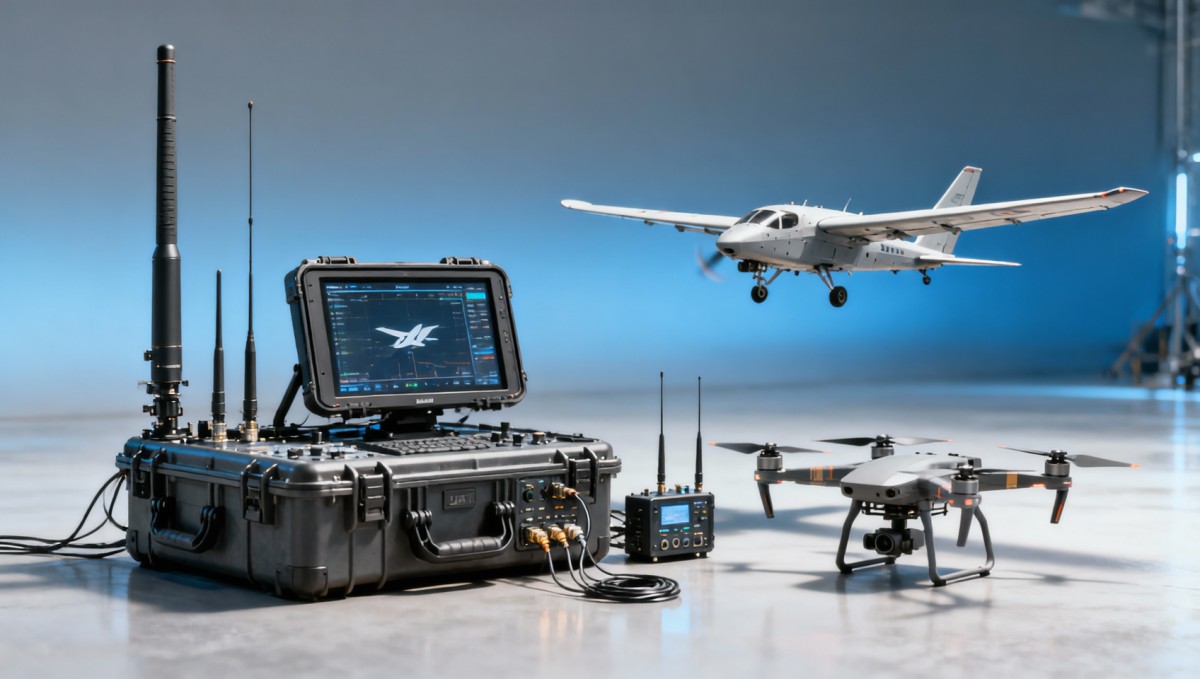
The first screening step is simple: confirm whether the ground control station actually fits the intended operational environment. Many wholesale listings look similar on paper, but their engineering suitability differs sharply depending on use case.
Buyers should begin with five baseline questions:
- What UAV platforms must the station support? Fixed-wing, multirotor, VTOL, and hybrid aircraft often require different control logic, mapping interfaces, and telemetry behaviors.
- Which flight controllers and communication protocols are supported? If you are already working with a Pixhawk flight controller supplier or another autopilot ecosystem, protocol compatibility is a non-negotiable starting point.
- What mission types will the station manage? Mapping, inspection, agriculture, public safety, border patrol, and ISR workflows create different requirements for payload control, waypoint complexity, and video handling.
- Will the system be deployed as a portable field unit or a vehicle-mounted/fixed command station? Power architecture, display visibility, ruggedization, and connectivity options change significantly by deployment model.
- What is the expected fleet scale? A station that works for one demo aircraft may fail operationally when asked to manage 20 aircraft, multiple operators, and synchronized data logging.
For procurement teams, this first step prevents a common mistake: purchasing a visually impressive ground control station that does not match real mission workflows. The right question is not “Is this advanced?” but “Is this operationally compatible with our aircraft, payloads, operators, and expansion plans?”
How do you judge compatibility with airframes, flight controllers, and payloads?
Compatibility is where many wholesale evaluations succeed or fail. A UAV ground control station must connect not only with the aircraft, but with the full mission stack: autopilot, radio datalink, payload interface, antenna system, mapping software, and post-mission data tools.
For technical teams, ask suppliers for clear answers on the following points:
- Autopilot support: Does the station support Pixhawk-based systems, proprietary flight controllers, or both?
- Protocol transparency: Is communication based on MAVLink, custom protocols, or mixed architecture?
- Payload integration: Can the station control EO/IR gimbals, LiDAR, multispectral cameras, radar payloads, or mapping sensors?
- Video and telemetry handling: Are telemetry and HD video transmitted through separate or unified links?
- Third-party software compatibility: Can it connect with mission planning suites, GIS platforms, or proprietary fleet management systems?
This matters especially when the buyer is sourcing across multiple vendors—for example, using a fixed wing UAV supplier for the aircraft, a separate pixhawk flight controller supplier for control hardware, and a specialized drone propeller manufacturer for propulsion components. In such cases, the ground control station becomes the integration hub. If the supplier cannot provide a clear interface map, integration burden shifts to the buyer.
A practical rule: if a vendor cannot provide protocol documents, supported hardware lists, and real deployment references, buyers should treat compatibility claims cautiously.
Which communication and control questions matter most in real operations?
In field deployment, communication stability is more important than polished interface design. Buyers should ask not only about maximum range, but about link quality under realistic conditions.
Important questions include:
- What is the effective control and telemetry range under line-of-sight and contested RF conditions?
- What frequency bands are supported? Common options may include 433 MHz, 868 MHz, 915 MHz, 1.4 GHz, 2.4 GHz, and others depending on region and application.
- Does the system support encrypted communication?
- How does it behave during packet loss, latency spikes, or link interruption?
- What redundancy exists for communication and navigation data?
- Can operators switch between manual, assisted, and autonomous control cleanly?
Procurement teams should request measured data, not broad marketing statements. “Long range” is not a useful engineering metric. Useful metrics include latency ranges, packet success rate, reconnect time, handover behavior, antenna gain configuration, and fail-safe logic under degraded conditions.
For enterprise buyers, this directly affects risk. A lower-cost unit with unstable communications can create mission loss, rework costs, training burden, and field safety exposure that far outweigh initial savings.
How important are software architecture and user workflow?
Software often determines whether operators trust a ground control station after six months of use. A wholesale decision should therefore evaluate the interface not as a demo screen, but as a daily operational tool.
Key evaluation areas include:
- Mission planning efficiency: How fast can operators build, edit, and validate routes?
- Map handling: Does the system support offline maps, GIS overlays, terrain awareness, no-fly zone settings, and custom layers?
- Role-based access: Can separate operator, supervisor, and maintenance permissions be configured?
- Data logging: Are flight logs, telemetry records, maintenance records, and payload metadata easy to export and audit?
- Training burden: How much time is needed for a new operator to achieve competent use?
- Software update policy: Are updates stable, documented, and backward-compatible?
For operators, usability is not a soft issue. Poor menu design, cluttered telemetry display, or weak alert logic can increase workload and elevate error rates in live missions. For managers, this translates into longer onboarding cycles and reduced mission consistency across teams.
A good UAV ground control station should make critical information obvious, reduce operator friction, and support repeatable procedures across missions.
What hardware durability and field-readiness standards should wholesale buyers ask about?
If the station will be used outdoors, ruggedization is a major buying factor. Desktop-style systems may perform adequately in demonstrations but fail under heat, dust, vibration, moisture, or transport stress.
Ask suppliers for specifics on:
- Ingress protection: Is the enclosure rated against dust and water exposure?
- Operating temperature range: Can the system remain stable in hot, cold, and rapidly changing field environments?
- Shock and vibration resistance: Has the unit been tested for vehicle transport or rough deployment conditions?
- Display performance: Is the screen readable in direct sunlight, and can it be used with gloves?
- Power options: Does it support battery packs, AC input, vehicle power, hot-swappable batteries, or external generators?
- Connector durability: Are RF, Ethernet, power, and payload connectors industrial grade?
These are not secondary details. In practical procurement, the failure point is often not the core processor, but a weak connector, poor thermal design, unstable battery interface, or display unreadability in sunlight.
Wholesale buyers should also ask for service data: mean time between failure, common replacement parts, and field repair procedures. Durable hardware reduces not only downtime, but also spare inventory complexity.
What compliance, cybersecurity, and documentation questions reduce procurement risk?
For procurement officers and enterprise decision-makers, supplier credibility must be tested through documentation quality. A capable manufacturer should be able to provide structured technical and compliance materials without hesitation.
Key questions include:
- What certifications or test reports are available? Depending on market and application, this may include CE, FCC, RoHS, EMC, environmental testing, or sector-specific compliance documents.
- How is cybersecurity handled? Ask about encryption, authentication, secure update mechanisms, and data access controls.
- What export or regional restrictions apply?
- Is there a complete technical manual? This should include wiring, interfaces, maintenance steps, software operation, and troubleshooting logic.
- Are configuration management and version control documented?
For organizations in defense-adjacent, infrastructure, or government-linked sectors, missing documentation can delay deployment more than any hardware issue. Even commercial buyers should treat documentation quality as a proxy for engineering maturity.
How should buyers compare wholesale suppliers beyond unit price?
Price matters, but unit price alone can be misleading. The better comparison framework is total operational value over the expected lifecycle.
Evaluate suppliers across these dimensions:
- Integration cost: How much custom engineering is required after purchase?
- Training cost: How long until crews can use the system effectively?
- Support responsiveness: Is technical support direct from engineers or filtered through sales channels?
- Spare parts availability: Can critical components be replaced quickly?
- Lead time stability: Are production schedules predictable for repeat orders?
- Firmware and software longevity: Will the platform still be supported in two to five years?
This is especially important in wholesale purchasing, where the buyer may need to standardize a system across multiple regions or business units. A slightly higher upfront cost may deliver lower fleet-wide support cost, fewer compatibility issues, and better mission uptime.
Buyers should also request sample evaluation units, reference customers, and structured acceptance criteria before large-volume procurement. A serious supplier should support test-based qualification rather than relying only on brochure claims.
What are the smartest questions to ask a UAV ground control station wholesale supplier before signing?
Before finalizing a purchase, decision-makers should ask a concise set of high-value questions:
- Which UAV platforms, autopilots, radios, and payloads have been validated with this station?
- Can you provide protocol documentation and interface definitions?
- What measured data do you have for communication range, latency, and fail-safe behavior?
- What environmental and durability tests has the hardware passed?
- What software update, bug-fix, and long-term support policy do you offer?
- What operator training materials and maintenance manuals are included?
- What spare parts are field-replaceable, and what are the lead times?
- Can this station be customized for language, branding, workflow, or payload control requirements?
- What compliance documents can you provide immediately?
- Can you support a pilot order with formal acceptance testing?
If a supplier answers these clearly and with supporting evidence, the conversation is likely moving in the right direction. If answers remain vague, the buyer should assume additional hidden integration or reliability risk.
Conclusion: what defines a good wholesale decision?
A sound UAV ground control station wholesale decision is based on operational fit, not marketing presentation. The best buyers focus on system compatibility, communication resilience, software usability, rugged hardware, documentation quality, and long-term support. This is particularly important when the broader UAV stack includes inputs from a fixed wing UAV supplier, a Pixhawk flight controller supplier, or a drone propeller manufacturer, because the ground control station must unify those components into one reliable operating environment.
In short, buyers should choose the station that reduces uncertainty. If a supplier can prove integration readiness, field reliability, and lifecycle support with real data, that supplier deserves serious consideration. If not, a lower quote may become a higher operational cost later.
Search News
Hot Articles
- Carbon Fiber StructuresHow to Specify Aerospace Carbon Fiber Assemblies for Lightweight, Load-Bearing PartsJul 11, 2026
- Machine VisionXiaomi, Alibaba DAMO Academy Drive Open-Source Robotics Model Ecosystem, Lowering Algorithm Development Barriers for Overseas SMEs Adopting Chinese Robotics SolutionsMar 30, 2026
- Cobots & ArmsShanxi 'AI+' Conference Showcases Embodied Intelligence with Multinational Buyer Engagement: Key Industry ImplicationsMar 30, 2026
Popular Tags
Recommended News
 Jul 11, 2026How to Specify Aerospace Carbon Fiber Assemblies for Lightweight, Load-Bearing PartsAerospace carbon fiber assemblies: learn how to specify laminate design, load data, joining methods, and inspection controls for lighter, reliable load-bearing aerospace parts.Elena Rostova (UAV Systems Researcher)
 Mar 30, 2026Xiaomi, Alibaba DAMO Academy Drive Open-Source Robotics Model Ecosystem, Lowering Algorithm Development Barriers for Overseas SMEs Adopting Chinese Robotics SolutionsXiaomi & Alibaba DAMO Academy's open-source robotics models lower algorithm barriers for global SMEs. Boost efficiency in manufacturing, logistics & smart retail with ROS 2 compatible solutions.TSV Data Lab
 Mar 30, 2026Shanxi 'AI+' Conference Showcases Embodied Intelligence with Multinational Buyer Engagement: Key Industry ImplicationsShanxi 'AI+' Conference highlights embodied intelligence with Tesla, Ubtech & Jiantao showcasing multimodal robotics. 40+ global buyers validated tech on-site, creating new B2B channels for industrial automation & AI solutions.Chen Wei (Automation Lead Engineer)
 Mar 30, 2026Zhongguancun Unveils 6G Integrated Sensing-Computing-Intelligence Platform to Empower Embodied Robots for Global Industrial ApplicationsZhongguancun's new 6G platform revolutionizes industrial robotics with <10ms latency, empowering global automotive, logistics & port automation. Discover how this tech boosts China's smart manufacturing exports.TSV Data Lab
 Mar 30, 2026Mech-Mind Tianjin Embodied Intelligence R&D and Production Base Goes Live, Cutting Delivery Time by 20%–30% for Global Customized AMR+Vision SolutionsMech-Mind's Tianjin AMR+Vision production base cuts delivery time by 20%-30% for欧美 & Latin American markets. Discover how this PLd-certified facility accelerates customized robotics solutions for smart manufacturing and logistics.Chen Wei (Automation Lead Engineer)
 Mar 30, 2026Boao Forum Reveals 'Co-evolution of Big and Small Brains' Trend in Humanoid Robots, China's Embodied Intelligence Accelerates Adaptation to Overseas Manufacturing Service ScenariosDiscover how China's humanoid robots, featuring 'Co-evolution of Big and Small Brains,' are revolutionizing global manufacturing. Learn about Embodied Tian Gong 3.0's ISO compliance and overseas deployment at Boao Forum 2026.Chen Wei (Automation Lead Engineer)
 Mar 30, 2026China Railway Industrial Secures Patent for Embodied Robotics in Material Handling, Boosting High-Precision Delivery Capabilities for Overseas Infrastructure and Manufacturing ProjectsChina Railway Industrial's new patent for embodied robotics in material handling boosts high-precision delivery for global infrastructure & manufacturing. Discover how this innovation enhances logistics accuracy in automotive, rail transit & EPC projects.Chen Wei (Automation Lead Engineer)
 Oct 16, 2026Choosing a Rugged Edge AI Box Supplier: Thermal Tests and Lifecycle SupportChoose a rugged edge AI box supplier with proven thermal performance and reliable lifecycle support. Discover the tests and commitments to verify before you buy.TSV Data Lab
 Oct 15, 2026R&D Cost Reduction Services: How to Evaluate Fees, Savings, and ROIEvaluate R&D cost reduction services with confidence. Compare fees, verify savings, and calculate ROI without compromising performance. Discover how to choose a provider that delivers real value.Chen Wei (Automation Lead Engineer)
 Oct 15, 2026How Should You Compare TechStat Vanguard 5-Axis CNC Tolerances?TechStat Vanguard 5-axis CNC tolerance comparison: learn how to verify part accuracy, assess inspection evidence, and choose suppliers that reliably meet your drawing requirements.Dr. Marcus Vance
 Oct 14, 2026Drone Frame Composites: Carbon Fiber vs. Fiberglass for Weight and StiffnessExplore drone structural materials composites: compare carbon fiber and fiberglass for weight, stiffness, cost, and antenna compatibility. Find the right material for your drone frame.Elena Rostova (UAV Systems Researcher)
 Oct 13, 2026Smart Cameras vs. PC-Based Machine Vision: Which Fits High-Speed Inspection?This industrial product comparison for machine vision weighs smart cameras vs. PC-based systems on latency, throughput, and cost. Discover your best fit for high-speed inspection.TSV Data Lab
 Oct 12, 2026How to Verify RoHS Compliance in Industrial Sensing Systems Before DeploymentRoHS compliant sensing systems: learn how to verify materials, supplier declarations, testing, and configuration controls before industrial deployment.TSV Data Lab
 Oct 11, 2026How Procurement-Oriented Content Taxonomy Improves B2B Buying JourneysProcurement-oriented content taxonomy streamlines B2B buying journeys with clearer evidence, supplier comparisons, risk visibility, and faster approvals.TSV Data Lab
 Oct 10, 2026How to Select a Machine Performance Monitoring Platform for OEE and Downtime ReductionMachine performance monitoring platform selection guide: validate machine states, OEE data, downtime reasons, integrations, and scalability to reduce losses with confidence.TSV Data Lab
 Oct 08, 2026How to Machine Inconel 625 Blades Without Heat Cracks or Edge ChippingInconel 625 blade machining guide: prevent heat cracks, edge chipping, chatter, and work hardening with proven tooling, cooling, fixturing, and inspection strategies.Dr. Marcus Vance
 Oct 07, 2026How to Evaluate an HMI Panel Distributor for Industrial Automation ProjectsHMI panel distributor evaluation guide: verify technical compatibility, traceability, supply reliability, lifecycle support, and total cost for automation projects.Victor Lin (Chief Software Architect)
 Oct 06, 2026Navigation Fault Tolerance Standards for AMRs: What Safety Teams Must VerifyNavigation fault tolerance standards: learn what AMR safety teams must verify, from localization loss and sensor faults to stopping distance, safe restart, and site-specific validation.Chen Wei (Automation Lead Engineer)
 Oct 05, 2026Calculating Edge Computing Total Cost of Ownership Across Distributed SitesEdge computing ownership cost explained: calculate deployment, energy, connectivity, security, remote support, and refresh costs across distributed sites.TSV Data Lab
 Oct 04, 2026CAD/CAM Benchmarking in the GCC: What Manufacturers Should Ask a ConsultantCAD CAM benchmark consultant GCC guide: learn the key questions manufacturers should ask to validate post-processors, workflows, machine performance, and production risk.Victor Lin (Chief Software Architect)
 Oct 03, 2026Selecting Automotive Radar Sensor Modules for ADAS Range, Resolution, and IntegrationAutomotive radar sensor module selection guide for ADAS: compare range, resolution, field of view, latency, and integration to build safer, reliable vehicle systems.TSV Data Lab
 Oct 02, 2026How to Qualify Machined Parts Suppliers for Hard Tech ProgramsHard tech supply chain machined parts demand rigorous supplier qualification. Learn how to assess capability, traceability, quality controls, and delivery resilience.Dr. Marcus Vance
 Oct 01, 2026How to Select an Outdoor Security Radar Sensor for Perimeter Detection?Outdoor security radar sensor selection guide: compare range, accuracy, false-alarm control, integration, and field testing for reliable perimeter detection.TSV Data Lab
 Sep 30, 2026How to Evaluate Solid-State LiDAR Hardware for Outdoor Autonomous VehiclesSolid state LiDAR hardware evaluation guide for outdoor autonomous vehicles—compare range, point-cloud quality, environmental resilience, integration, and safety.TSV Data Lab























