Drone parachute recovery system and low-altitude failure risk
Publication Date
author
For quality and safety leaders overseeing UAV operations, a drone parachute recovery system is not just a compliance add-on—it is a critical control layer against low-altitude failure risk. When propulsion, power, or flight-control faults occur close to the ground, response windows shrink dramatically. This article examines the engineering realities, verification points, and risk thresholds that determine whether a recovery system can truly reduce impact severity and operational liability.
What is a drone parachute recovery system, and why is low-altitude failure such a difficult safety problem?
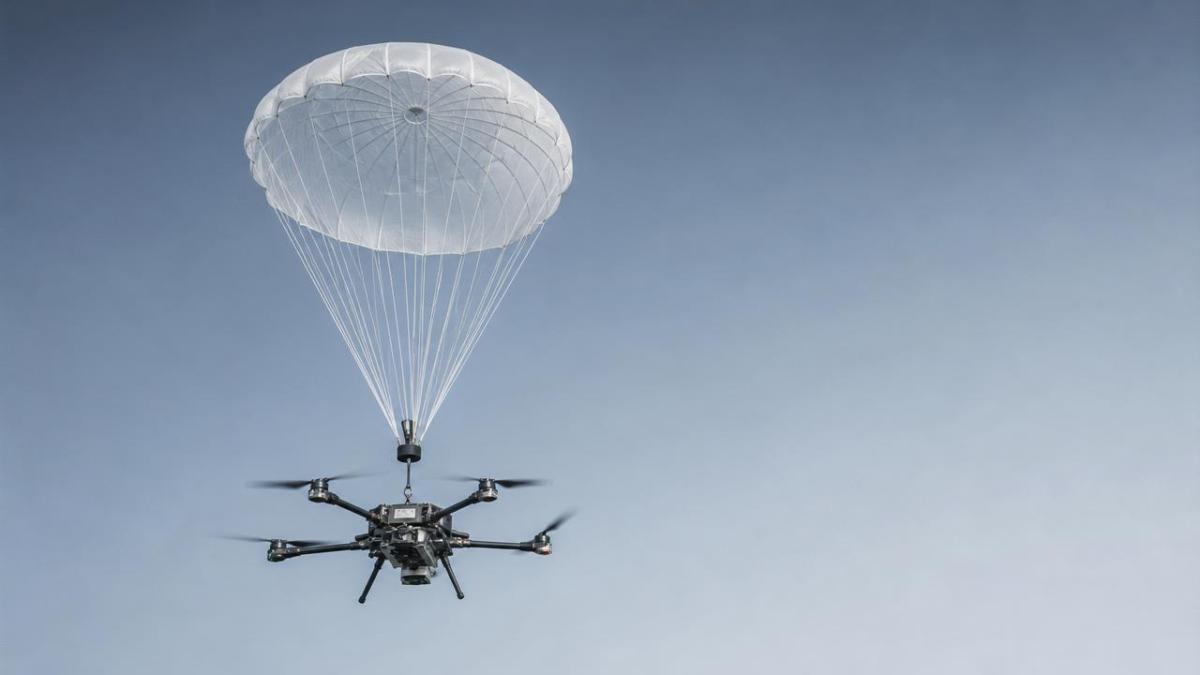
A drone parachute recovery system is an emergency descent mechanism designed to reduce impact energy after a serious in-flight failure. In practical terms, it usually includes a detection logic layer, a deployment trigger, a packed parachute, and in many systems an independent power path or mechanical launch device. The purpose is not to “save every aircraft” in every condition. Its real job is more specific: lower descent speed, reduce ground impact force, and give operators a defensible mitigation layer when catastrophic failures occur.
Low-altitude failure is difficult because the available time budget becomes extremely small. A multirotor flying at 25 meters does not have the same recovery envelope as one cruising at 120 meters. Detection delay, trigger logic, deployment time, canopy inflation time, aircraft attitude, forward speed, and wind all consume precious milliseconds. If the total time from failure onset to full canopy inflation exceeds the remaining fall time, the drone parachute recovery system may deploy too late to materially reduce impact severity.
This is why safety managers should avoid broad marketing claims such as “instant deployment” or “ultimate protection.” The meaningful question is narrower: under which failure modes, mass ranges, airspeeds, and altitudes has the system been tested to show measurable kinetic energy reduction? For quality teams, the engineering truth is found in thresholds, not slogans.
Which failure modes can a drone parachute recovery system realistically address, and which ones remain high risk?
Not every emergency benefits equally from parachute deployment. A drone parachute recovery system is most valuable when the aircraft loses controlled lift but still has enough altitude and time for deployment. Examples include total power loss, critical battery disconnect, propulsion failure causing unrecoverable instability, flight controller failure, or a severe navigation fault that makes controlled landing impossible.
However, several scenarios remain difficult even with a well-designed system. Extremely low altitude hover, aggressive bank angles during high-speed flight, entanglement with structures, and failures occurring directly above hard obstacles can all reduce effectiveness. If the aircraft is descending rapidly already, the parachute may only partially inflate before impact. If the drone is rotating violently, line twist or canopy asymmetry may further reduce drag performance.
For safety planning, it is useful to separate failure events into three groups:
- High recoverability: mid-altitude power loss, sudden controller shutdown, severe motor-out events with enough vertical margin.
- Conditional recoverability: partial propulsion loss, unstable but not fully ballistic descent, moderate forward speed, limited altitude.
- Low recoverability: impact-imminent failures below minimum deployment height, structural breakup, severe entanglement, or obstacle-dense urban geometry.
This classification matters because a drone parachute recovery system should be validated against the actual risk profile of the mission, not against ideal test conditions only.
How should quality and safety teams evaluate minimum deployment altitude instead of trusting headline claims?
Minimum deployment altitude is one of the most misunderstood specifications in the UAV safety space. Vendors may publish a low number, but the test assumptions behind that number are what matter. Was the aircraft in level flight or free fall? Was the parachute manually triggered or autonomously detected? Was the payload representative? Were wind and pitch rate controlled? Was “successful recovery” defined as any canopy opening, or as a descent speed below a target injury threshold?
A practical evaluation framework should break the event into four timed segments: failure detection, trigger decision, ejection or release, and canopy inflation. Even if each segment is individually short, the combined duration may still exceed the safe envelope at low altitude. For example, a system with excellent mechanical ejection but slow fault confirmation logic may underperform in real incidents. Conversely, a very sensitive trigger may reduce delay but create nuisance deployments and operational disruptions.
Quality personnel should request test evidence for at least these points:
- Aircraft takeoff mass and center-of-gravity range during testing.
- Deployment altitude distribution, not just best-case minimum altitude.
- Descent rate after full inflation and resulting impact energy estimates.
- Number of test repetitions and failed deployments.
- Environmental conditions such as wind, temperature, and humidity.
- Whether the trigger path was autonomous, manual, or both.
If a drone parachute recovery system cannot show this level of data transparency, it becomes difficult to treat it as a verified safety barrier in a formal risk register.
What technical parameters matter most when comparing one drone parachute recovery system to another?
For procurement and safety review, comparison should move beyond generic claims and focus on measurable engineering parameters. The most important variables are not always the most advertised ones. A larger canopy, for instance, may reduce descent speed but increase packing volume and deployment complexity. A faster trigger may improve low-altitude survivability but raise the false activation rate. The right balance depends on mission type, aircraft size, and acceptable risk thresholds.
The table below summarizes core evaluation points for a drone parachute recovery system.
For safety managers, the best drone parachute recovery system is not the one with the most features on paper. It is the one with verifiable performance in the exact operational envelope your fleet uses.
What are the most common mistakes companies make when implementing a drone parachute recovery system?
The first mistake is assuming installation equals risk reduction. In reality, poor integration can shift risk rather than reduce it. Added weight may shorten endurance, increase takeoff load, and change handling. The mounting location may affect center of gravity, antenna visibility, or payload clearance. If the deployment path is obstructed by propellers, arms, sensors, or top-mounted equipment, the system may fail at the exact moment it is needed.
The second mistake is using a single test flight as proof of airworthiness. A drone parachute recovery system should be evaluated like any other safety-critical subsystem: repeated tests, documented pass-fail criteria, maintenance control, and traceable configuration management. Quality teams should ask whether the packed parachute degrades with vibration, humidity, UV exposure, or repeated thermal cycling during field operations.
The third mistake is ignoring human factors. Manual deployment may sound reassuring, but under time pressure an operator may not recognize the event quickly enough. Autonomous logic may help, but only if the trigger thresholds are tuned to avoid both missed activations and unnecessary deployments. Training, simulator drills, and post-flight inspection routines are therefore part of the safety system, not optional extras.
A final mistake is treating the parachute as a substitute for broader safety design. Redundant power architecture, battery health monitoring, preflight checks, geofencing, fail-safe logic, and operational area control remain essential. A drone parachute recovery system is a last protective layer, not permission to accept weak upstream controls.
How can safety leaders decide whether a parachute system is justified for their UAV operation?
The answer depends on the interaction between mission exposure and residual risk. If flights occur over people, near critical infrastructure, in industrial sites, above roads, or around expensive assets, the case for a drone parachute recovery system becomes stronger. The same is true for heavier aircraft, operations beyond visual line of sight, or missions where emergency landing zones are limited.
A useful decision path starts with three questions. First, what is the credible worst-case impact scenario if lift is lost at typical mission altitude? Second, how often do operations enter low-altitude segments where response time is minimal? Third, can the proposed system demonstrate a meaningful reduction in impact energy under those exact conditions?
If the likely accident consequence is low, the aircraft is very small, and the mission is conducted over clear, controlled areas, the operational burden may outweigh the benefit. But where third-party exposure is significant, a tested drone parachute recovery system often supports both internal governance and external assurance. It can also strengthen incident defensibility by showing that the operator implemented a recognized mitigation layer rather than relying solely on pilot skill.
What should teams confirm before procurement, validation, or supplier approval?
Before approving any drone parachute recovery system, procurement, quality, and safety stakeholders should align on a short list of evidence-based questions. This avoids buying a nominal safety product that does not match the fleet’s risk profile.
- Which aircraft models, weight ranges, and payload configurations are formally supported?
- What is the demonstrated minimum effective altitude for autonomous deployment, not just manual activation?
- How many deployments has the vendor logged, and what is the documented failure or partial-deployment rate?
- What inspection, repacking, shelf-life, and environmental storage rules apply?
- How does installation affect endurance, controllability, EMI behavior, and maintenance intervals?
- What data can be exported for incident investigation, compliance records, and quality audits?
For organizations that follow a data-first engineering culture, these questions should be converted into supplier qualification gates and acceptance test plans. That approach is especially aligned with the needs of safety managers who must defend operational decisions with measurable evidence rather than vendor language.
Final question: what should you discuss first if you need to assess a real deployment?
Start with the mission profile, not the product brochure. Define normal altitude bands, aircraft mass, forward speed, operating environment, third-party exposure, and the specific failure modes you most need to control. Then compare those conditions against verified deployment data for the drone parachute recovery system being considered. For quality and safety leaders, the most important next conversation is not “What is the advertised specification?” but “Under our actual low-altitude failure scenarios, what evidence shows this system reduces impact severity and liability?”
If you need to move toward procurement or validation, prioritize discussion around test evidence, minimum effective altitude, descent-rate data, integration effects, maintenance intervals, and false-trigger logic. Those topics will reveal quickly whether the system is a meaningful risk control or merely a compliance checkbox. In UAV safety, the value of a drone parachute recovery system is proven by engineering performance under constrained time, not by the presence of a parachute alone.
Search News
Hot Articles
- Carbon Fiber StructuresHow to Specify Aerospace Carbon Fiber Assemblies for Lightweight, Load-Bearing PartsJul 11, 2026
- Machine VisionXiaomi, Alibaba DAMO Academy Drive Open-Source Robotics Model Ecosystem, Lowering Algorithm Development Barriers for Overseas SMEs Adopting Chinese Robotics SolutionsMar 30, 2026
- Cobots & ArmsShanxi 'AI+' Conference Showcases Embodied Intelligence with Multinational Buyer Engagement: Key Industry ImplicationsMar 30, 2026
Popular Tags
Recommended News
 Jul 11, 2026How to Specify Aerospace Carbon Fiber Assemblies for Lightweight, Load-Bearing PartsAerospace carbon fiber assemblies: learn how to specify laminate design, load data, joining methods, and inspection controls for lighter, reliable load-bearing aerospace parts.Elena Rostova (UAV Systems Researcher)
 Mar 30, 2026Xiaomi, Alibaba DAMO Academy Drive Open-Source Robotics Model Ecosystem, Lowering Algorithm Development Barriers for Overseas SMEs Adopting Chinese Robotics SolutionsXiaomi & Alibaba DAMO Academy's open-source robotics models lower algorithm barriers for global SMEs. Boost efficiency in manufacturing, logistics & smart retail with ROS 2 compatible solutions.TSV Data Lab
 Mar 30, 2026Shanxi 'AI+' Conference Showcases Embodied Intelligence with Multinational Buyer Engagement: Key Industry ImplicationsShanxi 'AI+' Conference highlights embodied intelligence with Tesla, Ubtech & Jiantao showcasing multimodal robotics. 40+ global buyers validated tech on-site, creating new B2B channels for industrial automation & AI solutions.Chen Wei (Automation Lead Engineer)
 Mar 30, 2026Zhongguancun Unveils 6G Integrated Sensing-Computing-Intelligence Platform to Empower Embodied Robots for Global Industrial ApplicationsZhongguancun's new 6G platform revolutionizes industrial robotics with <10ms latency, empowering global automotive, logistics & port automation. Discover how this tech boosts China's smart manufacturing exports.TSV Data Lab
 Mar 30, 2026Mech-Mind Tianjin Embodied Intelligence R&D and Production Base Goes Live, Cutting Delivery Time by 20%–30% for Global Customized AMR+Vision SolutionsMech-Mind's Tianjin AMR+Vision production base cuts delivery time by 20%-30% for欧美 & Latin American markets. Discover how this PLd-certified facility accelerates customized robotics solutions for smart manufacturing and logistics.Chen Wei (Automation Lead Engineer)
 Mar 30, 2026Boao Forum Reveals 'Co-evolution of Big and Small Brains' Trend in Humanoid Robots, China's Embodied Intelligence Accelerates Adaptation to Overseas Manufacturing Service ScenariosDiscover how China's humanoid robots, featuring 'Co-evolution of Big and Small Brains,' are revolutionizing global manufacturing. Learn about Embodied Tian Gong 3.0's ISO compliance and overseas deployment at Boao Forum 2026.Chen Wei (Automation Lead Engineer)
 Mar 30, 2026China Railway Industrial Secures Patent for Embodied Robotics in Material Handling, Boosting High-Precision Delivery Capabilities for Overseas Infrastructure and Manufacturing ProjectsChina Railway Industrial's new patent for embodied robotics in material handling boosts high-precision delivery for global infrastructure & manufacturing. Discover how this innovation enhances logistics accuracy in automotive, rail transit & EPC projects.Chen Wei (Automation Lead Engineer)
 Sep 28, 2026Spindle Runout Measurement in Germany: DIN Standards, Methods, and Acceptance LimitsSpindle runout measurement Germany: explore DIN standards, proven methods, acceptance limits, and audit-ready practices for reliable machining quality.Dr. Marcus Vance
 Sep 27, 2026How to Select Wall-Mount Edge Devices for Space-Constrained Factory NetworksWall mount edge devices for space-constrained factories: evaluate workload, thermal design, power resilience, cable access, and network reliability for smarter deployments.TSV Data Lab
 Sep 26, 2026Machining Tolerance Analysis: How to Set Limits That Meet Function and Cost TargetsMachining tolerance analysis: learn how to set functional limits, control tolerance stacks, reduce inspection risk, and balance precision with production cost.Dr. Marcus Vance
 Sep 25, 2026How to Evaluate an Industrial Infrastructure Data Platform for Multi-Site OperationsIndustrial infrastructure data platform evaluation guide for multi-site operations: compare data quality, edge resilience, interoperability, governance, and scalable proof-of-value criteria.Victor Lin (Chief Software Architect)
 Sep 24, 2026How to Select Machine Vision Optics for Accurate Inspection at Different Working DistancesMachine vision optics selection guide for accurate inspection at every working distance. Compare FOV, pixel scale, DOF, distortion, lighting, and telecentric options.TSV Data Lab
 Sep 23, 2026How to Evaluate a Machine Vision System Integrator for High-Speed Inspection LinesChoose a machine vision system integrator with proven expertise in high-speed inspection, reliable reject timing, robust optics, and measurable acceptance criteria.TSV Data Lab
 Sep 28, 2026When is a SCADA API the right choice for connecting plant systems?SCADA API guide: learn when governed plant data integration improves traceability, security, and scalability—without compromising real-time control.Victor Lin (Chief Software Architect)
 Sep 27, 2026How SCADA data integration improves traceability across production linesSCADA data integration connects production-line data to improve traceability, accelerate quality investigations, and strengthen safety decisions.Victor Lin (Chief Software Architect)
 Sep 26, 2026What to define before starting SCADA integration planningSCADA integration planning starts with clear scope, control boundaries, data models, cybersecurity, and testing. Discover the definitions that reduce risk and costly rework.Victor Lin (Chief Software Architect)
 Sep 25, 2026How a smart factory with Industrial IoT reduces production blind spotsDiscover how a smart factory with Industrial IoT turns real-time machine, quality, and workflow data into actionable insights that reduce production blind spots and delivery risks.Victor Lin (Chief Software Architect)
 Sep 24, 2026When does Industrial IoT make smart manufacturing easier to scale?Smart manufacturing Industrial IoT scales when trusted data, interoperable systems, and secure workflows turn connected assets into measurable gains.TSV Data Lab
 Sep 23, 2026What drives ultra-precision machining cost at 1-micron tolerance?Ultra precision machining cost per part at 1 micron tolerance depends on process, material, metrology, and yield. Learn how to compare quotes confidently.Dr. Marcus Vance
 Sep 22, 2026Drone Engine-T550CC Applications: Build the UAV Power System Around the MissionAn application guide for Drone Engine-T550CC integration, covering payload planning, airframe matching, cooling, fuel, vibration, test procedures, documentation, and service preparation.Elena Rostova (UAV Systems Researcher)
 Sep 22, 2026How to Evaluate Industrial Edge Computing Vendors for Factory DeploymentIndustrial edge computing vendor evaluation guide for factories: compare latency, protocol fit, reliability, security, and lifecycle support before deployment.TSV Data Lab
 Sep 21, 2026Drone Payload Integration: Matching Power, Data, and Center of Gravity for Reliable FlightsDrone payload integration made practical: balance power, data, center of gravity, and endurance to build safer, more reliable mission-ready flights.Elena Rostova (UAV Systems Researcher)
 Sep 20, 2026Autonomous Navigation Pricing: Cost Drivers and Budget Benchmarks for AMR ProjectsAutonomous navigation price explained: compare AMR cost drivers, software, sensors, integration, safety, and lifecycle budgets to build a scalable project plan.Chen Wei (Automation Lead Engineer)
 Sep 19, 2026How to Scope Automation Integration Services for Multi-System Factory ProjectsAutomation integration services: learn how to scope multi-system factory projects with clear workflows, interface contracts, safety boundaries, and acceptance criteria.Victor Lin (Chief Software Architect)