Which trampoline park accessories improve safety the most
Publication Date
author
For quality-control and safety managers, choosing the right trampoline park accessories is not about add-ons—it is about measurable risk reduction. From impact-absorbing pads and enclosure nets to grip surfaces and inspection-friendly hardware, the safest accessories directly influence injury prevention, compliance, and maintenance efficiency. This guide examines which trampoline park accessories improve safety the most, with a practical focus on performance, durability, and operational control.
What counts as a safety-critical trampoline park accessory?
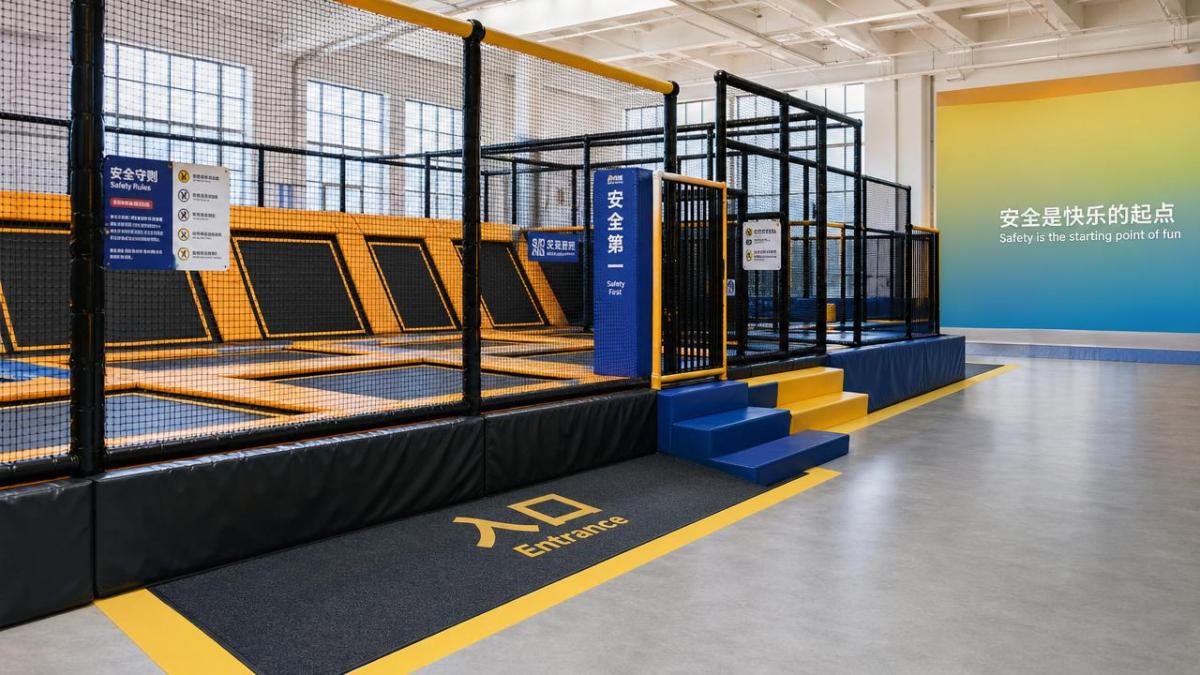
Not every accessory has the same value in risk control. For safety managers, the most important trampoline park accessories are the components that reduce impact severity, prevent falls into hazardous gaps, improve user stability, and make inspection easier. In practice, that means prioritizing frame pads, spring pads, enclosure systems, anti-slip entry surfaces, edge protection, anchor and fastening systems, and clear signage elements that support behavior control.
A useful way to classify trampoline park accessories is by failure consequence. If a component fails and the likely result is direct injury, it belongs in the highest safety tier. Padding over metal frames and springs fits this category because exposed hard points can turn a routine bounce into a head, ankle, or wrist injury. Enclosure nets and divider nets also rank high because they control trajectory and prevent user-to-user collisions or ejection from active zones.
By contrast, decorative accessories or branding elements may improve appearance but do not materially reduce incident probability. For quality-control teams, the procurement decision should therefore start with a hazard map, not a catalog. The question is not “Which accessory is popular?” but “Which accessory controls the most severe and most frequent risks in this park layout?”
Which trampoline park accessories improve safety the most in real operations?
If the goal is maximum safety return per investment, several trampoline park accessories consistently outperform others. The first is high-density impact padding over frames, springs, and transition zones. Good padding lowers injury severity by absorbing energy and covering pinch points. The second is a well-engineered enclosure net system that maintains tension, avoids entanglement hazards, and contains users within designated zones. The third is slip-resistant flooring around entries, stairs, and observation paths, because many incidents occur before or after jumping rather than during peak airtime.
Also highly effective are soft wall pads, corner protectors, and barrier pads around support posts. These are especially important in parks with angled layouts, foam pits, dodgeball courts, or junior zones where directional control is less predictable. In many audits, hard edges near high-energy zones are found to be underestimated hazards. Covering them with durable padding produces a measurable reduction in contact injuries.
Another often overlooked category is inspection-friendly hardware. Safety is not only about impact absorption; it is also about maintaining stable performance over time. Accessories that allow fast visual verification of wear, loosening, tearing, or displacement can have an outsized effect on operational safety because they shorten the time between defect appearance and corrective action.
Quick-priority table for safety managers
How should quality-control teams judge padding quality instead of trusting marketing claims?
Padding is one of the most important trampoline park accessories, but it is also one of the easiest categories to oversell. Terms such as “premium foam” or “heavy-duty vinyl” are not enough. Quality-control personnel should verify actual material behavior under use conditions. Start with foam density and rebound characteristics. Padding that is too soft may bottom out under impact, while padding that is too hard may not dissipate energy effectively. The best option depends on location: frame perimeter pads, spring cover pads, and wall pads may require different performance profiles.
The outer cover matters just as much as the foam core. In high-traffic parks, low-grade covers crack, split at seams, or become slippery after repeated cleaning. A safer accessory is one with abrasion resistance, moisture resistance, and seams that hold shape under repeated compression. UV exposure, disinfectant chemistry, and temperature swings can all accelerate failure, so operating environment must be part of incoming inspection criteria.
Attachment method is another critical point. Even thick pads become unsafe if they drift, bunch, or expose hardware. Look for secure fastening layouts that minimize migration during use. The safest trampoline park accessories are not only durable in the lab; they remain correctly positioned after thousands of cycles, cleaning rounds, and user impacts.
Are enclosure nets and barrier systems more important than extra bounce features?
From a safety perspective, yes. Many parks invest heavily in attractions that increase user excitement, but for risk control, containment systems usually provide greater value. Enclosure nets, lane dividers, and protected transition barriers directly address two major incident drivers: uncontrolled movement and user collision. In mixed-age or mixed-skill environments, these accessories become even more important because behavior is harder to predict.
A strong net system should not be evaluated only by its initial appearance. Safety managers should ask how the mesh behaves after repeated loading, whether edge bindings fray, whether connection points create finger entrapment risks, and whether the net rebounds users safely instead of creating a slingshot effect. Proper spacing and tension are essential. A net that sags excessively may allow hazardous contact with posts or frames; a net that is too stiff may transfer force poorly.
Barrier systems also support operational zoning. For example, junior areas, performance areas, and dodgeball courts should not rely on user self-discipline alone. Physical separation is one of the most practical trampoline park accessories for reducing interaction risk. In many cases, barriers are more effective than additional rules because they work continuously without requiring perfect staff enforcement.
What are the most common mistakes when selecting trampoline park accessories?
The first mistake is choosing by purchase price alone. Lower-cost trampoline park accessories may look acceptable on day one but fail quickly under sweat, cleaning agents, friction, and repetitive force. When replacement frequency, downtime, and injury exposure are considered, the initial savings often disappear. Safety managers should calculate total operating cost, not only invoice cost.
The second mistake is treating all zones the same. A toddler area, a main jumping bed, a foam pit edge, and a stair landing do not have identical hazard patterns. Accessories should be selected by zone-specific risk. For example, anti-slip surfacing is critical in circulation paths, while high-energy impact pads matter most at active boundaries and structural contact points.
The third mistake is ignoring maintainability. Some trampoline park accessories are safe when new but difficult to inspect once installed. If staff cannot easily see whether a fastener has loosened, a seam has opened, or foam has collapsed, defects may remain hidden until an incident occurs. Accessories should support daily walk-through checks, scheduled preventive maintenance, and efficient replacement.
The fourth mistake is overvaluing visual thickness and undervaluing engineering detail. A bulky pad or heavy net may seem safer, but if the stitching pattern is weak, the anchoring layout is inconsistent, or the surface becomes slick, the accessory can still underperform. Quality-control decisions must be evidence-based and use measurable acceptance criteria.
How can safety managers compare accessories during procurement and inspection?
A practical evaluation framework should include five dimensions: hazard reduction effect, material durability, inspection accessibility, cleaning compatibility, and replacement simplicity. This moves the discussion beyond brand promises and into operational evidence. For each category of trampoline park accessories, define pass-fail criteria before supplier comparison begins.
For example, for pads, compare not just thickness but compression behavior, seam integrity, attachment retention, and surface grip when dry and slightly damp. For nets, review mesh consistency, edge finishing, tension retention, and whether damaged sections can be replaced without removing entire assemblies. For flooring, assess slip resistance after cleaning, edge stability, and wear in high-turn traffic lanes.
Documentation matters too. Reliable suppliers should provide traceable material information, recommended inspection intervals, cleaning limits, and replacement guidance. This approach aligns with the data-driven mindset that quality and safety leaders increasingly prefer: parameters over slogans, lifecycle performance over showroom appearance. In procurement reviews, the best trampoline park accessories are those that can be specified, inspected, and maintained with minimal ambiguity.
Simple procurement checklist
Which accessories are most important for long-term compliance and maintenance control?
The best long-term choices are usually the trampoline park accessories that combine injury prevention with easy monitoring. Pads with visible wear indicators, modular net sections, corrosion-resistant fasteners, and clearly segmented flooring systems all support better control. These features help teams inspect faster, replace only what is necessary, and maintain consistent standards across multiple zones or locations.
Signage and access-control accessories should not be ignored either. While they do not absorb impact, they influence user behavior and traffic flow. Clear rule boards, age-zone markers, grip socks policy signs, and queue guidance systems can reduce misuse, overcrowding, and cross-traffic. For safety management, behavioral controls and physical controls work best together.
It is also wise to consider replacement cadence during purchasing. Some accessories cost more initially but produce more stable performance and fewer emergency repairs. From a compliance standpoint, predictable maintenance is preferable to reactive patching. A park that can document inspection routines, accessory condition, and replacement history is in a much stronger position during audits, claims review, or internal safety evaluations.
What should you confirm first before purchasing or upgrading trampoline park accessories?
Before moving forward, safety and quality teams should confirm five things: the highest-risk zones in the facility, the most common incident types, the expected cleaning and usage intensity, the inspection resources available on site, and the replacement strategy for wear parts. These answers will determine which trampoline park accessories deserve top priority and which specifications should be mandatory rather than optional.
For many operators, the accessories that improve safety the most are not the flashiest items. They are the components that consistently lower impact severity, prevent hazardous contact, support stable footing, and make defects obvious before they become incidents. That is why high-quality pads, net systems, anti-slip surfaces, barrier protection, and inspection-friendly hardware usually deliver the strongest safety value.
If you need to confirm a specific upgrade path, start the conversation with practical questions: Which injury modes are you trying to reduce? Which zones fail inspection most often? What material performance data can the supplier provide? How quickly can damaged parts be replaced? By asking these questions first, teams can select trampoline park accessories that support measurable risk reduction instead of relying on generic product claims.
Search News
Hot Articles
- Carbon Fiber StructuresHow to Specify Aerospace Carbon Fiber Assemblies for Lightweight, Load-Bearing PartsJul 11, 2026
- Machine VisionXiaomi, Alibaba DAMO Academy Drive Open-Source Robotics Model Ecosystem, Lowering Algorithm Development Barriers for Overseas SMEs Adopting Chinese Robotics SolutionsMar 30, 2026
- Cobots & ArmsShanxi 'AI+' Conference Showcases Embodied Intelligence with Multinational Buyer Engagement: Key Industry ImplicationsMar 30, 2026
Popular Tags
Recommended News
 Jul 11, 2026How to Specify Aerospace Carbon Fiber Assemblies for Lightweight, Load-Bearing PartsAerospace carbon fiber assemblies: learn how to specify laminate design, load data, joining methods, and inspection controls for lighter, reliable load-bearing aerospace parts.Elena Rostova (UAV Systems Researcher)
 Mar 30, 2026Xiaomi, Alibaba DAMO Academy Drive Open-Source Robotics Model Ecosystem, Lowering Algorithm Development Barriers for Overseas SMEs Adopting Chinese Robotics SolutionsXiaomi & Alibaba DAMO Academy's open-source robotics models lower algorithm barriers for global SMEs. Boost efficiency in manufacturing, logistics & smart retail with ROS 2 compatible solutions.TSV Data Lab
 Mar 30, 2026Shanxi 'AI+' Conference Showcases Embodied Intelligence with Multinational Buyer Engagement: Key Industry ImplicationsShanxi 'AI+' Conference highlights embodied intelligence with Tesla, Ubtech & Jiantao showcasing multimodal robotics. 40+ global buyers validated tech on-site, creating new B2B channels for industrial automation & AI solutions.Chen Wei (Automation Lead Engineer)
 Mar 30, 2026Zhongguancun Unveils 6G Integrated Sensing-Computing-Intelligence Platform to Empower Embodied Robots for Global Industrial ApplicationsZhongguancun's new 6G platform revolutionizes industrial robotics with <10ms latency, empowering global automotive, logistics & port automation. Discover how this tech boosts China's smart manufacturing exports.TSV Data Lab
 Mar 30, 2026Mech-Mind Tianjin Embodied Intelligence R&D and Production Base Goes Live, Cutting Delivery Time by 20%–30% for Global Customized AMR+Vision SolutionsMech-Mind's Tianjin AMR+Vision production base cuts delivery time by 20%-30% for欧美 & Latin American markets. Discover how this PLd-certified facility accelerates customized robotics solutions for smart manufacturing and logistics.Chen Wei (Automation Lead Engineer)
 Mar 30, 2026Boao Forum Reveals 'Co-evolution of Big and Small Brains' Trend in Humanoid Robots, China's Embodied Intelligence Accelerates Adaptation to Overseas Manufacturing Service ScenariosDiscover how China's humanoid robots, featuring 'Co-evolution of Big and Small Brains,' are revolutionizing global manufacturing. Learn about Embodied Tian Gong 3.0's ISO compliance and overseas deployment at Boao Forum 2026.Chen Wei (Automation Lead Engineer)
 Mar 30, 2026China Railway Industrial Secures Patent for Embodied Robotics in Material Handling, Boosting High-Precision Delivery Capabilities for Overseas Infrastructure and Manufacturing ProjectsChina Railway Industrial's new patent for embodied robotics in material handling boosts high-precision delivery for global infrastructure & manufacturing. Discover how this innovation enhances logistics accuracy in automotive, rail transit & EPC projects.Chen Wei (Automation Lead Engineer)
 Sep 28, 2026Spindle Runout Measurement in Germany: DIN Standards, Methods, and Acceptance LimitsSpindle runout measurement Germany: explore DIN standards, proven methods, acceptance limits, and audit-ready practices for reliable machining quality.Dr. Marcus Vance
 Sep 27, 2026How to Select Wall-Mount Edge Devices for Space-Constrained Factory NetworksWall mount edge devices for space-constrained factories: evaluate workload, thermal design, power resilience, cable access, and network reliability for smarter deployments.TSV Data Lab
 Sep 26, 2026Machining Tolerance Analysis: How to Set Limits That Meet Function and Cost TargetsMachining tolerance analysis: learn how to set functional limits, control tolerance stacks, reduce inspection risk, and balance precision with production cost.Dr. Marcus Vance
 Sep 25, 2026How to Evaluate an Industrial Infrastructure Data Platform for Multi-Site OperationsIndustrial infrastructure data platform evaluation guide for multi-site operations: compare data quality, edge resilience, interoperability, governance, and scalable proof-of-value criteria.Victor Lin (Chief Software Architect)
 Sep 24, 2026How to Select Machine Vision Optics for Accurate Inspection at Different Working DistancesMachine vision optics selection guide for accurate inspection at every working distance. Compare FOV, pixel scale, DOF, distortion, lighting, and telecentric options.TSV Data Lab
 Sep 23, 2026How to Evaluate a Machine Vision System Integrator for High-Speed Inspection LinesChoose a machine vision system integrator with proven expertise in high-speed inspection, reliable reject timing, robust optics, and measurable acceptance criteria.TSV Data Lab
 Sep 28, 2026When is a SCADA API the right choice for connecting plant systems?SCADA API guide: learn when governed plant data integration improves traceability, security, and scalability—without compromising real-time control.Victor Lin (Chief Software Architect)
 Sep 27, 2026How SCADA data integration improves traceability across production linesSCADA data integration connects production-line data to improve traceability, accelerate quality investigations, and strengthen safety decisions.Victor Lin (Chief Software Architect)
 Sep 26, 2026What to define before starting SCADA integration planningSCADA integration planning starts with clear scope, control boundaries, data models, cybersecurity, and testing. Discover the definitions that reduce risk and costly rework.Victor Lin (Chief Software Architect)
 Sep 25, 2026How a smart factory with Industrial IoT reduces production blind spotsDiscover how a smart factory with Industrial IoT turns real-time machine, quality, and workflow data into actionable insights that reduce production blind spots and delivery risks.Victor Lin (Chief Software Architect)
 Sep 24, 2026When does Industrial IoT make smart manufacturing easier to scale?Smart manufacturing Industrial IoT scales when trusted data, interoperable systems, and secure workflows turn connected assets into measurable gains.TSV Data Lab
 Sep 23, 2026What drives ultra-precision machining cost at 1-micron tolerance?Ultra precision machining cost per part at 1 micron tolerance depends on process, material, metrology, and yield. Learn how to compare quotes confidently.Dr. Marcus Vance
 Sep 22, 2026Drone Engine-T550CC Applications: Build the UAV Power System Around the MissionAn application guide for Drone Engine-T550CC integration, covering payload planning, airframe matching, cooling, fuel, vibration, test procedures, documentation, and service preparation.Elena Rostova (UAV Systems Researcher)
 Sep 22, 2026How to Evaluate Industrial Edge Computing Vendors for Factory DeploymentIndustrial edge computing vendor evaluation guide for factories: compare latency, protocol fit, reliability, security, and lifecycle support before deployment.TSV Data Lab
 Sep 21, 2026Drone Payload Integration: Matching Power, Data, and Center of Gravity for Reliable FlightsDrone payload integration made practical: balance power, data, center of gravity, and endurance to build safer, more reliable mission-ready flights.Elena Rostova (UAV Systems Researcher)
 Sep 20, 2026Autonomous Navigation Pricing: Cost Drivers and Budget Benchmarks for AMR ProjectsAutonomous navigation price explained: compare AMR cost drivers, software, sensors, integration, safety, and lifecycle budgets to build a scalable project plan.Chen Wei (Automation Lead Engineer)
 Sep 19, 2026How to Scope Automation Integration Services for Multi-System Factory ProjectsAutomation integration services: learn how to scope multi-system factory projects with clear workflows, interface contracts, safety boundaries, and acceptance criteria.Victor Lin (Chief Software Architect)