What Drives Trampoline Park Price More Than Most Owners Expect
Publication Date
author
For finance approvers, trampoline park price is rarely driven by the obvious line items alone. Beyond equipment quotes, the real cost often rises through compliance demands, site engineering, lifecycle maintenance, insurance exposure, and utilization assumptions that many owners underestimate. Understanding these hidden financial drivers is essential for evaluating capital efficiency, forecasting payback, and avoiding budget decisions based on incomplete supplier narratives.
Why does trampoline park price move far beyond the supplier quote?
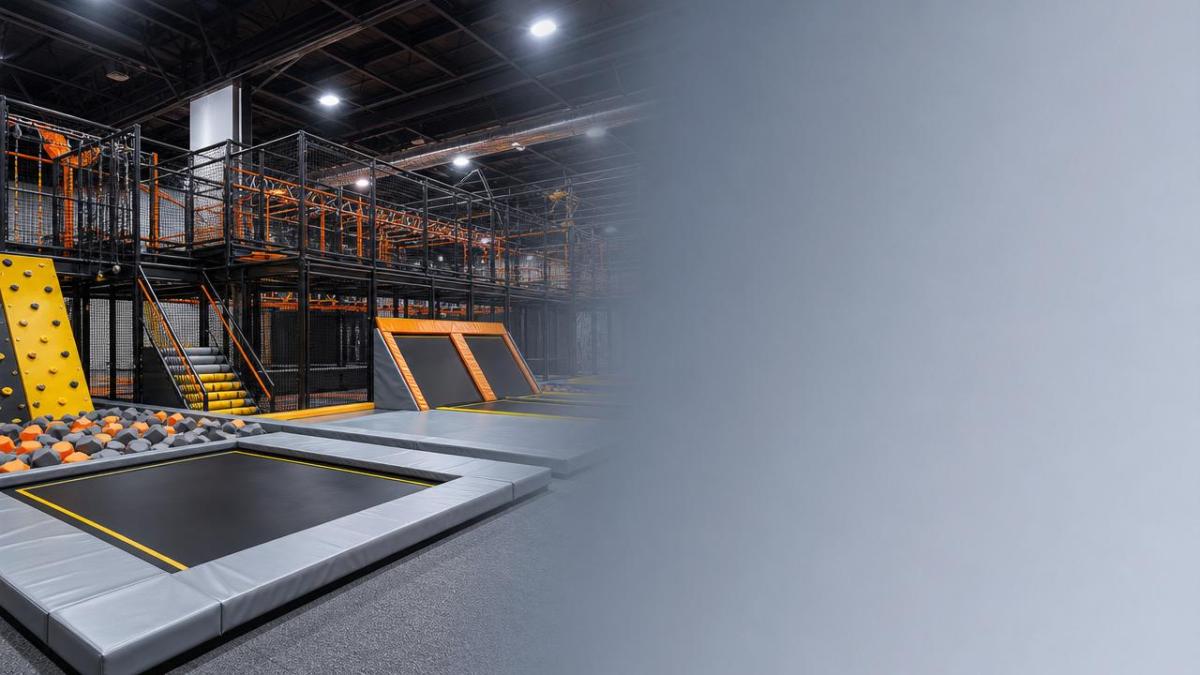
Many first-pass budgets treat trampoline park price as a simple equipment procurement exercise. That is the first error. In practice, the quote for frames, springs, pads, nets, soft play modules, or digital attraction add-ons is only the visible layer. The deeper cost structure sits in structural adaptation, code compliance, operating risk, maintenance cycles, and throughput assumptions that directly affect return on invested capital.
For finance teams, this matters because a low entry quote can create a higher total project burden. A supplier may present an attractive package price while excluding flooring reinforcement, fire system updates, queue design, HVAC adjustments, local permitting, or post-install inspection. The result is budget drift after approval, which undermines internal confidence in capital planning.
This is exactly where a data-driven review process becomes valuable. TechStat Vanguard approaches supplier evaluation the same way advanced industries assess hard-tech procurement: strip away adjectives, isolate measurable variables, and compare lifecycle impacts instead of headline numbers. When evaluating trampoline park price, finance approvers should think less like a retail buyer and more like a procurement analyst approving a long-lived operating asset.
- Initial equipment cost is only one capital layer and often excludes site-specific engineering.
- Regulatory and safety requirements can materially change installed cost after design review.
- Expected utilization determines wear rate, staffing burden, and maintenance reserve needs.
- Insurance and liability assumptions can reshape the acceptable payback period.
What cost categories shape trampoline park price most in real projects?
Before comparing vendors, finance approvers need a cost map that reflects actual project exposure. The table below breaks trampoline park price into the categories that most often create variance between budget approval and final spend.
The practical insight is simple: trampoline park price should be approved as a project system, not as a product line. When financial review separates equipment from supporting obligations, the “approved” number stops reflecting the actual cash requirement.
Which hidden technical and facility variables increase cost after approval?
The most expensive surprises are usually technical, not cosmetic. A finance approver may see a visually similar park layout from two vendors and assume cost parity. Yet the final installed price changes when engineering assumptions differ. Ceiling height, column spacing, floor load capacity, emergency egress routing, and HVAC performance can all force redesign.
Facility geometry matters more than many owners expect
An open rectangular shell is usually cheaper to fit out than an irregular unit filled with columns, mezzanines, low beams, or mixed floor elevations. Dead zones reduce usable attraction area, which raises cost per revenue-generating square foot. From a finance perspective, this means trampoline park price should be normalized against monetizable play capacity, not gross leased area.
Utilization assumptions change wear economics
A park designed for moderate weekend traffic has a different maintenance profile from one targeting high-frequency birthday events, school bookings, or tourist volume. Higher throughput accelerates replacement intervals for springs, pads, grip surfaces, and netting. If the business plan assumes aggressive attendance, the approved trampoline park price should include a realistic maintenance reserve from day one.
Add-on attractions reshape both CapEx and OpEx
Ninja courses, climbing walls, foam pits, interactive projection systems, or digital scoring zones can improve revenue mix. They can also introduce more complex inspections, different staffing ratios, and broader liability analysis. Finance teams should not treat these as simple upsells. They are revenue tools with distinct risk and upkeep profiles.
- Ask whether the quoted design assumes a standard slab or requires reinforcement.
- Confirm whether freight, customs, and on-site assembly tools are fully included.
- Review how many operational hours per day were used to estimate component life.
- Check whether queue areas, party rooms, socks inventory, and spectator zones are budgeted separately.
How should finance approvers compare supplier proposals on trampoline park price?
A quote comparison based on total amount alone is not reliable. Finance teams need a normalized decision framework that reveals what each supplier includes, excludes, assumes, and transfers back to the buyer. The following matrix is useful when comparing trampoline park price across multiple proposals.
This type of comparison reflects TSV’s broader methodology: decisions improve when buyers compare parameters and process transparency, not promotional language. A lower quote may still be acceptable, but only after the hidden transfer of risk is visible.
What standards, compliance, and insurance issues affect trampoline park price?
Compliance cost is one of the least understood drivers of trampoline park price. Requirements differ by region, but finance approvers should assume that safety documentation, installation records, material specifications, operating procedures, and local building checks will influence both opening timeline and budget. Even where standards are familiar to operators, the local authority review process can still trigger redesign or added documentation work.
Common compliance cost drivers
- Fire protection changes such as sprinkler coverage adjustments, signage, and egress refinement.
- Accessibility-related layout revisions affecting circulation, service counters, or spectator areas.
- Third-party inspection expectations tied to local amusement or recreational facility rules.
- Operating manual requirements for staff training, daily checks, and incident logging.
Insurance is equally important. Premiums depend on market location, claims history, attraction mix, supervision model, and documented maintenance discipline. If the business model needs high attendance to justify the trampoline park price, but insurance conditions force stricter staffing or lower capacity control, projected margins may compress quickly.
How can owners reduce lifecycle cost instead of just negotiating a lower purchase price?
The best financial outcome usually comes from lowering total cost of ownership rather than chasing the lowest opening invoice. That means selecting a configuration that fits the site, supports utilization targets, and limits avoidable replacement expense. In procurement terms, the right question is not “How do we get the cheapest trampoline park price?” but “Which configuration protects operating margin over three to five years?”
- Match attraction mix to demand reality. Overbuilding novelty attractions can dilute payback if occupancy is seasonal or family-ticket driven.
- Model maintenance by usage band. Ask for replacement planning under low, medium, and high attendance scenarios.
- Preserve layout flexibility. Modular zones may allow phased expansion instead of heavy upfront investment.
- Validate spare-parts logistics. Delays in pads, mats, or fabric components increase revenue loss during downtime.
- Review staffing economics together with design. A cheaper layout may require more supervision positions per session.
This is where a benchmarking mindset helps. TSV’s philosophy applies even outside core hard-tech sectors: measurable operational variables matter more than marketing claims. If a proposal cannot explain wear assumptions, inspection burden, or replacement planning, its attractive trampoline park price may simply defer cost into later quarters.
FAQ: What do finance approvers ask most about trampoline park price?
Is a lower trampoline park price usually a better investment?
Not necessarily. A lower upfront number can hide exclusions, weaker engineering validation, or shorter replacement cycles. Finance teams should compare installed cost, opening readiness, maintenance exposure, and revenue downtime risk, not just the purchase amount.
What should be included in a serious budget review?
At minimum, review equipment scope, freight, installation labor, site preparation, code-related upgrades, inspection support, maintenance reserve, insurance assumptions, and opening schedule dependencies. If any of these remain undefined, the approved budget is incomplete.
How early should compliance be discussed with suppliers?
As early as concept review. Waiting until lease execution or production start can produce redesign costs and schedule delays. Early compliance mapping reduces surprise spending and gives finance teams a clearer cash-flow plan.
Can a premium supplier still make financial sense?
Yes, if the higher quote comes with better documentation, more reliable delivery, lower maintenance burden, or fewer post-install corrections. The financially stronger option is the one with the more stable total project outcome, not simply the smallest initial invoice.
Why choose a data-driven review partner before approving trampoline park price?
When project teams are under pressure to open quickly, supplier narratives can become louder than the underlying numbers. TechStat Vanguard is built around the opposite principle: parameters first, claims second. Our approach helps decision-makers separate equipment cost from engineering reality, identify hidden budget drivers, and compare proposals on measurable procurement criteria.
If you are evaluating trampoline park price for capital approval, you can consult us on practical issues that directly affect budget confidence: scope normalization between suppliers, parameter confirmation, site-related engineering risks, lifecycle maintenance assumptions, delivery timeline logic, compliance documentation expectations, and quote communication structure. This allows finance approvers, procurement leads, and operating stakeholders to work from the same evidence base before funds are committed.
A disciplined approval process does not slow decisions. It prevents expensive revisions after signature. In projects where hidden variables drive outcome, better data is not a luxury. It is the basis for sound capital allocation.
Search News
Hot Articles
- Carbon Fiber StructuresHow to Specify Aerospace Carbon Fiber Assemblies for Lightweight, Load-Bearing PartsJul 11, 2026
- Machine VisionXiaomi, Alibaba DAMO Academy Drive Open-Source Robotics Model Ecosystem, Lowering Algorithm Development Barriers for Overseas SMEs Adopting Chinese Robotics SolutionsMar 30, 2026
- Cobots & ArmsShanxi 'AI+' Conference Showcases Embodied Intelligence with Multinational Buyer Engagement: Key Industry ImplicationsMar 30, 2026
Popular Tags
Recommended News
 Jul 11, 2026How to Specify Aerospace Carbon Fiber Assemblies for Lightweight, Load-Bearing PartsAerospace carbon fiber assemblies: learn how to specify laminate design, load data, joining methods, and inspection controls for lighter, reliable load-bearing aerospace parts.Elena Rostova (UAV Systems Researcher)
 Mar 30, 2026Xiaomi, Alibaba DAMO Academy Drive Open-Source Robotics Model Ecosystem, Lowering Algorithm Development Barriers for Overseas SMEs Adopting Chinese Robotics SolutionsXiaomi & Alibaba DAMO Academy's open-source robotics models lower algorithm barriers for global SMEs. Boost efficiency in manufacturing, logistics & smart retail with ROS 2 compatible solutions.TSV Data Lab
 Mar 30, 2026Shanxi 'AI+' Conference Showcases Embodied Intelligence with Multinational Buyer Engagement: Key Industry ImplicationsShanxi 'AI+' Conference highlights embodied intelligence with Tesla, Ubtech & Jiantao showcasing multimodal robotics. 40+ global buyers validated tech on-site, creating new B2B channels for industrial automation & AI solutions.Chen Wei (Automation Lead Engineer)
 Mar 30, 2026Zhongguancun Unveils 6G Integrated Sensing-Computing-Intelligence Platform to Empower Embodied Robots for Global Industrial ApplicationsZhongguancun's new 6G platform revolutionizes industrial robotics with <10ms latency, empowering global automotive, logistics & port automation. Discover how this tech boosts China's smart manufacturing exports.TSV Data Lab
 Mar 30, 2026Mech-Mind Tianjin Embodied Intelligence R&D and Production Base Goes Live, Cutting Delivery Time by 20%–30% for Global Customized AMR+Vision SolutionsMech-Mind's Tianjin AMR+Vision production base cuts delivery time by 20%-30% for欧美 & Latin American markets. Discover how this PLd-certified facility accelerates customized robotics solutions for smart manufacturing and logistics.Chen Wei (Automation Lead Engineer)
 Mar 30, 2026Boao Forum Reveals 'Co-evolution of Big and Small Brains' Trend in Humanoid Robots, China's Embodied Intelligence Accelerates Adaptation to Overseas Manufacturing Service ScenariosDiscover how China's humanoid robots, featuring 'Co-evolution of Big and Small Brains,' are revolutionizing global manufacturing. Learn about Embodied Tian Gong 3.0's ISO compliance and overseas deployment at Boao Forum 2026.Chen Wei (Automation Lead Engineer)
 Mar 30, 2026China Railway Industrial Secures Patent for Embodied Robotics in Material Handling, Boosting High-Precision Delivery Capabilities for Overseas Infrastructure and Manufacturing ProjectsChina Railway Industrial's new patent for embodied robotics in material handling boosts high-precision delivery for global infrastructure & manufacturing. Discover how this innovation enhances logistics accuracy in automotive, rail transit & EPC projects.Chen Wei (Automation Lead Engineer)
 Sep 28, 2026Spindle Runout Measurement in Germany: DIN Standards, Methods, and Acceptance LimitsSpindle runout measurement Germany: explore DIN standards, proven methods, acceptance limits, and audit-ready practices for reliable machining quality.Dr. Marcus Vance
 Sep 27, 2026How to Select Wall-Mount Edge Devices for Space-Constrained Factory NetworksWall mount edge devices for space-constrained factories: evaluate workload, thermal design, power resilience, cable access, and network reliability for smarter deployments.TSV Data Lab
 Sep 26, 2026Machining Tolerance Analysis: How to Set Limits That Meet Function and Cost TargetsMachining tolerance analysis: learn how to set functional limits, control tolerance stacks, reduce inspection risk, and balance precision with production cost.Dr. Marcus Vance
 Sep 25, 2026How to Evaluate an Industrial Infrastructure Data Platform for Multi-Site OperationsIndustrial infrastructure data platform evaluation guide for multi-site operations: compare data quality, edge resilience, interoperability, governance, and scalable proof-of-value criteria.Victor Lin (Chief Software Architect)
 Sep 24, 2026How to Select Machine Vision Optics for Accurate Inspection at Different Working DistancesMachine vision optics selection guide for accurate inspection at every working distance. Compare FOV, pixel scale, DOF, distortion, lighting, and telecentric options.TSV Data Lab
 Sep 23, 2026How to Evaluate a Machine Vision System Integrator for High-Speed Inspection LinesChoose a machine vision system integrator with proven expertise in high-speed inspection, reliable reject timing, robust optics, and measurable acceptance criteria.TSV Data Lab
 Sep 28, 2026When is a SCADA API the right choice for connecting plant systems?SCADA API guide: learn when governed plant data integration improves traceability, security, and scalability—without compromising real-time control.Victor Lin (Chief Software Architect)
 Sep 27, 2026How SCADA data integration improves traceability across production linesSCADA data integration connects production-line data to improve traceability, accelerate quality investigations, and strengthen safety decisions.Victor Lin (Chief Software Architect)
 Sep 26, 2026What to define before starting SCADA integration planningSCADA integration planning starts with clear scope, control boundaries, data models, cybersecurity, and testing. Discover the definitions that reduce risk and costly rework.Victor Lin (Chief Software Architect)
 Sep 25, 2026How a smart factory with Industrial IoT reduces production blind spotsDiscover how a smart factory with Industrial IoT turns real-time machine, quality, and workflow data into actionable insights that reduce production blind spots and delivery risks.Victor Lin (Chief Software Architect)
 Sep 24, 2026When does Industrial IoT make smart manufacturing easier to scale?Smart manufacturing Industrial IoT scales when trusted data, interoperable systems, and secure workflows turn connected assets into measurable gains.TSV Data Lab
 Sep 23, 2026What drives ultra-precision machining cost at 1-micron tolerance?Ultra precision machining cost per part at 1 micron tolerance depends on process, material, metrology, and yield. Learn how to compare quotes confidently.Dr. Marcus Vance
 Sep 22, 2026Drone Engine-T550CC Applications: Build the UAV Power System Around the MissionAn application guide for Drone Engine-T550CC integration, covering payload planning, airframe matching, cooling, fuel, vibration, test procedures, documentation, and service preparation.Elena Rostova (UAV Systems Researcher)
 Sep 22, 2026How to Evaluate Industrial Edge Computing Vendors for Factory DeploymentIndustrial edge computing vendor evaluation guide for factories: compare latency, protocol fit, reliability, security, and lifecycle support before deployment.TSV Data Lab
 Sep 21, 2026Drone Payload Integration: Matching Power, Data, and Center of Gravity for Reliable FlightsDrone payload integration made practical: balance power, data, center of gravity, and endurance to build safer, more reliable mission-ready flights.Elena Rostova (UAV Systems Researcher)
 Sep 20, 2026Autonomous Navigation Pricing: Cost Drivers and Budget Benchmarks for AMR ProjectsAutonomous navigation price explained: compare AMR cost drivers, software, sensors, integration, safety, and lifecycle budgets to build a scalable project plan.Chen Wei (Automation Lead Engineer)
 Sep 19, 2026How to Scope Automation Integration Services for Multi-System Factory ProjectsAutomation integration services: learn how to scope multi-system factory projects with clear workflows, interface contracts, safety boundaries, and acceptance criteria.Victor Lin (Chief Software Architect)