Trampoline park equipment mistakes that raise repair costs
Publication Date
author
When repair budgets keep climbing, the root cause is often not usage volume but avoidable specification and maintenance errors in trampoline park equipment. For business evaluators, understanding these costly mistakes is essential to judging lifecycle value, supplier reliability, and operational risk. This article highlights the decisions that quietly drive up repair costs and shows how a more data-based evaluation can protect long-term returns.
What repair-cost mistakes in trampoline park equipment really mean
In commercial leisure facilities, repair expense is rarely caused by one dramatic failure. More often, it grows from small but repeated issues in trampoline park equipment: underspecified frames, mismatched springs, low-grade padding, poor anchoring, incomplete inspection access, and maintenance plans that look acceptable on paper but fail under real traffic. For business evaluators, these are not only technical details. They directly affect downtime, insurance exposure, guest experience, and the total cost of ownership.
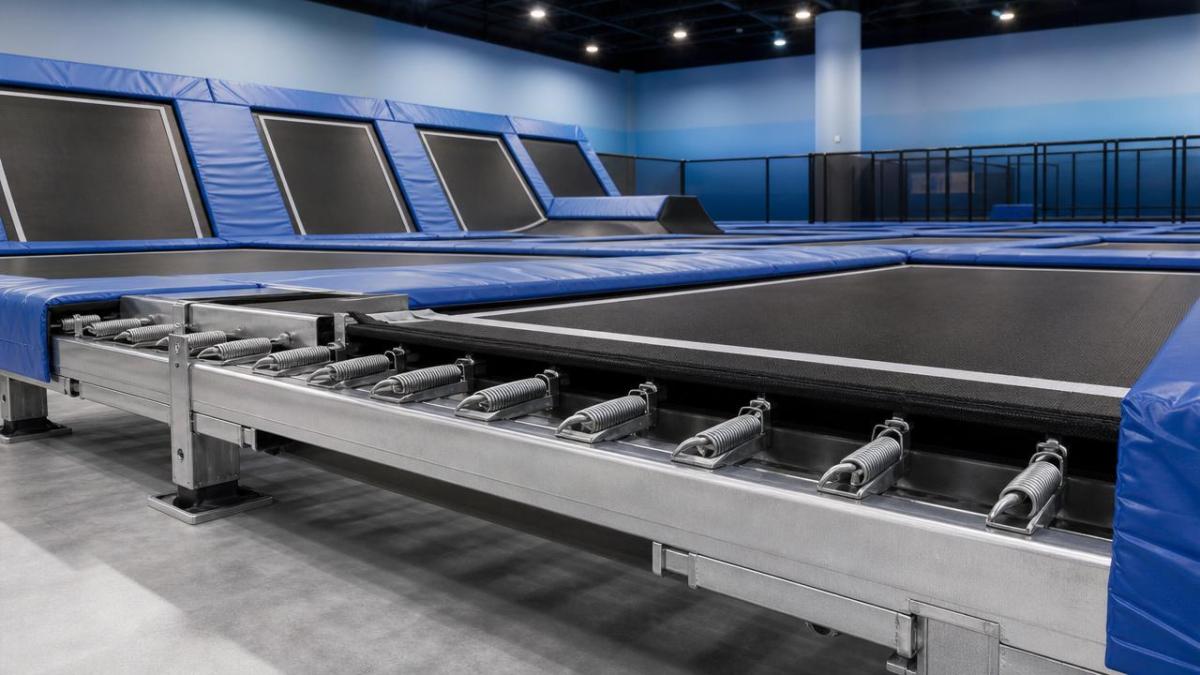
A useful way to view trampoline park equipment is not as a one-time installation, but as a fatigue-loaded system. Every jump cycle stresses springs, welds, bed stitching, pads, foam interfaces, and support structures. If the original design, component selection, or upkeep model does not fit the site’s usage intensity, repair costs begin to compound. The visible symptom may be torn pads or noisy springs, but the hidden driver is usually a decision made months earlier during specification or supplier review.
This matters even more in a market where promotional claims often exceed engineering clarity. A data-based review, consistent with the TechStat Vanguard mindset, focuses on verifiable metrics: material thickness, cycle durability, corrosion resistance, seam strength, coating quality, replacement intervals, and documented test thresholds. Parameters do not eliminate every failure, but they reduce uncertainty and improve forecasting.
Why the industry pays attention to these errors
Indoor activity parks operate on a narrow balance between utilization and asset preservation. Revenue depends on frequent use, yet frequent use accelerates fatigue. That is why trampoline park equipment must be assessed through both operational and engineering lenses. A low upfront purchase price can quickly lose its appeal if the site requires repeated spring replacement, pad rework, frame reinforcement, or prolonged closure of high-traffic zones.
Business evaluators are especially concerned because repair cost inflation affects several financial lines at once. Direct maintenance spending rises. Labor hours expand. Spare-part inventory becomes harder to predict. Lost bookings follow temporary closures. Risk controls tighten after visible wear issues. In some cases, poor maintainability also increases vendor dependency, forcing operators to buy proprietary parts at higher prices and longer lead times.
For that reason, the most important question is not “Which trampoline park equipment looks attractive at launch?” It is “Which system remains structurally stable, serviceable, and economically predictable after heavy commercial use?”
A practical overview of common mistakes and their cost impact
The table below summarizes the most common specification and maintenance mistakes that raise repair costs in trampoline park equipment, along with their typical downstream effects.
The most expensive specification errors in trampoline park equipment
Choosing by upfront price instead of duty cycle
This is one of the most common and costly errors. Some buyers compare quotations without separating school-use, family entertainment, and high-volume commercial park duty cycles. Trampoline park equipment in a busy venue may experience thousands of repetitive load events daily. If the system was priced and designed for lighter traffic, repair needs appear early and repeatedly. The result is not one large capital event but continuous maintenance drain.
Ignoring component compatibility
A trampoline system performs as an integrated assembly. Springs, bed fabric, frame geometry, anchor points, and pads influence one another. Replacing one element with a cheaper alternative can transfer stress to other parts. For example, non-matched springs may alter rebound forces and increase seam stress on the jump bed. What looked like a savings decision then creates a wider repair cycle.
Underestimating corrosion and cleaning exposure
Even indoor trampoline park equipment is affected by humidity, sweat, cleaning chemicals, and ventilation conditions. If coatings, fasteners, or spring treatments are not selected for these exposures, surface degradation begins sooner than expected. Corrosion is not only a cosmetic issue. It weakens reliability, complicates disassembly, and raises service time.
Accepting vague technical claims
Terms such as “heavy-duty,” “premium,” or “park-grade” have little value without measurable support. Business evaluators should request actual data on steel thickness, welding standards, foam density, fabric tensile behavior, coating process, and recommended replacement intervals. Without such detail, comparing trampoline park equipment across suppliers becomes subjective, and hidden repair risk increases.
How maintenance mistakes turn minor wear into major cost
Poor maintenance does not always mean neglect. In many operations, the issue is that maintenance is too informal. Staff may notice visible wear but lack standardized inspection criteria. Springs are replaced when they break, not when they drift out of acceptable performance range. Pads are checked for tears, but not for compression loss or attachment weakness. Understructure inspection is delayed because access is inconvenient during operating hours.
These patterns matter because trampoline park equipment often degrades progressively rather than suddenly. A single worn connector can increase movement in adjacent sections. A slightly loose frame point can amplify vibration. A pad edge that lifts repeatedly can expose nearby material to faster tearing. In financial terms, delayed intervention usually multiplies both the number of affected parts and the labor required to restore safe condition.
Another maintenance mistake is relying on generic schedules rather than site-specific usage data. A weekday-light, weekend-heavy park does not wear components in the same pattern as a venue with daily school groups or athletic programming. Better operators divide trampoline park equipment into wear zones and adjust inspection frequency accordingly.
Where these issues create the most business impact
Not every part of a venue creates equal repair risk. Some asset categories face higher stress, more contamination, or more user concentration. Evaluators should distinguish between general park installations and specialty zones, because replacement behavior can differ significantly.
A data-based evaluation framework for business reviewers
A strong evaluation framework for trampoline park equipment should move beyond visual quality and brochure language. It should test whether the supplier can support predictable performance over time. The following criteria are especially valuable:
- Documented material specifications for frame steel, spring treatment, bed fabric, foam density, and cover finish
- Fatigue and cycle-life evidence for high-use components, not just initial load capacity
- Clear preventive maintenance intervals with measurable replacement triggers
- Spare-part availability, lead time commitments, and interchangeability policy
- Ease of inspection and service access at high-wear points
- Zone-specific design logic that reflects expected user flow and peak occupancy
- Warranty language that identifies exclusions tied to commercial traffic intensity
This approach aligns with the broader engineering principle that lifecycle value depends on tolerances, traceability, and service realism. When evaluators ask for measurable proof, they reduce the chance of buying trampoline park equipment that appears competitive at purchase but becomes expensive in operation.
Practical steps to reduce repair costs without sacrificing utilization
First, segment the venue by wear intensity. High-traffic areas should not share the same inspection assumptions as low-use corners. Second, require suppliers to map each major component to an expected service interval under commercial load. Third, standardize inspection records so that wear trends can be tracked before failures occur. Fourth, keep approved spare parts available for predictable high-turn items rather than waiting for urgent failures.
It is also wise to review maintainability during design approval. If technicians need excessive disassembly to inspect or replace common wear components, labor cost will remain high regardless of part quality. Finally, compare suppliers on total support capability, not installation price alone. For trampoline park equipment, lifecycle economics are shaped as much by documentation, replacement logic, and engineering transparency as by the physical hardware itself.
Conclusion: better decisions start with engineering clarity
Rising repair budgets often signal that trampoline park equipment was evaluated too narrowly at the start. The biggest cost drivers are usually avoidable: weak duty-cycle matching, vague technical standards, poor component compatibility, and maintenance systems that react too late. For business evaluators, the goal is not simply to identify the lowest-cost option, but to identify the most stable long-term asset.
A disciplined, data-driven review of trampoline park equipment helps organizations reduce downtime, improve budget predictability, and strengthen supplier accountability. In an environment where marketing language can blur real differences, engineering evidence remains the most reliable guide. If lifecycle value is the priority, repair prevention begins at the evaluation stage, not after the first failure.
Search News
Hot Articles
- Carbon Fiber StructuresHow to Specify Aerospace Carbon Fiber Assemblies for Lightweight, Load-Bearing PartsJul 11, 2026
- Machine VisionXiaomi, Alibaba DAMO Academy Drive Open-Source Robotics Model Ecosystem, Lowering Algorithm Development Barriers for Overseas SMEs Adopting Chinese Robotics SolutionsMar 30, 2026
- Cobots & ArmsShanxi 'AI+' Conference Showcases Embodied Intelligence with Multinational Buyer Engagement: Key Industry ImplicationsMar 30, 2026
Popular Tags
Recommended News
 Jul 11, 2026How to Specify Aerospace Carbon Fiber Assemblies for Lightweight, Load-Bearing PartsAerospace carbon fiber assemblies: learn how to specify laminate design, load data, joining methods, and inspection controls for lighter, reliable load-bearing aerospace parts.Elena Rostova (UAV Systems Researcher)
 Mar 30, 2026Xiaomi, Alibaba DAMO Academy Drive Open-Source Robotics Model Ecosystem, Lowering Algorithm Development Barriers for Overseas SMEs Adopting Chinese Robotics SolutionsXiaomi & Alibaba DAMO Academy's open-source robotics models lower algorithm barriers for global SMEs. Boost efficiency in manufacturing, logistics & smart retail with ROS 2 compatible solutions.TSV Data Lab
 Mar 30, 2026Shanxi 'AI+' Conference Showcases Embodied Intelligence with Multinational Buyer Engagement: Key Industry ImplicationsShanxi 'AI+' Conference highlights embodied intelligence with Tesla, Ubtech & Jiantao showcasing multimodal robotics. 40+ global buyers validated tech on-site, creating new B2B channels for industrial automation & AI solutions.Chen Wei (Automation Lead Engineer)
 Mar 30, 2026Zhongguancun Unveils 6G Integrated Sensing-Computing-Intelligence Platform to Empower Embodied Robots for Global Industrial ApplicationsZhongguancun's new 6G platform revolutionizes industrial robotics with <10ms latency, empowering global automotive, logistics & port automation. Discover how this tech boosts China's smart manufacturing exports.TSV Data Lab
 Mar 30, 2026Mech-Mind Tianjin Embodied Intelligence R&D and Production Base Goes Live, Cutting Delivery Time by 20%–30% for Global Customized AMR+Vision SolutionsMech-Mind's Tianjin AMR+Vision production base cuts delivery time by 20%-30% for欧美 & Latin American markets. Discover how this PLd-certified facility accelerates customized robotics solutions for smart manufacturing and logistics.Chen Wei (Automation Lead Engineer)
 Mar 30, 2026Boao Forum Reveals 'Co-evolution of Big and Small Brains' Trend in Humanoid Robots, China's Embodied Intelligence Accelerates Adaptation to Overseas Manufacturing Service ScenariosDiscover how China's humanoid robots, featuring 'Co-evolution of Big and Small Brains,' are revolutionizing global manufacturing. Learn about Embodied Tian Gong 3.0's ISO compliance and overseas deployment at Boao Forum 2026.Chen Wei (Automation Lead Engineer)
 Mar 30, 2026China Railway Industrial Secures Patent for Embodied Robotics in Material Handling, Boosting High-Precision Delivery Capabilities for Overseas Infrastructure and Manufacturing ProjectsChina Railway Industrial's new patent for embodied robotics in material handling boosts high-precision delivery for global infrastructure & manufacturing. Discover how this innovation enhances logistics accuracy in automotive, rail transit & EPC projects.Chen Wei (Automation Lead Engineer)
 Sep 28, 2026Spindle Runout Measurement in Germany: DIN Standards, Methods, and Acceptance LimitsSpindle runout measurement Germany: explore DIN standards, proven methods, acceptance limits, and audit-ready practices for reliable machining quality.Dr. Marcus Vance
 Sep 27, 2026How to Select Wall-Mount Edge Devices for Space-Constrained Factory NetworksWall mount edge devices for space-constrained factories: evaluate workload, thermal design, power resilience, cable access, and network reliability for smarter deployments.TSV Data Lab
 Sep 26, 2026Machining Tolerance Analysis: How to Set Limits That Meet Function and Cost TargetsMachining tolerance analysis: learn how to set functional limits, control tolerance stacks, reduce inspection risk, and balance precision with production cost.Dr. Marcus Vance
 Sep 25, 2026How to Evaluate an Industrial Infrastructure Data Platform for Multi-Site OperationsIndustrial infrastructure data platform evaluation guide for multi-site operations: compare data quality, edge resilience, interoperability, governance, and scalable proof-of-value criteria.Victor Lin (Chief Software Architect)
 Sep 24, 2026How to Select Machine Vision Optics for Accurate Inspection at Different Working DistancesMachine vision optics selection guide for accurate inspection at every working distance. Compare FOV, pixel scale, DOF, distortion, lighting, and telecentric options.TSV Data Lab
 Sep 23, 2026How to Evaluate a Machine Vision System Integrator for High-Speed Inspection LinesChoose a machine vision system integrator with proven expertise in high-speed inspection, reliable reject timing, robust optics, and measurable acceptance criteria.TSV Data Lab
 Sep 28, 2026When is a SCADA API the right choice for connecting plant systems?SCADA API guide: learn when governed plant data integration improves traceability, security, and scalability—without compromising real-time control.Victor Lin (Chief Software Architect)
 Sep 27, 2026How SCADA data integration improves traceability across production linesSCADA data integration connects production-line data to improve traceability, accelerate quality investigations, and strengthen safety decisions.Victor Lin (Chief Software Architect)
 Sep 26, 2026What to define before starting SCADA integration planningSCADA integration planning starts with clear scope, control boundaries, data models, cybersecurity, and testing. Discover the definitions that reduce risk and costly rework.Victor Lin (Chief Software Architect)
 Sep 25, 2026How a smart factory with Industrial IoT reduces production blind spotsDiscover how a smart factory with Industrial IoT turns real-time machine, quality, and workflow data into actionable insights that reduce production blind spots and delivery risks.Victor Lin (Chief Software Architect)
 Sep 24, 2026When does Industrial IoT make smart manufacturing easier to scale?Smart manufacturing Industrial IoT scales when trusted data, interoperable systems, and secure workflows turn connected assets into measurable gains.TSV Data Lab
 Sep 23, 2026What drives ultra-precision machining cost at 1-micron tolerance?Ultra precision machining cost per part at 1 micron tolerance depends on process, material, metrology, and yield. Learn how to compare quotes confidently.Dr. Marcus Vance
 Sep 22, 2026Drone Engine-T550CC Applications: Build the UAV Power System Around the MissionAn application guide for Drone Engine-T550CC integration, covering payload planning, airframe matching, cooling, fuel, vibration, test procedures, documentation, and service preparation.Elena Rostova (UAV Systems Researcher)
 Sep 22, 2026How to Evaluate Industrial Edge Computing Vendors for Factory DeploymentIndustrial edge computing vendor evaluation guide for factories: compare latency, protocol fit, reliability, security, and lifecycle support before deployment.TSV Data Lab
 Sep 21, 2026Drone Payload Integration: Matching Power, Data, and Center of Gravity for Reliable FlightsDrone payload integration made practical: balance power, data, center of gravity, and endurance to build safer, more reliable mission-ready flights.Elena Rostova (UAV Systems Researcher)
 Sep 20, 2026Autonomous Navigation Pricing: Cost Drivers and Budget Benchmarks for AMR ProjectsAutonomous navigation price explained: compare AMR cost drivers, software, sensors, integration, safety, and lifecycle budgets to build a scalable project plan.Chen Wei (Automation Lead Engineer)
 Sep 19, 2026How to Scope Automation Integration Services for Multi-System Factory ProjectsAutomation integration services: learn how to scope multi-system factory projects with clear workflows, interface contracts, safety boundaries, and acceptance criteria.Victor Lin (Chief Software Architect)