Stocking Trampoline Park Parts Without Tying Up Cash
Publication Date
author
For distributors and sourcing agents, stocking trampoline park parts is a constant balance between availability, cash flow, and supplier reliability. In a market where downtime hurts revenue and overbuying ties up capital, the real advantage comes from smarter inventory planning, verified component data, and dependable procurement channels. This article explores how to secure the right parts without overcommitting cash while maintaining service speed and commercial flexibility.
Why do trampoline park parts create such a difficult inventory problem?
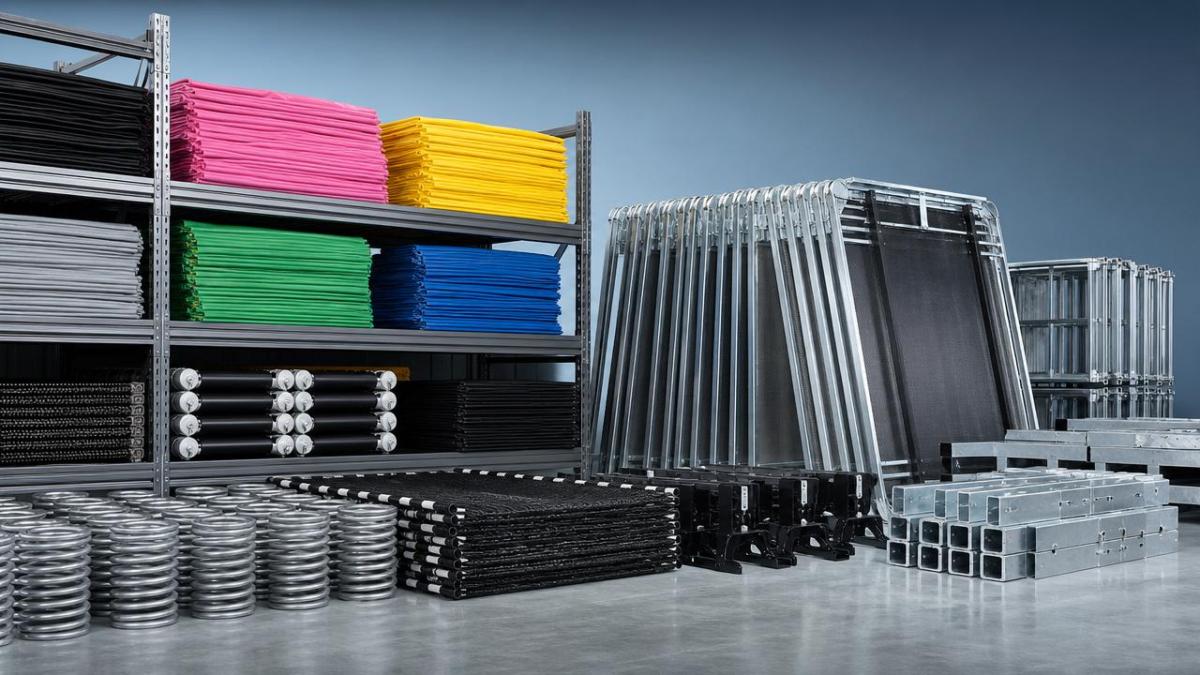
For dealers, distributors, and agents, trampoline park parts are not simple low-risk consumables. They sit in a category where safety, wear rate, lead time, and model compatibility all matter at the same time. A torn bed, fatigued spring, cracked foam pad cover, damaged frame sleeve, or worn net connector can stop a revenue-generating attraction immediately.
That creates a classic commercial conflict. If you carry too little stock, your customer faces downtime, urgent freight, and possible reputational damage. If you carry too much stock, working capital gets frozen in slow-moving SKUs, especially when parts vary by park layout, attraction type, frame geometry, pad thickness, or regional compliance requirements.
The problem gets worse because the trampoline park parts market is often filled with incomplete specifications. Many listings mention compatibility in broad language, yet leave out critical details such as spring length tolerance, stitching density, fabric weight, foam compression grade, coating durability, or hardware corrosion resistance. For a distributor, vague data is not a minor inconvenience. It is a direct margin risk.
- High uptime expectations from commercial park operators, especially during weekends, school holidays, and peak event seasons.
- Wide SKU variation across beds, springs, pads, nets, frame tubes, connector hardware, and foam system components.
- Uneven supplier transparency, where marketing claims may not be backed by dimensional data, material traceability, or practical wear benchmarks.
- Cash-flow pressure caused by buying ahead without verified consumption cycles or true demand segmentation.
What should distributors classify before buying trampoline park parts in volume?
Before placing larger orders for trampoline park parts, it helps to divide parts into operational classes rather than treating everything as general replacement stock. This improves forecasting, shortens replenishment decisions, and helps protect cash.
A practical inventory segmentation model
The table below shows a useful framework for categorizing trampoline park parts by urgency, variability, and capital impact. It is especially helpful for distributors managing multiple parks, resellers serving different regions, or agents working with custom indoor recreation projects.
This model prevents a common mistake: using equal purchasing logic for all trampoline park parts. High-wear items support service speed, while low-frequency structural items should be managed through supplier readiness, not heavy warehouse commitment.
Questions worth asking before committing stock
- Which parts fail often enough to justify local stock?
- Which SKUs differ only slightly and can be standardized to reduce fragmentation?
- Which parts must match specific attraction designs or frame drawings exactly?
- Which suppliers can provide verified dimensions, materials, and repeat order consistency?
Which technical data matters most when sourcing trampoline park parts?
TechStat Vanguard approaches sourcing through engineering truth, not vague promotion. For trampoline park parts, that means the quality of procurement decisions depends on measurable parameters. Distributors do not need exaggerated claims. They need usable data that reduces mismatch, disputes, and repeat failures.
Core technical checkpoints for procurement review
The next table summarizes the specification areas that should appear in supplier documentation when buying trampoline park parts. These checkpoints are highly relevant for quoting, quality review, and customer assurance.
A supplier that cannot provide this level of detail may still offer low unit pricing, but the total cost of ownership often rises through returns, compatibility disputes, service callbacks, and urgent replacements. TSV’s data-first mindset is valuable here because it filters out descriptive noise and centers the conversation on measurable fit-for-use factors.
Why parameter discipline supports cash efficiency
Better data does more than protect safety. It also improves inventory precision. When dimensions, material ranges, and wear expectations are verified early, distributors can stock fewer speculative SKUs, consolidate equivalent parts, and reduce dead inventory caused by hidden incompatibility.
How can you stock trampoline park parts without freezing too much capital?
The answer is not simply “buy less.” Understocking creates emergency logistics costs and weaker customer retention. The stronger approach is to design a layered stocking strategy that matches capital exposure to failure probability and lead-time risk.
A three-layer replenishment approach
- Layer 1: Fast-turn safety stock. Keep local inventory of the trampoline park parts most likely to fail or wear out, especially springs, beds, edge pads, and selected hardware kits.
- Layer 2: Shared regional buffer. Use pooled stock for medium-demand items that can serve multiple customer accounts across nearby markets.
- Layer 3: On-demand engineered supply. For custom or slow-moving parts, rely on approved suppliers with drawing control, agreed lead times, and repeatable production files.
This structure lets distributors maintain responsiveness without carrying every possible part in every warehouse. It also creates a disciplined cash allocation model. Capital is concentrated where service value is highest, not spread across unpredictable custom components.
How to decide reorder points
Use actual replacement history whenever possible. If your installed base is still growing and data is limited, start with attraction count, average traffic intensity, peak months, and lead-time variability. Reorder points for trampoline park parts should reflect both physical wear and service promise. A part with moderate failure but long lead time may deserve stock sooner than a frequently replaced item with easy local replenishment.
What purchasing mistakes make trampoline park parts more expensive than they look?
Low visible price often hides high commercial cost. This is especially true in fragmented spare-parts categories where quality differences are not obvious in catalog photos. Distributors serving commercial leisure facilities need to judge the full cost chain, not just invoice price.
Comparison of common buying approaches
The table below compares three common ways distributors source trampoline park parts and shows where cost pressure usually appears over time.
For most commercial distributors, the middle option is usually the strongest. It aligns with TSV’s principle that parameters and traceable data should drive decisions. A disciplined, spec-led sourcing model often beats both uncontrolled bulk buying and purely reactive procurement.
Common errors to avoid
- Assuming all trampoline park parts described as “universal” will fit the same frame and attraction design.
- Buying large quantities before checking wear concentration by attraction zone and user traffic profile.
- Ignoring packaging, corrosion protection, and handling conditions for parts stored over long periods.
- Failing to document revision changes when customers operate parks built in different years.
How should distributors evaluate suppliers of trampoline park parts?
A good supplier is not defined by broad claims or fast replies alone. In the trampoline park parts business, the supplier must support repeatability, traceability, and quotation clarity. Distributors need to know whether the source can support commercial scaling without creating technical ambiguity.
Supplier qualification checklist
- Request dimensional drawings or at least controlled dimensional sheets for key parts.
- Check whether material descriptions are specific enough to support repeat orders and claim handling.
- Review packaging standards for springs, beds, pads, and coated hardware to avoid storage damage.
- Confirm whether the supplier can manage batch identification or production traceability for critical commercial orders.
- Verify lead-time consistency, not just the best-case lead time shown in sales conversations.
This is where TSV’s hard-tech perspective becomes commercially useful even in a broad industry setting. The goal is to remove language inflation from supplier comparisons. Distributors need engineering-grade clarity because every unclear parameter eventually becomes a cost, delay, or dispute.
What standards, compliance points, and documentation should you pay attention to?
Specific regulatory obligations vary by market, installation type, and customer use case. Still, distributors sourcing trampoline park parts should look for consistent documentation around materials, dimensions, safety-related construction, and product application scope. Even when a part is only a replacement component, documentation quality affects customer trust and liability management.
Documentation priorities for commercial supply
- Part drawings, revision records, or dimensional confirmation sheets for matching legacy installations.
- Material descriptions for fabrics, coatings, foams, and steel components used in trampoline park parts.
- Inspection records or incoming quality checkpoints for critical commercial batches.
- Clear product-use statements showing whether a part is intended for commercial trampoline systems rather than residential equipment.
Distributors do not always need complex certification stacks for every spare part. They do need evidence that product claims can be supported and that replacement decisions are not based on guesswork. That is consistent with TSV’s broader mission: reduce sourcing noise and shorten the qualification cycle through verified technical information.
FAQ: practical questions about stocking trampoline park parts
How much stock of trampoline park parts should a distributor keep?
There is no universal number because installed base, park traffic, and service promise vary. A better approach is to stock fast-wear parts based on real replacement frequency and keep slow-moving structural items on a qualified supply basis. If cash is tight, prioritize SKUs that prevent attraction downtime rather than visually minor accessories.
Are low-cost aftermarket trampoline park parts a good option?
Sometimes, but only if dimensional fit, material properties, and use conditions are verified. A lower purchase price can become expensive if the part wears faster, fails to match the original geometry, or causes claims. For commercial parks, aftermarket supply should be evaluated with the same rigor as original sourcing.
Which trampoline park parts usually deserve priority stocking?
Beds, springs, pad covers, selected hardware kits, and frequently handled protective elements often deserve top priority because they combine wear risk with direct operational impact. Exact priorities should be adjusted by attraction type, throughput, and the age profile of the installed park base.
What is the biggest sourcing mistake distributors make?
The biggest mistake is buying trampoline park parts on product name alone. Terms such as “commercial spring” or “replacement bed” are not enough. Without controlled dimensions, material data, and fit confirmation, the distributor is carrying risk that may not appear until installation or early field use.
Why choose a data-driven sourcing partner for trampoline park parts?
When capital is limited, the best inventory decision is rarely the loudest offer or the largest catalog. It is the decision backed by usable specifications, sourcing traceability, and realistic replenishment planning. That is exactly where TechStat Vanguard adds value. Our data-first approach helps commercial buyers strip away marketing noise and focus on the operational truths that protect margin and service continuity.
If you are evaluating trampoline park parts for distribution, agency supply, or regional stocking, you can consult us on concrete procurement questions, including parameter confirmation, replacement-part matching, SKU consolidation strategy, lead-time evaluation, documentation review, sample assessment, quotation comparison, and supplier-screening logic. We support decisions that reduce trial-and-error cost and help you stock smarter without tying up unnecessary cash.
Search News
Hot Articles
- Carbon Fiber StructuresHow to Specify Aerospace Carbon Fiber Assemblies for Lightweight, Load-Bearing PartsJul 11, 2026
- Machine VisionXiaomi, Alibaba DAMO Academy Drive Open-Source Robotics Model Ecosystem, Lowering Algorithm Development Barriers for Overseas SMEs Adopting Chinese Robotics SolutionsMar 30, 2026
- Cobots & ArmsShanxi 'AI+' Conference Showcases Embodied Intelligence with Multinational Buyer Engagement: Key Industry ImplicationsMar 30, 2026
Popular Tags
Recommended News
 Jul 11, 2026How to Specify Aerospace Carbon Fiber Assemblies for Lightweight, Load-Bearing PartsAerospace carbon fiber assemblies: learn how to specify laminate design, load data, joining methods, and inspection controls for lighter, reliable load-bearing aerospace parts.Elena Rostova (UAV Systems Researcher)
 Mar 30, 2026Xiaomi, Alibaba DAMO Academy Drive Open-Source Robotics Model Ecosystem, Lowering Algorithm Development Barriers for Overseas SMEs Adopting Chinese Robotics SolutionsXiaomi & Alibaba DAMO Academy's open-source robotics models lower algorithm barriers for global SMEs. Boost efficiency in manufacturing, logistics & smart retail with ROS 2 compatible solutions.TSV Data Lab
 Mar 30, 2026Shanxi 'AI+' Conference Showcases Embodied Intelligence with Multinational Buyer Engagement: Key Industry ImplicationsShanxi 'AI+' Conference highlights embodied intelligence with Tesla, Ubtech & Jiantao showcasing multimodal robotics. 40+ global buyers validated tech on-site, creating new B2B channels for industrial automation & AI solutions.Chen Wei (Automation Lead Engineer)
 Mar 30, 2026Zhongguancun Unveils 6G Integrated Sensing-Computing-Intelligence Platform to Empower Embodied Robots for Global Industrial ApplicationsZhongguancun's new 6G platform revolutionizes industrial robotics with <10ms latency, empowering global automotive, logistics & port automation. Discover how this tech boosts China's smart manufacturing exports.TSV Data Lab
 Mar 30, 2026Mech-Mind Tianjin Embodied Intelligence R&D and Production Base Goes Live, Cutting Delivery Time by 20%–30% for Global Customized AMR+Vision SolutionsMech-Mind's Tianjin AMR+Vision production base cuts delivery time by 20%-30% for欧美 & Latin American markets. Discover how this PLd-certified facility accelerates customized robotics solutions for smart manufacturing and logistics.Chen Wei (Automation Lead Engineer)
 Mar 30, 2026Boao Forum Reveals 'Co-evolution of Big and Small Brains' Trend in Humanoid Robots, China's Embodied Intelligence Accelerates Adaptation to Overseas Manufacturing Service ScenariosDiscover how China's humanoid robots, featuring 'Co-evolution of Big and Small Brains,' are revolutionizing global manufacturing. Learn about Embodied Tian Gong 3.0's ISO compliance and overseas deployment at Boao Forum 2026.Chen Wei (Automation Lead Engineer)
 Mar 30, 2026China Railway Industrial Secures Patent for Embodied Robotics in Material Handling, Boosting High-Precision Delivery Capabilities for Overseas Infrastructure and Manufacturing ProjectsChina Railway Industrial's new patent for embodied robotics in material handling boosts high-precision delivery for global infrastructure & manufacturing. Discover how this innovation enhances logistics accuracy in automotive, rail transit & EPC projects.Chen Wei (Automation Lead Engineer)
 Sep 28, 2026Spindle Runout Measurement in Germany: DIN Standards, Methods, and Acceptance LimitsSpindle runout measurement Germany: explore DIN standards, proven methods, acceptance limits, and audit-ready practices for reliable machining quality.Dr. Marcus Vance
 Sep 27, 2026How to Select Wall-Mount Edge Devices for Space-Constrained Factory NetworksWall mount edge devices for space-constrained factories: evaluate workload, thermal design, power resilience, cable access, and network reliability for smarter deployments.TSV Data Lab
 Sep 26, 2026Machining Tolerance Analysis: How to Set Limits That Meet Function and Cost TargetsMachining tolerance analysis: learn how to set functional limits, control tolerance stacks, reduce inspection risk, and balance precision with production cost.Dr. Marcus Vance
 Sep 25, 2026How to Evaluate an Industrial Infrastructure Data Platform for Multi-Site OperationsIndustrial infrastructure data platform evaluation guide for multi-site operations: compare data quality, edge resilience, interoperability, governance, and scalable proof-of-value criteria.Victor Lin (Chief Software Architect)
 Sep 24, 2026How to Select Machine Vision Optics for Accurate Inspection at Different Working DistancesMachine vision optics selection guide for accurate inspection at every working distance. Compare FOV, pixel scale, DOF, distortion, lighting, and telecentric options.TSV Data Lab
 Sep 23, 2026How to Evaluate a Machine Vision System Integrator for High-Speed Inspection LinesChoose a machine vision system integrator with proven expertise in high-speed inspection, reliable reject timing, robust optics, and measurable acceptance criteria.TSV Data Lab
 Sep 28, 2026When is a SCADA API the right choice for connecting plant systems?SCADA API guide: learn when governed plant data integration improves traceability, security, and scalability—without compromising real-time control.Victor Lin (Chief Software Architect)
 Sep 27, 2026How SCADA data integration improves traceability across production linesSCADA data integration connects production-line data to improve traceability, accelerate quality investigations, and strengthen safety decisions.Victor Lin (Chief Software Architect)
 Sep 26, 2026What to define before starting SCADA integration planningSCADA integration planning starts with clear scope, control boundaries, data models, cybersecurity, and testing. Discover the definitions that reduce risk and costly rework.Victor Lin (Chief Software Architect)
 Sep 25, 2026How a smart factory with Industrial IoT reduces production blind spotsDiscover how a smart factory with Industrial IoT turns real-time machine, quality, and workflow data into actionable insights that reduce production blind spots and delivery risks.Victor Lin (Chief Software Architect)
 Sep 24, 2026When does Industrial IoT make smart manufacturing easier to scale?Smart manufacturing Industrial IoT scales when trusted data, interoperable systems, and secure workflows turn connected assets into measurable gains.TSV Data Lab
 Sep 23, 2026What drives ultra-precision machining cost at 1-micron tolerance?Ultra precision machining cost per part at 1 micron tolerance depends on process, material, metrology, and yield. Learn how to compare quotes confidently.Dr. Marcus Vance
 Sep 22, 2026Drone Engine-T550CC Applications: Build the UAV Power System Around the MissionAn application guide for Drone Engine-T550CC integration, covering payload planning, airframe matching, cooling, fuel, vibration, test procedures, documentation, and service preparation.Elena Rostova (UAV Systems Researcher)
 Sep 22, 2026How to Evaluate Industrial Edge Computing Vendors for Factory DeploymentIndustrial edge computing vendor evaluation guide for factories: compare latency, protocol fit, reliability, security, and lifecycle support before deployment.TSV Data Lab
 Sep 21, 2026Drone Payload Integration: Matching Power, Data, and Center of Gravity for Reliable FlightsDrone payload integration made practical: balance power, data, center of gravity, and endurance to build safer, more reliable mission-ready flights.Elena Rostova (UAV Systems Researcher)
 Sep 20, 2026Autonomous Navigation Pricing: Cost Drivers and Budget Benchmarks for AMR ProjectsAutonomous navigation price explained: compare AMR cost drivers, software, sensors, integration, safety, and lifecycle budgets to build a scalable project plan.Chen Wei (Automation Lead Engineer)
 Sep 19, 2026How to Scope Automation Integration Services for Multi-System Factory ProjectsAutomation integration services: learn how to scope multi-system factory projects with clear workflows, interface contracts, safety boundaries, and acceptance criteria.Victor Lin (Chief Software Architect)