
How much should you pay for an agricultural spraying drone
Publication Date
author
How much should you pay for an agricultural spraying drone? In most real-world buying scenarios, a practical answer is this: entry-level systems often start around a few thousand dollars, serious commercial agricultural spraying drones commonly fall in the roughly $8,000 to $30,000 range, and large-capacity enterprise platforms can go well beyond that once batteries, chargers, tanks, RTK modules, spare parts, and service support are included. The right number is not defined by sticker price alone. It is defined by how many acres or hectares you need to cover, how reliably the drone performs in your field conditions, and how quickly the system pays back through labor savings, chemical accuracy, and reduced downtime.
For buyers comparing agricultural spraying drone price options, the biggest mistake is treating all drones with similar payload claims as equal. They are not. Tank volume, effective spray width, droplet consistency, pump stability, battery cycle life, obstacle sensing, route automation, maintenance support, and local regulatory compliance all influence the true cost of ownership. This guide focuses on the engineering and procurement factors that matter most so you can judge whether a drone is cheap, fairly priced, or expensive for what it actually delivers.
What is a reasonable agricultural spraying drone price in today’s market?
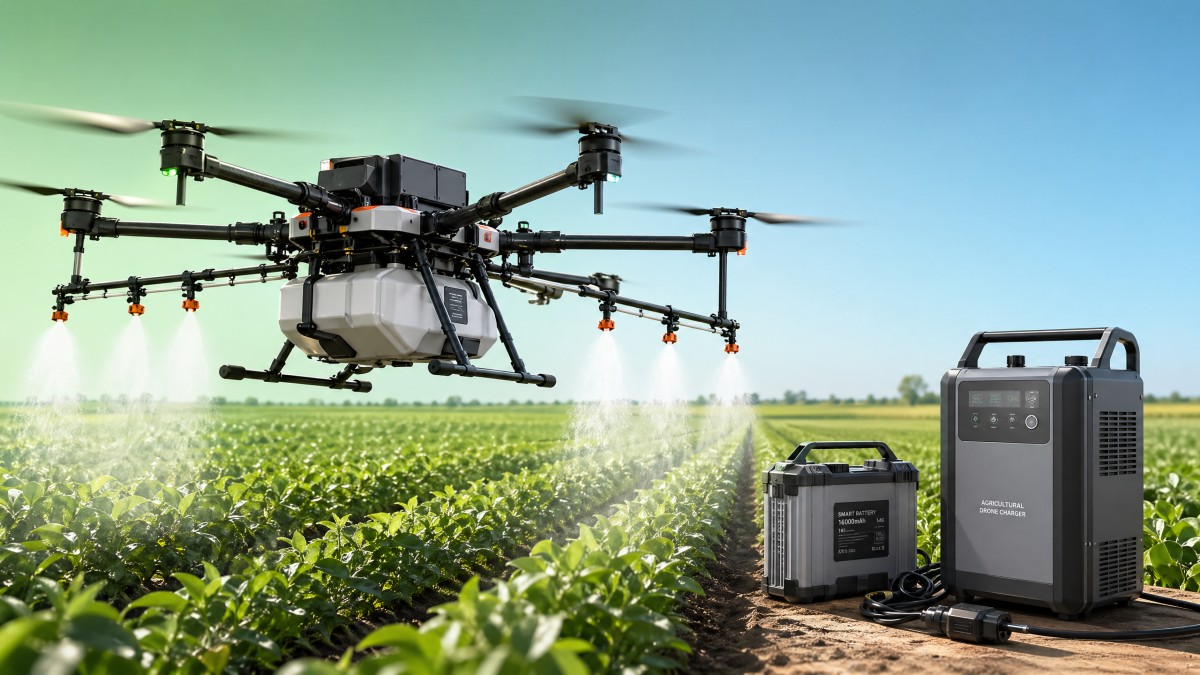
A reasonable agricultural spraying drone price depends on use case, not marketing category. As a practical benchmark:
- Entry-level or small-farm systems: roughly $3,000 to $8,000
- Mainstream commercial spraying drones: roughly $8,000 to $20,000
- Higher-capacity professional platforms: roughly $20,000 to $35,000+
- Enterprise packages with batteries, fast chargers, generators, RTK, mapping tools, and support: can exceed $40,000
These ranges vary by country, import duties, certification requirements, and after-sales support structure. The important point is that a drone advertised at a low base price may be incomplete for actual field deployment. In procurement terms, buyers should always ask for the ready-to-operate price, not just the airframe price.
A ready-to-operate package usually includes:
- Aircraft and spraying system
- Flight controller and remote station
- Required number of batteries for continuous work
- Battery charging or power generation equipment
- Spare nozzles, pumps, hoses, seals, and filters
- Positioning modules such as RTK if needed
- Operator training
- Warranty and service agreement
If one supplier quotes $9,500 and another quotes $16,000, the first may still be more expensive in practice if it lacks the power system, spares, and local technical support needed to maintain field productivity.
What actually drives the price of an agricultural spraying drone?
Price is mostly driven by performance architecture and supportability. Buyers should look beyond headline payload numbers and evaluate the following cost drivers.
1. Payload and tank capacity
Larger payload drones generally cost more because they require stronger frames, more powerful motors, larger ESCs, higher-capacity pumps, and more robust battery systems. A higher tank volume reduces refill frequency, but it also changes flight dynamics and power demand. Two drones with the same listed tank size may not maintain the same spraying efficiency under wind, temperature, or uneven terrain.
2. Spray system quality
The spray system is not a minor accessory. It is central to value. Price increases when the drone has:
- Stable flow control across changing flight speeds
- Consistent droplet size distribution
- Multiple nozzle options for different crops and chemicals
- Reliable anti-clogging design
- Precision shutoff to reduce overlap and waste
A cheaper drone with poor spray consistency can waste chemicals, damage crops, and fail to deliver the application accuracy that justifies drone use in the first place.
3. Battery system and charging ecosystem
Battery cost is often underestimated. In commercial operations, the drone alone is not enough. You need enough battery throughput to maintain daily acreage targets. Battery-related cost includes:
- Battery pack price
- Cycle life and degradation rate
- Charging speed
- Generator or field charging infrastructure
- Thermal management and safety systems
A lower-cost drone paired with weak battery logistics may achieve poor daily utilization. For contractors and large farms, that can become more expensive than buying a better system upfront.
4. Autonomy and navigation stack
Drones with advanced route planning, terrain following, radar or LiDAR-based obstacle sensing, and RTK-level positioning typically cost more. But these features can materially improve coverage consistency and reduce operator fatigue. In orchards, hilly land, or irregular field geometries, autonomy quality may be a major economic differentiator.
5. Structural durability and ingress protection
Agricultural environments are harsh. Chemical exposure, dust, mud, vibration, and repeated loading cycles all affect service life. Better sealing, corrosion resistance, stronger carbon fiber or composite structures, and well-protected electronics raise the purchase price but lower the risk of downtime and repair frequency.
6. Brand support, training, and spare parts
For procurement teams, this is often where apparent price advantage disappears. Spare part availability, lead time, service training, firmware support, and local maintenance capability are part of the real product. A drone that sits idle waiting for a pump assembly or flight controller board is not low cost.
How much should different types of buyers expect to spend?
Not every buyer should target the same system class. Budget should align with mission profile.
Small farms and first-time users
If your acreage is moderate and spraying windows are not extremely tight, a smaller-capacity system may be enough. The focus should be simplicity, ease of maintenance, basic route automation, and affordable battery replacement. In this segment, overspending on top-end features may not improve economics unless terrain or crop type is demanding.
Commercial service providers
Spraying contractors should prioritize throughput, battery turnaround, serviceability, and reliability under long duty cycles. For this group, a higher agricultural spraying drone price may still be the better investment if it improves acres covered per day and reduces unplanned downtime during peak season.
Large farms and agribusiness operations
Enterprise buyers should evaluate fleet economics, not single-unit price. Standardization across batteries, chargers, software workflows, spare parts, and operator training can matter more than shaving a few thousand dollars off each drone. In larger operations, the cost of operational fragmentation can exceed the initial savings from a cheaper platform.
Procurement teams and decision-makers
For formal sourcing, compare total system value using a structured scorecard:
- Price of full operational package
- Expected coverage per hour and per day
- Chemical application accuracy
- Battery replacement cost over lifecycle
- Spare parts availability
- Local service response time
- Training requirements
- Regulatory compatibility
- Warranty terms
This approach produces better decisions than comparing payload and brochure price alone.
What hidden costs do buyers often miss?
When evaluating agricultural spraying drone price, several hidden costs can materially change ROI.
- Extra batteries: one or two batteries are rarely enough for sustained field work
- Charging equipment: high-speed chargers and generators can add significantly to capital cost
- Consumables and wear parts: nozzles, pumps, seals, filters, hoses, and landing gear components
- Training: operator certification, spray calibration procedures, and safety processes
- Software fees: route planning, fleet management, cloud data, or unlock licenses
- Repairs and downtime: crash damage, shipping delays, and seasonal service bottlenecks
- Insurance and compliance: local aviation rules, agricultural chemical handling requirements, and liability coverage
These costs are especially important for enterprise procurement. A drone with a low acquisition price but high operating friction is often the wrong buy.
How do you judge whether a drone is worth the price?
The best method is to calculate value per unit of productive work. Instead of asking, “How much does the drone cost?” ask:
- How many acres or hectares can it spray per hour in my actual field conditions?
- How often will it stop for refill, recharge, or maintenance?
- How consistent is the spray pattern and droplet deposition?
- What is the expected cost per acre after labor, power, batteries, maintenance, and depreciation?
- How many seasons until payback?
A practical buying model is to estimate:
Total cost of ownership over 3 years = acquisition cost + battery replacement + maintenance + training + software + downtime impact
Then divide that by expected treated acreage over the same period. This gives a more meaningful benchmark than sticker price alone.
For example, a $22,000 system that operates reliably and covers substantially more acreage may produce a lower cost per acre than a $10,000 system that struggles with battery turnover, maintenance, or uneven application.
What specifications should you verify before requesting a quote?
To avoid weak comparisons, ask suppliers for measurable data rather than broad claims. Key questions include:
- What is the effective payload during real spraying missions, not maximum lift in ideal conditions?
- What acreage per hour is achievable at specified droplet size, flight speed, and application rate?
- What is the pump flow rate stability across different viscosities?
- What are the battery cycle ratings under field conditions?
- How many batteries are required for continuous operation?
- What is the recommended maintenance interval for pumps, motors, and nozzles?
- What IP rating or sealing performance does the system have?
- What is the local spare parts lead time?
- What training and commissioning support are included?
- What failure data or field reliability statistics can be provided?
This type of questioning aligns with engineering-based procurement and helps expose whether a low price reflects efficiency or simply missing capability.
So, how much should you pay?
You should pay enough to get the performance, reliability, and support level your operation actually requires—no more, and definitely no less. For many serious users, that means budgeting beyond the basic airframe and expecting a realistic total package cost in the commercial range rather than chasing the lowest advertised number.
If you are a small operator, paying in the lower end of the market may be reasonable if the system is simple, supported, and suited to your acreage. If you are a contractor or large farm, paying more for a robust spray platform, strong battery ecosystem, and dependable after-sales support is often the smarter financial decision.
In short, the right agricultural spraying drone price is not the cheapest quote. It is the price at which coverage efficiency, spray accuracy, battery logistics, maintenance burden, and supplier support combine to deliver the lowest practical cost per acre and the highest operational confidence.
Buy with a full-system mindset, validate field performance data, and compare total ownership cost—not just brochure pricing. That is how you determine what an agricultural spraying drone is truly worth.
Search News
Hot Articles
- Carbon Fiber StructuresHow to Specify Aerospace Carbon Fiber Assemblies for Lightweight, Load-Bearing PartsJul 11, 2026
- Machine VisionXiaomi, Alibaba DAMO Academy Drive Open-Source Robotics Model Ecosystem, Lowering Algorithm Development Barriers for Overseas SMEs Adopting Chinese Robotics SolutionsMar 30, 2026
- Cobots & ArmsShanxi 'AI+' Conference Showcases Embodied Intelligence with Multinational Buyer Engagement: Key Industry ImplicationsMar 30, 2026
Popular Tags
Recommended News
 Jul 11, 2026How to Specify Aerospace Carbon Fiber Assemblies for Lightweight, Load-Bearing PartsAerospace carbon fiber assemblies: learn how to specify laminate design, load data, joining methods, and inspection controls for lighter, reliable load-bearing aerospace parts.Elena Rostova (UAV Systems Researcher)
 Mar 30, 2026Xiaomi, Alibaba DAMO Academy Drive Open-Source Robotics Model Ecosystem, Lowering Algorithm Development Barriers for Overseas SMEs Adopting Chinese Robotics SolutionsXiaomi & Alibaba DAMO Academy's open-source robotics models lower algorithm barriers for global SMEs. Boost efficiency in manufacturing, logistics & smart retail with ROS 2 compatible solutions.TSV Data Lab
 Mar 30, 2026Shanxi 'AI+' Conference Showcases Embodied Intelligence with Multinational Buyer Engagement: Key Industry ImplicationsShanxi 'AI+' Conference highlights embodied intelligence with Tesla, Ubtech & Jiantao showcasing multimodal robotics. 40+ global buyers validated tech on-site, creating new B2B channels for industrial automation & AI solutions.Chen Wei (Automation Lead Engineer)
 Mar 30, 2026Zhongguancun Unveils 6G Integrated Sensing-Computing-Intelligence Platform to Empower Embodied Robots for Global Industrial ApplicationsZhongguancun's new 6G platform revolutionizes industrial robotics with <10ms latency, empowering global automotive, logistics & port automation. Discover how this tech boosts China's smart manufacturing exports.TSV Data Lab
 Mar 30, 2026Mech-Mind Tianjin Embodied Intelligence R&D and Production Base Goes Live, Cutting Delivery Time by 20%–30% for Global Customized AMR+Vision SolutionsMech-Mind's Tianjin AMR+Vision production base cuts delivery time by 20%-30% for欧美 & Latin American markets. Discover how this PLd-certified facility accelerates customized robotics solutions for smart manufacturing and logistics.Chen Wei (Automation Lead Engineer)
 Mar 30, 2026Boao Forum Reveals 'Co-evolution of Big and Small Brains' Trend in Humanoid Robots, China's Embodied Intelligence Accelerates Adaptation to Overseas Manufacturing Service ScenariosDiscover how China's humanoid robots, featuring 'Co-evolution of Big and Small Brains,' are revolutionizing global manufacturing. Learn about Embodied Tian Gong 3.0's ISO compliance and overseas deployment at Boao Forum 2026.Chen Wei (Automation Lead Engineer)
 Mar 30, 2026China Railway Industrial Secures Patent for Embodied Robotics in Material Handling, Boosting High-Precision Delivery Capabilities for Overseas Infrastructure and Manufacturing ProjectsChina Railway Industrial's new patent for embodied robotics in material handling boosts high-precision delivery for global infrastructure & manufacturing. Discover how this innovation enhances logistics accuracy in automotive, rail transit & EPC projects.Chen Wei (Automation Lead Engineer)
 Oct 26, 2026AMAXiMAL Releases Open-Source TopMod 3D v3 With Claude AIExplore AMAXiMAL’s free, open-source TopMod 3D v3 with Claude AI assistance, topology-based modeling and plywood fabrication tools that connect complex designs to physical builds.Dr. Marcus Vance
 Oct 26, 2026Choosing a SCADA System Integrator Company: PLC Compatibility and Long-Term SupportChoose a scada system integrator company with proven PLC compatibility and reliable long-term support. Discover what to test, compare, and require before investing.Victor Lin (Chief Software Architect)
 Oct 25, 2026Hesai Leads Global ADAS Main Lidar Shipments in Yole’s 2026 ReportHesai led global ADAS main lidar shipments with a 43% share in 2025, according to Yole’s 2026 report. Explore what this ranking reveals about its automotive market position.TSV Data Lab
 Oct 25, 2026Choosing an Aerospace Materials Manufacturer: Quality and Traceability ChecksChoosing an aerospace materials manufacturer? Learn how to verify certifications, test reports, and lot traceability to qualify suppliers confidently and reduce costly sourcing risks.Dr. Marcus Vance
 Oct 24, 2026Guotai Haitong: Global Entry-Level 3D Printer Shipments Rose 39% in Q1 2026Entry-level 3D printer shipments rose 39% in Q1 2026, Guotai Haitong reports. Explore how AI, multicolor printing and print farms are shaping market growth.Dr. Marcus Vance
 Oct 24, 2026Choosing an Industrial Vision Inspection Supplier: Acceptance Tests That MatterChoose an industrial vision inspection supplier with confidence. Discover acceptance tests for defect detection, false rejects, production speed, and reliable part rejection before you buy.TSV Data Lab
 Oct 23, 2026US Navy Raises Gecko Robotics Contract Ceiling to $300M for Robotic Fleet MaintenanceUS Navy raises Gecko Robotics’ contract ceiling to $300M for Pacific Fleet robotic inspections. Explore potential opportunities for maintenance suppliers and key procurement considerations.Chen Wei (Automation Lead Engineer)
 Oct 23, 2026Choosing Industrial Sensing Systems for Global Plants: Protocol CompatibilityCompare industrial sensing systems international buyers can trust. Explore protocol compatibility, reduce integration risks, and select proven configurations for reliable global plant deployments.TSV Data Lab
 Oct 22, 2026KUKA Showcases Physical AI and iiQKA.AI Vision at NVIDIA GTC BerlinExplore KUKA’s Physical AI showcase at NVIDIA GTC Berlin and discover how iiQKA.AI Vision aims to simplify robotic vision integration and improve 2D and 3D scene recognition.TSV Data Lab
 Oct 22, 2026Robotic Machining of Advanced Composites: What Tolerances Are Achievable?Explore advanced materials machining robotics: discover what drives achievable composite tolerances and how to validate accuracy before investing in your next machining system.Dr. Marcus Vance
 Oct 21, 2026China’s Industrial Robot Exports Near RMB 10 Billion in First Nine Months of 2026China’s industrial robot exports neared RMB 10 billion in January–September 2026, with value rising faster than volume. Explore the data and what it could mean for suppliers.Chen Wei (Automation Lead Engineer)
 Oct 21, 2026Low-Latency Industrial Data Processing: Pricing and Key Cost DriversExplore industrial data latency price drivers, from edge hardware to integration and support. Learn how to compare quotes, verify performance, and avoid unnecessary costs.TSV Data Lab
 Oct 20, 2026KUKA Launches iiQKA.AI Vision to Simplify Industrial Image ProcessingKUKA iiQKA.AI Vision simplifies industrial image processing with controller-based 2D and 3D vision. Explore drag-and-drop setup for vision-guided automation.TSV Data Lab
 Oct 20, 2026Smart Industrial Edge Devices: Key Criteria for Legacy PLC IntegrationChoose smart industrial edge devices for legacy PLC integration. Discover key criteria for compatibility, data quality, security, and reliable collection without disrupting control.TSV Data Lab
 Oct 19, 2026Choosing a Radar Sensor by Application: Range, Resolution, and Field of ViewSimplify radar sensor application based product selection. Compare range, resolution, and field of view to avoid blind spots and choose with confidence. Explore the guide.TSV Data Lab
 Oct 18, 2026Comparing Material Options for Procurement: Specs, Costs, and Supply RisksExplore procurement oriented technical content on material options, specs, costs, and supply risks. Compare alternatives to cut hidden expenses and make confident sourcing decisions.Dr. Marcus Vance
 Oct 17, 20265-Axis CNC Positioning Accuracy: How to Interpret ISO 230-2 Test ResultsAssess 5 axis CNC machining positioning accuracy with ISO 230-2. Learn to interpret repeatability, reversal error, and test conditions to compare suppliers and make confident acceptance decisions.Dr. Marcus Vance























